An excerpt from “Mistaken Identity” – a work in progress

The odds of any one of us having a doppelganger are quite high. Whether or not you got to meet him or her, or be confronted by them was significantly lower. Except of course, unless you are a celebrity.

It was a phenomenon remarkable only for the fact, at times, certain high-profile people, notorious or not, had doubles if only to put off enemies or the general public. Sometimes we see people in the street, people who look like someone we knew, and made the mistake of approaching them like a long lost friend, only to discover an embarrassed individual desperately trying to get away for what they perceive is a stalker or worse.

And then sometimes it is a picture that looms up on a TV screen, an almost exact likeness of you. At first, you are fascinated, and then according to the circumstances, and narrative that is attached to that picture, either flattered or horrified.

For me one turned to the other when I saw an almost likeness of me flash up on the screen when I turned the TV on in my room. What looked to be my photo, with only minor differences, was in the corner of the screen, the newsreader speaking in rapid Italian, so fast I could only translate every second or third word.

But the one word I did recognize was murder. The photo of the man up on the screen was the subject of an extensive manhunt. The crime, the murder of a woman in the very same hotel I was staying, and it was being played out live several floors above me. The gist of the story, the woman had been seen with, and staying with the man who was my double, and, less than an hour ago, the body had been discovered by a chambermaid.

The killer, the announcer said, was believed to be still in the hotel because the woman had died shortly before she had been discovered.

I watched, at first fascinated at what I was seeing. I guess I should have been horrified, but at that moment it didn’t register that I might be mistaken for that man.

Not until another five minutes had passed, and I was watching the police in full riot gear, with a camera crew following behind, coming up a passage towards a room. Live action of the arrest of the suspected killer the breathless commentator said.

Then, suddenly, there was a pounding on the door. On the TV screen, plain to see, was the number of my room.
I looked through the peephole and saw an army of police officers. It didn’t take much to realize what had happened. The hotel staff identified me as the man in the photograph on the TV and called the police.

Horrified wasn’t what I was feeling right then.

It was fear.

My last memory was the door crashing open, the wood splintering, and men rushing into the room, screaming at me, waving guns, and when I put my hands up to defend myself, I heard a gunshot.

And in one very confused and probably near-death experience, I thought I saw my mother and thought what was she doing in Rome?

I was the archetypal nobody.

I lived in a small flat, I drove a nondescript car, had an average job in a low profile travel agency, was single, and currently not involved in a relationship, no children, and according to my workmates, no life.

They were wrong. I was one of those people who preferred their own company, I had a cat, and travelled whenever I could. And I did have a ‘thing’ for Rosalie, one of the reasons why I stayed at the travel agency. I didn’t expect anything to come of it, but one could always hope.

I was both pleased and excited to be going to the conference. It was my first, and the glimpse I had seen of it had whetted my appetite for more information about the nuances of my profession.

Some would say that a travel agent wasn’t much of a job, but to me, it was every bit as demanding as being an accountant or a lawyer. You were providing a customer with a service, and arguably more people needed a travel agent than a lawyer. At least that was what I told myself, as I watched more and more people start using the internet, and our relevance slowly dissipating.

This conference was about countering that trend.

The trip over had been uneventful. I was met at the airport and taken to the hotel where the conference was being held with a number of other delegates who had arrived on the same plane. I had mingled with a number of other delegates at the pre conference get together, including one whose name was Maryanne.

She was an unusual young woman, not the sort that I usually met, because she was the one who was usually surrounded by all the boys, the life of the party. In normal circumstances, I would not have introduced myself to her, but she had approached me. Why did I think that may have been significant? All of this ran through my mind, culminating in the last event on the highlight reel, the door bursting open, men rushing into my room, and then one of the policemen opened fire.

I replayed that last scene again, trying to see the face of my assailant, but it was just a sea of men in battle dress, bullet proof vests and helmets, accompanied by screaming and yelling, some of which I identified as “Get on the floor”.

Then came the shot.

Why ask me to get on the floor if all they were going to do was shoot me. I was putting my hands up at the time, in surrender, not reaching for a weapon.

Then I saw the face again, hovering in the background like a ghost. My mother. Only the hair was different, and her clothes, and then the image was going, perhaps a figment of my imagination brought on by pain killing drugs. I tried to imagine the scene again, but this time it played out, without the image of my mother.

I opened my eyes took stock of my surroundings. What I felt in that exact moment couldn’t be described. I should most likely be dead, the result of a gunshot wound. I guess I should be thankful the shooter hadn’t aimed at anything vital, but that was the only item on the plus side.

I was in a hospital room with a policeman by the door. He was reading a newspaper, and sitting uncomfortably on a small chair. He gave me a quick glance when he heard me move slightly, but didn’t acknowledge me with either a nod, or a greeting, just went back to the paper.

If I still had a police guard, then I was still considered a suspect. What was interesting was that I was not handcuffed to the bed. Perhaps that only happened in TV shows. Or maybe they knew I couldn’t run because my injuries were too serious. Or the guard would shoot me long before my feet hit the floor. I knew the police well enough now to know they would shoot first and ask questions later.

On the physical side, I had a large bandage over the top left corner of my chest, extending over my shoulder. A little poking and prodding determined the bullet had hit somewhere between the top of my rib cage and my shoulder. Nothing vital there, but my arm might be somewhat useless for a while, depending on what the bullet hit on the way in, or through.

It didn’t feel like there were any broken or damaged bones.

That was the good news.

On the other side of the ledger, my mental state, there was only one word that could describe it. Terrified. I was looking at a murder charge and jail time, a lot of it. Murder usually had a long time in jail attached to it.

Whatever had happened, I didn’t do it. I know I didn’t do it, but I had to try and explain this to people who had already made up their minds. I searched my mind for evidence. It was there, but in the confused state brought on by the medication, all I could think about was jail, and the sort of company I was going to have.

I think death would have been preferable.

Half an hour later, maybe longer, I was drifting in an out of consciousness, a nurse, or what I thought was a nurse, came into the room. The guard stood, checked her ID card, and then stood by the door.

She came over and stood beside the bed. “How are you?” she asked, first in Italian, and when I pretended I didn’t understand, she asked the same question in accented English.

“Alive, I guess,” I said. “No one has come and told what my condition is yet. You are my first visitor. Can you tell me?”

“Of course. You are very lucky to be alive. You will be fine and make a full recovery. The doctors here are excellent at their work.”

“What happens now?”

“I check you, and then you have a another visitor. He is from the British Embassy I think. But he will have to wait until I have finished my examination.”

I realized then she was a doctor, not a nurse.

My second visitor was a man, dressed in a suit the sort of which I associated with the British Civil Service.  He was not very old which told me he was probably a recent graduate on his first posting, the junior officer who drew the short straw.

The guard checked his ID but again did not leave the room, sitting back down and going back to his newspaper.

My visitor introduced himself as Alex Jordan from the British Embassy in Rome and that he had been asked by the Ambassador to sort out what he labelled a tricky mess.

For starters, it was good to see that someone cared about what happened to me.  But, equally, I knew the mantra, get into trouble overseas, and there is not much we can do to help you.  So, after that lengthy introduction, I had to wonder why he was here.

I said, “They think I am an international criminal by the name of Jacob Westerbury, whose picture looks just like me, and apparently for them it is an open and shut case.”  I could still hear the fragments of the yelling as the police burst through the door, at the same time telling me to get on the floor with my hands over my head.

“It’s not.  They know they’ve got the wrong man, which is why I’m here.  There is the issue of what had been described as excessive force, and the fact you were shot had made it an all-round embarrassment for them.”

“Then why are you here?  Shouldn’t they be here apologizing?”

“That is why you have another visitor.  I only took precedence because I insisted I speak with you first.  I have come, basically to ask you for a favour.  This situation has afforded us with an opportunity.  We would like you to sign the official document which basically indemnifies them against any legal proceedings.”

Curious.  What sort of opportunity was he talking about?  Was this a matter than could get difficult and I could be charged by the Italian Government, even if I wasn’t guilty, or was it one of those hush hush type deals, you do this for us, we’ll help you out with that.  “What sort of opportunity?”

“We want to get our hands on Jacob Westerbury as much as they do.  They’ve made a mistake, and we’d like to use that to get custody of him if or when he is arrested in this country.  I’m sure you would also like this man brought into custody as soon as possible so you will stop being confused with him.  I can only imagine what it was like to be arrested in the manner you were.  And I would not blame you if you wanted to get some compensation for what they’ve done.  But.  There are bigger issues in play here, and you would be doing this for your country.”

I wondered what would happen if I didn’t agree to his proposal.  I had to ask, “What if I don’t?”

His expression didn’t change.  “I’m sure you are a sensible man Mr Pargeter, who is more than willing to help his country whenever he can.  They have agreed to take care of all your hospital expenses, and refund the cost of the Conference, and travel.  I’m sure I could also get them to pay for a few days at Capri, or Sorrento if you like, before you go home.  What do you say?”

There was only one thing I could say.  Wasn’t it treason if you went against your country’s wishes?

“I’m not an unreasonable man, Alex.  Go do your deal, and I’ll sign the papers.”

“Good man.”

After Alex left, the doctor came back to announce the arrival of a woman, by the way she had announced herself, the publicity officer from the Italian police. When she came into the room, she was not dressed in a uniform.

The doctor left after giving a brief report to the civilian at the door. I understood the gist of it, “The patient has recovered excellently and the wounds are healing as expected. There is no cause for concern.”

That was a relief.

While the doctor was speaking to the civilian, I speculated on who she might be. She was young, not more than thirty, conservatively dressed so an official of some kind, but not necessarily with the police. Did they have prosecutors? I was unfamiliar with the Italian legal system.

She had long wavy black hair and the sort of sultry looks of an Italian movie star, and her presence made me more curious than fearful though I couldn’t say why.

The woman then spoke to the guard, and he reluctantly got up and left the room, closing the door behind him.
She checked the door, and then came back towards me, standing at the end of the bed. Now alone, she said, “A few questions before we begin.” Her English was only slightly accented. “Your name is Jack Pargeter?”

I nodded. “Yes.”

“You are in Rome to attend the Travel Agents Conference at the Hilton Hotel?”

“Yes.”

“You attended a preconference introduction on the evening of the 25th, after arriving from London at approximately 4:25 pm.”

“About that time, yes. I know it was about five when the bus came to collect me, and several others, to take us to the hotel.”

She smiled. It was then I noticed she was reading from a small notepad.

“It was ten past five to be precise. The driver had been held up in traffic. We have a number of witnesses who saw you on the plane, on the bus, at the hotel, and with the aid of closed circuit TV we have established you are not the criminal Jacob Westerbury.”

She put her note book back in her bag and then said, “My name is Vicenza Andretti and I am with the prosecutor’s office. I am here to formally apologize for the situation that can only be described as a case of mistaken identity. I assure you it is not the habit of our police officers to shoot people unless they have a very strong reason for doing so. I understand that in the confusion of the arrest one of our officers accidentally discharged his weapon. We are undergoing a very thorough investigation into the circumstances of this event.”

I was not sure why, but between the time I had spoken to the embassy official and now, something about letting them off so easily was bugging me. I could see why they had sent her. It would be difficult to be angry or annoyed with her.

But I was annoyed.

“Do you often send a whole squad of trigger happy riot police to arrest a single man?” It came out harsher than I intended.

“My men believed they were dealing with a dangerous criminal.”

“Do I look like a dangerous criminal?” And then I realized if it was mistaken identity, the answer would be yes.

She saw the look on my face, and said quietly, “I think you know the answer to that question, Mr. Pargeter.”

“Well, it was overkill.”

“As I said, we are very sorry for the circumstances you now find yourself in. You must understand that we honestly believed we were dealing with an armed and dangerous murderer, and we were acting within our mandate. My department will cover your medical expenses, and any other amounts for the inconvenience this has caused you. I believe you were attending a conference at your hotel. I am very sorry but given the medical circumstances you have, you will have to remain here for a few more days.”

“I guess, then, I should thank you for not killing me.”

Her expression told me that was not the best thing I could have said in the circumstances.

“I mean, I should thank you for the hospital and the care. But a question or two of my own. May I?”

She nodded.

“Did you catch this Jacob Westerbury character?”

“No. In the confusion created by your arrest he escaped. Once we realized we had made a mistake and reviewed the close circuit TV, we tracked him leaving by a rear exit.”

“Are you sure it was one of your men who shot me?”

I watched as her expression changed, to one of surprise.

“You don’t think it was one of my men?”

“Oddly enough no. But don’t ask me why.”

“It is very interesting that you should say that, because in our initial investigation, it appeared none of our officer’s weapons had been discharged. A forensic investigation into the bullet tells us it was one that is used in our weapons, but…”

I could see their dilemma.

“Have you any enemies that would want to shoot you Mr Pargeter?”

That was absurd because I had no enemies, at least none that I knew of, much less anyone who would want me dead.

“Not that I’m aware of.”

“Then it is strange, and will perhaps remain a mystery. I will let you know if anything more is revealed in our investigation.”

She took an envelope out of her briefcase and opened it, pulling out several sheets of paper.

I knew what it was. A verbal apology was one thing, but a signed waiver would cover them legally. They had sent a pretty girl to charm me. Perhaps using anyone else it would not have worked. There was potential for a huge litigation payout here, and someone more ruthless would jump at the chance of making a few million out of the Italian Government.

“We need a signature on this document,” she said.

“Absolving you of any wrong doing?”

“I have apologized. We will take whatever measures are required for your comfort after this event. We are accepting responsibility for our actions, and are being reasonable.”

They were. I took the pen from her and signed the documents.

“You couldn’t add dinner with you on that list of benefits?” No harm in asking.

“I am unfortunately unavailable.”

I smiled. “It wasn’t a request for a date, just dinner. You can tell me about Rome, as only a resident can. Please.”

She looked me up and down, searching for the ulterior motive. When she couldn’t find one, she said, “We shall see once the hospital discharges you in a few days.”

“Then I’ll pencil you in?”

She looked at me quizzically. “What is this pencil me in?”

“It’s an English colloquialism. It means maybe. As when you write something in pencil, it is easy to erase it.”

A momentary frown, then recognition and a smile. “I shall remember that. Thank-you for your time and co-operation Mr. Pargeter. Good morning.”

© Charles Heath 2015-2021

“Trouble in Store” – Short stories my way:  More on the policewoman

I’ve been looking at the role of the policewoman, and her interaction with the shop’s participants.

I’m still working on whether she needs more or less of an introduction, but, for the time being, this is what I’m going with:

It had been another long day at the office for Officer Margaret O’Donnell, or, out in the streets, coping with people who either didn’t know or didn’t care about the law.

People who couldn’t cross the road where there were crossings and lights to protect them, silly girls shoplifting on a dare, and boys who thought they were men and could walk on water.

The one they scraped of the road would never get to grow up, and his mother, well, she was not doing another call on a family to give them the bad news.

That was her day.

So far.

At the end of the day, she was glad to be getting home, putting her feet up, and forgetting about everything until the next morning when it would start all over again.

Coming around that last corner, the home stretch she called it, she was directly opposite the corner shop, usually closed at this hour of the night.  It was not.  The lights were still on.

She looked at her watch and saw it was ten minutes to midnight, and long past closing time.  She looked through the window, but from the other side of the road, she could only see three heads and little else.

Damn, she thought, I’m going to have to check it out. 

She was aware of the rumors, from her co-residents and also her colleagues down at the station, rumors she hoped were not true.

© Charles Heath 2016-2020

Phryne Fisher and the Crypt of Tears: A review of sorts

So, what has all the adventure of an Indiana Jones movie, takes you through the back alleys of a Persian city, and gives you good old-fashioned entertainment?

Yes, at one point I felt I had just been transplanted in Aladdin.

But this only served as the starting point of a daring prison break, a very Indiana Jones motorbike ride, and a do-or-die jump onto a moving train.

Never have so many waited so long for…

Phryne the pilot, the swordswoman, and the one-woman rescue squad, who dabbles in a spot of investigating on the side.

Just how did she find Detective Inspector Jack Robinson in that seedy lodging house?

Some of the reviews haven’t been quite as nice as they might be, but I think they missed the point.

No one in this movie takes themselves or their characters seriously, which, in a way, makes them more interesting.

Loved John Stanton’s creepy portrayal of Crippins, the butler, just the sort of man you could use around a mansion, always there insidiously insinuating himself.

And loved the ending where we finally get to see what was missing in three whole series of episodes. What is it, you’ll have to go and see it to find out.

For me, 5 stars, 101 minutes of pure Phryne joy!

The cinema of my dreams – I always wanted to write a war story – Episode 25

For a story that was conceived during those long boring hours flying in a steel cocoon, striving to keep away the thoughts that the plane and everyone in it could just simply disappear as planes have in the past, it has come a long way.

Whilst I have always had a fascination with what happened during the second world war, not the battles or fighting, but in the more obscure events that took place, I decided to pen my own little sidebar to what was a long and bitter war.

And, so, it continues…

Rolf Mayer had always had a dream to travel to other planets, and when he heard that the government was putting together a team of scientists with the express intention of building rockets, he gathered up his few belongings and traveled to Pennemunde to join the group being led by Werner von Braun.

At first, he had been turned away, but a chance meeting with von Braun changed his fortune.  

But, when Adolf Hitler came to power, it seemed that quest to reach the other planets became a quest to build a military weapon that would devastate an enemy city.  He had expressed his opposition to the project, but that was silenced when some Nazi party officials came from Berlin to give those scientists with reservations an ‘attitude readjustment’.

From then on all of the scientists knew when their allegiances lay and that there would be no time for traveling to the stars, even though, secretly, he drew on the experience and knowledge of the rockets they were building and testing to design his own rocket.  One day.

Then, as if only weeks had passed, the war had been declared, and the scientists had to work harder on creating a weapon which, in its first instance became known as the V1 flying bomb.  V, of course, stood for vengeance.

Later, when the enemy had bombed Pennemunde out of existence they moved to Nordhausen.  This place was different, underground where it could not be bombed, but there was something rather sinister about it.  Slave labor, prisoners from a local concentration camp were forced to work there, and the souls that he saw were not fit for work, or for anything else.

At Nordhausen, they worked on the V2 rockets, rockets in the true sense of the word, and it was abhorrent to him that they should be used for wholesale murder rather than their true purpose.  A promotion to Haupsturnfuhere in the SS and making him responsible for the horrific crimes being committed against humanity was the last straw.

He had enough information to create his own rocket based on the success of the V2, and it was time to leave, get away from this place before it killed him too.  There was only one problem, the real SS was watching, everyone and everything.  They trusted no-one, not even their own fellow officers.

Mayer was one of the scientists lucky enough to get a billet to the town nearby.  It was quiet enough, but he believed everyone living there knew what was going on, and worse, they knew about the concentration camp and the evil that went on inside.  Worse still, he knew everyone was watching everyone else, and reporting back to the SS anything out of the ordinary, including newcomers.

One such man came into the town, dressed as Obersturnfurer with one other SS officer in a car.  Everyone knew how impossible it was to get fuel, or if you had a car, a permit to use it except for essential services, or if it was requisitioned.

They were SS, so no one questioned why they were there.  But that didn’t mean that whispers of their presence didn’t filter around the town.  Just the very mention of the SS gave most people cold shivers.

Mayer heard about the two mysterious visitors when he arrived downstairs where he was lodging.  

“They were asking about the people staying here and wanted to see their papers.  I think they’re looking for someone, someone from the factory.”

“Nonsense.  They’re probably here to see some of their friends up at the camp.”

With that, he dismissed the visitors from his mind and went up to his room.  He unlocked the door and went in.  A moment later he realized his room had been thoroughly searched, and the mess left as a warning.  Had someone told the SS of his discontent.  He hadn’t said as much, but attitude and body language would have told a different story.

Then the door closed behind him with a bang, and the moment a hand touched his shoulder he jumped in fright.

There’s been a man behind the door.

“I suggest you do not speak or do anything that might bring attention to us.  Am I clear?”

Mayer nodded.

“Good.”

Another man, dressed in the uniform of a SS Standartenfuhrer, stepped out of the shadows in front of him holding a folder, the folder that contained his drawings and specifications for a more advanced V2 rocket,

Condemning evidence of him being a traitor to the Reich unless he could put a different spin on it.  He waited to see what the Standartenfuher had to say.

“This is damning evidence of your traitorous behavior.  We received information that you were stealing secrets from the Reich?  For whom, Mayer?  The British or the Americans?”

“I did not steal anything.  I work on the plans here in my spare time, away from that place.”  He realized the moment he said it, it might not be the best idea to be critical of anything, because it was always taken as a criticism of the Reich itself.

“Are you displeased with your working environment.  No one else has raised such issues.”

“No, no,” he added hastily, “it was not what I meant.  It’s just difficult to think clearly on problems when we’re under so much pressure.”

The Standartenfuhrer shook his head.  “Enough Mayer.  You are coming with us to explain yourself.”

“You need to clear this….”

“We don’t need anyone’s permission, Mayer.  We walk out of here, into the car, and not a word to anyone.  Any trouble I will not hesitate to shoot you.  Understand?”

Mayer nodded.

This wasn’t good.  Arrested by the SS.  There could be only one outcome.  It wouldn’t matter what he said, it would be the cells and then the firing squad.  He’d heard the rumors.

The other SS officer went first, the Mayer, then the Standartenfuhrer, down the stairs and past the owner of the boarding house.  The Standartenfuhrer stopped, and said, “This man’s papers, now.”

The owner stepped back into a room and came out a minute later and handed the Standartenfuhrer the document.

“No one is to be told what happened here.  Not unless you want us to come back and arrest your family.”

“Yes sir,” the owner said, very scared.

The proceeded to the car, got in, Mayer in the back with the Standartenfuhrer, and they drove off.  Only two people saw the whole event, and because it was by the SS, they were not going to tell anyone.

“Where are we going?” Mayer asked.

“Headquarters.  You will be wise to sit, be quiet and say nothing under any circumstances.”

Headquarters was in Berlin, at least that’s where he went to be made an officer of the SS, as a Hauptsturmfuhrer to give him the necessary authority to take charge of certain aspects of the production process of the V2 rockets.

And that included work on improving the guidance system.

But, he noticed they were not going north, but south.

© Charles Heath 2020

Mistaken Identity – The Editor’s Draft – Day 18

I have been working on the story, the editor is asking for a second draft after making suggested changes – and I’m now working on it

I have been writing away from home. We promised to take our granddaughters away for a few days during the school holidays, and so I’ve had to rough it, writing at the kitchen table with the sounds of a Nintendo Switch going off in my ears, when we’re not out trying new food and swimming, or playing mini gold.

It’s a bit hard to get in the mood.

But, our main character, Jack, is back home, having got away from Maryanne, and knowing he has a package to get from Rosalie, he invites her out to dinner.

Dinner is pleasant, and a rapport develops into something else when he invites her back to his place.

And, of course, it’s probably too much to expect the romance will go as smooth as it should, and something will come along to liven it up.

And at some point we will discover another of Rosalie’s hidden talents acquired from an undisclosed past life, not related to the romance aspect. If that sounds a little strange it probably is but I don’t want to give away the plot just yet.

Today’s effort amounts to 2,337 words, for a total, so far, of 43,759.

More tomorrow.

Searching for Locations: The Eiffel Tower, Paris, France

Sorry, reminiscing again…

It was a cold but far from a miserable day.  We were taking our grandchildren on a tour of the most interesting sites in Paris, the first of which was the Eiffel Tower.

We took the overground train, which had double-decker carriages, a first for the girls, to get to the tower.

We took the underground, or Metro, back, and they were fascinated with the fact the train carriages ran on road tires.

Because it was so cold, and windy, the tower was only open to the second level. It was a disappointment to us, but the girls were content to stay on the second level.

There they had the French version of chips.

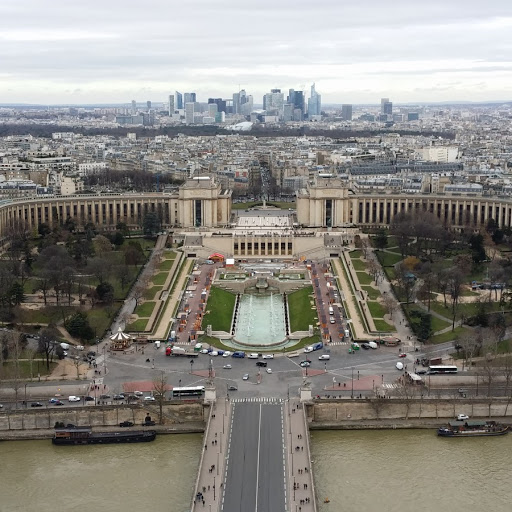
It was a dull day, but the views were magnificent.

20140107_132225

A view of the Seine

20140107_132859

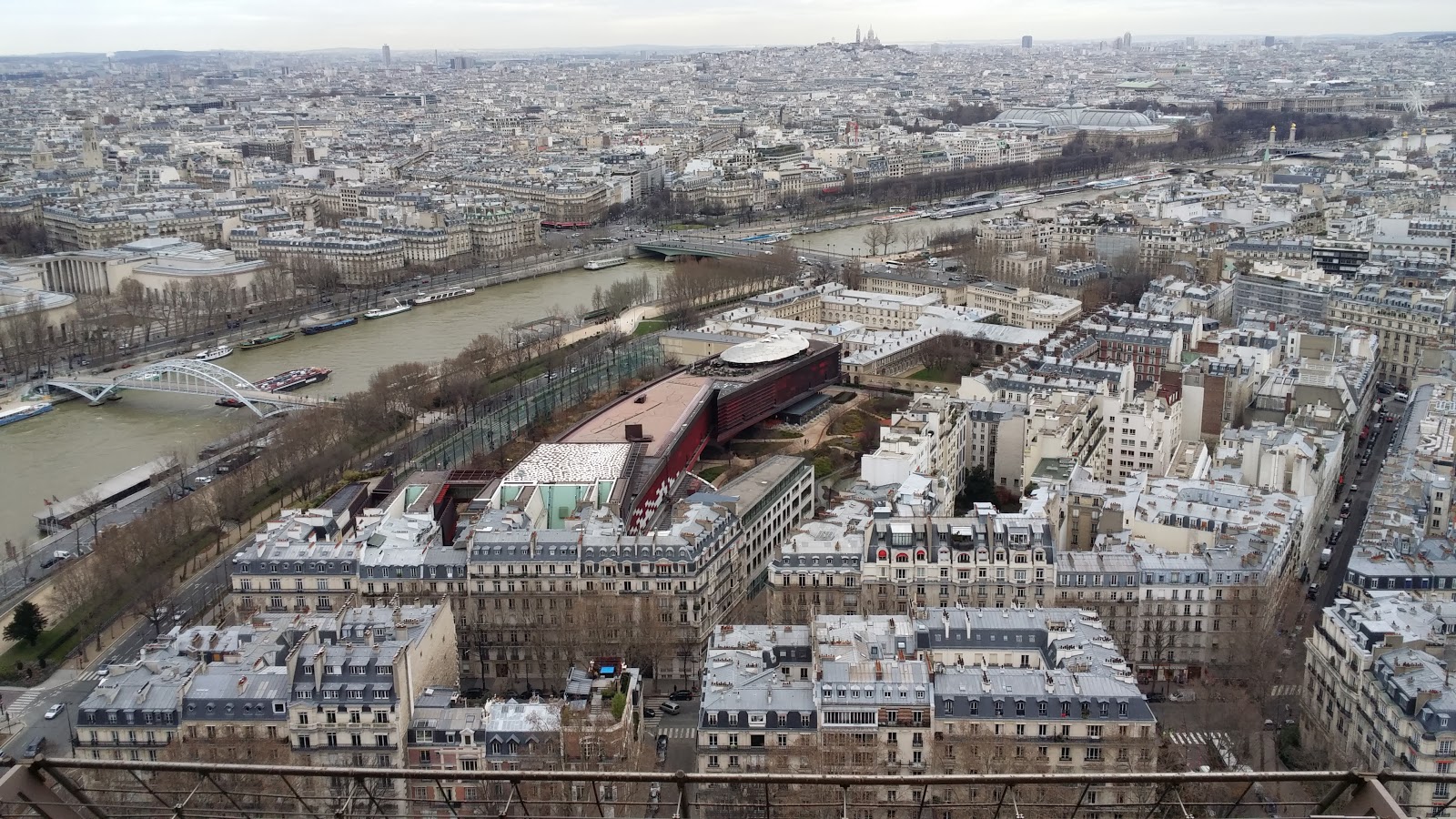
20140107_132208

Sacre Coeur church at Montmartre in the distance.

Another view along the river Seine

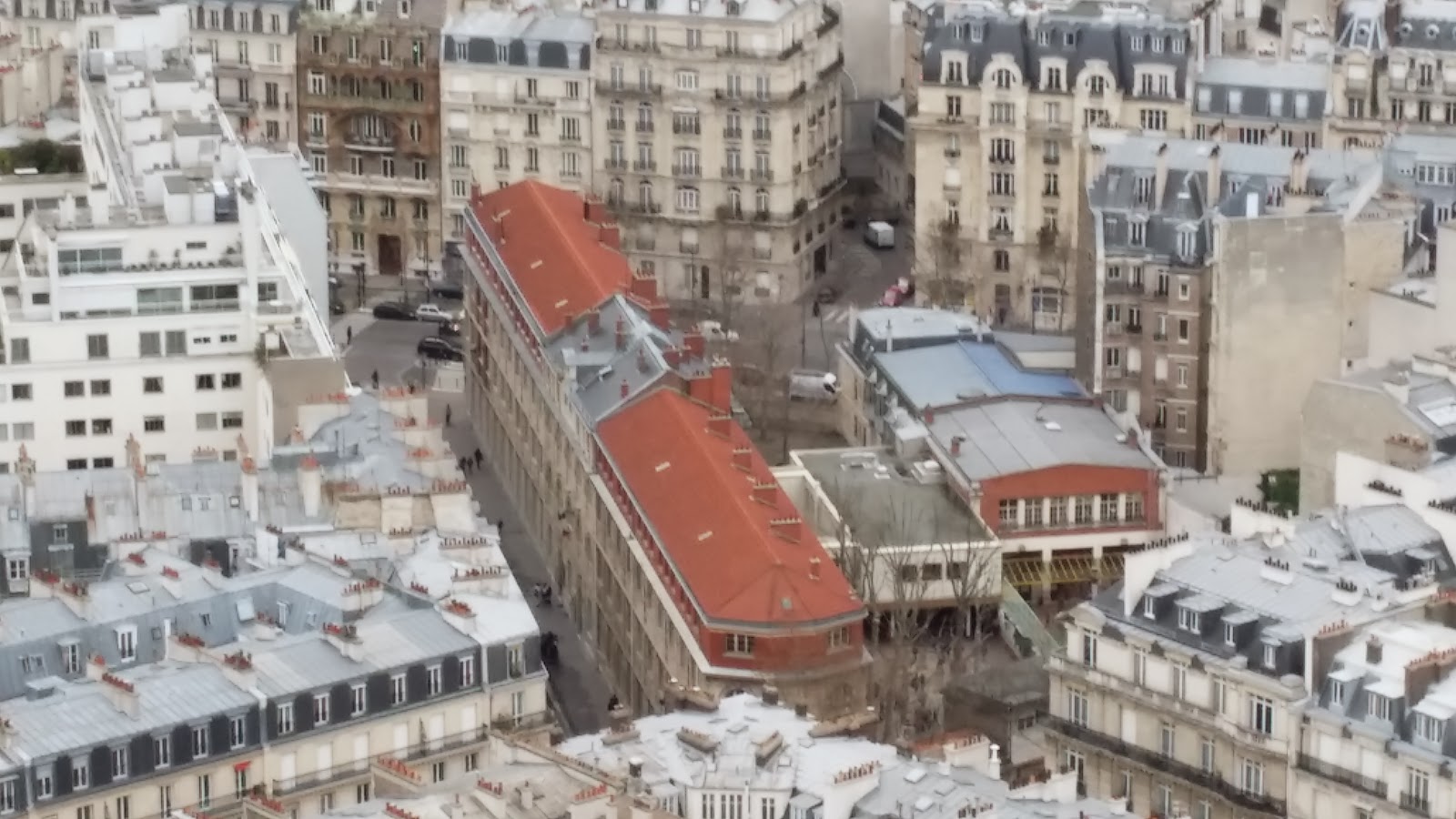
Overlooking the tightly packed apartment buildings

Looking along the opposite end of the river Seine

Using Hollywood as a source of inspiration

I’m not one for writing Western, I’ll leave the honours for that to Louis L’Amore, whose acquaintance I made when I saw How The West Was Won on the big screen, and then read the book.

That led to reading a few more by Zane Grey, but it was not in the reading of the stories but in the visual splendour of the west depicted in these films that made the actors almost secondary.

But my interest in watching Westerns had been fuelled by the fact my parents watched them on TV, though back in those days, they were in black and white, and starred John Wayne, Gary Cooper, Alan Ladd and, later on, Clint Eastwood among a great many others.

But the mainstay of my interest in the archetypal Western centred on John Wayne whose movies may have almost the same plot line, just a substitution of actors and locations.

Often it was not so much that John Wayne was in it, but the actors he surrounded himself with, like Dean Martin, Ricky Nelson, Walter Brennan, and Robert Mitcham, all of whom made the experience all the better.

Films like The Sons of Katie Elder, True Grit, Rio Bravo, and El Dorado.

Who can forget the vast open spaces, the dry dusty stresses lines with wooden buildings and endless walkways that substituted for footpaths?  Bars in hotels, rooms overlooking the street, havens for sharpshooters, when bad guys outnumber the good guys, and typically the Sherrif who always faced insurmountable odds.

Or the attacks staged by Indians who were routinely killed, in fact, there was not one film I saw where they ended up winning any battle. Only in recent years did they get a more sympathetic role, one film that comes to mind is Soldier Blue, which may have painted them as savages, but a possible reason why they ended up so.

But for those without Indians, there were plenty of others whose intentions were anything but for the good of the settlers.

A lot of films ended in a classic gunfight.  High Noon, 3:10 to Yuma are two, where the story led to gun fights between good and bad in unlikely places like El Dorado or Rio Bravo.

There are countless others I could name, like Shane, or became to be called, the spaghetti westerns with Clint Eastwood, or last but not least, The Magnificent Seven, or Once Upon a time in the west.

All have contributed to a picture in my mind of how the American West was, fearsome men, beleaguered sheriffs, people with good intentions, and those driven by greed and power. All of this plays out in the harshest of conditions where life and death could be determined by a wrong word or a stray bullet.

And let’s not forget the role of the guns, Colt, Winchester, and Remington.  And Smith and Wesson, and the gunslingers of the day. Some were good, but most according to the film world were bad.

So, against the lifelong interest of watching and reading about the archetypal view of the old West, shall I attempt to put pen to paper. Thank God it will be a work of fiction because I don’t think there are many who knew what it was really like.

The cinema of my dreams – Was it just another surveillance job – Episode 5

I’m back home and this story has been sitting on a back burner for a few months, waiting for some more to be written.

The trouble is, there are also other stories to write, and I’m not very good at prioritising.

But, here we are, a few minutes opened up and it didn’t take long to get back into the groove.

Is it going to be revenge or just plain bewilderment?


There were protocols to handle every situation.  It’s why I was stuck in a room with a dozen others for nearly six months, learning the ropes.

That’s what Alex called it.  He’d also said it was a waste of time because by the time we made it out into the field all the bad guys would be locked up.  Patience wasn’t one of his virtues.

That’s why Alex didn’t make it through the first cut.

It had been a long six months but it had been worth it when ten of us out of the original intake of 24 made it.  I considered myself lucky.

Now three of those men were missing, and I believed they were dead, or if not dead, incapacitated.  This was our first live mission.  We had been excited but held that in check.  We could celebrate our first mission together, and then if it was a success.

At this moment, in my mind, it was anything but a success.

And my anger was building.  I kept the target in sight, and once or twice he nearly slipped away, but I knew the area having studied the maps the day before.  I liked to know what it was like on the ground, and if it was the target’s home turf, then I didn’t want him to have the advantage.

It was those little things, our instructor said, that could make a difference.

It did.

I knew or thought I knew where he was going.

At some point, I was going to have to take a chance, and head him off.  It also meant I might lose him, but I had a point on the map where I believed if he didn’t go where I was anticipating, he’d still be within range to find him again.

Time.

He went right, I went straight ahead.

His most likely destination, the train station.  His training wasn’t much different from mine.  After a calamity, look to make an unexpected exit.  There were buses, but they led basically to the same place.

Five minutes, and I’d know.

I came out on the main street that ran alongside the train tracks, the station was behind me, and he would have to pass me to get there.

There was also a dead end lane between him and me, and that was where I would corral him.

Almost a minute passed, and it was too long.  Two.  The thought of possibly being wrong leapt into my mind, along with the sickening feeling in my stomach of failure.

Two and a half.  I took several steps in his possible direction, then I saw him turn the corner.  I stepped back and out of sight.  I needed him to get to the lane entrance before I made a move.

He was wary and looking around.  He knew I was on his tail.

As he approached the laneway, I stepped out and started walking slowly towards him.  It took a few steps before he realised it was me, and stopped.  Was he surprised at my enterprise, or shocked.

Predictably he turned into the lane.

I ran.

At the entrance to the lane, I stopped and saw him reach the dead end.  There was no climbing over the fence at the end,. Nor were there any ladders or climbable points either side.

He would have to get past me.

I had him, and he knew it.


© Charles Heath 2018-2019

An excerpt from “If Only” – a work in progress

Investigation of crimes doesn’t always go according to plan, nor does the perpetrator get either found or punished.

That was particularly true in my case.  The murderer was incredibly careful in not leaving any evidence behind, to the extent that the police could not rule out whether it was a male or a female.

At one stage the police thought I had murdered my own wife though how I could be on a train at the time of the murder was beyond me.  I had witnesses and a cast-iron alibi.

The officer in charge was Detective First Grade Gabrielle Walters.  She came to me on the day after the murder seeking answers to the usual questions like, when was the last time you saw your wife, did you argue, the neighbors reckon there were heated discussions the day before.

Routine was the word she used.

Her fellow detective was a surly piece of work whose intention was to get answers or, more likely, a confession by any or all means possible.  I could sense the raging violence within him.  Fortunately, common sense prevailed.

Over the course of the next few weeks, once I’d been cleared of committing the crime, Gabrielle made a point of keeping me informed of the progress.

After three months the updates were more sporadic, and when, for lack of progress, it became a cold case, communication ceased.

But it was not the last I saw of Gabrielle.

The shock of finding Vanessa was more devastating than the fact she was now gone, and those images lived on in the same nightmare that came to visit me every night when I closed my eyes.

For months I was barely functioning, to the extent I had all but lost my job, and quite a few friends, particularly those who were more attached to Vanessa rather than me.

They didn’t understand how it could affect me so much, and since it had not happened to them, my tart replies of ‘you wouldn’t understand’ were met with equally short retorts.  Some questioned my sanity, even, for a time, so did I.

No one, it seemed, could understand what it was like, no one except Gabrielle.

She was by her own admission, damaged goods, having been the victim of a similar incident, a boyfriend who turned out to be an awfully bad boy.  Her story varied only in she had been made to witness his execution.  Her nightmare, in reliving that moment in time, was how she was still alive and, to this day, had no idea why she’d been spared.

It was a story she told me one night, some months after the investigation had been scaled down.  I was still looking for the bottom of a bottle and an emotional mess.  Perhaps it struck a resonance with her; she’d been there and managed to come out the other side.

What happened become our secret, a once-only night together that meant a great deal to me, and by mutual agreement, it was not spoken of again.  It was as if she knew exactly what was required to set me on the path to recovery.

And it had.

Since then, we saw each about once a month in a cafe.   I had been surprised to hear from her again shortly after that eventful night when she called to set it up, ostensibly for her to provide me with any updates on the case, but perhaps we had, after that unspoken night, formed a closer bond than either of us wanted to admit.

We generally talked for hours over wine, then dinner and coffee.  It took a while for me to realize that all she had was her work, personal relationships were nigh on impossible in a job that left little or no spare time for anything else.

She’d always said that if I had any questions or problems about the case, or if there was anything that might come to me that might be relevant, even after all this time, all I had to do was call her.

I wondered if this text message was in that category.  I was certain it would interest the police and I had no doubt they could trace the message’s origin, but there was that tiny degree of doubt, about whether or not I could trust her to tell me what the message meant.

I reached for the phone then put it back down again.  I’d think about it and decide tomorrow.

© Charles Heath 2018-2020

Searching for locations: Paris, France: Place de la Republique

Whilst a rather important place for the French, for us visitors, it has a convenient hotel located just behind the square, and an underground, or Metro station, underneath.

2014-01-07 11.43.05

Added to that was equally convenient cafes, one of which, The Cafe Republique, we had dinner every night.  The service and food were excellent, and we had no problems with the language barriers.

At the top of the monument is a bronze statue of Marianne, said to be the personification of France.

2014-01-07 11.43.41

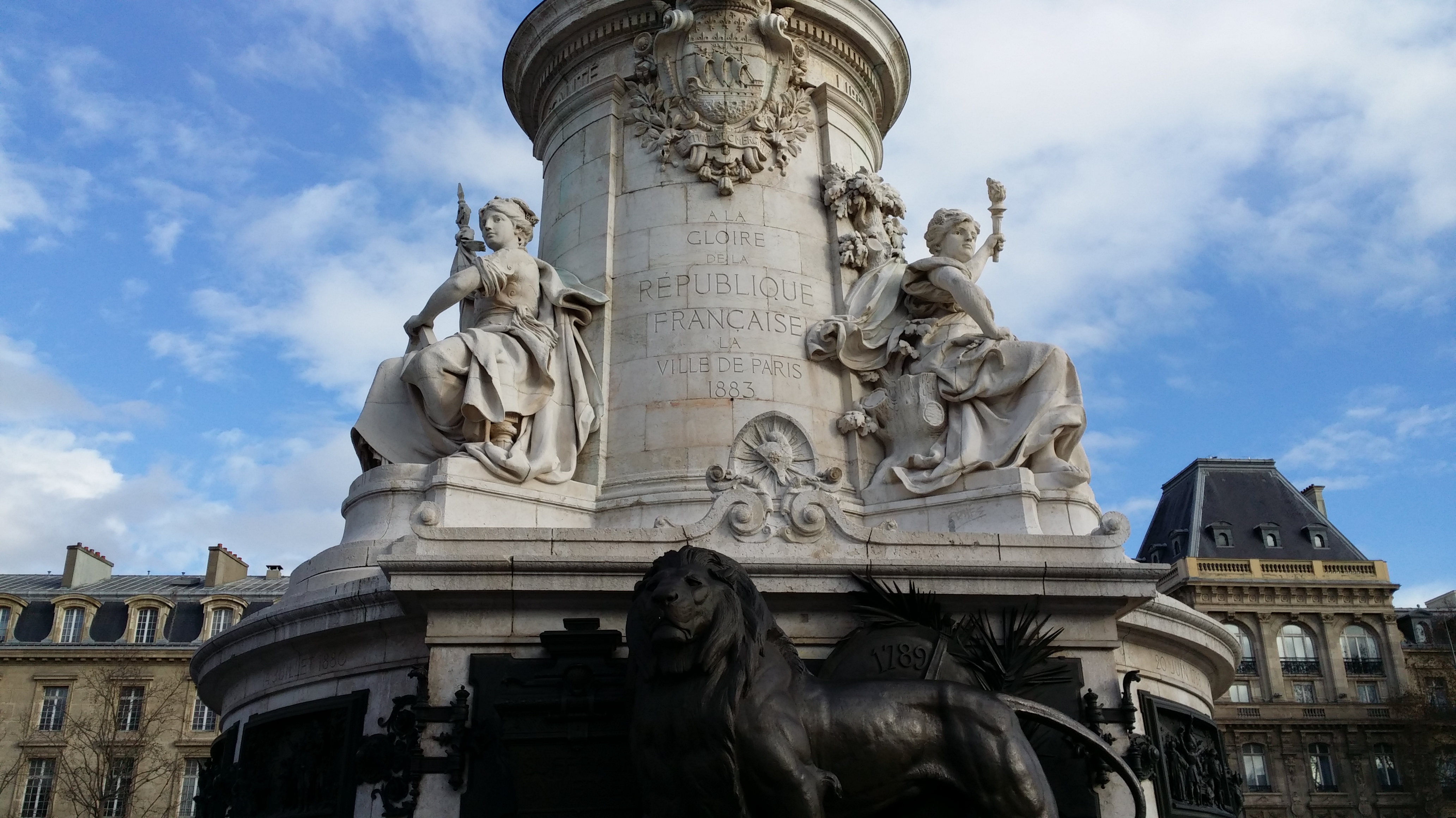
Surrounding Marianne is three more statues, representing liberty, equality, and fraternity.

2014-01-07 11.43.32

At the base is a lion guarding what is said to be a ballot box.