Writing about writing a book – Day 4

Of course, by this time, a lot has changed and what I had discussed before now needs a few changes, so I have made the necessary amendments where required to the narrative, but that doesn’t mean I won’t revisit it sometime in the future.


It was a late night last night, reading and rereading, considering plot lines, new characters, and demolishing a six-pack.

It’s debatable if it is helping the creative process.  It has left me with a slight headache.

I drag myself out of bed and look out the window.  Bright sunshine, blue sky, slight breeze.

11:00 am.  Half the day is gone.

My stomach rumbles, I need something to eat.  I stagger out to the kitchen and look in the fridge.  OK, too busy to go shopping, time to make time.  A writer has to eat!


Three hours have passed and it’s mid-afternoon.  A new plan is required.  I need to make sure I don’t waste the day and write a certain number of words, otherwise, this book will never get written.

Bed: midnight

Rise: 7:00 am, go for a run to clear the head

Breakfast: 8:00 am

Writing: 9:00 am to ??

Let’s just see if that works tomorrow.


I sit down and stare at the pad.

Plotting:  Our main character is an IT department manager, whose main responsibility from the start, and at that time, he was alone and not the manager of anything, was setting up and keeping the network running.  These were the early days of Ethernet, token ring, and 3-Com, in moving from mainframes to desktops and servers.

I remember it well, and my first client/server network was 3-Com and Ethernet.

In the story scenario, Bill literally is indispensable because the job he performs is single point sensitive, even though Benton refuses to act on employing another network engineer.  This is art imitating life because so many places have similar situations.

So the reason why Benton is calling Bill; there is a crisis.

Some accountant is found shot dead at his desk, novel but not unheard of.  I know a few accountants who deserve just that.

That’s not the problem though, it’s the fact the network is down, and Benton is almost hysterical (after he makes a promise to his superiors that he can’t keep!).  Nothing unusual there with the sort of person he is, and like many in similar situations.


Scribble, scribble …


Another five minutes, then the phone began its shrill insistence again.  Before it rang again, I’d moved it from the floor to the bed.  I counted the rings, to ten, and then picked up the receiver.

“Bill?  Don’t hang up.”  Almost pleading.

“Why?  You said I should go, away from work, away from the phones, away to recharge my batteries, I believe you said.”

“That was Friday.  This is Monday. You’re needed.  Richardson has been found shot dead by his desk.  All hell has broken loose!”  Benton rarely used adjectives, so I assumed when he said all hell had broken loose, it meant something had happened he couldn’t fix.  His flowery language and telegram style had momentarily distracted my attention from Richardson’s fate.

Harold Richardson was an accountant, rather stuffy, but good at his job.  I’d spoken to him probably twice in as many years, and he didn’t strike me as the sort who would kill himself.  So why did I think that?  Benton had only said he was shot.

Benton’s voice went up an octave, a sure sign he was going into meltdown.  “It’s a circus down here.  Jennifer is missing, Giles is not in yet, the network is down, and that bunch of nincompoops you call support staff are running around the office like headless chooks.”

It all came out in a nonstop sentence, followed by a gasp for air.  It gave me time to sift the facts.  Jennifer, the Assistant Manager, and responsible for data entry and accounts maintenance, was not there, which in itself was unusual, because she kept longer hours than me, Peter Giles, my youthful assistant, just out of university and still being beaten into shape was also not in, and that was usual, so it could only mean one thing.

The network was down.

It was my responsibility since I’d recommended it and then won the support of management over his objections, and following that it had become a point of continual contention, a petty war neither of us was going to win.

I tried to keep the joy out of my voice. 

He’d also vetoed my recommendation for an extra full-time network engineer as my alternative, and in doing so Benton had made my job become single point sensitive.  There was no one to replace me if anything went wrong.


Richardson has nothing to do with the plot, he just happened to be in the wrong place at the wrong time, but someone else further up the chain of command will be.  That’s something to look forward to, though I’ve yet to decide what happens.

As for Benton, he will linger around for a while, but has no real part to play, except perhaps as the comic light relief.  He will get a rude awakening at the end.

Try not to make it too technical, no one really wants to know about computer systems, just the machinations of the people who are creating the problems and why.


© Charles Heath 2016 – 2020

The fifth attempt, and now it’s a launching pad

I have a stab at improving this starting piece every now and then, a project that started about a year or so ago, and I find myself rewriting the start over and over because I’m not satisfied with the characterization.

It’s not so much the storyline, as it is in trying to create sympathy for the character, and not find him as dull as Ditchwater.  But that takes words, and no one wants to read a biography when they want full-on mayhem.

As writers, we tend to create colourful characters and shy away from those who are dull and boring, because after all, as a reader, you want to become something or someone who is far from ordinary. 

Well, Sam/Graham has a past, and it might catch up with him, but just not in the way he imagined it might. I haven’t quite decided what that past is, but hiding out under witness protection, or just hiding away from a world that he no longer understands is still in the balance.

They say trouble comes when you least expect it.

I can attest to that. It does.

I was at the end of my shift. Another shift, another bright, another 10 hours of my life gone, doing a job that, had you asked me 20 years ago would I be here, I would have said no.

Circumstances and stupidity put me here, and it’s not as if I didn’t deserve it. I was told I had choices, and I did, but I didn’t make the right one.

There are excuses, but that was all they were; excuses.

Jim was like me, and like Joe, and like Mike. My name was Sam. They were easy names to remember, we didn’t need to know much more than that, only that we had each other’s back.

“Usual weekend?” Jim asked.

I was heading towards the kitchen to get my small fridge bag, then out the back door and off home.

“The boat and the lake await.”

“You still expecting to find fish in that swamp?” Mike had been with me one weekend, and nothing took the bait.

After six or so months I was beginning to think the locals were right. There were no fish.

“Miracles can still happen.”

“Yeah, right. You should come hunting with us.”

“Don’t like guns.”

Not any more, anyway. There was a time I was happy to use one, when I had purpose, and there was a reason to use it.

“Then why pick a job that needs one?”

“Chances of having to use it, zero, Mike. If I have to I will, but until then…”

I left it there. We’d had this conversation and it always ended the same way.

I collected the bag, told them I’d see them next Monday, the start of the next shift, and stepped out the back door into the early morning dawn, that period just as the light came.

Silent, fresh, the promise of either a good day or a bad. I wasn’t sure. I glanced over towards the car and it was covered in snow.  The weather was clear now, but I could feel more snow was coming.  A white Christmas?  That’s all I needed. 

As I approached my car, the light went on inside an SUV parked next to my car.  The door opened and what looked to be a woman was getting out of the car.

“Graham?”

That was another thing about the members of my team. Our current first names were not necessarily our real names. It was a voice I was familiar with, though I hadn’t heard it for a long time.

I looked again and was shocked to see my ultra-successful sister, Penelope.  She was leaning against the front side fender, and from what I could see, didn’t look too well.

How on earth did she find me, after all the years that had passed?  Perhaps that sparked my un-conciliatory question, “What do you want?”

I could see the surprise and then the hurt in her expression.  Perhaps I had been a little harsh.  Whatever she felt, it passed and she said, “Help.”

My help?  Help with what? I was the last person who could help her, or anyone for that matter, with anything.   But curiosity got the better of me.  “Why?”

“I think my husband is trying to kill me.”

Then, with that said, she slid down the side of the car, and I could see, in the arc lamps lighting the car park, a trail of blood.

My first thought was she needed the help of a doctor, not a stupid brother, then a second thought, to call 911, which I did, and hoped like hell they got here in time.

And, yes, there was a third thought that crossed my mind.  Whether or not I would be blamed for this event.

So, from the last version to this, I decided we didn’t need a sob story, it’s one that can play out as and when circumstances require an explanation for our main character’s disposition.

And I have this renewed vigour for getting into action as soon as possible, and, as you can imagine a lot more is about to happen, in about three sentences time.

Exactly what that is, you will have to wait…

© Charles Heath 2022-2023

The cinema of my dreams – I always wanted to write a war story – Episode 31

For a story that was conceived during those long boring hours flying in a steel cocoon, striving to keep away the thoughts that the plane and everyone in it could just simply disappear as planes have in the past, it has come a long way.

Whilst I have always had a fascination with what happened during the second world war, not the battles or fighting, but in the more obscure events that took place, I decided to pen my own little sidebar to what was a long and bitter war.

And, so, it continues…

I woke to the sound of a cracking sound behind me, and, when I rolled over, I found myself staring up the barrel of a gun.

The number one rule broken, don’t fall asleep in enemy territory.

But something else bothered me in those few seconds as I struggle to wake up and comprehend what was happening.  Where was Jack?  If he’d been here this would not have happened.

But still bleary-eyed from just waking up and in that initial confused state of not knowing where and when, all I could see was a uniformed shape holding the gun standing over me, and feel, in those few seconds that I was not going to survive this.

I braced myself for a bullet, wondering if death was going to be instantaneous.  I had hoped I might die in a less inglorious manner.

“Sam?  Is that you?”

It was a rather dumb question to be asking an enemy soldier because my mind hadn’t adjusted to the fact the soldier was not in a German uniform, nor in work clothes, but quite possibly the uniform of a soldier from the castle, and if it was, why be asking the question and not just shooting me?

Then, finally, my eyes focussed and I could see clearly who it was, and breathed a sigh of relief.  Whoever it was, knew me but that wasn’t necessarily a good thing.  But in the next second, I saw the gun retract and the man behind it come closer and crouch down beside me.

He was not a soldier from the castle, but a soldier in the familiar British uniform.  From somewhere else entirely.  An Army Captain if I was not mistaken, which, for another second, I also thought was odd.

And then recognition of a face I hadn’t seen in years.

“Blinky?”

OK, so it was a strange nickname, but it was apt, William O’Reilly blinked a lot, hence the nickname.  And Will had been on the same training course as I had three years before, only he had ended up in administration.  Bad eyesight.

“It is you, Sam.”

“What the hell are you doing here?”

I dragged myself up from the ground to sit up.  I did a quick scan around me, but Jack was nowhere to be found.  It was not like him to desert me when trouble arrived.

“Apparently rescuing your sorry ass.  Now that I’m here, I can see why the Colonel said you needed help.”  He held out his hand and pulled me up.

“Forster?  You work for him?”

“No, but he asked for someone who knew you by sight, and I was the only one available.  Besides, I was getting sick of sitting behind a desk while the rest of you were out in the field doing heroic shit.”

I brushed the undergrowth off my uniform and straightened my clothes.  It didn’t make me feel any more comfortable.

“I don’t think falling asleep is very heroic.  When did the orders come through?”

“Yesterday.  A message was sent and received, a rendezvous at an old church.  I came with three others, including a very serious sergeant major who had absolutely no sense of humor.  I saw this farm; thought I’d check it out.”

“You’re lucky you didn’t get your head shot off.”

“By the man-mountain.  Nearly, yes, until I told him who I was.  Said you were up here.  Waiting for something?”

“Then enemy.  We were hoping they turn up so we could deal with them.”

“That would be the traitors up at the castle, or the turncoat resistance members working with them?  Carlo, he told me his name, he reckons it’s not happening.  Said once I found you to come down and we’ll catch up with the others at this church.”

I picked up the weapon and then we headed towards Carlo’s position.

I could see the Colonel’s reasoning.  Send someone I knew who couldn’t be working for the other side.  It worried me that the message from Thompson hadn’t been received, because if it had, Martina would have got someone to tell us.

That she hadn’t concerned me.

© Charles Heath 2020-2023

Mistaken Identity – The Editor’s Draft – Day 24

I have been working on the story, the editor is asking for a second draft after making suggested changes – and I’m now working on it

So, here’s a question.

If your mother and her twin sister are identical twins, how will Jack know that he has rescued the right woman?

We all know how some identical twins like to play tricks on their friends, by substituting each other. It’s a wicked game on the unsuspecting, but for a criminal, it’s a ploy that just might work.

But there’s that other issue we have between the son and the mother, quite a few years of lying and half-truths to get past, and a great deal of explanation.

Perhaps their reuniting is not going to go the way the mother or the son thinks.

Meanwhile, Jack is working on the idea of visiting his real father and trying to get some explanations out of him.

And, where is Maryanne?

Is it a bit late in the day to say that I’m not quite sure how this is going to end because one is not coming to me that will satisfy tying up the loose ends.

I suspect tomorrow will be the day when the last planning will be done. It may cost a day of words, but it will get the story done.

It’s the pointy end of the project and it has to come together.

Doesn’t it?

Today’s effort amounts to 1,786 words, for a total, so far, of 58,087.

More tomorrow.

Searching for locations: Siena, Italy

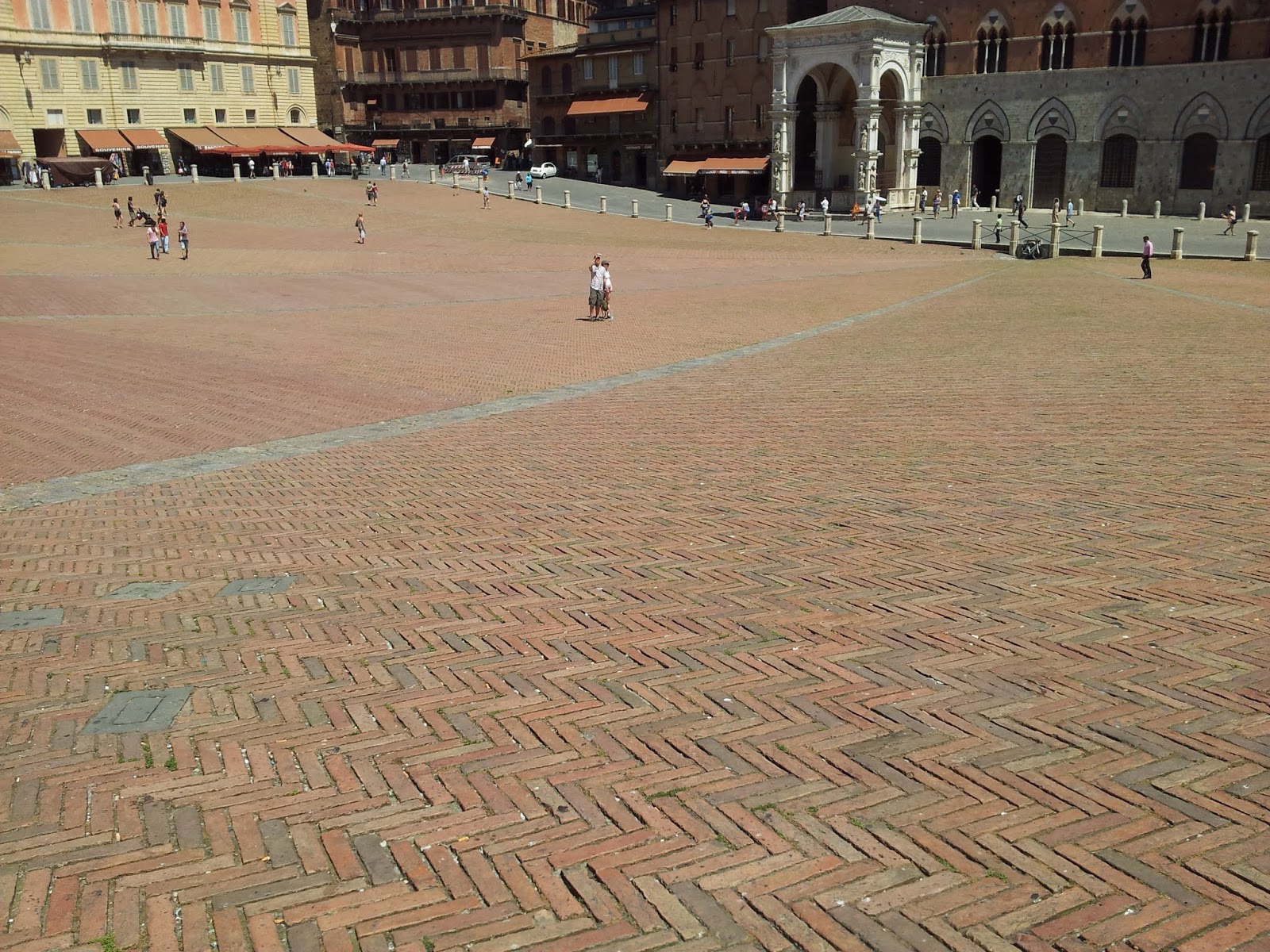
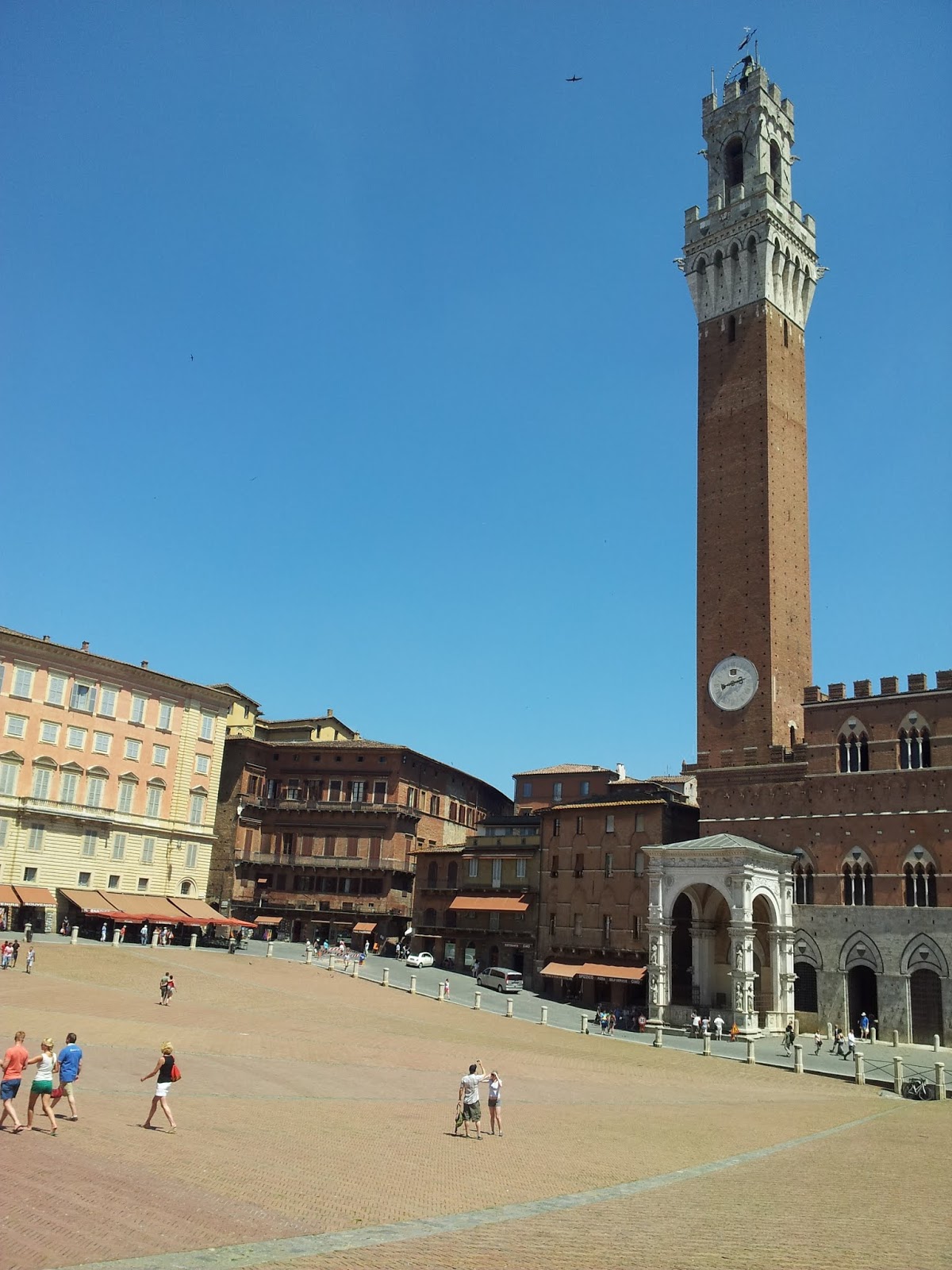
The Piazza del Campo is one of the greatest medieval squares in Europe.

It is shaped like a shell.

This is where the Palazzo Publico and the Torre del Mangia are.

At 102 meters (334 feet), the bell tower is the city’s second tallest structure.

When it was built in 1848 it was the exact same height of the Duomo to show that the state and church had equal amounts of power.

Around the edges of the Piazza are a lot of restaurants, where you can sit in the shade, have a plate of pasta and sip on a cold limonata.

There ain’t no mountain high enough

If only it was as easy to write one line of a song as it is to write a sentence, a paragraph, or a page of a book.  Of course, if you were to ask a songwriter the same question, he or she would probably twist it around, and not without reason.

The bottom line in all scenarios, whether writing a story, writing a song, or writing a letter, at times it feels like it is like climbing a mountain.

It’s why we have waste paper bins, and imaginary shooting practice sessions.  By the way, I don’t get very many scrunched paper balls in.

Curiously, we seem to categorize almost insurmountable problems in terms of climbing mountains.  Of course, I’ve yet to attempt to climb the north face of Mount Everest, but I suspect I’ll have to do a lot of practice to do so.

Maybe that’s what I need to do as a writer.  Practice, not climbing mountains.

Mountains have always been part of the metaphor for overcoming obstacles.  So, metaphorically, to overcome this ‘obstacle’, we can choose to climb over it, blow it up, or tunnel through it.

But the salient point is the same in all cases, obstacles, metaphorical or not, are not insurmountable, they just need time to find a solution.

So, in my case, there are two items to note when it comes to mountains, the first, I prefer to go through a tunnel, and the second, there’s not a mountain I’ve been up that hasn’t had a magnificent view.  Of course, getting to the top has been easy, I just hopped on the tram or the gondola.

After all, isn’t that what they’re there for?

Ok, flippancy aside, I have had to climb a few mountains of my own over the years, and, yes, it’s hard work, and, at times, I’ve wanted to give up.

But, not today.  Today is a good day.

And as the title says, ‘There ain’t no mountain high enough!’


The cinema of my dreams – Was it just another surveillance job – Episode 10

I’m back home and this story has been sitting on a back burner for a few months, waiting for some more to be written.

The trouble is, there are also other stories to write, and I’m not very good at prioritising.

But, here we are, a few minutes opened up and it didn’t take long to get back into the groove.

An interrogation continues


“So, take it from the top, give me a detailed rundown on the operation, from the briefing to coming here.”

That was an interesting request.  My usual report would not go into so much detail, and I had been compiling it on the go because if left until the end, crucial details were always omitted.

And, with the explosion, a lot of details had been mislaid in my mind, with more important or over-arching problems, getting a more prominent place in my memory.  It was a valuable lesson learned on reporting, we’d received from a man who most of my classmates thought odd, to the point of paranoid.

“I received the text message the night before to report to the midtown office for the briefing.  The code word was Chancellor and it was recognised at the security station.  If it was bogus I would not have made it in the building.”

“You go there for all your briefings?”

“Yes.”

“Same team?”

“For the previous five, yes.  This last one, a different team.  “One of us asked what happened to the previous team and we were told that it was none of our business.  We were given orders and sent out into the field to do a job.  That job, we were reminded, was not to ask irrelevant questions.”

“The leader told you that?”

“In no uncertain terms.”

“Go on.”

“We were given a photograph of the man that I have just given to you.  No mention was made of what he had done to warrant surveillance, only that we were to not lose him and to note everything he did.

“We were told where he might be found at a particular time, and a particular place, information that was correct.”

“Your team members?”

“Fiona Davis, Jack Venables, Walter Arbon, and me.”

“I take it you had the target under surveillance, ready to hand off to the next team member?”

“Before the explosion, yes, it was my leg.”

“You’re referring to the explosion in Church Street?”

“Yes.  I’d just past it when there was an explosion, and I was caught in the aftermath, and narrowly avoided the shrapnel raining down.  Others were not so lucky.”

“That’s where you lost him?”

“He was in front of me, thus avoiding the fallout.  It took a minute or so to get my bearings, and even then it was very hazy with the dust and carnage around me, but I did manage to see him in the distance heading towards the next person’s tag point.”

“You didn’t resume surveillance?”

“Couldn’t.  Too disoriented.  I put out an alert on the comms, but no one answered, not straight away.”

“You didn’t suspect anything?”

“Not then.,  I put it down to a malfunction from the blast.”

“You said ‘not straight away’?”

“About five minutes had passed when a voice came in my ear, asking for an update.  I didn’t think much about it at the time, because of the temporary disorientation, but it was about the time for the next team to take over.  There were two rolling teams of four.”

“Why did you think it odd?”

“Because they would know about the explosion.  Everyone within a mile radius would.  But at the time I simply said I was caught up in the aftermath and that the target was last seen heading towards the takeover point.  Then I was told the target was sighted.”

“I assume you then considered your role had ended?”

“Yes.  I’d been told to follow the advice of the medical staff on site.”

“Which was?”

“Go to the hospital for a check-up.”

“But you didn’t.”

“No.  I was heading away from the blast site when I saw the target again.  I stopped, watched, got out of sight, and waited.  He was coming back in my direction.”

“Was that an expected scenario, that he might backtrack?”

“No.  In the briefing we were told it was possible he would be moving from the point where we found him, to another for a clandestine meeting, away from the blast site.”

What did you do then?”

“Checked the position of the next member of the surveillance team. C I found him, and he was dead.  I made an assumption that the other two may have suffered a similar fate, and resumed surveillance on the target.”

“Did you report it?”

“Over the comms, yes.”

“What happened?”

“Nothing, no one answered.”

“Not even the director?”

“No.”

She made a note, crossed it out and wrote another with an underline.  A thick black line repeatedly, expressing her anger.

“You maintained surveillance?”

“Yes.”

“Until?”

“I’d cornered him in an alley, near a railway station.  I suspected he might head for it.  He’s seen me, and nearly dispatched me in the same manner as the others.  Luckily it was only a scratch.”

It was more than that and required 12 stitches but they didn’t need to know that.

“Then, Severin arrived, and out of nowhere, he was shot dead.”

“Did you speak to him?”

“Only to ask what he had done with the other members of my team.  He never answered.”

“Did you report that you’d caught him?”

“No.  Didn’t have to.  Severin arrived just after I had.”

“And that’s all of it?”

“In my report.  Yes.  When I get to write it, but I’ll need my phone.  It has the relevant details, except for the last part where I’d found him.”

“No name?”

“No.”

“You didn’t know he was one of ours?”

“No.  That fact only came to my attention when he told me.  When you’re given a target, you don’t ask what the relevance is, or what he’s done.  I’m sure you’re fully aware of the current practices and procedures.”

That last sentence slipped out, and by the look on her face, wasn’t well received.  I’d forgotten the golden rule.  Stick to the facts.  No embellishment, no emotion.

She made another note, closed the book, and got up.  “I’d like you to stay, just for the time being while we sort through the details.”

Then she left.


© Charles Heath 2019

An excerpt from “Mistaken Identity” – a work in progress

The odds of any one of us having a doppelganger are quite high. Whether or not you got to meet him or her, or be confronted by them was significantly lower. Except of course, unless you are a celebrity.

It was a phenomenon remarkable only for the fact, at times, certain high-profile people, notorious or not, had doubles if only to put off enemies or the general public. Sometimes we see people in the street, people who look like someone we knew, and made the mistake of approaching them like a long lost friend, only to discover an embarrassed individual desperately trying to get away for what they perceive is a stalker or worse.

And then sometimes it is a picture that looms up on a TV screen, an almost exact likeness of you. At first, you are fascinated, and then according to the circumstances, and narrative that is attached to that picture, either flattered or horrified.

For me one turned to the other when I saw an almost likeness of me flash up on the screen when I turned the TV on in my room. What looked to be my photo, with only minor differences, was in the corner of the screen, the newsreader speaking in rapid Italian, so fast I could only translate every second or third word.

But the one word I did recognize was murder. The photo of the man up on the screen was the subject of an extensive manhunt. The crime, the murder of a woman in the very same hotel I was staying, and it was being played out live several floors above me. The gist of the story, the woman had been seen with, and staying with the man who was my double, and, less than an hour ago, the body had been discovered by a chambermaid.

The killer, the announcer said, was believed to be still in the hotel because the woman had died shortly before she had been discovered.

I watched, at first fascinated at what I was seeing. I guess I should have been horrified, but at that moment it didn’t register that I might be mistaken for that man.

Not until another five minutes had passed, and I was watching the police in full riot gear, with a camera crew following behind, coming up a passage towards a room. Live action of the arrest of the suspected killer the breathless commentator said.

Then, suddenly, there was a pounding on the door. On the TV screen, plain to see, was the number of my room.
I looked through the peephole and saw an army of police officers. It didn’t take much to realize what had happened. The hotel staff identified me as the man in the photograph on the TV and called the police.

Horrified wasn’t what I was feeling right then.

It was fear.

My last memory was the door crashing open, the wood splintering, and men rushing into the room, screaming at me, waving guns, and when I put my hands up to defend myself, I heard a gunshot.

And in one very confused and probably near-death experience, I thought I saw my mother and thought what was she doing in Rome?

I was the archetypal nobody.

I lived in a small flat, I drove a nondescript car, had an average job in a low profile travel agency, was single, and currently not involved in a relationship, no children, and according to my workmates, no life.

They were wrong. I was one of those people who preferred their own company, I had a cat, and travelled whenever I could. And I did have a ‘thing’ for Rosalie, one of the reasons why I stayed at the travel agency. I didn’t expect anything to come of it, but one could always hope.

I was both pleased and excited to be going to the conference. It was my first, and the glimpse I had seen of it had whetted my appetite for more information about the nuances of my profession.

Some would say that a travel agent wasn’t much of a job, but to me, it was every bit as demanding as being an accountant or a lawyer. You were providing a customer with a service, and arguably more people needed a travel agent than a lawyer. At least that was what I told myself, as I watched more and more people start using the internet, and our relevance slowly dissipating.

This conference was about countering that trend.

The trip over had been uneventful. I was met at the airport and taken to the hotel where the conference was being held with a number of other delegates who had arrived on the same plane. I had mingled with a number of other delegates at the pre conference get together, including one whose name was Maryanne.

She was an unusual young woman, not the sort that I usually met, because she was the one who was usually surrounded by all the boys, the life of the party. In normal circumstances, I would not have introduced myself to her, but she had approached me. Why did I think that may have been significant? All of this ran through my mind, culminating in the last event on the highlight reel, the door bursting open, men rushing into my room, and then one of the policemen opened fire.

I replayed that last scene again, trying to see the face of my assailant, but it was just a sea of men in battle dress, bullet proof vests and helmets, accompanied by screaming and yelling, some of which I identified as “Get on the floor”.

Then came the shot.

Why ask me to get on the floor if all they were going to do was shoot me. I was putting my hands up at the time, in surrender, not reaching for a weapon.

Then I saw the face again, hovering in the background like a ghost. My mother. Only the hair was different, and her clothes, and then the image was going, perhaps a figment of my imagination brought on by pain killing drugs. I tried to imagine the scene again, but this time it played out, without the image of my mother.

I opened my eyes took stock of my surroundings. What I felt in that exact moment couldn’t be described. I should most likely be dead, the result of a gunshot wound. I guess I should be thankful the shooter hadn’t aimed at anything vital, but that was the only item on the plus side.

I was in a hospital room with a policeman by the door. He was reading a newspaper, and sitting uncomfortably on a small chair. He gave me a quick glance when he heard me move slightly, but didn’t acknowledge me with either a nod, or a greeting, just went back to the paper.

If I still had a police guard, then I was still considered a suspect. What was interesting was that I was not handcuffed to the bed. Perhaps that only happened in TV shows. Or maybe they knew I couldn’t run because my injuries were too serious. Or the guard would shoot me long before my feet hit the floor. I knew the police well enough now to know they would shoot first and ask questions later.

On the physical side, I had a large bandage over the top left corner of my chest, extending over my shoulder. A little poking and prodding determined the bullet had hit somewhere between the top of my rib cage and my shoulder. Nothing vital there, but my arm might be somewhat useless for a while, depending on what the bullet hit on the way in, or through.

It didn’t feel like there were any broken or damaged bones.

That was the good news.

On the other side of the ledger, my mental state, there was only one word that could describe it. Terrified. I was looking at a murder charge and jail time, a lot of it. Murder usually had a long time in jail attached to it.

Whatever had happened, I didn’t do it. I know I didn’t do it, but I had to try and explain this to people who had already made up their minds. I searched my mind for evidence. It was there, but in the confused state brought on by the medication, all I could think about was jail, and the sort of company I was going to have.

I think death would have been preferable.

Half an hour later, maybe longer, I was drifting in an out of consciousness, a nurse, or what I thought was a nurse, came into the room. The guard stood, checked her ID card, and then stood by the door.

She came over and stood beside the bed. “How are you?” she asked, first in Italian, and when I pretended I didn’t understand, she asked the same question in accented English.

“Alive, I guess,” I said. “No one has come and told what my condition is yet. You are my first visitor. Can you tell me?”

“Of course. You are very lucky to be alive. You will be fine and make a full recovery. The doctors here are excellent at their work.”

“What happens now?”

“I check you, and then you have a another visitor. He is from the British Embassy I think. But he will have to wait until I have finished my examination.”

I realized then she was a doctor, not a nurse.

My second visitor was a man, dressed in a suit the sort of which I associated with the British Civil Service.  He was not very old which told me he was probably a recent graduate on his first posting, the junior officer who drew the short straw.

The guard checked his ID but again did not leave the room, sitting back down and going back to his newspaper.

My visitor introduced himself as Alex Jordan from the British Embassy in Rome and that he had been asked by the Ambassador to sort out what he labelled a tricky mess.

For starters, it was good to see that someone cared about what happened to me.  But, equally, I knew the mantra, get into trouble overseas, and there is not much we can do to help you.  So, after that lengthy introduction, I had to wonder why he was here.

I said, “They think I am an international criminal by the name of Jacob Westerbury, whose picture looks just like me, and apparently for them it is an open and shut case.”  I could still hear the fragments of the yelling as the police burst through the door, at the same time telling me to get on the floor with my hands over my head.

“It’s not.  They know they’ve got the wrong man, which is why I’m here.  There is the issue of what had been described as excessive force, and the fact you were shot had made it an all-round embarrassment for them.”

“Then why are you here?  Shouldn’t they be here apologizing?”

“That is why you have another visitor.  I only took precedence because I insisted I speak with you first.  I have come, basically to ask you for a favour.  This situation has afforded us with an opportunity.  We would like you to sign the official document which basically indemnifies them against any legal proceedings.”

Curious.  What sort of opportunity was he talking about?  Was this a matter than could get difficult and I could be charged by the Italian Government, even if I wasn’t guilty, or was it one of those hush hush type deals, you do this for us, we’ll help you out with that.  “What sort of opportunity?”

“We want to get our hands on Jacob Westerbury as much as they do.  They’ve made a mistake, and we’d like to use that to get custody of him if or when he is arrested in this country.  I’m sure you would also like this man brought into custody as soon as possible so you will stop being confused with him.  I can only imagine what it was like to be arrested in the manner you were.  And I would not blame you if you wanted to get some compensation for what they’ve done.  But.  There are bigger issues in play here, and you would be doing this for your country.”

I wondered what would happen if I didn’t agree to his proposal.  I had to ask, “What if I don’t?”

His expression didn’t change.  “I’m sure you are a sensible man Mr Pargeter, who is more than willing to help his country whenever he can.  They have agreed to take care of all your hospital expenses, and refund the cost of the Conference, and travel.  I’m sure I could also get them to pay for a few days at Capri, or Sorrento if you like, before you go home.  What do you say?”

There was only one thing I could say.  Wasn’t it treason if you went against your country’s wishes?

“I’m not an unreasonable man, Alex.  Go do your deal, and I’ll sign the papers.”

“Good man.”

After Alex left, the doctor came back to announce the arrival of a woman, by the way she had announced herself, the publicity officer from the Italian police. When she came into the room, she was not dressed in a uniform.

The doctor left after giving a brief report to the civilian at the door. I understood the gist of it, “The patient has recovered excellently and the wounds are healing as expected. There is no cause for concern.”

That was a relief.

While the doctor was speaking to the civilian, I speculated on who she might be. She was young, not more than thirty, conservatively dressed so an official of some kind, but not necessarily with the police. Did they have prosecutors? I was unfamiliar with the Italian legal system.

She had long wavy black hair and the sort of sultry looks of an Italian movie star, and her presence made me more curious than fearful though I couldn’t say why.

The woman then spoke to the guard, and he reluctantly got up and left the room, closing the door behind him.
She checked the door, and then came back towards me, standing at the end of the bed. Now alone, she said, “A few questions before we begin.” Her English was only slightly accented. “Your name is Jack Pargeter?”

I nodded. “Yes.”

“You are in Rome to attend the Travel Agents Conference at the Hilton Hotel?”

“Yes.”

“You attended a preconference introduction on the evening of the 25th, after arriving from London at approximately 4:25 pm.”

“About that time, yes. I know it was about five when the bus came to collect me, and several others, to take us to the hotel.”

She smiled. It was then I noticed she was reading from a small notepad.

“It was ten past five to be precise. The driver had been held up in traffic. We have a number of witnesses who saw you on the plane, on the bus, at the hotel, and with the aid of closed circuit TV we have established you are not the criminal Jacob Westerbury.”

She put her note book back in her bag and then said, “My name is Vicenza Andretti and I am with the prosecutor’s office. I am here to formally apologize for the situation that can only be described as a case of mistaken identity. I assure you it is not the habit of our police officers to shoot people unless they have a very strong reason for doing so. I understand that in the confusion of the arrest one of our officers accidentally discharged his weapon. We are undergoing a very thorough investigation into the circumstances of this event.”

I was not sure why, but between the time I had spoken to the embassy official and now, something about letting them off so easily was bugging me. I could see why they had sent her. It would be difficult to be angry or annoyed with her.

But I was annoyed.

“Do you often send a whole squad of trigger happy riot police to arrest a single man?” It came out harsher than I intended.

“My men believed they were dealing with a dangerous criminal.”

“Do I look like a dangerous criminal?” And then I realized if it was mistaken identity, the answer would be yes.

She saw the look on my face, and said quietly, “I think you know the answer to that question, Mr. Pargeter.”

“Well, it was overkill.”

“As I said, we are very sorry for the circumstances you now find yourself in. You must understand that we honestly believed we were dealing with an armed and dangerous murderer, and we were acting within our mandate. My department will cover your medical expenses, and any other amounts for the inconvenience this has caused you. I believe you were attending a conference at your hotel. I am very sorry but given the medical circumstances you have, you will have to remain here for a few more days.”

“I guess, then, I should thank you for not killing me.”

Her expression told me that was not the best thing I could have said in the circumstances.

“I mean, I should thank you for the hospital and the care. But a question or two of my own. May I?”

She nodded.

“Did you catch this Jacob Westerbury character?”

“No. In the confusion created by your arrest he escaped. Once we realized we had made a mistake and reviewed the close circuit TV, we tracked him leaving by a rear exit.”

“Are you sure it was one of your men who shot me?”

I watched as her expression changed, to one of surprise.

“You don’t think it was one of my men?”

“Oddly enough no. But don’t ask me why.”

“It is very interesting that you should say that, because in our initial investigation, it appeared none of our officer’s weapons had been discharged. A forensic investigation into the bullet tells us it was one that is used in our weapons, but…”

I could see their dilemma.

“Have you any enemies that would want to shoot you Mr Pargeter?”

That was absurd because I had no enemies, at least none that I knew of, much less anyone who would want me dead.

“Not that I’m aware of.”

“Then it is strange, and will perhaps remain a mystery. I will let you know if anything more is revealed in our investigation.”

She took an envelope out of her briefcase and opened it, pulling out several sheets of paper.

I knew what it was. A verbal apology was one thing, but a signed waiver would cover them legally. They had sent a pretty girl to charm me. Perhaps using anyone else it would not have worked. There was potential for a huge litigation payout here, and someone more ruthless would jump at the chance of making a few million out of the Italian Government.

“We need a signature on this document,” she said.

“Absolving you of any wrong doing?”

“I have apologized. We will take whatever measures are required for your comfort after this event. We are accepting responsibility for our actions, and are being reasonable.”

They were. I took the pen from her and signed the documents.

“You couldn’t add dinner with you on that list of benefits?” No harm in asking.

“I am unfortunately unavailable.”

I smiled. “It wasn’t a request for a date, just dinner. You can tell me about Rome, as only a resident can. Please.”

She looked me up and down, searching for the ulterior motive. When she couldn’t find one, she said, “We shall see once the hospital discharges you in a few days.”

“Then I’ll pencil you in?”

She looked at me quizzically. “What is this pencil me in?”

“It’s an English colloquialism. It means maybe. As when you write something in pencil, it is easy to erase it.”

A momentary frown, then recognition and a smile. “I shall remember that. Thank-you for your time and co-operation Mr. Pargeter. Good morning.”

© Charles Heath 2015-2021

Searching for locations: Windsor Castle, London, England

A fine day, on this trip a rarity, we decided to take the train to Windsor and see the castle.

This is a real castle, and still in one piece, unlike a lot of castles.

Were we hoping to see the Queen, no, it was highly unlikely.

But there were a lot of planes flying overhead into Heathrow.  The wind must have been blowing the wrong day, and I’m sure, with one passing over every few minutes, it must annoy the Queen if she was looking for peace and quiet.

Good thing then, when it was built, it was an ideal spot, and not under the landing path.  I guess it was hard to predict what would happen 500 years in the future!

2013-06-30 12.09.56

I’m not sure if this was the front gate or back gate, but I was wary of any stray arrows coming out of those slits either side of the entrance.

You just never know!

2013-06-30 13.58.11

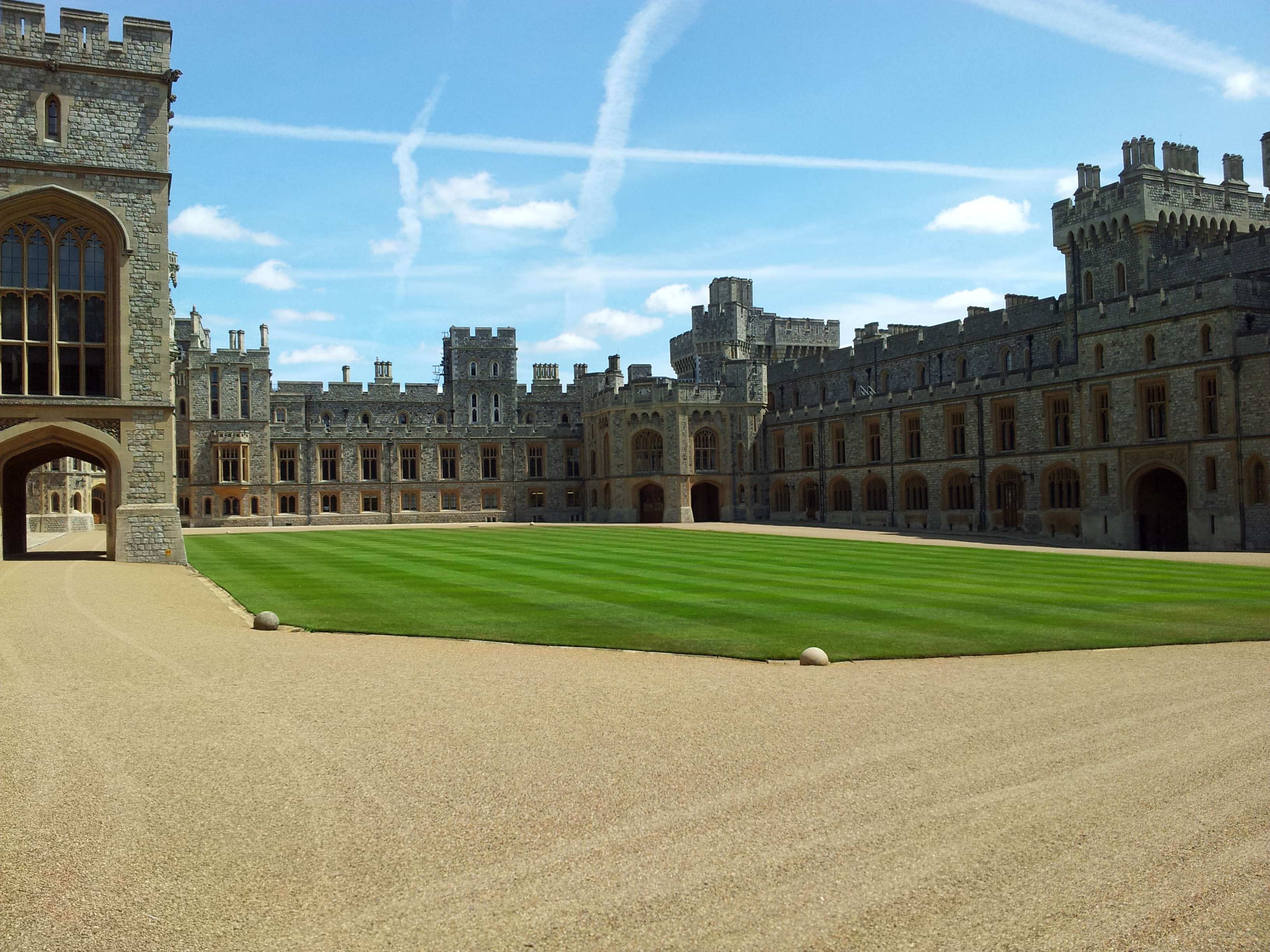
An excellent lawn for croquet.  This, I think, is the doorway, on the left, where dignitaries arrive by car.  The private apartments are across the back.

2013-06-30 13.58.00

The visitor’s apartments.  Not sure who that is on the horse.

2013-06-30 14.07.25

St George’s Chapel.  It’s a magnificent church for a private castle.  It’s been very busy the last few months with Royal weddings.

2013-06-30 12.12.29

The Round Tower, or the Keep.  It is the castle’s centerpiece.  Below it is the gardens.

2013-06-30 13.59.57

Those stairs are not for the faint-hearted, nor the Queen I suspect.  But I think quite a few royal children and their friends have been up and down them a few times.

2013-06-30 12.13.04

And well worth the effort to reach the bottom.

2013-06-30 14.00.40

Any faces peering out through the windows?

Coming soon – “Strangers We’ve Become”, the sequel to “What Sets Us Apart”

Stranger’s We’ve Become, a sequel to What Sets Us Apart.

The blurb:

Is she or isn’t she, that is the question!

Susan has returned to David, but he is having difficulty dealing with the changes. Her time in captivity has changed her markedly, so much so that David decides to give her some time and space to re-adjust back into normal life.

But doubts about whether he chose the real Susan remain.

In the meantime, David has to deal with Susan’s new security chief, the discovery of her rebuilding a palace in Russia, evidence of an affair, and several attempts on his life. And, once again, David is drawn into another of Predergast’s games, one that could ultimately prove fatal.

From being reunited with the enigmatic Alisha, a strange visit to Susan’s country estate, to Russia and back, to a rescue mission in Nigeria, David soon discovers those whom he thought he could trust each has their own agenda, one that apparently doesn’t include him.

The Cover:

strangerscover9

Coming soon