An excerpt from “The Things We Do For Love”; In love, Henry was all at sea!

In the distance he could hear the dinner bell ringing and roused himself.  Feeling the dampness of the pillow, and fearing the ravages of pent up emotion, he considered not going down but thought it best not to upset Mrs. Mac, especially after he said he would be dining.

In the event, he wished he had reneged, especially when he discovered he was not the only guest staying at the hotel.

Whilst he’d been reminiscing, another guest, a young lady, had arrived.  He’d heard her and Mrs. Mac coming up the stairs, and then shown to a room on the same floor, perhaps at the other end of the passage.

Henry caught his first glimpse of her when she appeared at the door to the dining room, waiting for Mrs. Mac to show her to a table.

She was about mid-twenties, slim, long brown hair, and the grace and elegance of a woman associated with countless fashion magazines.  She was, he thought, stunningly beautiful with not a hair out of place, and make-up flawlessly applied.  Her clothes were black, simple, elegant, and expensive, the sort an heiress or wife of a millionaire might condescend to wear to a lesser occasion than dinner.

Then there was her expression; cold, forbidding, almost frightening in its intensity.  And her eyes, piercingly blue and yet laced with pain.  Dracula’s daughter was his immediate description of her.

All in all, he considered, the only thing they had in common was, like him, she seemed totally out of place.

Mrs. Mac came out of the kitchen, wiping her hands on her apron.  She was, she informed him earlier, chef, waitress, hotelier, barmaid, and cleaner all rolled into one.  Coming up to the new arrival she said, “Ah, Miss Andrews, I’m glad you decided to have dinner.  Would you like to sit with Mr. Henshaw, or would you like to have a table of your own?”

Henry could feel her icy stare as she sized up his appeal as a dining companion, making the hair on the back on his neck stand up.  He purposely didn’t look back.  In his estimation, his appeal rating was minus six.  Out of a thousand!

“If Mr. Henshaw doesn’t mind….”  She looked at him, leaving the query in mid-air.

He didn’t mind and said so.  Perhaps he’d underestimated his rating.

“Good.”  Mrs. Mac promptly ushered her over.  Henry stood, made sure she was seated properly and sat.

“Thank you.  You are most kind.”  The way she said it suggested snobbish overtones.

“I try to be when I can.”  It was supposed to nullify her sarcastic tone but made him sound a little silly, and when she gave him another of her icy glares, he regretted it.

Mrs. Mac quickly intervened, asking, “Would you care for the soup?”

They did, and, after writing the order on her pad, she gave them each a look, imperceptibly shook her head, and returned to the kitchen.

Before Michelle spoke to him again, she had another quick look at him, trying to fathom who and what he might be.  There was something about him.

His eyes, they mirrored the same sadness she felt, and, yes, there was something else, that it looked like he had been crying?  There was a tinge of redness.

Perhaps, she thought, he was here for the same reason she was.

No.  That wasn’t possible.

Then she said, without thinking, “Do you have any particular reason for coming here?”  Seconds later she realized she’s spoken it out loud, had hadn’t meant to actually ask, it just came out.

It took him by surprise, obviously not the first question he was expecting her to ask of him.

“No, other than it is as far from civilization, and home, as I could get.”

At least we agree on that, she thought.

It was obvious he was running away from something as well.

Given the isolation of the village and lack of geographic hospitality, it was, from her point of view, ideal.  All she had to do was avoid him, and that wouldn’t be difficult.

After getting through this evening first.

“Yes,” she agreed.  “It is that.”

A few seconds passed, and she thought she could feel his eyes on her and wasn’t going to look up.

Until he asked, “What’s your reason?”

Slight abrupt in manner, perhaps as a result of her question, and the manner in which she asked it.

She looked up.  “Rest.  And have some time to myself.”

She hoped he would notice the emphasis she had placed on the word ‘herself’ and take due note.  No doubt, she thought,  she had completely different ideas of what constituted a holiday than he, not that she had actually said she was here for a holiday.

Mrs. Mac arrived at a fortuitous moment to save them from further conversation.

Over the entree, she wondered if she had made a mistake coming to the hotel.  Of course, there had been no possible way she could know than anyone else might have booked the same hotel, but realized it was foolish to think she might end up in it by herself.

Was that what she was expecting?

Not a mistake then, but an unfortunate set of circumstances, which could be overcome by being sensible.

Yet, there he was, and it made her curious, not that he was a man, by himself, in the middle of nowhere, hiding like she was, but for very different reasons.

On discreet observance whilst they ate, she gained the impression his air of light-heartedness was forced and he had no sense of humor.

This feeling was engendered by his looks, unruly dark hair, and permanent frown.  And then there was his abysmal taste in clothes on a tall, lanky frame.  They were quality but totally unsuited to the wearer.

Rebellion was written all over him.

The only other thought crossing her mind, and rather incongruously, was he could do with a decent feed.  In that respect, she knew now from the mountain of food in front of her, he had come to the right place.

“Mr. Henshaw?”

He looked up.  “Henshaw is too formal.  Henry sounds much better,” he said, with a slight hint of gruffness.

“Then my name is Michelle.”

Mrs. Mac came in to take their order for the only main course, gather up the entree dishes, then return to the kitchen.

“Staying long?” she asked.

“About three weeks.  Yourself?”

“About the same.”

The conversation dried up.

Neither looked at the other, rather at the walls, out the window, towards the kitchen, anywhere.  It was, she thought, almost unbearably awkward.

Mrs. Mac returned with a large tray with dishes on it, setting it down on the table next to theirs.

“Not as good as the usual cook,” she said, serving up the dinner expertly, “but it comes a good second, even if I do say so myself.  Care for some wine?”

Henry looked at Michelle.  “What do you think?”

“I’m used to my dining companions making the decision.”

You would, he thought.  He couldn’t help but notice the cutting edge of her tone.  Then, to Mrs. Mac, he named a particular White Burgundy he liked and she bustled off.

“I hope you like it,” he said, acknowledging her previous comment with a smile that had nothing to do with humor.

“Yes, so do I.”

Both made a start on the main course, a concoction of chicken and vegetables that were delicious, Henry thought, when compared to the bland food he received at home and sometimes aboard my ship.

It was five minutes before Mrs. Mac returned with the bottle and two glasses.  After opening it and pouring the drinks, she left them alone again.

Henry resumed the conversation.  “How did you arrive?  I came by train.”

“By car.”

“Did you drive yourself?”

And he thought, a few seconds later, that was a silly question, otherwise she would not be alone, and certainly not sitting at this table. With him.

“After a fashion.”

He could see that she was formulating a retort in her mind, then changed it, instead, smiling for the first time, and it served to lighten the atmosphere.

And in doing so, it showed him she had another more pleasant side despite the fact she was trying not to look happy.

“My father reckons I’m just another of ‘those’ women drivers,” she added.

“Whatever for?”

“The first and only time he came with me I had an accident.  I ran up the back of another car.  Of course, it didn’t matter to him the other driver was driving like a startled rabbit.”

“It doesn’t help,” he agreed.

“Do you drive?”

“Mostly people up the wall.”  His attempt at humor failed.  “Actually,” he added quickly, “I’ve got a very old Morris that manages to get me where I’m going.”

The apple pie and cream for dessert came and went and the rapport between them improved as the wine disappeared and the coffee came.  Both had found, after getting to know each other better, their first impressions were not necessarily correct.

“Enjoy the food?” Mrs. Mac asked, suddenly reappearing.

“Beautifully cooked and delicious to eat,” Michelle said, and Henry endorsed her remarks.

“Ah, it does my heart good to hear such genuine compliments,” she said, smiling.  She collected the last of the dishes and disappeared yet again.

“What do you do for a living,” Michelle asked in an off-hand manner.

He had a feeling she was not particularly interested and it was just making conversation.

“I’m a purser.”

“A what?”

“A purser.  I work on a ship doing the paperwork, that sort of thing.”

“I see.”

“And you?”

“I was a model.”

“Was?”

“Until I had an accident, a rather bad one.”

“Oh, I’m sorry.”

So that explained the odd feeling he had about her.

As the evening had worn on, he began to think there might be something wrong, seriously wrong with her because she didn’t look too well.  Even the carefully applied makeup, from close up, didn’t hide the very pale, and tired look, or the sunken, dark ringed eyes.

“I try not to think about it, but it doesn’t necessarily work.  I’ve come here for peace and quiet, away from doctors and parents.”

“Then you will not have to worry about me annoying you.  I’m one of those fall-asleep-reading-a-book types.”

Perhaps it would be like ships passing in the night and then smiled to himself about the analogy.

Dinner now over, they separated.

Henry went back to the lounge to read a few pages of his book before going to bed, and Michelle went up to her room to retire for the night.

But try as he might, he was unable to read, his mind dwelling on the unusual, yet the compellingly mysterious person he would be sharing the hotel with.

Overlaying that original blurred image of her standing in the doorway was another of her haunting expressions that had, he finally conceded, taken his breath away, and a look that had sent more than one tingle down his spine.

She may not have thought much of him, but she had certainly made an impression on him.

© Charles Heath 2015-2020
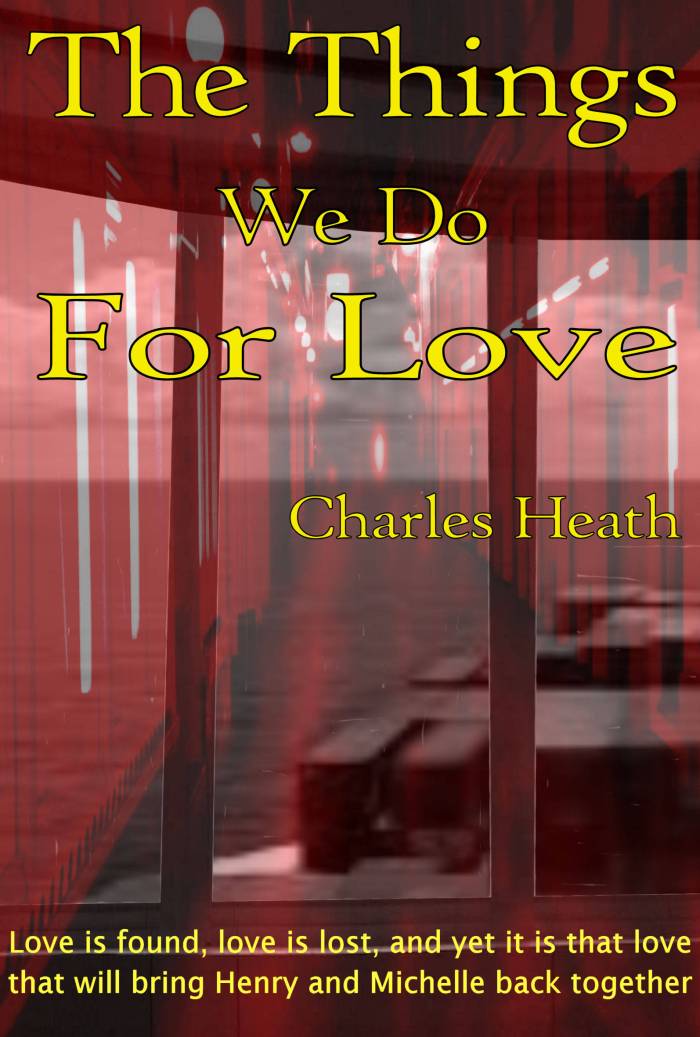
lovecoverfinal1

In a word: state

I think it’s stating the obvious, we are expressing something definitively and clearly.  I stated my case, but it was not good enough to save me from the hangman’s noose.

Or, they stated their case, but with an unforgiving government, it didn’t save them from being deported.

Or maybe not, maybe a state is a territory or nation under one government, though sometimes we might think that governance is not all that great

But it could also mean a subdivision within a single country, like the 52 states of the US, and the 5 states in Australia

And woe betide you if you become a state-less person, it means living in the international transit lounge for the rest of your life.

Or it might be how I feel at the time, you know, I’m not in a fit state of mind to be writing this post, or that I might be agitated, with someone else saying ‘he’s in a state’, or having said something quite odd, it might be said that my state of mind is clouded by grief.

If I was an important person, such as a king or prince, and had the unfortunate luck of dying, I could lie in state, though I could never understand why you’d want to hang around after you died.


“One Last Look”, nothing is what it seems

A single event can have enormous consequences.

A single event driven by fate, after Ben told his wife Charlotte he would be late home one night, he left early, and by chance discovers his wife having dinner in their favourite restaurant with another man.

A single event where it could be said Ben was in the wrong place at the wrong time.

Who was this man? Why was she having dinner with him?

A simple truth to explain the single event was all Ben required. Instead, Charlotte told him a lie.

A single event that forces Ben to question everything he thought he knew about his wife, and the people who are around her.

After a near-death experience and forced retirement into a world he is unfamiliar with, Ben finds himself once again drawn back into that life of lies, violence, and intrigue.

From London to a small village in Tuscany, little by little Ben discovers who the woman he married is, and the real reason why fate had brought them together.

It is available on Amazon here:  http://amzn.to/2CqUBcz

Once Upon a Time… – A short story

Everyone knows someone who has a child that will not go to sleep.

You can set the bedtime at whatever early hour you like, but by the time they actually fall asleep, there have been two or three hours of up and down, in and out of bed, and at least one episode of a scary master lurking under the bed, or, worse, outside the window.

After exhausting every method of achieving a result and failing, I thought I’d try reading.

The first book I picked up was, yes, you guessed it, about monsters. In fact, nearly every book for kids was about monsters, witches, ogres, dragons, and vampires.

I put them back and sighed. I would have to come up with a story of my own.

It started with, “Once upon a time…”

“But that,” May said, “only applies to fairy tales.”

“Well, this is going to be a fairy tale of sorts. Minus the fire breathing dragons, and nasty trolls under drawbridges.”

“It’s not going to be much of a story, then. In fairy tales, there’s always a knight who slays the dragon and rides off with the princess.”

This was going to be a tough ask. I thought of going back to the book pile, but, then, I could do this.

“So,” I began again, “Once upon a time there was a princess, who lived in a castle with her father, the king, her mother, the queen, and her brother, the steadfast and trusty knight in shining armor.”

“Why is their armor always shining?”

I was going to tell her to save the questions until after the story, by which time I had hoped I’d bored her enough to choose sleep over criticism. I was wrong.

“Because a knight always has to have shiny armor, otherwise the king would be disappointed.”

“Does the knight spend all night shining his armor?”

“No. He has an apprentice who cleans the armor, and attends to anything else the knight needs.”

“And then he becomes a knight?”

“In good time. The apprentice is usually a boy of about 11 or 12 years old. First, he learns what it means to be a knight, then he has to do years of training until he comes of age.” I saw the question coming, and got in first, “When he is about 21 years old.”

She looked at me, and that meant I had to continue the story.

“The princess was very lucky and lived a very different life than her subjects, except she wished she had their freedom to play, and do ordinary things like cooking, or collecting food from the markets. Because she was a princess, she had to stay in the castle, and spend most of her time learning how to be a princess, and a queen, because when it was time, she would marry a prince who would become a king.”

“Doesn’t sound too lucky to me, being stuck as home. I like the idea of getting somebody to do everything for me though. She does have maids, doesn’t she?”

“Yes. And, you’re right, she has everything done for her, including getting dressed. A maid to clean, a maid to dress her, a maid to bring her snacks. And it was these maids she envied.”

Maybe I should not make the story too interesting, or she’ll never go to sleep.

“Well, one day, she decided to change places with one of her maids. They were almost identical and when they exchanged clothes, the other maids could not tell they had changed places. At the end of the day, when the maids went home, the princess headed to the house where the maid she had taken the place of.

It was very different from the castle, and the room she had in the castle. The mother was at him, cooking the food for the evening meal, and it was nothing like what she usually had. A sort of soup with scraps of meat in it. There was a loaf of bread on the table. The father came home after working all day in the fields, very tired. They ate and then went to bed. Her bed was straw and a piece of cloth that hardly covered her. At least, by the fire, it was warm. It didn’t do anything for the pangs of hunger because there had barely been enough for all of them.

The next morning she returned to the castle and changed places back again. When the maid she changed places with asked about her experience of how it was like in their life, the princess said she was surprised. She had never been told about how the people who served the king lived, and she had assumed that they were well looked after. Now she had experienced what it was like to be a subject, she was going to investigate it further.

After all, she told the maid, I have to have all the facts if I’m going to approach the king.

And she thought to herself, a lot more courage than she had.

But, instead of lessons today, she was going to demand to be taken on a tour outside the castle and to see the people.

“This sounds like it’s not going to have a happy ending.”

No, I thought. Maybe I’ll get the dragon that her brother failed to slay to eat her.

“It will. Patience. But that’s enough for tonight. If you want to know what happens, you’ll have to go to sleep and then, tomorrow night, the story continues.”

I tucked her in, turned down the night light so it was only a glow, just enough to see where I was going, and left.

If I was lucky she would go to sleep. The only problem was, I had to come up with more of the story.

Outside the door, her mother, Christine, was smiling. “Since when did you become an expert on Princesses?”

“When I married one.”

—-

© Charles Heath 2020-2021

What’s that coming out of left field?

Why is it ideas come at the least expected and most inconvenient time?

I thought I’d trained my thoughts to assemble when I was having a shower.

Then there’s that quiet spot down in the lounge, by the window, away from everything.  But now it seems that will not work all that well because the telephone rings regularly with scammers, threatening to cut off my internet, my telephone, just about every wire that comes into the house.

Don’t you hate that?

I wasn’t considering a new idea for yet another book; I have so many on the go already.  But, the sad truth is, you have no control over it.

When I sit down, listening to Ravel, or some other classical music, I close my eyes and drift along to the music, waiting for the imagination to kick in.

Can’t force it, can you?

But, five minutes to three, after a frantic call announcing yet another storm in a teacup, I’m racing out the door, setting the alarm, locking the door, and …

… bing …

The idea is there, out of left field, in front of me.

Good thing my phone is now a recording device enabling me to speak and drive and solve all manner of crises on the go.

Try and best that superman, batman, spiderman…

The cinema of my dreams – I always wanted to write a war story – Episode 3

This is a story inspired by a visit to an old castle in Italy. It was, of course, written while travelling on a plane, though I’m not sure if it was from Calgary to Toronto, or New York to Vancouver.

But, there’s more to come. Those were long flights…
And sadly when I read what I’d written, off the plane and in the cold hard light of dawn, there were problems, which now in the second draft, should provide the proper start.

There were eleven stormtroopers and Wallace, eighteen in Johansson and Jackerby’s group. One of those would be in the communications centre, leaving, at worst, twenty-nine men out looking for me.

I also assumed that Jackerby would approach the search in much the same manner as I would, the men in pairs, as singly, he knew that I would have an advantage.

Eight pairs would be inside, doing a room-to-room search, from the top down.

Five pairs would be outside, one group in the centre, one group at each of the corners, all working the perimeter, all in constant communication with each other.

In normal circumstances, I would be caught.

These were not normal circumstances.

Jack padded his way just ahead of me, stopping every few yards and both sniffing and listening.  At a junction he would stop, wait, and then make a decision about which way to go.

I had to trust his instincts.

Just ahead of me there was a cracking sound followed by falling rocks and a shaft of light.

An opening in the roof where it was too close to the surface.

Jack went quite still.  Voices.

“Be careful.”  German.

Followed immediately by “Speak in English you fool.  You were saying,”

The man switched to careful English, “Be careful, or you’ll fall down that hole.  They should have told us the ground around here is on top of an old mineshaft.”

“Better, Corporal.  Remember. English at all times.”

“Could be where they buried the bodies hastily before they left.”

The man was referring to the story the previous custodians of the castle had killed about a hundred of the nearby villagers and buried them in a mass grave near the castle.  No one had been able to verify the account, nor had anyone found any skeletal evidence.

Yet.

“Let’s get out of here.  The last thing I want to see is a ghost.”

© Charles Heath 2019-2022

A score to settle – The Editor’s draft – Day 28

I have the story, the editor is asking for it, and I’m putting the final touches to it

We’re near the end, and I have to say, it has been hard work.

Today I’ve been writing and revising and reading. There are aspects to the flow that are bothering me, and I know I’m supposed to let it mull for a while before I started editing, but I’m like that, I have to do something about it now, not later.

While I’m doing that, I’ve been working on a musical theme for the writing and hit upon the big band sounds of the 1940s and ’50s.

I have always been fascinated by that era of music, particularly Benny Goodman, but not so much the Dorsey brothers.

It’s then led to the final chapter, as I was playing Sing, Sing, Sing, I had the vision, in the ballroom, just our main character, and Teresa, with a few selected guests.

I’m also one of these people who like happy endings to the stories, or at least until the next book in the series starts.

Two days to go and I can rest.

Maybe. Maybe not. We’ll see.

Today’s word count: 4,499 words, for the running total of 79,305.

Searching for locations: Washington DC, USA

Washington is a city with bright shiny buildings and endless monuments, each separated by a long walk or a taxi ride if you can find one.

We might have picked the wrong day, shortly after New Year’s Day when the crowds were missing along with everything else.  Or, conversely, it was probably the right time to go, when we didn’t have to battle the crowds.

Sunny but very cold, the walking warmed us up.

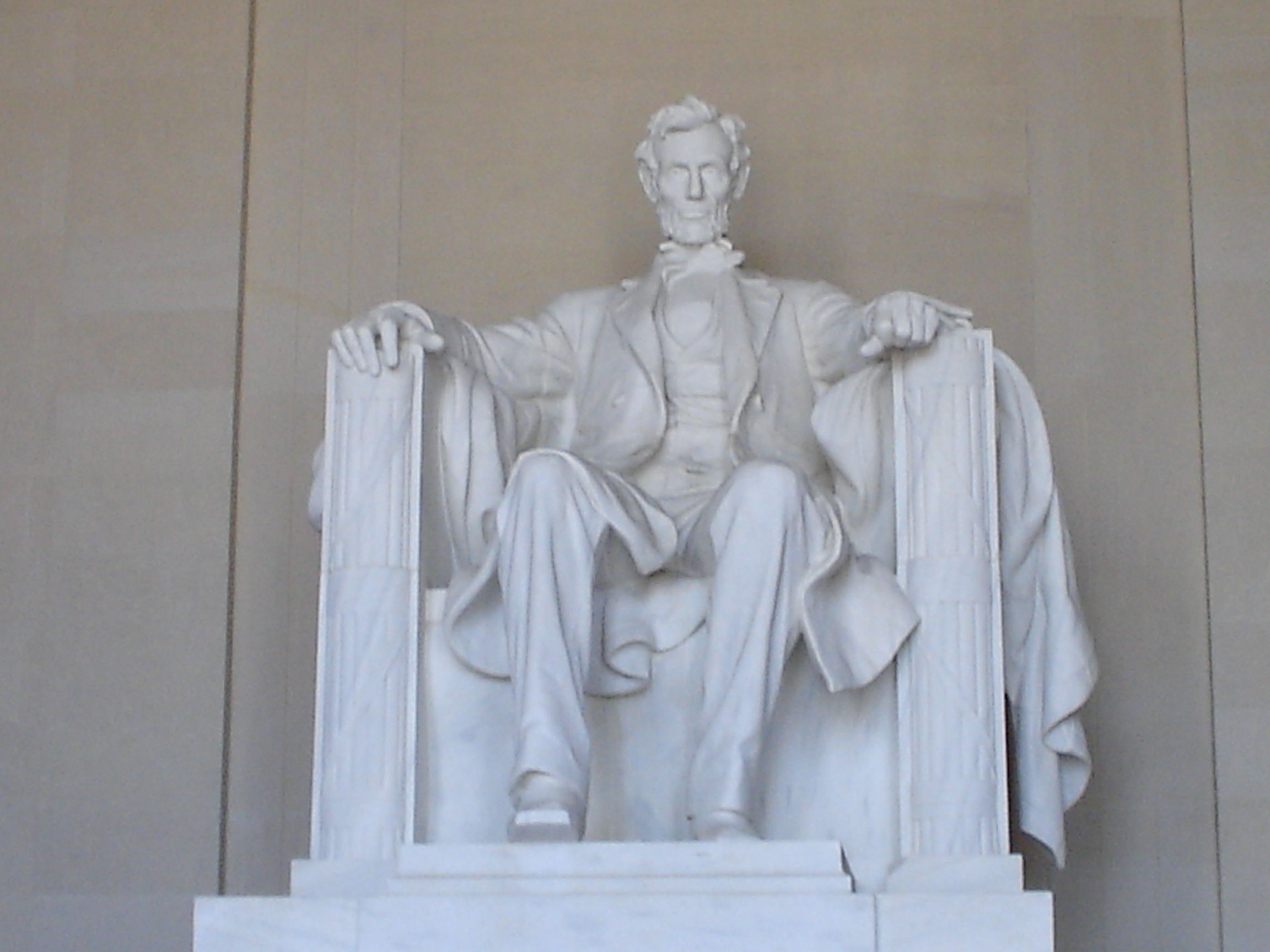
First stop was the Lincoln Memorial

DSC00833

It was built to honor the 16th President of the United States, Abraham Lincoln.

It is located on the western end of the National Mall in Washington, D.C., across from the Washington Monument.

DSC00834

The building is in the form of a Greek Doric temple and contains a large seated sculpture of Abraham Lincoln and inscriptions of two well-known speeches by Lincoln.

The next stop was the Washington Monument

DSC00840

The Washington Monument is an obelisk on the National Mall in Washington, D.C., built to commemorate George Washington. Construction of the monument began in 1848 and not completed until 1888.  It was officially opened October 9, 1888.


We then took a taxi ride to the Jefferson Memorial

DSC00851

This monument is dedicated to Thomas Jefferson (1743–1826), one of the most important of the American Founding Fathers as the main drafter and writer of the Declaration of Independence.

Construction of the building began in 1939 and was completed in 1943.

The bronze statue of Jefferson was added in 1947.

On renovations and editing

There are a lot of words in the English language that can strike fear into the hearts of even the bravest of men and women.

Two are renovations and editing.

We are currently deep in the first and it’s running something like this:

Firstly, we are updating the ensuite, and this has been relatively painless.

Secondly, we are fixing up the outside of the house.  The intention was to put in a retaining wall and build a stone garden with succulents.

Ah, the best-laid plans!

This led to, let’s render the walls, get rid of the unsightly bricks.

Fine.

But before that, we need to repaint the roof an appropriate colour to match the walls.

Fine.

Got the roof done, got the walls rendered.

Now we need a carport.  Fine.

Back to the garden, and so on, and so forth.  Much is still to be done.

It’s like editing, a chore that I’m beginning to like less and less because it’s taking on the dimensions of a renovation.

It isn’t a matter of correcting spelling mistakes, sentence structure errors, or badly place punctuation.

It’sd a matter of weeding out the superfluous text, cutting and more cutting, taking out anything that does not propel the story to a logical and unexpected end, let alone having to rewrite at the beginning because of an afterthought later on.

Starting to sound like the garden, rendering, roof scenario?

It’s harder editing than writing.

So many words, so much brilliance, ending up on the cutting room floor.

Perhaps it’s time to go back to the renovations.  They seem more fun than editing.

No?


The cinema of my dreams – I never wanted to go to Africa – Episode 28

Our hero knows he’s in serious trouble.

The problem is, there are familiar faces and a question of who is a friend and who is foe made all the more difficult because of the enemy, if it was the enemy, simply because it didn’t look or sound or act like the enemy.

Now, it appears, his problems stem from another operation he participated in.

I was escorted to a small room that adjoined the interview room, and I was separated from the main event by a one-way mirror.

It was a cliché, but not surprising.

The interrogation room was much the same as an office, with a table, two chairs, and on the side, a cabinet, closed up, an interesting addition to what might be called a boring room.

It was currently empty, and I was the only one in this small room, sitting at a counter, looking in.  In front of me was a stack of writing pads, pens and pencils.  I wondered if I was the only party that was about to observe Lallo and the new arrival.

Five minutes passed before the door to the room next door opened and a hooded man was led in.  His hands were cuffed, and his legs had chains, standard prisoner gear.  

From the man’s manner and body language, it appeared to me as though he was surprised he was being treated so badly, and was not forcefully resistant, but wasn’t making it easy for his captors.

He was asked to sit, and when he didn’t he was forced to sit, with some force, and then his hands were locked onto the metal bar at the table.  His legs were locked to a lower bar.  A precaution in case he decided to attack his interrogator.

One thing I knew for sure, this man would not give up information willingly.

Once he was secured, one guard took up station inside the door, and the other left.  That’s when Lallo made his appearance.  He came in, put a file on the desk, nodded to the guard who remove3d the hood, and then he sat.

I’d expected to see Lallo in full uniform.  He was not.  He was, if anything, dressed casually.  The man on the other side was in a cream suit, very crumpled and slightly stained as if he had not changed during the entire journey from capture to this room.

No doubt part of his conditioning.

“Mr Jacobi, that is your name isn’t it?”

The man stared at him sullenly.  I got the impression he was usually the one asking the questions, not the other way around.

The man lifted his head and stared straight at Lallo.  It was not a look I’d want to be on the end of, but Lallo, I suspect, had been on the end of a lot worse.  And a closer inspection of his face, and features, I noticed that someone had already started the harsher form of interrogation.

“You know this already.  I am an employee of the United States Government, your Government, and you will regret treating me like this.”

“That may be so, but you have failed to define what part of the Government it is you work for.  Is it the CIA?”

Another withering stare, followed by, “You people are so incompetent, the left-hand does not know what the right hand is doing.  I require a telephone so that I can contact my liaison, and this farce will stop, and you will be reprimanded very severely.”

“I seriously doubt anyone knows you are missing yet.  Maybe after a week or so, but we know you keep to yourself, and very few people know your business, a situation, I assure you, benefits us more than it benefits you.  So I will assume you are Jacobi.”

There was a knock on the door, and Monroe came in with a small box, handed it to Lallo, and then left again.

Lallo looked in the box, then pulled out a plastic evidence bag with a mobile phone in it, and put it on the table.  “This is the phone you use to call General Bahti, your contact inside the current government.  It seems it is not registered with a telephone network in your country, but another, shall we say neutral, country.

He reached into the box and pulled out another plastic evidence bag also with mobile phone in it.  “This phone,” he held it up, “is the one you use to talk to the, shall we call them the local resistance.  It’s so much nicer than calling them rebels.”

The man’s eyes followed each bag from the box to the table.  He was almost expressionless.

Then Lallo pulled out another bag, with another phone, “This is the phone which you make and receive calls from your American contact.  It is what we call a burner phone, and was given to you, we think, on a recent visit to this country, by that contact.  I am assuming this is the person you wish to call and who will stop this farce.”

If Lallo was expecting the man to break down there and then, he was sadly mistaken.  There was little if any movement in his expression, perhaps just enough for Lallo to assume he’d got the men behind the phones correct.  That he was basically unmoved at Lallo’s revelations told me this man had a resolve Lallo was going to find hard to shake.

Lallo took the third phone out of the evidence bag and pushed it across the table towards the man.  “You can call your contact now, and you can tell him I would like to speak to him.”

© Charles Heath 2019-2022