In a word: Stick

Everyone knows what a stick is, it’s a lump of wood that you throw out in front of you, and if your dog is inclined to, he will run out and fetch it back.

Of course, there’s the obstinate ones who just lie down on the ground and look at you like you’re foolishly throwing away something useful.

For instance, that stick, and a few others that would be very useful to light a campfire, or just a woodfire in the house, during winter.

Or it can be a stick of wood needed for something else, like a building project, of of those highly secret affairs that go on in the locked shed at the bottom of the garden.

I’m sure the dog who refuses to fetch sticks knows exactly what is going on there, but is disinclined to say.

But..

If you are looking at the gooey sense of the word, there is an old saying, if you throw enough mud, some of it sticks’.

Yes, you can stick stuff to stuff, such as words cut out of various newspapers to make up a ransom, or warning, note.

Too many mystery movies, I know.

Paint will stick to timber, or any surface really.

Mud sticks to the bottom of shoes or boots and then becomes analysable evidence.

I can stick to you like glue, which means, really, where you go I go, quite handy if you are trying to stop an opposition player from scoring in a game.

I can use a walking stick, beat someone with a stick, use a stick to fly a plane, or a gear stick to move a car.

I’m sure, if you think about it, you can come up with a dozen more ways to use it.


“The Devil You Don’t”, she was the girl you would not take home to your mother!

Now only $0.99 at https://amzn.to/2Xyh1ow

John Pennington’s life is in the doldrums. Looking for new opportunities, and prevaricating about getting married, the only joy on the horizon was an upcoming visit to his grandmother in Sorrento, Italy.

Suddenly he is left at the check-in counter with a message on his phone telling him the marriage is off, and the relationship is over.

If only he hadn’t promised a friend he would do a favour for him in Rome.

At the first stop, Geneva, he has a chance encounter with Zoe, an intriguing woman who captures his imagination from the moment she boards the Savoire, and his life ventures into uncharted territory in more ways than one.

That ‘favour’ for his friend suddenly becomes a life-changing event, and when Zoe, the woman who he knows is too good to be true, reappears, danger and death follow.

Shot at, lied to, seduced, and drawn into a world where nothing is what it seems, John is dragged into an adrenaline-charged undertaking, where he may have been wiser to stay with the ‘devil you know’ rather than opt for the ‘devil you don’t’.

newdevilcvr6

Knowledge can be dangerous… – A short story

It was, perhaps, the saddest week of my life.

It started with a phone call, then a visit by two police officers.  It was about my parents, but the news could not be imparted over the phone, only in person.  That statement alone told me it was very bad news, so I assumed the worst.

The two police officers, standing at the front door, grim expressions on their faces, completed the picture.  The news, my parents were dead, killed in a freak car accident.

At first, it didn’t sink in.  They were on their way back from another of their extensive holidays, one of many since my father had retired.  I’d seen them probably six months out of the last five years, and the only reason they were returning this time was that my mother needed an operation.

They hadn’t told me why, not that they ever told me very much any time since the day I’d been born, but that was who they were.  I thought them eccentric, being older when I’d come along, and others thought them, well, eccentric.

And being an only child, they packed me off to boarding school, then university, and then found me a job in London, and set me up so that I would only see them weekends if they were home.

I had once wondered if they ever cared about me, keeping me at arm’s length, but my mother some time ago had taken me aside and explained why.  It was my father’s family tradition.  The only part I’d missed was a nanny.

It most likely explained why I didn’t feel their passing as much as I should.

A week later, after a strange funeral where a great many people I’d never met before, and oddly who knew about me, I found myself sitting in the sunroom, a glass of scotch in one hand, and an envelope with my name on it, in the other.

The solicitor, a man I’d never met before, had given it to me at the funeral.   We had, as far as I knew an elderly fellow, one of my father’s old school friends, as the family solicitor, but he hadn’t shown at the funeral and wasn’t at home when I called in on my way home.

It was all very odd.

I refilled the glass and took another look at the envelope.  It was not new, in fact, it had the yellow tinge of age, with discoloration where the flap was.  The writing was almost a scrawl, but identifiable as my father’s handwriting, perhaps an early version as it was now definitely an illegible scrawl.

I’d compared it with the note he’d left me before they had embarked on their last adventure, everything I had to do while caretaking their house.  The last paragraph was the most interesting, instructing me to be present when the cleaning lady came, he’d all but accused her of stealing the candlesticks.

To be honest, I hadn’t realized there were candlesticks to steal, but there they were, on the mantlepiece over the fire in the dining room.  The whole house was almost like being in an adventure park, stairs going up to an array of rooms, mostly no longer used, and staircase to the attic, and then another going down to the cellar.  The attic was locked and had been for as long as I could remember, and the cellar was dank and draughty.

Much like the whole house, but not surprising, it was over 200 years old.

And perhaps it was now mine.  The solicitor, a man by the name of Sir Percival Algernon Bridgewater, had intimated that it might be the last will and testament and had asked me to tell him if it was.  I was surprised that Sir Percival didn’t have the document in question.

And equally. so that the man I knew as his solicitor, Lawerence Wellingham, didn’t have a copy of my father’s last will and testament either.

I finished the drink, picked up the envelope, and opened it.

It contained two sheets of paper, the will, and a letter.  A very short letter.

“If you are reading this I have died before my time.  You will need to find Albert Stritching, and ask him to help you find the murderer.”

Even the tenor of that letter didn’t faze me as it should have, because at this point nothing would surprise me.  In fact, as I  unfolded the document that proclaimed it was the will, I was ready for it to say that whole of his estate and belongings were to be left to some charity, and I would get an annual stipend of a thousand pounds.

In fact, it didn’t.  The whole of his estate was left to my mother should she outlive him, or in the event of her prior decease, to me.

I had to put all of those surprises on hold to answer a knock on the door.

Lawerence Wellingham.

I stood too e side, let him pass, closed the door, and followed him into the front room, the one my mother called the ‘drawing room’ though I never knew why.

He sat in one of the large, comfortable lounge chairs.  I sat in the other.

I showed him the will.  I kept the other back, not knowing what to make of it.

“No surprise there,” Wellingham said.

“Did you have any idea what my father used to do, beyond being, as he put it, a freelance diplomat?”

I thought it a rather odd description but it was better than one he once proffered, ‘I do odd jobs for the government’.

“I didn’t ask.  Knowledge can be dangerous, particularly when associated with your father.  Most of us preferred not to know, but one thing I can tell you.  If anyone tries to tell you what happened to your parents was not an accident, ignore them.  Go live your life, and keep those memories you have of them in the past, and don’t look back.  They were good people, Ken, remember them as such.”

We reminisced for the next hour, making a dent in the scotch, one of my father’s favorite, and he left.

Alone again, the thoughts went back to the second note from my father.  That’s when the house phone rang.

Before I could answer it, a voice said, “My name is Stritching.  Your father might have mentioned me?  We need to talk.”

—-

© Charles Heath 2020-2021

Have you ever…

Started to write a post, get so far, and another theme or idea slips in, and demands to be written first?

I’m on this nostalgia kick, simply because when I turned on the TV to catch up with the latest COVID news, it was on a channel that shows old movies.

In case you don’t realize it, I love old movies, not just those from Hollywood, but also from Britain.

What was on?

An American in Paris.

Well, it had to be one of my favourites, even though I’m not a great fan of Gene Kelly, the sheer majesty of the music more than makes up for the story in between.

Could it be said, then, this was from the golden years of Hollywood? Such bright and cheerful movies such as Singing in the Rain, and An American in Paris, perhaps exemplify the Hollywood musical.

Years before, Fred Astaire and Ginger Rogers were the quintessential musical stars, followed by the likes of Judy Garland and Deanna Durbin, and later Bing Crosby and Frank Sinatra. A couple of musicals, in particular, comes to mind, firstly the Wizard of Oz and then High Society.

Moving forward to more modern times, several stand out in the1960s, My Fair Lady and Sound of Music. By this time theatregoers were dining on the superb talents of Rogers and Hammerstein, and Learner and Lowe. Of the former, musicals such as Carousel, South Pacific, and The King and I were on my list of favourites.

Even later still in the 1970s, there is Funny Girl, and Hello Dolly, which have a connection to the past with its director, none other than, yes, Gene Kelly.

But it seems once the 60s had passed the notion of the Hollywood blockbuster musical had gone, and we were left with clip shows like That’s Entertainment, put together while Gene Kelly and Fred Astaire were still alive. We still had the film versions of the stage plays, but the lustre had, somehow, gone.

Perhaps it will return, who knows, after all, everything old is usually new again, it just takes time to go full circle.

The cinema of my dreams – It all started in Venice – Episode 12

Let’s talk about Larry.

Over the main, and desert, I told her about Siena and the Palio, painting a vivid picture of horsemanship and rivalry over the course of several hundred years, making it sound so much better than it was.

It the heat, the tight confines of the square, and the large number of people crammed in, it could be quite oppressive.

It wasn’t until after coffee arrived I decided to take a different tack and surprise her.

“You know, back in the old days, when I was working a desk, I used to do research on criminals for task forces.  I longed to get out in the field, but back then you had to be a particular sort of bastard to get those jobs.  I just didn’t have that mean streak.”

“Any I might know of?”

“One that springs to mind, Larry Pomisor, head of the so-called Waterville gang, though as an organization, is went downhill quickly after Larry’s father died and he took over.”

I’d been watching her carefully, and, yes, no matter how hard people tried to mask their surprise, it never works.  I got the hit I was looking for.

“You’re saying he’s not a crime boss?”

“Exactly.  He’s little better than a complete moron.  Blames me for the death of his brother, failing to understand that he is ultimately responsible.  If he hadn’t dragged him into the business, he’d still be alive today.”

“Why would he blame you?”

“He thinks I was at the scene of his brother’s death but whoever told him got their dates mixed up.  But Larry is nothing if not pathological in his beliefs no matter how wrong they are.”

I could see she was processing how to deal with this turn of events.  Being handed to her on a plate, exactly what Larry wanted me to talk about, I could see she was mid-way between confused and surprised.  In other words, off guard.

She now had to come up with questions that were not obvious.

“Not exactly the sort of enemy you want, then.”

“No more than any of the others I’m sure are waiting in line.  I was there, yes, but not when his brother was killed, he was alive when I left.  It was a meeting his brother called, and we believe he was going to inform on Larry, and Larry had him killed, then pinning the blame on us, and me in particular.  His brother never wanted anything to do with Waterville, but Larry never gave him the option.”

“I can’t believe that he would do that, not to his brother.  No one would do that to family.”

“Like I said, everything I learned about Larry pointed to the fact he was a moron.  His father hated him, and his mother moved to be as far from him as possible.  She lives in Sorrento you know.  His father was a piece of work, and I first met him on a domestic call-out when their neighbors reported gunshots.  She had taken a beating, not the first, and not the last, and I had to say, I’d never seen anyone more relieved when the old man died.”

I wondered what Larry was making of this if he was listening in.  He had once told me, in passing, in one of many visits to the parent’s house to intervene, that he would kill his father if he didn’t stop.

But, Larry was all talk and no action and did nothing to stop it.  In the end, it was his wife Gabrielle, who finally ended the violence. 

When it happened she called me, the most familiar face, and told me what happened.  I then told her what to do, and it eventually kept her out of jail.  Over the years since our paths rarely crossed, but significantly I was on her Christmas card list.

She had, when she learned I was living in Venice incited Violetta and I over for tea, and we went a few times, but the last was a long time ago.

“He doesn’t blame you for that too foes he?”

“Probably, but Gabrielle can put him straight on that.  I should go and see her, it’s been a while.”

 “What do you mean?  Go see Larry’s mother?”

“Why not?  The chances of Larry being there are remote.  It’ll have to be after Cecilia goes back home.  You want to come, see a bit more of Italy?”

“What?”

The shock of the conversation direction had finally caught up with her.  I’d seen her glancing more than one at her phone, and equally wondering what Larry was making of it.

“Go see Larry’s mother.  We’re old friends.  I’m sure she’d give him a stern talking-to if she knew he wanted me dead, don’t you?”

“I don’t know.  I’ll have to see.”

“Of course.  Too short notice.”

I gave her one of my winning smiles, just as Cecilia loomed out of the darkness and came over, dropping heavily into the seat next to me, and complaining, “Well, that was a spectacular waste of time and effort.”

© Charles Heath 2022

A score to settle – The Editor’s draft – Day 12

I have the story, the editor is asking for it, and I’m putting the final touches to it

That sleepless night left me staring at a blank computer screen, drifting off into another world.

This is the problem of writing more than one story at a time. My other story, at the moment, is the treasure hunt, and it’s getting to the good part, actually finding where the treasure might be buried, and the thought of looking at unspeakable riches.

But, it hasn’t been plain saying, for the pirate, or the treasure hunters, and like all quests for treasure, it’s hard work and a lot of disappointment, working through the clues, the red herrings, and endless lies and deception.

If anything, money truely is the root of all evil.

Buy I digress…

Back in that nightmare of odd noises and misgivings about titles, I usually come up with a title, and if there’s a better one in the offing, it’d the one my editor comes up with.

She’s good, after the first reading, at picking a suitable title

In the meantime, we have a working title.

As for the noises in the night, I’m awake now and the noises have now identified themselves as normal, cats on the prowl. Possums jumping from trees to roofs, cars racing around the streets by drivers with nothing better to do, and the odd voice traveling on the wind.

Not everyone sleeps at night, not everyone behaves in a manner we expect.

Perhaps that’s a subject I can address in a story after I finish what’s on my plate now…

Something I will say about these early hours of the morning, it’s probably the best time to write, simply because there are no real interruptions, especially the phone and the myriad of scammers plying their new trade, stealing identities, and emptying bank accounts.

Tomorrow, I’m having the landline cut off, and wait and see how long it takes for those scammers to find my mobile number.

Today’s word count: 3,713 words, for the running total of 27,918.

Searching for locations: From the Presidential Suite to almost walking the plank, Auckland, New Zealand

This is something you don’t see every day of the week, or once in a lifetime, perhaps.

We arrived at the Hilton Auckland hotel somewhere between one and two in the morning after arriving from Australia by plane around midnight.

Sometimes there is a benefit in arriving late, and, of course, being a very high tier HHonors guest, where the room you book is upgraded.

This stay we got one hell of a surprise.

We got to spend the night in the Presidential Suite.

The lounge and extra bathroom.

Looking towards the private bathroom.

A bathroom fit for a King and a Queen

And the royal bed

There was a note to say that we should keep the blinds closed for privacy and that a ship would be arriving in the port, but I did not expect it to be literally fifty feet from our balcony.

aucklandhotelandship

Questions, sometimes without answers

At what point does a writer become a journalist?

Quite often journalists become writers because of their vast experience in observing and writing about the news, sometimes in the category of ‘truth is stranger than fiction’.

I did journalism at University and thought I would never get to use it.  I had to interview people, write articles, and act as an editor.  The hardest part was the headlines.

How much does that resemble the job of coming up with a title for your book?

Well, several opportunities arose over the last few months to dig out the journalist hat, put it on, and go to work.

Where?

Hospital.  I’ve had to go there a few times more in the last few months than I have in recent years.

And I’d forgotten just how hospitals are interesting places, especially the waiting room in Emergency.

After the second or third visit, I started to observe the people who were waiting and ran through various scenarios as to the reason for their visit.  None may have been true, but it certainly was an exercise in creative writing and would make an excellent article.

Similarly, once we got inside the inner sanctum, where the real work is done, there is any number of crises and operations going on, and plenty of material for when I might need to include a hospital scene in one of my stories.

Or I could write a volume in praise of the people who work there and what they have to endure.  Tending the sick, injured and badly injured is not a job for the faint-hearted.

Research, if it could be called that, turns up in the unlikeliest of places.  Doctors who answer questions, not necessarily about the malady, nurses who tell you about what it’s like in Emergency on nights you really don’t want to be there, and other patients and their families, all of whom have a story to tell, or just wait patiently for a diagnosis and then treatment so they can go home.

We get to go this time at about four in the morning.  Everyone is tired.  More people are waiting.  Outside it is cool and the first rays of light are coming over the horizon as dawn is about to break.

I ponder the question without an answer, a question one of the nurses asked a youngish doctor, tossed out in conversation, but was there a more intent to it; what he was doing on Saturday night.

He didn’t answer.  Another crisis, another patient.

I suspect he was on duty in Emergency.

The cinema of my dreams – I never wanted to go to Africa – Episode 13

It’s still a battle of wits, but our hero knows he’s in serious trouble.

The problem is, there are familiar faces and a question of who is a friend and who is foe made all the more difficult because the enemy if it is the enemy, doesn’t look or sound or act like the enemy.

If at first, you don’t succeed, try a few threats, or leverage.

Or just get rid of the problem


Back in my cell, delivered more forcibly than when they escorted me to the interrogation room, I had time to consider his words.

A tactic, I told myself.  Classic divide and conquer.

It was obvious that he wanted me to corroborate his suspicion that Breeman had sent the helicopter out to find his operation.  Did it sound like something she would do or any other commanding officer whose jurisdiction this operation fell under?

Why hadn’t they told her?  If t was military and being run by our side, why would they keep it secret from their own people, especially when something like what just happened, could happen?

It didn’t make sense.

Unless, of course, it was the CIA.  They seemed to be a law unto themselves, except in this case they needed something to incriminate her with in order to have her removed, and replaced with a more sympathetic commanding officer.

It was all too much for a gunnery sergeant like me to understand.

At least I didn’t know anything so I couldn’t tell them anything.  A little solace perhaps, but the trouble was, they’d never believe me.

I sighed.  Perhaps some sleep before they returned for the next round.

They came in the middle of the night.  Or day, I had no idea what it was outside because there were no windows in my cave cell.

They had no intention of being polite, I was dragged up by the scruff of the next and tossed in the direction of the door.  When I stumbled, still half asleep and unable to see properly, one of the guards kicked me and said he would do it again if I didn’t get up.

He did anyway because I took too long.

My ribs were hurting when I breathed, as I staggered in front of them, one behind me giving me a shove every two or three steps, perhaps hoping I’d stumble again so he could kick me.

At the interrogation room, a different one this time, he shoved me in and shut the door.  I didn’t hear a key in the lock, so perhaps they were hoping I’d try to escape.

There was only one chair in the room, and I sat in it.  I couldn’t sit up straight because it hurt, so I had to slump over.

A half hour later a man and a woman, both with white coats like a doctor would wear, came in.  Nothing was said.  The man took up a position behind me, then held me so I couldn’t move.

The woman then joined him, produced as a syringe, and jabbed it in my neck.

The man let me go, and a few seconds later I fell off the chair onto the floor hitting my head in the process, and a few more after that, it was lights out.

At least there was no more pain.


© Charles Heath 2019

Searching for locations: Queenstown Gardens, Queenstown, New Zealand

Queenstown Gardens are not far from the center of Queenstown.  They are just down the hill from where we usually stay at Queenstown Mews.

More often than not we approach the Gardens from the lakeside during our morning walk from the apartment to the coffee shop.  You can walk alongside the lake, or walk through the Gardens, which, whether in summer or winter, is a very picturesque walk.

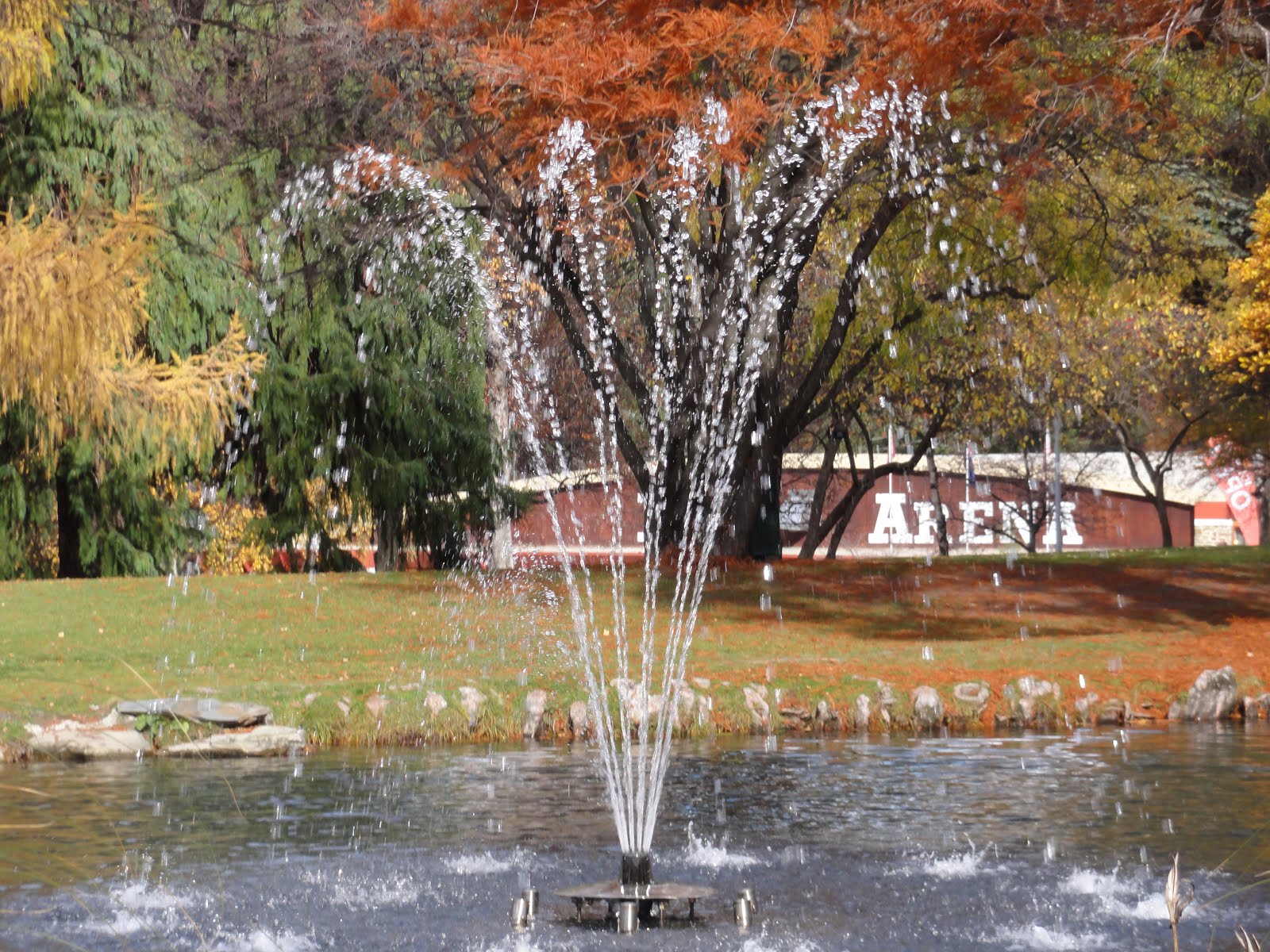
There’s a bowling club, and I’m afraid I will never be that sort of person to take it up (not enough patience) and an Ice Arena, where, in winter I have heard players practicing ice hockey.

I’m sure, at times, ice skating can also be done.

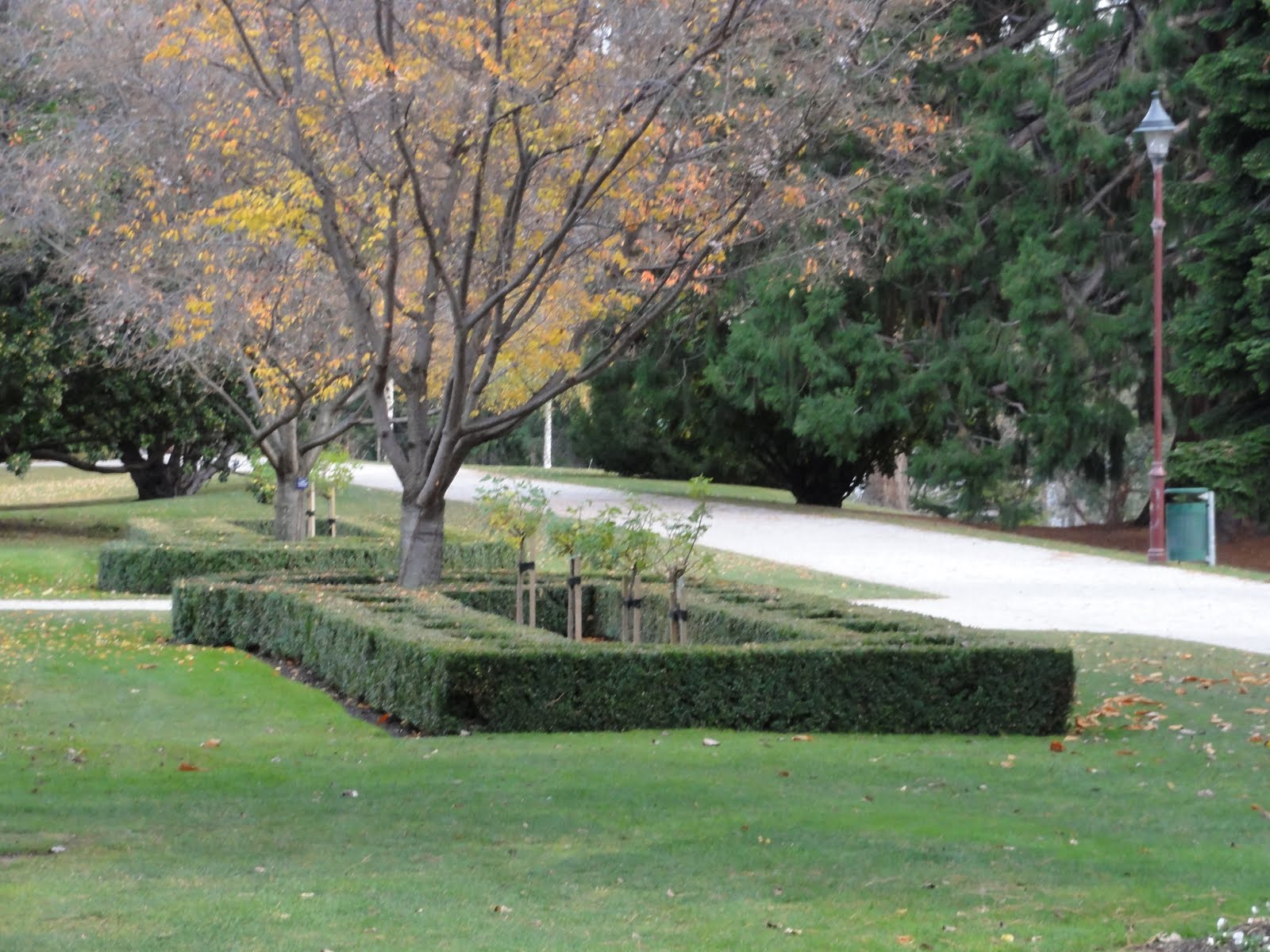
There is a stone bridge to walk across, and in Autumn/Winter the trees can add a splash of color.

There is a large water feature with fountain, and plenty of seating around the edge of the lake, to sit and absorb the tranquility, or to have a picnic.

There are ducks in the pond

and out of the pond

and plenty of grassed areas with flower beds which are more colorful in summer.  I have also seen the lawns covered in snow, and the fir trees that line the lake side of the gardens hang heavy with icicles.