An excerpt from “The Devil You Don’t”

Available on Amazon Kindle here:  https://amzn.to/2Xyh1ow

By the time I returned to the Savoie, the rain had finally stopped, and there was a streak of blue sky to offer some hope the day would improve.

The ship was not crowded, the possibility of bad weather perhaps holding back potential passengers.  Of those I saw, a number of them would be aboard for the lunch by Phillippe Chevrier.  I thought about it, but the Concierge had told me about several restaurants in Yvoire and had given me a hand-drawn map of the village.  I think he came from the area because he spoke with the pride and knowledge of a resident.

I was looking down from the upper deck observing the last of the boarding passengers when I saw a woman, notable for her red coat and matching shoes, making a last-minute dash to get on board just before the gangway was removed.  In fact, her ungainly manner of boarding had also captured a few of the other passenger’s attention.  Now they would have something else to talk about, other than the possibility of further rain.

I saw her smile at the deckhand, but he did not smile back.  He was not impressed with her bravado, perhaps because of possible injury.  He looked at her ticket then nodded dismissively, and went back to his duties in getting the ship underway.  I was going to check the departure time, but I, like the other passengers, had my attention diverted to the woman in red.

From what I could see there was something about her.  It struck me when the light caught her as she turned to look down the deck, giving me a perfect profile.  I was going to say she looked foreign, but here, as in almost anywhere in Europe, that described just about everyone.  Perhaps I was just comparing her to Phillipa, so definitively British, whereas this woman was very definitely not.

She was perhaps in her 30’s, slim or perhaps the word I’d use was lissom, and had the look and manner of a model.  I say that because Phillipa had dragged me to most of the showings, whether in Milan, Rome, New York, London, or Paris.  The clothes were familiar, and in the back of my mind, I had a feeling I’d seen her before.

Or perhaps, to me, all models looked the same.

She looked up in my direction, and before I could divert my eyes, she locked on.  I could feel her gaze boring into me, and then it was gone as if she had been looking straight through me.  I remained out on deck as the ship got underway, watching her disappear inside the cabin.  My curiosity was piqued, so I decided to keep an eye out for her.

I could feel the coolness of the air as the ship picked up speed, not that it was going to be very fast.  With stops, the trip would take nearly two hours to get to my destination.  It would turn back almost immediately, but I was going to stay until the evening when it returned at about half eight.  It would give me enough time to sample the local fare, and take a tour of the medieval village.

Few other passengers ventured out on the deck, most staying inside or going to lunch.  After a short time, I came back down to the main deck and headed forward.  I wanted to clear my head by concentrating on the movement of the vessel through the water, breathing in the crisp, clean air, and let the peacefulness of the surroundings envelope me.

It didn’t work.

I knew it wouldn’t be long before I started thinking about why things hadn’t worked, and what part I played in it.  And the usual question that came to mind when something didn’t work out.  What was wrong with me?

I usually blamed it on my upbringing.

I had one of those so-called privileged lives, a nanny till I was old enough to go to boarding school, then sent to the best schools in the land.  There I learned everything I needed to be the son of a Duke, or, as my father called it in one of his lighter moments, nobility in waiting.

Had this been five or six hundred years ago, I would need to have sword and jousting skills, or if it had been a few hundred years later a keen military mind.  If nothing else I could ride a horse, and go on hunts, or did until they became not the thing to do.

I learned six languages, and everything I needed to become a diplomat in the far-flung British Empire, except the Empire had become the Commonwealth, and then, when no-one was looking, Britain’s influence in the world finally disappeared.  I was a man without a cause, without a vocation, and no place to go.

Computers were the new vogue and I had an aptitude for programming.  I guess that went hand in hand with mathematics, which although I hated the subject, I excelled in.  Both I and another noble outcast used to toss ideas around in school, but when it came to the end of our education, he chose to enter the public service, and I took a few of those ideas we had mulled over and turned them into a company.

About a year ago, I was made an offer I couldn’t refuse.  There were so many zeroes on the end of it I just said yes, put the money into a very grateful bank, and was still trying to come to terms with it.

Sadly, I still had no idea what I was going to do with the rest of my life.  My parents had asked me to come back home and help manage the estate, and I did for a few weeks.  It was as long as it took for my parents to drive me insane.

Back in the city, I spent a few months looking for a mundane job, but there were very few that suited the qualifications I had, and the rest, I think I intimidated the interviewer simply because of who I was.  In that time I’d also featured on the cover of the Economist, and through my well-meaning accountant, started involving myself with various charities, earning the title ‘philanthropist’.

And despite all of this exposure, even making one of those ubiquitous ‘eligible bachelor’ lists, I still could not find ‘the one’, the woman I wanted to spend the rest of my life with.  Phillipa seemed to fit the bill, but in time she proved to be a troubled soul with ‘Daddy’ issues.  I knew that in building a relationship compromise was necessary, but with her, in the end, everything was a compromise and what had happened was always going to be the end result.

It was perhaps a by-product of the whole nobility thing.  There was a certain expectation I had to fulfill, to my peers, contemporaries, parents and family, and those who either liked or hated what it represented.  The problem was, I didn’t feel like I belonged.  Not like my friend from schooldays, and now obscure acquaintance, Sebastian.  He had been elevated to his Dukedom early when his father died when he was in his twenties.  He had managed to fade from the limelight and was rarely mentioned either in the papers or the gossip columns.  He was one of the lucky ones.

I had managed to keep a similarly low profile until I met Phillipa.  From that moment, my obscurity disappeared.  It was, I could see now, part of a plan put in place by Phillipa’s father, a man who hogged the limelight with his daughter, to raise the profile of the family name and through it their businesses.  He was nothing if not the consummate self-advertisement.

Perhaps I was supposed to be the last piece of the puzzle, the attachment to the establishment, that link with a class of people he would not normally get in the front door.  There was nothing refined about him or his family, and more than once I’d noticed my contemporaries cringe at the mention of his name, or any reference of my association with him.

Yet could I truthfully say I really wanted to go back to the obscurity I had before Phillipa?  For all her faults, there were times when she had been fun to be with, particularly when I first met her when she had a certain air of unpredictability.  That had slowly disappeared as she became part of her father’s plan for the future.  She just failed to see how much he was using her.

Or perhaps, over time, I had become cynical.

I thought about calling her.  It was one of those moments of weakness when I felt alone, more alone than usual.

I diverted my attention back to my surroundings and the shoreline.  Out of the corner of my eye, I could see the woman in the red coat, making a move.  The red coat was like a beacon, a sort of fire engine red.  It was not the sort of coat most of the women I knew would wear, but on her, it looked terrific.  In fact, her sublime beauty was the one other attribute that was distinctly noticeable, along with the fact her hair was short, rather than long, and jet black.

I had to wrench my attention away from her.

A few minutes later several other passengers came out of the cabin for a walk around the deck, perhaps to get some exercise, perhaps checking up on me, or perhaps I was being paranoid.  I waited till they passed on their way forward, and I turned and headed aft.

I watched the wake sluicing out from under the stern for a few minutes, before retracing my steps to the front of the ship and there I stood against the railing, watching the bow carve its way through the water.  It was almost mesmerizing.  There, I emptied my mind of thoughts about Phillipa, and thoughts about the woman in the red coat.

Until a female voice behind me said, “Having a bad day?”

I started, caught by surprise, and slowly turned.  The woman in the red coat had somehow got very close me without my realizing it.  How did she do that?  I was so surprised I couldn’t answer immediately.

“I do hope you are not contemplating jumping.  I hear the water is very cold.”

Closer up, I could see what I’d missed when I saw her on the main deck.  There was a slight hint of Chinese, or Oriental, in her particularly around the eyes, and of her hair which was jet black.  An ancestor twice or more removed had left their mark, not in a dominant way, but more subtle, and easily missed except from a very short distance away, like now.

Other than that, she was quite possibly Eastern European, perhaps Russian, though that covered a lot of territory.  The incongruity of it was that she spoke with an American accent, and fluent enough for me to believe English was her first language.

Usually, I could ‘read’ people, but she was a clean slate.  Her expression was one of amusement, but with cold eyes.  My first thought, then, was to be careful.

“No.  Not yet.”  I coughed to clear my throat because I could hardly speak.  And blushed, because that was what I did when confronted by a woman, beautiful or otherwise.

The amusement gave way to a hint of a smile that brightened her demeanor as a little warmth reached her eyes.  “So that’s a maybe.  Should I change into my lifesaving gear, just in case?”

It conjured up a rather interesting image in my mind until I reluctantly dismissed it.

“Perhaps I should move away from the edge,” I said, moving sideways until I was back on the main deck, a few feet further away.  Her eyes had followed me, and when I stopped she turned to face me again.  She did not move closer.

I realized then she had removed her beret and it was in her left side coat pocket.  “Thanks for your concern …?”

“Zoe.”

“Thanks for your concern, Zoe.  By the way, my name is John.”

She smiled again, perhaps in an attempt to put me at ease.  “I saw you earlier, you looked so sad, I thought …”

“I might throw myself overboard?”

“An idiotic notion I admit, but it is better to be safe than sorry.”

Then she tilted her head to one side then the other, looking intently at me.  “You seem to be familiar.  Do I know you?”

I tried to think of where I may have seen her before, but all I could remember was what I’d thought earlier when I first saw her; she was a model and had been at one of the showings.  If she was, it would be more likely she would remember Phillipa, not me.  Phillipa always had to sit in the front row.

“Probably not.”  I also didn’t mention the fact she may have seen my picture in the society pages of several tabloid newspapers because she didn’t look the sort of woman who needed a daily dose of the comings and goings, and, more often than not, scandal associated with so-called celebrities.

She gave me a look, one that told me she had just realized who I was.  “Yes, I remember now.  You made the front cover of the Economist.  You sold your company for a small fortune.”

Of course.  She was not the first who had recognized me from that cover.  It had raised my profile considerably, but not the Sternhaven’s.  That article had not mentioned Phillipa or her family.  I suspect Grandmother had something to do with that, and it was, now I thought about it, another nail in the coffin that was my relationship with Phillipa.

“I wouldn’t say it was a fortune, small or otherwise, just fortunate.”  Each time, I found myself playing down the wealth aspect of the business deal.

“Perhaps then, as the journalist wrote, you were lucky.  It is not, I think, a good time for internet-based companies.”

The latter statement was an interesting fact, one she read in the Financial Times which had made that exact comment recently.

“But I am boring you.”  She smiled again.  “I should be minding my own business and leaving you to your thoughts.  I am sorry.”

She turned to leave and took a few steps towards the main cabin.

“You’re not boring me,” I said, thinking I was letting my paranoia get the better of me.  It had been Sebastian on learning of my good fortune, who had warned me against ‘a certain element here and abroad’ whose sole aim would be to separate me from my money.  He was not very subtle when he described their methods.

But I knew he was right.  I should have let her walk away.

She stopped and turned around.  “You seem nothing like the man I read about in the Economist.”

A sudden and awful thought popped into my head.  Those words were part of a very familiar opening gambit.  “Are you a reporter?”

I was not sure if she looked surprised, or amused.  “Do I look like one?”

I silently cursed myself for speaking before thinking, and then immediately ignored my own admonishment.  “People rarely look like what they are.”

I saw the subtle shake of the head and expected her to take her leave.  Instead she astonished me.

“I fear we have got off on the wrong foot.  To be honest, I’m not usually this forward, but you seemed like you needed cheering up when probably the opposite is true.  Aside from the fact this excursion was probably a bad idea.  And,” she added with a little shrug, “perhaps I talk too much.”

I was not sure what I thought of her after that extraordinary admission. It was not something I would do, but it was an interesting way to approach someone and have them ignoring their natural instinct.  I would let Sebastian whisper in my ear for a little longer and see where this was going.

“Oddly enough, I was thinking the same thing.  I was supposed to be traveling with my prospective bride.  I think you can imagine how that turned out.”

“She’s not here?”

“No.”

“She’s in the cabin?”  Her eyes strayed in that direction for a moment then came back to me.  She seemed surprised I might be traveling with someone.

“No.  She is back in England, and the wedding is off.  So is the relationship.  She dumped me by text.”

OK, why was I sharing this humiliating piece of information with her?  I still couldn’t be sure she was not a reporter.

She motioned to an empty seat, back from the edge.  No walking the plank today.  She moved towards it and sat down.  She showed no signs of being cold, nor interested in the breeze upsetting her hair.  Phillipa would be having a tantrum about now, being kept outside, and freaking out over what the breeze might be doing to her appearance.

I wondered, if only for a few seconds if she used this approach with anyone else.  I guess I was a little different, a seemingly rich businessman alone on a ferry on Lake Geneva, contemplating the way his life had gone so completely off track.

She watched as I sat at the other end of the bench, leaving about a yard between us.  After I leaned back and made myself as comfortable as I could, she said, “I have also experienced something similar, though not by text message.  It is difficult, the first few days.”

“I saw it coming.”

“I did not.”  She frowned, a sort of lifeless expression taking over, perhaps brought on by the memory of what had happened to her.  “But it is done, and I moved on.  Was she the love of your life?”

OK, that was unexpected.

When I didn’t answer, she said, “I am sorry.  Sometimes I ask personal questions without realizing what I’m doing.  It is none of my business.”  She shivered.  “Perhaps we should go back inside.”

She stood, and held out her hand.  Should I take it and be drawn into her web?  I thought of Sebastian.  What would he do in this situation?

I took her hand in mine and let her pull me gently to my feet.  “Wise choice,” she said, looking up at the sky.

It just started to rain.

© Charles Heath 2015-2023

newdevilcvr6

Motive, means, and opportunity – Episode 14

Detective Worthey investigates a car crash

Detective Worthey had some experience with arguments and death.

It was a simple scenario and it happened more than one thought.  Only recently there had been a case where a husband and wife had an extreme argument, a number of residents in the apartment block attested to it, and to the fact the husband left in a fit of pique, and not thirty minutes later was killed in a car crash caused by his inattentiveness.

For all intents and purposes, it was an open and shut case.

The case notes before him were anything but an open and shut case, even though the investigating detective had considered it so.  On the surface it was.

The son was a recovering drug addict.  His mother refused to accept that the boy was an addict, that he had a problem that could easily be overcome and was being handled.  According to her statement, the son had told her it was not a problem, as it was being made out to be.

The father knew the extent of the problem and had been working with the medical team to look after his son, and the considered opinion of the medical team and the father was for an extra period in rehab.  The problem: the treatment was working but the son was not strictly adhering to the program.

It was that old story, the son didn’t think he had a problem and had fallen off the wagon.

And, of course, the program was not like jail.  The participant was not obligated to stay if they didn’t want to, and the son had considered he was sorted and signed himself out.

Only to go and visit his old friends, and, that mistake made, he was convinced just a little wouldn’t harm him.  Define ‘just a little’.

Another statement had the son returning home, clearly under the influence, and a meltdown ensues.  The wife takes the son’s side, not acknowledging the son was back on drugs, the father tries to convince them that the son needed to return to rehab, and while the parents are fighting, the son takes the car and leaves.

Not twenty minutes later the son was involved in a car accident, failing to stop at a red light, and cleaned up by a car who had a green light.  The son is severely injured, and the car is wrecked.  The other car is also disabled, but the driver just got out and ran.

There were seven witness statements covering the crash and aftermath.

Each was different.

Each said the son’s car ran the red light and the other car had nowhere to go.

Each said the driver of the car that hit the son’s car got out and simply walked away.

Seven descriptions of the fleeing driver were basically the same in that it was a man, he was wearing a dark blue suit, and he had short reddish hair.

That was it.  Two said he was tall, two said her was short, and the rest of average height.

Three said he was a black man, and the others said he was Mexican.

Four said the man stopped to look in the car that he’d hit, saw the driver, and completely changed expression, to one of recognition followed by shock.

The others said he looked in the car, shook his head, and then walked off.  The detectives’ notes said the car was registered to a man named…

Phillip Megarry.

Worthey re-read the paragraph again, and then shook his head.

The report then went on to say that Megarry had been contacted, did not match the description of the man who had ran not the son’s car, and then reported the fact the car was stolen, having not realised that it was not in the garage where it should be.

That man showed the Detective the garage where the car was stored and provided the registration papers for the car.  The Megarry then, was not the Megarry aka Bergman now.

But, that Megarry was short, slight, and spoke with a German accent.  The Bergman Megarry was American with no sign of any accent.

Worthy made a note: Follow up interview with Megarry the owner of the car that hit the son’s car.

But, if the Megarry that did hit the son’s car was the Bergman alias, then the killing of the son was from the very person Wendy was having an affair with, whom she had known for a long time, and was the cause of all Anderson’s problems.

What are the odds of it being such a small world? Worthey asked himself.

This was adding a new level of complication that he was sure none of the family knew about.

The accident wasn’t James Anderson’s fault.  Whether or not he could have prevented his son taking the car, that could also be applicable to the mother.  That accident was always going to happen, one way of another, because the son’s ability to do anything was impaired by drugs.

And Worthey was curious what the mother would say when she learned who it was driving the car that caused the death of her son.  No, that was Bryson’s problem to sort out as the lead detective on the case.

But there was one lingering possibility, had James Anderson known it was his best friend who had virtually killed his son, and did he kill him because of it?

© Charles Heath 2019-2023

Books, books, and more books

If there is one thing I cannot resist is walking into a book store wherever it might be.

It usually elicits a groan from everyone I’m with because for them, watching grass grow is a more fascinating exercise.

But…

The best bookshops are the pop-up ones that appear in various shopping centres where there are empty spaces, and these have a wide variety of books for just $7 each.

And there are lots of bargains…

As you can see, I have been on a few bargain hunts lately and like any writer’s room, tucked away with the boxes of drinks, gardening equipment and everything else that just doesn’t fit in the house, are the piles of books awaiting being put into the shelves

As you can see, the shelves are almost full so it’s going to be an uphill battle to find spaces for them.

By the way, there are eight such book cases on the surrounding walls, as well as a new one, recently discarded from the lounge room, to house the reference books

Along with a few stuffed bears.

The job of putting books on shelves falls to the grandchildren, whom I am trying to convince that when they get older, they should too embrace the idea of having a reading room, which my writing room will also be when I eventually get to throw out the accumulation of years of discarded homewares.

Perhaps one day next year…

First Dig Two Graves – The Final Draft – Day 27

The second Zoe thriller.

It’s the final battle.

Never trust anyone else to do the job you should have done yourself in the first place.

It’s an interesting premise, but somehow encapsulates the ethos of this story.

Who is Romanov?  Zoe, Irina, whatever you want to call her, he’s her father.

But…

The notion that anonymously putting out a finder’s fee on his daughter’s head, coupled with the ire of Olga over the death of her son, sent everyone from the Minister in the Kremlin down into a tailspin.

The first effort, had the kidnappers just followed the rules, would have got an enormous payday, and everything would have been resolved there and then, in Marseilles.

No, people got greedy.

So did all the others, getting wind of what was at stake, enough to retire, or continue to retire in style.

Dominica, Yuri, and even Olga had she been smart.

She was not.

People didn’t have to die.  Zoe could have been spared a killing spree, and John some maybe quality time with Olga.  It’s a mistake Olga won’t make again.

And John, now with a father-in-law, well it’s just another surprise in a long list of surprises.

Today’s writing, with everyone, almost, getting their just desserts, 2,111 words, for a total of 65,265.

Sayings: Before you can say Jack Robinson

Once upon a time, you could have told me Jack Robinson was a jack in the box, the name meant nothing to me.

Not until Phryne Fisher came along, a rather brilliant 1920s private detective series set in the back streets of Melbourne, as well as more salubrious houses of the rich and famous.
In this series, there is a policeman, a foil for her detective moments, and a love interest that is always just beyond her grasp, a man by the name of Inspector Jack Robinson.

How coincidental.

But…

As for the saying, before you can say Jack Robinson…

It has nothing to do with Phryne Fishers Inspector.

Instead,

There is one story of a politician, Jack Robinson, in the late eighteenth century who was accused of bribery on the floor of the house of commons in England. His accuser was another MP who was asked to name the culprit, and thereby coined the term, ‘I could name him as soon as I could say Jack Robinson’.

The second was a Jack Robinson, the hero of a story written in the nineteenth century who came home to find his intended wife married to another, and to assuage the pain of it was back to the sea, ‘afore you could say Jack Robinson’.

I’m sure there’s a ton of other saying that could be attached to the name, but these seem to be the accepted reason for the term ‘before you can say Jack Robinson’.

The cinema of my dreams – I always wanted to see the planets – Episode 50

A discussion with the Princess

I had the Princess put in one of the VIP guests’ rooms, quarters that were about four times the size of a junior officer’s room.

It was self-sufficient.

She had asked for an assistant which by her tone told me she really wanted a servant, a request I turned down because in our culture we did not believe in having servants.  We had long since removed subservience, though pockets of it still existed, labelled as something more palatable.

Instead, I assigned one of the medical staff as an assistant with strict instructions that firstly she was not there to take orders, secondly, she didn’t have to do anything she didn’t want to and thirdly to observe, and by any means possible within reason, find out more about their physiology and thought processes.

I called ahead of the visit to ensure it was convenient.  We had spoken briefly, but I had told her I would need to speak more comprehensively at a later time.  Like the other alien, she had a considerable comprehension of us and our language.

It just reinforced how insignificant we were in the universe, contrary to a lot of thinking back home who believed we were the centre of that same universe.

It was going to be a jolt to a lot of people back yo to realise we were not a superior race of beings.

Nurse Jolene Richardson was just leaving when I arrived at the door. 

“Everything going alright,” I asked.

“As well as it can.  It’s still quite difficult to wrap my head around the fact there are other people, other than us, though I have to say I never believed we were the only people in the universe.”

“I’m not sure what I believed, but that’s what we’re out here for.  You are one of the privileged few.  So far.  Done for now?”

“Time for a break.  She is very polite, but I get the impression she is lost.  If I was to make a guess, going home might be more stressful due to how long she had been away.  She wouldn’t tell me, but I suspect there might be some difficulties.”

“Thanks.”

Jolene continued on her way and I stepped into the room and the door closed behind me.

The princess was on the far side of the room, sitting comfortably on a settee, now dressed in a borrowed uniform, reading from a computer tablet.  Ancient technology to them perhaps.

“Captain.”  I waited until she looked up.

“Princess.”

“I’d rather you called me Elizabeth.  It’s not my real name, but it is an earth representation of it. Please sit.”  She waved at a chair opposite her, and I sat.  “You have questions?”

“I have an interest in where we are going, and what I might find there.  So far, we’ve met with hostility, but that, I fear, was due to some of my fellow humans doing the wrong thing, and, to a certain extent, our own lack of knowledge of local customs and protocols.  I hope to avoid that when we get to your home world.  As with the person we dealt with on the other world, you seem to know a little about us.”

“We know a lot about every world within our sphere of space travel simply because we have to.  Not all species are peaceful.  Your people, for instance, have spent centuries going to war with each other, and even now, still cannot put a combined mission together for a common cause.  That does not speak highly of your people.”

“We’ve come a long way in the last 50 years, but, as you say, not quite far enough. This mission’s parameters are to present a united front of many different people from our world.  The other ship belongs to a more avaricious group whose ideals are not the same as ours.  Unfortunately, I suspect these same traits are in your own people too.”

“We have, to use a word of yours, factions too.  We are not immune to internal struggles for leadership, and division of wealth, no matter how enlightened we become.”

And that might mean they have a little human in them.  In fact, I had always suspected that the human genome would be present in other galaxies like this, even if the people looked vastly different to us. 

In talking to the Astro physicists and anthropologists some of whom we had on board, they quite literally couldn’t predict what we might find, but the notion some of the people would be like us had been discussed.

So had the subject of robotics and the fact we might find very lifelike robots or androids.  In any case, it seemed we were predicting that the lifeforms would be far more advanced than us, and at no time have we considered they would be more primitive.

“In that, I guess we are not unlike.  But one question I have, are you like the others, a consciousness in a manufactured body?”

“I am not.  But we have developed a means of preserving our outer shells.  For instance, I am roughly 280 of your earth years old, though, in my own world, I am very young.  Our elders are roughly 1,000 of your earth years, and some of whom have transferred their consciousness mind to a more sustainable body.”

“How did you end up on the planet we rescued you from?”

“Hundreds of your years ago we were at war, not only with M but half a dozen others.  I was on a communications and transit outpost with a dozen other families when an enemy ship came, killed all the adult people and kidnapped me and twenty other children, taking us back to their world to be sold.  I have been gone a long time and I’m unsure if anyone related to me will still be very alive.”

“You see a princess.”

“A long time ago.  I went home once and it was a place I didn’t recognise.  My world had Bern conquered several times over time, and very few of my people were still alive then.  I suspect there are fewer now.”

“Then this will hardly be much of a homecoming for you.”

“But I will be home, such as it is.  I might have to beg your indulgence for a short time until I get settled.  You might also take the opportunity to talk to other new people.”

Well, I wasn’t thinking of dumping her and running, but I had to wonder if the current leadership might be equally hostile to us as the others. 

“I hope so.  I can see you’re tired.  We’ll pick this up later.”

“As you wish.”

© Charles Heath 2021-2022

The colour purple

You would think, being one of a dozen colours that pip onto your head when asked, name a dozen colours, that it would be easy to find almost anything.

Wrong.

We are on a quest to find bridesmaid dresses in, you guessed it, any shade of purple.

We might as well be looking for gold nuggets.  In fact, we’d have a better chance of finding gold than a purple dress.

And, seven stores later, five of which are specialty fashion boutiques, sorry, no one is doing purple. Maybe a dash here or there, but it’s lost in the overall dress that may have flowers or a Picasso abstract.

OK, so the dresses are for a 15-year-old and a 12-year-old, you would think you could go to a Target, or K Mart, or Cotton On, or perhaps the Guess type of store that caters to that 13 to 25 market.

Think again.

Purple, mauve, lilac, or any shade in between just isn’t on the rack.

I suddenly consider the notion of phoning a supermodel and then convincing her to wear every shade of purple every waking hour in public, thus setting a new trend.

I’m betting that within a week, every store on the planet will have purple clothes in stock.

Of course, there is only one flaw in the master plan. I don’t know any supermodels.

So, this search is going to have a bad ending. I’m guessing the bride’s decision for purple and white as the signature color scheme was made before discovering that practically nothing comes in purple.

No the way, it was originally lilac, but that is impossible, not unless there are about 3 years before the wedding and you can get to Hong Kong to have the dresses specially made.

We’ve got about three weeks.

Yes, there’s another thing about this wedding. From announcement to the big day, is six weeks. Logistically, it can’t be done. Practically, there’s going to be a ward in the mental hospital for the wedding party, even if they pull it off.

Meanwhile, it’s back on the trail. There’s one more level to trawl, in what is a very large shopping mall.

And for the first day after the easing of many of the drastic Covid restrictions, it seems everyone for miles around has descended on this very place.

Sigh!

Then, majestically appearing through the mist…

No, not sunshine! A purple dress.

I am all astonishment. And, it’s not just one, there are several.

Hold that thought…

Alas, we find the dress, but not the colour, well, not in that store. Now it’s a matter of phoning other stores to see if they have any purple stock.

I’ll let you know what happens next!

The cinema of my dreams – I always wanted to go on a treasure hunt – Episode 90

Here’s the thing…

Every time I close my eyes, I see something different.

I’d like to think the cinema of my dreams is playing a double feature but it’s a bit like a comedy cartoon night on Fox.

But these dreams are nothing to laugh about.

Once again there’s a new instalment of an old feature, and we’re back on the treasure hunt.

Mrs Boggs has a gun and will use it

The sheriff was looking at me.

“Don’t you have a negotiator?”

“Tried.  We have fifteen minutes before she starts shooting them.”

“Given the circumstances, surely there is a more simple solution.”

“She’s not in a position where we could neutralize the problem.”

I could see the scene in my mind.  Benderby’s passion for privacy was going to be his undoing.

“Why me?”

“She wants the truth about her son’s death.”

“I wasn’t there when he was killed.”

“You were when they confessed.”

“So were you?”

“The recording was inadmissible evidence, a confession gained under duress.”

“Then it doesn’t matter what I say, the same argument applies.”

“Just tell her what she wants to hear and get the gun.  We’ll take care of the rest.”

“And if she shoots Sam in the process?”  Finally, my mother decided to speak.

“I don’t think she will, but we will take precautions.”

“I’m not going to change her mind, but if it saves her life, I’ll try.”

I didn’t see how the bulletproof vest was going to help if her aim was off, a very genuine possibility.  It made me feel like I was overweight, and it restricted movement.

A large crowd had formed outside the venue, and it was hard to tell what they were thinking, other than this was yet another random act of gun violence.

The deputies cleared a path, and we went into the large room that was usually full of diners.  People within a six-table radius had moved away, leaving Benderby, and Alex, sitting somewhat stultified, glancing in the direction where Elsie Boggs was.

She was not visible from where we were standing, yet it appeared she could see us.

“That’s far enough, Sheriff.  Just send Sam here, and back off.

As the sheriff backed away, I walked slowly towards the table where I could now clearly see Benderby and Alex, and then I felt a shiver.  His first wife, rarely seen in public, and daughter, Alex’s younger sister were also at the table.  She had left him long before Benderby had embarked on his questionable ventures.

Wrong place, wrong time, and possible collateral damage.

I stopped about fifteen feet from both Elsie Boggs and the Benderby’s.   The two women were visibly terrified.

Elsie Boggs said nothing, which surprised me after asking for me.

“If you want justice for your son, this is not going to achieve it.  At least consider letting some of these people leave.  They have nothing to do with this.”

“No.  They’re witnesses.”

“To what exactly?”

“Alex’s confession.”

“It isn’t a confession if it’s under duress.  It won’t be admissible in a court of law, and you know as well as I do that Alex would confess to anything if he believed it would save himself.”

“It’s not him he’s going to save.”

I heard once the effective range of a handgun was about twenty feet, and in the hands of an amateur far less.  I was not sure if Mrs. Boggs knew how to use it, but she was certainly holding it steady, using both hands, like I’d seen on TV.

I suspect the weapon was Rico’s, because Boggs had shown me a gun he had found hidden away in the closing in the spare bedroom where Rico had been staying before being arrested.

I remembered it had a safety lock, but I couldn’t see it from where I was standing.

But the threat was real, she was aiming the gun at Alex’s sister.  That was not going to help her case when this was over.  It also brought into focus her state of mind, which was more than likely all over the place after losing her son.

I had to try, and talk her out of this course of action.

“This is not the way to get things done.  It’s a matter for the police, and I’m sure they will investigate any claims you make.”

She shook her head.  “The sheriff is in Benderby’s picket.  There will be no investigation.  Their minds are already made up.”

She was right of course, and without any real assurances the sheriff was going to do anything, regret seemed little point to stop her.

“Look…”

She raised the gun towards the roof, over the heads of the Benderby’s, and shot a round into the ornate plasterwork, breaking it and showering them with plaster dust and normal dust.

It caused three of them to cough.

Two distinct points were resolved at that moment, the safety was off, and she could shoot.  Would distance be the only factor?

“You’re running out of time, Alex.”

I saw a slight movement in what would have been her peripheral vision, more armed police moving into several more accessible places, one improving the firing line for a marksman to eliminate the problem.

Unfortunately, she saw it too, and shot another round in that direction, hitting a female police officer who was one of three with weapons drawn.

Mrs. Boggs situation just went from bad to worse.

“I told you all to leave,” she yelled, “so whatever happens now is on you.”

The other two officers had to hold their fire because returning fire might hit one of the Benderby’s.  I hadn’t realized until then that she had also positioned herself so the Benderby’s became shields.

And if she shot at me, she would have to take the Benderby’s out of her sights, which might give a quick-thinking, or quick moving officer a chance of a shot.

This was where I should come up with some calming words, but it was clear that the last foray by the sheriff’s people had rattled her.  The gun was getting more unsteady in her hands.

“Alex,” she said, a tinge of hysteria on her tone, and an edge that indicated time was running out for someone at that table, “You’ve got five seconds.”

Alex was not the bravest of souls, but, sitting at that table with his father, maybe he feared being a failure in front of him, than losing a sister.

He turned towards her, and said, “Go to hell.”

Five seconds later it was over.

Mrs. Boggs changed the target and shot Alex in the head, changed aim, and shot Benderby, and before either body hit the floor, three officers shot Mrs. Boggs. 

The moment Alex spoke his words, I dropped to the floor, only registering what had happened after the five shots, and watching Mrs. Boggs collapse to the floor.  No husband, no son, Rico in jail, she had nothing left to live for.

© Charles Heath 2020-2022

An excerpt from “Amnesia”, a work in progress

I remembered a bang.
I remembered the car slewing sideways.
I remember another bang, and then it was lights out.
When I opened my eyes again, I saw the sky.
Or I could be underwater.
Everything was blurred.
I tried to focus but I couldn’t. My eyes were full of water.
What happened?
Why was I lying down?
Where was I?
I cast my mind back, trying to remember.
It was a blank.
What, when, who, why and where, questions I should easily be able to answer. Questions any normal person could answer.
I tried to move. Bad, bad mistake.
I did not realise the scream I heard was my own. Just before my body shut down.

“My God! What happened?”
I could hear, not see. I was moving, lying down, looking up.
I was blind. Everything was black.
“Car accident, hit a tree, sent the passenger flying through the windscreen. Pity to poor bastard didn’t get the message that seat belts save lives.”
Was I that poor bastard?
“Report?” A new voice, male, authoritative.
“Multiple lacerations, broken collar bone, broken arm in three places, both legs broken below the knees, one badly. We are not sure of internal injuries, but ruptured spleen, cracked ribs and pierced right lung are fairly evident, x-rays will confirm that and anything else.”
“What isn’t broken?”
“His neck.”
“Then I would have to say we are looking at the luckiest man on the planet.”
I heard shuffling of pages.
“OR1 ready?”
“Yes. On standby since we were first advised.”
“Good. Let’s see if we can weave some magic.”

Magic.
It was the first word that popped into my head when I surfaced from the bottom of the lake. That first breath, after holding it for so long, was sublime, and, in reality, agonising.

Magic, because it seemed like I’d spent a long time under water.
Or somewhere.
I tried to speak, but couldn’t. The words were just in my head.
Was it night or was it day?
Was it hot, or was it cold?
Where was I?
Around me it felt cool.
It was very quiet. No noise except for the hissing of air through an air-conditioning vent. Or perhaps that was the sound of pure silence. And with it the revelation that silence was not silent. It was noisy.
I didn’t try to move.
Instinctively, somehow I knew not to.
A previous bad experience?
I heard what sounded like a door opening, and very quiet footsteps slowly come into the room. They stopped. I could hear breathing, slightly laboured, a sound I’d heard before.
My grandfather.
He had smoked all his life, until he was diagnosed with lung cancer. But for years before that he had emphysema. The person in the room was on their way, down the same path. I could smell the smoke.
I wanted to tell whoever it was the hazards of smoking.
I couldn’t.
I heard a metallic clanging sound from the end of the bed. A moment later the clicking of a pen, then writing.
“You are in a hospital.” A female voice suddenly said. “You’ve been in a very bad accident. You cannot talk, or move, all you can do, for the moment, is listen to me. I am a nurse. You have been here for 45 days, and just come out of a medically induced coma. There is nothing to be afraid of.”
She had a very soothing voice.
I felt her fingers stroke the back of my hand.
“Everything is fine.”
Define fine, I thought. I wanted to ask her what ‘fine’ meant.
“Just count backwards from 10.”
Why?
I didn’t reach seven.

Over the next ten days, that voice became my lifeline to sanity. Every morning I longed to hear it, if only for the few moments she was in the room, those few waking moments when I believed she, and someone else who never spoke, were doing tests. I knew it had to be someone else because I could smell the essence of lavender. My grandmother had worn a similar scent.
It rose above the disinfectant.
I also believed she was another doctor, not the one who had been there the day I arrived. Not the one who had used some ‘magic’ and kept me alive.
It was then, in those moments before she put me under again, that I thought, what if I was paralysed? It would explain a lot. A chill went through me.

The next morning she was back.
“My name is Winifred. We don’t know what your name is, not yet. In a few days, you will be better, and you will be able to ask us questions. You were in an accident, and you were very badly injured, but I can assure you there will be no lasting damage.”
More tests, and then, when I expected the lights to go out, they didn’t. Not for a few minutes more. Perhaps this was how I would be integrated back into the world. A little bit at a time.
The next morning, she came later than usual, and I’d been awake for a few minutes. “You have bandages over your eyes and face. You had bad lacerations to your face, and glass in your eyes. We will know more when the bandages come off in a few days. Your face will take longer to heal. It was necessary to do some plastic surgery.”
Lacerations, glass in my eyes, car accident, plastic surgery. By logical deduction, I knew I was the poor bastard thrown through the windscreen. It was a fleeting memory from the day I was admitted.
How could that happen?
That was the first of many startling revelations. The second was the fact I could not remember the crash. Equally shocking, in that same moment was the fact I could not remember before the crash either, and only vague memories after.
But the most shattering of all these revelations was the one where I realised I could not remember my name.
I tried to calm down, sensing a rising panic.
I was just disoriented, I told myself. After 45 days in an induced coma, it had messed with my mind, and it was only a temporary lapse. Yes, that’s what it was, a temporary lapse. I would remember tomorrow. Or the next day.
Sleep was a blessed relief.

The next day I didn’t wake feeling nauseous. Perhaps they’d lowered the pain medication. I’d heard that morphine could have that effect. Then, how could I know that, but not who I am?
I knew now Winifred the nurse was preparing me for something very bad. She was upbeat, and soothing, giving me a new piece of information each morning. This morning, “You do not need to be afraid. Everything is going to be fine. The doctor tells me you are going to recover with very little scarring. You will need some physiotherapy to recover from your physical injuries, but that’s in the future. We need to let you mend a little bit more before then.”
So, I was not going to be able to leap out of bed, and walk out of the hospital any time soon. I don’t suppose I’d ever leapt out of bed, except as a young boy. I suspect I’d sustained a few broken bones. I guess learning to walk again was the least of my problems.
But, there was something else. I picked it up in the timbre of her voice, a hesitation, or reluctance. It sent another chill through me.
This time I was left awake for an hour before she returned.
This time sleep was restless.
There were scenes playing in my mind, nothing I recognised, and nothing lasting longer than a glimpse. Me. Others, people I didn’t know. Or perhaps I knew them and couldn’t remember them.
Until they disappeared, slowly like the glowing dot in the centre of the computer screen, before finally fading to black.

The morning the bandages were to come off she came in bright and early and woken me. I had another restless night, the images becoming clearer, but nothing recognisable.
“This morning the doctor will be removing the bandages over your eyes. Don’t expect an immediate effect. Your sight may come back quickly or it may come back slowly, but we believe it will come back.”
I wanted to believe I was not expecting anything, but I was. It was probably human nature. I did not want to be blind as well as paralysed. I had to have at least one reason to live.
I dozed again until I felt a gentle hand on my shoulder. I could smell the lavender, the other doctor was back. And I knew the hand on my shoulder was Winifred’s. She told me not to be frightened.
I was amazed to realise in that moment, I wasn’t.
I heard the scissors cutting the bandages.
I felt the bandage being removed, and the pressure coming off my eyes. I could feel the pads covering both eyes.
Then a moment where nothing happened.
Then the pads being gently lift and removed.
Nothing.
I blinked my eyes, once, twice. Nothing.
“Just hold on a moment,” Winifred said. A few seconds later I could feel a cool towel wiping my face, and then gently wiping my eyes. Perhaps there was ointment, or something else in them.
Then a flash. Well, not a flash, but like when a light is turned on and off. A moment later, it was brighter, not the inky blackness of before, but a shade of grey.
She wiped my eyes again.
I blinked a few more times, and then the light returned, and it was like looking through water, at distorted and blurry objects in the distance.
I blinked again, and she wiped my eyes again.
Blurry objects took shape. A face looking down on me, an elderly lady with a kindly face, surely Winifred, who was smiling. And on the opposite side of the bed, the doctor, a Chinese woman of indescribable beauty.
I nodded.
“You can see?”
I nodded again.
“Clearly?”
I nodded.
“Very good. We will just draw the curtains now. We don’t want to overdo it. Tomorrow we will be taking off the bandages on your face. Then, it will be the next milestone. Talking.”
I couldn’t wait.

When morning came, I found myself afraid. Winifred had mentioned scarring, there were bandages on my face. I knew, but wasn’t quite sure how I knew, I wasn’t the handsomest of men before the accident, so this might be an improvement.
I was not sure why I didn’t think it would be the case.
They came at mid morning, the nurse, Winifred, and the doctor, the exquisite Chinese. Perhaps she was the distraction, taking my mind of the reality of what I was about to see.
Another doctor came into the room, before the bandages were removed, and he was introduced as the plastic surgeon that had ‘repaired’ the ravages of the accident. It had been no easy job, but, with a degree of egotism, he did say he was one of the best in the world.
I found it hard to believe, if he was, that he would be at a small country hospital.
“Now just remember, what you might see now is not how you will look in a few months time.”
Warning enough.
The Chinese doctor started removing the bandages. She did it slowly, and made sure it did not hurt. My skin was very tender, and I suspect still bruised, either from the accident or the surgery, I didn’t know.
Then it was done.
The plastic surgeon gave his work a thorough examination and seemed pleased with his work. “Coming along nicely,” he said to the other doctor. He issued some instructions on how to manage the skin, nodded to me, and I thanked him before he left.
I noticed Winifred had a mirror in her hand, and was somewhat reticent in using it. “As I said,” she said noticing me looking at the mirror, “what you see now will not be the final result. The doctor said it was going to heal with very little scarring. You have been very fortunate he was available. Are you ready?”
I nodded.
She showed me.
I tried not to be reviled at the red and purple mess that used to be my face. At a guess I would have to say he had to put it all back together again, but, not knowing what I looked like before, I had no benchmark. All I had was a snippet of memory that told me I was not the tall, dark, and handsome type.
And I still could not talk. There was a reason, he had worked on that area too. Just breathing hurt. I think I would save up anything I had to say for another day. I could not even smile. Or frown. Or grimace.
“We’ll leave you for a while. Everyone needs a little time to get used to the change. I suspect you are not sure if there has been an improvement on last year’s model. Well, time will tell.”
A new face?
I could not remember the old one.
My memory still hadn’t returned.

Searching for locations: The canals of Suzhou, China

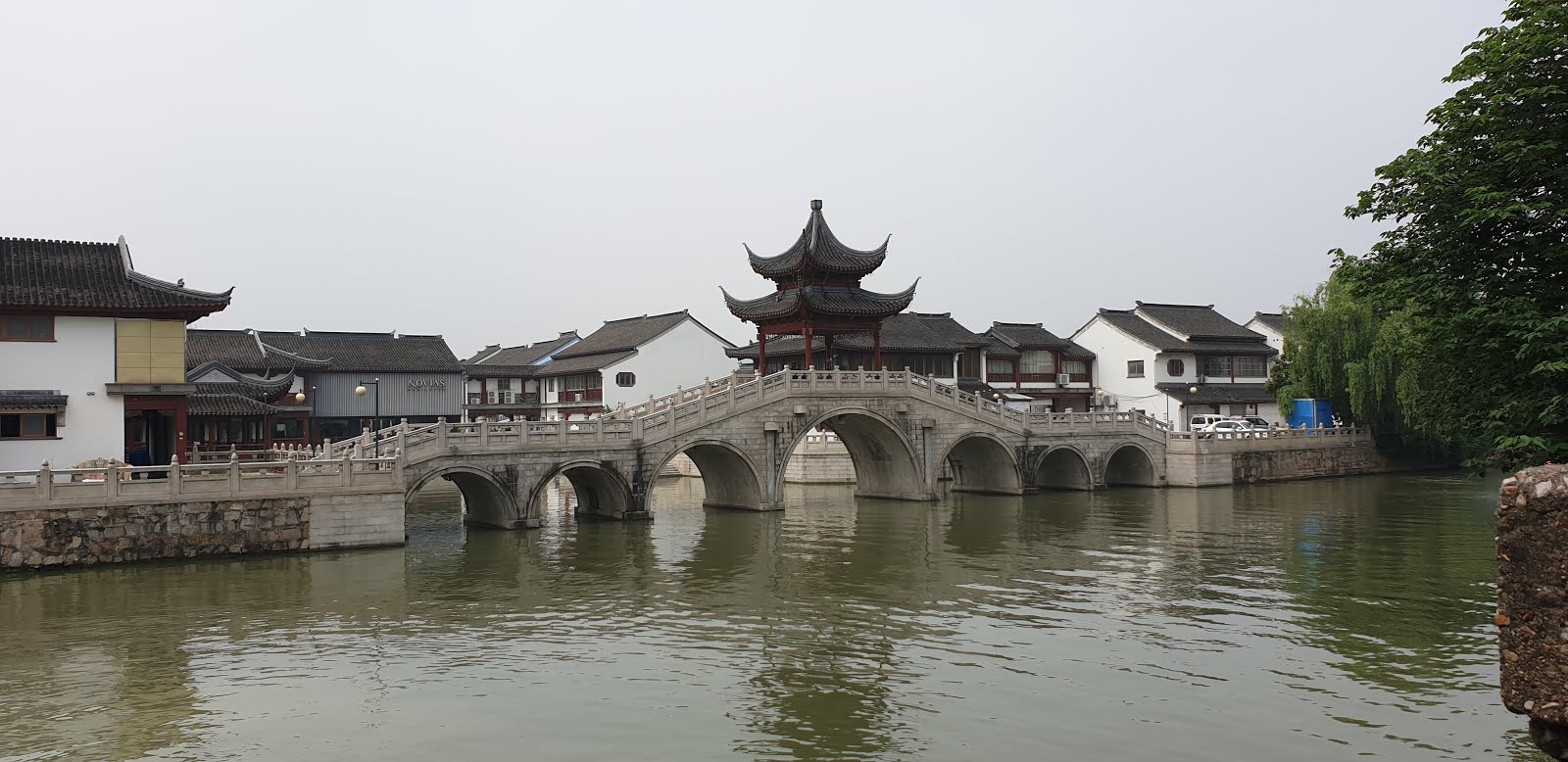
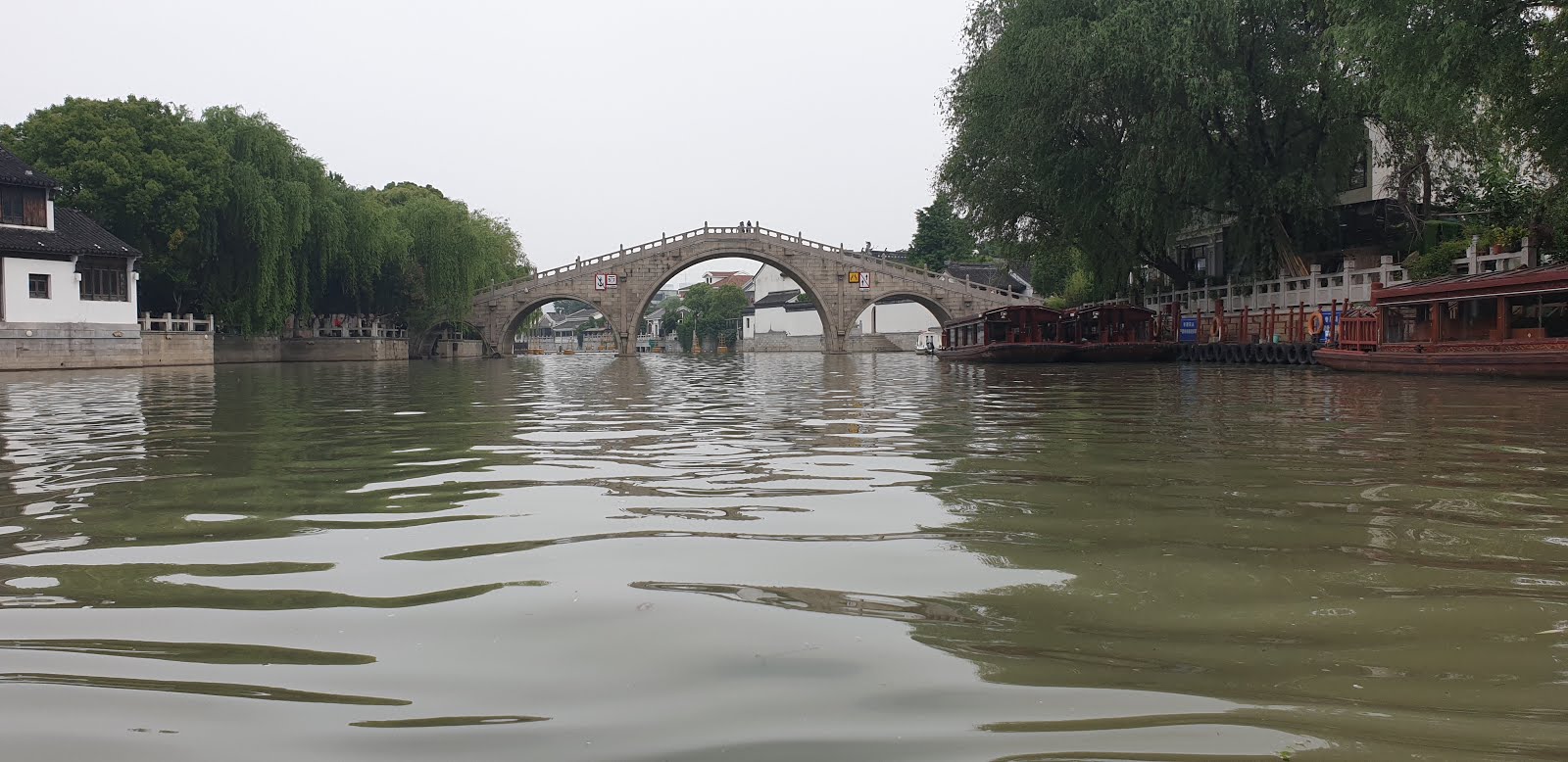
This morning is a boat ride that will take us along a small portion of the main canal, and we head through a number of back streets, to a landing where there are a number of boats all vying with each other to get us passengers on boats.

But…

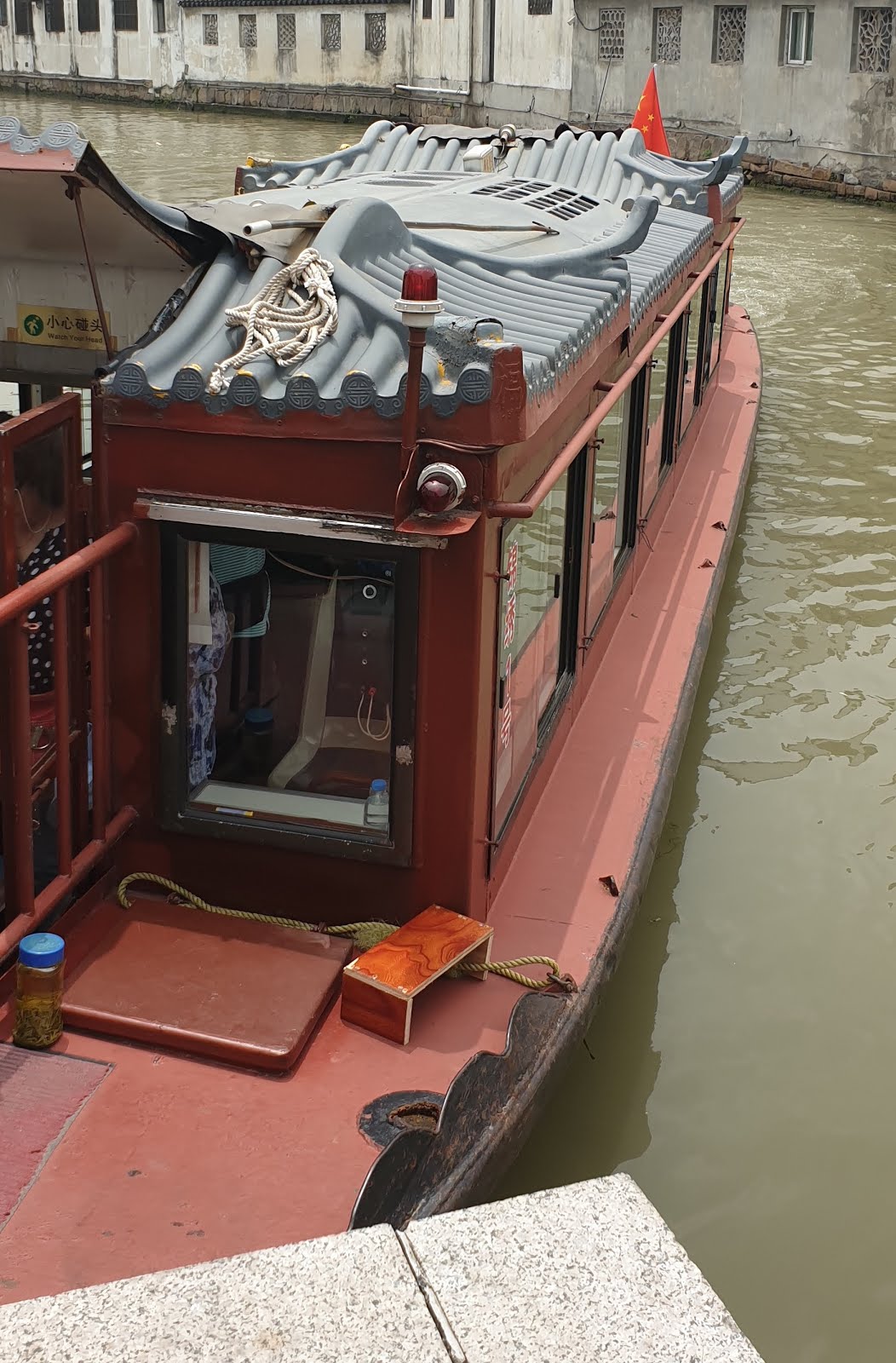
These boats don’t have a wharf to tie up to and then put out a stable gangplank.  No.  They just more into a concrete step and you take your life in your hands getting on.  One wrong step and you’re in the canal.  And not a very clean one at that.

That’s if another boat doesn’t come along and bumps you, knocking you off balance.  We managed not to lose anyone in boarding the vessel.

This is where we get on the boat

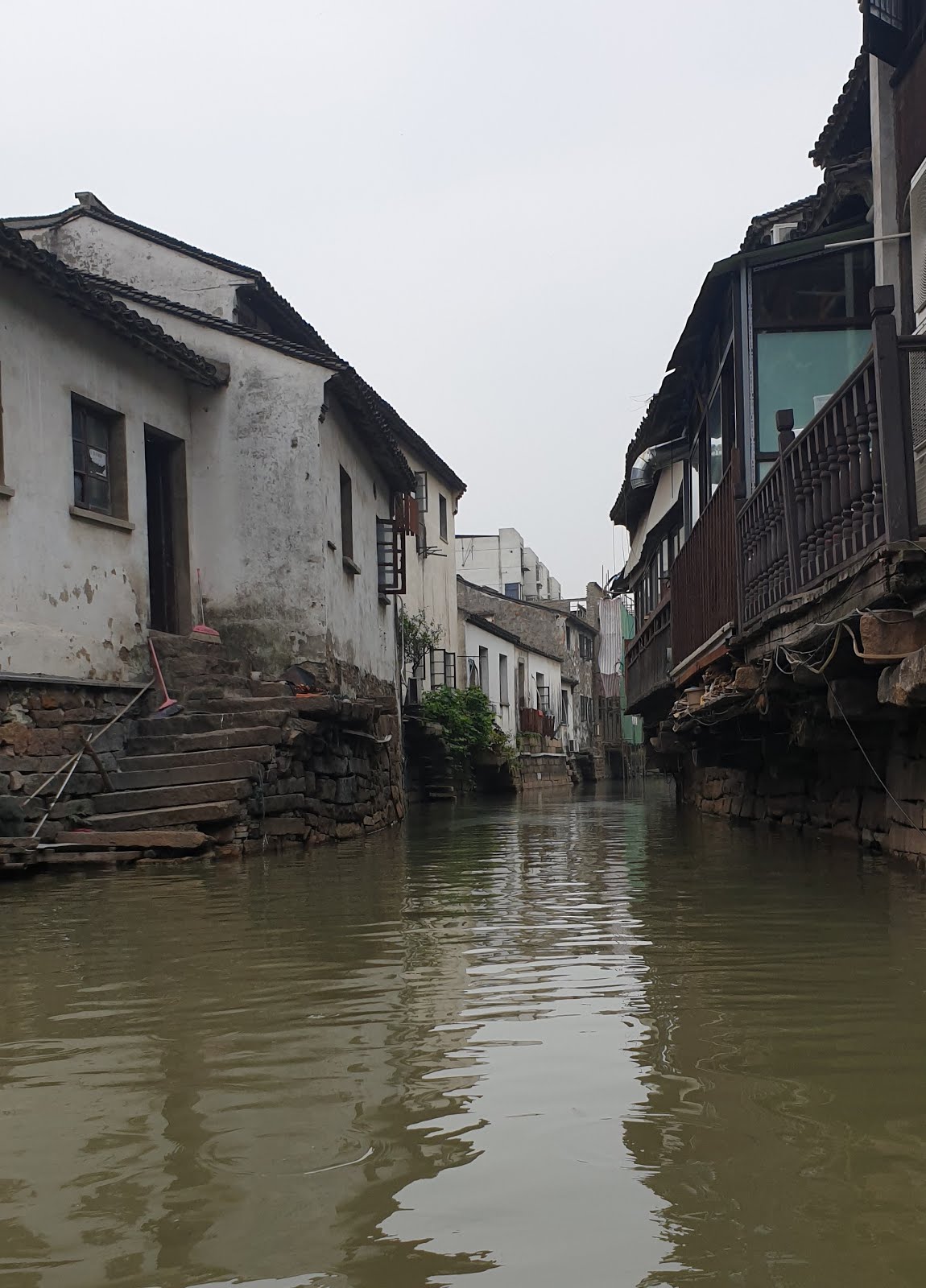
We go along what appears to be downstream towards another larger canal, past tree-lined streets until the canal narrows and we’re looking at the backs of houses, which look very dilapidated.

And the canals?  Well, it’s not quite like it is in Venice

Though some parts of the canal look better than others

What doesn’t bear thinking about is the electrical wiring which is a nightmarish spider web of cables going off in all directions.  How anyone could troubleshoot problems is beyond me.

We pass under a number of bridges, and then, about 30 minutes after leaving, we reach a larger canal and do a 180-degree turn, and head back to a drop off point the will enable us to walk through a typical everyday Chinese market for food and the other items.

This drop off point is much the same as the starting point, a concrete step which is as hazardous as the first.  At least we don’t have to compete with other boats for the landing spot.

We take a leisurely stroll down a small section of Pingjiang Road with small shops on either side, selling all manner of goods

but my interest is in the food and the prices, which at times seem quite expensive for so-called local people, so maybe because the tourists go down this street every day, the prices have been inflated accordingly.

I find it rather disappointing.

We walk to the bridge, go under to the other side crossing the canal and find the coffee shop which is also the meeting place.

So…

When is a coffee shop not a coffee shop, when it takes an eternity to make a cup of coffee, we waited 25 minutes?

We also ordered beef black pepper rice and it took 20 minutes before it arrived, but it was well worth the wait.  Strands of perfectly cooked beef with onion, carrot, and capsicum, with a very peppery and spicy sauce, with a side of boiled rice.

A pizza was ordered too but it did not arrive at all before we left.