NaNoWriMo – April – 2023 — Day 10

“The Things We Do For Love”

The course of love never runs smoothly. 

After the disappointment, Henry is on a plane heading to what he hopes will be a wonderful day.  That first meeting, she comes to the airport, appears as an exquisite vision.

A perfect morning, but when lunch beckons, her mood changes and they are suddenly in a whole different world, she has changed completely.

Questions but no substantive answers, she apologises, and they move on, but the mood does not return.  Henry now realizes something is terribly wrong.

The past always catches up with you eventually.

What Michelle could not tell him is that someone from her past, someone she had hoped never to see again, appears, and everything she had hoped for is ripped out from under her.

There is no hiding, and those who swore to protect her, have no choice but to give her up.

And, for them, there is no room for Henry, no possibility of love.

In order for them not to hurt him, she must tell him they can never be together.

Words written 3,505, for a total of 33,410

The A to Z Challenge – 2023 — H is for Hallowed

It was not more than twenty minutes since I’d walked in the door after attending the funeral, and then the wake, for my parents who had died in a motor vehicle accident in the south of France.

I’d met a man I’d never seen before who had given me an ancient envelope before he disappeared, in which there was a note and a copy of my father’s will.

The family solicitor, Lawrence Wellingham, who had attended the funeral and who told me he did not have a current will, had visited me not long after I got home, a man who had told me that anyone who said my parents had died, other than from an accident was to be ignored.

With the will had been a letter, my father saying if he died in an accident, it was likely not an accident, and to contact a man called Albert Stritching.

Then, not five minutes after Lawrence Wellingham left, Albert Stritching called.

It was a series of events that defied explanation.

After a few moments to get over the shock of hearing the name so soon, I said, “The same Albert Stritching my fathers said I needed to talk to if anything happened to him?”

“He left you a note?”

“Were you the person at the funeral who handed me the envelope?”

“I didn’t know there was a funeral.  What man?”

“About 70, grey hair, beard, blue Italian suit, brown shoes, the shoes seemed an odd addition.  Tie was old school, Eton, I think.

“Sir Percival.  We all went to school together, a long time ago.  He was what you might call, your father’s boss, mine too for that matter, when I worked in the same department.”

“What did my father, and you, do?”

“That is a long story.  We need to meet, as soon as possible.  What I can tell you, for now, is that you need to be careful.  Do you have anyone with you?”

“No.”

“I assume you are currently at your father’s house?”

“Yes.”

“OK.  Stay there, and I’ll send someone over, just to make sure you’re safe.  Her name is Genevieve, one of our personal protection officers.  Her identification code is your father’s middle name.  You do know it?”

“Yes.”

“Good.  Don’t answer the phone, or the door till she gets there.”

It was odd to think that trouble would come to what my father often referred to as hallowed ground.  The house was his sanctuary, a place no one knew about, a place he never invited anyone but family.  Not even close friends.

The thought, or notion, that trouble could visit here was preposterous.

And yet…

I heard the sound of a high-powered motorcycle from the distance, slowly getting louder until it stopped not far from my front door.  Peering through the front window from behind the curtains, I saw a figure dismount, take off the helmet and shake out a lot of blonde hair.

She looked too young to be in personal protection.

Carrying the helmet in one hand, she came up the path to the front door and knocked.

I left the door shut and yelled out, “Who are you?”

“I was sent by Albert Stritching.  My name is Genevieve.”

I opened the door a fraction, leaving the safety chain attached.

“The identification code?”

“Alwyn.”

I closed the door, removed the chain, and opened it for her to pass.  A look down the path to see if anyone was following her, which there was not, and I shut it.

“Anyone call or ring,” she asked, looking around the room.

It was old and musty smelling because it rarely got any sunlight.  The fire I’d lit earlier in the morning before going out, was slowly reviving after I’d put some more wood on the embers.  In another half hour, the temperature in the room would be above freezing.

“No.  What happens now?”

“I stay until Mr Stritching arrives, sometime tomorrow.  In fact, I have been assigned to mind you for the next few days.  All I can tell you is that it is possible your life is in danger.  And your parents were murdered.  We don’t yet know by whom, or why.  I assume your father didn’t tell you what he was doing?”

“Other than going on a well-earned, his words, holiday with my mother, no.”

“I assume you don’t normally stay in this house.”

“Not normally, but I have for the past three and a half months while they were away.  I sometimes house-sit for them.  My father told me that when he got back, we would talk about the future.  I guess that’s impossible now.”

“Didn’t leave anything to read in case of his untimely demise?”

The girl was asking a lot of questions for someone who was supposed to be a bodyguard.  Was she more than that, like another fixer for the same organisation my father now appeared to work for?

“No.”

“Anything at all?”

I decided then and there I was not going to tell this person anything, especially about the note.  “Nothing.  Had the police not come to inform me, they would still be travelling in Europe somewhere, blissfully unaware, a state I’m beginning to wonder may never return.

“Mind if I have a look around, see how secure the place is?”

“Sure.  If you’re staying, there’s a choice of three rooms on the left side of the corridor.  Mine is on the right.”

The notion that I could be in danger seemed to me to be a little over the top.  I had no contact with my father over anything concerning his business.  In fact, I knew very little about his business, being told back then, that he was independently wealthy, whatever that meant, and was free to pick whatever projects he felt like doing.

He was also a diplomat, because we spent time in various countries all over Europe, mostly, and several in Africa because of his fascination with the old British colonies in Tanzania, Uganda, what was once Rhodesia, Nigeria and a few others.  Those appointments were hard on our mother, and I suspect, contributed to her early death.

After that, she often complained about recurring bouts of ‘jungle sickness’, though later I suspected had a lot to do with an alcohol problem.

I had been spending a lot of time in the study/library, a very large room on the ground floor that backed onto the rear garden, with a large veranda with windows floor to ceiling.  The library consisted of thousands of books on every aspect of the British Commonwealth, from when it was East India Company, through the British Empire, to a token amalgamation of sometimes hostile countries.

My father had been working on a book, and he had left notes, exercise books filled with scribbling, scrapbooks with newspaper clippings, some about himself, a ream of typewritten chapters of which some read like a memoir, others like the ramblings of a lecturer.

It was a project, now that he was gone, that I was considering taking up and finishing, perhaps as his legacy.

Oddly, there was not one word of any extracurricular activities, the sort of stuff that would fill a spy novel.

I was just reading a chapter on Uganda, Idi Amin, and a proposal to Princess Anne when I heard a loud bang.  Then another, closer to the study, coming from what I thought was outside the front of the house.

Cautiously I approached the door and peered out.

I could see Genevieve, gun in hand, sweeping for … what?

“Stay in the study,” she said.

I heard her go out the front door and close it behind her.

Five minutes, there were several more gunshots, then silence.

A minute later the front door opened, and I heard what sounded like someone falling on the floor.  I went out, then to the front of the house where, inside the door, there was what looked like a man lying still on the floor, blood stains beside it.

A few seconds after that Genevieve came in and closed the door.  “We have a problem.”  She had a phone to her ear, waiting.  Then, “Send the cleaners.  They sent two assassins, got the Professor, and I got them.  The Professor needs medical help as soon as possible.”

That was the extent of the call.  She looked at me.  “You got a medical kit,”

“Yes.”  I went back to the study and got what was a briefcase with a red cross on it.  It was more sophisticated than the usual medical kit a house would have.  It was more suited to a doctor’s surgery.

I brought it to her.  She had the man lying on his back, and I could see who it was.

The man at the funeral who gave me the yellow envelope.

© Charles Heath 2023

Why is writing so hard

In just about every book about how to be a good writer, there seems to be a pile of problems that at some time in a writer’s life will need to be overcome.

Writer’s block

Don’t have it.  The ideas pour out of my head like water over a waterfall

Don’t use abstract descriptions in your writing

Damn, I do that all the time

But, back to writer’s block, is that where you write 37 chapters and there the story stops?

Oops.

Plan your book and have an outline so you can write it from start to finish

Plan?  What Plan?

That only happens when I’ve written the book and prior to the first edit, I make a precise of each chapter to make sure of continuity.

Plan your characters and give them a timeline

Oh God is that why characters’ names are often changing as the story progresses.

Believe it or not, I’m working on this issue.

Manage your time.

Still can’t get it right.

Write at least a thousand words a day, no matter if it’s rubbish or not.

Does that include writing for social media?

Apparently not.

At least this is one of the requirements I follow religiously. Sometimes it’s a lot more words but a least some writing finished up either on paper in on the word processor.

Now it’s time to write those thousand words.

Look, there, I’ve at least got one part of time management under control.

A photograph from the inspirational bin – 21

Looking for something to suit my mood.

I’ve been reading the headlines and it seems that nothing else is going on except COVID 19, bar a plane crash, and residual fallout from the explosion in Beirut.

All bad news unfortunately, so I need to find something uplifting.

There’s nothing like a walk in the park on a bright sunny day.
Is there?

What could possible happen?

I always wanted to see the planets – Episode 3

Meanwhile, space is still waiting…

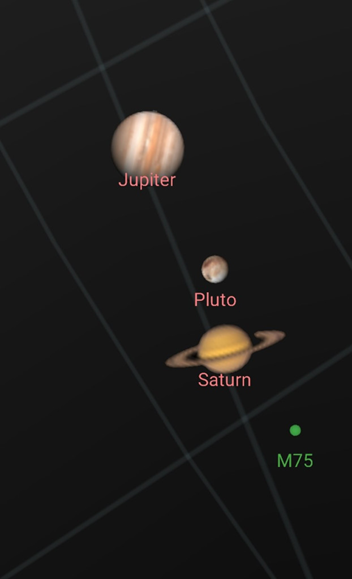
Back on the spaceship, after a last glance at the screen that had the same planets, just in a different perspective, and representing what we’re heading to:

It’s still debatable whether we’re going to get out of the dock.

The Captain requested me to go down and personally find out what was happening down in the bowels of the ship, and I’d just risked life and limb in the elevator that wasn’t working properly not 24 hours before. Now, the doors having opened, and after a huge sigh of relief, I step into the maelstrom.

The engine room, if it could be called that, looks like a shopping mall at Christmas, with the centre piece looking like a set of constantly strobing lights, and around it, people with computer pads, looking for answers.

I doubt whether any or all of the information they required was going to be in the central computer system because it was too new.

Whatever happened to paper manuals? Oh, sorry, that was so twenty first century.

I felt like I was walking against the tide until I see the Chief Engineer, hands in pockets, not look in the least perturbed.

No, he’s not Scottish. To be honest, I’m not sure where he comes from, I hadn’t got acquainted in the short time we’ve all been aboard.

He sees me coming, and I’m surprised he knows who I am.

“Captain send you?”

He broke away from one of his assistants, and turned towards me.

“He could have just asked you himself,” I said.

He shook his head. “He doesn’t work like that. Prefers the personal touch.”

“What’s happening?”

“Everything and nothing. New modifications are not infallible, but it appears to be just a glitch. The builders are on it, so we’ll have an answer soon.”

“Your opinion?”

“Doesn’t pay to have opinions, only answers.”

A wave from the other side of the room was accompanied by a change in the strobing lights, and a different sound.

“Good news,” he said. “By the time you get back to the bridge, everything will be fine.”

The activity hadn’t lessened given the resolution. “You sure?”

“Nothing’s written in stone. Try crossing your fingers.” With that he left me, and I headed towards to the lift.

© Charles Heath 2021

NaNoWriMo – April – 2023 — Day 9

“The Things We Do For Love”

Henry writes a letter and sends it.   He’s disappointed when after a week there is no reply.  He resigns himself to the thought he might never see her again.

Michelle gets a message concerning a person from her past, one who was helpful even when she was at her worst.  But, it could be a trap because one of the people she was hiding from knew of his association with her.

Then a real letter arrives, one from Henry, but it is not fully of his undying love for her, removing him from the status of the knight in shining armour.  What was she expecting, and then remembered she had told him expectation ruined everything.

This was her reality, not what it had been with him.  She was hiding, she was alone, and she was afraid.  All the time.

She writes back, reassuring him, and admonishing his writing skill.

He in turn tries harder to improve, and then advises her it might be possible to meet again giving her a date and time.

Plans are made and plans are dashed, and more plans are made, and there springs a possibility.

Words written 2,939, for a total of 29,905

Back to those ‘old days’ again

I started out by saying I didn’t want to be a lone voice in the wilderness.

Apparently I am, still.

Well, that might be a little harsh in the circumstances, but the monkey on my shoulder is telling me I should start writing something that someone might want to read.

I guess the trials and tribulations of a writer who basically is a lone voice in the wilderness is as boring as everyday life.

I mean, who wants to read about someone’s miserable, or, on rare occasions, good, day.

Yet, if I was to pick up any book written in the 18th and 19th century, all it seems to be about is everyday life, but what makes it interesting is the fact we never lived it, nor realized how hard it was for some, and how good it could be for others.

Best not to be born poor.

So, I was wondering, in 200 years time when someone sits down to read about the vicissitudes of my life, will it be interesting to know what it was like back in the ‘old days’ that is really today for me?

Interesting how a change in time frame makes something interesting, and ‘classic’ literature.

But one difference between then and now is the fact we, today, can write about science fiction, spies and all manner of events that come out of recent inventions.  Odd too, that people are still the same, those that tell the truth, those that are pure of heart, those who are as evil as the devil himself.

Some things never change.

Just the when, where, and how.

An excerpt from “What Sets Us Apart”, a mystery with a twist

See the excerpt from the story below, just a taste of what’s in store…

http://amzn.to/2Eryfth

whatsetscover

McCallister was old school, a man who would most likely fit in perfectly campaigning on the battlefields of Europe during the Second World War. He’d been like a fish out of water in the army, post-Falklands, and while he retired a hero, he still felt he’d more to give.

He’d applied and was accepted as head of a SWAT team, and, watching him now as he and his men disembarked from the truck in almost military precision, a look passed between Annette, the police liaison officer, and I that said she’d seen it all before. I know I had.

There was a one in four chance his team would be selected for this operation, and she had been hoping it would be one of the other three. While waiting for them to arrive she filled me in on the various teams. His was the least co-operative, and the more likely to make ad-hoc decisions rather than adhere to the plan, or any orders that may come from the officer in charge.

This, she said quite bluntly, was going to end badly.

I still had no idea why Prendergast instructed me to attend the scene of what looked to be a normal domestic operation, but as the nominated expert in the field in these types of situations, it was fairly clear he wasn’t taking any chances. It was always a matter of opinion between us, and generally I lost.

In this case, it was an anonymous report identifying what the authorities believed were explosives in one of the dockside sheds where explosives were not supposed to be.

The only reason why the report was given any credence was the man, while not identifying himself by name, said he’d been an explosive expert once and recognized the boxes. That could mean anything, but the Chief Constable was a cautious man.

With his men settled and preparing their weapons, McCallister came over to the command post, not much more than the SUV my liaison and I arrived in, with weapons, bulletproof vests, and rolls of tape to cordon off the area afterward. We both had coffee, steaming in the cold early morning air. Dawn was slowly approaching and although rain had been forecast it had yet to arrive.

A man by the name of Benson was in charge. He too had groaned when he saw McCallister.

“A fine morning for it.” McCallister was the only enthusiastic one here.

He didn’t say what ‘it’ was, but I thought it might eventually be mayhem.

“Let’s hope the rain stays away. It’s going to be difficult enough without it,” Benson said, rubbing his hands together. We had been waiting for the SWAT team to arrive, and another team to take up their position under the wharf, and who was in the final stages of securing their position.

While we were waiting we drew up the plan. I’d go in first to check on what we were dealing with, and what type of explosives. The SWAT team, in the meantime, were to ensure all the exits to the shed were covered. When I gave the signal, they were to enter and secure the building. We were not expecting anyone inside or out, and no movement had been detected in the last hour since our arrival and deployment.

“What’s the current situation?”

“I’ve got eyes on the building, and a team coming in from the waterside, underneath. Its slow progress, but they’re nearly there. Once they’re in place, we’re sending McKenzie in.”

He looked in my direction.

“With due respect sir, shouldn’t it be one of us?” McCallister glared at me with the contempt that only a decorated military officer could.

“No. I have orders from above, much higher than I care to argue with, so, McCallister, no gung-ho heroics for the moment. Just be ready to move on my command, and make sure you have three teams at the exit points, ready to secure the building.”

McCallister opened his mouth, no doubt to question those orders, but instead closed it again. “Yes sir,” he muttered and turned away heading back to his men.

“You’re not going to have much time before he storms the battlements,” Benson quietly said to me, a hint of exasperation in his tone. “I’m dreading the paperwork.”

It was exactly what my liaison officer said when she saw McCallister arriving.

The water team sent their ‘in position’ signal, and we were ready to go.

In the hour or so we’d been on site nothing had stirred, no arrivals, no departures, and no sign anyone was inside, but that didn’t mean we were alone. Nor did it mean I was going to walk in and see immediately what was going on. If it was a cache of explosives then it was possible the building was booby-trapped in any number of ways, there could be sentries or guards, and they had eyes on us, or it might be a false alarm.

I was hoping for the latter.

I put on the bulletproof vest, thinking it was a poor substitute for full battle armor against an exploding bomb, but we were still treating this as a ‘suspected’ case. I noticed my liaison officer was pulling on her bulletproof vest too.

“You don’t have to go. This is my party, not yours,” I said.

“The Chief Constable told me to stick to you like glue, sir.”

I looked at Benson. “Talk some sense into her please, this is not a kindergarten outing.”

He shrugged. Seeing McCallister had taken all the fight out of him. “Orders are orders. If that’s what the Chief Constable requested …”

Madness. I glared at her, and she gave me a wan smile. “Stay behind me then, and don’t do anything stupid.”

“Believe me, I won’t be.” She pulled out and checked her weapon, chambering the first round. It made a reassuring sound.

Suited up, weapons readied, a last sip of the coffee in a stomach that was already churning from nerves and tension, I looked at the target, one hundred yards distant and thought it was going to be the longest hundred yards I’d ever traversed. At least for this week.

A swirling mist rolled in and caused a slight change in plans.

Because the front of the buildings was constantly illuminated by large overhead arc lamps, my intention had been to approach the building from the rear where there was less light and more cover. Despite the lack of movement, if there were explosives in that building, there’d be ‘enemy’ surveillance somewhere, and, after making that assumption, I believed it was going to be easier and less noticeable to use the darkness as a cover.

It was a result of the consultation, and studying the plans of the warehouse, plans that showed three entrances, the main front hangar type doors, a side entrance for truck entry and exit and a small door in the rear, at the end of an internal passage leading to several offices. I also assumed it was the exit used when smokers needed a break. Our entry would be by the rear door or failing that, the side entrance where a door was built into the larger sliding doors. In both cases, the locks would not present a problem.

The change in the weather made the approach shorter, and given the density of the mist now turning into a fog, we were able to approach by the front, hugging the walls, and moving quickly while there was cover. I could feel the dampness of the mist and shivered more than once.

It was nerves more than the cold.

I could also feel rather than see the presence of Annette behind me, and once felt her breath on my neck when we stopped for a quick reconnaissance.

It was the same for McCallister’s men. I could feel them following us, quickly and quietly, and expected, if I turned around, to see him breathing down my neck too.

It added to the tension.

My plan was still to enter by the back door.

We slipped up the alley between the two sheds to the rear corner and stopped. I heard a noise coming from the rear of the building, and the light tap on the shoulder told me Annette had heard it too. I put my hand up to signal her to wait, and as a swirl of mist rolled in, I slipped around the corner heading towards where I’d last seen the glow of a cigarette.

The mist cleared, and we saw each other at the same time. He was a bearded man in battle fatigues, not the average dockside security guard.

He was quick, but my slight element of surprise was his undoing, and he was down and unconscious in less than a few seconds with barely a sound beyond the body hitting the ground. Zip ties secured his hands and legs, and tape his mouth. Annette joined me a minute after securing him.

A glance at the body then me, “I can see why they, whoever they are, sent you.”

She’d asked who I worked for, and I didn’t answer. It was best she didn’t know.

“Stay behind me,” I said, more urgency in my tone. If there was one, there’d be another.

Luck was with us so far. A man outside smoking meant no booby traps on the back door, and quite possibly there’d be none inside. But it indicated there were more men inside, and if so, it appeared they were very well trained. If that were the case, they would be formidable opponents.

The fear factor increased exponentially.

I slowly opened the door and looked in. A pale light shone from within the warehouse itself, one that was not bright enough to be detected from outside. None of the offices had lights on, so it was possible they were vacant. I realized then they had blacked out the windows. Why hadn’t someone checked this?

Once inside, the door closed behind us, progress was slow and careful. She remained directly behind me, gun ready to shoot anything that moved. I had a momentary thought for McCallister and his men, securing the perimeter.

At the end of the corridor, the extent of the warehouse stretched before us. The pale lighting made it seem like a vast empty cavern, except for a long trestle table along one side, and, behind it, stacks of wooden crates, some opened. It looked like a production line.

To get to the table from where we were was a ten-yard walk in the open. There was no cover. If we stuck to the walls, there was equally no cover and a longer walk.

We needed a distraction.

As if on cue, the two main entrances disintegrated into flying shrapnel accompanied by a deafening explosion that momentarily disoriented both Annette and I. Through the smoke and dust kicked up I saw three men appear from behind the wooden crates, each with what looked like machine guns, spraying bullets in the direction of the incoming SWAT members.

They never had a chance, cut down before they made ten steps into the building.

By the time I’d recovered, my head heavy, eyes watering and ears still ringing, I took several steps towards them, managing to take down two of the gunmen but not the third.

I heard a voice, Annette’s I think, yell out, “Oh, God, he’s got a trigger,” just before another explosion, though all I remember in that split second was a bright flash, the intense heat, something very heavy smashing into my chest knocking the wind out of me, and then the sensation of flying, just before I hit the wall.

I spent four weeks in an induced coma, three months being stitched back together and another six learning to do all those basic actions everyone took for granted. It was twelve months almost to the day when I was released from the hospital, physically, except for a few alterations required after being hit by shrapnel, looking the same as I always had.

But mentally? The document I’d signed on release said it all, ‘not fit for active duty; discharged’.

It was in the name of David Cheney. For all intents and purposes, Alistair McKenzie was killed in that warehouse, and for the first time ever, an agent left the Department, the first to retire alive.

I was not sure I liked the idea of making history.

© Charles Heath 2016-2020

The cinema of my dreams – I always wanted to go on a treasure hunt – Episode 41

Here’s the thing…

Every time I close my eyes, I see something different.

I’d like to think the cinema of my dreams is playing a double feature but it’s a bit like a comedy cartoon night on Fox.

But these dreams are nothing to laugh about.

Once again there’s a new installment of an old feature, and we’re back on the treasure hunt.


The expression of Boggs’s face told me he was down here for a reason, and that assumption was proved correct when he started walking towards the middle of the first row of carpark.  

He stopped at a pylon, surrounded by concrete blocks, tiles and broken bricks that looked like they’d been deliberately piled there.  Light on, he went around the back and emerged with a coil of rope.

I knew then what his intention was.

“You not going down there.  That’s too dangerous.”

“It was, once.  Not anymore.”  He tied one end to the pylon and then unraveled it as he approached me, then three the remainder over the edge. 

I watched it fall, reaching the bottom, conveniently over a rock.  The section that was over the side was knotted at intervals.  Anti-slip knots.  He had come prepared.  OR had come earlier to prepare for this.

“You’ve been here before.”

“Several times.  I was looking for a way to get down to below the second level carpark and would have found this wall had those overzealous security guards not come down at the wrong moment.  Aside from that, I had to wait to do this with you, just in case there was a problem.”

“What sort of a problem?”

I think his definition of a problem was a lot different from mine.  This whole scenario was a problem.  Was he thinking we could get down, take a look at whatever he was looking for, then get back up again?

“The guards might come back while I’m down there.  I might need you to pull me back up.  I don’t know, anything could go wrong.”

“And yet you still intend to do it?”

“Of course.”  

He had a second rope, thinner, that I hadn’t seen till the other went over the side.  He tied that around his waist, pulled on it a few times to check the strength of the knot, then looked over the side.

To me, 30 feet looked like 30 miles.

“Wish me luck.”

I simply shook my head and took the rope when he handed it to me, then, after a minute. Perhaps saying a silent prayer, he went over the side, hanging grimly onto the rope.

“Keep your phone handy.  I may have to call you.”

Then he was gone.  It took a minute for me to gather the courage to look over the side again, and by that time, he was almost to the rock.  Two more knots, I saw his feet touch down.  There was no moss on it, and it looked worn smooth from a lot of water over a long period.

He looked up at me.  “It’s like a huge cave.”  Phone in hand, he disappeared under the carpark floor.

A closer look at the gap he had just walked through looked like it once had a wall there, but it had been broken away, leaving only the skeleton of reinforcing steel under to floor lip.  There were also traces of the reinforcement anchors drilled into the rock below.  It was obvious the force of the water had built up like flooding into a dam, and if the pressure was too much, the dam wall broke.

Well, that was never meant to be a dam, just a retaining wall for filling upon which the bottom carpark was built.

I think we could now positively identify this site as one of the two rivers that had existed back when the pirates worked this part of the coast.

Boggs was gone for about half an hour, so I found a spot to sit down and wait.  He signaled me by yanking on the rope.

I stood up by the edge and pulled the rope in as he came back up, then, after a few minutes, he clambered over the side.

“We have to get going,” he said.  “I think we can safely say this is the first of the rivers.”

He untied the rope around his waist, pulled the knotted rope up, coiled them and put them back behind the pylon.

As we headed back up to the mall level, he said, “I took some pictures of the body in the water.  It looked like someone had tossed a mannequin in there, perhaps back before they sealed off the parking area. That’s only been there for a few years, judging by the rust on the latch, and hinges.”

“And down in the cave-like area?”

“The river, now only a stream, but running water none the less.  Where it goes from there to the ocean, is not necessarily a requirement to discover.  I thought it fed the marina pool directly, but it doesn’t.  They actually have a pump house and pumped the water into the pool which is why it had to be treated to keep it clean.”

So that was the odd smell that came from it.  It had been a constant battle to keep the water clean and fresh and keep the fish in it from dying.  There had also seemed like a child screaming at the sight of a dead fish floating among the water lilies.

Approaching the pond we both heard what sounded like a brick dropping on the floor, and turned to look behind us.  It was like peering into the gloom of a foggy night.

Boggs shrugged.  “Must be a ghost.”  Then he kept on walking.

I might have agreed with him, by back at the stairs where we had just come from, I thought I saw a splash of bright yellow move very quickly out of sight.  It could have been my imagination, but I also thought I saw a light for a second before it was extinguished.

Ghosts didn’t carry lights.  Someone else was down here, perhaps kids exploring.  Despite the hazard signs, that meant little to kids who had nothing better to do.

I waited for a minute so so, until Boggs flashed his light in my direction, and asked, “You coming?”

There was no more movement, so it had to be my overactive imagination at work again.

“Yep, coming.”  I ran to catch up.

We quickly passed the pond and overgrown garden and made it back to the hole in the wall, with an hour to spare before I had to get to the warehouse and start my shift.

“Did you find what you’re looking for?”

“Yes.  We’re on the right track.  Next, we have to find the other river.”


We made it back to the bikes and headed back towards the town.  On the way, we were overtaken by a van with Benderby Security Services on the side of it, going too fast, and nearly knocked both Boggs and me off our bikes.

In the struggle to stay on the bike, I happened to see the man on the passenger side.  It was one of the two men who had been down by the pond, earlier.  If there were any bodies down there, they belonged to Benderby.  Good to know.

© Charles Heath 2020

An excerpt from “Mistaken Identity” – a work in progress

The odds of any one of us having a doppelganger are quite high. Whether or not you got to meet him or her, or be confronted by them was significantly lower. Except of course, unless you are a celebrity.

It was a phenomenon remarkable only for the fact, at times, certain high-profile people, notorious or not, had doubles if only to put off enemies or the general public. Sometimes we see people in the street, people who look like someone we knew, and made the mistake of approaching them like a long lost friend, only to discover an embarrassed individual desperately trying to get away for what they perceive is a stalker or worse.

And then sometimes it is a picture that looms up on a TV screen, an almost exact likeness of you. At first, you are fascinated, and then according to the circumstances, and narrative that is attached to that picture, either flattered or horrified.

For me one turned to the other when I saw an almost likeness of me flash up on the screen when I turned the TV on in my room. What looked to be my photo, with only minor differences, was in the corner of the screen, the newsreader speaking in rapid Italian, so fast I could only translate every second or third word.

But the one word I did recognize was murder. The photo of the man up on the screen was the subject of an extensive manhunt. The crime, the murder of a woman in the very same hotel I was staying, and it was being played out live several floors above me. The gist of the story, the woman had been seen with, and staying with the man who was my double, and, less than an hour ago, the body had been discovered by a chambermaid.

The killer, the announcer said, was believed to be still in the hotel because the woman had died shortly before she had been discovered.

I watched, at first fascinated at what I was seeing. I guess I should have been horrified, but at that moment it didn’t register that I might be mistaken for that man.

Not until another five minutes had passed, and I was watching the police in full riot gear, with a camera crew following behind, coming up a passage towards a room. Live action of the arrest of the suspected killer the breathless commentator said.

Then, suddenly, there was a pounding on the door. On the TV screen, plain to see, was the number of my room.
I looked through the peephole and saw an army of police officers. It didn’t take much to realize what had happened. The hotel staff identified me as the man in the photograph on the TV and called the police.

Horrified wasn’t what I was feeling right then.

It was fear.

My last memory was the door crashing open, the wood splintering, and men rushing into the room, screaming at me, waving guns, and when I put my hands up to defend myself, I heard a gunshot.

And in one very confused and probably near-death experience, I thought I saw my mother and thought what was she doing in Rome?

I was the archetypal nobody.

I lived in a small flat, I drove a nondescript car, had an average job in a low profile travel agency, was single, and currently not involved in a relationship, no children, and according to my workmates, no life.

They were wrong. I was one of those people who preferred their own company, I had a cat, and travelled whenever I could. And I did have a ‘thing’ for Rosalie, one of the reasons why I stayed at the travel agency. I didn’t expect anything to come of it, but one could always hope.

I was both pleased and excited to be going to the conference. It was my first, and the glimpse I had seen of it had whetted my appetite for more information about the nuances of my profession.

Some would say that a travel agent wasn’t much of a job, but to me, it was every bit as demanding as being an accountant or a lawyer. You were providing a customer with a service, and arguably more people needed a travel agent than a lawyer. At least that was what I told myself, as I watched more and more people start using the internet, and our relevance slowly dissipating.

This conference was about countering that trend.

The trip over had been uneventful. I was met at the airport and taken to the hotel where the conference was being held with a number of other delegates who had arrived on the same plane. I had mingled with a number of other delegates at the pre conference get together, including one whose name was Maryanne.

She was an unusual young woman, not the sort that I usually met, because she was the one who was usually surrounded by all the boys, the life of the party. In normal circumstances, I would not have introduced myself to her, but she had approached me. Why did I think that may have been significant? All of this ran through my mind, culminating in the last event on the highlight reel, the door bursting open, men rushing into my room, and then one of the policemen opened fire.

I replayed that last scene again, trying to see the face of my assailant, but it was just a sea of men in battle dress, bullet proof vests and helmets, accompanied by screaming and yelling, some of which I identified as “Get on the floor”.

Then came the shot.

Why ask me to get on the floor if all they were going to do was shoot me. I was putting my hands up at the time, in surrender, not reaching for a weapon.

Then I saw the face again, hovering in the background like a ghost. My mother. Only the hair was different, and her clothes, and then the image was going, perhaps a figment of my imagination brought on by pain killing drugs. I tried to imagine the scene again, but this time it played out, without the image of my mother.

I opened my eyes took stock of my surroundings. What I felt in that exact moment couldn’t be described. I should most likely be dead, the result of a gunshot wound. I guess I should be thankful the shooter hadn’t aimed at anything vital, but that was the only item on the plus side.

I was in a hospital room with a policeman by the door. He was reading a newspaper, and sitting uncomfortably on a small chair. He gave me a quick glance when he heard me move slightly, but didn’t acknowledge me with either a nod, or a greeting, just went back to the paper.

If I still had a police guard, then I was still considered a suspect. What was interesting was that I was not handcuffed to the bed. Perhaps that only happened in TV shows. Or maybe they knew I couldn’t run because my injuries were too serious. Or the guard would shoot me long before my feet hit the floor. I knew the police well enough now to know they would shoot first and ask questions later.

On the physical side, I had a large bandage over the top left corner of my chest, extending over my shoulder. A little poking and prodding determined the bullet had hit somewhere between the top of my rib cage and my shoulder. Nothing vital there, but my arm might be somewhat useless for a while, depending on what the bullet hit on the way in, or through.

It didn’t feel like there were any broken or damaged bones.

That was the good news.

On the other side of the ledger, my mental state, there was only one word that could describe it. Terrified. I was looking at a murder charge and jail time, a lot of it. Murder usually had a long time in jail attached to it.

Whatever had happened, I didn’t do it. I know I didn’t do it, but I had to try and explain this to people who had already made up their minds. I searched my mind for evidence. It was there, but in the confused state brought on by the medication, all I could think about was jail, and the sort of company I was going to have.

I think death would have been preferable.

Half an hour later, maybe longer, I was drifting in an out of consciousness, a nurse, or what I thought was a nurse, came into the room. The guard stood, checked her ID card, and then stood by the door.

She came over and stood beside the bed. “How are you?” she asked, first in Italian, and when I pretended I didn’t understand, she asked the same question in accented English.

“Alive, I guess,” I said. “No one has come and told what my condition is yet. You are my first visitor. Can you tell me?”

“Of course. You are very lucky to be alive. You will be fine and make a full recovery. The doctors here are excellent at their work.”

“What happens now?”

“I check you, and then you have a another visitor. He is from the British Embassy I think. But he will have to wait until I have finished my examination.”

I realized then she was a doctor, not a nurse.

My second visitor was a man, dressed in a suit the sort of which I associated with the British Civil Service.  He was not very old which told me he was probably a recent graduate on his first posting, the junior officer who drew the short straw.

The guard checked his ID but again did not leave the room, sitting back down and going back to his newspaper.

My visitor introduced himself as Alex Jordan from the British Embassy in Rome and that he had been asked by the Ambassador to sort out what he labelled a tricky mess.

For starters, it was good to see that someone cared about what happened to me.  But, equally, I knew the mantra, get into trouble overseas, and there is not much we can do to help you.  So, after that lengthy introduction, I had to wonder why he was here.

I said, “They think I am an international criminal by the name of Jacob Westerbury, whose picture looks just like me, and apparently for them it is an open and shut case.”  I could still hear the fragments of the yelling as the police burst through the door, at the same time telling me to get on the floor with my hands over my head.

“It’s not.  They know they’ve got the wrong man, which is why I’m here.  There is the issue of what had been described as excessive force, and the fact you were shot had made it an all-round embarrassment for them.”

“Then why are you here?  Shouldn’t they be here apologizing?”

“That is why you have another visitor.  I only took precedence because I insisted I speak with you first.  I have come, basically to ask you for a favour.  This situation has afforded us with an opportunity.  We would like you to sign the official document which basically indemnifies them against any legal proceedings.”

Curious.  What sort of opportunity was he talking about?  Was this a matter than could get difficult and I could be charged by the Italian Government, even if I wasn’t guilty, or was it one of those hush hush type deals, you do this for us, we’ll help you out with that.  “What sort of opportunity?”

“We want to get our hands on Jacob Westerbury as much as they do.  They’ve made a mistake, and we’d like to use that to get custody of him if or when he is arrested in this country.  I’m sure you would also like this man brought into custody as soon as possible so you will stop being confused with him.  I can only imagine what it was like to be arrested in the manner you were.  And I would not blame you if you wanted to get some compensation for what they’ve done.  But.  There are bigger issues in play here, and you would be doing this for your country.”

I wondered what would happen if I didn’t agree to his proposal.  I had to ask, “What if I don’t?”

His expression didn’t change.  “I’m sure you are a sensible man Mr Pargeter, who is more than willing to help his country whenever he can.  They have agreed to take care of all your hospital expenses, and refund the cost of the Conference, and travel.  I’m sure I could also get them to pay for a few days at Capri, or Sorrento if you like, before you go home.  What do you say?”

There was only one thing I could say.  Wasn’t it treason if you went against your country’s wishes?

“I’m not an unreasonable man, Alex.  Go do your deal, and I’ll sign the papers.”

“Good man.”

After Alex left, the doctor came back to announce the arrival of a woman, by the way she had announced herself, the publicity officer from the Italian police. When she came into the room, she was not dressed in a uniform.

The doctor left after giving a brief report to the civilian at the door. I understood the gist of it, “The patient has recovered excellently and the wounds are healing as expected. There is no cause for concern.”

That was a relief.

While the doctor was speaking to the civilian, I speculated on who she might be. She was young, not more than thirty, conservatively dressed so an official of some kind, but not necessarily with the police. Did they have prosecutors? I was unfamiliar with the Italian legal system.

She had long wavy black hair and the sort of sultry looks of an Italian movie star, and her presence made me more curious than fearful though I couldn’t say why.

The woman then spoke to the guard, and he reluctantly got up and left the room, closing the door behind him.
She checked the door, and then came back towards me, standing at the end of the bed. Now alone, she said, “A few questions before we begin.” Her English was only slightly accented. “Your name is Jack Pargeter?”

I nodded. “Yes.”

“You are in Rome to attend the Travel Agents Conference at the Hilton Hotel?”

“Yes.”

“You attended a preconference introduction on the evening of the 25th, after arriving from London at approximately 4:25 pm.”

“About that time, yes. I know it was about five when the bus came to collect me, and several others, to take us to the hotel.”

She smiled. It was then I noticed she was reading from a small notepad.

“It was ten past five to be precise. The driver had been held up in traffic. We have a number of witnesses who saw you on the plane, on the bus, at the hotel, and with the aid of closed circuit TV we have established you are not the criminal Jacob Westerbury.”

She put her note book back in her bag and then said, “My name is Vicenza Andretti and I am with the prosecutor’s office. I am here to formally apologize for the situation that can only be described as a case of mistaken identity. I assure you it is not the habit of our police officers to shoot people unless they have a very strong reason for doing so. I understand that in the confusion of the arrest one of our officers accidentally discharged his weapon. We are undergoing a very thorough investigation into the circumstances of this event.”

I was not sure why, but between the time I had spoken to the embassy official and now, something about letting them off so easily was bugging me. I could see why they had sent her. It would be difficult to be angry or annoyed with her.

But I was annoyed.

“Do you often send a whole squad of trigger happy riot police to arrest a single man?” It came out harsher than I intended.

“My men believed they were dealing with a dangerous criminal.”

“Do I look like a dangerous criminal?” And then I realized if it was mistaken identity, the answer would be yes.

She saw the look on my face, and said quietly, “I think you know the answer to that question, Mr. Pargeter.”

“Well, it was overkill.”

“As I said, we are very sorry for the circumstances you now find yourself in. You must understand that we honestly believed we were dealing with an armed and dangerous murderer, and we were acting within our mandate. My department will cover your medical expenses, and any other amounts for the inconvenience this has caused you. I believe you were attending a conference at your hotel. I am very sorry but given the medical circumstances you have, you will have to remain here for a few more days.”

“I guess, then, I should thank you for not killing me.”

Her expression told me that was not the best thing I could have said in the circumstances.

“I mean, I should thank you for the hospital and the care. But a question or two of my own. May I?”

She nodded.

“Did you catch this Jacob Westerbury character?”

“No. In the confusion created by your arrest he escaped. Once we realized we had made a mistake and reviewed the close circuit TV, we tracked him leaving by a rear exit.”

“Are you sure it was one of your men who shot me?”

I watched as her expression changed, to one of surprise.

“You don’t think it was one of my men?”

“Oddly enough no. But don’t ask me why.”

“It is very interesting that you should say that, because in our initial investigation, it appeared none of our officer’s weapons had been discharged. A forensic investigation into the bullet tells us it was one that is used in our weapons, but…”

I could see their dilemma.

“Have you any enemies that would want to shoot you Mr Pargeter?”

That was absurd because I had no enemies, at least none that I knew of, much less anyone who would want me dead.

“Not that I’m aware of.”

“Then it is strange, and will perhaps remain a mystery. I will let you know if anything more is revealed in our investigation.”

She took an envelope out of her briefcase and opened it, pulling out several sheets of paper.

I knew what it was. A verbal apology was one thing, but a signed waiver would cover them legally. They had sent a pretty girl to charm me. Perhaps using anyone else it would not have worked. There was potential for a huge litigation payout here, and someone more ruthless would jump at the chance of making a few million out of the Italian Government.

“We need a signature on this document,” she said.

“Absolving you of any wrong doing?”

“I have apologized. We will take whatever measures are required for your comfort after this event. We are accepting responsibility for our actions, and are being reasonable.”

They were. I took the pen from her and signed the documents.

“You couldn’t add dinner with you on that list of benefits?” No harm in asking.

“I am unfortunately unavailable.”

I smiled. “It wasn’t a request for a date, just dinner. You can tell me about Rome, as only a resident can. Please.”

She looked me up and down, searching for the ulterior motive. When she couldn’t find one, she said, “We shall see once the hospital discharges you in a few days.”

“Then I’ll pencil you in?”

She looked at me quizzically. “What is this pencil me in?”

“It’s an English colloquialism. It means maybe. As when you write something in pencil, it is easy to erase it.”

A momentary frown, then recognition and a smile. “I shall remember that. Thank-you for your time and co-operation Mr. Pargeter. Good morning.”

© Charles Heath 2015-2021