How many of us have skeletons in the closet that we know nothing about? The skeletons we know about generally stay there, but those we do not, well, they have a habit of coming out of left field when we least expect it.
In this case, when you see your photo on a TV screen with the accompanying text that says you are wanted by every law enforcement agency in Europe, you’re in a state of shock, only to be compounded by those same police, armed and menacing, kicking the door down.
I’d been thinking about this premise for a while after I discovered my mother had a boyfriend before she married my father, a boyfriend who was, by all accounts, the man who was the love of her life.
Then, in terms of coming up with an idea for a story, what if she had a child by him that we didn’t know about, which might mean I had a half brother or sister I knew nothing about. It’s not an uncommon occurrence from what I’ve been researching.
There are many ways of putting a spin on this story.
Then, in the back of my mind, I remembered a story an acquaintance at work was once telling us over morning tea, that a friend of a friend had a mother who had a twin sister and that each of the sisters had a son by the same father, without each knowing of the father’s actions, both growing up without the other having any knowledge of their half brother, only to meet by accident on the other side of the world.
It was an encounter that in the scheme of things might never have happened, and each would have remained oblivious of the other.
For one sister, the relationship was over before she discovered she was pregnant, and therefore had not told the man he was a father. It was no surprise the relationship foundered when she discovered he was also having a relationship with her sister, a discovery that caused her to cut all ties with both of them and never speak to either from that day.
It’s a story with more twists and turns than a country lane!
I’m back home and this story has been sitting on the back burner for a few months, waiting for some more to be written.
The trouble is, there are also other stories to write, and I’m not very good at prioritizing.
But, here we are, a few minutes opened up and it didn’t take long to get back into the groove.
Chasing leads, maybe
It was all over in the blink of an eye. The swat team had secured the scene, zip ties, and shoved me into a corner with two burly men standing over me, guns ready in case I tried to escape.
Before the next wave, I had time to consider what just happened. Obviously, Dobbin or Jan had set the scene. She lied about being able to track Maury, they found him, brought him back to the room, tortured him, and then killed him. The few seconds I had to look at the body showed signs of intense interrogation.
A side benefit was to stitch me up for the crime. The fact the police were at the door a minute after I’d arrived meant they had been waiting for me to come back. That pointed to Jan as the informant.
But to what end. If they considered I was the only one who could find the USB, why let me get caught by the police.
Jennifer would be safe. She had been in the foyer a full ten minutes before I arrived, and was sitting in a corner when I passed her. If they knew she was involved, she would have been missing. Hopefully, she would have seen the swat team arrive, and leave.
A few minutes after the swat leader spoke into his two-way radio, a middle-aged woman and a young man in his late 20’s arrived, the woman first, the young man behind her. A Detective Chief Inspect, or Superintendent, and Detect Sergeant. He was too well dressed to be a constable,. One old, one new.
The young man spoke to the swat leader, the woman surveyed the scene, looked at the body, then at me, shaking her head slightly.
I tried to look anonymous if not invisible. The fact they had found no ID on me would not count well for my situation, or so I had been told. Nor was the fact I preferred not to speak.
Never volunteer information.
A nod from her and the two swat guards took several steps back. She pulled a chair over from the side of the bed, and once three feet away, sat down.
“I’m told you are refusing to answer any questions.”
“Refusing to answer and simply not talking is not the same thing.”
“You do speak.”
“When appropriate.”
“What are you doing here?”
“This is my room, along with a young lady, who as you can see, is not here. That much you should have gleaned from the front desk.”
She pulled a card out of her pocket. “Alan, and Alice Jones. Not your real names I suspect., nor very original. Do you know who the man on the bed is?”
“He told me his name is Maury, not sure of his first name, but that wasn’t his real name. His other name was Bernie Salvin, but that might also be a fake. He was one of two men who were in charge of my training.”
“For what?”
“I suspect it might be above your pay grade.”
If she was shocked at that statement she didn’t show it. In fact, I would not be surprised if she had suspected it was likely it had to do with the clandestine security services. Torture victims were not an everyday occurrence, or at least I hoped for her sake they weren’t.
She gave a slight sigh. “And who do you work for?”
“There’s the rub. I have no idea. I’ve just been caught in the middle of a bloody awful mess.”
The second rule is always to tell the truth, or as close to it as possible so you don’t have to try and remember a web of lies, and trip yourself up at later interviews. And keep it simple.
“So, no one I should be calling to verify who you are?”
“No. Not unless you can revive the man on the bed. I’m only new, been on the job after training for about a week. I was part of a team running a surveillance exercise when a shop exploded and the target disappeared. I’ve been trying to find out what happened.”
Her expression whanged, telling me she was familiar with the event.
“Do you find out anything?”
“Only that the would be a body in the shop, a journalist, that was trying to hand over some sensitive information. I have no idea what it was, or who he was. The target, whom I suspected was there for the handover, is now also dead. So, quite literally, two dead ends. Do I look like someone who could do that to a man?” I nodded in the direction of the body.
“You’d be surprised who was capable of what. Do you have a real name?”
“I do, but I won’t be telling you. You have my work name, that’s as much as I can volunteer.”
“A few days in a dank hole might change that.”
“A few days in a dank hole would be like a holiday compared to the week I’m currently having.”
She smiled, or I thought it was a smile. “I daresay you might.”
There was a loud noise and some yelling coming from outside the door. A man burst into the room, two constables in his wake.
A man I didn’t recognize.
She stood. “Who are you?”
“Richards, MI5.” He showed her a card, which she glanced at. She’d no doubt seen them before.
“We’ll be taking over from here.”
“This person?” She nodded her head in my direction.
“Leave him. We’ll take care of him.”
“Johnson, Jacobs, let’s leave the room to them. We’re done here. Places to be, gentlemen.” She nodded in my direction. “Good luck, you’re going to need it.”
I remembered a bang. I remembered the car slewing sideways. I remember another bang, and then it was lights out. When I opened my eyes again, I saw the sky. Or I could be underwater. Everything was blurred. I tried to focus but I couldn’t. My eyes were full of water. What happened? Why was I lying down? Where was I? I cast my mind back, trying to remember. It was a blank. What, when, who, why and where, questions I should easily be able to answer. Questions any normal person could answer. I tried to move. Bad, bad mistake. I did not realise the scream I heard was my own. Just before my body shut down.
“My God! What happened?” I could hear, not see. I was moving, lying down, looking up. I was blind. Everything was black. “Car accident, hit a tree, sent the passenger flying through the windscreen. Pity to poor bastard didn’t get the message that seat belts save lives.” Was I that poor bastard? “Report?” A new voice, male, authoritative. “Multiple lacerations, broken collar bone, broken arm in three places, both legs broken below the knees, one badly. We are not sure of internal injuries, but ruptured spleen, cracked ribs and pierced right lung are fairly evident, x-rays will confirm that and anything else.” “What isn’t broken?” “His neck.” “Then I would have to say we are looking at the luckiest man on the planet.” I heard shuffling of pages. “OR1 ready?” “Yes. On standby since we were first advised.” “Good. Let’s see if we can weave some magic.”
Magic. It was the first word that popped into my head when I surfaced from the bottom of the lake. That first breath, after holding it for so long, was sublime, and, in reality, agonising.
Magic, because it seemed like I’d spent a long time under water. Or somewhere. I tried to speak, but couldn’t. The words were just in my head. Was it night or was it day? Was it hot, or was it cold? Where was I? Around me it felt cool. It was very quiet. No noise except for the hissing of air through an air-conditioning vent. Or perhaps that was the sound of pure silence. And with it the revelation that silence was not silent. It was noisy. I didn’t try to move. Instinctively, somehow I knew not to. A previous bad experience? I heard what sounded like a door opening, and very quiet footsteps slowly come into the room. They stopped. I could hear breathing, slightly laboured, a sound I’d heard before. My grandfather. He had smoked all his life, until he was diagnosed with lung cancer. But for years before that he had emphysema. The person in the room was on their way, down the same path. I could smell the smoke. I wanted to tell whoever it was the hazards of smoking. I couldn’t. I heard a metallic clanging sound from the end of the bed. A moment later the clicking of a pen, then writing. “You are in a hospital.” A female voice suddenly said. “You’ve been in a very bad accident. You cannot talk, or move, all you can do, for the moment, is listen to me. I am a nurse. You have been here for 45 days, and just come out of a medically induced coma. There is nothing to be afraid of.” She had a very soothing voice. I felt her fingers stroke the back of my hand. “Everything is fine.” Define fine, I thought. I wanted to ask her what ‘fine’ meant. “Just count backwards from 10.” Why? I didn’t reach seven.
Over the next ten days, that voice became my lifeline to sanity. Every morning I longed to hear it, if only for the few moments she was in the room, those few waking moments when I believed she, and someone else who never spoke, were doing tests. I knew it had to be someone else because I could smell the essence of lavender. My grandmother had worn a similar scent. It rose above the disinfectant. I also believed she was another doctor, not the one who had been there the day I arrived. Not the one who had used some ‘magic’ and kept me alive. It was then, in those moments before she put me under again, that I thought, what if I was paralysed? It would explain a lot. A chill went through me.
The next morning she was back. “My name is Winifred. We don’t know what your name is, not yet. In a few days, you will be better, and you will be able to ask us questions. You were in an accident, and you were very badly injured, but I can assure you there will be no lasting damage.” More tests, and then, when I expected the lights to go out, they didn’t. Not for a few minutes more. Perhaps this was how I would be integrated back into the world. A little bit at a time. The next morning, she came later than usual, and I’d been awake for a few minutes. “You have bandages over your eyes and face. You had bad lacerations to your face, and glass in your eyes. We will know more when the bandages come off in a few days. Your face will take longer to heal. It was necessary to do some plastic surgery.” Lacerations, glass in my eyes, car accident, plastic surgery. By logical deduction, I knew I was the poor bastard thrown through the windscreen. It was a fleeting memory from the day I was admitted. How could that happen? That was the first of many startling revelations. The second was the fact I could not remember the crash. Equally shocking, in that same moment was the fact I could not remember before the crash either, and only vague memories after. But the most shattering of all these revelations was the one where I realised I could not remember my name. I tried to calm down, sensing a rising panic. I was just disoriented, I told myself. After 45 days in an induced coma, it had messed with my mind, and it was only a temporary lapse. Yes, that’s what it was, a temporary lapse. I would remember tomorrow. Or the next day. Sleep was a blessed relief.
The next day I didn’t wake feeling nauseous. Perhaps they’d lowered the pain medication. I’d heard that morphine could have that effect. Then, how could I know that, but not who I am? I knew now Winifred the nurse was preparing me for something very bad. She was upbeat, and soothing, giving me a new piece of information each morning. This morning, “You do not need to be afraid. Everything is going to be fine. The doctor tells me you are going to recover with very little scarring. You will need some physiotherapy to recover from your physical injuries, but that’s in the future. We need to let you mend a little bit more before then.” So, I was not going to be able to leap out of bed, and walk out of the hospital any time soon. I don’t suppose I’d ever leapt out of bed, except as a young boy. I suspect I’d sustained a few broken bones. I guess learning to walk again was the least of my problems. But, there was something else. I picked it up in the timbre of her voice, a hesitation, or reluctance. It sent another chill through me. This time I was left awake for an hour before she returned. This time sleep was restless. There were scenes playing in my mind, nothing I recognised, and nothing lasting longer than a glimpse. Me. Others, people I didn’t know. Or perhaps I knew them and couldn’t remember them. Until they disappeared, slowly like the glowing dot in the centre of the computer screen, before finally fading to black.
The morning the bandages were to come off she came in bright and early and woken me. I had another restless night, the images becoming clearer, but nothing recognisable. “This morning the doctor will be removing the bandages over your eyes. Don’t expect an immediate effect. Your sight may come back quickly or it may come back slowly, but we believe it will come back.” I wanted to believe I was not expecting anything, but I was. It was probably human nature. I did not want to be blind as well as paralysed. I had to have at least one reason to live. I dozed again until I felt a gentle hand on my shoulder. I could smell the lavender, the other doctor was back. And I knew the hand on my shoulder was Winifred’s. She told me not to be frightened. I was amazed to realise in that moment, I wasn’t. I heard the scissors cutting the bandages. I felt the bandage being removed, and the pressure coming off my eyes. I could feel the pads covering both eyes. Then a moment where nothing happened. Then the pads being gently lift and removed. Nothing. I blinked my eyes, once, twice. Nothing. “Just hold on a moment,” Winifred said. A few seconds later I could feel a cool towel wiping my face, and then gently wiping my eyes. Perhaps there was ointment, or something else in them. Then a flash. Well, not a flash, but like when a light is turned on and off. A moment later, it was brighter, not the inky blackness of before, but a shade of grey. She wiped my eyes again. I blinked a few more times, and then the light returned, and it was like looking through water, at distorted and blurry objects in the distance. I blinked again, and she wiped my eyes again. Blurry objects took shape. A face looking down on me, an elderly lady with a kindly face, surely Winifred, who was smiling. And on the opposite side of the bed, the doctor, a Chinese woman of indescribable beauty. I nodded. “You can see?” I nodded again. “Clearly?” I nodded. “Very good. We will just draw the curtains now. We don’t want to overdo it. Tomorrow we will be taking off the bandages on your face. Then, it will be the next milestone. Talking.” I couldn’t wait.
When morning came, I found myself afraid. Winifred had mentioned scarring, there were bandages on my face. I knew, but wasn’t quite sure how I knew, I wasn’t the handsomest of men before the accident, so this might be an improvement. I was not sure why I didn’t think it would be the case. They came at mid morning, the nurse, Winifred, and the doctor, the exquisite Chinese. Perhaps she was the distraction, taking my mind of the reality of what I was about to see. Another doctor came into the room, before the bandages were removed, and he was introduced as the plastic surgeon that had ‘repaired’ the ravages of the accident. It had been no easy job, but, with a degree of egotism, he did say he was one of the best in the world. I found it hard to believe, if he was, that he would be at a small country hospital. “Now just remember, what you might see now is not how you will look in a few months time.” Warning enough. The Chinese doctor started removing the bandages. She did it slowly, and made sure it did not hurt. My skin was very tender, and I suspect still bruised, either from the accident or the surgery, I didn’t know. Then it was done. The plastic surgeon gave his work a thorough examination and seemed pleased with his work. “Coming along nicely,” he said to the other doctor. He issued some instructions on how to manage the skin, nodded to me, and I thanked him before he left. I noticed Winifred had a mirror in her hand, and was somewhat reticent in using it. “As I said,” she said noticing me looking at the mirror, “what you see now will not be the final result. The doctor said it was going to heal with very little scarring. You have been very fortunate he was available. Are you ready?” I nodded. She showed me. I tried not to be reviled at the red and purple mess that used to be my face. At a guess I would have to say he had to put it all back together again, but, not knowing what I looked like before, I had no benchmark. All I had was a snippet of memory that told me I was not the tall, dark, and handsome type. And I still could not talk. There was a reason, he had worked on that area too. Just breathing hurt. I think I would save up anything I had to say for another day. I could not even smile. Or frown. Or grimace. “We’ll leave you for a while. Everyone needs a little time to get used to the change. I suspect you are not sure if there has been an improvement on last year’s model. Well, time will tell.” A new face? I could not remember the old one. My memory still hadn’t returned.
I had one myself once, whether it was a peek into my future, or whether it was just playing out a scene for one of my stories, it was rather intense.
That variation of the word vision is one that uses one’s imagination. I do it quite a lot, and I call it the cinema of my dreams.
But…
Vision, in the simplest sense of the word, is sight, what you see.
People can try to make it better, like movie studios, who have called it rather interesting titles such as VistaVision or Panavision, either of which sounds quite remarkable, and it may have been back in the day, but it’s probably quite ordinary these days.
A vision, in another sense, might be something like a dream as mentioned before, which might happen when we are asleep, but if awake, it might be because we are very bored with our job and we’re imagining what it would be like at Santorini or the Bahamas, or anywhere but where you are now.
It might also describe our particular slant on what else we would like to happen, whether at work or somewhere else, but it’s usually confined to our closest circle of friends. Bosses never invite nor want to hear plebs ideas of improving their lot.
Hence, I have a vision…
But no one will listen. Perhaps if I was Martin Luther King, things might be different.
Then, at the end of it all…
There are visions and then there are visions, like seeing something that no one else can see, whether driven by hallucinogenic drugs or magic mushrooms, or you just happened to be there to see what no one else could.
John Pennington’s life is in the doldrums. Looking for new opportunities, and prevaricating about getting married, the only joy on the horizon was an upcoming visit to his grandmother in Sorrento, Italy.
Suddenly he is left at the check-in counter with a message on his phone telling him the marriage is off, and the relationship is over.
If only he hadn’t promised a friend he would do a favour for him in Rome.
At the first stop, Geneva, he has a chance encounter with Zoe, an intriguing woman who captures his imagination from the moment she boards the Savoire, and his life ventures into uncharted territory in more ways than one.
That ‘favour’ for his friend suddenly becomes a life-changing event, and when Zoe, the woman who he knows is too good to be true, reappears, danger and death follow.
Shot at, lied to, seduced, and drawn into a world where nothing is what it seems, John is dragged into an adrenaline-charged undertaking, where he may have been wiser to stay with the ‘devil you know’ rather than opt for the ‘devil you don’t’.
After the disappointment, Henry is on a plane heading to what he hopes will be a wonderful day. That first meeting, she comes to the airport, appears as an exquisite vision.
A perfect morning, but when lunch beckons, her mood changes and they are suddenly in a whole different world, she has changed completely.
Questions but no substantive answers, she apologises, and they move on, but the mood does not return. Henry now realizes something is terribly wrong.
The past always catches up with you eventually.
What Michelle could not tell him is that someone from her past, someone she had hoped never to see again, appears, and everything she had hoped for is ripped out from under her.
There is no hiding, and those who swore to protect her, have no choice but to give her up.
And, for them, there is no room for Henry, no possibility of love.
In order for them not to hurt him, she must tell him they can never be together.
I remember the last conversation I had with my father the day he died.
It had taken three months of my life, giving up everything to make sure his last days were bearable, all with the expectation that it would be a thankless task he would not appreciate. Three months of dismissive retorts, insults, insufferable behaviour, cryptic comments, and sometimes, in less lucid moments, ramblings about places he’d been, and discoveries made.
Neither of my brothers wanted anything to do with him, other than to wait for the selfish bastard to die and leave them their sufferance money, their expectation of an incalculable inheritance, and it was left to me, the youngest son, and in their eyes the one he cared about the most to take responsibility.
I didn’t have the heart, nor was I given the opportunity, to tell them I was not the golden boy they thought I was. Or the fact there was no incalculable inheritance.
But there was that conversation, one I never expected to have.
I’d left the room for a break, heading to the hospital cafeteria for coffee and a croissant. Amelia, one of two dedicated nurses looking after my father, was there, having a coffee before she started her shift. We had become friends of a sort, each other’s go-to person when my father unravelled on us.
Yesterday’s revelations were about his will, and which one, if there was one, was current. His mind changed weekly, including who was in and who was out, which made it especially interesting because he sometimes didn’t remember any of all of us. Or the fact his wife, our mother, had died twenty years before after being dragged along on one of his archaeological adventures.
Yesterday, I was getting nothing, his rant about the child, not knowing I was in the room with him. He simply didn’t recognise me. Everything, he said, was going to Elroy, the eldest brother, who, apparently, was in the room with us.
The brain tumour was affecting him more each passing day, and symptoms and behaviour the doctors had told me from the outset, would demonstrate indescribable and at times confronting behaviour. I think, in that three months, I’d seen it all.
“Another day, not another million dollars, eh Steven?” She smiled. She’d caught the last of the spray he gave me. She was amused by my eligibility as a so-called wealthy bachelor, which changed from week to week. This week, it was zero wealth, no eligibility.
“I was hoping to propose, but once again, I can’t afford the ring, the wedding, or the honeymoon.”
“You know what I expect, a soda can ring pull, my parent’s backyard, and a B and B in Yonkers. If I’m lucky. My parents might charge rent for using their backyard.”
We joked about it, but I’d thought more than once in the last few weeks to ask her on a date, but after telling me about her last breakup and the horrid man, she’d sworn off dating for life. She was the only light in days of darkness.
“Everything comes to he or she who waits. I’m sure the right one is out there somewhere.”
“We can only hope. He had a quiet night, I’m told, and the end is near. Twice the night nurse had thought he’d died. Maybe he’s finally done.”
I could only hope. “Got anything lined up for the weekend?”
She grimaced. I knew that look. Duty and obligation led to an inquisition.
“Going home to visit mum and dad, and see the perfect sisters with their perfect families, each with their perfect husband with perfect jobs, and why I’m not married, have no children in a dead-end job. I sometimes wonder if I should ask you to pretend to be my perfect husband just to get them off my back. What do you think?”
It was an idea that sent a shiver through me when it shouldn’t.
“I’m not perfect.”
“Nobody is, Steven, except in my family. Tell you what, the more I think about it….” Then she shook her head. “I think I’m going mad. I’ll see you later.” She rushed off, and I was not sure if she was late starting or embarrassed by thinking out loud.
It was an idea. Maybe I’d mention it later.
I opened the curtains covering the windows and looked at the frail man either asleep or feigning sleep. It was hard to tell. He was, after the ravages of age and illness, now only a fraction of what he used to be, a big, strong force of nature.
I arranged the array of newspapers I’d brought with me, just in case he wanted me to read stories from them, or just one. I had several Dickens novels, which I’d read to him at night. He liked the classics and Dickens in particular. I had a bottle of scotch, which we had a drink of sometimes. Other times, I was not allowed because he thought I was too young. It was amusing.
Every morning was a waiting game, where I would wait until he spoke to me unless one of the medical staff interrupted this charade. It seemed to amuse him, and because he was dying, I played along.
Reading the newspaper while waiting, I found a story on page 6 of the local rag, my father’s description of it because he had never anything nice to say about it, or the reporting because the editor was an arch enemy if his, about his impending demise, and how he had been the counties most distinguished archaeologist and celebrity. It refrained from mentioning he could be and often was abrasive.
“Alfred Biggins in serious condition.” Followed by a catchy subtitled, “Not expected to live.”
It was rather a belatedly written story written by a friend, of sorts; “stodgy”, so named because his journalistic talent was simply writing the facts. It was a mishmash of everything he’d got from me in a bar the previous Friday in what he thought was a well-disguised interrogation. It was not. Having every intention of trying to keep the wolves from the door, I managed to head off an assassination piece; those would come from various sources after his death.
“Is that you, Steven?” My father was awake, and I braced myself.
I put the paper down and looked over to see him sitting up. If I was to guess, he didn’t look ill or half mad at all, just his usual self. “It is me. What can I get you?”
“Nothing I can’t get for myself. What are you doing here? What am I doing here?”
OK. Something was very wrong here. This person in the bed was not my father. “You have a brain tumour and you’ve been in a very bad way. In fact, the night nurse had thought you’d died. Twice.”
“Died? Brain tumour? There’s nothing wrong with me. I feel fine.”
Then I remembered what the doctor had said a month or so ago when we went through a similar phase. This moment of clarity wouldn’t last.
“Dad, believe me, you are unwell, and this is just a temporary remission. The doctor will be here soon and will explain it.”
“Then if I’m ill as you say, where are your brothers?”
“They wanted nothing to do with you once you were put in here. They delegated me to keep you company. I’m sure you don’t remember any of this, but it’s been three months now, and it’s getting worse.”
He shook his head and went quiet. It was as if he was taking in the enormity of it, or just that he didn’t believe it could happen to him. A few minutes passed, and I wondered if he had slipped back into the fog.
Then he opened his eyes and looked at me. “Yes. Some of it I remember, firstly going down like a sack of potatoes in Cairo, waking up in some damn hospital with a witch doctor trying to peer into my soul. Said I had a tumour and it needed to be seen to, said I had six months, at best to live. Of course, I laughed at him, came home, and then the last thing I know was falling over in the study at home.”
“It’s where I found you. It was a day before I came home. Scared the living hell out of me.”
“How long since that day?”1
“Three months almost to the day.”
“Plus the three before that, that’s the six months. I’m on borrowed time. There’s a journal in the study. I don’t remember where I put it, but it’s in a safe place. If I remember before I die, I’ll tell you, but I think that’s a long shot at best. The will is in a copy of the 1933 Guide to Touring Egypt. Basically the money goes to the other two, and the house goes to you. They don’t need a house and they’d only sell it if I left it to them. The money with more than compensate them. I should change it and leave the money to a lost dog’s home, but it’s too late. I’m sorry for a lot of things Steven, but what’s in the journal will make up for everything. Two things, don’t tell anyone about it, or what’s in there. Ever. The other, watch out for Professor Moriarty. Yes, I know it sounds stupid because he’s a foe of Sherlock Holmes, but I’m not joking. The man is dangerous. and he’s after the same thing you are. Now, be a good boy and get me some cold water.”
I looked at him, trying to fathom if he was having me on. It wouldn’t surprise me. Whether or not this was one of those lucid moments, or he was just a very good actor, I couldn’t tell. But Professor Moriarty? Please. That was where I drew the line. I took the jug and headed to the cold water dispenser.
Amelia passed as I was filling the jug. “How is he today?”
“The weirdest thing. Until he mentioned Professor Moriarty, I thought he’d woken and was lucid again. Certainly, the conversation was better than anything we’d had before, even before being admitted to the hospital.”
“Maybe some of it was, and his mind just wandered. Ask him again when you see him. I’ll be there soon.”
I’d just picked up the jug when I heard a scream, and it sounded like it came from my father’s room. I left the jug and ran. I arrived at the same time as the doctor and two nurses, to see him trying to get out of bed, yelling, “He’s trying to get me, he’s trying to get me, Help.” He was literally fighting the doctor and nurse off.
Suddenly he went limp in their arms, and they managed to get him back on the bed. With one look at him, the doctor immediately checked for a pulse. A minute later, with a shake of the head, he looked at the clock on the wall. “Time of death, 8:43 am.” He turned to me. “Your father just passed. I’m sorry for your loss. We’ll give you a moment alone with him.”
It grieved me in the sense that I had not been with him in his last moments alive. But, it also surprised me that I didn’t feel more now that he was dead. All those years of making us children a second priority perhaps had made us more immune from his loss than it should. I sat for a minute and held his hand, quite cold, but not because of death. His hands had always been cold.
It was then I noticed the piece of paper under the pillow, just showing. I pulled it out. He must have made a note in those moments of clarity.
I pulled it out and read it.
“If I am dead, then leave. Now. Don’t wait around because it will only invite trouble. Go home. Look for the journal. Trust no one.”
I might have ignored that note had it not for the sound of raised voices coming from the nurse’s station, one being a man who was demanding to see my father.
A last look at him, a memory of a man who no longer looked like my father, and I left. Just about to leave by the side exit I could hear the doctor saying, “You cannot be here, Professor Moriarty, and if you persist, I will call the police.”
OK, I could have made one, I have a Nespresso machine, purchased after watching an inspiring George Clooney advertisement (well, my wife bought it) but I was after something with a little more oomph!
We have a small shopping centre just up the road about a kilometer and I thought, what’s five minutes and a short drive against a cup of hot, steaming, delicious to the last drop, coffee?
That’s where any semblance of sanity ends.
I walked out the back door, and forgot the car keys, so I had to go back in. The door opens and the cat gets out. Not so bad you think, but no, after three road kills, the cat getting out is a major catastrophe (pardon the pun).
Ten minutes later, cornered like a rat in a trap, he is back inside, I have the keys, and out in the car. It’s a hot day, and the air conditioning isn’t working. Damn. It’s like 45 degrees Celsius in the car.
This is the time to give up and go back inside. The omens are telling!
I don’t.
Our driveway is up a slight hill and usually we back the cars up so it’s easier to drive out onto the street. We live in a corner house, and whilst it is not a busy intersection, it has been known for cars to treat it like the third chicane of a grand prix. Late at night cars have rolled trying to make that tight corner.
I’m reversing off the driveway, too lazy the previous day to back it up, and you guessed it, Enzo Ferrari’s brother is making heavy weather in the third chicane and takes the corner wide, sliding across to the other side of the street, a) because he’s going too fast, and b) because he just saw me backing out of my driveway.
I’m having a heart attack and waiting for the bang, and he’s rapidly accelerating, smoke pouring from streaming tyres, and engine roaring in first or second as the revs pass 9000 and are redlining.
Disaster averted. One speed junkie and daredevil happy, one old man shaken to the core.
So far I’ve travelled 10 metres.
On the radio the station is playing the James Bond theme from ‘You Only Live Twice’.
Apt, very apt.
I am now very sedately driving to the shopping centre, the road following a wide curve. Nothing can go wrong here, until I reach the T intersection. I stop like I do every time, and look. No cars from the left, and one opposite me, turning into my street.
I start to turn. The car opposite decides to do a U Turn, and I slam the foot on the brakes. The driver of the other car is oblivious to me, happily chatting on her mobile phone. Didn’t stop, didn’t look, didn’t care.
My heart rate is now 170 over 122, and perhaps I should be clinically dead.
Coffee is the last thing I need.
But I persevere. How much worse can it get?
The shopping centre is not far, up to the roundabout and a right turn into the shopping centre car part. Usually there are plenty of parking spots, today there a none. I drive down one of the lanes, and nearly get hit but a reversing driver. Again, not looking, or perhaps distracted by four children in the back seat.
Or the very, very loud music coming from the car.
I thought at first it was the pounding of my headache, brought on by high blood pressure.
I back up the car a) top give the driver more room to reverse out, and b) so I could turn into the spot when he vacates it.
More fool me. The car backs out, another driver swoops in and takes the spot.
I get out to remonstrate, but he’s three feet wide and seven feet tall with a scarred face and tattoos on both arms. Time to move on.
Yes, there’s nothing like a tall hot steaming cup of coffee on a pleasant Sunday morning.
Whilst in reality these steps go down to a very narrow space of the beach, and scattered rocks in the shallow water, so much more could be inspired by this photograph.
Further out that day, divers were out exploring about 100 yards offshore.
But, to me, it what you don’t see that gives it its fascination.
We could be anywhere along a 1,000-mile shoreline, one side a small village lazily gets through the day, on the other, a deserted and overgrown picnic spot that no one ever comes to anymore since the bypass road was built.
But it is not any of those. it’s in Mornington, Victoria, Australia, the pier that is not far from a small park, and that day, very, very busy.
It simply goes to show that sometimes a photograph can provide enough information to inspire a story.
We managed to get out of the space dock without a scratch…
…
We’re moving slowly beyond the space dock, heading through clear space.
We had seen people inside the wings of the dock, lining the passage windows watching the big ship depart. In olden days, on earth, when a ship left port, people on the dock would remain connected to the passengers by streamers, until the ship started to move away.
It was impossible to do that in space.
But, it was a notable day, the first of its type, heading out into the known, and, later, the unknown if the shakedown worked out.
The captain had decided despite the success of the trials, that he wanted to have one more trial, this time putting the crew through their paces.
I looked sideways, one eye still on the screen, now showing three possible midrange destinations, and on the Captain, also looking at the screen.
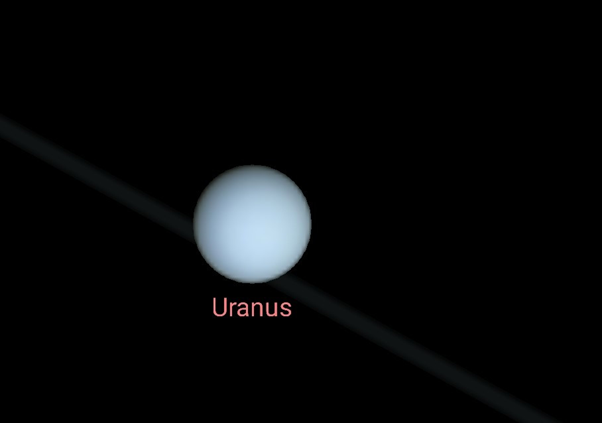
Uranus was about 2.8 billion kilometres.
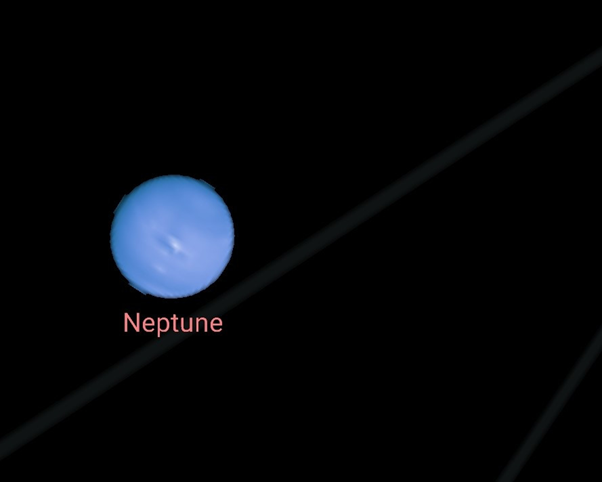
Neptune, where our orders were to go, was 4.5 billion kilometres.
I had done the rough calculations on time to destination, in round numbers, basing the speed of light, what we regarded as SSPD 1,000. That was in km’s about 1.8 billion kilometres an hour, give or take.
Our first ships were under SSPD 1, and the series before this ship had a maximum of SSPD 1.25, which in understandable numbers was about 1,349,063 km per hour. Our ship was capable of SSPD 5.
So, given that our previous fastest ship could move at a maximum of SSPD 1.25, the time it would take to the first destination at SSPD 2 (no one ever travelled at maximum) was a little over 86 days, and to Neptune about 139 days.
In this ship if we were to hit SSPD 4.5, the same time frames would be 24 days and just over 38.5 days.
“Check the co-ordinates for Neptune and once we’re clear of the dock and given clearance, let’s start her out slowly on SSPD 2.
The helmsman checked the co-ordinates and set the speed. “Co-ordinates and speed set, awaiting clearance.”
“Very good. Best have a seat Number One, just in case.”
“Yes, sir.” I took a last glance at the screen, now only showing Neptune on the long-range scanner, and sat.
“Adventurer, you’re cleared for departure.” The voice of the dock master came over the speakers.
No need for further orders, the helmsman pushed the button below his screen, there was a slight lurch, and we were under way.



 Thrills, Spills, and just a dash of Romance