Searching for Locations: Waitomo caves house, North Island, New Zealand

A relatively unassuming lane leads to what could be described as a grand hotel, called Waitomo Caves Hotel.

The original hotel was built in 1908, and it was later extended in 1928.  Part of it is ‘Victorian’, based on an eastern Europe mountain chalet, and part of it is ‘Art Deco’, the concrete wing, and a feature, if it could be called that, is none of the four corners are the same.

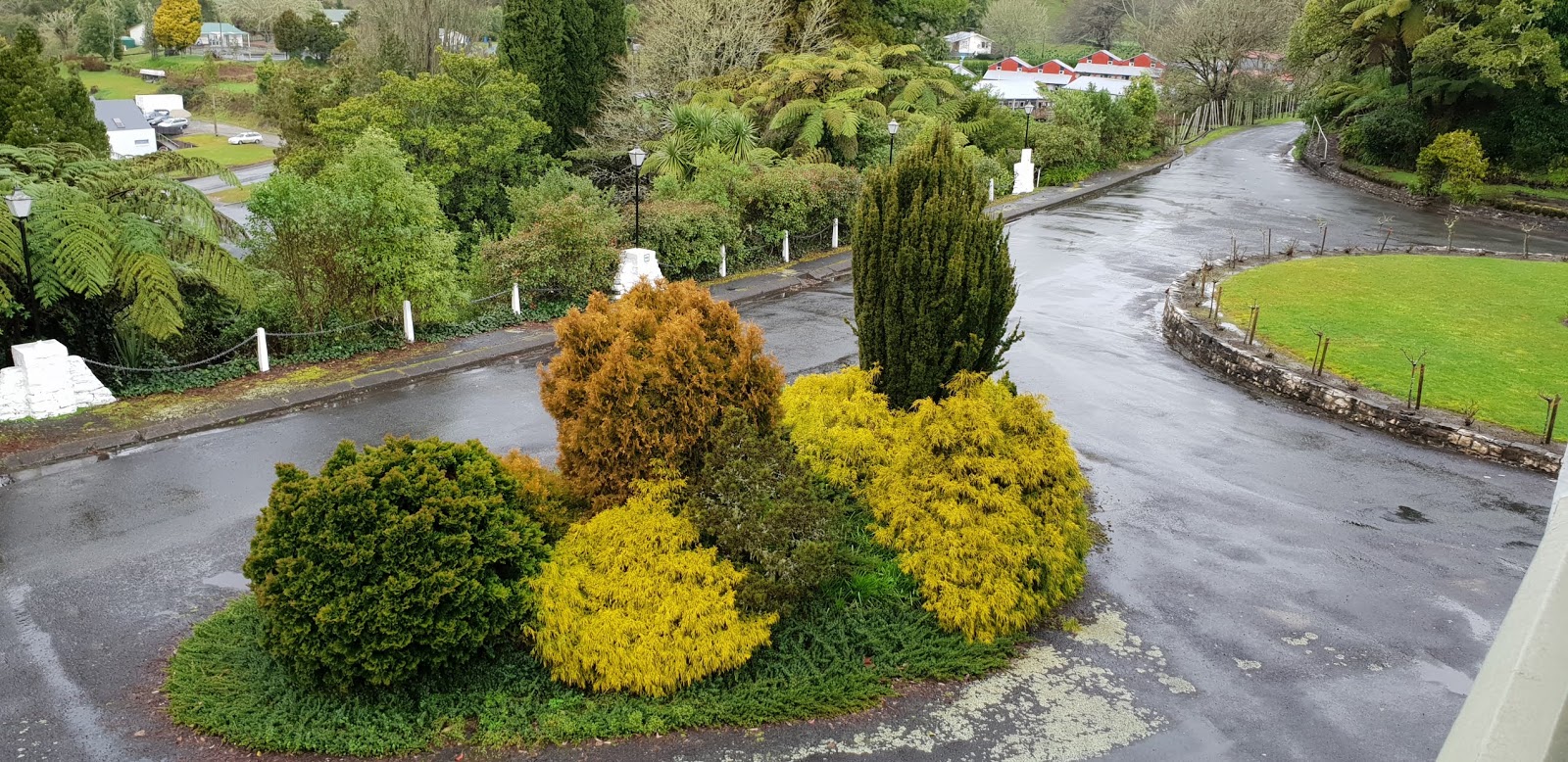
Views from the balcony show part of the surrounding gardens
 

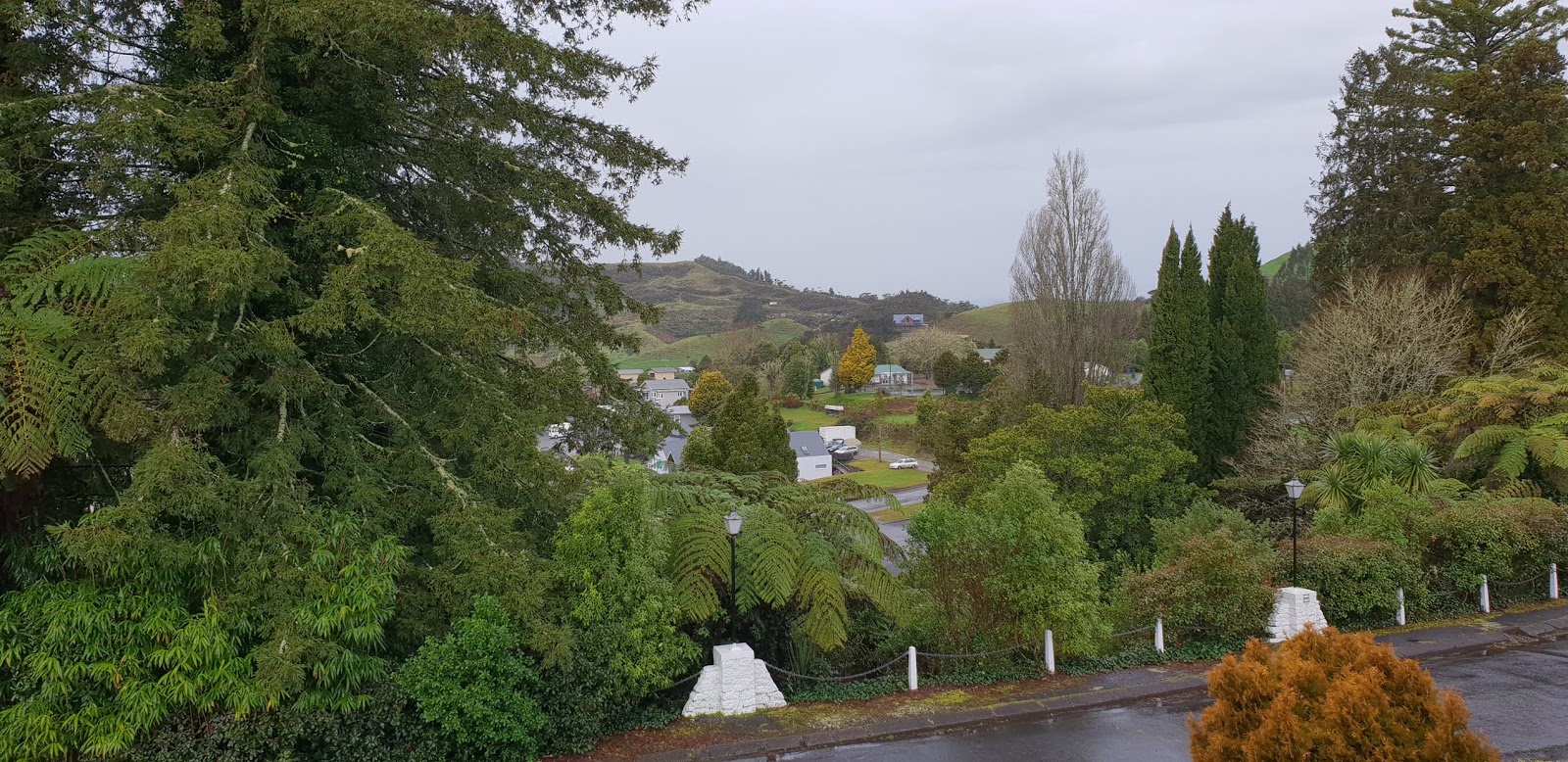
and the town of Waitomo in the distance.
 

In gloomy weather, it does look rather spooky, and I suspect there may be a ghost or two lurking somewhere in the buildings.


But…
 

This a a very interesting, and the words of one of my younger grand daughters, a very creepy place. It would make an excellent base for paranormal activity, and there could very well be ghosts walking the corridors of this hotel.

It has the long darkish passageways that lead in all directions and to almost hidden rooms, a creepy nighttime aspect, and the creaky woodwork.

I know when we were exploring, it was easy to lose your bearings, if not get lost, trying to find certain places, and once found, hard to find your way back.

All in all, it was one of the best stays in a very old place going through the throes of modernisation.

And looking at it from the outside at night, I’ll leave you with that thought…

The cinema of my dreams – It all started in Venice – Episode 15

A note and an opinion

On the way back to the hotel I thought about the idea of killing the Frenchman and dumping his body in one of the back canals.

Of course, that was the sort of unsanctioned act that quite often brought down a well-planned operation and it would not be the first time for me if that happened now.

I tried not to think about that moment in history and to this day still couldn’t say why I did it beyond the fact the person annoyed me.  Those were young and brash days, long since gone from the repertoire.

Still, if he got in the way, or was going to compromise my plan he would have to go, and those back canals were begging for new prey.

When I finally returned to the hotel, it seemed almost stuffy in the small reception area, and the woman behind the counter nodded cursorily in my direction as I passed her heading for the stairs.

She was the sort of person who would miss nothing that happened in that hotel in or out of sight.

The elevator was old and tired, and I didn’t like to advertise arriving back on the floor where my room was located. Again, another memory of a bad experience involving an elevator has made me more wary since.

The stairs, in this instance, were well maintained, without the usual squeaks and groans susceptible to any other hotel.  The fact it was only a few floors and not twenty was also a selling point.

If Juliet was waiting she’d have to be in my doorway for me to fall over her, and as I took those last few steps before the landing, I wondered if Cecilia was back in my room’ waiting for me.

If she was, and Juliet arrived that might throw that proverbial car among the pigeons.

Neither were either waiting or in my room which oddly enough seemed disappointing.  Nor was anyone else who also brought up a memory or two that I’d rather forget. 

Experience was a cruel master.

I looked out the windows over the canal, still able to be surprised by the amount of activity on the water even for that hour of the night.

In a few hours, a whole new group of people would be about those behind the scenes, delivering all manner of goods and services in those early hours before a new day began.

Behind me, there was a very light knock on the door and I swiftly crossed the room and looked in the peep-hole.

Cecilia.

I opened the door and she slipped in before I’d even got it partially open.  She was in what I would call stealth mode.

“You’re up and about late?  Nothing on for tomorrow?”

She shrugged.  “Just the usual, so it’s unlikely they’ll miss me if I’m not there’ or late.  Besides, there’s a producer I keep running into that’s beginning to be annoying.”

“I can deal with him if you want me to?”

“I can deal with him myself.  No.  It’s your girlfriend whose supposedly not your girlfriend.”

“Juliet?  She’s not…”

“Of course not, just ragging you.  She’s suddenly all apologetic, telling me how sorry she was about being catty. Then giving me a hug that was quite unsettling.  Until I realised what she was doing.”

“Not making a pass I hope.”

“It wouldn’t be the first in the last day or so.  I must have that look, whatever that look is.  No.  She gave me this.”

Cecilia held up a small folded piece of paper.

“Did you read it?”

“Do I look like the sort who would read other people’s love letters?”

I took the piece of paper and unfolded it.

It said, and reading it aloud, “I believe you know why I’m here and I can tell you it’s not what I want.  I can’t discuss this with you otherwise he’ll know, so we need another way, perhaps through Cecilia. I’m supposed to deliver you in Sorrento, so we will need a plan to keep us both safe.  Sorry for dragging your friend into this.”

“Not a love letter then.”  She sounded disappointed.  “How could she possibly know that?”

“In trying to get Larry to do something in haste which he has, it was not without its risks.  She’s smart enough, given what she knew of me then, and that Larry has me in his sights, to realise it was not coincidental when I brought his name into the conversation.”

“Forcing an issue sometimes can have unintended consequences.”

“I didn’t want to drag it out for any of us.”

“Have you considered the possibility that this might be part of Larry’s plan, after all, he did tell her to get closer by any means possible.  How much closer could she get pretending to work with you?”

A plan I considered more plausible given the hold he had over her.  Alfie would have told me if such a conversation had taken place between them, but he hadn’t which meant it may have been before she embarked for Venice. 

It made sense, from his perspective and the hold he had over her.  Doing something as reckless on her part without his knowledge defied that threat, making it very difficult for me to believe it was a legitimate offer to help.

“What would you have thought if we didn’t know what we know?”

“It’s difficult to say since I’ve never been in that situation but first thought would be to considered it’s with the customary suspicion we have to view everything with.”

“Good answer.  You’ll be coming with me and lucky for you, you will not have to play nice.”

She smiled.  “At last a role I can get my teeth into.”

“We’ll go tomorrow, so be ready to leave.  I’m sure you’ll devise a good excuse for leaving early.  And watch your back tonight they might have a little surprise in store for you.”

“Not if I stay here.  I came prepared,” showing me her pyjamas under the gym wear.

I shrugged.  The room had two beds.  “Fine.”

© Charles Heath 2022

“Strangers We’ve Become” – Countdown to publishing in 30 days

Anyone can write a book.

It’s an extravagant statement and not necessarily true, but often used by relatives when one of their numbers says they’ve written a book.

My brother said that when I told him I’d written one

I didn’t tell him that I’d written a dozen and published five, it seemed irrelevant at the time.

But as easy or hard as it may be to write one, writing a second is so much harder.

One of those five was ‘What sets us apart’, a story about a retired ‘problem solver’ who meets a girl, marries her, then she disappears.

It’s not long before he’s dragged back down the rabbit hole of ‘problem-solving’, this time a problem of his own.

Needless to say, there are endless espionage undertones along the way, meeting up with old friends, new friends, and enemies alike.

And his wife was not who he expected her to be, but something else entirely.

Oh, and just for good measure, the girl is the daughter of an old friend of his ex-boss, Prendergast, the legendary spymaster.

It was fun writing the first, weaving the story through many unexpected twists and turns, and arriving at a point where he finally gets her back.

Or has he?

As I was writing that first book, it occurred to me there was scope for a second book, a sequel, that could explore the theme that she might not be the real Susan.  After all, in the first, our hero has to contend with several clones that are almost impossible to separate from the real Susan.

What if he hadn’t rescued his Susan?

Thus, a sequel was born, “Strangers we’ve become’, and over the next month, I’m going to share the process to take it from the final draft to being published.

I am making progress, really…

It’s been a long time, or what seems to be a long time.

A few weeks ago I was sitting in front of the computer screen, the ever-pervasive cursor flashing on a blank piece of digitized paper, and that was as far as I got.

No, the house didn’t burn down, no major catastrophe nor family member or friend was in dire need of my help.

I just didn’t know what to write next.

I have been writing, but not necessarily in the normal sense.  I have SomNote on my phone, and when I’m waiting, usually for doctors or Government offices, I write.  A bit of this, a bit of that, but sometimes the YA novel I’m writing for, and not necessarily about, my 19-year-old granddaughter.  Other times it might be a blog post about the experience, or someone who stands out in the crowd.

I find SomNote excellent for just putting words down quickly, as narrative, or just points, emailing it my myself and rehashing it later.  It has basically been used to write the first 37 chapters of the YA novel.

But as for the other writing?

Strangers We’ve Become, the follow-up to What Sets Us Apart took a new direction.  As this is the next book to be published, I have decided, as one of my new year resolutions, the get the final draft done for the editor.  It was the host of suggestions that keeps me putting it off.  No more.

Never let anyone tell you there’s not something else to be done after 10 edits, and re-writes.

The Things We Do For Love, a little story I wrote many years ago, is finally through its last edit and ready for the final approval from the editor, and will be ready for publication.  It will be categorized as Romantic Suspense, along with Sunday In New York.

Look for those to be released in February or March this year.

My other story, the tales of PI Walthenson, private detective, had taken a back burner for a while, as I continue to muddle through the second case, now at about 60 episodes, of which 40 odd have been published.

I have no idea how it will end, but it’s going to be fun getting there.

This is a link to the latest episode here:  https://www.walthensonpi.com/

After that, Zoe will be back.  After the trials and tribulations in The Devil You Don’t, she finds that the past she tried to leave behind had come back to bite her, in the tentatively titled ”First Dig Two Graves’, because it is about revenge and whether or not it’s best served cold.  And whether or not John’s romantic aspirations are fulfilled.

Now, I guess, it’s back to work!

In a word: Right

Am I right?  Or is that correct?

In the moral sense, or in answering a question?

Do I have a right to …

As an entitlement?

Maybe

But right means generally to be correct, but the word itself can be used, like many others in a variety of ways

Such as, do we have any rights any more, since the government is slowly shutting down our freedoms, and, you guessed it, allegedly taking away our rights.

What about a right angle, we know this as being an angle of 90 degrees

How about I right a wrong, returning a bad situation to a good one?

Are you left-handed or right-handed?

Are you one of those people who can’t tell their left from their right?

And who was it that decided what was your left or your right, ever thought about that?  I didn’t until just now.  Good luck finding an answer on Google.

And how many times have you wished you were in the right place at the right time???

Then, of course, if English is a second language, how about confusing right with write.

Means something quite different, doesn’t it?

How about rite?  Yes, I guess if we were in the habit of chopping chicken heads off and dancing around a fire, that might be its meaning,

But…

It too has a lot of different meanings

Are you confused yet?

“Sunday in New York”, a romantic adventure that’s not a walk in the park!

“Sunday in New York” is ultimately a story about trust, and what happens when a marriage is stretched to its limits.

When Harry Steele attends a lunch with his manager, Barclay, to discuss a promotion that any junior executive would accept in a heartbeat, it is the fact his wife, Alison, who previously professed her reservations about Barclay, also agreed to attend, that casts a small element of doubt in his mind.

From that moment, his life, in the company, in deciding what to do, his marriage, his very life, spirals out of control.

There is no one big factor that can prove Harry’s worst fears, that his marriage is over, just a number of small, interconnecting events, when piled on top of each other, points to a cataclysmic end to everything he had believed in.

Trust is lost firstly in his best friend and mentor, Andy, who only hints of impending disaster, Sasha, a woman whom he saved, and who appears to have motives of her own, and then in his wife, Alison, as he discovered piece by piece damning evidence she is about to leave him for another man.

Can we trust what we see with our eyes or trust what we hear?

Haven’t we all jumped to conclusions at least once in our lives?

Can Alison, a woman whose self-belief and confidence is about to be put to the ultimate test, find a way of proving their relationship is as strong as it has ever been?

As they say in the classics, read on!

Purchase:

http://tinyurl.com/Amazon-SundayInNewYork

The cinema of my dreams – I never wanted to go to Africa – Episode 22

Our hero knows he’s in serious trouble.

The problem is, there are familiar faces and the question of who is a friend and who is a foe is made all the more difficult because of the enemy, if it was the enemy, simply because it didn’t look or sound or act like the enemy.

Now, it appears, his problems stem from another operation he participated in.

Lallo was gone ten minutes, perhaps a specific amount of time that was supposed to make me sweat.  It was warm in the ward so it wasn’t his presence or the questions that made me feel uncomfortable.

It was fear of the unknown.

If anything, it was more likely I’d be going to a black site rather than rest and recuperation in Germany.  And apparently, over an operation, I had little or no knowledge of its inception or execution beyond being used for target practice.

Unless the army in its infinite wisdom was looking for a scapegoat, they’d tried pinning it on Treen, but he didn’t play ball, so now it was my turn.  However, just to complicate that thought, why didn’t they just kill me on the ground when they had the chance?

Because they needed me alive.

My mind went back to that fateful operation.

I went over as many of the crew as I could remember.  Ledgeman, Sergeant, explosives expert, he was with me until he was shot, caught in the crossfire, which now made me consider my first assessment of what has happened to him, that it might have been one of us who shot him, was the likely outcome.

Willies, a Corporal, also an explosives expert, sent with Mason, Gunnery Sergeant like me, who was providing cover for Willies.

Breen, Lieutenant, Leader, although it didn’t exactly appear to be the case, the more I thought about it, there seemed an undertone of indifference from the team towards its leader, one I should have picked up on.  Informal command never worked when push came to shove.

Andrews, Cathcar, Edwards and Sycamore, regular soldiers with combat experience along for protection, Andrews and Sycamore were with us and had worked together before, their camaraderie didn’t extend to me, but they were professional soldiers.

Of all the people in that entire group, why did Treen survive?  In putting the pieces together now in my mind, and if what I remembered was right, he should have been the first to die.

I mean, drugs and paranoia aside, that was the one single damning conclusion I could draw from events.  If he had, then a lot of the others might have survived.

But time was up; Lallo was back, squirming in his seat, and armed with a different coloured notebook.

First question, “What was your opinion of Treen?”

Relevance?  “Competent, but perhaps not truly in charge of his men.”

“How so?”

“I got the impression it was a case of familiarity breeds contempt.”

“You question his ability to command?”

“Just his style.”

Groups who worked together in close combat as a unit, from the top to the bottom, acquired a level of camaraderie that transcended rank.  It was not supposed to, but it did.  It was built on mutual respect and got to a point where everyone knew what they were doing without being asked, or ordered.  I got the impression that had been the case for Treen and his team up till that operation.  Perhaps the loss of one of the team had changed the dynamic.

“He’s there to lead, not be liked.”

“Then why ask me what I thought?  You’d know what I meant by that if you were out on the front line and your life depended on your team.  Something was not right.”

“How did you fit in,” he asked, with an emphasis on the word ‘fit’.

I didn’t, but I was not going to tell him that.  In the end, I just didn’t trust them.  You can get a measure of a man in that first meeting with or speaking with them, and they closed me out from the start.

“I had a job to do and I did it.”

And, it was probably the reason why I walked away.

© Charles Heath 2019-2023

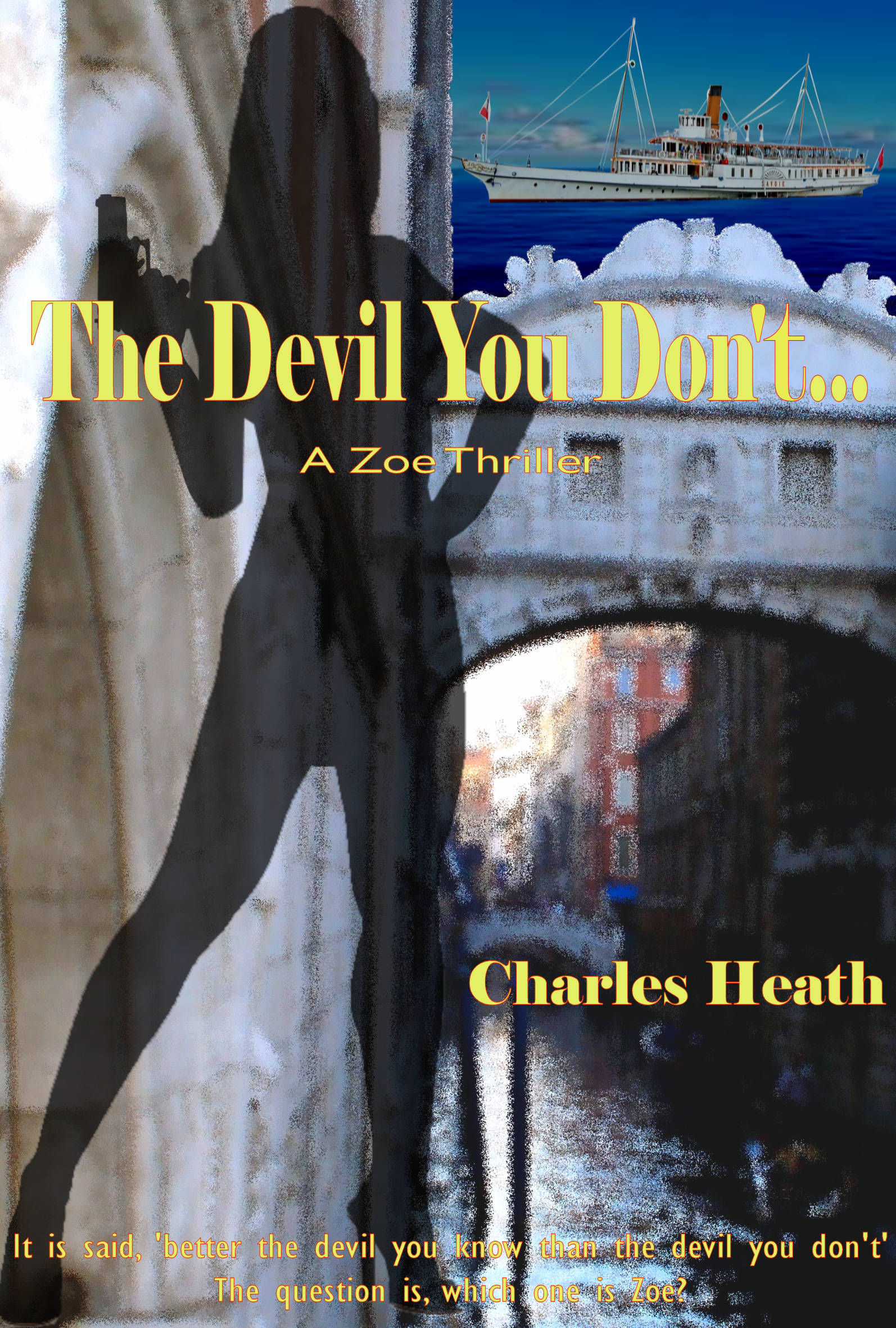
“The Devil You Don’t” – A beta readers view

It could be said that of all the women one could meet, whether contrived or by sheer luck, what are the odds it would turn out to be the woman who was being paid a very large sum to kill you.

John Pennington is a man who may be lucky in business, but not so lucky in love. He has just broken up with Phillipa Sternhaven, the woman he thought was the one, but relatives and circumstances, and perhaps because she was a ‘princess’, may also have contributed to the end result.

So, what do you do when you are heartbroken?

That is a story that slowly unfolds, from the first meeting with his nemesis on Lake Geneva, all the way to a hotel room in Sorrento, where he learns the shattering truth.

What should have been a high turns out to be something else entirely, and from that point every thing goes to hell in a handbasket.

He suddenly realises his so-called friend Sebastian has not exactly told him the truth about a small job he asked him to do, the woman he is falling in love with is not quite who she says she is, and he is caught in the middle of a war between two men who consider people becoming collateral damage as part of their business.

The story paints the characters cleverly displaying all their flaws and weaknesses. The locations add to the story at times taking me back down memory lane, especially to Venice where in those back streets I confess it’s not all that hard to get lost.

All in all a thoroughly entertaining story with, for once, a satisfying end.

Available on Amazon here: https://amzn.to/2Xyh1ow

The cinema of my dreams – I always wanted to see the planets – Episode 34

A brief moment of respite

The simulation of nighttime on board the ship was as realistic as I remembered it when back on earth.

I was on my usual rounds after midnight, with the 2IC of security, Nancy Woolmer, who had been a NY detective until a better offer came along.

This ship.

Like me, she had little to keep her back home, her husband who had also been a detective, had been killed on the job, and that had been the straw that broke the camel’s back.

Not blessed, or as she put it, cursed, with children, her parents had passed on, and any family left were not enough to keep her home.  This ship, she had said, would be her savior.

But she had the look of a person running away, and that, one day, would come back to bite her.  In the meantime, if we ever needed a detective, she was it.

“They’ve really got this night thing going, haven’t they.  You could almost imagine you’re in a leafy suburb out for a walk at night.”

“I doubt the streets would be as safe.”

The world we had left behind was in crisis, where there were deep divides between those in work and those who were not, and those with wealth and those without, and a bigger fight between countries over the space program.  It had started out with good intentions, but people being people, it didn’t stay that way.  

We had an international crew, but there was always the lingering doubt of what some people’s intentions were.  Out in space where everyone depended on everyone else, a small problem could become a big one very quickly.

“No, perhaps not.  But it’s good to hear the breeze rustling in the trees.”

Though the simulation lacked real trees, the projection on the passage walls of what either side of a street. With pavements, trees and houses, and for the night, the eerie glow of street lamps, was close enough.

The once around the perimeter passage on each deck took about two hours at a leisurely pace, considering there were ten decks.

I could have passed the job onto one of the watch officers, but it was about the only time I got to see the crew, those that were basically out of sight, keeping the ship running.  

I had set the lofty goal of meeting every one of the over 2,000 crew members within the first year, but a few months in, that was looking unlikely.

There was a sudden vibration emanating from the deck, followed by the sort of movement I would have associated with the ship coming off speed, like the jerk in a car when taking the foot off the accelerator.  The dampeners were designed to handle that and make increases and decreases in speed unnoticeable, but there was still an indication it had happened.

Ten seconds later my communicator vibrated.  I didn’t like the ring tone built-in, but it was more likely because most calls were bad news.

“What happened,” I asked, knowing it would be the duty officer of the watch

“Engineering are reporting a glitch, sir.”

There’s a word I hadn’t heard for a long time.  My father used to refer to anything that went wrong around the house as a glitch.

“Serious?”

“Don’t know, but you’re within a stone’s throw, so I thought you might want to pay them a visit.”

He was right, I was on that deck, and not far from the central control room.  The bridge must be tracking me, even though I’d asked them not to.  Standing orders dictated all officers and important personnel whereabouts were known at all times, I’d been told.

“I will.”

To Nancy, “You might want to continue on without me, and I’ll try to catch up later.”

She smiled.  “Tell them they should have bought the premium quality rubber bands.”

Previous conversations had highlighted a certain cynicism towards the fixtures and fittings, some of which were quite shoddy, which was disappointing but there was no doubt corners were cut in order to get the ship into service.

We all just hoped that cost-cutting didn’t extend to the main items, and if there were, it had been picked up in the trials.

As I stepped into the control room, a brightly lit room with banks of control panels and engineers sitting at them, there were a number of people huddled around one in particular, including the chief engineer.

The conversation was quite lively, and one voice stood out above the others, “… and had the builders rep actually listen to someone who knows what they’re talking about, we wouldn’t be in this situation.”

It was the same voice I’d heard in the captain’s day room my first day aboard, pontificating, as the captain put it, over a list of problems he was having with the shipbuilders representative.

“We’re in this situation,” the Chief Engineer said, “because everything we have here is new, and some of it untried.  If you’re going to push boundaries, then sometimes there’s a problem.  Rather than complain, find a resolution.”

The group broke up, and the Chief saw me coming over.  He met me halfway.

“Half this new breed they’ve sent me and more teaches rather than hands-on, always on about the code or some such.  Good, maybe, for diagnostics, but not for problem-solving.  I suspect it’s tainted coolant, seems the original batch wasn’t cleaned out after the first run, and it’s overwhelmed the filters.  It’s down to the bowels I’m afraid, and we’ll be up and running before those nincompoops work out the real problem.”

“Good.  Just let the bridge know when you’re done.”

One last look at the nincompoops, and I headed back out to resume rounds.

© Charles Heath 2021

An excerpt from “What Sets Us Apart”, a mystery with a twist

See the excerpt from the story below, just a taste of what’s in store…

http://amzn.to/2Eryfth

whatsetscover

McCallister was old school, a man who would most likely fit in perfectly campaigning on the battlefields of Europe during the Second World War. He’d been like a fish out of water in the army, post-Falklands, and while he retired a hero, he still felt he’d more to give.

He’d applied and was accepted as head of a SWAT team, and, watching him now as he and his men disembarked from the truck in almost military precision, a look passed between Annette, the police liaison officer, and I that said she’d seen it all before. I know I had.

There was a one in four chance his team would be selected for this operation, and she had been hoping it would be one of the other three. While waiting for them to arrive she filled me in on the various teams. His was the least co-operative, and the more likely to make ad-hoc decisions rather than adhere to the plan, or any orders that may come from the officer in charge.

This, she said quite bluntly, was going to end badly.

I still had no idea why Prendergast instructed me to attend the scene of what looked to be a normal domestic operation, but as the nominated expert in the field in these types of situations, it was fairly clear he wasn’t taking any chances. It was always a matter of opinion between us, and generally I lost.

In this case, it was an anonymous report identifying what the authorities believed were explosives in one of the dockside sheds where explosives were not supposed to be.

The only reason why the report was given any credence was the man, while not identifying himself by name, said he’d been an explosive expert once and recognized the boxes. That could mean anything, but the Chief Constable was a cautious man.

With his men settled and preparing their weapons, McCallister came over to the command post, not much more than the SUV my liaison and I arrived in, with weapons, bulletproof vests, and rolls of tape to cordon off the area afterward. We both had coffee, steaming in the cold early morning air. Dawn was slowly approaching and although rain had been forecast it had yet to arrive.

A man by the name of Benson was in charge. He too had groaned when he saw McCallister.

“A fine morning for it.” McCallister was the only enthusiastic one here.

He didn’t say what ‘it’ was, but I thought it might eventually be mayhem.

“Let’s hope the rain stays away. It’s going to be difficult enough without it,” Benson said, rubbing his hands together. We had been waiting for the SWAT team to arrive, and another team to take up their position under the wharf, and who was in the final stages of securing their position.

While we were waiting we drew up the plan. I’d go in first to check on what we were dealing with, and what type of explosives. The SWAT team, in the meantime, were to ensure all the exits to the shed were covered. When I gave the signal, they were to enter and secure the building. We were not expecting anyone inside or out, and no movement had been detected in the last hour since our arrival and deployment.

“What’s the current situation?”

“I’ve got eyes on the building, and a team coming in from the waterside, underneath. Its slow progress, but they’re nearly there. Once they’re in place, we’re sending McKenzie in.”

He looked in my direction.

“With due respect sir, shouldn’t it be one of us?” McCallister glared at me with the contempt that only a decorated military officer could.

“No. I have orders from above, much higher than I care to argue with, so, McCallister, no gung-ho heroics for the moment. Just be ready to move on my command, and make sure you have three teams at the exit points, ready to secure the building.”

McCallister opened his mouth, no doubt to question those orders, but instead closed it again. “Yes sir,” he muttered and turned away heading back to his men.

“You’re not going to have much time before he storms the battlements,” Benson quietly said to me, a hint of exasperation in his tone. “I’m dreading the paperwork.”

It was exactly what my liaison officer said when she saw McCallister arriving.

The water team sent their ‘in position’ signal, and we were ready to go.

In the hour or so we’d been on site nothing had stirred, no arrivals, no departures, and no sign anyone was inside, but that didn’t mean we were alone. Nor did it mean I was going to walk in and see immediately what was going on. If it was a cache of explosives then it was possible the building was booby-trapped in any number of ways, there could be sentries or guards, and they had eyes on us, or it might be a false alarm.

I was hoping for the latter.

I put on the bulletproof vest, thinking it was a poor substitute for full battle armor against an exploding bomb, but we were still treating this as a ‘suspected’ case. I noticed my liaison officer was pulling on her bulletproof vest too.

“You don’t have to go. This is my party, not yours,” I said.

“The Chief Constable told me to stick to you like glue, sir.”

I looked at Benson. “Talk some sense into her please, this is not a kindergarten outing.”

He shrugged. Seeing McCallister had taken all the fight out of him. “Orders are orders. If that’s what the Chief Constable requested …”

Madness. I glared at her, and she gave me a wan smile. “Stay behind me then, and don’t do anything stupid.”

“Believe me, I won’t be.” She pulled out and checked her weapon, chambering the first round. It made a reassuring sound.

Suited up, weapons readied, a last sip of the coffee in a stomach that was already churning from nerves and tension, I looked at the target, one hundred yards distant and thought it was going to be the longest hundred yards I’d ever traversed. At least for this week.

A swirling mist rolled in and caused a slight change in plans.

Because the front of the buildings was constantly illuminated by large overhead arc lamps, my intention had been to approach the building from the rear where there was less light and more cover. Despite the lack of movement, if there were explosives in that building, there’d be ‘enemy’ surveillance somewhere, and, after making that assumption, I believed it was going to be easier and less noticeable to use the darkness as a cover.

It was a result of the consultation, and studying the plans of the warehouse, plans that showed three entrances, the main front hangar type doors, a side entrance for truck entry and exit and a small door in the rear, at the end of an internal passage leading to several offices. I also assumed it was the exit used when smokers needed a break. Our entry would be by the rear door or failing that, the side entrance where a door was built into the larger sliding doors. In both cases, the locks would not present a problem.

The change in the weather made the approach shorter, and given the density of the mist now turning into a fog, we were able to approach by the front, hugging the walls, and moving quickly while there was cover. I could feel the dampness of the mist and shivered more than once.

It was nerves more than the cold.

I could also feel rather than see the presence of Annette behind me, and once felt her breath on my neck when we stopped for a quick reconnaissance.

It was the same for McCallister’s men. I could feel them following us, quickly and quietly, and expected, if I turned around, to see him breathing down my neck too.

It added to the tension.

My plan was still to enter by the back door.

We slipped up the alley between the two sheds to the rear corner and stopped. I heard a noise coming from the rear of the building, and the light tap on the shoulder told me Annette had heard it too. I put my hand up to signal her to wait, and as a swirl of mist rolled in, I slipped around the corner heading towards where I’d last seen the glow of a cigarette.

The mist cleared, and we saw each other at the same time. He was a bearded man in battle fatigues, not the average dockside security guard.

He was quick, but my slight element of surprise was his undoing, and he was down and unconscious in less than a few seconds with barely a sound beyond the body hitting the ground. Zip ties secured his hands and legs, and tape his mouth. Annette joined me a minute after securing him.

A glance at the body then me, “I can see why they, whoever they are, sent you.”

She’d asked who I worked for, and I didn’t answer. It was best she didn’t know.

“Stay behind me,” I said, more urgency in my tone. If there was one, there’d be another.

Luck was with us so far. A man outside smoking meant no booby traps on the back door, and quite possibly there’d be none inside. But it indicated there were more men inside, and if so, it appeared they were very well trained. If that were the case, they would be formidable opponents.

The fear factor increased exponentially.

I slowly opened the door and looked in. A pale light shone from within the warehouse itself, one that was not bright enough to be detected from outside. None of the offices had lights on, so it was possible they were vacant. I realized then they had blacked out the windows. Why hadn’t someone checked this?

Once inside, the door closed behind us, progress was slow and careful. She remained directly behind me, gun ready to shoot anything that moved. I had a momentary thought for McCallister and his men, securing the perimeter.

At the end of the corridor, the extent of the warehouse stretched before us. The pale lighting made it seem like a vast empty cavern, except for a long trestle table along one side, and, behind it, stacks of wooden crates, some opened. It looked like a production line.

To get to the table from where we were was a ten-yard walk in the open. There was no cover. If we stuck to the walls, there was equally no cover and a longer walk.

We needed a distraction.

As if on cue, the two main entrances disintegrated into flying shrapnel accompanied by a deafening explosion that momentarily disoriented both Annette and I. Through the smoke and dust kicked up I saw three men appear from behind the wooden crates, each with what looked like machine guns, spraying bullets in the direction of the incoming SWAT members.

They never had a chance, cut down before they made ten steps into the building.

By the time I’d recovered, my head heavy, eyes watering and ears still ringing, I took several steps towards them, managing to take down two of the gunmen but not the third.

I heard a voice, Annette’s I think, yell out, “Oh, God, he’s got a trigger,” just before another explosion, though all I remember in that split second was a bright flash, the intense heat, something very heavy smashing into my chest knocking the wind out of me, and then the sensation of flying, just before I hit the wall.

I spent four weeks in an induced coma, three months being stitched back together and another six learning to do all those basic actions everyone took for granted. It was twelve months almost to the day when I was released from the hospital, physically, except for a few alterations required after being hit by shrapnel, looking the same as I always had.

But mentally? The document I’d signed on release said it all, ‘not fit for active duty; discharged’.

It was in the name of David Cheney. For all intents and purposes, Alistair McKenzie was killed in that warehouse, and for the first time ever, an agent left the Department, the first to retire alive.

I was not sure I liked the idea of making history.

© Charles Heath 2016-2020