The cinema of my dreams – I always wanted to see the planets – Episode 48

A meeting of department heads

First impressions, I was told, were everything.

Back on earth, before this mission, before I had been selected for the crew, we had to spend time learning diplomacy.

I didn’t mind it because I was used to working with multiple nationalities as crew members aboard the cargo ships I worked, some often at odds with each other, and I had to broker peace.

But this brand of diplomacy was more about meeting aliens from other worlds and what to do, even though those running the sessions really had no clue.  The problem was, we would have no idea of what their customs and rules were, much like on earth where the same applied, but you could look them up before going to an ‘alien’s destination.

I could say that now I had experienced one encounter.  And nothing we did in any of those sessions gave me any help or guidance on what I should do.  Yes, we may have learned a little about their culture, but that was never going to be enough, not in the time I had in front of them.

What needed to happen was for us to set up something similar to the old-time embassy where we could exchange information and prevent the problems of new travellers before they got here.  And there would be more travellers now we had the spaceships and not everyone was going to be a positive influence’ ad the Russian example quite clearly illustrated.

But, getting someone or some people to stay with unknown people on a relatively unknown planet, was going to be a difficult ask.

It was one of a dozen topics on the head of department meeting I had called immediately after being transported back to the ship’ joined by the Princess’ whom we had agreed to return to her people.

I suspect that the aliens who had all but incarcerated her did not want to wear the wrath of her people.  Perhaps we would be treated better and hopefully, we would be able to engage in meaningful diplomatic discussions.  It was a subject I had raised with the Princess when escorting her to her transit quarters. Accommodation befitting a Princess.

She was hateful to come aboard but she seemed apprehensive to go home.  That was something else that would fuel another conversation. Because there was definitely more to that story. I didn’t quite trust our so-called new friends.

The next task was to ensure the princess had a private security detail, and dampeners installed to prevent her being transported off the ship.

After that my first call was to the diplomatic unit where I gave them five minutes of my thoughts on the subject before heading back to my quarters to freshen up, and get down the bare bones of the report I was eventually hoping to send on our first encounter, one that I doubted was over yet. 

I will still be getting over the fact they knew of our existence, lived among us, and we had no idea.  And they didn’t believe we were worthy yet to be told.  Sadly, given my knowledge of humankind, I was not really surprised, but others like the Admiral would be shocked and offended and it was their reaction I was worried about.

It was also not so much of a surprise there were others out there, places and people, we knew nothing about because our telescopic technology still wasn’t up to see beyond the limits of our known galaxies and we were the first well technically the second to go beyond it.

And now we proved we could get to that theoretical barrier, set at Pluto, perhaps a telescope launched from there might help us see what was beyond in the first instance because they did hint at a number of civilisations with their own galaxy.

My idea would be to suggest caution and not hit them with a flood of ships but to spend time building a space station at the edge, and then launch exploratory forays from there, when it was complete.  It would take time ten or more years, but the aliens weren’t going anywhere.

But I knew it didn’t matter what I thought.  That was up to the Admiral and the rest of the Space Alliance, and they would want to be out there getting as many aliens on side, much the same as the others would.

The Russian ship had stayed long enough to offload the prisoners and get ready for the return trip.  That was going to be some homecoming because the Space Alliance was going to want answers long before it hit Earth’s outer limits.

Stolen technology, an unannounced foray into space that could have ultimately destroyed any chance of relations with our nearest space neighbours, I wouldn’t want to be the captain of that vessel, at home, or in front of an international jury.

It highlighted just how easy it was to make mistakes, or how badly everything could go wrong very quickly over a nuance.  His background hadn’t helped him either but that shoe could also have fitted elsewhere too.  I had been lucky, he had not.

I walked into the conference room packed with both relevant and interested parties, all eyes on me.  It was, to say the least, uncomfortable.  Whatever noise there was had subsided into silence.

There was one seat remaining.  Mine.

© Charles Heath 2021-2022

“Sunday in New York”, a romantic adventure that’s not a walk in the park!

“Sunday in New York” is ultimately a story about trust, and what happens when a marriage is stretched to its limits.

When Harry Steele attends a lunch with his manager, Barclay, to discuss a promotion that any junior executive would accept in a heartbeat, it is the fact his wife, Alison, who previously professed her reservations about Barclay, also agreed to attend, that casts a small element of doubt in his mind.

From that moment, his life, in the company, in deciding what to do, his marriage, his very life, spirals out of control.

There is no one big factor that can prove Harry’s worst fears, that his marriage is over, just a number of small, interconnecting events, when piled on top of each other, points to a cataclysmic end to everything he had believed in.

Trust is lost firstly in his best friend and mentor, Andy, who only hints of impending disaster, Sasha, a woman whom he saved, and who appears to have motives of her own, and then in his wife, Alison, as he discovered piece by piece damning evidence she is about to leave him for another man.

Can we trust what we see with our eyes or trust what we hear?

Haven’t we all jumped to conclusions at least once in our lives?

Can Alison, a woman whose self-belief and confidence is about to be put to the ultimate test, find a way of proving their relationship is as strong as it has ever been?

As they say in the classics, read on!

Purchase:

http://tinyurl.com/Amazon-SundayInNewYork

In a word: Maybe

This word, where I live, had taken on a new meaning.  We have telephone scammers who ask your name when you answer the phone, and when you say yes, they hang up.

It doesn’t take much imagination how they can use that recording.

So, I now answer the phone with maybe, which confuses the real callers who want to know if it is you.

Of course, maybe is one of those words that have so many meaning, but the best one is to use it while you have time to think of a proper answer.

For example, did you get the potatoes?  You haven’t been out, it slipped your mind, or you just plain forgot, but run with a ‘maybe’ so you can judge the reaction.

Angry face, you know no matter what, you’re in trouble.

Genial face, you know that it didn’t really matter and all is forgiven.

Then there’s the person who doesn’t know you and comes up to you in a crowded room.  Are you [put name here]?

Maybe.  We want to know if we’re in trouble, or if it for something good.

Using ‘maybe’ in writing probably isn’t the best word to us, but I like defying the experts.  You can always find a maybe or two in any of my books.

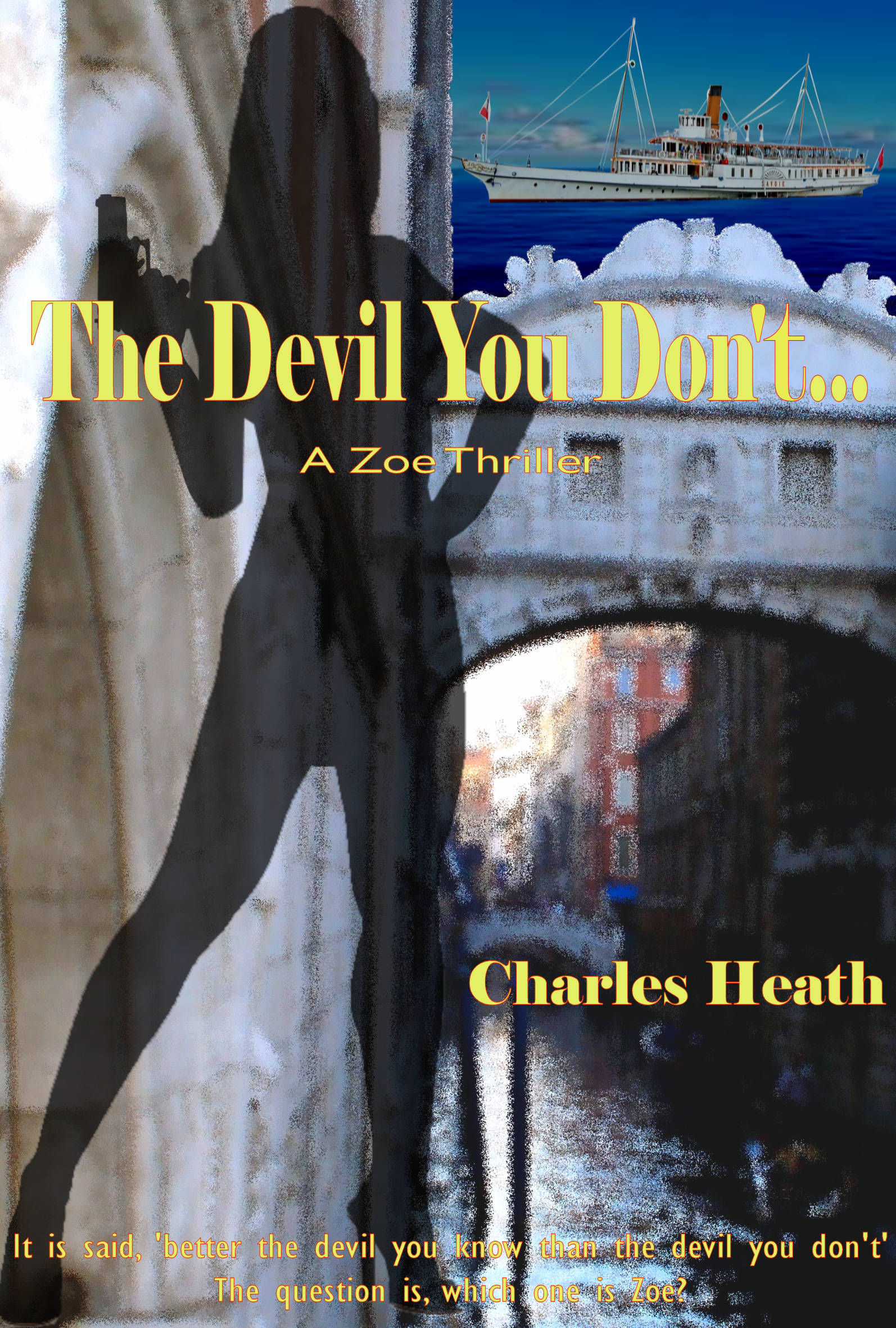
“The Devil You Don’t” – A beta readers view

It could be said that of all the women one could meet, whether contrived or by sheer luck, what are the odds it would turn out to be the woman who was being paid a very large sum to kill you.

John Pennington is a man who may be lucky in business, but not so lucky in love. He has just broken up with Phillipa Sternhaven, the woman he thought was the one, but relatives and circumstances, and perhaps because she was a ‘princess’, may also have contributed to the end result.

So, what do you do when you are heartbroken?

That is a story that slowly unfolds, from the first meeting with his nemesis on Lake Geneva, all the way to a hotel room in Sorrento, where he learns the shattering truth.

What should have been a high turns out to be something else entirely, and from that point every thing goes to hell in a handbasket.

He suddenly realises his so-called friend Sebastian has not exactly told him the truth about a small job he asked him to do, the woman he is falling in love with is not quite who she says she is, and he is caught in the middle of a war between two men who consider people becoming collateral damage as part of their business.

The story paints the characters cleverly displaying all their flaws and weaknesses. The locations add to the story at times taking me back down memory lane, especially to Venice where in those back streets I confess it’s not all that hard to get lost.

All in all a thoroughly entertaining story with, for once, a satisfying end.

Available on Amazon here: https://amzn.to/2Xyh1ow

The cinema of my dreams – I always wanted to write a war story – Episode 28

For a story that was conceived during those long boring hours flying in a steel cocoon, striving to keep away the thoughts that the plane and everyone in it could just simply disappear as planes have in the past, it has come a long way.

Whilst I have always had a fascination with what happened during the second world war, not the battles or fighting, but in the more obscure events that took place, I decided to pen my own little sidebar to what was a long and bitter war.

And, so, it continues…


By the time they reached the outskirts of Munich, what the Standartenfuhrer considered their biggest hurdle, it was quite dark and almost impossible to see where they were going.

The whole city seemed to have disappeared so effectively was the blackout.  

But there was one benefit, there was little or no traffic on the roads, which lessened the chance of running into another car or truck.

And it was time to refill the tank with two more petrol cans, leaving two remaining.  Filling up now, the Standartenfuhrer said, would get them to Innsbruck.

He sounded confident, but Mayer got the distinct impression it was mostly that he was putting on a brave face.  There had been one instance, the checkpoint before Munich where he nearly lost his nerve.  For the first time, there had been SS guards at the checkpoint, and which had been entirely unexpected.

An SS officer of the same rank had been summoned and he had requested their written orders.  They had paperwork, but Mayer wasn’t sure if it related to their current situation, further confirming his belief this had been a very carefully planned operation to get him out of Germany, and that there was a more pressing reason why.  It definitely had something to do with the V2’s, but had their intelligence services found out about something else, something he didn’t know about?

Given the level of risk to the two men with him, and that at every turn there was a possibility of capture or death, given the level of planning and the run so far, one he would have never thought of trying on his own, he didn’t have a very high level of confidence that they would get away with it.

Those in the SS were not fools, trusted no one, believed nothing they were told, and disregarded anything written on paper.  Check, double-check, then check again.  Take nothing as read.  The document he’d been given on what made a first-class SS officer in the eyes of the Reich, was fundamentally not him, nor most of the German population.

The officer at this checkpoint reminded him of the one who had shot the shooting in the hotel, and for at least ten tense minutes, during which time the other two had conferred quietly in English, one suggestion they cut and run.

That would have invited a hail of machine-gun fire that none of them would survive.

Both looked visibly relieved when he returned, having obviously called the name of the officer who had signed the order.  The only explanation he had for this was that the level of discontent among officers Military of SS must be greater than he thought.


They managed to cross over into Austria without any problems, the route they had taken, a series of back roads and tracks which had been given to them.  Once again, Mayer was surprised that so many people could be working against their own country, but, of what he’d seen, conditions were harsh no matter which part of Germany they were in.

The war was not going the way the German people were being told, and it was hard to see any resolution of the conflict any time soon.

Perhaps everyone in the high command was hoping the new V2 rockets were going to change the country’s fortunes in the war.  If they were, they were going to be bitterly disappointed.  What they needed was the jet-propelled fighters and bombers, something that remarkably had not been implemented years earlier, and would have given them air superiority.

He’d worked on those early jet engines and they were remarkable, and faster than anything the British or the Americans had.  It was hard to comprehend why high command had not pushed forward the new jet-propelled planes that Belin had finally decided to implement.  

And just when the trio had agreed that everything would work out about 100 kilometers from Innsbruck, on the road to the Italian border crossing, they took the wrong route.  It was a mistake brought on by tiredness, and a momentary lapse in concentration.

A checkpoint where there shouldn’t be one.

© Charles Heath 2020

Writing about writing a book – Day 11

Once again, instead of writing, I have been obsessing over the planning and creation of a website for the book.

And, that being the case, now I have to give the book a name so I can name the site/blog after it.

The word Starburst has featured in the story so tentatively I’m going to name it “The Starburst Conspiracy”

The site will be on WordPress.  There will be progress blog posts, there will draft writing and possible chapters for beta reading and comment.  There will be separate pages for each of the characters.

I’m not sure how I’m going to build an email list so perhaps I’ll build a following first.

So, having mapped out a plan for the site, I’ve made the first post and written the ‘About’ page which basically gives a bit of history about the book.

Bear in mind the original book of about 400 pages scribbled over a long period of time, and not really a book in the sense of the word (more a collection of ideas set in some form of chronology) and set in the early eighties and will probably stay there but will be the basis for the new novel.

Another interesting aspect of this exercise is to see how far I have come writing-wise in the last 30 years and how easy it is to spot the issues with the original manuscript.

I’ve also created a master page for the cast of characters and only a page for the main character so far.  Others will follow.

There will be another page with an ongoing, updated synopsis.

Shortcuts to these pages, as the information flows will be in subsequent posts.


For now, it’s back to writing, after a long gap, and the ideas have been churning in my head.


© Charles Heath 2016-2020

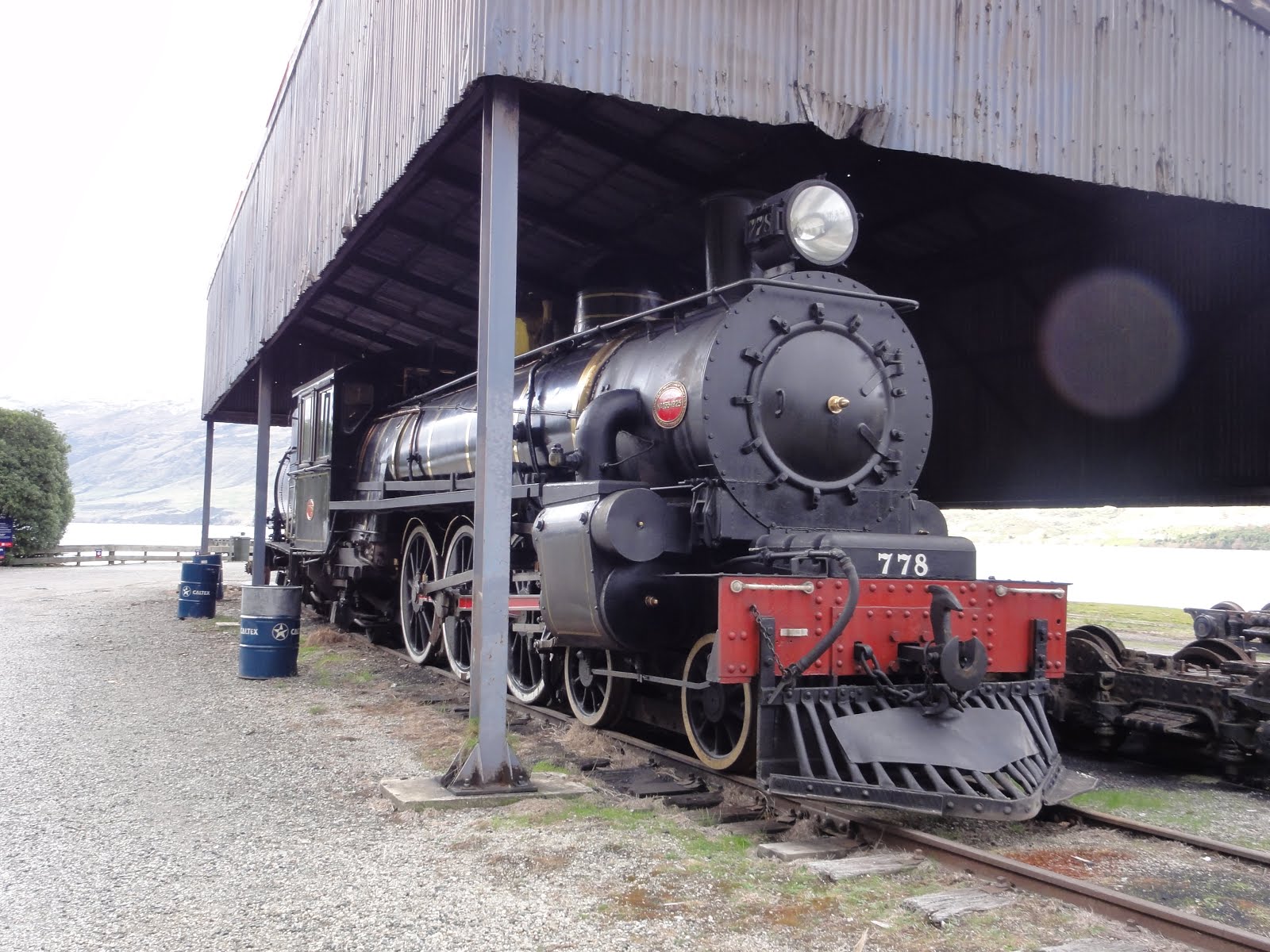
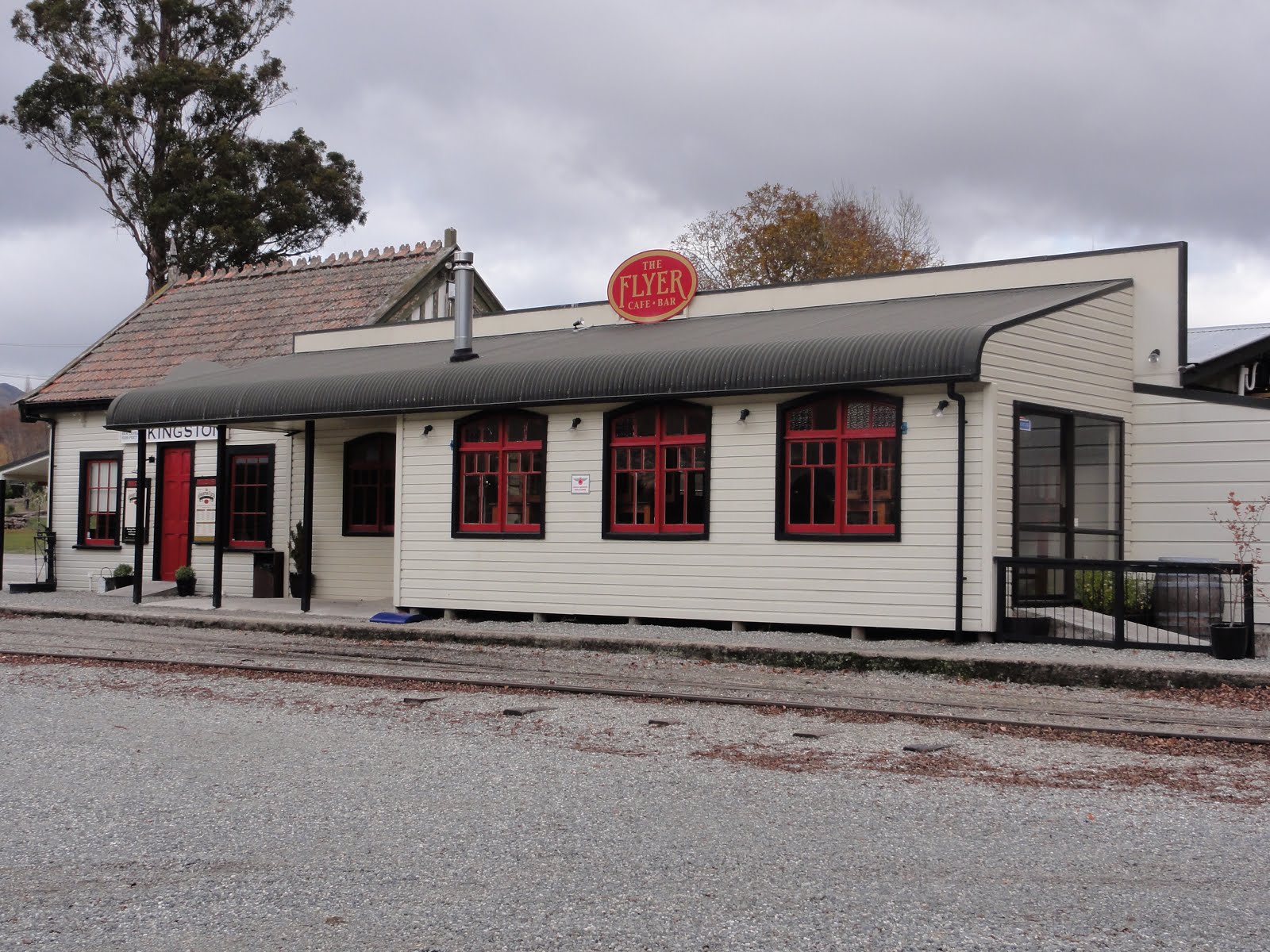
Searching for locations: The Kingston Flyer, Kingston, New Zealand

The Kingston Flyer was a vintage train that ran about 14km to Fairlight from Kingston, at the southern end of Lake Wakatipu, and back.

This tourist service was suspended in December 2012 because of locomotive issues.

However, before that, we managed to go on one of the tours, and it was a memorable trip.  Trying to drink a cup of tea from the restaurant car was very difficult, given how much the carriages moved around on the tracks.

The original Kingston Flyer ran between Kingston, Gore, Invercargill, and sometimes Dunedin, from the 1890s through to 1957.

There are two steam locomotives used for the Kingston Flyer service, the AB778 starting service in 1925, and the AB795 which started service in 1927.

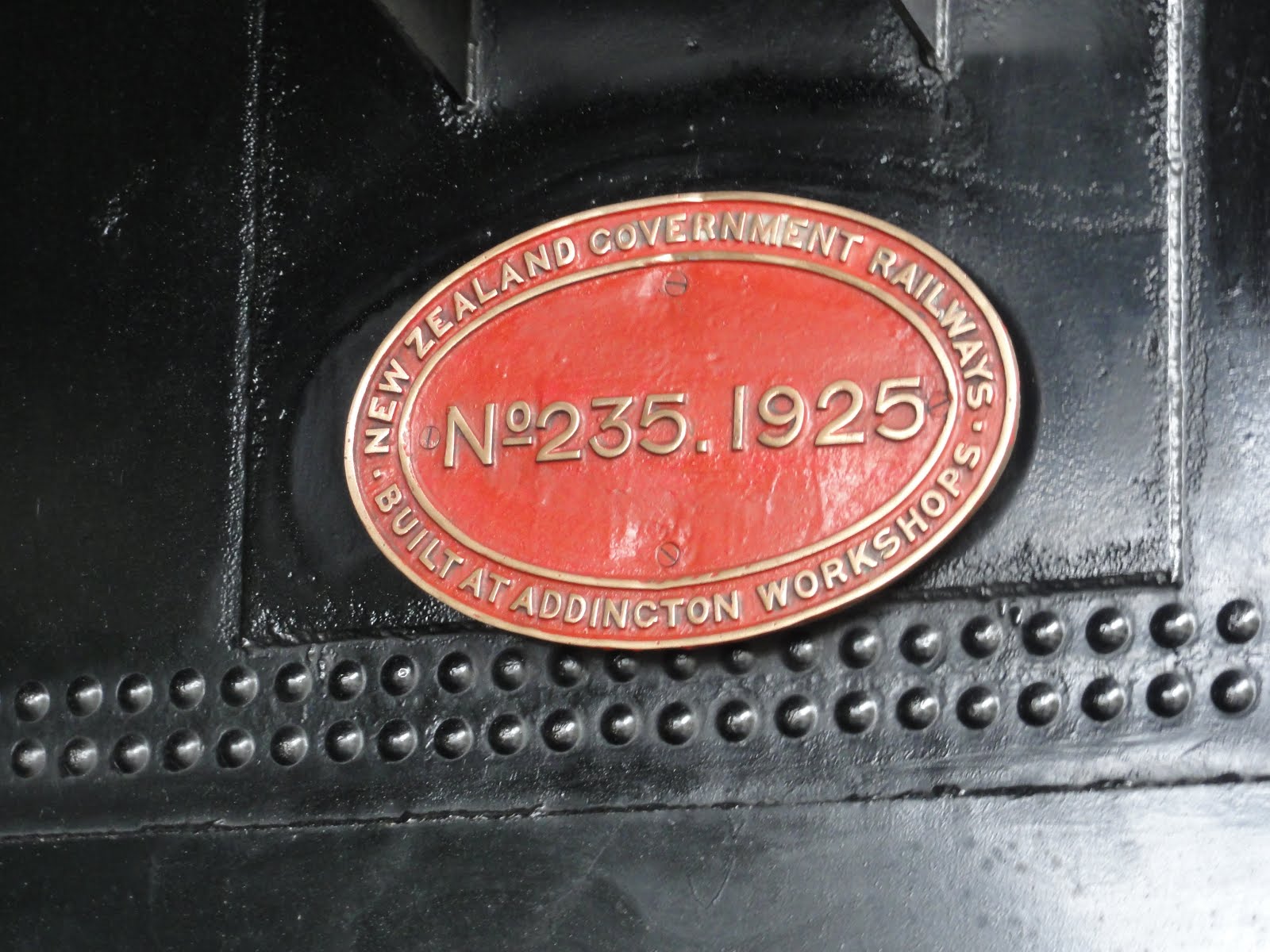
The AB class locomotive was a 4-6-2 Pacific steam locomotive with a Vanderbilt tender, of which 141 were built between 1915 and 1927 some of which by New Zealand Railways Addington Workshops.

No 235 is the builder’s number for the AB778

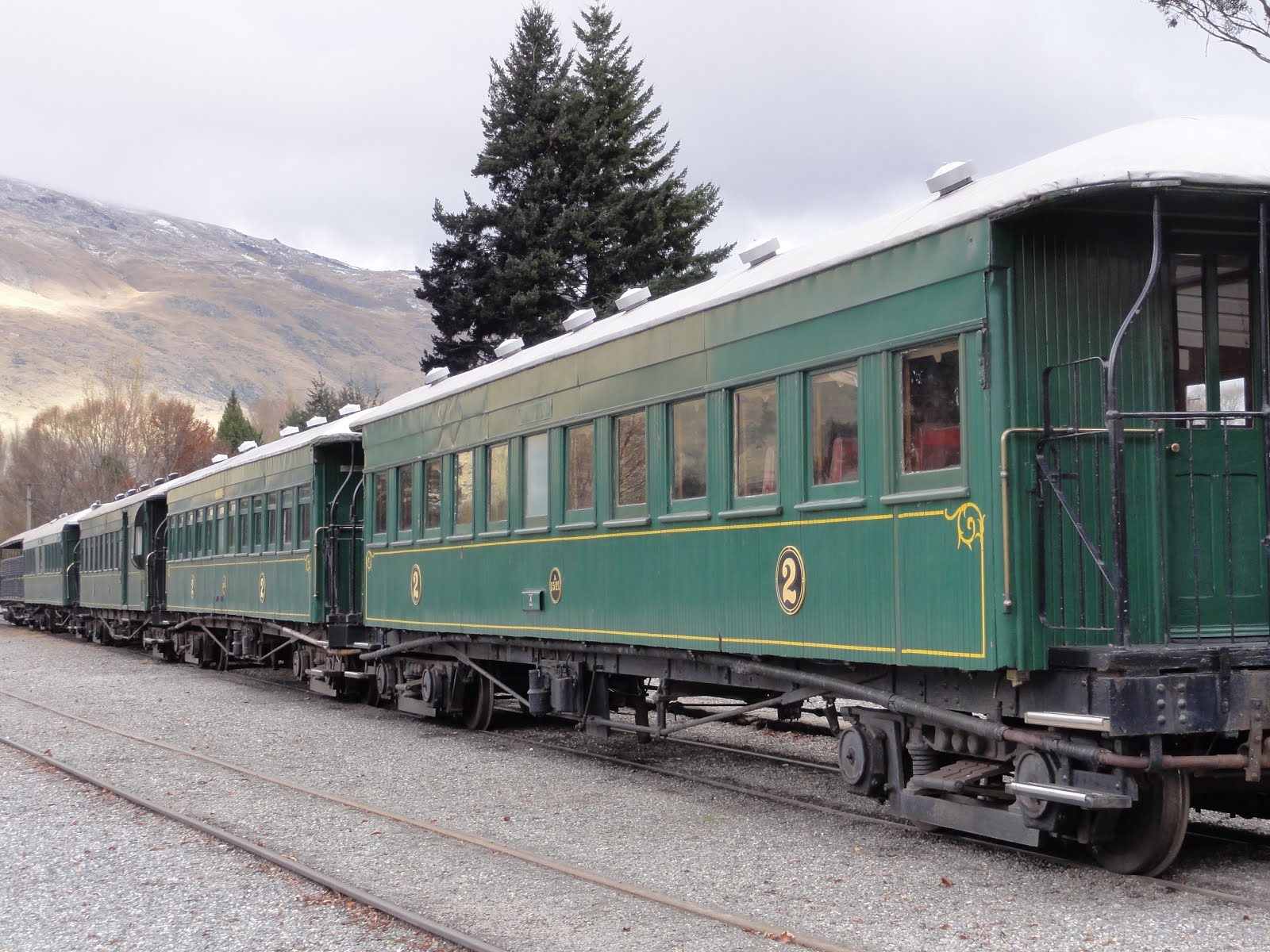
There were seven wooden bodied passenger carriages, three passenger coaches, one passenger/refreshments carriage and two car/vans.  The is also a Birdcage gallery coach.  Each of the rolling stock was built between 1900 and 1923.  They were built at either of Addington, Petone, or Hillside.

I suspect the 2 on the side means second class

The passenger coach we traveled in was very comfortable.

This is one of the guard’s vans, and for transporting cargo.

The Kingston Railway Station

and cafe.

A poster sign advertising the Kingston Flyer

The running times for the tourist services, when it was running.

“Strangers We’ve Become” – Countdown to publishing in 17 Days

Three stations

After seeing a film called Gorky Park with a Russian detective named Arcady, I read a few more in the series that feature him, and one of those had a reference to three stations.

These three stations are the Leningrad station, the Kazansky station, and the Yaroslavl station.

The latter was the one that interested me the most.

The story has Susan having a Russian father, a KGB agent who had an affair with her mother, and a man who had roots in the imperial past, from a rich family pre-1917 revolution, who lost everything after the revolution.

I needed a place for the ruined palace, and that was Yaroslavl.  It is tucked away off the main road on the banks of the Volga River, and according to legend, was once visited several times by the Tzar himself.

Legend also has it it was given to the family by Catherine the Great for services rendered.

Anyway, David gets himself to Moscow, does his version of the Cook’s tour, thanks to an obliging taxi driver, and then to the station to catch the train.  Why not drive?  Well, that’s an interesting question.

But ensconced in his hotel making plans for the next day to visit the ruins, an unexpected visitor lands on his doorstep.

Does every writer suffer from this dilemma?

If I get a headache I can take paracetamol

If I have a sore back I can take ipBrufen.

If I can’t put words on paper … what is there I can take?

It affects us all at some point, but it’s not necessarily that old demon writer’s block.

What is writer’s block anyway?  Is it some existential disease that doesn’t really exist, yet something we can blame where we can’t write?

So, it’s down to looking for reasons, and logically looking at what is the underlying cause of the problem.  We should be asking ourselves questions, like

Are we constantly distracted from writing?

Plan or no plan, subconsciously it doesn’t feel right, that the next scene, plotline or character interaction does follow, is contrived, is just plain wrong?

Usually, for me, it only takes two questions and the answer pops up.

I’ve written myself into the proverbial corner, and there’s no logical way to go forward.

What does that mean?

Well, that is covered by a third possible outcome from answering the questions.

I have to go back and do some major re-writes of earlier work, make sure there are the appropriate hooks and maybe even change the direction, even if just a little.

That, in itself, in the back of your mind, knowing what has to be done, and putting off the inevitable, is another reason why this project isn’t moving forward.

Two aspirin can’t solve this.

Nothing can.

Perhaps we should rename writer’s block to writer’s dilemma.

In a word: cue

Another small and sometimes confusing word.

The first meaning that comes to mind is a cue is a prompt, often from someone standing behind the camera in a television studio.

That is to say that a cue is some form of signal, a wave, a nod, or verbal.

A cue can also be where a tape or recording is set to a certain place, ready to play.  One could assume, if playing tracks off an album of songs, and you wanted to play the fourth track, then you would cue it up, ready to go on, of course, the moment you got a, yes, cue to play it.

Then there is a cue used in a game of pool or snooker, that is a long thin tapered piece of wood with a felt tip.  

Not exactly my favourite game, but it’s always the cues fault, not mine.

This is not to be considered with Que which is a shortened form for Quebec, in Canada.

Or que, which for some reason, only in California, is short for barbecue.

Or Queue, as in a long line, or a short one, of people waiting to get on a bus, or waiting to get tickets  

In my experience every queue I get in is always a long one, and then suffer the frustration of waiting hours only to be told the tickets have all been sold.

Almost as bad as being stuck in a traffic jam, which is technically a queue of cars, never to get through the first set of lights, and sometimes not the second.

And don’t get me started on phone queues.  

Queues are for people who have a lot of time on the hands.