An excerpt from “The Things We Do For Love”; In love, Henry was all at sea!

In the distance he could hear the dinner bell ringing and roused himself.  Feeling the dampness of the pillow, and fearing the ravages of pent up emotion, he considered not going down but thought it best not to upset Mrs. Mac, especially after he said he would be dining.

In the event, he wished he had reneged, especially when he discovered he was not the only guest staying at the hotel.

Whilst he’d been reminiscing, another guest, a young lady, had arrived.  He’d heard her and Mrs. Mac coming up the stairs, and then shown to a room on the same floor, perhaps at the other end of the passage.

Henry caught his first glimpse of her when she appeared at the door to the dining room, waiting for Mrs. Mac to show her to a table.

She was about mid-twenties, slim, long brown hair, and the grace and elegance of a woman associated with countless fashion magazines.  She was, he thought, stunningly beautiful with not a hair out of place, and make-up flawlessly applied.  Her clothes were black, simple, elegant, and expensive, the sort an heiress or wife of a millionaire might condescend to wear to a lesser occasion than dinner.

Then there was her expression; cold, forbidding, almost frightening in its intensity.  And her eyes, piercingly blue and yet laced with pain.  Dracula’s daughter was his immediate description of her.

All in all, he considered, the only thing they had in common was, like him, she seemed totally out of place.

Mrs. Mac came out of the kitchen, wiping her hands on her apron.  She was, she informed him earlier, chef, waitress, hotelier, barmaid, and cleaner all rolled into one.  Coming up to the new arrival she said, “Ah, Miss Andrews, I’m glad you decided to have dinner.  Would you like to sit with Mr. Henshaw, or would you like to have a table of your own?”

Henry could feel her icy stare as she sized up his appeal as a dining companion, making the hair on the back on his neck stand up.  He purposely didn’t look back.  In his estimation, his appeal rating was minus six.  Out of a thousand!

“If Mr. Henshaw doesn’t mind….”  She looked at him, leaving the query in mid-air.

He didn’t mind and said so.  Perhaps he’d underestimated his rating.

“Good.”  Mrs. Mac promptly ushered her over.  Henry stood, made sure she was seated properly and sat.

“Thank you.  You are most kind.”  The way she said it suggested snobbish overtones.

“I try to be when I can.”  It was supposed to nullify her sarcastic tone but made him sound a little silly, and when she gave him another of her icy glares, he regretted it.

Mrs. Mac quickly intervened, asking, “Would you care for the soup?”

They did, and, after writing the order on her pad, she gave them each a look, imperceptibly shook her head, and returned to the kitchen.

Before Michelle spoke to him again, she had another quick look at him, trying to fathom who and what he might be.  There was something about him.

His eyes, they mirrored the same sadness she felt, and, yes, there was something else, that it looked like he had been crying?  There was a tinge of redness.

Perhaps, she thought, he was here for the same reason she was.

No.  That wasn’t possible.

Then she said, without thinking, “Do you have any particular reason for coming here?”  Seconds later she realized she’s spoken it out loud, had hadn’t meant to actually ask, it just came out.

It took him by surprise, obviously not the first question he was expecting her to ask of him.

“No, other than it is as far from civilization, and home, as I could get.”

At least we agree on that, she thought.

It was obvious he was running away from something as well.

Given the isolation of the village and lack of geographic hospitality, it was, from her point of view, ideal.  All she had to do was avoid him, and that wouldn’t be difficult.

After getting through this evening first.

“Yes,” she agreed.  “It is that.”

A few seconds passed, and she thought she could feel his eyes on her and wasn’t going to look up.

Until he asked, “What’s your reason?”

Slight abrupt in manner, perhaps as a result of her question, and the manner in which she asked it.

She looked up.  “Rest.  And have some time to myself.”

She hoped he would notice the emphasis she had placed on the word ‘herself’ and take due note.  No doubt, she thought,  she had completely different ideas of what constituted a holiday than he, not that she had actually said she was here for a holiday.

Mrs. Mac arrived at a fortuitous moment to save them from further conversation.


Over the entree, she wondered if she had made a mistake coming to the hotel.  Of course, there had been no possible way she could know than anyone else might have booked the same hotel, but realized it was foolish to think she might end up in it by herself.

Was that what she was expecting?

Not a mistake then, but an unfortunate set of circumstances, which could be overcome by being sensible.

Yet, there he was, and it made her curious, not that he was a man, by himself, in the middle of nowhere, hiding like she was, but for very different reasons.

On discreet observance whilst they ate, she gained the impression his air of light-heartedness was forced and he had no sense of humor.

This feeling was engendered by his looks, unruly dark hair, and permanent frown.  And then there was his abysmal taste in clothes on a tall, lanky frame.  They were quality but totally unsuited to the wearer.

Rebellion was written all over him.

The only other thought crossing her mind, and rather incongruously, was he could do with a decent feed.  In that respect, she knew now from the mountain of food in front of her, he had come to the right place.

“Mr. Henshaw?”

He looked up.  “Henshaw is too formal.  Henry sounds much better,” he said, with a slight hint of gruffness.

“Then my name is Michelle.”

Mrs. Mac came in to take their order for the only main course, gather up the entree dishes, then return to the kitchen.

“Staying long?” she asked.

“About three weeks.  Yourself?”

“About the same.”

The conversation dried up.

Neither looked at the other, rather at the walls, out the window, towards the kitchen, anywhere.  It was, she thought, almost unbearably awkward.


Mrs. Mac returned with a large tray with dishes on it, setting it down on the table next to theirs.

“Not as good as the usual cook,” she said, serving up the dinner expertly, “but it comes a good second, even if I do say so myself.  Care for some wine?”

Henry looked at Michelle.  “What do you think?”

“I’m used to my dining companions making the decision.”

You would, he thought.  He couldn’t help but notice the cutting edge of her tone.  Then, to Mrs. Mac, he named a particular White Burgundy he liked and she bustled off.

“I hope you like it,” he said, acknowledging her previous comment with a smile that had nothing to do with humor.

“Yes, so do I.”

Both made a start on the main course, a concoction of chicken and vegetables that were delicious, Henry thought, when compared to the bland food he received at home and sometimes aboard my ship.

It was five minutes before Mrs. Mac returned with the bottle and two glasses.  After opening it and pouring the drinks, she left them alone again.

Henry resumed the conversation.  “How did you arrive?  I came by train.”

“By car.”

“Did you drive yourself?”

And he thought, a few seconds later, that was a silly question, otherwise she would not be alone, and certainly not sitting at this table. With him.

“After a fashion.”

He could see that she was formulating a retort in her mind, then changed it, instead, smiling for the first time, and it served to lighten the atmosphere.

And in doing so, it showed him she had another more pleasant side despite the fact she was trying not to look happy.

“My father reckons I’m just another of ‘those’ women drivers,” she added.

“Whatever for?”

“The first and only time he came with me I had an accident.  I ran up the back of another car.  Of course, it didn’t matter to him the other driver was driving like a startled rabbit.”

“It doesn’t help,” he agreed.

“Do you drive?”

“Mostly people up the wall.”  His attempt at humor failed.  “Actually,” he added quickly, “I’ve got a very old Morris that manages to get me where I’m going.”

The apple pie and cream for dessert came and went and the rapport between them improved as the wine disappeared and the coffee came.  Both had found, after getting to know each other better, their first impressions were not necessarily correct.

“Enjoy the food?” Mrs. Mac asked, suddenly reappearing.

“Beautifully cooked and delicious to eat,” Michelle said, and Henry endorsed her remarks.

“Ah, it does my heart good to hear such genuine compliments,” she said, smiling.  She collected the last of the dishes and disappeared yet again.

“What do you do for a living,” Michelle asked in an off-hand manner.

He had a feeling she was not particularly interested and it was just making conversation.

“I’m a purser.”

“A what?”

“A purser.  I work on a ship doing the paperwork, that sort of thing.”

“I see.”

“And you?”

“I was a model.”

“Was?”

“Until I had an accident, a rather bad one.”

“Oh, I’m sorry.”

So that explained the odd feeling he had about her.

As the evening had worn on, he began to think there might be something wrong, seriously wrong with her because she didn’t look too well.  Even the carefully applied makeup, from close up, didn’t hide the very pale, and tired look, or the sunken, dark ringed eyes.

“I try not to think about it, but it doesn’t necessarily work.  I’ve come here for peace and quiet, away from doctors and parents.”

“Then you will not have to worry about me annoying you.  I’m one of those fall-asleep-reading-a-book types.”

Perhaps it would be like ships passing in the night and then smiled to himself about the analogy.

Dinner now over, they separated.

Henry went back to the lounge to read a few pages of his book before going to bed, and Michelle went up to her room to retire for the night.

But try as he might, he was unable to read, his mind dwelling on the unusual, yet the compellingly mysterious person he would be sharing the hotel with.

Overlaying that original blurred image of her standing in the doorway was another of her haunting expressions that had, he finally conceded, taken his breath away, and a look that had sent more than one tingle down his spine.

She may not have thought much of him, but she had certainly made an impression on him.


© Charles Heath 2015-2020
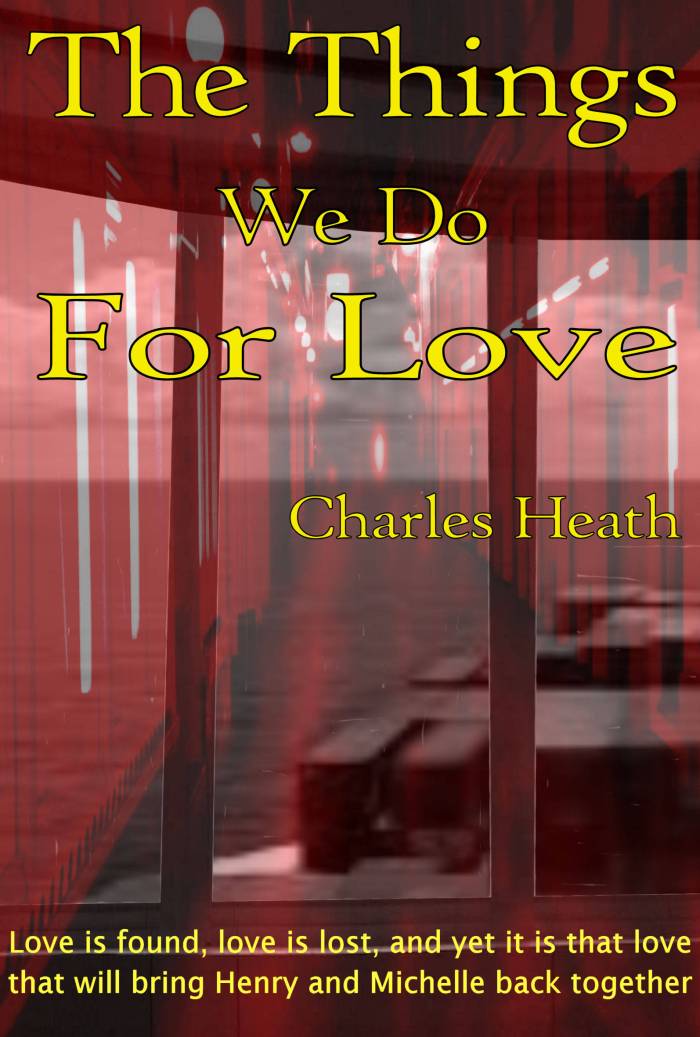
lovecoverfinal1

In a word: Bar

There’s more than one way … er, perhaps it’s better to say, there are many ways to use the word bar, which is not bad for a three letter word.


Bar, the one you associate with drinks, in hotels, restaurants and we’ll, just bars.

Probably the best type of bar you might find me in is a Sports Bar, where you can snack on buffalo wings a tall glass of beer and watch with ice hockey in winter or baseball in summer.

It’s one I use from time to time when asked, what will we do, and the reply is often let’s go to a bar.  The best bars are underground, dark and dingy, full of eclectic people, with a band playing almost passable music or better still jazz


Bar, as in the legal variety

There are so many legal references to using bar, that the one that I am most familiar with is being admitted to the bar which means that you can now practice law.

Raising the bar, if that’s possible, where the bar is that imaginary level which offers sinks very low.  When someone says they’re going to try and raise the bar, you may be assured there will be a long battle ahead, simply because people generally find it hard to change.


Bar, as in we are not going to let you in here.  Yes, this is the irksome one where you find yourself, often for reasons unknown, barred from somewhere or something.  This may also be referred to by saying everyone may enter bar you.  


Bar, as in an iron bar, the sort that is sometimes used as a blunt force object by villains to remind the victim they owe any one of a loan shark, bookie or the mafia.  God help you if it is all three.

There are also iron bars of a different sort, those that are set in concrete outside a window most likely in a prison where the objective is to prevent escape.

It gives rise to an old expression, that person should be behind bars.


Then there is just a bar, such as a bar of gold, which I’m sure we’d all like to have stashed away, but not necessarily in the mattress, or the more common variety, a chocolate bar, which I have one now.  What’s your favorite?


And just to add to the list of meanings you can always refer to sashes or stripes as bars.

Confused?  Well, there’s still music, and the bane of yachtsmen, sand bars but I think we’ll leave it there.

Welcome to the English language

In a word: Scene

This is an easy one.

It’s a part of a book or film which covers a single event, and predominantly with a set group of characters.

It could also mean it might relate to a particular genre that you like, as in,

I’m part of the jazz scene or the symphonic scene, though I think it had a more sinister context back in the late 60s early 70s.

A scene could also be a landscape (especially in art)

Then, of course, the last thing you want is a child to make a scene in front of others, in a display of temper, or bad manners

This is not to be confused with seen, as in, you should be seen and not heard, an oft used expression by a parent.

You could be seen, especially in places where you were not meant to be, or, conversely, make sure you are seen by the ‘right’ people in the ‘right’ places

Have you seen my dictionary, it’s quite large and heavy

I have seen his bad qualities

I have seen better days, though at the moment I can’t remember when

I have seen them all, sometimes seemingly impossible, but it is generated by exasperation, and generally more like I’ve seen everything now!


Searching for locations: Salzburg, Austria

Along with My Fair Lady, another of my favorite musicals was Sound of Music and having seen it a number of times over the years, it had conjured up a number of images of Salzburg in my mind, and with them a desire to go there.  We had been to Salzburg once before, an overnight train stop between Vienna and Innsbruck, an afterthought, but what we saw then was reason enough to come back later and spend several days.

A pity then the day we arrived, and for much of our stay, it rained.  But, like hardened travelers, very little stops us from doing anything, and particularly sightseeing.

We stayed at the Crowne Plaza – The Pitter in a very well-appointed room.  Breakfast included, it was a great way to start the day.  The afternoon we arrived we went for a short walk to the old city passing through the Mirabelle gardens with the Pegasus Fountain, Rose Garden, and Dwarves Garden.  Later we discovered that the archway had been used in part of the filming of Sound of Music.

We took the Festungsbahn funicular railway up to the Fortress Hohensalzburg, dating back to 1077, and the largest fortress still standing in Europe.  We spent a pleasant afternoon wandering through the rooms and exhibits and then had lunch at a café, the Salzburg Fortress Café, that overlooked the countryside.  This was where we were introduced to Mozart Gold Chocolate Cream added to our coffee.

It led us to search for the product which we eventually found in a confectionary store, Holzemayr in the Alter Markt.  Not only sis we find the Gold liqueur there was also a dark chocolate variety as well.  We bought a whole box to bring back with us, as well as a number of other chocolates including Victor Schmidt Austrian Mozart Balls, a delicious chocolate and marzipan combination.

With another afternoon to spare we visited the Salzburg Residence which previously housed Salzburg’s ruling prince-archbishops.  We visited the reception rooms and living quarters, as well as the Gallery.  It is as ornate as any of the palaces in Austria, resplendent with furnishings and paintings.  After that, the visit to Mozart’s birthplace was something of an anticlimax.

But, what we were in Salzburg for, the Sound of Music tour, and the places we visited:

The Mirabelle gardens, where Maria sang Do Re Mi in front of the gates to the gardens.  We spent some time here before and after the tour, and also has a look inside the Mirabelle Palace, which is not open to the public as it is the city administrative offices.

Leopoldskron Palace where the boating scene was filmed as well as exteriors.  They were not allowed to film inside the place and were only allowed to use the exterior.  An interesting tidbit of information, one of the children nearly drowned.

Heilbrunn palace is now home to the gazebo where Rolf and Leisl sang their song, ‘16 going on 17’.  The interesting part of this was the fact the Gazebo used to film the scene was much larger than the actual Gazebo on display.

The walkway from the fortress back to the old city passes Nonnberg Abbey where Maria was a novice, and where the opening scenes were filmed.  A number of scenes were filmed here, including the song ‘Maria’ in the courtyard.  The tour only showed the exterior of the Abbey.

Salzburg lake district where panorama and picnic scenes were filmed.  Even on the dullest of days, during which throughout our tour in continually rained, the scenery was still magnificent.

Mondsee church, where the wedding scenes were filmed.  It was surprising just how small the church really is.  It was also a stop to have afternoon tea or some ‘famous’ apple strudel.

Needless to say, we watched Sound of Music straight after the tour and managed to pick out all of the places we had been to.  The only downside to the tour, singing along to the songs.  I’m sorry, but I do not sing, and some of those that were, well, I say no more.

The cinema of my dreams – I always wanted to write a war story – Episode 29

For a story that was conceived during those long boring hours flying in a steel cocoon, striving to keep away the thoughts that the plane and everyone in it could just simply disappear as planes have in the past, it has come a long way.

Whilst I have always had a fascination with what happened during the second world war, not the battles or fighting, but in the more obscure events that took place, I decided to pen my own little sidebar to what was a long and bitter war.

And, so, it continues…


They reached a point a few kilometers from what was known as Brenner Pass at four in the morning, having navigated their way through patchy snow, icy roads, and bitter cold.

Progress at times was slow and the roads were difficult, the driver, at times, nearly losing control of the car.

The checkpoint appeared almost when they were on top of it, one that hadn’t been marked on the map, so they had not been prepared for it. Too late to turn back, they had to stop.

Once again the soldier that came out of the hut beside the boom was an army Unteroffizier who was more concerned about the cold than those in the car.

The Standartenfuhrer once again explained the nature of their business, and again the sentry went back to his hut and made a call.

While he was there the driver was checking the number of other soldiers were in attendance and had pulled his weapon out from under the seat and had it ready to use.

The Standartenfuhrer had done the same, also having checked the extent of the staffing of the post.

Then the driver said, “This looks like one of several. I think we may have walked into a hornet’s nest. The Brenner Pass is very important to the Germans for supplies from Germany to its soldiers in Italy.”

“You think our luck has finally run out?”

They had both seen the guard change expression, from the languid guard worrying more about the cold than a lone car at night, to a soldier who looked like he was about to attend a Nazi rally.

“I think they’ve finally discovered that our friend Mayer is missing.”

“Which means we’re about to get a small platoon of soldiers down on us. OK. You keep them off as long as you can so Mayer and I can get into the woods.”

The Standartenfuhrer turned to Mayer. “This is it, then end of the line for driving. We’re about to get a lot of unwanted visitors.”

He thrust the folder of plans into Mayer’s hands along with a coat.

“Let’s go.”

“Where?” Mayer was almost panic-stricken. The situation was deteriorating with each passing second. He, like the others, could see six men jogging towards them.

Their only advantage was the lack of illumination.

The driver said, “See you on the other side.”

The Standartenfuhrer leaned over, opened the door, and said, forcefully, “Get out, now.”

Mayer tumbled out almost slipping on the icy surface, and the sudden cold hitting him hard.

The Standartenfuher was right behind him, closing the door, and then literally dragging him off the side of the road and towards the tree line about 50 meters away, just barely visible again the dark sky. Thankfully there was no moon peeking through the clouds.
But light snow just began to fall, and it would hide them behind an artificial white wall.

They made it to the edge of the forest just as the soldiers reached the car.

Mayer turned to look and could see the sentry now with a torch, probably checking the car which was now barely visible to them. He had seen three people before, now there was only one.

No time to see the inevitable, the Standartenfuhrer dragged him away with, “We have to go before they bring out the dogs.”

Further into the trees, and moving as quickly as they could through the trees and undergrowth, and at times slipping and sliding on both snow and ice, it was five minutes before they heard six shots in rapid succession, followed by the sound of a machine gun.

“Let’s hope he killed at least six of them before he died.”

The problem was, Mayer thought, there was probably another hundred others waiting to take their place.


Mayer had come totally unprepared for the snow, and the cold. At least he had a coat.

Another problem was that he was hungry and that only added to his discomfort. And now they had no means of transport, it was going to take a lot longer to get to Florence, or anywhere for that matter.

An hour passed as they worked their way steadily through the trees, and cover. The dreaded dogs had not been unleashed on them, but they had to assume that someone at the border checkpoint would raise the alarm that there were fugitives in the area, and probably wait until morning before looking for them,

They could calculate how far they had walked and sent in search teams from there.

Or not.

Four hours after they’d left the car, they stumbled upon a cabin. It was not much, having been abandoned quite some time ago and left for the forest to reclaim, but it was shelter and a place to rest. It was not long before first light, and then they could assess their situation.

It was also time for the Standartenfuhrer to give Mayer all the information he needed once he got to Gaiole because at some point they were going to have to split up and Mayer would have to go alone.

Just when he thought it couldn’t get any worse.


© Charles Heath 2020

The cinema of my dreams – Was it just another surveillance job – Episode 44

I’m back home and this story has been sitting on the back burner for a few months, waiting for some more to be written.

The trouble is, there are also other stories to write, and I’m not very good at prioritizing.

But, here we are, a few minutes opened up and it didn’t take long to get back into the groove.

Chasing leads, maybe


I leaned back in the chair and shuddered.  It was not so much the cold as the stark realization before me, well, before all of us really.

The USB was gone.

But it was going to be impossible to convince any or all of Severin, Maury, and Nobbin.  Or for that matter Monica.  None of them were going to believe the explosion in the café was a deliberate act.  

But it did raise a question.

“How did whoever placed the bomb in the café know you and your contact were going to be there, and, for that matter, that either of you might have the USB?”

O’Connell seemed lost in thought.  After prodding him, I asked the question again.  His hesitation seemed to suggest that what he’d told me might be a lie, or a half-truth because the more I thought about it, the more implausible it sounded.  The other side of that was, what did he have to gain by lying?  Of no doubt, there was more to this story.

“There are more people involved in this than what you know.  Dobbin had me looking into a biological laboratory, one that was reportedly doing research on cures for various coronaviruses, like SARS.  The thing is, they had a store of nasties they were using as candidates for finding cures.

“The laboratory had been getting funding from the military so that to me meant they’d been working on weaponizing one of those nasty viruses, but there had been containment breach leading to a review, and they lost their funding.

“That, in turn, leads to the head of the company seeking funding from elsewhere, and that it was going to be an overseas government institution, one which they claimed commercial confidence so the donor could not be released.  Of course, our intelligence services went into a spin, thinking the worst, that it was either Russia or the Chinese, or some other rogue regime, and if they got their hands on those candidates, well, you can imagine the paranoia.

“There was also the problem of hacking, where various countries and/or individuals are looking for information to use for their own benefit, or to sell to the highest bidder.  That as far as I can tell is what happened here; it was not a case of external hacking, this was internal by one of the staff, downloading sensitive information onto the USB and smuggling it out.

“As soon as the breach was discovered, it triggered an internal review, which had a member of the military on the panel, and it concluded it was one of three ex-employees.  Dobbin gave me the three names, and I tracked them down.  One of the three had stolen the data, but far from stealing it to sell to the highest bidder, he had stolen it to pass on to a newspaper reporter, the person I was going to see.

“He could see the information was not the sort to be disseminated to the general public and wanted it returned.  I was going to get it.

“So, in answer to your question, it was possible that someone else had done the same as I had after I had visited each of the three, and decided to deal with the problem decisively.  But it would have required planning and an organization with infinite resources to pull it off.  Top of my list is the owners of the laboratory, simply because, they were not interested in getting the copy back, and the fact they didn’t want to have any witnesses, which meant the reporter and had to be silenced.”

“And the person who stole the information?”

“Burned to death in a house fire.  The fire department concluded it was a gas leak.”

“Helped by a person or persons unknown.”

“Given the distribution list of that final report, unless Dobbin has been moonlighting as an assassin, there’s only one other name on the list.”

No need to say it out loud.  That left one question, and probably a hundred others that wouldn’t get answers.

“What’s it to do with Severin and Maury?”

“That’s not their names.  Severin is really David Westcott, and Maury is Bernie Salvin.  Both used to be in the security detail at the company about three years ago when several biological entities were being researched, both of whom were assigned by the military to keep an eye on their investment.

“When the accident occurred, they were reassigned, but I suspect, at the time, they knew exactly what had happened, and what is involved.  It’s not a leap to come to the conclusion they had a shift in allegiance and may have helped the person who stole the information because there was no way the person who stole it had the knowledge to get it out.

“It was not something he would tell me.  That, he said, if he told me, would sign his death warrant.”

Which it did.  Was the original thief killed before or after the explosion?

“Do we Assume Severin is the man in charge?”

“No.  They’re basically blunt instruments, giving orders, and doing what they’re told.  We all are, to a certain extent.  This operation had someone else, someone far more clever, and connected.”

“But they did create a whole unit and train them in an existing facility without anyone knowing.”

“Is that you they told you?  And you believed them?  Nothing goes on in that place with an official sanction.  No.  Your operation was created on the books, but on the quiet so if anything went wrong, they could disavow any knowledge of it.  It went south and what happened?”

“They disavowed any knowledge of it.”

“And kept you on, only reassigned?”

“Those of us who survived, yes.”

“Then I suggest you watch your back and keep all of them at arm’s length.  You’ll only be useful until the USB is found, so you have to keep them believing it’s missing.”

“We’re not going to be able to do that forever.”

“No.  Which makes it imperative we find out who Severin and Maury’s bosses are and chop of the head.”

All while pretending he was dead.  Easier said than done.


© Charles Heath 2020-2021

A photograph from the inspirational bin – 13

I came across this photo:

This is like so many roads off in what is known as the Gold Coast hinterland, that tract of land between the ocean and the mountain range that runs along the eastern side of the country, known as the Great Dividing Range.

This is the road that runs behind where friends of ours live, and runs on down into a valley where a river runs, and when the rains come down, floods.

It’s hard to imagine that a few hundred years ago all of this would have been tropical jungle, and intrepid explorers would be making their way north or west, just to see what was there.

I imagine in another 100 years, all of this will be gone, given over to housing, shopping malls, and factories, and anything that resembles country living will have been moved out to far beyond the mountain range and towards the what is called the ‘red’ centre.

Or over that time there is a reckoning with mother nature, and if there is, I know who I’d put my money on.

But, as for a story…

It was quite literally the road to nowhere.

You just had to follow it until it disintegrated into a dirt track, and then for another 20 miles before you finished up at a rusty gate attached to a dilapidated fence that surrounds the a house that was cleverly hidden behind a grove of trees, the only place I knew as home. We had no phones, no television or radio, no real contact with the outside world.

Until, one day, my fairy godmother came and rescued me.

Yes, it felt like that.

Little had I realized that there were any other people in our family, and it took until the death of my parents to find out I had grandparents, and a much larger extended family.

There had been, according to my father, no reason to leave. Or for anyone else to come, and the few that ventured to end of the road, found there was nothing to see, and no reason to stay.

For all intents and purposes we didn’t exist, and, oddly, I was content with that.

Until I decided to venture further afield, run into two people, a man and a woman, both of whom said they were related to my father, and ask me to take them back with them to meet my father,

A bad choice, but I didn’t know it at the time.

Not until my father ran them off at the point of the gun he always had with him.

He knew who they were, and it surprised me to see the change in him, from the strong silent type, to a man greatly afraid, though he would not tell me of what.

He just told me to lock myself in my room, and not to come out for anything.

I heard him leave, but not come back.

It took three days before I left that room, to find I was completely alone in the house. Outside, it was a different story. There, half way between the back door and the barn were the two people I’d brought home, both dead. A little further away were my parents, also dead.

And another man, who was leaning over my father.

I stopped when he looked up in my direction.

“You must be Jake.”

How did he know my name? I nodded, warily watching him in case I had to run.

He went from body to body, checking to see if they were still alive, then stood and turned around to look at me.

“Do you know what happened?”

“No.”

“Do you know who the other two are?”

I assumed he was referring to the visitors.

“No. The man said he was a relative, asked me to bring them here.”

“How did you…”

Escape? “My father told me to hide and not come out.” If this man was associated with the other two…

Perhaps he saw my trepidation.

“I’m a friend of your father’s, a policeman. You were supposed to be safe here.”

We were, until I brought the harbingers of death. “Not any more,” I said.

© Charles Heath 2021

There’s more time for TV

Being confined to home because of COVID not only gives me, and a lot of others more time to write, it also enables us to explore a few more leisure options to fill in the time.

After all, we can hardly just keep writing endlessly.

Well, perhaps some of us could.

At first I decided I would do some virtual travelling, you know, go to places I would never go in person, like South Africa, Kenya, Egypt, South America, you know the sort of places I mean, the ones where you can’t get travel insurance cover, or not without mortgaging your home.

That lasted about a day. Seeing the pyramids online was not the same as being there, getting the sand blown in your face, or the tour bus being hijacked, and you spend the next three months in a dark, hot, hell hole while the kidnappers negotiate with governments that refuse to negotiate with terrorists.

So far, I’m not filling in my time very well.

There are weeds to be pulled, lawns to be cut, shrubs and trees to be pruned, painting to be done, you know, all of those chores that you put off until tomorrow, knowing tomorrow will never come.

Don’t ask me to explain that.

So, we’re left with television.

Firstly there was a series called Yellowstone, a western in a modern setting, three series worth. Yes, we watched all of them, no, didn’t like the swearing, or Beth Dutton, Rip was channelling the Duke, and Kevin Kostner, well, his stint in Dances with Wolves stood him in good stead.

Geez though, how much trouble can one ranch attract? Indians, speculators, developers, and an international airport? To be honest, at times it spiralled out of control, but for sheer entertainment value, it was slightly better than I thought it might be. As for Jamie, how could one person be so complicated?

Then there was another series, Away. OK, this was about as far fetched as a premise could get, and the characters, as diverse, and sometimes as obtuse as any I’ve seen thrown together for over eight months. Thank god we didn’t have to suffer eight months of it.

It was good, I guess, with people being the way they are, and I’d expected in the confines of that small space for so long, they might have killed each other off one at a time, like in Lord of the Flies, but no such luck.

My favourite? The Russian. He might have been blind but he was interesting. Just would have liked a few subtitles for us non-Ghana, Chinese, Russian, Indian people.

As for White House Farm, I’m still trying to work out who killed them all, because it definitely wasn’t the daughter. It had to be the indifferent son, or at his behest. Full marks to the dogged detective, who, the last time I saw him, he was a rather improbable Hercules. Funny how your impression of a performance goes back to one you’ve seen him before.

Which is another of our viewing interests, watching a show and trying to work out where we’ve seen the actors before. Some are familiar and seem to be in everything, others rarely seen, or remembered. I hope this is not a sign of their acting talent, or more to the point, lack of it.

At the moment we are in the middle of Young Wallender. Those who may have seen Branagh in the Wallender series would remember this as being the most stultifying of series, filmed bleakly in a bleak country with bleak characters, and bleak crimes.

Fortunately, the Young Wallender series is not as bleak, but it has dark undertones. Some might call this gritty. There are four more to go so it can only get better.

Like jumping off a ten storey building, it’s so far so good…

“The Devil You Don’t”, she was the girl you would not take home to your mother!

Now only $0.99 at https://amzn.to/2Xyh1ow

John Pennington’s life is in the doldrums. Looking for new opportunities, and prevaricating about getting married, the only joy on the horizon was an upcoming visit to his grandmother in Sorrento, Italy.

Suddenly he is left at the check-in counter with a message on his phone telling him the marriage is off, and the relationship is over.

If only he hadn’t promised a friend he would do a favour for him in Rome.

At the first stop, Geneva, he has a chance encounter with Zoe, an intriguing woman who captures his imagination from the moment she boards the Savoire, and his life ventures into uncharted territory in more ways than one.

That ‘favour’ for his friend suddenly becomes a life-changing event, and when Zoe, the woman who he knows is too good to be true, reappears, danger and death follow.

Shot at, lied to, seduced, and drawn into a world where nothing is what it seems, John is dragged into an adrenaline-charged undertaking, where he may have been wiser to stay with the ‘devil you know’ rather than opt for the ‘devil you don’t’.

newdevilcvr6

Are these people who say they have the answers to writing success useful or a hindrance?

I’ve been investigating, another word, perhaps, for research!

On how to become an overnight success.

It’s a mistake, I know, because everyone is different, everyone has their own way of doing things, and success comes for different people in different ways, quite often not able to be replicated by others.

What’s the expression, you had to be there.

I read success stories, I read what these people did to get 1,000 extra Twitter followers in a day, a week, or five minutes, sold thousands of copies of their books in a month, from absolutely nothing, and/or have the formula for success.

All you have to do is part with, hang on, yesterday it was $495.00, but today only, just for you, it’s $69.95.

Read the fine print, this might not work for you.  And, generally, who reads the fine print.

I read about other authors using book promotion services, yes we had 250,000 twitter followers just aching to buy you book.

Read the fine print, it depends on a whole lot of factors whether it sells or not.  You could be ‘lucky’.  Most authors are not.

What’s the answer?

I think it’s at the bottom of the abyss, where I’m in free-fall heading rapidly towards.

If I happen to find the answer and become ultra successful, I’ll be happy to share it for nothing.  It’s not going to affect my sales, not once I’m established.

It’s just taking that first step.

Perhaps I need to believe that hard word and perseverance will work.

I’m also sure there are 101 ways to taking that first step, and someone out there knows one, or two, and someone else, knows another.  It’s just finding those people who do know, and who are willing to share, not for $495, not for $69.95, but because they want to do it to help others.

And maybe, just maybe, all those who gain the benefit their wisdom will buy their books.

Hang on, perhaps that’s number one on the list of 101 ….
