“Trouble in Store” – Short stories my way: Point of view

If this story was being written the first person the only perspective or point of view would be that of the narrator.

Since we need to have a number of perspectives it is better done in the third person so we can change between characters and try to understand their motivation.

We might look at the first-person perspective for each of the characters later.

The second of the protagonists is the girl with the gun.  How did she get it?  How did the situation deteriorate so quickly?   What is she going to do?

This is a short story and we need to know something about her, so we have to get to the heat of the matter quickly, so let’s start with:

Her mother said she would never amount to anything, and here she was, with a broken drug addict coming apart because she had been cut off from her money, dragged into coming to this shop to leverage drugs from his dealer at the end of a gun.  It was her fault, Jerry said and made her feel responsible, much the same as her parents and everyone else in her life.

One of life’s losers or just a victim?  This theme can go in any direction.

Then a moment to reflect on why she was here:

Why had she agreed to go with Jerry?  At that moment when she picked up the gun off the floor, she realized it was not out of responsibility or fault, it was out of fear.

That gives us the why; he had obviously tried to make her feel responsible and when that failed, he threatened her.  But now there’s a bigger issue, the gun and a situation spiraling out of control.  The thing is, she has the gun and the power to walk away or make matters worse.

The problem was, she has outed the shopkeeper as a dealer in front of someone who had not known.  That now made him a victim as much as she was.

She looked at the two men facing her, a shopkeeper who was a dealer and a customer scared shitless.  As much as she was.  Her gun hand was shaking.

The scene is set, something has to give.

Time for the shopkeeper to weigh in.

“I have no idea what you are talking about.  Please, put the gun down before someone gets hurt.”

It’s a typical response from a man who realizes he’s in trouble and is trying to make time while he thinks of how to rescue himself from a potentially dangerous situation.

Time to change the perspective again and explore the shopkeeper.

If only Jack hadn’t come in when he did.  He would have the gun, called the police, and brazened his way out of trouble.  Who would the police believe a pair of addicts or a respectable shopkeeper?

Now he had to deal with the fallout, especially if the girl started talking.


Next, actions have consequences, building the tension.


This section rewritten, moving from Jack as the narrator to the girl, and then to the shopkeeper:


Annalisa looked at the two men facing her, a shopkeeper who, despite his protestations, was a dealer and a customer scared shitless.

The poor bastard was not the only one.  This was meant to be simple, arrive at the shop just before closing, force the shopkeeper to hand over the shit, and leave.  Simple.

Except …

The shopkeeper told them to get out.  Simmo started ranting waving the gun around, then collapsed.  A race for the gun which spilled out of his hand, she won.

He was getting the stuff when the customer burst into the shop.

Shit, shit, shit, shit, she thought.

Why had she agreed to go with Jerry?  It was her fault, Jerry had said, and he made her feel responsible for his problems, much the same as her parents and everyone else in her life.

Her mother said she would never amount to anything, and here she was, with a drug addict coming apart because she had been cut off from her money, dragged into coming to this shop to pick up his score from his dealer at the end of a gun.

She heard a strange sound come from beside her and looked down.  Simmo was getting worse, like he had a fever, and was moaning.

The shopkeeper saw an opportunity.  “Listen to me, young lady, I have no idea what you are talking about.  Please, put the gun down before someone gets hurt.  Your friend needs medical help and I can call an ambulance.”

The girl switched her attention back to him.  “Shut up, let me think.  Shit.”

The storekeeper glanced over at the customer.  He’s been in once or twice, probably lived in the neighborhood, but looked the sort who’d prefer to be anywhere but in his shop.  More so now.  If only he hadn’t burst in when he did.  He would have the gun, called the police, and brazened his way out of trouble.  Who would the police believe a pair of addicts or a respectable shopkeeper?

Now he had to deal with the fallout, especially if the girl started talking.


© Charles Heath 2016 – 2020


An excerpt from “The Devil You Don’t”

Available on Amazon Kindle here:  https://amzn.to/2Xyh1ow


By the time I returned to the Savoie, the rain had finally stopped, and there was a streak of blue sky to offer some hope the day would improve.

The ship was not crowded, the possibility of bad weather perhaps holding back potential passengers.  Of those I saw, a number of them would be aboard for the lunch by Phillippe Chevrier.  I thought about it, but the Concierge had told me about several restaurants in Yvoire and had given me a hand-drawn map of the village.  I think he came from the area because he spoke with the pride and knowledge of a resident.

I was looking down from the upper deck observing the last of the boarding passengers when I saw a woman, notable for her red coat and matching shoes, making a last-minute dash to get on board just before the gangway was removed.  In fact, her ungainly manner of boarding had also captured a few of the other passenger’s attention.  Now they would have something else to talk about, other than the possibility of further rain.

I saw her smile at the deckhand, but he did not smile back.  He was not impressed with her bravado, perhaps because of possible injury.  He looked at her ticket then nodded dismissively, and went back to his duties in getting the ship underway.  I was going to check the departure time, but I, like the other passengers, had my attention diverted to the woman in red.

From what I could see there was something about her.  It struck me when the light caught her as she turned to look down the deck, giving me a perfect profile.  I was going to say she looked foreign, but here, as in almost anywhere in Europe, that described just about everyone.  Perhaps I was just comparing her to Phillipa, so definitively British, whereas this woman was very definitely not.

She was perhaps in her 30’s, slim or perhaps the word I’d use was lissom, and had the look and manner of a model.  I say that because Phillipa had dragged me to most of the showings, whether in Milan, Rome, New York, London, or Paris.  The clothes were familiar, and in the back of my mind, I had a feeling I’d seen her before.

Or perhaps, to me, all models looked the same.

She looked up in my direction, and before I could divert my eyes, she locked on.  I could feel her gaze boring into me, and then it was gone as if she had been looking straight through me.  I remained out on deck as the ship got underway, watching her disappear inside the cabin.  My curiosity was piqued, so I decided to keep an eye out for her.

I could feel the coolness of the air as the ship picked up speed, not that it was going to be very fast.  With stops, the trip would take nearly two hours to get to my destination.  It would turn back almost immediately, but I was going to stay until the evening when it returned at about half eight.  It would give me enough time to sample the local fare, and take a tour of the medieval village.

Few other passengers ventured out on the deck, most staying inside or going to lunch.  After a short time, I came back down to the main deck and headed forward.  I wanted to clear my head by concentrating on the movement of the vessel through the water, breathing in the crisp, clean air, and let the peacefulness of the surroundings envelope me.

It didn’t work.

I knew it wouldn’t be long before I started thinking about why things hadn’t worked, and what part I played in it.  And the usual question that came to mind when something didn’t work out.  What was wrong with me?

I usually blamed it on my upbringing.

I had one of those so-called privileged lives, a nanny till I was old enough to go to boarding school, then sent to the best schools in the land.  There I learned everything I needed to be the son of a Duke, or, as my father called it in one of his lighter moments, nobility in waiting.

Had this been five or six hundred years ago, I would need to have sword and jousting skills, or if it had been a few hundred years later a keen military mind.  If nothing else I could ride a horse, and go on hunts, or did until they became not the thing to do.

I learned six languages, and everything I needed to become a diplomat in the far-flung British Empire, except the Empire had become the Commonwealth, and then, when no-one was looking, Britain’s influence in the world finally disappeared.  I was a man without a cause, without a vocation, and no place to go.

Computers were the new vogue and I had an aptitude for programming.  I guess that went hand in hand with mathematics, which although I hated the subject, I excelled in.  Both I and another noble outcast used to toss ideas around in school, but when it came to the end of our education, he chose to enter the public service, and I took a few of those ideas we had mulled over and turned them into a company.

About a year ago, I was made an offer I couldn’t refuse.  There were so many zeroes on the end of it I just said yes, put the money into a very grateful bank, and was still trying to come to terms with it.

Sadly, I still had no idea what I was going to do with the rest of my life.  My parents had asked me to come back home and help manage the estate, and I did for a few weeks.  It was as long as it took for my parents to drive me insane.

Back in the city, I spent a few months looking for a mundane job, but there were very few that suited the qualifications I had, and the rest, I think I intimidated the interviewer simply because of who I was.  In that time I’d also featured on the cover of the Economist, and through my well-meaning accountant, started involving myself with various charities, earning the title ‘philanthropist’.

And despite all of this exposure, even making one of those ubiquitous ‘eligible bachelor’ lists, I still could not find ‘the one’, the woman I wanted to spend the rest of my life with.  Phillipa seemed to fit the bill, but in time she proved to be a troubled soul with ‘Daddy’ issues.  I knew that in building a relationship compromise was necessary, but with her, in the end, everything was a compromise and what had happened was always going to be the end result.

It was perhaps a by-product of the whole nobility thing.  There was a certain expectation I had to fulfill, to my peers, contemporaries, parents and family, and those who either liked or hated what it represented.  The problem was, I didn’t feel like I belonged.  Not like my friend from schooldays, and now obscure acquaintance, Sebastian.  He had been elevated to his Dukedom early when his father died when he was in his twenties.  He had managed to fade from the limelight and was rarely mentioned either in the papers or the gossip columns.  He was one of the lucky ones.

I had managed to keep a similarly low profile until I met Phillipa.  From that moment, my obscurity disappeared.  It was, I could see now, part of a plan put in place by Phillipa’s father, a man who hogged the limelight with his daughter, to raise the profile of the family name and through it their businesses.  He was nothing if not the consummate self-advertisement.

Perhaps I was supposed to be the last piece of the puzzle, the attachment to the establishment, that link with a class of people he would not normally get in the front door.  There was nothing refined about him or his family, and more than once I’d noticed my contemporaries cringe at the mention of his name, or any reference of my association with him.

Yet could I truthfully say I really wanted to go back to the obscurity I had before Phillipa?  For all her faults, there were times when she had been fun to be with, particularly when I first met her when she had a certain air of unpredictability.  That had slowly disappeared as she became part of her father’s plan for the future.  She just failed to see how much he was using her.

Or perhaps, over time, I had become cynical.

I thought about calling her.  It was one of those moments of weakness when I felt alone, more alone than usual.

I diverted my attention back to my surroundings and the shoreline.  Out of the corner of my eye, I could see the woman in the red coat, making a move.  The red coat was like a beacon, a sort of fire engine red.  It was not the sort of coat most of the women I knew would wear, but on her, it looked terrific.  In fact, her sublime beauty was the one other attribute that was distinctly noticeable, along with the fact her hair was short, rather than long, and jet black.

I had to wrench my attention away from her.

A few minutes later several other passengers came out of the cabin for a walk around the deck, perhaps to get some exercise, perhaps checking up on me, or perhaps I was being paranoid.  I waited till they passed on their way forward, and I turned and headed aft.

I watched the wake sluicing out from under the stern for a few minutes, before retracing my steps to the front of the ship and there I stood against the railing, watching the bow carve its way through the water.  It was almost mesmerizing.  There, I emptied my mind of thoughts about Phillipa, and thoughts about the woman in the red coat.

Until a female voice behind me said, “Having a bad day?”

I started, caught by surprise, and slowly turned.  The woman in the red coat had somehow got very close me without my realizing it.  How did she do that?  I was so surprised I couldn’t answer immediately.

“I do hope you are not contemplating jumping.  I hear the water is very cold.”

Closer up, I could see what I’d missed when I saw her on the main deck.  There was a slight hint of Chinese, or Oriental, in her particularly around the eyes, and of her hair which was jet black.  An ancestor twice or more removed had left their mark, not in a dominant way, but more subtle, and easily missed except from a very short distance away, like now.

Other than that, she was quite possibly Eastern European, perhaps Russian, though that covered a lot of territory.  The incongruity of it was that she spoke with an American accent, and fluent enough for me to believe English was her first language.

Usually, I could ‘read’ people, but she was a clean slate.  Her expression was one of amusement, but with cold eyes.  My first thought, then, was to be careful.

“No.  Not yet.”  I coughed to clear my throat because I could hardly speak.  And blushed, because that was what I did when confronted by a woman, beautiful or otherwise.

The amusement gave way to a hint of a smile that brightened her demeanor as a little warmth reached her eyes.  “So that’s a maybe.  Should I change into my lifesaving gear, just in case?”

It conjured up a rather interesting image in my mind until I reluctantly dismissed it.

“Perhaps I should move away from the edge,” I said, moving sideways until I was back on the main deck, a few feet further away.  Her eyes had followed me, and when I stopped she turned to face me again.  She did not move closer.

I realized then she had removed her beret and it was in her left side coat pocket.  “Thanks for your concern …?”

“Zoe.”

“Thanks for your concern, Zoe.  By the way, my name is John.”

She smiled again, perhaps in an attempt to put me at ease.  “I saw you earlier, you looked so sad, I thought …”

“I might throw myself overboard?”

“An idiotic notion I admit, but it is better to be safe than sorry.”

Then she tilted her head to one side then the other, looking intently at me.  “You seem to be familiar.  Do I know you?”

I tried to think of where I may have seen her before, but all I could remember was what I’d thought earlier when I first saw her; she was a model and had been at one of the showings.  If she was, it would be more likely she would remember Phillipa, not me.  Phillipa always had to sit in the front row.

“Probably not.”  I also didn’t mention the fact she may have seen my picture in the society pages of several tabloid newspapers because she didn’t look the sort of woman who needed a daily dose of the comings and goings, and, more often than not, scandal associated with so-called celebrities.

She gave me a look, one that told me she had just realized who I was.  “Yes, I remember now.  You made the front cover of the Economist.  You sold your company for a small fortune.”

Of course.  She was not the first who had recognized me from that cover.  It had raised my profile considerably, but not the Sternhaven’s.  That article had not mentioned Phillipa or her family.  I suspect Grandmother had something to do with that, and it was, now I thought about it, another nail in the coffin that was my relationship with Phillipa.

“I wouldn’t say it was a fortune, small or otherwise, just fortunate.”  Each time, I found myself playing down the wealth aspect of the business deal.

“Perhaps then, as the journalist wrote, you were lucky.  It is not, I think, a good time for internet-based companies.”

The latter statement was an interesting fact, one she read in the Financial Times which had made that exact comment recently.

“But I am boring you.”  She smiled again.  “I should be minding my own business and leaving you to your thoughts.  I am sorry.”

She turned to leave and took a few steps towards the main cabin.

“You’re not boring me,” I said, thinking I was letting my paranoia get the better of me.  It had been Sebastian on learning of my good fortune, who had warned me against ‘a certain element here and abroad’ whose sole aim would be to separate me from my money.  He was not very subtle when he described their methods.

But I knew he was right.  I should have let her walk away.

She stopped and turned around.  “You seem nothing like the man I read about in the Economist.”

A sudden and awful thought popped into my head.  Those words were part of a very familiar opening gambit.  “Are you a reporter?”

I was not sure if she looked surprised, or amused.  “Do I look like one?”

I silently cursed myself for speaking before thinking, and then immediately ignored my own admonishment.  “People rarely look like what they are.”

I saw the subtle shake of the head and expected her to take her leave.  Instead she astonished me.

“I fear we have got off on the wrong foot.  To be honest, I’m not usually this forward, but you seemed like you needed cheering up when probably the opposite is true.  Aside from the fact this excursion was probably a bad idea.  And,” she added with a little shrug, “perhaps I talk too much.”

I was not sure what I thought of her after that extraordinary admission. It was not something I would do, but it was an interesting way to approach someone and have them ignoring their natural instinct.  I would let Sebastian whisper in my ear for a little longer and see where this was going.

“Oddly enough, I was thinking the same thing.  I was supposed to be traveling with my prospective bride.  I think you can imagine how that turned out.”

“She’s not here?”

“No.”

“She’s in the cabin?”  Her eyes strayed in that direction for a moment then came back to me.  She seemed surprised I might be traveling with someone.

“No.  She is back in England, and the wedding is off.  So is the relationship.  She dumped me by text.”

OK, why was I sharing this humiliating piece of information with her?  I still couldn’t be sure she was not a reporter.

She motioned to an empty seat, back from the edge.  No walking the plank today.  She moved towards it and sat down.  She showed no signs of being cold, nor interested in the breeze upsetting her hair.  Phillipa would be having a tantrum about now, being kept outside, and freaking out over what the breeze might be doing to her appearance.

I wondered, if only for a few seconds if she used this approach with anyone else.  I guess I was a little different, a seemingly rich businessman alone on a ferry on Lake Geneva, contemplating the way his life had gone so completely off track.

She watched as I sat at the other end of the bench, leaving about a yard between us.  After I leaned back and made myself as comfortable as I could, she said, “I have also experienced something similar, though not by text message.  It is difficult, the first few days.”

“I saw it coming.”

“I did not.”  She frowned, a sort of lifeless expression taking over, perhaps brought on by the memory of what had happened to her.  “But it is done, and I moved on.  Was she the love of your life?”

OK, that was unexpected.

When I didn’t answer, she said, “I am sorry.  Sometimes I ask personal questions without realizing what I’m doing.  It is none of my business.”  She shivered.  “Perhaps we should go back inside.”

She stood, and held out her hand.  Should I take it and be drawn into her web?  I thought of Sebastian.  What would he do in this situation?

I took her hand in mine and let her pull me gently to my feet.  “Wise choice,” she said, looking up at the sky.

It just started to rain.


© Charles Heath 2015-2020

newdevilcvr6

In a word: Page

We as authors always like to see two little words in every review, page turner.

Alas, sometimes they’re not, but usually this applied to non fiction simple because they’re reference books. Then another two words apply: boat anchor.

The good stuff is usually over the page.

Page in this instance refers to a leaf in a book, which generally has many pages.

Then the is a page boy, not what you’d find lurking around these days but were more common in days past, but refers to a boy in training to become a knight, or an errand boy for a nobleman.

These days a page boy opens doors and runs messages in a hotel.

Another variation is being paged over the P.A. system, always a major cause of embarrassment because you and everyone else thinks your in trouble.

Of course, before there were mobile phones, there were pagers, and sometimes in the deathly silence of the classroom, it went off. Definitely not advisable to have one on you if you are trying to sneak up on someone. Same goes for the modern equivalent, the mobile phone.

For the person who uses a word processor, you are familiar with pages, and having the software generate page numbers, of course, not for the title page, and a different numbering for other pages like an index, before the story starts.

Complicated? Sometimes.

And many years ago a boss of mine often used to say I needed to turn over a new page, and it did make much sense to me. That might have been because I was young and stupid. But, later on I realised what he was really saying was that I needed to turn over a new leaf.

Kind of strange, but then a lot saying are.

And did I?

Eventually.

And just to end on a high note, Paige is also the name of a girl, I think, and one I’ve decided to use in a story.

In a word: Straight

Yes, that man is straight as an arrow.

Well, in my experience based on the fact many years ago I used to play Cowboys and Indians, and I was always an Indian, I used to make a bow, and arrows, from the limbs of a tree in our back yard, those arrows were never straight.

How they got them so back in the middle ages without a lathe is anybody’s guess.

We all know what straight means, level, even, true, not deviating.  It could be a board, a road, the edge of a piece of paper.

But, of course, there are other meanings like,

He was straight, meaning heterosexual, a question not 50 odd years ago anyone would ask you, and 100 years ago, you wouldn’t dare admit anything but.

In poker, a card game, it is a sequence of five cards, and the sort of straight I’d like to get is ace high.  Chances of that happening, zero per cent.

It can mean being honest, that is, you should be straight with her, though I’m not sure telling your wide you’re having an affair would be conducive to continuing good health.

It could mean immediately, as in, I’ve got a headache and going straight to bed, probably after hearing news of that affair that was best left unspoken.

Perhaps that would be the time to have a whiskey straight, that is without mixers or ice.  I’ve tried, but still, at the very least I need ice.

This is not to be confused with the word strait, which is a narrow waterway between to areas of land.

But, here’s where it gets murky because a company can be in dire straits after being in desperate straits, and a person can be strait-laced, and just to be certain, most lunatics finish up in a straitjacket.


Searching for Locations: Venice, Italy

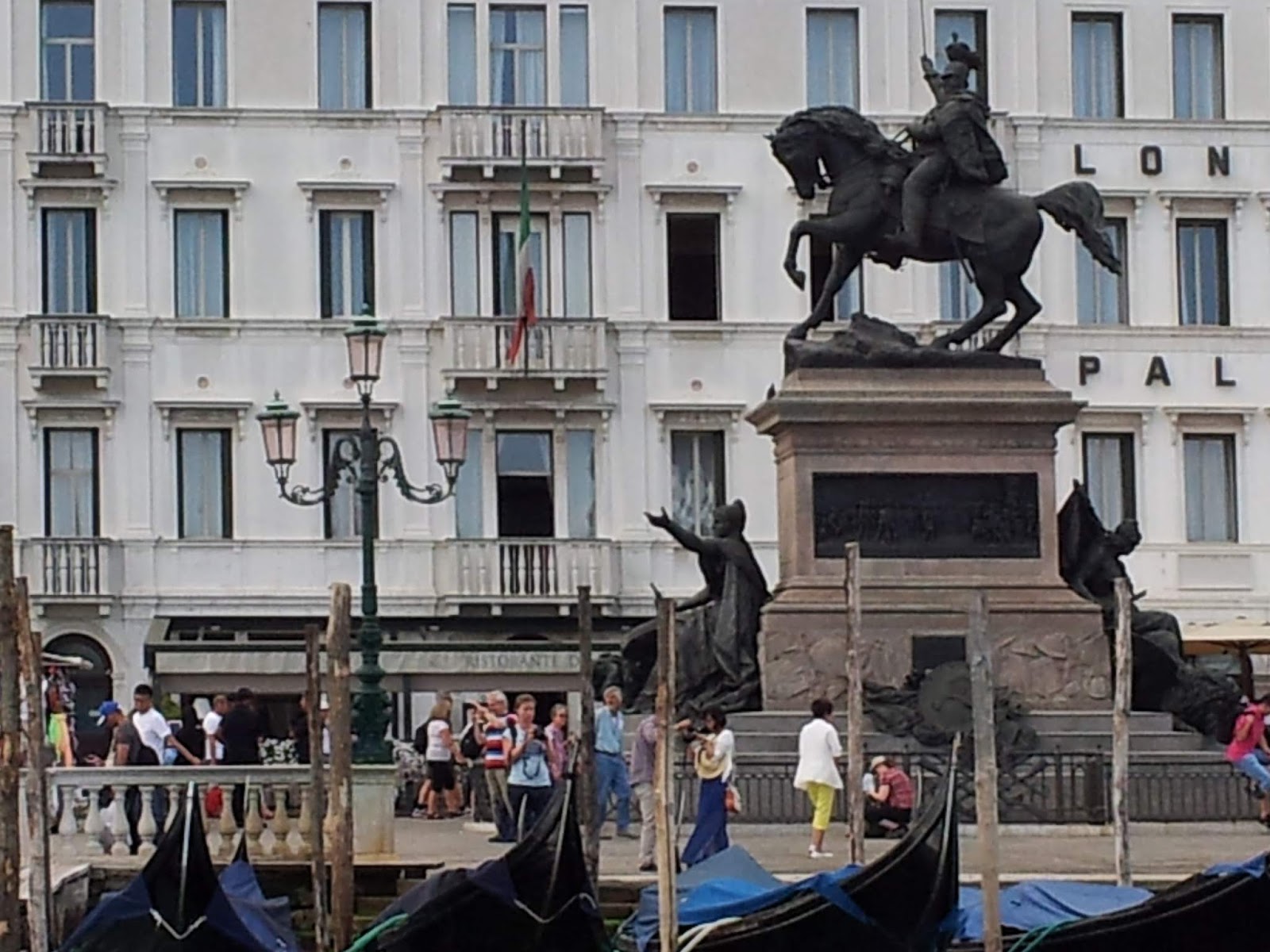
Venice is definitely a city to explore.  It has an incredible number of canals and walkways, and each time we would start our exploration at St Marks square when it’s not underwater

Everyone I have spoken to about exploring Venice has told me how easy it is to get lost.  It has not happened to me, but with the infinite number of ways you can go, I guess it is possible.

We started our exploration of Venice in St Marks square, where, on one side there was the Museo di Palazzo Ducale and, next door, the Basilica di San Marco.  Early morning and/or at high tide, water can be seen bubbling up from under the square, partially flooding it.  I have seen this happen several times.  Each morning as we walked from the hotel (the time we stayed in the Savoia and Jolanda) we passed the Bridge of Sighs.

Around the other three sides of the square are archways and shops.  We have bought both confectionary and souvenirs from some of these stores, albeit relatively expensive.  Prices are cheaper in stores that are away from the square and we found some of these when we walked from St Marks square to the Railway station, through many walkways, and crossing many bridges, and passing through a number of small piazzas.

That day, after the trek, we caught the waterbus back to San Marco, and then went on the tour of the Museo di Palazzo Du which included the dungeons and the Bridge of Sighs from the inside.  It took a few hours, longer than I’d anticipated because there was so much to see.

The next day, we caught the waterbus from San Marco to the Ponte di Rialto bridge.  Just upstream from the wharf there was a very large passenger ship, and I noticed there were a number of passengers from the ship on the waterbus, one of whom spoke to us about visiting Venice.  I didn’t realize we looked like professional tourists who knew where we were going.

After a pleasant conversation, and taking in the views up and down the Grand Canal, we disembarked and headed for the bridge, looking at the shops, mostly selling upmarket and expensive gifts, and eventually crossing to the other side where there was a lot of small market type stalls selling souvenirs as well as clothes, and most importantly, it being a hot day, cold Limonata.  This was my first taste of Limonata and I was hooked.

Continuing on from there was a wide street at the end and a number of restaurants where we had lunch.  We had a map of Venice and I was going to plot a course back to the hotel, taking what would be a large circular route that would come out at the Accademia Bridge, and further on to the Terminal Fusina Venezia where there was another church to explore, the Santa Maria del Rosario.

This is a photo of the Hilton Hotel from the other side of the canal.

It was useful knowledge for the second time we visited Venice because the waterbus from the Hilton hotel made its first stop, before San Marco, there.  We also discovered on that second visit a number of restaurants on the way from the terminal and church to the Accademia Bridge.

This is looking back towards San Marco from the Accademia Bridge:

And this, looking towards the docks:

Items to note:

Restaurants off the beaten track were much cheaper and the food a lot different to that in the middle of the tourist areas.

There are a lot of churches, big and small, tucked away in interesting spots where there are small piazza’s.  You can look in all of them, though some asked for a small fee.

Souvenirs, coffee, and confectionary are very expensive in St Marks square.

The cinema of my dreams – I always wanted to write a war story – Episode 34

For a story that was conceived during those long boring hours flying in a steel cocoon, striving to keep away the thoughts that the plane and everyone in it could just simply disappear as planes have in the past, it has come a long way.

Whilst I have always had a fascination with what happened during the second world war, not the battles or fighting, but in the more obscure events that took place, I decided to pen my own little sidebar to what was a long and bitter war.

And, so, it continues…


We gathered up what food there was to take with us.  There were no weapons left behind.  Leonardo had assumed correctly we would have used them if they’d been left there.

Carlo had changed slowly into an automaton, and I guess if I could read his mind, I’d know exactly what he was thinking.  Enrico had attached himself to Carlo, and I knew Carlo would look after him.

When I said that the burials would have to wait, Carlo agreed.

We had a short discussion on what we would be doing next, and in the first instance, we would be going back to the other soldiers and the church.  There, with both of our knowledge of the castle, its entrances, secret or otherwise, and the internal passageways which I knew Wallace and the others there were not too familiar with, we would formulate a plan to go in and pick them off one by one.

It seemed a good plan when we first talked about it, but on the way back to the church, and I had time to consider how it would work, it seemed we would only get an advantage once, and we would have to kill or capture as many as we could in the first raid.

Then it was going to be difficult.

Unless Carlo knew of more places we could enter the castle without being seen or heard.

I only knew of three.

And the first post we had to hit, and silence, the radio room.


My war had not been as start or as terrifying as most of those whom I’d known or worked with.  My part was more selective, finding and eliminating spies, informers, and enemy cells on home territory.  

Sometimes that would extend into enemy territory, particularly France where, as one who could speak French fluently, I found myself working with the resistance, using intelligence gathered by a network of spies we had, not only in France but in all parts of enemy territory.  That also meant, sometimes, accompanying weapons and other supplies into enemy territory.

It hadn’t included anything like what I’d just seen back at the underground cavern.

I’d been told, often, about the enemy executing whole villages, and large groups as retaliation for resistance operations that killed German soldiers, and particularly officers, but I’d not seen it first-hand.

Now I had.

I’d been told, along with the others who had been at the training camp way back at the start of the war, that we would inevitably see atrocities.  Those instructors, men who had survived the first war, were speaking from experience.  We were told it would make us angry.  It had.  I had this immediate thought of doing as much damage as I could to the perpetrators of that massacre.

But we had also been told that we had to harness that anger, and use it to drive our actions, bot in a reckless manner, but with a measured calm and with planning.  Blind rage, which had been predicted, would only get us killed.

I had left the cavern at the blind rage stage, but the walk to the church wore some of that off, and I began to piece together the seeds of a plan to get our revenge.  We were only a small group, but even so, we could work more efficiently than those at the castle. 

Leonardo was not going to tell Wallace that he hadn’t captured or killed me in his ambush, but it might make Wallace think that my ability to retaliate would be weakened.  Leonardo would know that Carlo and I were still alive.  He would not know about Blinky and his men.

It would be interesting to see if Wallace would commit any of his men to hunt us down, send Leonardo back out to finish the job, or just wait until Meyer turned up.  His contact in Gaole would know about the castle’s change of allegiance, but he would not know that Martina was not going to be there to greet them when they arrived in the village.

That was several days away.  We would have to be there, but it was going to be dangerous unless we found a way to neutralize the castle.  So far, in my head, we’d neutralized the radio and got as far as the dungeons before meeting enemy resistance.

The same had happened in the next six scenarios, after playing out the last we had arrived back at the church.


Chiara was resting as comfortably as the Sergeant could make her.

He had made a more thorough assessment of her injuries, and aside for the severe beating, she had sustained a few cracked ribs and several broken fingers.  The broken fingers were a surprise.  The sergeant had reset them as best he could.

Other than that, she would recover physically.  Mentally, he said, would be something else.  She was lucky, he said, her torturer was an amateur, and Italian.  Had it been the German Gestapo, she would be dead.

She was lucid and I told her we would make Leonardo pay for what he’d done.  I thought it best not to tell her about what had happened back at the cavern.  She had enough on her conscience without adding the senseless deaths of the villagers.

Then we had a meeting, where I asked Carlo to draw a plan of the castle and the places where we could breach their defenses and give us an element of surprise.

He had one that I hadn’t known about, one that might give us a fighting chance.

© Charles Heath 2020

“The Price of Fame”, A Short Story

I looked at the invitation, a feeling of dread coming over me.  It was not entirely unexpected but like a great many things that had suddenly come into my life, it caused equal measures of fear and excitement.

The gold edging and the perfect script displaying my name in the exact centre of the envelope made it almost unique.  Very few people ever received such an invitation.

I held it in my hand for a longer than necessary, then put it down on the desk carefully, as if it would explode if I dropped it.

My first instinct, driven by fear, was not to accept.

But, fear or not, there was no question of me not attending.  Circumstances had painted me into a corner; I’d agreed to go a long time ago when I thought there was no chance it would come to pass.

Way back then, I had been compared to the aspiring painter in an attic having to die before I made any sort of impression.  In those days people thought it amusing.  I thought it was amusing.  Kirsty, in particular, had thought it was as impossible as I had.

Now it was not amusing.  Not even remotely.

My life was once quiet, peaceful, sedate, even boring.  That didn’t mean I lacked imagination, it was just not out on display for everyone to see.  Inspired by reading endless books, I had the capacity to transport myself into another world, divorced from reality, where my boring existence became whatever I wanted it to be.

It was also instrumental in bringing Kirsty into my life.  In reality, I thought she’d never take a second look at me, let alone a first.  So I pretended to be someone else.  Original, witty, charming, underneath more scared than I’d ever known.

And yet she knew, she’d always known and didn’t care.

As we spent more time together, she discovered I liked to write, not finish anything, just start, write a hundred pages, then lose interest.  Like everything I did.  Start, and never finish.

Why not?  It would never be published.  It would never succeed.

So she bribed me.  If I didn’t finish my first book and send it away, I couldn’t marry her.  It didn’t matter if it was rejected, all I had to do was finish a book, and send it.

The thought of marrying her had not entered my mind, because I hadn’t thought she would.  Incentive enough, I picked out one of the unfinished manuscripts and humoured her.  She read bits of it, not saying a word.  Sometimes she’d put a note or two on the manuscript, her equivalent to sweet nothings, and with it I gained inner confidence in my own ability, not only to write but in many other aspects of my life.

When it was finished, it was Kirsty who sent it off.  She read it, packaged it, addressed it, and sent it before I had a chance to change her mind.  Once gone, I heaved a huge sigh of relief.  It was done. That was, as far as I was concerned, the end of it.

It was not possible that one letter could change a person’s life so dramatically.  I came home to the all-knowing smile, and mischievous whimsicality that had always suggested trouble.

Trouble indeed!

My book was accepted.  With a cheque called an advance.  For more money than I knew what to do with.

This was followed not long after by publication.  And a dramatic change to my life, one I didn’t want.  To become a public person, to face an enormous number of people, people I didn’t know.

I went back to being scared.

Kirsty smiled at me and told me how wonderful I looked in my monkey suit.  Why couldn’t I go in jeans and a dress shirt?  All the best actors in Hollywood did it.

“This is not Hollywood.  You’re not an actor.”  It was a simple, practical, answer.

The hell I wasn’t.  I could act sick, dying, fake a heart attack, anything.  “What am I going to say?”

“You could talk about books.”  Quiet, efficient, oozing the confidence I didn’t feel.

She didn’t fuss.  She took it in her stride.  She dressed in her usual simple elegance, in a manner that made me love to be seen with her.  I couldn’t tie my tie, so she did it for me.  She straightened my jacket because I couldn’t do that either.  Nerves.  Can’t live with them, can’t live without them.  Or was that a reference to wives, or mistresses, or something else?

The palms of my hands were sweating.  Meatball hands, I thought, the sort of palms that betrayed the pretenders.  Me, I was the pretender.  My neck felt too large for the shirt.  Beads of sweat formed on my brow.  Where was a sponge when you needed one?

“I can’t do this.”

“You can.”

We hadn’t even left the hotel yet.

“How long before the execution.”

She looked at me with her whimsical smile.  “Long enough for me to give you a hard time.”

I lost count of the number of times I had to go to the bathroom, for one thing, or another.  Nerves I said.  Perhaps a dozen Valium or something similar.  Did I have any?  Had she hidden them?  Why did she keep smiling?

In the car, I looked at my watch at least a dozen times.  I couldn’t breathe.  It was too hot, too cold.  She held my hand, and it served best to stop the trembling that had set in.  Why did I agree to this?  Why?

We were greeted by the Events Manager, who was polite and genuinely interested.  He took us inside where he introduced the interviewer, another woman who oozed confidence and charm, who went over the format and generally tried to set me at ease.

I didn’t let Kirsty’s hand go.  Not yet.  She was my lifeline, the umbilical cord.  When it was severed, I knew I was going to die.

Bathroom?  Where was the bathroom?  Hell, five minutes to go, and I felt like passing out.  No, Kirsty couldn’t come in.  Comb my hair.  Straighten my tie, no it was straight.  Maybe I could hide in here?  I looked around.  No, maybe not.

Time.

The cue man was standing beside me, hand gently on my back.  He knew the score.  He knew I would turn and run the first chance I got.  Kirsty was on the other side, smiling.  Did she know too?

Then the announcement, my cue to walk on.

The gentle shove, the bright lights, the deafening applause, the seemingly endless walk to the chair, dear God, would I make it without tripping over?

How many times had I made this trip?  I stood, facing the audience, waved, then sat.  It was the fifteenth.  You’d think I’d learned by now.

There was nothing to it.

© Charles Heath 2016-2022

The Perils of Travelling: Airports can be disasters

Melbourne airport – an underwhelming experience

Let me sum up this experience at the start, in one word.

Terrible.

I know it’s not much past post-Covid, but tell me, what were the airport administrators doing for two years, other than lamenting the lack of plane traffic and sitting on their hands? Did they think no one was ever going to travel again?

Let me suggest what they should have been doing, getting onto every one of the retailers that had to close, and making sure that from day one of reopening, it was back to pre-Covid.

Instead, it’s a desolate nightmare.  There was only one dedicated Cafe and a bar and two bookshops down the Qantas end.

And the food was basically stale sandwiches and muffins. And if you don’t like muffins…

We had to walk a mile to get to the Cafe and get a decent cup of coffee and a toastie, which the Cafe itself and coffee and food scored a ten out of ten.

If you didn’t know it was there, God only knows what you would do if you wanted something decent.

Score out of ten for the Airport Administrators – minus 5 

Since scoring that I had the unhappy experience of going to the men’s restroom.  It was filthy.  How hard could be for someone to check every half hour to clean up the obvious mess?  I’ll let you imagine how that will affect their current score.

My other bugbear about airports is the scanning of bags before getting to the gate.

Melbourne for some reason has been the worst experience in quite literally the world because it is a complete mess, particularly if one thing goes wrong.

I hate it, and it was no better today and left me shaking, which only happens when I’m extremely stressed.

I can only hope it eventually gets better, but, sorry to say this but they’ve had nearly two years to get the process right and run much smoother, but it’s clear they’ve also just sat on their hands.

Maybe one day someone might do something about it, but we’re talking government here, and it takes them ten years just to create a green discussion paper.

So, not holding my breath.

Of course, in reading about the current parlous state of air travel throughout the world, it seems we are not the only ones having problems. I guess we should spare a thought for those going to Heathrow in London. The many times we’ve been there, it’s been borderline organized chaos, and yes, once, we had to wait an hour for our baggage, but now it seems it just disappears.

Glad I’m not going there any time soon.

But, soon, we’re taking the plunge again, and going to Hobart.

I’ll let you know how that goes.

An excerpt from “Echoes from the Past”

Available on Amazon Kindle here:  https://amzn.to/2CYKxu4

With my attention elsewhere, I walked into a man who was hurrying in the opposite direction.  He was a big man with a scar running down the left side of his face from eye socket to mouth, and who was also wearing a black shirt with a red tie.

That was all I remembered as my heart almost stopped.

He apologized as he stepped to one side, the same way I stepped, as I also muttered an apology.

I kept my eyes down.  He was not the sort of man I wanted to recognize later in a lineup.  I stepped to the other side and so did he.  It was one of those situations.  Finally getting out of sync, he kept going in his direction, and I towards the bus, which was now pulling away from the curb.

Getting my breath back, I just stood riveted to the spot watching it join the traffic.  I looked back over my shoulder, but the man I’d run into had gone.  I shrugged and looked at my watch.  It would be a few minutes before the next bus arrived.

Wait, or walk?  I could also go by subway, but it was a long walk to the station.  What the hell, I needed the exercise.

At the first intersection, the ‘Walk’ sign had just flashed to ‘Don’t Walk’.  I thought I’d save a few minutes by not waiting for the next green light.  As I stepped onto the road, I heard the screeching of tires.

A yellow car stopped inches from me.

It was a high powered sports car, perhaps a Lamborghini.  I knew what they looked like because Marcus Bartleby owned one, as did every other junior executive in the city with a rich father.

Everyone stopped to look at me, then the car.  It was that sort of car.  I could see the driver through the windscreen shaking his fist, and I could see he was yelling too, but I couldn’t hear him.  I stepped back onto the sidewalk, and he drove on.  The moment had passed and everyone went back to their business.

My heart rate hadn’t come down from the last encounter.   Now it was approaching cardiac arrest, so I took a few minutes and several sets of lights to regain composure.

At the next intersection, I waited for the green light, and then a few seconds more, just to be sure.  I was no longer in a hurry.

At the next, I heard what sounded like a gunshot.  A few people looked around, worried expressions on their faces, but when it happened again, I saw it was an old car backfiring.  I also saw another yellow car, much the same as the one before, stopped on the side of the road.  I thought nothing of it, other than it was the second yellow car I’d seen.

At the next intersection, I realized I was subconsciously heading towards Harry’s new bar.   It was somewhere on 6th Avenue, so I continued walking in what I thought was the right direction.

I don’t know why I looked behind me at the next intersection, but I did.  There was another yellow car on the side of the road, not far from me.  It, too, looked the same as the original Lamborghini, and I was starting to think it was not a coincidence.

Moments after crossing the road, I heard the roar of a sports car engine and saw the yellow car accelerate past me.  As it passed by, I saw there were two people in it, and the blurry image of the passenger; a large man with a red tie.

Now my imagination was playing tricks.

It could not be the same man.  He was going in a different direction.

In the few minutes I’d been standing on the pavement, it had started to snow; early for this time of year, and marking the start of what could be a long cold winter.  I shuddered, and it was not necessarily because of the temperature.

I looked up and saw a neon light advertising a bar, coincidentally the one Harry had ‘found’ and, looking once in the direction of the departing yellow car, I decided to go in.  I would have a few drinks and then leave by the back door if it had one.

Just in case.

© Charles Heath 2015-2020

newechocover5rs

Memories of the conversations with my cat – 9

As some may be aware, but many not, Chester, my faithful writing assistant, mice catcher, and general pain in the neck, passed away some months ago.

Recently I was running a series based on his adventures, under the title of Past Conversations with my cat.

For those who have not had the chance to read about all of his exploits I will run the series again from Episode 1

These are the memories of our time together…

20160921_071506

This is Chester.   He’s undercover.

I’ve asked him to investigate the mouse problem, and this is how he responds.

Hiding in the ‘grass’.

Waiting, watching, ever wary.

Those mice will not see him coming.

I try to tell him that hiding on the chair, whilst the mice are on the floor doesn’t make much sense.

We’ll just have to wait and see.