An excerpt from “If Only” – a work in progress

Investigation of crimes doesn’t always go according to plan, nor does the perpetrator get either found or punished.

That was particularly true in my case.  The murderer was incredibly careful in not leaving any evidence behind, to the extent that the police could not rule out whether it was a male or a female.

At one stage the police thought I had murdered my own wife though how I could be on a train at the time of the murder was beyond me.  I had witnesses and a cast-iron alibi.

The officer in charge was Detective First Grade Gabrielle Walters.  She came to me on the day after the murder seeking answers to the usual questions like, when was the last time you saw your wife, did you argue, the neighbors reckon there were heated discussions the day before.

Routine was the word she used.

Her Sargeant was a surly piece of work whose intention was to get answers or, more likely, a confession by any or all means possible.  I could sense the raging violence within him.  Fortunately, common sense prevailed.

Over the course of the next few weeks, once I’d been cleared of committing the crime, Gabrielle made a point of keeping me informed of the progress.

After three months the updates were more sporadic, and when, for lack of progress, it became a cold case, communication ceased.

But it was not the last I saw of Gabrielle.

The shock of finding Vanessa was more devastating than the fact she was now gone, and those images lived on in the same nightmare that came to visit me every night when I closed my eyes.

For months I was barely functioning, to the extent I had all but lost my job, and quite a few friends, particularly those who were more attached to Vanessa rather than me.

They didn’t understand how it could affect me so much, and since it had not happened to them, my tart replies of ‘you wouldn’t understand’ were met with equally short retorts.  Some questioned my sanity, even, for a time, so did I.

No one, it seemed, could understand what it was like, no one except Gabrielle.

She was by her own admission, damaged goods, having been the victim of a similar incident, a boyfriend who turned out to be an awfully bad boy.  Her story varied only in she had been made to witness his execution.  Her nightmare, in reliving that moment in time, was how she was still alive and, to this day, had no idea why she’d been spared.

It was a story she told me one night, some months after the investigation had been scaled down.  I was still looking for the bottom of a bottle and an emotional mess.  Perhaps it struck a resonance with her; she’d been there and managed to come out the other side.

What happened become our secret, a once-only night together that meant a great deal to me, and by mutual agreement, it was not spoken of again.  It was as if she knew exactly what was required to set me on the path to recovery.

And it had.

Since then, we saw each about once a month in a cafe.   I had been surprised to hear from her again shortly after that eventful night when she called to set it up, ostensibly for her to provide me with any updates on the case, but perhaps we had, after that unspoken night, formed a closer bond than either of us wanted to admit.

We generally talked for hours over wine, then dinner and coffee.  It took a while for me to realize that all she had was her work, personal relationships were nigh on impossible in a job that left little or no spare time for anything else.

She’d always said that if I had any questions or problems about the case, or if there was anything that might come to me that might be relevant, even after all this time, all I had to do was call her.

I wondered if this text message was in that category.  I was certain it would interest the police and I had no doubt they could trace the message’s origin, but there was that tiny degree of doubt, about whether or not I could trust her to tell me what the message meant.

I reached for the phone then put it back down again.  I’d think about it and decide tomorrow.

© Charles Heath 2018-2020

A photograph from the inspirational bin – 35

This is Railway Hotel in Gympie, adjacent to the old Gympie station

Just the name Railway Hotel conjured up a lot of interesting connotations. There’s one in almost every rural town that has Railway station, or perhaps a Junction Hotel, a Railway Hotel, or a Terminus Hotel.

And, once upon a time, there were nearly 600 of them, up until the 1920s, ubiquitous hotels build to house the people building the railways, and, then, when they were finished a lot disappeared, but a lot also remained to service the railway station and passengers coming and going.

These days, these old hotels that still exist are anachronisms of a bygone age, rather ornate wooden structures with big rooms and communal bathrooms, bars, saloons, and dining rooms, and only those curious about the past would stay there.

I’ve stayed in a few myself.

But, as for a story, well, the older, the better, because these would have ghosts.

They could also have infamous pasts, like a fire that destroys only part of the hotel, signs of which form part of the character.

A doorway into a now hidden room closed off because of something horrible happening there, could suddenly become a portal, where stepping through takes you back to the time of the event.

In fact, I’m in the mood to write just such a story…

“The Things We Do For Love” – Coming soon

Is love the metaphorical equivalent to ‘walking the plank’; a dive into uncharted waters?

For Henry the only romance he was interested in was a life at sea, and when away from it, he strived to find sanctuary from his family and perhaps life itself.  It takes him to a small village by the sea, s place he never expected to find another just like him, Michelle, whom he soon discovers is as mysterious as she is beautiful.

Henry had long since given up the notion of finding romance, and Michelle couldn’t get involved for reasons she could never explain, but in the end both acknowledge that something happened the moment they first met.  

Plans were made, plans were revised, and hopes were shattered.

A chance encounter causes Michelle’s past to catch up with her, and whatever hope she had of having a normal life with Henry, or anyone else, is gone.  To keep him alive she has to destroy her blossoming relationship, an act that breaks her heart and shatters his.

But can love conquer all?

It takes a few words of encouragement from an unlikely source to send Henry and his friend Radly on an odyssey into the darkest corners of the red light district in a race against time to find and rescue the woman he finally realizes is the love of his life.

The cover, at the moment, looks like this:

lovecoverfinal1

‘What Sets Us Apart’ – A beta readers view

There’s something to be said for a story that starts like a James Bond movie, throwing you straight in the deep end, a perfect way of getting to know the main character, David, or is that Alistair?

A retired spy, well not so much a spy as a retired errand boy, David’s rather wry description of his talents, and a woman that most men would give their left arm for, not exactly the ideal couple, but there is a spark in a meeting that may or may not have been a set up.

But as the story progressed, the question I kept asking myself was why he’d bother.

And, page after unrelenting page, you find out.

Susan is exactly the sort of woman the pique his interest. Then, inexplicably, she disappears. That might have been the end to it, but Prendergast, that shadowy enigma, David’s ex boss who loves playing games with real people, gives him an ultimatum, find her or come back to work.

Nothing like an offer that’s a double edged sword!

A dragon for a mother, a sister he didn’t know about, Susan’s BFF who is not what she seems or a friend indeed, and Susan’s father who, up till David meets her, couldn’t be less interested, his nemesis proves to be the impossible dream, and he’s always just that one step behind.

When the rollercoaster finally came to a halt, and I could start breathing again, it was an ending that was completely unexpected.

I’ve been told there’s a sequel in the works.

Bring it on!

The book can be purchased here: http://amzn.to/2Eryfth

“Trouble in Store” – Short stories my way: Still working on the start

I have reworked the first part of the story with a few new elements about the characters and changed a few of the details of how the characters finish up in the shop before the policewoman makes her entrance.

This is part of the new first section that involves Jack:


Jack was staring down the barrel of a gun.

He had gone down to the corner shop to get a pack of cigarettes.

He had to hustle because he knew the shopkeeper, Alphonse, liked to close at 11:00 pm sharp.  His momentum propelled him through the door, causing the customer warning bell to ring loudly as the door bashed into it, and before the sound had died away, he knew he was in trouble.

It took a second, perhaps three, to sum up the situation. 

A young girl, about 16 or 17, scared, looking sideways at a man on the ground, then Alphonse, and then Jack.  He recognized the gun, a Luger, German, relic of WW2, perhaps her father’s souvenir, or more likely a stolen weapon, now pointing at him then Alphonse, then back to him.

Jack took another second or two to consider if he could disarm her.  No, the distance was too great.  He put his hands out where she could see them.  No sudden movements, try to remain calm, his heart rate up to the point of cardiac arrest.  No point making a bad situation worse.

Pointing with the gun, she said, “Move closer to the counter where I can see you better.”

Everything but her hand steady as a rock.  Only telltale sign of stress, the bead of perspiration on her brow.  It was 40 degrees Fahrenheit in the shop.

Jack shivered and then did as he was told. 

A few seconds more for him to decide she was in an unpredictable category.

“What’s wrong with your friend?”  Jack tried the friendly approach after he’d taken the three steps sideways necessary to reach the counter.

The shopkeeper, Alphonse, who, Jack noted seemed to have aged another ten years in the last few months, spoke instead; “I suspect he’s an addict, looking for a score.  At the end of his tether, my guess, and her to get some money.”

A simple hold up that had gone wrong.  Wrong time, wrong place, in more ways than one Jack thought, now realizing he had walked into a very dangerous situation.  She didn’t look like a user.  The boy on the ground, he did, and he looked like he was going through the beginnings of withdrawal.

Oddly, though, Jack had noticed a look pass between the shopkeeper and the girl.

 “All you had to go was give us the money, and we wouldn’t be here, now.”  She was glaring back at Alphonse.  “You can still make this right.”

A flicker of memory jumped out of the depths on Jack’s mind, something discussed at the dinner table with their neighbors, something about the shop as a pick-up point for drugs.

The boy on the floor, he was not here for the money.

Jack thought he’d try another approach.  “Look, I don’t want trouble, and you don’t want trouble.  I’ll go, forget this ever happened.  You might want to do the same.”

The girl looked like she was thinking.  The gun, though, still moved between him and the shopkeeper.

Another assessment of the girl; this was not her real home.  She was from a better class of people, a different part of town.  Caught up in a downward spiral because of her friend on the floor.

Caught in a situation she was not equipped to deal with.

That didn’t bode well for his, or anyone else in that shop right then, health.


© Charles Heath 2016-2020

In a word: Clip

It was in the news, and seemed odd to me, that a word such as clip would have any significance beyond that of having a haircut, but apparently, it does.

Maybe they’re referring to the clip of ammunition for a gun?

But for us, a clip can be part of a haircut, letting the scissors loose.

And for those children who had a father who was a hard taskmaster, you would be familiar with a clip around the ears.  It can just as easily be used, say when a car clips another car when the driver loses control.

There’s a horse that runs at a fast clip, and can be anything for that matter that moves quickly.

It can be a spring-loaded device that holds all your papers together.  Or just about anything else for that matter.

You can clip an item from a newspaper, aptly known as a news clipping.

it can be a portion of a larger film or television programme, but to me, sometimes, when a series has a clip show, an episode where someone reminisces and we see clips from previous episodes.

And last but not least, clip the wings of those so-called high flyers at the office.

In a word: Spark

So, as far as I’m concerned a ‘spark’ can happen when electrical wires cross and the resultant ‘spark’ can start a fire, or the fire is already alight and ‘sparks’ fly making it worse by starting more spot fires.

But…

Another meaning is that a ‘spark’ is created by a ‘spark plug’ in order to force the pistons of an engine to drive the crankshaft

This leads to…

There is no spark in this relationship, so perhaps it’s going nowhere.  No, we’re not looking for a fiery spark, but a small amount of very intense feeling

Spark?

I was watching God Friended Me last night and I’m sure like many others we were waiting to see that spark that would change their relationship from the friend zone, to something else.

And…

it’s there, but something seems to be holding them back.

As for the word spark, well there several different meanings, one of which I am familiar with when I was young.

Being called a ‘bright spark’

Depending on who used that remark, it could either mean you were clever or you were a smart ass, which I suspect the latter was the reference to me.

Then, moving on

Saying something inflammatory ‘sparked’ the crowd into action.  A single remark can be equated to a literal ‘spark’ that can ignite a reaction.

A lynching perhaps?

And what about, once upon a time, a ship’s radio officer, he was called ‘sparks’ or ‘sparkie’, also a name that sometimes refers to an electrician.

I can see plenty of uses for this word in a story.

Searching for locations: Toowoomba Flower Festival, Toowoomba, Queensland, Australia

The Toowoomba Carnival of Flowers is held in September, and generally runs for ten days at the end of the month.

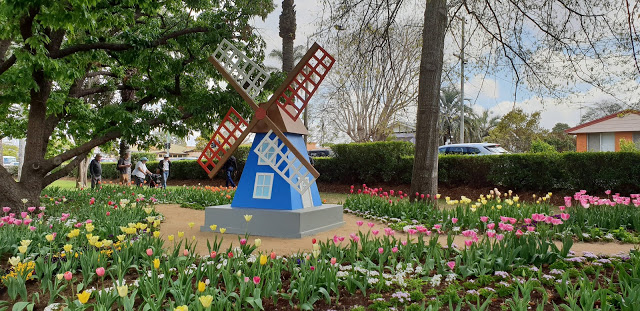
We visited the Laurel Bank Park, where there are beds of many colorful flowers,

open spaces,

statues,

an area set aside for not only tulips but a model windmill

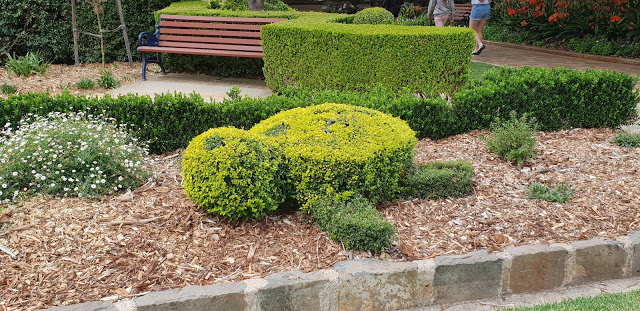
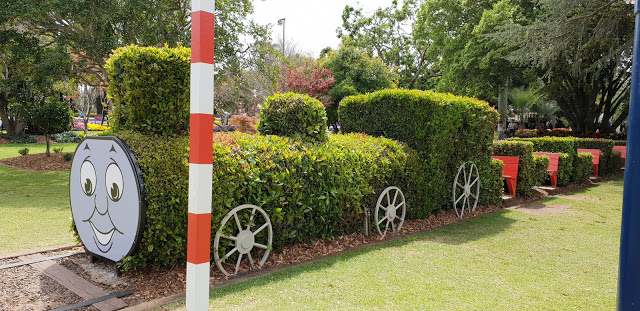
and quite a number of hedge sculptures

There was also the opportunity to go on a morning or afternoon garden tour which visited a number of private gardens of residences in Toowoomba.

The cinema of my dreams – I always wanted to write a war story – Episode 40

For a story that was conceived during those long boring hours flying in a steel cocoon, striving to keep away the thoughts that the plane and everyone in it could just simply disappear as planes have in the past, it has come a long way.

Whilst I have always had a fascination with what happened during the second world war, not the battles or fighting, but in the more obscure events that took place, I decided to pen my own little sidebar to what was a long and bitter war.

And, so, it continues…

I had to almost restrain Carlo from going up to the castle and singlehandedly kill everyone in it.  I didn’t doubt he could do it, for a short time at least, until they realized what was going on.  There were too many of them to take on alone.

It would need a careful plan, and knowledge of the layout of the castle, and the likely spots where the soldiers were located.  It was a plan that had been slowly formulating in the back of my mind, especially after Carlo’s help with an internal map of the castle, some parts of which I hadn’t got to see in my brief stay.

I forgot that being built back in the middle ages, and the history of cities fighting against each other, there were ways in, out, and around, both inside and in the walls, so that soldiers could travel from one part of the castle to another without being seen, and not having to go inside the castle itself.

There were, also, tunnels, one of which I had inadvertently found, but there were more, and it seems only Carlo knew of those.  Some were useful, others would lead to an early confrontation, and give early notice of our intentions.  Those we would avoid, or use to escape.

We had set up a command center at the church ruins, having found several rooms off the cellar that had two exits.  I didn’t like the idea of being trapped, nor waiting in a location that Fernando was familiar with and was likely to return to.

Which, in a sense, I was hoping he would because we had set a trap and he and his men would be caught in the crossfire.  He was not going to get a chance to explain, nor would I ask any questions, or show him any mercy.

Especially when I found out what he had done to Martina.  If it was as bad as Chiara, he would be repaid in kind, if the opportunity arose.  I tentatively agreed to give Carlo five minutes in the room alone with him, but he knew that expediency might not give him that luxury.  Blinky was not happy about it, but he hadn’t been here long enough to know what the man or his people were like.

We’d also worked out the surveillance system so that we would know when anyone turned up in the village, particularly our prized defector Meyer, and whether anyone left the castle to come down to the village because it was possible there would be more defectors passing through, and they needed to be warned.

What was particularly useful was finding the radio that Martina had been using.  It was in the church grounds, which was not entirely unexpected, but one of Blink’s men had stumbled over it when looking to set up a latrine.

Blinky had brought a radioman, but his radio had been damaged in the parachute landing.  Now he had a new toy to tinker with, and got a connection back to Thompson, after some initial difficulty in translation.  That I could help him with, my Italian was marginally better than a schoolboy.

Thompson was relieved to hear from me, as I was to talk to him.

“It’s been difficult to get a clear picture with Martina, but I got the impression you had to be precise with your questions.”

“A case of getting lost in translation, perhaps.”  I had not had similar problems, but Thompson was from the aristocracy, and his version of English was sometimes quaint.

“The situation is bad, I understand.”

“It is.  The castle is over-run with British-German double agents.  The three you sent out, and reinforcements that followed.  I get the impression we have about 20 odd dead soldiers languishing in shallow graves somewhere on the Italian countryside.”

It hadn’t been hard to realize that while the officers were known British officers, the soldiers were substituted Germans whose English language and mannerisms were impeccable.  I had no doubt once they’d reeled in Meyer, they would move on, integrating into invasion forces and creating havoc from within, unless of course, we stopped them.

A sigh at the other end, perhaps a lamentation of such needless loss of life.  This war was getting tiresome for both of us.

“How close is Meyer?  We last heard he was in Gaole, waiting for a courier to take him to the village.  His arrival is anticipated to be any time from tomorrow onwards.”

“We’ve got men out keeping tabs on everyone.”

“Blinky arrive with his team?”

“All bar the radio, but as you can hear, we have access to one do it will not be a problem.  I think we might finish this and talk again tomorrow.  Don’t want the Germans tracking the radio waves.”

“Good.  Tomorrow, and hour before today.”

I’d almost forgotten that the Germans were good at tracking radio signals, especially when they thought the enemy was using them, as those at the castle would.  That radio unit could also be used to trace other radio signals, and no doubt they had picked up the signal.  Hopefully, we had not been on long enough for them to run the trace.

That was not going to be a problem.  One of Blinky’s soldiers on village reconnaissance was waiting for us as we approached the church ruins.”

“What is it, man?”

“There are four people at the village, looking for someone or something.”

“More defectors,” I said.  “We’d better get to them before Leonardo and his men get to them first.”

© Charles Heath 2020-2021
More or less… – A short story

It was meant to be time to reacquaint as brothers.

Louis and I had not seen each other for decades, and when he returned, about a week before, I got the impression there was more than just ‘missing his brother’ going on.

But that was Louis. He was never one to say what or how he felt about anything, preferring to be the strong silent type, and it had not fared well for him transitioning from teenager to adult.

As for me, when our parents split up, Louis went with our father, and I stayed with our mother, and, given the amount of acrimony there was attached to the split, it was no surprise to anyone that Louis and I had effectively become estranged.

In fact, when I had tried to find them, about two years after the split and our mother had died suddenly, all I found were loose ends. They had effectively vanished.

With that part of my life effectively over, I had married, had children and watched 30 years disappear before Louis suddenly popped up. He simply knocked on the front door one afternoon, Helen answered it, and within minutes they were the best of friends. I’d had that rapport, once, many years before, but life and circumstances had all but ruined that.

Or perhaps that was just me, worn down by that same life and circumstances we were all supposed to take on the chin.

His arrival was a welcome distraction, and when, after a week, he suggested that he and I go on a hike, the sort our father used to take us on when we were a family, I agreed. Helen was happy to be rid of me, and I guess a week without our arguing would suit everyone.

It was probably fortuitous timing. Helen and I had finally got to the point where divorce lawyers were about to be called in. The children had all moved on and had children and problems of their own, and we, as parents just didn’t gel anymore.

Besides, I said, just before I joined Louis in the truck, ready to embark for the wilderness, it would be time to clear my head.

And by day two, my head was clear, and Louis, taking the lead, led us along the ridgeline, a trek he said, that would take us about seven hours. We’d stopped the previous night in a base camp and then headed out the next morning. We were the only two, it being early in the season with snow still on the ground.

Above was the clear cloudless blue sky and in front of us, trees and mountains. There was snow on the ground but it was not solid and showed no signs of human footsteps, only animals. The air was fresh, and it was good to be away from the city and its pressures.

Approaching noon, I’d asked him if we were about halfway. I knew he was holding back, being the fitter of us.

“More or less.”

“More or less what, more closer or less close than we should be.”

I watched him do a 360-degree turn, scoping out our position. It was a maneuver I was familiar with from my time with the National Guard. I’d used my backcountry experience that I’d learned from my father, as a skill I thought they might be able to, and eventually did, use. I got the feeling Louis was looking for something.

“You get the impression we’re not alone?” I asked. I had that nagging feeling something was not right, not from about two miles back in the forest. It was like my sixth sense being switched on.

“Doesn’t seem so, though there have been a few animals lurking behind us, probably surprised anyone’s about this time of the year. It’s been a while, so I’m just getting a feel for the trail. This is, for now, our mountain.”

There was a time, from a time when we were kids, that I could tell when he was lying. He was better at covering it, but it was still there.

Where we’d stopped was a small clearing, a staging point that would be used by other trekkers, still overgrown because of lack of trekkers. Ahead there were the signs of a trail, and after six months, it would become clear again. In places, as we had made our way from the base camp, sections of the distinctive trail had all but disappeared, but Louis seemed to know where he was going, and it was not long before we had picked up the trail again. This spot was a lookout, giving a spectacular view of the valley below, and a fast running river through it.

I walked to the edge and looked up and down the valley, and at the trail that ran along the cliff for a short distance. I looked down, not the wisest of things to do, but it was long enough to catch sight of several charred pieces of wood. On top of the snow. The thing is, someone had been along this trail before us, and recently, something I thought wise to keep to myself.

Back at the log, I sat for a moment and drank some water, while Louis stood patiently, but impatiently, for me to join him.

“You look like you’ve got somewhere to be.” Probably not the wisest thing to say but it was out before I could stop it.

A flicker of annoyance crossed his face, then it was gone. “If we stop too long, joints will freeze up, especially when it gets colder.”

“Sorry.” I put the container back in the pack and joined him. “Let’s go. The cold and I don’t get along very well, and it’s been a long time since the last time I ventured into the great unknown.”

“Helen said you gave up trekking when you married her.”

“She wasn’t a trekker, Robbie. We all have to give up something, sooner or later.”

Another hour, feeling rather weary, we’d come to another small clearing and a place where I could sit down.

“You always were the weak link, Robbie. Admittedly you were younger, but you never seemed to grasp the concept of exercise and fitness.”

I looked up at him and could see my father, the exact stance, the exact words, the exact same sneer in his voice. It all came rushing back as if it was yesterday, the reasons why I chose to go with our mother, that another day with his bullying would be one too many. And he was a bully. And, in an instant, I could see the apple hadn’t fallen far from the tree.

“Out of shape after languishing in an office, perhaps,” I said, “but I was never the disappointment our father always considered me.”

“You didn’t join the army, follow in his footsteps, as he wanted us to do. I did. Proudly served, too.”

I could see it. Like father, like son. No surprise Robbie had followed in his father’s footsteps. And it was a clue as to what Robbie had been doing since I saw him last.

“So, tell me about it.”

“You wouldn’t understand.”

“No, I probably wouldn’t. Let’s push on.”

I’d also thought, along the way, he might ask questions, delve further into the problems that Helen and I were having, but I knew she had told him all he needed to know. I’d been held up at the office, and had rung to ask her to take him to dinner, get to know him, she might get to learn something of my life before I met her, details of which I hadn’t told her other than that my mother was dead, my father had left and taken Robbie with him. My past, I’d told her from the outset, was not something I would talk about.

I didn’t ask what they talked about, but I could see a change in both of them. Perhaps she had succumbed to Robbie’s charm, back in school all the girls did, but they all soon learned he was not a nice person, not once you got to know him. I didn’t warn her, and perhaps that was regrettable on my part, but it reflected the state in which our relationship had reached.

I’d also tried, once or twice, to find out if our father was still alive, but he deflected it, changing the subject. That meant he was still alive, somewhere, perhaps annoyed at Robbie for coming to see me. If I was a betting man, I’d bet our father would have denied permission for
Robbie to do so, even if he was a grown man and capable of making his own decisions.

Odd, but not surprising. Even now I could remember my father had secrets, and those secrets had fed into the breakup of our parents.

“So, you’ve been dodging it for days now, but you still haven’t told me if dad is alive or dead. He’d be about seventy-odd now.”

He stopped and turned to face me. “Would it matter if he was alive? I doubt you’d want to see him after what mother must have said about him.”

Interesting that he would think so. “She never had a bad word for him, and wouldn’t hear of one spoken, by me or anyone. And I have wondered what became of him, and you. At least now I know you spent time in the Army. If I was to guess what happened, that would be high on my list.”

“No surprise then you became an office wanker.”

Blunt, but, to him, it was a fact. I’d used that expression when telling Helen one time after a very bad day.

“We can’t all be heroes, Robbie.”

I put my hand up. Alarm bells were going off in my head. “You can come out now,” I yelled.

Robbie looked puzzled.

“I know you’re there. You’ve been behind us for about a half-mile now.”

A few seconds passed before the cracking of a twig, and then a person in a camouflage kit came towards us.

He’d aged, hair and beard grey in places but almost white now, but the face was familiar.

“What brings you to this part of the woods, Dad. Or is it just an unlucky coincidence?”

—–

© Charles Heath 2020-2021