“Trouble in Store” – Short stories my way: Adding more to the second part

The story fleshed out for the second section, discussed in Point of View


Annalisa looked at the two men facing her, a shopkeeper who, despite his protestations, was a dealer, and the other man, a customer scared shitless.

The poor bastard was not the only one scared. 

It was meant to be simple, arrive at the shop just before closing, force the shopkeeper to hand over the shit, and leave.

What had happened?

The shopkeeper laughed at them and  told them to get out.  Simmo started ranting and waving the gun around, then all of a sudden collapsed. 

There was a race for the gun which spilled out of Simmo’s hand, and she won.  No more arguments, the shopkeeper was getting the stuff when the customer burst into the shop.

This was worse than any bad hair day, or getting out of the wrong side of bed day, this was, she was convinced, the last day of her life.

Her mother said she would never amount to anything, and here she was with a drug addict coming apart because she had been cut off from her money and could no longer pay for his supply, which had led them to this inevitable ending.

She heard a strange sound come from beside her and looked down.  Simmo was getting worse, like he had a fever, and was moaning.


If Alphonse had thought his day was going to get any better after the delivery disaster earlier that day, he was wrong.

If he thought he could maintain his real business and his under the counter business with no one finding out, in that he was wrong too.  He’s know, inevitably, some useless punk would come and do exactly what Simmo was doing.

It might have been salvageable before the customer came in the door, but now it was not.  The customer had heard the words, and given him ‘the look’.  A drug addict telling the cops he was a dealer, it was his word against an  unreliable addict, but this local chap, he had that air of respectability the cops would listen too.

Damn.

But he had to try and salvage the situation, there was a lot of money involved, and other people depending on him.  He looked at the boy, on the floor, then  the girl.

“Listen to me, young lady, I have no idea what you are talking about.  Please, put the gun down before someone gets hurt.  Your friend needs medical help and I can call an ambulance.”

The girl switched her attention back to him.  “Shut up, let me think.  Shit.”

The storekeeper glanced over at the customer.  He’s been in once or twice, probably lived in the neighborhood, but looked the sort who’d  prefer to be anywhere but in his shop.  More so now.  If only he hadn’t burst in when he did.  He would have the gun, called the police, and brazened his way out of trouble.  Now, that remedy was off the table.

Now he had to deal with the fallout, especially if the girl started talking.


© Charles Heath 2016-2020

‘What Sets Us Apart’ – A beta readers view

There’s something to be said for a story that starts like a James Bond movie, throwing you straight in the deep end, a perfect way of getting to know the main character, David, or is that Alistair?

A retired spy, well not so much a spy as a retired errand boy, David’s rather wry description of his talents, and a woman that most men would give their left arm for, not exactly the ideal couple, but there is a spark in a meeting that may or may not have been a set up.

But as the story progressed, the question I kept asking myself was why he’d bother.

And, page after unrelenting page, you find out.

Susan is exactly the sort of woman the pique his interest. Then, inexplicably, she disappears. That might have been the end to it, but Prendergast, that shadowy enigma, David’s ex boss who loves playing games with real people, gives him an ultimatum, find her or come back to work.

Nothing like an offer that’s a double edged sword!

A dragon for a mother, a sister he didn’t know about, Susan’s BFF who is not what she seems or a friend indeed, and Susan’s father who, up till David meets her, couldn’t be less interested, his nemesis proves to be the impossible dream, and he’s always just that one step behind.

When the rollercoaster finally came to a halt, and I could start breathing again, it was an ending that was completely unexpected.

I’ve been told there’s a sequel in the works.

Bring it on!

The book can be purchased here: http://amzn.to/2Eryfth

In a word: Vision

I had one myself once, whether it was a peek into my future, or whether it was just playing out a scene for one of my stories, it was rather intense.

That variation of the word vision is one that uses one’s imagination. I do it quite a lot, and I call it the cinema of my dreams.

But…

Vision, in the simplest sense of the word, is sight, what you see.

People can try to make it better, like movie studios, who have called it rather interesting titles such as VistaVision or Panavision, either of which sounds quite remarkable, and it may have been back in the day, but it’s probably quite ordinary these days.

A vision, in another sense, might be something like a dream as mentioned before, which might happen when we are asleep, but if awake, it might be because we are very bored with our job and we’re imagining what it would be like at Santorini or the Bahamas, or anywhere but where you are now.

It might also describe our particular slant on what else we would like to happen, whether at work or somewhere else, but it’s usually confined to our closest circle of friends. Bosses never invite nor want to hear plebs ideas of improving their lot.

Hence, I have a vision…

But no one will listen. Perhaps if I was Martin Luther King, things might be different.

Then, at the end of it all…

There are visions and then there are visions, like seeing something that no one else can see, whether driven by hallucinogenic drugs or magic mushrooms, or you just happened to be there to see what no one else could.

Dragons, lizard people, or the Virgin Mary.

And no, I have not seen any of the above.

Yet.

In a word: Piece

Aside from the fact that it really means part of something else, we’ve got to remember that it is one of those ‘i before e except after c’ things.

I have a piece of the puzzle.  Well, maybe not.  You know what it’s like when you’re assembling a 1,000 piece jigsaw puzzle.  Yes, you get to the end and one piece is missing.

You’re so angry you want to give someone a piece of your mind.

Just remember not to give too many people pieces or you will become mindless.

We might be listening to a musical piece, which can be a movement, I think, in a symphony

Or we might piece together the parts of a child’s toy, especially on that night before Christmas when everything can and will go wrong.  I’ve been there and done that far too many times.

I’ve been known to move a chess piece incorrectly, no, come think of it, I’m always doing that

Some people call a gun a piece.

This is not to be confused with the word peace, which means something else, and hopefully, everyone will put away their pieces (guns) and declare peace.

And, every Sunday, at the church, there’s always an opportunity to say to the people around you ‘peace be with you’.

I wonder if that works very well if the person standing next to you is your enemy?

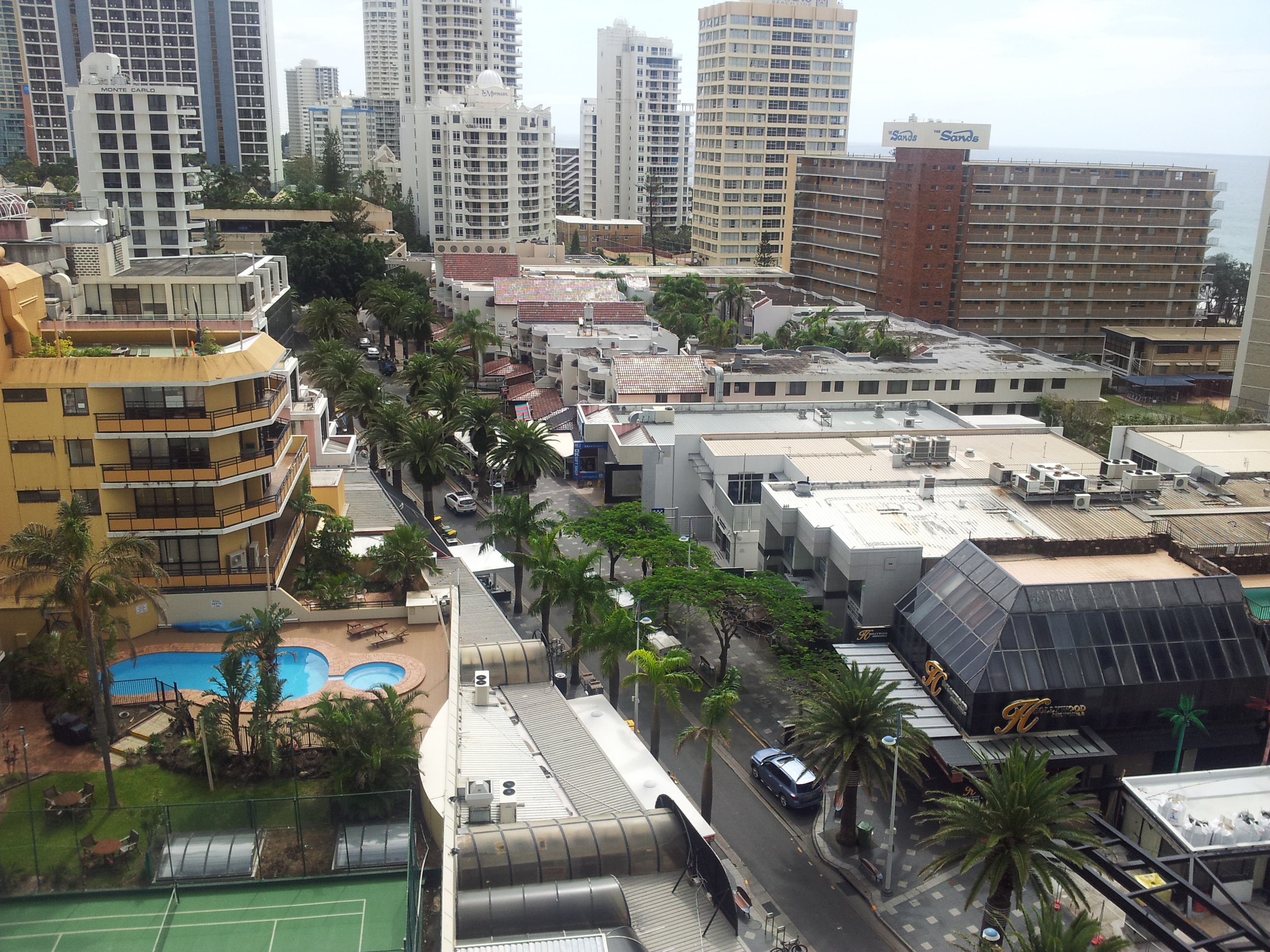
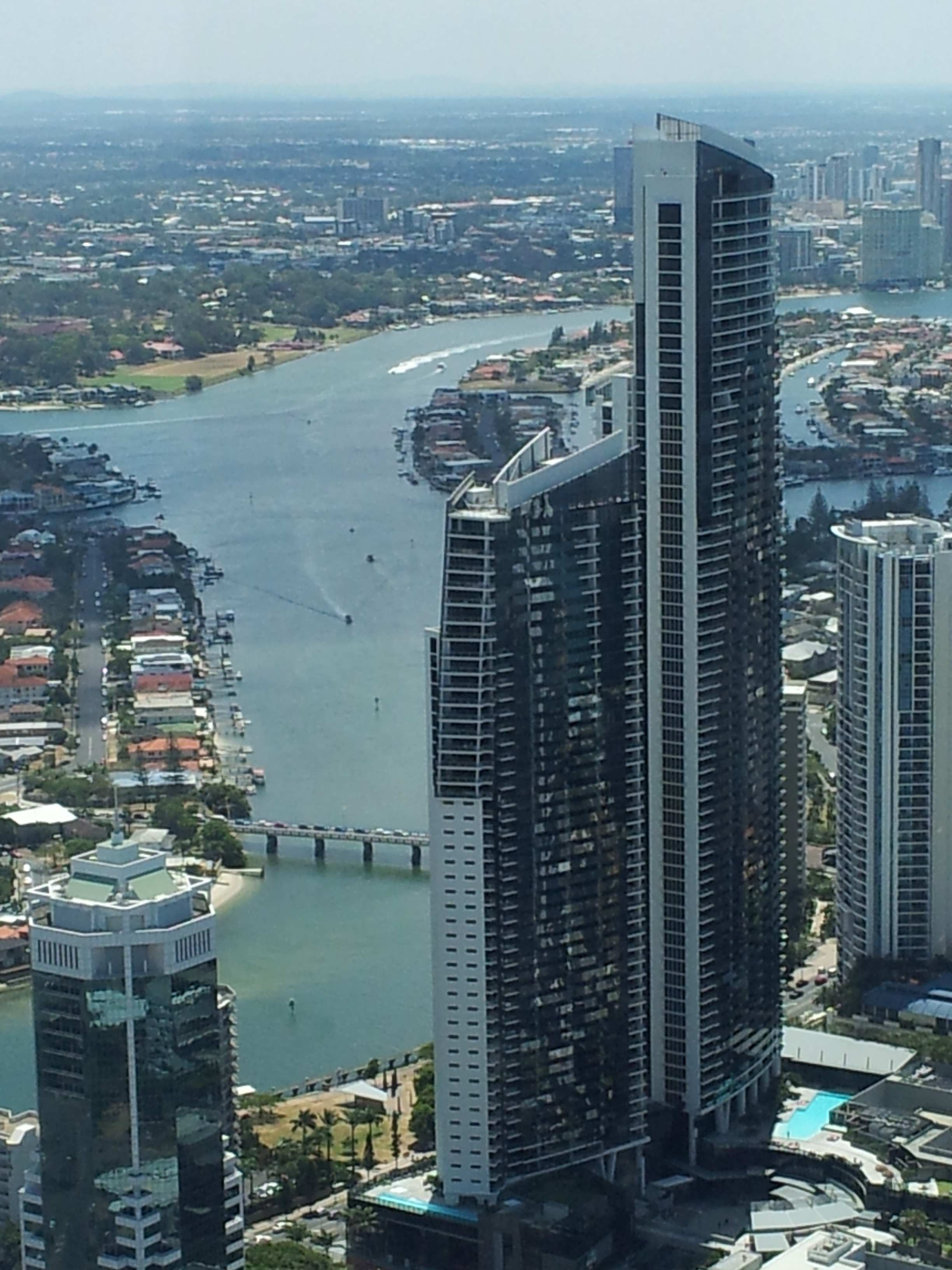
Searching for locations: Surfers Paradise, Queensland, Australia

It was topical some years ago because of the Commonwealth Games, but we have been to the Gold Coast on many occasions and nearly always stayed at the Hilton.

Nearly all of the photos here are taken from floor 13 through to 45, some close to the ocean, others facing north, and west, towards the hinterland.

Below is one of the main beaches, where the typical sun, sand, and surf pretty well sums it up.  Been ion the water a few times myself, and it is amazing how warm it can be on some days, and how cold it can be on others.

And a surfer’s paradise it sure is!

2013-02-03 09.34.50

At the bottom, the start of the shopping centers and eateries.  The is more different types of food there that can be counted on the fingers and toes together.

2013-10-19 11.30.23

The beach just to the north, and where the market stalls set up at night.

2013-10-19 11.31.42

Further north, through the highrises, and far, far into the distance towards Brisbane.

2013-03-31 10.54.56

North, again, looking up Cavill Avenue.

2013-02-03 09.31.08

South, showing highrises and the Q Tower.

2013-10-19 11.44.04

South, taken from the Q Tower, the coastline to Coolangatta dotted with high rise apartment blocks.

2013-10-19 11.32.49

The two towers behind the Grand Chancellor, are the twin towers of the Hilton Hotel.

2013-10-19 11.52.33

From the Q Tower, looking towards the canal residential precinct.

2013-10-19 11.30.31

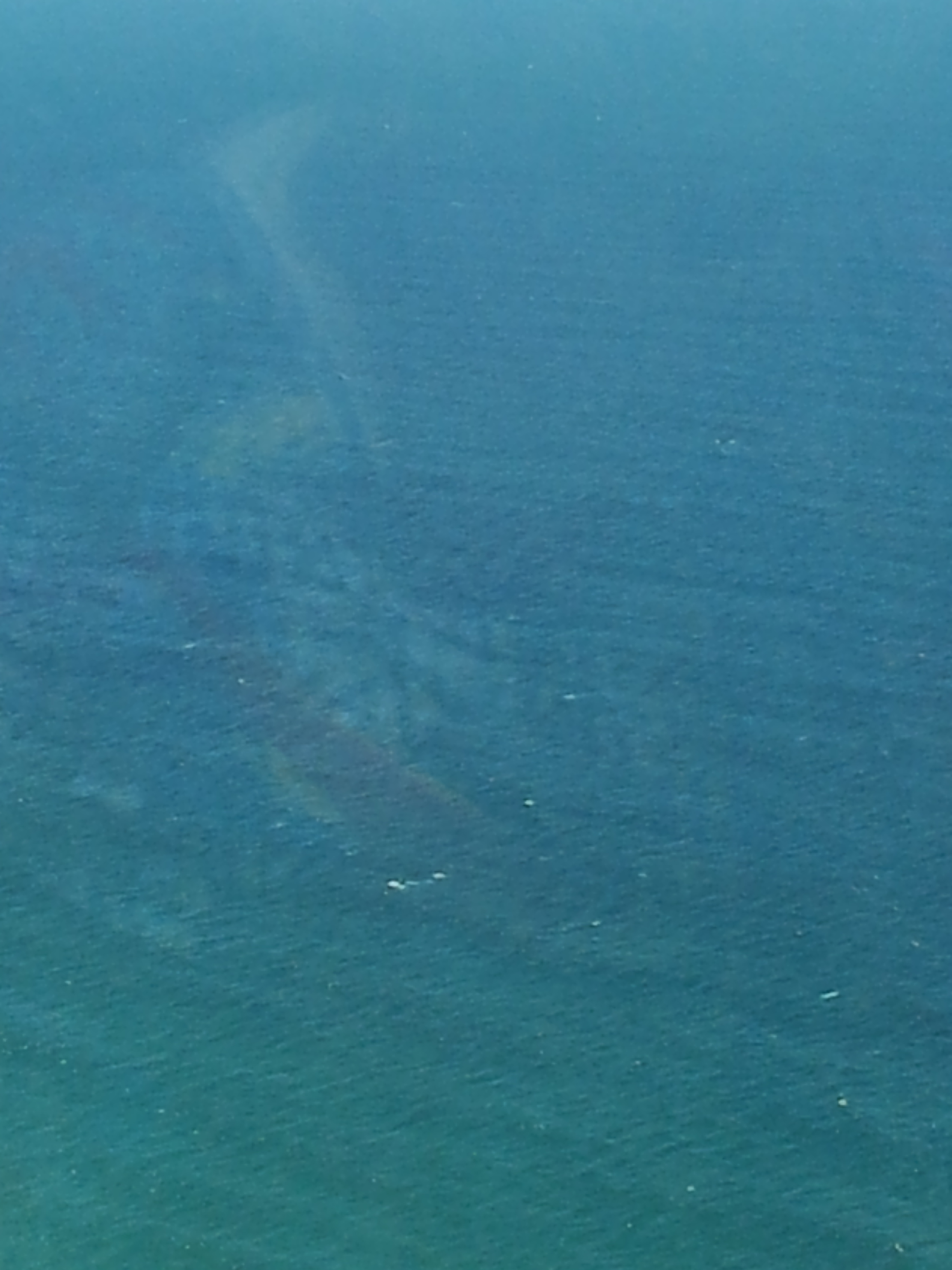
Yes, we were looking for whales, no we didn’t see any.  The ocean, though, was unusually calm.

The cinema of my dreams – I always wanted to write a war story – Episode 41

For a story that was conceived during those long boring hours flying in a steel cocoon, striving to keep away the thoughts that the plane and everyone in it could just simply disappear as planes have in the past, it has come a long way.

Whilst I have always had a fascination with what happened during the second world war, not the battles or fighting, but in the more obscure events that took place, I decided to pen my own little sidebar to what was a long and bitter war.

And, so, it continues…

——

Jackerby trusted no one.  He had been given orders by someone further up the ranks than Wallace and his people, someone who suspected that some or all of the Englishmen turned German turned Englishmen were traitors. 

The only men he could trust fully were those who had come with him in the glider, a dozen at most.  It’s why he had just completed a secret briefing with his second in command who would take over the operation if anything happened to him.

Not that it would, but he liked the idea of being prepared, and humoring the others into believing they were essential to the operation.  Eckhardt would be a good man in a crisis, battle scarred from the Russian front, and glad to be on this operation for obvious reasons.

He would do anything Jackerby asked, even kill Wallace and Johannsen if he was required to.

That might yet be necessary because Wallace didn’t seem interested in going after Atherton which made him think that Wallace wasn’t all that he appeared to be.  Atherton was a thorn in their operation and had to be eliminated.  The fact Wallace and Johannsen didn’t agree with him raised suspicions as to their motives.

Was there ultimately going to be a triple cross?

He had been lurking in the shadows when Wallace gave the drunken fool Leonardo his orders to go down to the village.  More defectors.  Jackerby couldn’t understand why anyone would want to leave the Reich, especially when they were winning the war, and, if it were up to him, he’d executer the lot of them not send them back.

But, orders were orders.

He went back to Eckhardt and told him he was going down to the village to observe Leonardo and his team in action, and that he was in charge of the men in his absence.

Eckhardt, on the other hand, knew that Jackerby, if he could find a way that would not cause them trouble, was going to eliminate Leonardo because they were a liability.  The plan was once Leonardo and his men were gone, Jackerby would take over rounding up the defectors.  Or, more to the point, they would go missing before reaching the castle.  There was only one that mattered, the rest were dead weight.  And once the prize had been captured, Jackerby would escort him home and collect the kudos for himself and his men.

The ultimate prize; leave to reunite briefly with their families and a cushy job in Berlin, away from the horrors of war in the trenches.

Leonardo and the five others that made up the resistance left the castle by one of the underground tunnels.  Leonardo knew of two, both of them shown to him by Carlo.  He knew that Carlo knew where more were, but Carlo was not particularly helpful at the best of times.

He also knew Carlo might be stupid enough to storm the castle, especially after what Leonardo had done to Martina, and, when it hadn’t happened, he suspected Atherton had appealed to him to wait.

Atherton, too, he knew had some idea of the layout of the castle, have been told to keep an eye on Atherton when he first arrived because he was reportedly an archaeologist.  Leonardo had, and reported back to Wallace that it appeared Atherton had been surveying the castle.  He had simply been told to keep Atherton under surveillance, and make notes of any discoveries, and particularly what Atherton was doing.

He had, not that it amounted to much.  Not when he realized Leonardo was following him.  Leonardo decided not to tell Wallace Atherton had rumbled him, just that he was roaming the passages looking for something.

It had worked so far and kept Wallace off his back, but it wasn’t going to last.

Bottom line, Leonardo had to find and kill Atherton before any trouble started, otherwise, it would be his neck on the block.

Jackerby followed.

It wasn’t hard to follow Leonardo because he and his man were the last people to know what stealth was.  He could hear them crashing through the forest between the castle and the village up to 250 meters away, he was making so much noise.

But, Jackerby thought, perhaps Leonardo didn’t need to worry about alerting his presence to Atherton, not if he was already working with him.

To Jackerby and his paranoia, it made sense.  Maybe he was going to meet with Atherton right now and do a deal with the defectors.  How many others had turned up at the village in the last week or so, and never made it to the castle?

He was right, Jackerby told himself, not to trust them.  Everyone, in the end, was an enemy of the Reich.

It took 20 minutes to reach the outskirts of the village, and when Jackerby could see the edge of the woods, and the barn and remains of the farmhouse just the other side of the tree line, he dropped back, found a suitable observation point, and waited.

Leonardo and his men had stopped at the back of the barn, and one of his men was about to go find the defectors.  The rest of Leonardo’s men would wait with him, and surprise their guests, before taking them back to the castle.

As far as “Jackerby was concerned, they would never reach the castle, and this time, he would take care of Leonardo, and the others.

It would be easy to say that Atherton had killed all the members of the resistance, and then got killed himself in a shootout with Jackerby.  It was a plausible reason for all the deaths, though he would have to come up with a suitable excuse for leaving the castle and following Leonardo and his men when Wallace had expressly forbidden it.

Wallace.

Perhaps if he got his hands on Atherton he’d ask him if Wallace was a traitor.

——-

© Charles Heath 2020-2021

How could that possibly happen… – A short story

I had hoped by the time I was promoted to assistant manager it might mean something other than long hours and an increase in pay.

It didn’t.

But unlike others who had taken the job, and eventually become jaded and left, I stayed. Something I realized that others seemed to either ignore or just didn’t understand, this was a company that rewarded loyalty.

It was why there were quite a few who had served 30 years or more. They might not reach the top job, but they certainly well looked after.

I had a long way to go, having been there only 8 years, and according to some, on a fast track. I was not sure how I would describe this so-called ‘fast track’ other than being in the right place at the right time and making a judicial selection.

When it was my turn to be promoted, I had a choice of a plum department, or one most of my contemporaries had passed over. At the time, the words of my previous manager sprang to mind, that being a manager for the most sought after department or the least sought after, came with exactly the same privileges.

And, he was right. I took the least sought after, much to their disdain and disapproval. One year on, that disapproval had turned almost to envy; that was when the Assistant Managers were granted a new privilege, tea, and lunch in the executive dining room.

“So, what’s it like?” John asked, when our group met on a Friday night, this the first after the privilege was granted.

He had been one of the three, including me, who had the opportunity to take the role. Both he and Alistair had both declined, prepared to wait for a more prestigious department. It hadn’t happened to them yet.

“The same as the staff dining room, only smaller. Except, I guess, the waitstaff and butler. They come and serve you when you have to go to them in the staff room. They’re the same staff, by the way, except for the butler.”

I could see the awe, or was it envy, in their eyes. “but it’s not that great. The Assistant Managers all sit at one end of the table, and we’re not part of the main group, so no sharing of information I’m afraid. And the meals are the same, just served on fancier crockery.”

“Then nothing to write home about?” Will was one of those who they also thought to be on a ‘fast track’. I was still trying to see how my ‘fast track’ was actually that fast.

“Put it this way, the extra pay doesn’t offset the long hours because you get overtime, I don’t, so on a good week, you’d all be earning more than me. Without responsibility, if anything goes wrong. I think that’s why Assistant Managers were created, to take the blame when anything goes wrong.”

That had been the hardest pill to swallow. Until I got the role, I hadn’t realized what it really involved. Nor had the others, and it was not something we could whinge about. My first-day introductory speech from Tomkins, my Manager, was all about taking responsibility, and how I was there to make his life easier. It was a speech he made a few times because he’d been Manager for the last 16 years, much the same as the others, and promotion if ever, would come when they died.

And Manager’s rarely died, because of their Assistant Managers.

“How old is Tomkins now?” Bert, a relative newcomer to our group, asked. He was still in the ‘in awe’ phase.

“About the same as Father Time,” I said. “But the reality is, no one knows, except perhaps for the personnel manager.” O looked over at Wally, the Personnel Department’s Assistant Manager. “Any chance of you telling us?”

“No. You know I can’t.”

“But you know?” I asked.

“Of course, but you know the rules. That’s confidential information. Not like what you are the custodian of, information everyone needs.”

Which, of course, was true. Communication and Secretarial Services had no secrets, except for twice a year when the company Bord of Directors met, and we were responsible for all the documents used at their meetings. Then, and only then, was I privy to all the secrets, including promotions. And be asked ‘What’s happening?’.

“Just be content to know that he’s as old as the hills, as most of them. It seems to me that one of the pre-requisites for managership is that you have been employed here for 30 years.”

Not all, though, I’d noticed, but there wasn’t one under the age of fifty.

And so it would go, the Friday night lament, those ‘in’ the executive, and those who were not quite there yet.
It seemed prophetic, in a sense, that we had been talking about Mangers and their ages. By a quirk of fate, some weeks before, that I learned of Tomkins’s currents state of health via a call on his office phone. At the time he was out, where, he had not told me, but by his the I believed it was something serious, so serious he didn’t want me, or anyone else, to know about it.

That phone call was from his wife, Eleanor, whom I’d met on a number of occasions when she came to take him home from work. I liked her, and couldn’t help but notice she was his exact opposite, Tomkins, silent and at times morose, and Eleanor, the life of the party. I could imagine her being a handful in her younger days, and it was a stark reminder of that old saying ‘opposites attract’.

She was concerned and asked me if he had returned from the specialist. I simply said he had but was elsewhere, and promised to get him to call her when he returned. Then I made a quick call around to see where he was and found that he was in Personnel. I left an innocuous message on his desk, and then let my imagination run wild.

At least for a day or so, the time it took for me to realize that it was probably nothing, the lethargy he’d been showing, gone.

I’d put it out of my mind until my cell phone rang, and it was from the Personnel Manager. On a Sunday, no less. In the few seconds before I answered it, I’d made the assumption that Tomkins’s secretive visits to the specialist meant he needed time off for a routine operation.

Greetings over, O’Reilly, the Personnel Manager, cut straight to the chase, “For your personal information, and not to be repeated, Tomkins will be out of action for about two months, and as that is longer than the standard period, you will become Acting Manager. We’ll talk more about this Tuesday morning.” Monday was a holiday.

All Assistant Managers knew the rules. Any absence of a manager for longer than a month, promotion to Acting Manager. Anything less, you sat in the office, but no change in title. There was one more rule, that in the event of the death of a manager, the assistant manager was immediately promoted to Manager. This had only happened once before. 70 years ago. If a manager retired, then the position of Manager was thrown open to anyone in the organization.

It was an intriguing moment in time.

Tuesday came, and as usual, I went into the office, with only one thought in mind, let the staff in the department know what was happening, of course, the moment I was given the approval to do so by Personnel.

Not a minute after I sat down, the phone rang. I picked it up, gave my name and greeting. It was met with a rather excitable voice of the Assistant Manager, Personnel, “I just got word from on high, you’ve been promoted to manager. How could that possibly happen…”

Then a moment later, as realization set in, “Unless…”

—-

© Charles Heath 2020-2021

The cinema of my dreams – I wonder what it was like in the wild west – Part 4

Yet another photograph in what is a series pushes the story along

It’s a reminder of a past that I have only seen in old movies, which to me, adds a great deal of importance to the preservation of any material that gives us a sense of what it was like many years ago.

It doesn’t mean that what we see happening because films, like stories, are sometimes based on some fact but the majority of it is fictional padding, adding a picture of how it might have been.

To find out what really happened, it is possible to find archived newspapers and municipal documents going back a long time, quite often the fodder for many history books.

This is how we think the wild west was, at times quite a dangerous place to be. But, in the main, it was probably a lot more mundane, just trying to make a living off the land, battling the vagaries of weather, fighting off all manner of hazards, both predators and humans, or trying to eventually eke out a living after a gold strike brought thousands of would-be prospectors.

Towns came and went, mines came and went, each leaving the ghosts of their people and buildings behind.

As for my story, it’s probably going to be an amalgam of everything I’ve read or seen, but with my own spin.

So, the story so far – Our hero is away on a driving tour and had come to a covered bridge.

The thought that it might be a portal does cross his mind, but not being a believer, crosses it. Then, after a few miles comes across what seems to be a deserted, or ghost, town. But, it’s not deserted, the car’s gone and in its place, a horse.

I woke up in unfamiliar surroundings.

I didn’t remember going to sleep, which, for a moment, was a worry.

It was not a bed I was lying on. It was hard, like a wooden plank, and, looking up, the roof was very high above. A cathedral ceiling.

A church?

I dragged myself up into a sitting position and looked around. It is a church. A very old church made completely out of timber. The sort of church one might find in an old town.

“Ah, you’re awake?” A voice came from behind me, the sort I instantly reminded of a priest.

I turned. A man that had the requisite collar and shirt, but not your typical priest.

“Where am I?”

“Church. Fergus thought you’d died of fright. Have to say I thought that too, but Doc reckons you’re tired from a long ride. Where you from?”

I was going to say from New York, but I wasn’t sure what was going on, so I held that thought and just said, “Back east.”

“Running from what?”

Was everyone who landed on their doorstep running from something? At least I wasn’t dressed in a suit, just a flannel shirt, and jeans, with sturdy hiking boots. They were the only item of my apparel that could be out of place in this setting.

“A woman. She picked another man, one I thought was a friend.”

It was as close to the truth I’d get. There was a woman, it was just she didn’t like me as much as I did her. The both of us couldn’t stay, so I quit and left.

“Well, it’s too late to go on, the hotel’s out the door and thirty paces straight ahead. Tommy’s taken your horse to the livery stable.”

My interview was over.

“I’ll see you at the service in the morning.”

Odd, when I walked out the church door, the scene had changed from what I last remembered. At dusk, there were lights and people. Not many, but just enough to give the town an air of reality.

Until I saw two women walk past, in traditional 1860s dresses and bonnets.

This had to be a historical town that went that extra mile for reality. It had to be.

© Charles Heath 2020-2022

An excerpt from “The Devil You Don’t”

Available on Amazon Kindle here:  https://amzn.to/2Xyh1ow


By the time I returned to the Savoie, the rain had finally stopped, and there was a streak of blue sky to offer some hope the day would improve.

The ship was not crowded, the possibility of bad weather perhaps holding back potential passengers.  Of those I saw, a number of them would be aboard for the lunch by Phillippe Chevrier.  I thought about it, but the Concierge had told me about several restaurants in Yvoire and had given me a hand-drawn map of the village.  I think he came from the area because he spoke with the pride and knowledge of a resident.

I was looking down from the upper deck observing the last of the boarding passengers when I saw a woman, notable for her red coat and matching shoes, making a last-minute dash to get on board just before the gangway was removed.  In fact, her ungainly manner of boarding had also captured a few of the other passenger’s attention.  Now they would have something else to talk about, other than the possibility of further rain.

I saw her smile at the deckhand, but he did not smile back.  He was not impressed with her bravado, perhaps because of possible injury.  He looked at her ticket then nodded dismissively, and went back to his duties in getting the ship underway.  I was going to check the departure time, but I, like the other passengers, had my attention diverted to the woman in red.

From what I could see there was something about her.  It struck me when the light caught her as she turned to look down the deck, giving me a perfect profile.  I was going to say she looked foreign, but here, as in almost anywhere in Europe, that described just about everyone.  Perhaps I was just comparing her to Phillipa, so definitively British, whereas this woman was very definitely not.

She was perhaps in her 30’s, slim or perhaps the word I’d use was lissom, and had the look and manner of a model.  I say that because Phillipa had dragged me to most of the showings, whether in Milan, Rome, New York, London, or Paris.  The clothes were familiar, and in the back of my mind, I had a feeling I’d seen her before.

Or perhaps, to me, all models looked the same.

She looked up in my direction, and before I could divert my eyes, she locked on.  I could feel her gaze boring into me, and then it was gone as if she had been looking straight through me.  I remained out on deck as the ship got underway, watching her disappear inside the cabin.  My curiosity was piqued, so I decided to keep an eye out for her.

I could feel the coolness of the air as the ship picked up speed, not that it was going to be very fast.  With stops, the trip would take nearly two hours to get to my destination.  It would turn back almost immediately, but I was going to stay until the evening when it returned at about half eight.  It would give me enough time to sample the local fare, and take a tour of the medieval village.

Few other passengers ventured out on the deck, most staying inside or going to lunch.  After a short time, I came back down to the main deck and headed forward.  I wanted to clear my head by concentrating on the movement of the vessel through the water, breathing in the crisp, clean air, and let the peacefulness of the surroundings envelope me.

It didn’t work.

I knew it wouldn’t be long before I started thinking about why things hadn’t worked, and what part I played in it.  And the usual question that came to mind when something didn’t work out.  What was wrong with me?

I usually blamed it on my upbringing.

I had one of those so-called privileged lives, a nanny till I was old enough to go to boarding school, then sent to the best schools in the land.  There I learned everything I needed to be the son of a Duke, or, as my father called it in one of his lighter moments, nobility in waiting.

Had this been five or six hundred years ago, I would need to have sword and jousting skills, or if it had been a few hundred years later a keen military mind.  If nothing else I could ride a horse, and go on hunts, or did until they became not the thing to do.

I learned six languages, and everything I needed to become a diplomat in the far-flung British Empire, except the Empire had become the Commonwealth, and then, when no-one was looking, Britain’s influence in the world finally disappeared.  I was a man without a cause, without a vocation, and no place to go.

Computers were the new vogue and I had an aptitude for programming.  I guess that went hand in hand with mathematics, which although I hated the subject, I excelled in.  Both I and another noble outcast used to toss ideas around in school, but when it came to the end of our education, he chose to enter the public service, and I took a few of those ideas we had mulled over and turned them into a company.

About a year ago, I was made an offer I couldn’t refuse.  There were so many zeroes on the end of it I just said yes, put the money into a very grateful bank, and was still trying to come to terms with it.

Sadly, I still had no idea what I was going to do with the rest of my life.  My parents had asked me to come back home and help manage the estate, and I did for a few weeks.  It was as long as it took for my parents to drive me insane.

Back in the city, I spent a few months looking for a mundane job, but there were very few that suited the qualifications I had, and the rest, I think I intimidated the interviewer simply because of who I was.  In that time I’d also featured on the cover of the Economist, and through my well-meaning accountant, started involving myself with various charities, earning the title ‘philanthropist’.

And despite all of this exposure, even making one of those ubiquitous ‘eligible bachelor’ lists, I still could not find ‘the one’, the woman I wanted to spend the rest of my life with.  Phillipa seemed to fit the bill, but in time she proved to be a troubled soul with ‘Daddy’ issues.  I knew that in building a relationship compromise was necessary, but with her, in the end, everything was a compromise and what had happened was always going to be the end result.

It was perhaps a by-product of the whole nobility thing.  There was a certain expectation I had to fulfill, to my peers, contemporaries, parents and family, and those who either liked or hated what it represented.  The problem was, I didn’t feel like I belonged.  Not like my friend from schooldays, and now obscure acquaintance, Sebastian.  He had been elevated to his Dukedom early when his father died when he was in his twenties.  He had managed to fade from the limelight and was rarely mentioned either in the papers or the gossip columns.  He was one of the lucky ones.

I had managed to keep a similarly low profile until I met Phillipa.  From that moment, my obscurity disappeared.  It was, I could see now, part of a plan put in place by Phillipa’s father, a man who hogged the limelight with his daughter, to raise the profile of the family name and through it their businesses.  He was nothing if not the consummate self-advertisement.

Perhaps I was supposed to be the last piece of the puzzle, the attachment to the establishment, that link with a class of people he would not normally get in the front door.  There was nothing refined about him or his family, and more than once I’d noticed my contemporaries cringe at the mention of his name, or any reference of my association with him.

Yet could I truthfully say I really wanted to go back to the obscurity I had before Phillipa?  For all her faults, there were times when she had been fun to be with, particularly when I first met her when she had a certain air of unpredictability.  That had slowly disappeared as she became part of her father’s plan for the future.  She just failed to see how much he was using her.

Or perhaps, over time, I had become cynical.

I thought about calling her.  It was one of those moments of weakness when I felt alone, more alone than usual.

I diverted my attention back to my surroundings and the shoreline.  Out of the corner of my eye, I could see the woman in the red coat, making a move.  The red coat was like a beacon, a sort of fire engine red.  It was not the sort of coat most of the women I knew would wear, but on her, it looked terrific.  In fact, her sublime beauty was the one other attribute that was distinctly noticeable, along with the fact her hair was short, rather than long, and jet black.

I had to wrench my attention away from her.

A few minutes later several other passengers came out of the cabin for a walk around the deck, perhaps to get some exercise, perhaps checking up on me, or perhaps I was being paranoid.  I waited till they passed on their way forward, and I turned and headed aft.

I watched the wake sluicing out from under the stern for a few minutes, before retracing my steps to the front of the ship and there I stood against the railing, watching the bow carve its way through the water.  It was almost mesmerizing.  There, I emptied my mind of thoughts about Phillipa, and thoughts about the woman in the red coat.

Until a female voice behind me said, “Having a bad day?”

I started, caught by surprise, and slowly turned.  The woman in the red coat had somehow got very close me without my realizing it.  How did she do that?  I was so surprised I couldn’t answer immediately.

“I do hope you are not contemplating jumping.  I hear the water is very cold.”

Closer up, I could see what I’d missed when I saw her on the main deck.  There was a slight hint of Chinese, or Oriental, in her particularly around the eyes, and of her hair which was jet black.  An ancestor twice or more removed had left their mark, not in a dominant way, but more subtle, and easily missed except from a very short distance away, like now.

Other than that, she was quite possibly Eastern European, perhaps Russian, though that covered a lot of territory.  The incongruity of it was that she spoke with an American accent, and fluent enough for me to believe English was her first language.

Usually, I could ‘read’ people, but she was a clean slate.  Her expression was one of amusement, but with cold eyes.  My first thought, then, was to be careful.

“No.  Not yet.”  I coughed to clear my throat because I could hardly speak.  And blushed, because that was what I did when confronted by a woman, beautiful or otherwise.

The amusement gave way to a hint of a smile that brightened her demeanor as a little warmth reached her eyes.  “So that’s a maybe.  Should I change into my lifesaving gear, just in case?”

It conjured up a rather interesting image in my mind until I reluctantly dismissed it.

“Perhaps I should move away from the edge,” I said, moving sideways until I was back on the main deck, a few feet further away.  Her eyes had followed me, and when I stopped she turned to face me again.  She did not move closer.

I realized then she had removed her beret and it was in her left side coat pocket.  “Thanks for your concern …?”

“Zoe.”

“Thanks for your concern, Zoe.  By the way, my name is John.”

She smiled again, perhaps in an attempt to put me at ease.  “I saw you earlier, you looked so sad, I thought …”

“I might throw myself overboard?”

“An idiotic notion I admit, but it is better to be safe than sorry.”

Then she tilted her head to one side then the other, looking intently at me.  “You seem to be familiar.  Do I know you?”

I tried to think of where I may have seen her before, but all I could remember was what I’d thought earlier when I first saw her; she was a model and had been at one of the showings.  If she was, it would be more likely she would remember Phillipa, not me.  Phillipa always had to sit in the front row.

“Probably not.”  I also didn’t mention the fact she may have seen my picture in the society pages of several tabloid newspapers because she didn’t look the sort of woman who needed a daily dose of the comings and goings, and, more often than not, scandal associated with so-called celebrities.

She gave me a look, one that told me she had just realized who I was.  “Yes, I remember now.  You made the front cover of the Economist.  You sold your company for a small fortune.”

Of course.  She was not the first who had recognized me from that cover.  It had raised my profile considerably, but not the Sternhaven’s.  That article had not mentioned Phillipa or her family.  I suspect Grandmother had something to do with that, and it was, now I thought about it, another nail in the coffin that was my relationship with Phillipa.

“I wouldn’t say it was a fortune, small or otherwise, just fortunate.”  Each time, I found myself playing down the wealth aspect of the business deal.

“Perhaps then, as the journalist wrote, you were lucky.  It is not, I think, a good time for internet-based companies.”

The latter statement was an interesting fact, one she read in the Financial Times which had made that exact comment recently.

“But I am boring you.”  She smiled again.  “I should be minding my own business and leaving you to your thoughts.  I am sorry.”

She turned to leave and took a few steps towards the main cabin.

“You’re not boring me,” I said, thinking I was letting my paranoia get the better of me.  It had been Sebastian on learning of my good fortune, who had warned me against ‘a certain element here and abroad’ whose sole aim would be to separate me from my money.  He was not very subtle when he described their methods.

But I knew he was right.  I should have let her walk away.

She stopped and turned around.  “You seem nothing like the man I read about in the Economist.”

A sudden and awful thought popped into my head.  Those words were part of a very familiar opening gambit.  “Are you a reporter?”

I was not sure if she looked surprised, or amused.  “Do I look like one?”

I silently cursed myself for speaking before thinking, and then immediately ignored my own admonishment.  “People rarely look like what they are.”

I saw the subtle shake of the head and expected her to take her leave.  Instead she astonished me.

“I fear we have got off on the wrong foot.  To be honest, I’m not usually this forward, but you seemed like you needed cheering up when probably the opposite is true.  Aside from the fact this excursion was probably a bad idea.  And,” she added with a little shrug, “perhaps I talk too much.”

I was not sure what I thought of her after that extraordinary admission. It was not something I would do, but it was an interesting way to approach someone and have them ignoring their natural instinct.  I would let Sebastian whisper in my ear for a little longer and see where this was going.

“Oddly enough, I was thinking the same thing.  I was supposed to be traveling with my prospective bride.  I think you can imagine how that turned out.”

“She’s not here?”

“No.”

“She’s in the cabin?”  Her eyes strayed in that direction for a moment then came back to me.  She seemed surprised I might be traveling with someone.

“No.  She is back in England, and the wedding is off.  So is the relationship.  She dumped me by text.”

OK, why was I sharing this humiliating piece of information with her?  I still couldn’t be sure she was not a reporter.

She motioned to an empty seat, back from the edge.  No walking the plank today.  She moved towards it and sat down.  She showed no signs of being cold, nor interested in the breeze upsetting her hair.  Phillipa would be having a tantrum about now, being kept outside, and freaking out over what the breeze might be doing to her appearance.

I wondered, if only for a few seconds if she used this approach with anyone else.  I guess I was a little different, a seemingly rich businessman alone on a ferry on Lake Geneva, contemplating the way his life had gone so completely off track.

She watched as I sat at the other end of the bench, leaving about a yard between us.  After I leaned back and made myself as comfortable as I could, she said, “I have also experienced something similar, though not by text message.  It is difficult, the first few days.”

“I saw it coming.”

“I did not.”  She frowned, a sort of lifeless expression taking over, perhaps brought on by the memory of what had happened to her.  “But it is done, and I moved on.  Was she the love of your life?”

OK, that was unexpected.

When I didn’t answer, she said, “I am sorry.  Sometimes I ask personal questions without realizing what I’m doing.  It is none of my business.”  She shivered.  “Perhaps we should go back inside.”

She stood, and held out her hand.  Should I take it and be drawn into her web?  I thought of Sebastian.  What would he do in this situation?

I took her hand in mine and let her pull me gently to my feet.  “Wise choice,” she said, looking up at the sky.

It just started to rain.


© Charles Heath 2015-2020

newdevilcvr6

Memories of the conversations with my cat – 17

As some may be aware, but many not, Chester, my faithful writing assistant, mice catcher, and general pain in the neck, passed away some months ago.

Recently I was running a series based on his adventures, under the title of Past Conversations with my cat.

For those who have not had the chance to read about all of his exploits I will run the series again from Episode 1

These are the memories of our time together…

Am I seriously reading my work to a cat, as an aid to correcting errors and grammar

20160907_135509

This is Chester, he helps with the proofreading.

It’s not his favorite job, and truth be told he’d rather be outside being chased by a dog.  But that’s why he’s not allowed outside.

He mistakenly wanders into my writing room ready to take up a spot on the seat near the window.

I watch him, and he’s pretending not to care if I’m watching him.  A wide yawn, and a dour look in my direction.  Yes, I can hear him now, “do your worst.”

For a moment while I read, trying to add the right amount of inflection and accent into the voices of the various characters, I realize that some of the conversational pieces seem a little awkward.

I think, judging from the expression on Chester’s face he agrees

Stilted, forced, or ‘mate, you’ve got a bloody awful accent, that sounded nothing like an Italian using English as a second language’.

OK, so I can’t write accents very well.  Note to self, find an Italian and spend some time talking to them.

So, the conversation needs a little rework, let’s move on.

The next part is a little descriptive, just to set the scene.

‘Flowery’ is the word Chester uses.  Flowery?  It isn’t describing a garden.  Oh, overly descriptive with too many comparisons.

What’s wrong with the sky is as blue as the ocean?

Have you seen the ocean?

Yes.

I doubt it.  The ocean is green.

How do you know, you’ve never seen an ocean?  This cat is starting to annoy me.

A gentle shrug, he gets up off the floor and heads towards the door.  A condescending look over his shoulder and he’s gone.

What’s the definition of madness?  Doing the same thing over and over and expecting a different result.

It’s official.  I’m mad!