Skeletons in the closet, and doppelgangers

A story called “Mistaken Identity”

How many of us have skeletons in the closet that we know nothing about? The skeletons we know about generally stay there, but those we do not, well, they have a habit of coming out of left field when we least expect it.

In this case, when you see your photo on a TV screen with the accompanying text that says you are wanted by every law enforcement agency in Europe, you’re in a state of shock, only to be compounded by those same police, armed and menacing, kicking the door down.

I’d been thinking about this premise for a while after I discovered my mother had a boyfriend before she married my father, a boyfriend who was, by all accounts, the man who was the love of her life.

Then, in terms of coming up with an idea for a story, what if she had a child by him that we didn’t know about, which might mean I had a half brother or sister I knew nothing about. It’s not an uncommon occurrence from what I’ve been researching.

There are many ways of putting a spin on this story.

Then, in the back of my mind, I remembered a story an acquaintance at work was once telling us over morning tea, that a friend of a friend had a mother who had a twin sister and that each of the sisters had a son by the same father, without each knowing of the father’s actions, both growing up without the other having any knowledge of their half brother, only to meet by accident on the other side of the world.

It was an encounter that in the scheme of things might never have happened, and each would have remained oblivious of the other.

For one sister, the relationship was over before she discovered she was pregnant, and therefore had not told the man he was a father. It was no surprise the relationship foundered when she discovered he was also having a relationship with her sister, a discovery that caused her to cut all ties with both of them and never speak to either from that day.

It’s a story with more twists and turns than a country lane!

And a great idea for a story.

That story is called ‘Mistaken Identity’.

Read an extract tomorrow.

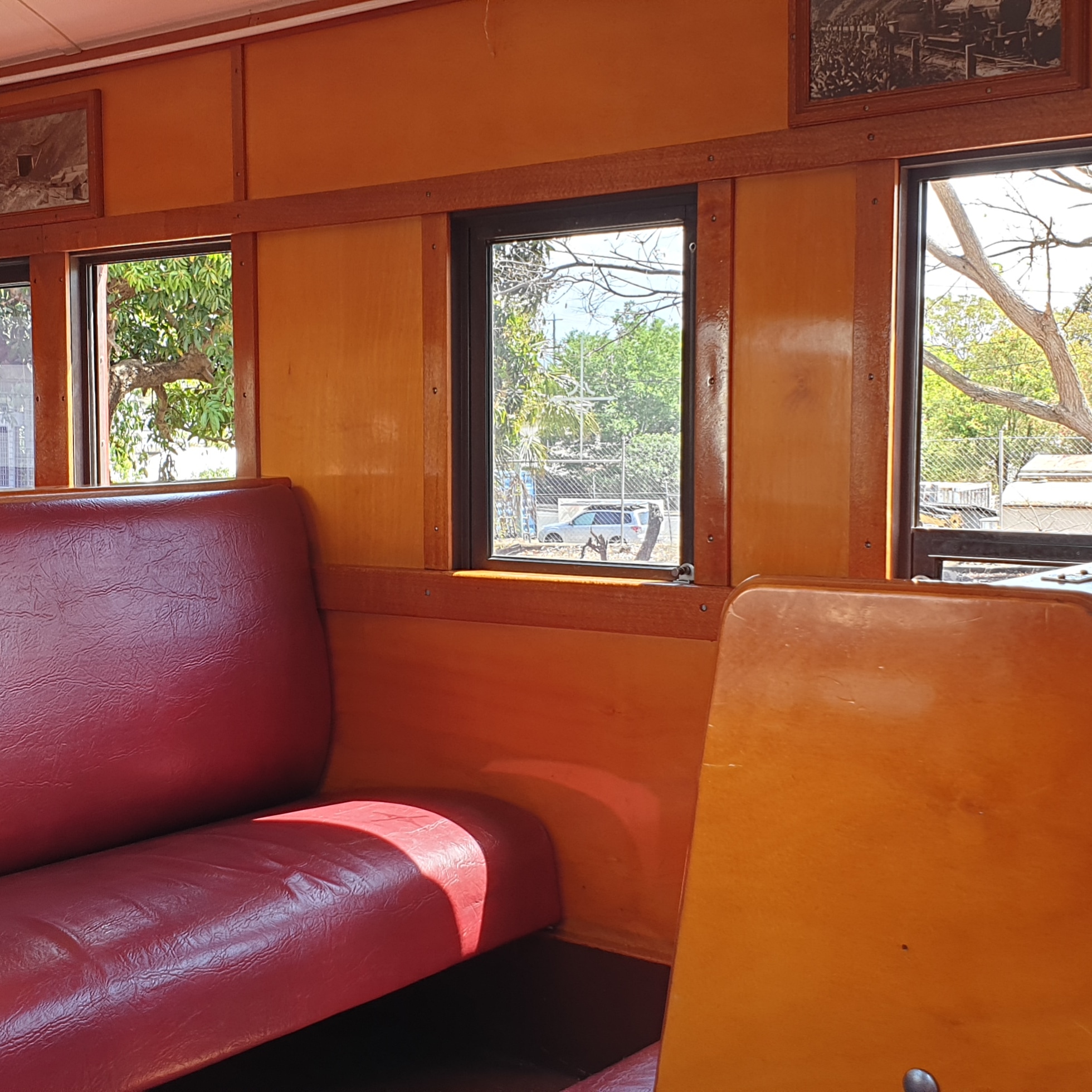
A photograph from the inspirational bin – 10

It was a relic from the past, put back together by a dedicated group of volunteers who had not wanted the last vestiges of the past to disappear.

Train enthusiasts, the called themselves.

They’d put together a steam locomotive, five carriages, a restaurant car, and the conductor’s car. The original train might have been twice to three times as long, but these days, the tourist market rarely filled the train.

I was one of a group who made it their mission to visit and rate every vintage train, not only in this country, but all over the world. It was a sad state of affairs when I first began, with locomotives and carriages dropping out of the system due to lack of funds, but more disheartening, the lack of government assistance in keeping it’s heritage alive.

It seemed money was short, and there were better things to spend it on, like two brand new 737-800 jets just to ferry the prime minister and government officials around. Just think of what that quarter of a billion dollars could have bought in heritage.

But it is what it is.

What I had before me was one of the most recent restorations to check out, and on first glance, it was remarkable just how lifelike and true to age it was.

Of course, I was of an age that could remember the old railway carriages, what were called red rattlers because of the ill fitting windows that went up and down, allow fresh air, or in days gone by, smoke from the locomotive hauling the train. I had not travelled during the last glorious years of steam, but the carriages had lived on briefly before the advent of the sterile aluminum tin cans with uncomfortably hard seats.

These carriages were built for comfort, and my first experience had been a five hour trip from Melbourne to Wangaratta, in Victoria, on my way to Mt Buffalo Chalet, a guesthouse owned by the Railways.

That too had been a remarkable old chalet style guest house with a room and all the dining included. I always left after the week having put on weight. Breakfast, morning tea, lunch, afternoon tea, and dinner, every day, and high tea on Sunday.

But this carriage, the polished wood that had shellac rather than varnish, highlighting the timber’s grain, the leather seats with generous padding, the curved ceilings with hanging lights, windows the could be opened and closed, allowing fresh air to circulate.

There was also a carriage with the passageway, and five or six separate compartments, each sitting six passengers. I remembered these well, having quite often ridden in one to work for some years when the country trains still ran.

It was always remarkable how a sight or a scent could trigger such memories.

For this carriage on this train, it used to ply the Gympie to Brooloo branch line from about 1915 onwards.

That was the history. It only went as far as Amamoor these days, it was still long enough to capture the sensation of riding the rails back in what is always referred to as the good old days, even if they were not.

Now for the ride….

© Charles Heath 2021

An excerpt from “Amnesia”, a work in progress

I remembered a bang.
I remembered the car slewing sideways.
I remember another bang, and then it was lights out.
When I opened my eyes again, I saw the sky.
Or I could be under water.
Everything was blurred.
I tried to focus but I couldn’t. My eyes were full of water.
What happened?
Why was I lying down?
Where was I?
I cast my mind back, trying to remember.
It was a blank.
What, when, who, why and where, questions I should easily be able to answer. Questions any normal person could answer.
I tried to move. Bad, bad mistake.
I did not realise the scream I heard was my own. Just before my body shut down.

“My God! What happened?”
I could hear, not see. I was moving, lying down, looking up.
I was blind. Everything was black.
“Car accident, hit a tree, sent the passenger flying through the windscreen. Pity to poor bastard didn’t get the message that seat belts save lives.”
Was I that poor bastard?
“Report?” A new voice, male, authoritative.
“Multiple lacerations, broken collar bone, broken arm in three places, both legs broken below the knees, one badly. We are not sure of internal injuries, but ruptured spleen, cracked ribs and pierced right lung are fairly evident, x-rays will confirm that and anything else.”
“What isn’t broken?”
“His neck.”
“Then I would have to say we are looking at the luckiest man on the planet.”
I heard shuffling of pages.
“OR1 ready?”
“Yes. On standby since we were first advised.”
“Good. Let’s see if we can weave some magic.”

Magic.
It was the first word that popped into my head when I surfaced from the bottom of the lake. That first breath, after holding it for so long, was sublime, and, in reality, agonising.

Magic, because it seemed like I’d spent a long time under water.
Or somewhere.
I tried to speak, but couldn’t. The words were just in my head.
Was it night or was it day?
Was it hot, or was it cold?
Where was I?
Around me it felt cool.
It was very quiet. No noise except for the hissing of air through an air-conditioning vent. Or perhaps that was the sound of pure silence. And with it the revelation that silence was not silent. It was noisy.
I didn’t try to move.
Instinctively, somehow I knew not to.
A previous bad experience?
I heard what sounded like a door opening, and very quiet footsteps slowly come into the room. They stopped. I could hear breathing, slightly laboured, a sound I’d heard before.
My grandfather.
He had smoked all his life, until he was diagnosed with lung cancer. But for years before that he had emphysema. The person in the room was on their way, down the same path. I could smell the smoke.
I wanted to tell whoever it was the hazards of smoking.
I couldn’t.
I heard a metallic clanging sound from the end of the bed. A moment later the clicking of a pen, then writing.
“You are in a hospital.” A female voice suddenly said. “You’ve been in a very bad accident. You cannot talk, or move, all you can do, for the moment, is listen to me. I am a nurse. You have been here for 45 days, and just come out of a medically induced coma. There is nothing to be afraid of.”
She had a very soothing voice.
I felt her fingers stroke the back of my hand.
“Everything is fine.”
Define fine, I thought. I wanted to ask her what ‘fine’ meant.
“Just count backwards from 10.”
Why?
I didn’t reach seven.

Over the next ten days, that voice became my lifeline to sanity. Every morning I longed to hear it, if only for the few moments she was in the room, those few waking moments when I believed she, and someone else who never spoke, were doing tests. I knew it had to be someone else because I could smell the essence of lavender. My grandmother had worn a similar scent.
It rose above the disinfectant.
I also believed she was another doctor, not the one who had been there the day I arrived. Not the one who had used some ‘magic’ and kept me alive.
It was then, in those moments before she put me under again, that I thought, what if I was paralysed? It would explain a lot. A chill went through me.

The next morning she was back.
“My name is Winifred. We don’t know what your name is, not yet. In a few days, you will be better, and you will be able to ask us questions. You were in an accident, and you were very badly injured, but I can assure you there will be no lasting damage.”
More tests, and then, when I expected the lights to go out, they didn’t. Not for a few minutes more. Perhaps this was how I would be integrated back into the world. A little bit at a time.
The next morning, she came later than usual, and I’d been awake for a few minutes. “You have bandages over your eyes and face. You had bad lacerations to your face, and glass in your eyes. We will know more when the bandages come off in a few days. Your face will take longer to heal. It was necessary to do some plastic surgery.”
Lacerations, glass in my eyes, car accident, plastic surgery. By logical deduction, I knew I was the poor bastard thrown through the windscreen. It was a fleeting memory from the day I was admitted.
How could that happen?
That was the first of many startling revelations. The second was the fact I could not remember the crash. Equally shocking, in that same moment was the fact I could not remember before the crash either, and only vague memories after.
But the most shattering of all these revelations was the one where I realised I could not remember my name.
I tried to calm down, sensing a rising panic.
I was just disoriented, I told myself. After 45 days in an induced coma, it had messed with my mind, and it was only a temporary lapse. Yes, that’s what it was, a temporary lapse. I would remember tomorrow. Or the next day.
Sleep was a blessed relief.

The next day I didn’t wake feeling nauseous. Perhaps they’d lowered the pain medication. I’d heard that morphine could have that effect. Then, how could I know that, but not who I am?
I knew now Winifred the nurse was preparing me for something very bad. She was upbeat, and soothing, giving me a new piece of information each morning. This morning, “You do not need to be afraid. Everything is going to be fine. The doctor tells me you are going to recover with very little scarring. You will need some physiotherapy to recover from your physical injuries, but that’s in the future. We need to let you mend a little bit more before then.”
So, I was not going to be able to leap out of bed, and walk out of the hospital any time soon. I don’t suppose I’d ever leapt out of bed, except as a young boy. I suspect I’d sustained a few broken bones. I guess learning to walk again was the least of my problems.
But, there was something else. I picked it up in the timbre of her voice, a hesitation, or reluctance. It sent another chill through me.
This time I was left awake for an hour before she returned.
This time sleep was restless.
There were scenes playing in my mind, nothing I recognised, and nothing lasting longer than a glimpse. Me. Others, people I didn’t know. Or perhaps I knew them and couldn’t remember them.
Until they disappeared, slowly like the glowing dot in the centre of the computer screen, before finally fading to black.

The morning the bandages were to come off she came in bright and early and woken me. I had another restless night, the images becoming clearer, but nothing recognisable.
“This morning the doctor will be removing the bandages over your eyes. Don’t expect an immediate effect. Your sight may come back quickly or it may come back slowly, but we believe it will come back.”
I wanted to believe I was not expecting anything, but I was. It was probably human nature. I did not want to be blind as well as paralysed. I had to have at least one reason to live.
I dozed again until I felt a gentle hand on my shoulder. I could smell the lavender, the other doctor was back. And I knew the hand on my shoulder was Winifred’s. She told me not to be frightened.
I was amazed to realise in that moment, I wasn’t.
I heard the scissors cutting the bandages.
I felt the bandage being removed, and the pressure coming off my eyes. I could feel the pads covering both eyes.
Then a moment where nothing happened.
Then the pads being gently lift and removed.
Nothing.
I blinked my eyes, once, twice. Nothing.
“Just hold on a moment,” Winifred said. A few seconds later I could feel a cool towel wiping my face, and then gently wiping my eyes. Perhaps there was ointment, or something else in them.
Then a flash. Well, not a flash, but like when a light is turned on and off. A moment later, it was brighter, not the inky blackness of before, but a shade of grey.
She wiped my eyes again.
I blinked a few more times, and then the light returned, and it was like looking through water, at distorted and blurry objects in the distance.
I blinked again, and she wiped my eyes again.
Blurry objects took shape. A face looking down on me, an elderly lady with a kindly face, surely Winifred, who was smiling. And on the opposite side of the bed, the doctor, a Chinese woman of indescribable beauty.
I nodded.
“You can see?”
I nodded again.
“Clearly?”
I nodded.
“Very good. We will just draw the curtains now. We don’t want to overdo it. Tomorrow we will be taking off the bandages on your face. Then, it will be the next milestone. Talking.”
I couldn’t wait.

When morning came, I found myself afraid. Winifred had mentioned scarring, there were bandages on my face. I knew, but wasn’t quite sure how I knew, I wasn’t the handsomest of men before the accident, so this might be an improvement.
I was not sure why I didn’t think it would be the case.
They came at mid morning, the nurse, Winifred, and the doctor, the exquisite Chinese. Perhaps she was the distraction, taking my mind of the reality of what I was about to see.
Another doctor came into the room, before the bandages were removed, and he was introduced as the plastic surgeon that had ‘repaired’ the ravages of the accident. It had been no easy job, but, with a degree of egotism, he did say he was one of the best in the world.
I found it hard to believe, if he was, that he would be at a small country hospital.
“Now just remember, what you might see now is not how you will look in a few months time.”
Warning enough.
The Chinese doctor started removing the bandages. She did it slowly, and made sure it did not hurt. My skin was very tender, and I suspect still bruised, either from the accident or the surgery, I didn’t know.
Then it was done.
The plastic surgeon gave his work a thorough examination and seemed pleased with his work. “Coming along nicely,” he said to the other doctor. He issued some instructions on how to manage the skin, nodded to me, and I thanked him before he left.
I noticed Winifred had a mirror in her hand, and was somewhat reticent in using it. “As I said,” she said noticing me looking at the mirror, “what you see now will not be the final result. The doctor said it was going to heal with very little scarring. You have been very fortunate he was available. Are you ready?”
I nodded.
She showed me.
I tried not to be reviled at the red and purple mess that used to be my face. At a guess I would have to say he had to put it all back together again, but, not knowing what I looked like before, I had no benchmark. All I had was a snippet of memory that told me I was not the tall, dark, and handsome type.
And I still could not talk. There was a reason, he had worked on that area too. Just breathing hurt. I think I would save up anything I had to say for another day. I could not even smile. Or frown. Or grimace.
“We’ll leave you for a while. Everyone needs a little time to get used to the change. I suspect you are not sure if there has been an improvement on last year’s model. Well, time will tell.”
A new face?
I could not remember the old one.
My memory still hadn’t returned.

“Many have come, few have stayed” – a short story


It was true to say that very few people knew our department existed. In fact, I was not sure quite who it was I worked for, but when I’d been first tasked with the assignment, a transfer precipitated by a transgression that might have ended my career, I was certain I had been sent to purgatory.

At least, that’s what the sign on the door said.

The office, if it could be called that, was in the basement, around so many twists and turns in the passages that it was easy to believe you had entered another dimension. It wasn’t located in the building you walked through the front door of, but somewhere else nearby. Through the walls, you could hear the sounds of cars, but whether it was a nearby road above the ceiling, or they were parking, it was not easy to say.

On another side, the sounds of trains passing through tunnels were barely discernible, and sometimes only noticeable by a slight vibration of the coffee mug on the desktop, of which there were four, the maximum number of occupants in the small area, but I have never seen who two of the other four were.

Such was the nature of our job. We operated in secret, hidden from the world, and the others. I was never quite sure why.

The interview, when I thought was going to be fired, was given by an old man in a pinstripe suit, long past the age of retirement. In fact, had I not known better, I would have said he was dead, and all that was missing was the cobwebs. He had no sense of humor and got straight to the point.

“You are being transferred to PIB effective immediately.”

He didn’t say what PIB stood for, and the no-nonsense tone told me this was not the time to ask.

“Many have come, but few have stayed. It’s not a job to be taken lightly, and a word of advice, the work you are about to undertake is not to be discussed with anyone but the person you have been assigned to work with.”

He then handed me an envelope, sealed, and that was the end of the interview.

I did not get to speak a word. I had this speech memorized, ready to explain why I had failed so badly, and what I was prepared to do to make up for it, but I was not given the opportunity. Perhaps I should just be grateful I was given another chance.

I waited until I was out of the building, and a block away in a small cafe, and the cheerful waitress had brought my coffee and cake. It was, in a small way, a celebration I still had a job, working for the organization I had set my sights on way back when I was in school.

Making sure no one was sitting too close; I opened the envelope and took out the neatly folded sheet of paper.

It was blank.

Was this some sort of joke?

There was a loud noise outside in the street, a car backfiring, and it caused a few anxious moments, particularly for me in case it was trouble, but it wasn’t. When normality returned I went back to the sheet of paper, picking it up off the top of the coffee cup where it had fallen, and something caught my eye.

Writing. Specifically, numbers, but what I thought I’d seen had disappeared, or hadn’t been there at all.

A shake of the head, perplexed, to say the least, I took a sip of the coffee. As the cup passed under the sheet, a pattern was discernible, displaying then disappearing. Bringing the cup back under the sheet, numbers suddenly appeared. It was a telephone number. It was also very cloak and daggers.

Was it a test? Because at that moment when I saw the blank sheet of paper, the meaning was very clear. It was a puzzle, and if I didn’t work it out, then I didn’t get the job. I’d simply been told to turn up at an anonymous building to see a man whom I doubted would answer to the name I’d been given to ask for again after I left.

I entered the number then pressed ‘call’.

Seven rings before a woman’s voice answered, “Yes?”

No names, no identification.

“Mr McCall gave me an envelope with this number in it.”

“You worked it out?” She sounded surprised.

“By accident, yes.”

“Well, four out of five candidates don’t. Consider this to be your lucky morning, the day is not over yet. Where are you?”

I told her.

“Then you’re not far from Central Park. Go to the souvenir store and wait.”

“How will I know you?”

“You won’t, I’ll recognize you.”

Then the phone went dead, and I was left looking at it as if I had the ability to see, via the phone, who that person was. I shrugged. How many others had failed even the most basic test, to figure out what was on the sheet of paper, and, was it an indication of the work I would be doing?

I spent the better part of an hour watching the squirrels at play. They scuttled around on the ground chasing each other or their imaginary friends or leaping from branch to branch in the shrubs and trees. They didn’t seem to have a care in the world, and I wondered what that would be like.

Unfortunately, I had to pay the rent, bills, and eat, all of which required having a paying job. I had been looking at having to return home a dismal failure and fulfil the destiny my father had predicted for me.

“David Jackson, I presume?”

I looked sideways to see a woman about my own age, dressed so that she would look anonymous in a crowd. It was anyone’s guess how long she had been there, but that, I guess was the point. She had been observing me, and no doubt assessing my suitability.

Could I blend in? Perhaps not if I was that easily identifiable.

“I am.”

“What if anything has been explained to you about the job?”

“Nothing. I was asked to meet a nameless man in an anonymous office and was handed an envelope which led to my call to you.”

After I said it out loud it sounded crazy.

“If you don’t mind me asking but how did you work out how to read the letter?”

Moment of truth, was there a right or wrong answer? Most if not all the people who received it would not work it out.

“Quite by accident.”

She smiled. “The truth is a rare commodity in our business. But then, you’re one of a very select group of people who made it to this level.”

“Just out of curiosity, what happens to those who done work out how to read the number?”

“They don’t get to stand where you are. Welcome aboard.”

© Charles Heath 2021

The story behind the story – Echoes from the Past

The novel ‘Echoes from the past’ started out as a short story I wrote about 30 years ago, titled ‘The birthday’.

My idea was to take a normal person out of their comfort zone and led on a short but very frightening journey to a place where a surprise birthday party had been arranged.

Thus the very large man with a scar and a red tie was created.

So was the friend with the limousine who worked as a pilot.

So were the two women, Wendy and Angelina, who were Flight Attendants that the pilot friend asked to join the conspiracy.

I was going to rework the short story, then about ten pages long, into something a little more.

And like all re-writes, especially those I have anything to do with, it turned into a novel.

There was motivation.  I had told some colleagues at the place where I worked at the time that I liked writing, and they wanted a sample.  I was going to give them the re-worked short story.  Instead, I gave them ‘Echoes from the past’

Originally it was not set anywhere in particular.

But when considering a location, I had, at the time, recently been to New York in December, and visited Brooklyn and Queens, as well as a lot of New York itself.  We were there for New Years, and it was an experience I’ll never forget.

One evening we were out late, and finished up in Brooklyn Heights, near the waterfront, and there was rain and snow, it was cold and wet, and there were apartment buildings shimmering in the street light, and I thought, this is the place where my main character will live.

It had a very spooky atmosphere, the sort where ghosts would not be unexpected.  I felt more than one shiver go up and down my spine in the few minutes I was there.

I had taken notes, as I always do, of everywhere we went so I had a ready supply of locations I could use, changing the names in some cases.

Fifth Avenue near the Rockefeller center is amazing at first light, and late at night with the Seasonal decorations and lights.

The original main character was a shy and man of few friends, hence not expecting the surprise party.  I enhanced that shyness into purposely lonely because of an issue from his past that leaves him always looking over his shoulder and ready to move on at the slightest hint of trouble.  No friends, no relationships, just a very low profile.

Then I thought, what if he breaks the cardinal rule, and begins a relationship?

But it is also as much an exploration of a damaged soul, as it is the search for a normal life, without having any idea what normal was, and how the understanding of one person can sometimes make all the difference in what we may think or feel.

And, of course, I wanted a happy ending.

Except for the bad guys.

Get it here:  https://amzn.to/2CYKxu4

newechocover5rs

In a word: Keep

Yes, this is an easy one.

I want to keep the car.  Especially if it’s a Lamborghini and it didn’t cost $500,000.

This form of the word simply means to hang on to something, or up the proper definition, to have or retain possession of

Paring it with other words is where it gets complicated.

For instance,

Keepings off, make sure that the ball doesn’t get into someone else’s possession.

Keep it to yourself, yes, here’s your chance to become the harbinger of secrets and not tell anyone else.  Not unless a lot of money is involved, or a Lamborghini.

You guessed it, the car is the running joke on this post.

How about, keep a low profile, been there tried that, it’s a lot harder than you think.

What about keeping your cards close to your chest, yes, this had both a literal and figurative meaning which makes it sort of unique.

That might follow the second definition, to continue, or cause to continue a particular state.

Another way of using keep is by delaying or stopping someone from doing something or getting somewhere; ie, I was kept waiting at the doctor’s surgery because he was late.

There are any number of examples of using the word keep in tandem with other words

One that specifically doesn’t relate to all the former examples, is simply the word keep.

What is it?

Usually the strongest part of the castle, and the last to fall in an attack.

At least, that was the theory.

In a word: well

At first, you would think this word has something to do with your health.

You’d be right.  “Are you well?” or “Are you well enough?”

Of course, it can cause some confusion, because how do you measure degrees of wellness.

Reasonably well, very well, not well, or just well.  Not a good descriptive word for the state of your health, maybe.

How about what if the team played well.  Not health this time, but a standard.

There’s ordinary, mediocre, as a team, brilliantly, and then there’s well.

It seems it can be used to describe an outcome.

Well, well.

Hang on, that’s something else again.

What about, then, we use the word to describe a hole in the ground with water at the bottom.

Or not if it is a drought.

A lot of people get water from a well, in fact in the olden days that was a common sight in a village.

What about those environment destroyers, oilmen.  They have oil wells, don’t they?

And when I went to school, there were ink wells on every desk.

Messy too, because I was once the ink monitor.

But if the well’s dried up?

It becomes a metaphor for a whole new bunch of stuff.

OR what about a stairwell?

And at the complexity of it all, for such a small word, tears well up in my eyes.

Searching for locations: Kaikoura, New Zealand, and, of course, the whales

I’m sure a lot of people have considered the prospect of whale watching.  I’m not sure how the subject came up on one of our visits to New Zealand, but I suspect it was one one of those tourist activity leaflets you find in the foyer of motels, hotels, and guesthouses.

Needless to say, it was only a short detour to go to Kaikoura and check out the prospect.

Yes, the ocean at the time seemed manageable.  My wife has a bad time with sea sickness, but she was prepared to make the trip, after some necessary preparations.  Seasickness tablets and special bands to wear on her wrist were recommended and used.

The boat was large and had two decks, and mostly enclosed.  There were a lot of people on board, and we sat inside for the beginning of the voyage.  The sea wasn’t rough, but there was about a meter and a half swell, easily managed by the boat while it was moving.

It took about a half hour or so to reach the spot where the boat stopped and a member of the crew used a listening device to see if there were any whales.

That led to the first wave of sickness.

We stopped for about ten minutes, and the boat moved up and down on the waves.  It was enough to start the queasy stomachs of a number of passengers.  Myself, it was a matter of going out on deck and taking in the sea air.  Fortunately, I don’t get seasick.

Another longish journey to the next prospective site settled a number of the queasy stomachs, but when we stopped again, the swell had increased, along with the boat’s motion.  Seasick bags were made available for the few that had succumbed.

By the time we reached the site where there was a whale, over half the passengers had been sick, and I was hoping they had enough seasick bags, and then enough bin space for them.

The whale, of course, put on a show for us, and those that could went out on deck to get their photos.

DSCN1026.JPG
DSCN1028.JPG
DSCN1029.JPG

By the end of the voyage, nearly everyone on board was sick, and I was helping to hand out seasick bags.

Despite the anti sickness preparations, my wife had also succumbed.  When we returned and she was asked if the device had worked, she said no.

But perhaps it had because within half an hour we were at a cafe eating lunch, fish and chips of course.

This activity has been crossed off the bucket list, and there’s no more whale watching in our traveling future.  Nor, it seems, will we be going of ocean liners.

Perhaps a cruise down the Rhine might be on the cards.  I don’t think that river, wide as it is in places, will ever have any sort of swell.

The cinema of my dreams – I always wanted to write a war story – Episode 15

For a story that was conceived during those long boring hours flying in a steel cocoon, striving to keep away the thoughts that the plane and everyone in it could just simply disappear as planes have in the past, it has come a long way.

Whilst I have always had a fascination in what happened during the second world war, not the battles or fighting, but in the more obscure events that took place, I decided to pen my own little sidebar to what was a long and bitter war.

And, so, it continues…


The new leader of the resistance was the woman, Martina, best if I didn’t know her last name.  Fair enough.  There had been a necessary restructure after the infiltration, and untimely deaths of over half their number.

When I asked what happened to the former leader, I learned that he, and all but five other members were captured and taken to the castle.  They were now, for all intents and purposes, double agents, working for the Thompson at the castle.

The remaining five, of which Giuseppe and Martina belonged, had been forced to hide, dodging the men sent from the castle to hunt them down and kill them.

It was both the lack of reporting from the castle, followed by a message received regarding a possible traitor inside the resistance we had received in London, that set everything in motion, including my arrival to ascertain what was happening within the resistance group, and also at the castle.  Until that information reached us, there had been no reason to suspect that anything was wrong, and that the plans set in place to facilitate the defection of useful German scientists and, in some cases, high ranking officers, or that it had been infiltrated and to put it bluntly, original members had been killed and replaced.

I hadn’t realised who was in charge until the paratroopers had arrived and I’d become a prisoner.  Part of my brief had also been to verify the layout of the castle in accordance with old plans we had found using my archaeology background as a front, and Id managed to explore certain areas before Thompson had become suspicious and basically stopped me.  I’d searched part of the lower levels of the castle, but hadn’t got as far as the dungeons, where I eventually discovered becoming one myself, they were keeping many more prisoners.

I hadn’t long enough in the dungeons to discover whether any of the prisoners were part of the original team sent, whether there were any defectors being still held there, except for two that I’d seen, and definitely one I talked to, but there had to be more.

And, now that I’d found the remaining members of the resistance, it was my intention to return to rescue then, and retake the castle.  What was going to make it difficult, if not impossible, was the fact there were only five, and they were all busy trying not to get caught.  Still, I had to try, and I asked Martina if it was possible to get everyone together for a meeting.

Martina just laughed.  Whether it was my request or my plan to retake the castle was the cause of her mirth.

“With what?”  she said incredulously, “there are only five of us left, and we spend most of our time keeping one step ahead of the turncoats.”

“How many of them are there?”

“Too many, led by that bastard Francesco.  He didn’t like taking orders from a woman, thought we’d picked the wrong side, especially when the Germans killed about fifty of the villagers when we refused to give ourselves up.  They killed his wife and mother  after he refused to send them away.”

That didn’t seem right to me, to align yourself with that sort of enemy, not after what they had done.  Except there was no telling what anyone might do in the face of such an adversary, or circumstances.  But I had to ask, “Why would they?”

“They’ve got hostages from the village up there, in the dungeons.  That’s how they turned them.”

Damn.  I was not going to be able to turn them back, not when the lives of their friends, even family, was being threatened.

“Is that the case for those who didn’t surrender?”

“No.  Our relatives left when we could see what was going to happen.”

“So, the problem we have is, freeing the hostages, freeing the soldiers if there are any of the original group, retake the castle, and get the pipeline working again.”  And, I thought to myself, pull off seven miracles in fifteen minutes.

I was putting forward what was for all intents and purposes impossible.

“There’s more,” she said.  “There is a high-value scientist coming, last advice was that he was in transit from Germany to here.  We know, and they know, courtesy of Francesco.  They want him captured; we want him safely delivered to the submarine waiting to take him to England.  He’s due in three days, and he doesn’t know the castle’s allegiances have changed.”

“Then we’ll have to intercept him.”

“Yes, but we don’t know what he looks like, but we do have a code name.  Francesco and the castle don’t have that, only his real name.”

A name I saw on a highly confidential document on Forster’s desk the day he briefed me on my current mission.  Blackfoot.  I thought it was an operation.  I think that was the code name for the defector.

“Blackfoot?”

“How did you know?”

“A lucky guess.” 

The question I had was, why didn’t he tell me about it?  Did he think I was going to get captured and tortured?

“Well, you’re right.  But it means Francesco and his men are going to be looking extra hard for us, because without that codename, as soon as they fail to confirm their identity to him, he will kill himself rather than go back, which I’m guessing will be their least preferred option.  And to make matters worse, London’s orders are quite specific, this man must be delivered alive.  He has critical information they need, and which will hasten the end of the war”

“Then I think we should tell London the nature of our situation and see what they come up with.”


© Charles Heath 2019

Friday night at a hotel bar

It’s a writer’s paradise for characters

I’m not a night person and even less so a pub person, except perhaps for a Sunday lunch, for what is usually an incomparable steak.

But tonight is different.

We’re meeting people who have come up from Melbourne for a wedding, people we haven’t seen for a long time.

I’m not a conversationalist, so I leave them to it, and go on a character hunt.

And the pickings are rich.

My first victim, If she could be called that, is the one I call the lady in the red dress.

She’s on the other side of 40, with a sort of earthy attractiveness about her.  The first thing to notice, for her age, the dress is too short.  Maybe that’s the fashion and I’m just an old fogey, but it does say something.

She’s definitely single, or perhaps a player, certainly a flirt.  She holds the stage, and talks with her hands, and those around her are captivated.

The untidy hair loosely collected in a hair tie tells me she carries a sort of messy but not messy look, and I wonder at the state of her residence.  It’s a leap I know, but small signs indicate bigger things.

I’ve counted two glasses of beer in an hour and a half, so she is sensible, aware of her surroundings, and of the three men she has spent her time with, it’s hard to pick a winner.  It’s not hard to captivate a loser.

Next comes the party girls three 20 somethings dressed to be noticed, and overly animated and screams look at us.

Oops, they just parked themselves nearby with the very expensive and exotic-looking matching cocktails.  There’s the obligatory selfie together, and then a casual look around to see what’s on offer.

I don’t think there’s a lot, but my standards and their standards are most likely miles apart.

Hang on, news flash, they’re a part of another group nearby, several older office workers who could be the so-called chaperones, or just having a quiet drink before having to go home to any of, a family, a car, an empty flat, or blessed relief the week is finally over.

Next door to us is a family group, the kids are teens, and I’m wondering if the boys are boyfriends.  The mother is an older, very attractive version of the daughter.

Perhaps it’s an experience for the girls because I don’t see a man who could act as a husband unless it’s the second time around with a younger version.

Why not.  Men do it, why can’t women.  But out on the town with your teenage children?

The bar’s entertainment … a single guy playing the guitar, along with backing music that makes him sound better, but people seem to agree that it’s good but not brilliant.

He’s singing covers, which may have made him just so so, perhaps if he sang his own material it might take him to the next level.

But, who cares, no one seems to be listening, the noise level of what seems like a thousand concurrent conversations drowning out any appreciation.  

Of course, it’s headache-inducing because he has the volume so high, just to get over the ambient noise, and in doing so, it takes away the intrinsic musicality of it all, and it’s just more noise to contend with.

I suppose it’s better than canned music.

OK, news flash, the red dress had moved down the table and settled on a prospect, about 15 years younger.  Her animation has intensified, and yes, there’s the casual brushing against him, like a cat marking its territory.

The night is young, and it’s looking good.  I’m not going to pretend I have given a passing thought to spending a few minutes with her, for character creation purposes only.

And yes, we now have a sing-along.  At half-past eight, it’s a bit early for the crowd to be too exuberant.

A squeal shatters the, well, not silence, and is one of the groups pretending like someone had dripped ice down the back of a dress that has no back, the next phase of attention-getting.

And, attention directed their way, they do a little dance, skol the drinks, and with all eyes on them, head to the bar for round two, or is that three.  Several others join them, but they don’t need to do the dance.  The lack of clothes more than makes up for the squeals.

If these are the modern mating rituals a lot has changed in the last 50 years.  Or perhaps not, I’m just too old to remember.