The cinema of my dreams – I always wanted to see the planets – Episode 51

We have a possible situation

I was walking slowly along the passage leading to the elevator on my way back to the bridge when the First Officer’s voice broke my thoughts.

“Captain?”

“Number one?”

“Could you come to the bridge; we have a possible situation.”

“On my way.”

A ‘possible situation’ for Number One that could mean almost anything, from an engineering calamity to a standoff with 100 alien battleships.  I was hoping for the calamity in engineering.

When I arrived on the bridge it was calm.  Was I expecting panic?

Number one stood, relinquishing the captain’s chair.

“On screen,” he said as I crossed the deck to join him.

A magnified vision of three alien spaceships appeared ahead.

“Between us and the Princesses home planet.  If we can see them, they can see us.  I suspect they knew we were coming.  I’ve slowed down to give us some preparation time.”

Of course.  Given her reservations about going home, the time she’d been away, the fact she had been living with the enemy, and the changing of power, it was not dissimilar to events that had happened through history on our own homework.

Was it too much to expect things would be different, and better than what we had?

“What do you think, friendly or hostile?”

“We should treat every encounter as hostile until proven otherwise.  A friendly response would not be three ships blocking our path.”

My sentiments exactly.  “General and team to the bridge.”

A few seconds later, “Acknowledged.”

“How far away are they?”

“We could be there in 30 minutes,” the navigator said.

“Can we scan for life signs, weapons, anything?”

“Not until we’re closer.  From here all we can see is their ships.”

The General and three others that made up his bridge attack team arrived on the bridge.

“What do we have?” He asked as he crossed to his station.

“Three ships waiting for us.”

“Same as the last vessel we encountered?”

“We have to get closer.  You better get ready for a fight.  I don’t think these people are going to be as friendly as the others.”

“You have information on these people.”

“Only from what the princess told me.  They have been constantly at war with themselves and others, with ever-changing governments.”  It had painted an interesting picture and one that might leave them battle-hardened or battle weary.

“Same old same old then.” 

It was, at times, no different from where we came.  Even with lessons learned from the past we still had pockets of war between stronger and weaker countries, these days mostly over dwindling resources.

“Let’s just hope their weapons are not superior to ours.”  It was a thought that I should have kept to myself.

“I’m sure we are as well-equipped as we possibly can be, given we had no idea if or what we would or could be up against.  The weapons are far superior to anything we have back home.”

Which had been the reason why in the first instance we didn’t know about, and once out here, could not get close enough back in each orbit to use them.  Our masters had theoretically considered everything.

Those weapons included nuclear-tipped torpedoes designed to travel through space, high-intensity laser beams that would cut through almost anything, including the alien alloy that this ship was constructed of, and a defensive tool, the ability to absorb shock waves and explosions and laser beams, what might be called shields.

The limited tests back home showed they worked, but out here in space against aliens with superior technology, w we were you to prove their worth.

Perhaps today would be the day.

“You have the bridge Number one.  Stay on course and speed and let me know when we are either hailing range.”

That would give me about a half hour.  I had more questions for the princess.

© Charles Heath 2021-2022

An excerpt from “Strangers We’ve Become” – Coming Soon

I wandered back to my villa.

It was in darkness.  I was sure I had left several lights on, especially over the door so I could see to unlock it.

I looked up and saw the globe was broken.

Instant alert.

I went to the first hiding spot for the gun, and it wasn’t there.  I went to the backup and it wasn’t there either.  Someone had found my carefully hidden stash of weapons and removed them.

Who?

There were four hiding spots and all were empty.  Someone had removed the weapons.  That could only mean one possibility.

I had a visitor, not necessarily here for a social call.

But, of course, being the well-trained agent I’d once been and not one to be caught unawares, I crossed over to my neighbor and relieved him of a weapon that, if found, would require a lot of explaining.

Suitably armed, it was time to return the surprise.

There were three entrances to the villa, the front door, the back door, and a rather strange escape hatch.  One of the more interesting attractions of the villa I’d rented was its heritage.  It was built in the late 1700s, by a man who was, by all accounts, a thief.  It had a hidden underground room which had been in the past a vault but was now a wine cellar, and it had an escape hatch by which the man could come and go undetected, particularly if there was a mob outside the door baying for his blood.

It now gave me the means to enter the villa without my visitors being alerted, unless, of course, they were near the vicinity of the doorway inside the villa, but that possibility was unlikely.  It was not where anyone could anticipate or expect a doorway to be.

The secret entrance was at the rear of the villa behind a large copse, two camouflaged wooden doors built into the ground.  I move aside some of the branches that covered them and lifted one side.  After I’d discovered the doors and rusty hinges, I’d oiled and cleaned them, and cleared the passageway of cobwebs and fallen rocks.  It had a mildew smell, but nothing would get rid of that.  I’d left torches at either end so I could see.

I closed the door after me, and went quietly down the steps, enveloped in darkness till I switched on the torch.  I traversed the short passage which turned ninety degrees about halfway to the door at the other end.  I carried the key to this door on the keyring, found it and opened the door.  It too had been oiled and swung open soundlessly.

I stepped in the darkness and closed the door.

I was on the lower level under the kitchen, now the wine cellar, the ‘door’ doubling as a set of shelves which had very little on them, less to fall and alert anyone in the villa.

Silence, an eerie silence.

I took the steps up to the kitchen, stopping when my head was level with the floor, checking to see if anyone was waiting.  There wasn’t.  It seemed to me to be an unlikely spot for an ambush.

I’d already considered the possibility of someone coming after me, especially because it had been Bespalov I’d killed, and I was sure he had friends, all equally as mad as he was.  Equally, I’d also considered it nigh on impossible for anyone to find out it was me who killed him because the only people who knew that were Prendergast, Alisha, a few others in the Department, and Susan.

That raised the question of who told them where I was.

If I was the man I used to be, my first suspect would be Susan.  The departure this morning, and now this was too coincidental.  But I was not that man.

Or was I?

I reached the start of the passageway that led from the kitchen to the front door and peered into the semi-darkness.  My eyes had got used to the dark, and it was no longer an inky void.  Fragments of light leaked in around the door from outside and through the edge of the window curtains where they didn’t fit properly.  A bone of contention upstairs in the morning, when first light shone and invariably woke me up hours before I wanted to.

Still nothing.

I took a moment to consider how I would approach the visitor’s job.  I would get a plan of the villa in my head, all entrances, where a target could be led to or attacked where there would be no escape.

Coming in the front door.  If I was not expecting anything, I’d just open the door and walk-in.  One shot would be all that was required.

Contract complete.

I sidled quietly up the passage staying close to the wall, edging closer to the front door.  There was an alcove where the shooter could be waiting.  It was an ideal spot to wait.

Crunch.

I stepped on some nutshells.

Not my nutshells.

I felt it before I heard it.  The bullet with my name on it.

And how the shooter missed, from point-blank range, and hit me in the arm, I had no idea.  I fired off two shots before a second shot from the shooter went wide and hit the door with a loud thwack.

I saw a red dot wavering as it honed in on me and I fell to the floor, stretching out, looking up where the origin of the light was coming and pulled the trigger three times, evenly spaced, and a second later I heard the sound of a body falling down the stairs and stopping at the bottom, not very far from me.

Two assassins.

I’d not expected that.

The assassin by the door was dead, a lucky shot on my part.  The second was still breathing.

I checked the body for any weapons and found a second gun and two knives.  Armed to the teeth!

I pulled off the balaclava; a man, early thirties, definitely Italian.  I was expecting a Russian.

I slapped his face, waking him up.  Blood was leaking from several slashes on his face when his head had hit the stairs on the way down.  The awkward angle of his arms and legs told me there were broken bones, probably a lot worse internally.  He was not long for this earth.

“Who employed you?”

He looked at me with dead eyes, a pursed mouth, perhaps a smile.  “Not today my friend.  You have made a very bad enemy.”  He coughed and blood poured out of his mouth.  “There will be more …”

Friends of Bespalov, no doubt.

I would have to leave.  Two unexplainable bodies, I’d have a hard time explaining my way out of this mess.  I dragged the two bodies into the lounge, clearing the passageway just in case someone had heard anything.

Just in case anyone was outside at the time, I sat in the dark, at the foot of the stairs, and tried to breathe normally.  I was trying not to connect dots that led back to Susan, but the coincidence was worrying me.

A half-hour passed and I hadn’t moved.  Deep in thought, I’d forgotten about being shot, unaware that blood was running down my arm and dripping onto the floor.

Until I heard a knock on my front door.

Two thoughts, it was either the police, alerted by the neighbors, or it was the second wave, though why would they be knocking on the door?

I stood, and immediately felt a stabbing pain in my arm.  I took out a handkerchief and turned it into a makeshift tourniquet, then wrapped a kitchen towel around the wound.

If it was the police, this was going to be a difficult situation.  Holding the gun behind my back, I opened the door a fraction and looked out.

No police, just Maria.  I hoped she was not part of the next ‘wave’.

“You left your phone behind on the table.  I thought you might be looking for it.”  She held it out in front of her.

When I didn’t open the door any further, she looked at me quizzically, and then asked, “Is anything wrong?”

I was going to thank her for returning the phone, but I heard her breathe in sharply, and add, breathlessly, “You’re bleeding.”

I looked at my arm and realized it was visible through the door, and not only that, the towel was soaked in blood.

“You need to go away now.”

Should I tell her the truth?  It was probably too late, and if she was any sort of law-abiding citizen she would go straight to the police.

She showed no signs of leaving, just an unnerving curiosity.  “What happened?”

I ran through several explanations, but none seemed plausible.  I went with the truth.  “My past caught up with me.”

“You need someone to fix that before you pass out from blood loss.  It doesn’t look good.”

“I can fix it.  You need to leave.  It is not safe to be here with me.”

The pain in my arm was not getting any better, and the blood was starting to run down my arm again as the tourniquet loosened.  She was right, I needed it fixed sooner rather than later.

I opened the door and let her in.  It was a mistake, a huge mistake, and I would have to deal with the consequences.  Once inside, she turned on the light and saw the pool of blood just inside the door and the trail leading to the lounge.  She followed the trail and turned into the lounge, turned on the light, and no doubt saw the two dead men.

I expected her to scream.  She didn’t.

She gave me a good hard look, perhaps trying to see if I was dangerous.  Killing people wasn’t something you looked the other way about.  She would have to go to the police.

“What happened here?”

“I came home from the cafe and two men were waiting for me.  I used to work for the Government, but no longer.  I suspect these men were here to repay a debt.  I was lucky.”

“Not so much, looking at your arm.”

She came closer and inspected it.

“Sit down.”

She found another towel and wrapped it around the wound, retightening the tourniquet to stem the bleeding.

“Do you have medical supplies?”

I nodded.  “Upstairs.”  I had a medical kit, and on the road, I usually made my own running repairs.  Another old habit I hadn’t quite shaken off yet.

She went upstairs, rummaged, and then came back.  I wondered briefly what she would think of the unmade bed though I was not sure why it might interest her.

She helped me remove my shirt, and then cleaned the wound.  Fortunately, she didn’t have to remove a bullet.  It was a clean wound but it would require stitches.

When she’d finished she said, “Your friend said one day this might happen.”

No prizes for guessing who that friend was, and it didn’t please me that she had involved Maria.

“Alisha?”

“She didn’t tell me her name, but I think she cares a lot about you.  She said trouble has a way of finding you, gave me a phone and said to call her if something like this happened.”

“That was wrong of her to do that.”

“Perhaps, perhaps not.  Will you call her?”

“Yes.  I can’t stay here now.  You should go now.  Hopefully, by the time I leave in the morning, no one will ever know what happened here, especially you.”

She smiled.  “As you say, I was never here.”

© Charles Heath 2018-2022

strangerscover9

You learn something new every day (1)

And it’s not necessarily something that might be good. To be honest, I didn’t know what to think, but in a strange sort of way it put a few things into perspective.

My brother and I have been delving into the family history, or at least my brother is throwing everything at it, and I’m along for the ride.

I did have a trove of stuff that we found when cleaning out my parent’s house when they moved into aged care, and at the time I didn’t think much of it. It was more about getting them settled than figuring out what was kept.

Now, four or so years later, and having finally received an interim output of the family tree, it’s not so much the forebears that interested me, as it was my parents.

It seems that our looking at our immediate family’s potted lives is like walking through a minefield, riddled with contradictions, rumors, and anecdotal evidence that doesn’t, for the moment, have any hard evidence to back it up. Or at least some have, but that’s not the interesting part.

So, picture this. The extent of my knowledge of my immediate family was that my father is Australian, his mother English, and I’m a second-generation Australian with an English grandparent. It doesn’t sound much, but not so long ago I could have applied for and got an English passport and had dual nationality. Unfortunately, that cannot happen anymore, you have to be one or the other.

My mother’s mother was of English descent and her husband of German descent. It was understood that my grandfather on this side died not long after I was born, though for a long time we were never told how. Only recently it came to light that he had committed suicide, and my brother has a copy of the suicide note he wrote. Morbid, eh? It turns out he thought he had cancer, but didn’t and mistakenly ended his life thinking he might have been a burden on my grandmother.

But now we started digging, getting dates of birth, easy, dates of death, easy, marriage certificates, and parents’ names for this limited dip into history, relatively simple.

But the story, the real aspects of genealogy, is where they went to school, their first job, what the did in the war, that fascinating story of their lives at different times, that’s where I’m more interested. My brother has the facts, I want to give them a story entwining those facts.

Something that adds some flesh to the story is letters.

Another recent addition to the pile of family documents are the letters between my mother and father before they were married, and the fact my mother had another boyfriend, something we never knew until the great clean up. I have those letters, or some of them too.

Those letters, from him, unfortunately, we don’t have hers, are fascinating, as are those from my father. There is no indication of why there was a breakup with the first boyfriend, but I did learn that my father had gone to an introduction agent by the name of Mrs. J Phillips who gave him her name. What factors had led him down this path?

It was, to me, very Dolly Levi-ish.

I discovered my father worked as a projectionist at the Snowy River hydro-electric project after the war., around 1948. He had spoken of showing pictures at the Athenaeum Theatre in Flinders Street, and the King’s Theatre in Melbourne, but not exactly when, which accounted for his amazing knowledge of Hollywood movie stars. It was, however, as much as he had shared for a long time.

I also discovered that he was in Perth, Western Australia immediately after the war, and then went overseas to England by ship 13th August 1947, arriving in London on 12th September, and stayed at Middlesex with relatives.

Ok, now it gets a little weird because when in Bedfordshire he became engaged to an English girl that he had (apparently) known for 10 years. How this came to pass is still a mystery awaiting an answer. The wedding was supposed to be on 21st December 1947 but never happened, because the marriage was forbidden by her parents because they did not want their daughter to move to Australia, and equally forbidden by his parents because she was Catholic.

Yes. Religion was a breaking point in those days because he was a protestant. He returned, perhaps heartbroken, a year after he left, in April 1948.

I found that for a period of two years, there would be enough speculative material to fuel a very lively account of their lives, particularly his.

My mother, by the way, spent the war years attending Dandenong High School, a steam train ride down from Pakenham to Dandenong. After that, she gained employment in Melbourne, and spend the weekdays at a Lady’s Boarding House called Chalmers Hall, in Parliament Place, and went home to Pakenham on the weekends. From a note or two, it seems she was something of a ‘wild’ child who craved doing something with her evenings other than ‘staying in’, with references to her going out with her friends.

My father confessed that he was the family’s black sheep, that he didn’t get along with any of the family, and which was why he was never home and always travelling. He wrote, in one letter of October 1948, that when he got into an argument he got mad and walked out on them, and came back when calm had returned. I assume that meant it might take days, weeks, or even months for the dust to settle.

There were disputes between my father with both his brothers and his parents over marrying my mother, and there were problems between my mother and her parents, to the extent they might not attend the wedding. After a few months of tense silence, there might not have been a wedding at all, but eventually, this happened at Trinity Church, Camberwell, on the 28th of June, 1949.

Wow! It shows that illusions of what might have been their happy day turned out to be moments of high dudgeon. Oh, to have been a fly on the wall.

I still have no idea what split her and the original boyfriend, a man she’d known since she was 14 and was from her hometown area, Pakenham. It might have been something she said because there are indications on one of two draft letters that she was prone to speaking her mind and had a temper which would not have helped in using discretion. I’m guessing a few years of war would make a man lose interest in a high minded, and perhaps a sharp-tongued woman. I suspect we’ll never know.

She is now 93 and has Alzheimer’s and dementia, and unlikely to remember back then.

Similarly, my father is 97 and I doubt sitting down with him would elicit much in the way of a sensible discussion. He was always irascible at best and oddly suffers from PTSD from his war service if that’s still possible. Over the years he was never prone to sharing his past life, except in snippets, and that, some of it was about the war. I guess war did terrible things to the participants back them

And, as for his war service, we have the physical documentation of where and when, but only a potted history of his own account of his service. But even that is a story and a half in itself.

More on that later.

Skeletons in the closet, and doppelgangers

A story called “Mistaken Identity”

How many of us have skeletons in the closet that we know nothing about? The skeletons we know about generally stay there, but those we do not, well, they have a habit of coming out of left field when we least expect it.

In this case, when you see your photo on a TV screen with the accompanying text that says you are wanted by every law enforcement agency in Europe, you’re in a state of shock, only to be compounded by those same police, armed and menacing, kicking the door down.

I’d been thinking about this premise for a while after I discovered my mother had a boyfriend before she married my father, a boyfriend who was, by all accounts, the man who was the love of her life.

Then, in terms of coming up with an idea for a story, what if she had a child by him that we didn’t know about, which might mean I had a half brother or sister I knew nothing about. It’s not an uncommon occurrence from what I’ve been researching.

There are many ways of putting a spin on this story.

Then, in the back of my mind, I remembered a story an acquaintance at work was once telling us over morning tea, that a friend of a friend had a mother who had a twin sister and that each of the sisters had a son by the same father, without each knowing of the father’s actions, both growing up without the other having any knowledge of their half brother, only to meet by accident on the other side of the world.

It was an encounter that in the scheme of things might never have happened, and each would have remained oblivious of the other.

For one sister, the relationship was over before she discovered she was pregnant, and therefore had not told the man he was a father. It was no surprise the relationship foundered when she discovered he was also having a relationship with her sister, a discovery that caused her to cut all ties with both of them and never speak to either from that day.

It’s a story with more twists and turns than a country lane!

And a great idea for a story.

That story is called ‘Mistaken Identity’.

Read an extract tomorrow.

A photograph from the inspirational bin – 10

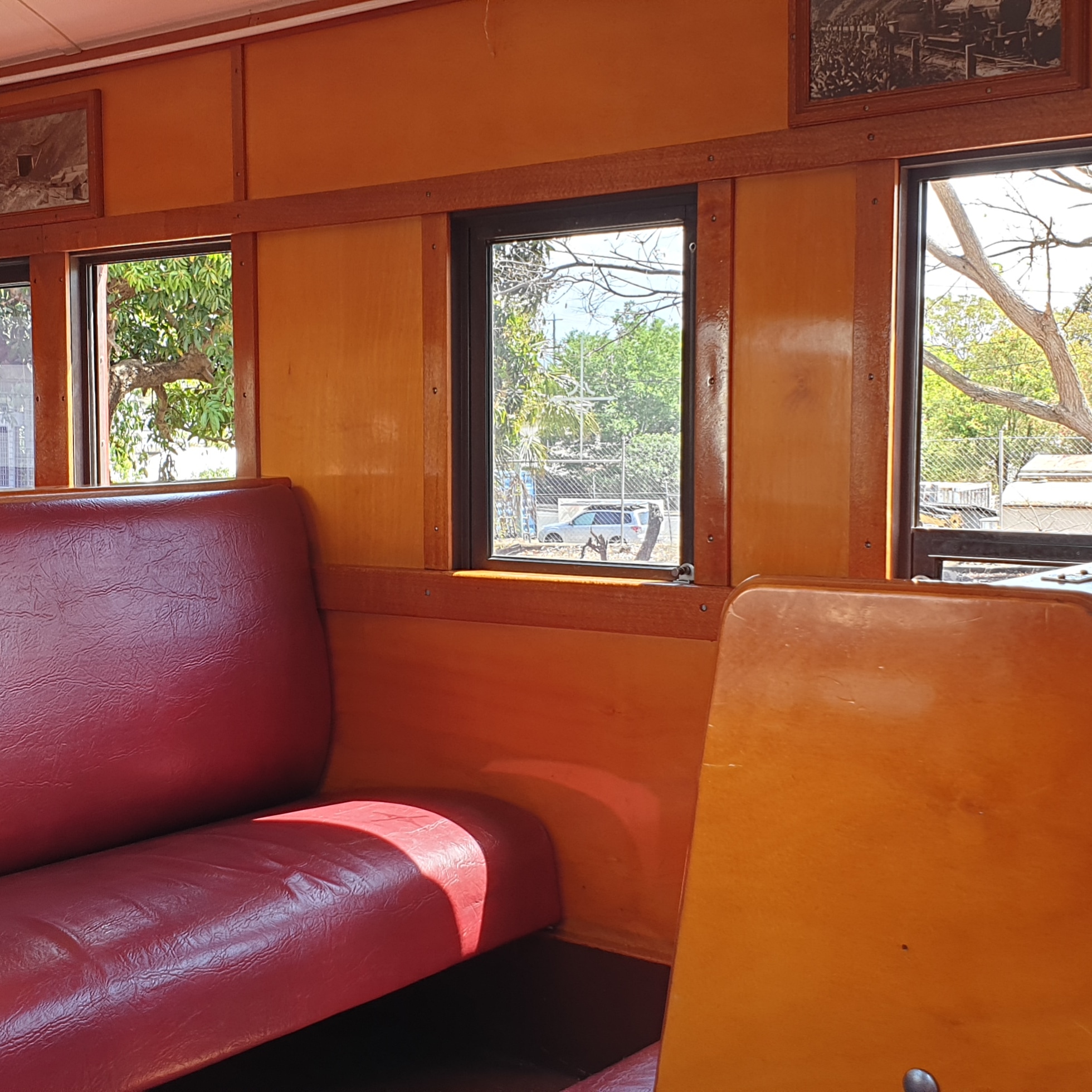
It was a relic from the past, put back together by a dedicated group of volunteers who had not wanted the last vestiges of the past to disappear.

Train enthusiasts, the called themselves.

They’d put together a steam locomotive, five carriages, a restaurant car, and the conductor’s car. The original train might have been twice to three times as long, but these days, the tourist market rarely filled the train.

I was one of a group who made it their mission to visit and rate every vintage train, not only in this country, but all over the world. It was a sad state of affairs when I first began, with locomotives and carriages dropping out of the system due to lack of funds, but more disheartening, the lack of government assistance in keeping it’s heritage alive.

It seemed money was short, and there were better things to spend it on, like two brand new 737-800 jets just to ferry the prime minister and government officials around. Just think of what that quarter of a billion dollars could have bought in heritage.

But it is what it is.

What I had before me was one of the most recent restorations to check out, and on first glance, it was remarkable just how lifelike and true to age it was.

Of course, I was of an age that could remember the old railway carriages, what were called red rattlers because of the ill fitting windows that went up and down, allow fresh air, or in days gone by, smoke from the locomotive hauling the train. I had not travelled during the last glorious years of steam, but the carriages had lived on briefly before the advent of the sterile aluminum tin cans with uncomfortably hard seats.

These carriages were built for comfort, and my first experience had been a five hour trip from Melbourne to Wangaratta, in Victoria, on my way to Mt Buffalo Chalet, a guesthouse owned by the Railways.

That too had been a remarkable old chalet style guest house with a room and all the dining included. I always left after the week having put on weight. Breakfast, morning tea, lunch, afternoon tea, and dinner, every day, and high tea on Sunday.

But this carriage, the polished wood that had shellac rather than varnish, highlighting the timber’s grain, the leather seats with generous padding, the curved ceilings with hanging lights, windows the could be opened and closed, allowing fresh air to circulate.

There was also a carriage with the passageway, and five or six separate compartments, each sitting six passengers. I remembered these well, having quite often ridden in one to work for some years when the country trains still ran.

It was always remarkable how a sight or a scent could trigger such memories.

For this carriage on this train, it used to ply the Gympie to Brooloo branch line from about 1915 onwards.

That was the history. It only went as far as Amamoor these days, it was still long enough to capture the sensation of riding the rails back in what is always referred to as the good old days, even if they were not.

Now for the ride….

© Charles Heath 2021

An excerpt from “Amnesia”, a work in progress

I remembered a bang.
I remembered the car slewing sideways.
I remember another bang, and then it was lights out.
When I opened my eyes again, I saw the sky.
Or I could be under water.
Everything was blurred.
I tried to focus but I couldn’t. My eyes were full of water.
What happened?
Why was I lying down?
Where was I?
I cast my mind back, trying to remember.
It was a blank.
What, when, who, why and where, questions I should easily be able to answer. Questions any normal person could answer.
I tried to move. Bad, bad mistake.
I did not realise the scream I heard was my own. Just before my body shut down.

“My God! What happened?”
I could hear, not see. I was moving, lying down, looking up.
I was blind. Everything was black.
“Car accident, hit a tree, sent the passenger flying through the windscreen. Pity to poor bastard didn’t get the message that seat belts save lives.”
Was I that poor bastard?
“Report?” A new voice, male, authoritative.
“Multiple lacerations, broken collar bone, broken arm in three places, both legs broken below the knees, one badly. We are not sure of internal injuries, but ruptured spleen, cracked ribs and pierced right lung are fairly evident, x-rays will confirm that and anything else.”
“What isn’t broken?”
“His neck.”
“Then I would have to say we are looking at the luckiest man on the planet.”
I heard shuffling of pages.
“OR1 ready?”
“Yes. On standby since we were first advised.”
“Good. Let’s see if we can weave some magic.”

Magic.
It was the first word that popped into my head when I surfaced from the bottom of the lake. That first breath, after holding it for so long, was sublime, and, in reality, agonising.

Magic, because it seemed like I’d spent a long time under water.
Or somewhere.
I tried to speak, but couldn’t. The words were just in my head.
Was it night or was it day?
Was it hot, or was it cold?
Where was I?
Around me it felt cool.
It was very quiet. No noise except for the hissing of air through an air-conditioning vent. Or perhaps that was the sound of pure silence. And with it the revelation that silence was not silent. It was noisy.
I didn’t try to move.
Instinctively, somehow I knew not to.
A previous bad experience?
I heard what sounded like a door opening, and very quiet footsteps slowly come into the room. They stopped. I could hear breathing, slightly laboured, a sound I’d heard before.
My grandfather.
He had smoked all his life, until he was diagnosed with lung cancer. But for years before that he had emphysema. The person in the room was on their way, down the same path. I could smell the smoke.
I wanted to tell whoever it was the hazards of smoking.
I couldn’t.
I heard a metallic clanging sound from the end of the bed. A moment later the clicking of a pen, then writing.
“You are in a hospital.” A female voice suddenly said. “You’ve been in a very bad accident. You cannot talk, or move, all you can do, for the moment, is listen to me. I am a nurse. You have been here for 45 days, and just come out of a medically induced coma. There is nothing to be afraid of.”
She had a very soothing voice.
I felt her fingers stroke the back of my hand.
“Everything is fine.”
Define fine, I thought. I wanted to ask her what ‘fine’ meant.
“Just count backwards from 10.”
Why?
I didn’t reach seven.

Over the next ten days, that voice became my lifeline to sanity. Every morning I longed to hear it, if only for the few moments she was in the room, those few waking moments when I believed she, and someone else who never spoke, were doing tests. I knew it had to be someone else because I could smell the essence of lavender. My grandmother had worn a similar scent.
It rose above the disinfectant.
I also believed she was another doctor, not the one who had been there the day I arrived. Not the one who had used some ‘magic’ and kept me alive.
It was then, in those moments before she put me under again, that I thought, what if I was paralysed? It would explain a lot. A chill went through me.

The next morning she was back.
“My name is Winifred. We don’t know what your name is, not yet. In a few days, you will be better, and you will be able to ask us questions. You were in an accident, and you were very badly injured, but I can assure you there will be no lasting damage.”
More tests, and then, when I expected the lights to go out, they didn’t. Not for a few minutes more. Perhaps this was how I would be integrated back into the world. A little bit at a time.
The next morning, she came later than usual, and I’d been awake for a few minutes. “You have bandages over your eyes and face. You had bad lacerations to your face, and glass in your eyes. We will know more when the bandages come off in a few days. Your face will take longer to heal. It was necessary to do some plastic surgery.”
Lacerations, glass in my eyes, car accident, plastic surgery. By logical deduction, I knew I was the poor bastard thrown through the windscreen. It was a fleeting memory from the day I was admitted.
How could that happen?
That was the first of many startling revelations. The second was the fact I could not remember the crash. Equally shocking, in that same moment was the fact I could not remember before the crash either, and only vague memories after.
But the most shattering of all these revelations was the one where I realised I could not remember my name.
I tried to calm down, sensing a rising panic.
I was just disoriented, I told myself. After 45 days in an induced coma, it had messed with my mind, and it was only a temporary lapse. Yes, that’s what it was, a temporary lapse. I would remember tomorrow. Or the next day.
Sleep was a blessed relief.

The next day I didn’t wake feeling nauseous. Perhaps they’d lowered the pain medication. I’d heard that morphine could have that effect. Then, how could I know that, but not who I am?
I knew now Winifred the nurse was preparing me for something very bad. She was upbeat, and soothing, giving me a new piece of information each morning. This morning, “You do not need to be afraid. Everything is going to be fine. The doctor tells me you are going to recover with very little scarring. You will need some physiotherapy to recover from your physical injuries, but that’s in the future. We need to let you mend a little bit more before then.”
So, I was not going to be able to leap out of bed, and walk out of the hospital any time soon. I don’t suppose I’d ever leapt out of bed, except as a young boy. I suspect I’d sustained a few broken bones. I guess learning to walk again was the least of my problems.
But, there was something else. I picked it up in the timbre of her voice, a hesitation, or reluctance. It sent another chill through me.
This time I was left awake for an hour before she returned.
This time sleep was restless.
There were scenes playing in my mind, nothing I recognised, and nothing lasting longer than a glimpse. Me. Others, people I didn’t know. Or perhaps I knew them and couldn’t remember them.
Until they disappeared, slowly like the glowing dot in the centre of the computer screen, before finally fading to black.

The morning the bandages were to come off she came in bright and early and woken me. I had another restless night, the images becoming clearer, but nothing recognisable.
“This morning the doctor will be removing the bandages over your eyes. Don’t expect an immediate effect. Your sight may come back quickly or it may come back slowly, but we believe it will come back.”
I wanted to believe I was not expecting anything, but I was. It was probably human nature. I did not want to be blind as well as paralysed. I had to have at least one reason to live.
I dozed again until I felt a gentle hand on my shoulder. I could smell the lavender, the other doctor was back. And I knew the hand on my shoulder was Winifred’s. She told me not to be frightened.
I was amazed to realise in that moment, I wasn’t.
I heard the scissors cutting the bandages.
I felt the bandage being removed, and the pressure coming off my eyes. I could feel the pads covering both eyes.
Then a moment where nothing happened.
Then the pads being gently lift and removed.
Nothing.
I blinked my eyes, once, twice. Nothing.
“Just hold on a moment,” Winifred said. A few seconds later I could feel a cool towel wiping my face, and then gently wiping my eyes. Perhaps there was ointment, or something else in them.
Then a flash. Well, not a flash, but like when a light is turned on and off. A moment later, it was brighter, not the inky blackness of before, but a shade of grey.
She wiped my eyes again.
I blinked a few more times, and then the light returned, and it was like looking through water, at distorted and blurry objects in the distance.
I blinked again, and she wiped my eyes again.
Blurry objects took shape. A face looking down on me, an elderly lady with a kindly face, surely Winifred, who was smiling. And on the opposite side of the bed, the doctor, a Chinese woman of indescribable beauty.
I nodded.
“You can see?”
I nodded again.
“Clearly?”
I nodded.
“Very good. We will just draw the curtains now. We don’t want to overdo it. Tomorrow we will be taking off the bandages on your face. Then, it will be the next milestone. Talking.”
I couldn’t wait.

When morning came, I found myself afraid. Winifred had mentioned scarring, there were bandages on my face. I knew, but wasn’t quite sure how I knew, I wasn’t the handsomest of men before the accident, so this might be an improvement.
I was not sure why I didn’t think it would be the case.
They came at mid morning, the nurse, Winifred, and the doctor, the exquisite Chinese. Perhaps she was the distraction, taking my mind of the reality of what I was about to see.
Another doctor came into the room, before the bandages were removed, and he was introduced as the plastic surgeon that had ‘repaired’ the ravages of the accident. It had been no easy job, but, with a degree of egotism, he did say he was one of the best in the world.
I found it hard to believe, if he was, that he would be at a small country hospital.
“Now just remember, what you might see now is not how you will look in a few months time.”
Warning enough.
The Chinese doctor started removing the bandages. She did it slowly, and made sure it did not hurt. My skin was very tender, and I suspect still bruised, either from the accident or the surgery, I didn’t know.
Then it was done.
The plastic surgeon gave his work a thorough examination and seemed pleased with his work. “Coming along nicely,” he said to the other doctor. He issued some instructions on how to manage the skin, nodded to me, and I thanked him before he left.
I noticed Winifred had a mirror in her hand, and was somewhat reticent in using it. “As I said,” she said noticing me looking at the mirror, “what you see now will not be the final result. The doctor said it was going to heal with very little scarring. You have been very fortunate he was available. Are you ready?”
I nodded.
She showed me.
I tried not to be reviled at the red and purple mess that used to be my face. At a guess I would have to say he had to put it all back together again, but, not knowing what I looked like before, I had no benchmark. All I had was a snippet of memory that told me I was not the tall, dark, and handsome type.
And I still could not talk. There was a reason, he had worked on that area too. Just breathing hurt. I think I would save up anything I had to say for another day. I could not even smile. Or frown. Or grimace.
“We’ll leave you for a while. Everyone needs a little time to get used to the change. I suspect you are not sure if there has been an improvement on last year’s model. Well, time will tell.”
A new face?
I could not remember the old one.
My memory still hadn’t returned.

“Many have come, few have stayed” – a short story


It was true to say that very few people knew our department existed. In fact, I was not sure quite who it was I worked for, but when I’d been first tasked with the assignment, a transfer precipitated by a transgression that might have ended my career, I was certain I had been sent to purgatory.

At least, that’s what the sign on the door said.

The office, if it could be called that, was in the basement, around so many twists and turns in the passages that it was easy to believe you had entered another dimension. It wasn’t located in the building you walked through the front door of, but somewhere else nearby. Through the walls, you could hear the sounds of cars, but whether it was a nearby road above the ceiling, or they were parking, it was not easy to say.

On another side, the sounds of trains passing through tunnels were barely discernible, and sometimes only noticeable by a slight vibration of the coffee mug on the desktop, of which there were four, the maximum number of occupants in the small area, but I have never seen who two of the other four were.

Such was the nature of our job. We operated in secret, hidden from the world, and the others. I was never quite sure why.

The interview, when I thought was going to be fired, was given by an old man in a pinstripe suit, long past the age of retirement. In fact, had I not known better, I would have said he was dead, and all that was missing was the cobwebs. He had no sense of humor and got straight to the point.

“You are being transferred to PIB effective immediately.”

He didn’t say what PIB stood for, and the no-nonsense tone told me this was not the time to ask.

“Many have come, but few have stayed. It’s not a job to be taken lightly, and a word of advice, the work you are about to undertake is not to be discussed with anyone but the person you have been assigned to work with.”

He then handed me an envelope, sealed, and that was the end of the interview.

I did not get to speak a word. I had this speech memorized, ready to explain why I had failed so badly, and what I was prepared to do to make up for it, but I was not given the opportunity. Perhaps I should just be grateful I was given another chance.

I waited until I was out of the building, and a block away in a small cafe, and the cheerful waitress had brought my coffee and cake. It was, in a small way, a celebration I still had a job, working for the organization I had set my sights on way back when I was in school.

Making sure no one was sitting too close; I opened the envelope and took out the neatly folded sheet of paper.

It was blank.

Was this some sort of joke?

There was a loud noise outside in the street, a car backfiring, and it caused a few anxious moments, particularly for me in case it was trouble, but it wasn’t. When normality returned I went back to the sheet of paper, picking it up off the top of the coffee cup where it had fallen, and something caught my eye.

Writing. Specifically, numbers, but what I thought I’d seen had disappeared, or hadn’t been there at all.

A shake of the head, perplexed, to say the least, I took a sip of the coffee. As the cup passed under the sheet, a pattern was discernible, displaying then disappearing. Bringing the cup back under the sheet, numbers suddenly appeared. It was a telephone number. It was also very cloak and daggers.

Was it a test? Because at that moment when I saw the blank sheet of paper, the meaning was very clear. It was a puzzle, and if I didn’t work it out, then I didn’t get the job. I’d simply been told to turn up at an anonymous building to see a man whom I doubted would answer to the name I’d been given to ask for again after I left.

I entered the number then pressed ‘call’.

Seven rings before a woman’s voice answered, “Yes?”

No names, no identification.

“Mr McCall gave me an envelope with this number in it.”

“You worked it out?” She sounded surprised.

“By accident, yes.”

“Well, four out of five candidates don’t. Consider this to be your lucky morning, the day is not over yet. Where are you?”

I told her.

“Then you’re not far from Central Park. Go to the souvenir store and wait.”

“How will I know you?”

“You won’t, I’ll recognize you.”

Then the phone went dead, and I was left looking at it as if I had the ability to see, via the phone, who that person was. I shrugged. How many others had failed even the most basic test, to figure out what was on the sheet of paper, and, was it an indication of the work I would be doing?

I spent the better part of an hour watching the squirrels at play. They scuttled around on the ground chasing each other or their imaginary friends or leaping from branch to branch in the shrubs and trees. They didn’t seem to have a care in the world, and I wondered what that would be like.

Unfortunately, I had to pay the rent, bills, and eat, all of which required having a paying job. I had been looking at having to return home a dismal failure and fulfil the destiny my father had predicted for me.

“David Jackson, I presume?”

I looked sideways to see a woman about my own age, dressed so that she would look anonymous in a crowd. It was anyone’s guess how long she had been there, but that, I guess was the point. She had been observing me, and no doubt assessing my suitability.

Could I blend in? Perhaps not if I was that easily identifiable.

“I am.”

“What if anything has been explained to you about the job?”

“Nothing. I was asked to meet a nameless man in an anonymous office and was handed an envelope which led to my call to you.”

After I said it out loud it sounded crazy.

“If you don’t mind me asking but how did you work out how to read the letter?”

Moment of truth, was there a right or wrong answer? Most if not all the people who received it would not work it out.

“Quite by accident.”

She smiled. “The truth is a rare commodity in our business. But then, you’re one of a very select group of people who made it to this level.”

“Just out of curiosity, what happens to those who done work out how to read the number?”

“They don’t get to stand where you are. Welcome aboard.”

© Charles Heath 2021

The story behind the story – Echoes from the Past

The novel ‘Echoes from the past’ started out as a short story I wrote about 30 years ago, titled ‘The birthday’.

My idea was to take a normal person out of their comfort zone and led on a short but very frightening journey to a place where a surprise birthday party had been arranged.

Thus the very large man with a scar and a red tie was created.

So was the friend with the limousine who worked as a pilot.

So were the two women, Wendy and Angelina, who were Flight Attendants that the pilot friend asked to join the conspiracy.

I was going to rework the short story, then about ten pages long, into something a little more.

And like all re-writes, especially those I have anything to do with, it turned into a novel.

There was motivation.  I had told some colleagues at the place where I worked at the time that I liked writing, and they wanted a sample.  I was going to give them the re-worked short story.  Instead, I gave them ‘Echoes from the past’

Originally it was not set anywhere in particular.

But when considering a location, I had, at the time, recently been to New York in December, and visited Brooklyn and Queens, as well as a lot of New York itself.  We were there for New Years, and it was an experience I’ll never forget.

One evening we were out late, and finished up in Brooklyn Heights, near the waterfront, and there was rain and snow, it was cold and wet, and there were apartment buildings shimmering in the street light, and I thought, this is the place where my main character will live.

It had a very spooky atmosphere, the sort where ghosts would not be unexpected.  I felt more than one shiver go up and down my spine in the few minutes I was there.

I had taken notes, as I always do, of everywhere we went so I had a ready supply of locations I could use, changing the names in some cases.

Fifth Avenue near the Rockefeller center is amazing at first light, and late at night with the Seasonal decorations and lights.

The original main character was a shy and man of few friends, hence not expecting the surprise party.  I enhanced that shyness into purposely lonely because of an issue from his past that leaves him always looking over his shoulder and ready to move on at the slightest hint of trouble.  No friends, no relationships, just a very low profile.

Then I thought, what if he breaks the cardinal rule, and begins a relationship?

But it is also as much an exploration of a damaged soul, as it is the search for a normal life, without having any idea what normal was, and how the understanding of one person can sometimes make all the difference in what we may think or feel.

And, of course, I wanted a happy ending.

Except for the bad guys.

Get it here:  https://amzn.to/2CYKxu4

newechocover5rs

In a word: Keep

Yes, this is an easy one.

I want to keep the car.  Especially if it’s a Lamborghini and it didn’t cost $500,000.

This form of the word simply means to hang on to something, or up the proper definition, to have or retain possession of

Paring it with other words is where it gets complicated.

For instance,

Keepings off, make sure that the ball doesn’t get into someone else’s possession.

Keep it to yourself, yes, here’s your chance to become the harbinger of secrets and not tell anyone else.  Not unless a lot of money is involved, or a Lamborghini.

You guessed it, the car is the running joke on this post.

How about, keep a low profile, been there tried that, it’s a lot harder than you think.

What about keeping your cards close to your chest, yes, this had both a literal and figurative meaning which makes it sort of unique.

That might follow the second definition, to continue, or cause to continue a particular state.

Another way of using keep is by delaying or stopping someone from doing something or getting somewhere; ie, I was kept waiting at the doctor’s surgery because he was late.

There are any number of examples of using the word keep in tandem with other words

One that specifically doesn’t relate to all the former examples, is simply the word keep.

What is it?

Usually the strongest part of the castle, and the last to fall in an attack.

At least, that was the theory.

In a word: Stern

It’s what I’d always expected of my teachers, having to stand up the front of the classroom and look like they were in control.

These days, not so much, but back in my day, teachers, and particularly the men, were to be feared, and stern expressions were the features of an effective teacher.

So, in this context, it means a hardness or severity of manner.

Whilst in a sense that was frightening to us kids, another form of the word also can be used to express a forbidding or gloomy appearance.

Grandfathers also have that stern look, but it’s more forbidding, more authoritarian, more severe, more austere, well, you get the picture.  A six-year-old would be trembling in his or her boots.

There again, in facing up to either possibility above, you could stand firm with a stern resolve not to buckle under the pressure.

Of course, not a good idea if you’re facing a tank (with a stern-looking tank master)

Then…

If you’re standing at the end of the boat, not the front, but the rear, you would be standing at the stern of the boat, or ship.

Oddly, when issuing instructions to go in reverse, not something you would say if you were on the bridge, you would instead say, or possibly yell, full speed astern, because you’re about to hit an iceberg.

Or some idiot in a jet ski who likes to think he or she can beat the bullet (or 65,000 tonnes of a ship that has very little mobility).