In a word: Maybe

This word, where I live, had taken on a new meaning.  We have telephone scammers who ask your name when you answer the phone, and when you say yes, they hang up.

It doesn’t take much imagination how they can use that recording.

So, I now answer the phone with maybe, which confuses the real callers who want to know if it is you.

Of course, maybe is one of those words that have so many meaning, but the best one is to use it while you have time to think of a proper answer.

For example, did you get the potatoes?  You haven’t been out, it slipped your mind, or you just plain forgot, but run with a ‘maybe’ so you can judge the reaction.

Angry face, you know no matter what, you’re in trouble.

Genial face, you know that it didn’t really matter and all is forgiven.

Then there’s the person who doesn’t know you and comes up to you in a crowded room.  Are you [put name here]?

Maybe.  We want to know if we’re in trouble, or if it for something good.

Using ‘maybe’ in writing probably isn’t the best word to us, but I like defying the experts.  You can always find a maybe or two in any of my books.

Searching for locations: At large in Paris, France

We have been to Paris a number of times over the years.

The last time we visited Paris we brought the two eldest grandchildren.   We took the Eurostar train from St Pancras station direct to Disneyland, then took the free bus from the station to the hotel.  The train station was directly outside Disneyland.

We stayed at the Dream Castle Hotel, rather than Disneyland itself as it was a cheaper option and we had a family room that was quite large and breakfast was included every morning.  Then it was a matter of getting the free bus to Disneyland.

We spent three days, time which seem to pass far too quickly, and we didn’t get to see everything.  They did, however, find the time to buy two princess dresses, and then spent the rest of the time playing dress-ups whenever they could.

In Paris, we stayed at the Crown Plaza at Republique Square.

We took the children to the Eiffel Tower where the fries, and the carousel at the bottom of the tower, seemed to be more memorable than the tower itself.  The day we visited, the third level was closed.  The day was cold and windy so that probably accounted for the less than memorable visit.  To give you some idea of conditions, it was the shortest queue to get in I’ve ever seen.

We traveled on the Metro where it was pointed out to me that the trains actually ran on rubber tires, something I had not noticed before.  It was a first for both children to travel on a double-decker train.

The same day, we went to the Louvre.

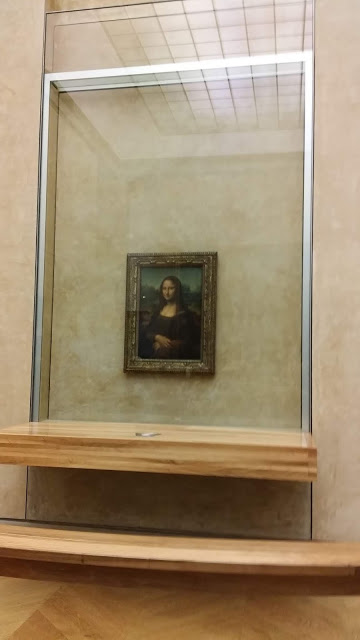
Here, it was cold, wet and windy while we waited,  Once inside we took the girls to the Mona Lisa, and after a walk up and down a considerable numkber of stairs, one said, “and we walked all this way to see this small painting”.

It quickly became obvious their idea of paintings were the much larger ones hanging in other galleries.

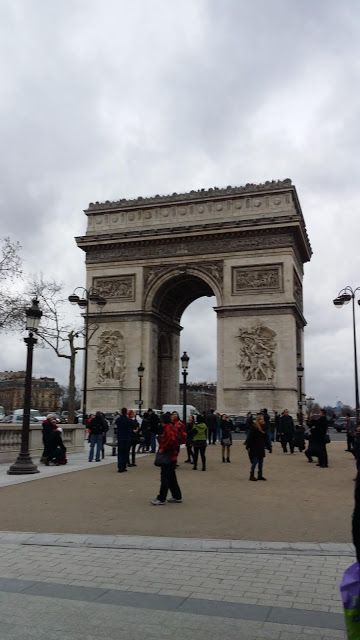
We also took them to the Arc de Triomphe.

We passed, and for some reason had to go into, the Disney shop, which I’m still wondering why after spending a small fortune at Disneyland itself.

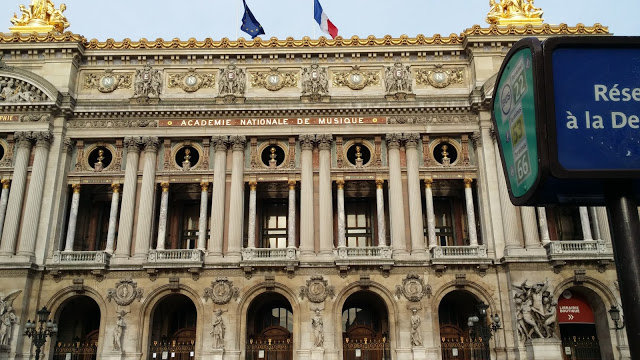
Next on the tour list was the Opera House.

 where one of the children thought she saw the ghost and refused to travel in one of the elevators.  At least it was quite amazing inside with the marble, staircases, and paintings on the roof.

Sadly, I don’t think they were all that interested in architecture, but at the Opera House, they did actually get to see some ballet stars from the Russian Bolshoi ballet company practicing.  As we were leaving the next day we could not go and see a performance.

Last but not least was Notre Dame with its gargoyles and imp[osing architecture.

All in all, traveling with children and experiencing Paris through their eyes made it a more memorable experience.

The first we visited Paris was at the end of a whirlwind bus tour, seven countries in seven days or something like that.  It was a relief to get to Paris and stay two nights if only to catch our breath.

I remember three events from that tour, the visit to the Eiffel Tower, the tour of the night lights, not that we were able to take much in from the inside of the bus, and the farewell dinner in one of the tour guides specially selected restaurants.  The food and atmosphere were incredible.  It was also notable for introducing us to a crepe restaurant in Montmartre, another of the tour guide’s favorite places.

On that trip to Paris, we also spent an afternoon exploring the Palace of Versailles.

The next time we visited Paris we flew in from London.  OK, it was a short flight, but it took all day.  From the hotel to the airport, the wait at the airport, departure, flying through time zones, arrival at Charles De Gaulle airport, now there’s an experience, and waiting for a transfer that never arrived, but that’s another story.

I can’t remember where we stayed the first time, it was somewhere out in the suburbs, but the second time we stayed at the Hilton near both the Eiffel Tower and the Australian Embassy, notable only because the concierge was dating an Australian girl working in the Embassy.  That was our ticket for special treatment, which at times you need to get around in Paris.

It was the year before 2000 and the Eiffel Tower was covered in lights, and every hour or so it looked like a bubbling bottle of champagne.  It was the first time we went to Level 3 of the Tower, and it was well worth it.  The previous tour only included Level 2.  This time we were acquainted with the fries available on the second level, and down below under the tower.

This time we acquainted ourselves with the Metro, the underground railway system, to navigate our way around to the various tourist spots, such as Notre Dame de Paris, The Louvre, Sacre-Coeur Basilica, and Les Invalides, and, of course, the trip to the crepe restaurant.

We also went to the Louvre for the express purpose of seeing the Mona Lisa, and I came away slightly disappointed.  I had thought it to be a much larger painting.  We then went to see the statue of Venus de Milo and spent some time trying to get a photo of it without stray visitors walking in front of us.  Aside from that, we spent the rest of the day looking at the vast number of paintings, and Egyptian artifacts in the Museum.

We also visited the Opera House which was architecturally magnificent.

The third time we visited Paris we took our daughter, who was on her first international holiday.  This time we stayed in a quaint Parisian hotel called Hotel Claude Bernard Saint Germain, (43 Rue Des Ecoles, Paris, 75005, France),  recommended to us by a relation who’d stayed there the year before.  It was small, and the elevator could only fit two people or one person and a suitcase.  Our rooms were on the 4th floor, so climbing the stairs with luggage was out of the question.

It included breakfast and wifi, and it was quite reasonable for the four days we stayed there.

It was close to everything you could want, down the hill to the railway station, and a square where on some days there was a market, and for those days when we were hungry after a day’s exploring, a baguette shop where rolls and salad were very inexpensive and very delicious.

To our daughter we appeared to be experienced travelers, going on the Metro, visiting the Louvre, going, yes once again, to the crepe restaurant and the Basilica at Montmartre, Notre Dame, and this time by boat to the Eiffel Tower.  We were going to do a boat rode on the Seine the last time but ran out of time.

We have some magnificent photos of the Tower from the boat.

Lunch on one of the days was at a restaurant not far from the Arc de Triomphe, where our daughter had a bucket of mussels.  I was not as daring and had a hamburger and fries.  Then we went to the center of the Arch and watched the traffic.

Our first time in Paris the bus driver got into the roundabout just to show us the dangers of driving in an unpredictable situation where drivers seem to take huge risks to get out at their exit.  Needless to say, we survived that experience, though we did make a number of circuits.

The cinema of my dreams – I always wanted to write a war story – Episode 18

For a story that was conceived during those long boring hours flying in a steel cocoon, striving to keep away the thoughts that the plane and everyone in it could just simply disappear as planes have in the past, it has come a long way.

Whilst I have always had a fascination in what happened during the second world war, not the battles or fighting, but in the more obscure events that took place, I decided to pen my own little sidebar to what was a long and bitter war.

And, so, it continues…


It was clear, however, that Marina was familiar with the man and very annoyed with the woman.

When I took a longer look at the man, I realised he was not a man at all, but a boy in his teens, blessed by the fact he looked older than he was.  My guess, about 16.  I was surprised he had not been conscripted into the war, there seemed very few young men in the area.

Marina went straight over to him and snatched the elderly rifle he was holding away from him, the glared at Chiara

“Are you stark staring mad.  Enrico is not supposed to be out in the open, hell, it’s been a battle to keep him hidden away.  What will his parents think when they discover he’s here?”

“Pleased,” Enrico said.  “My father said it’s about time I did something to rid of the Germans, of the English too for that matter.  None of you has any right to be here.”

Fervently spoken, and to the wrong person, it would earn him a bullet to the back of the head.  But I agreed with him.

“All well and good,” Marina said to him, “but now there’s no easy way of doing that.  We must be careful, and you must stay put with your parents.  What we’re doing isn’t a game, you are neither trained or equipped to take anyone on, except perhaps rabbits.”

Back at Chiara.  “Take him home, and never bring him back here.  You don’t want to be the one who has to tell his mother if he gets killed.  Now, both of you go now, before I shoot both of you myself.”

“This is not the end of the matter,” Enrico said.

“And when you’ve taken him back, come back here.  We need to talk.”

Chiara said nothing, just nodded sullenly.  I think she believed the less said the better and did as she was asked, nodding her head in his direction, and adding a few choice phrases in Italian to him that I couldn’t understand.  It also just occurred to me that she had not asked Chiara the questions about the two men from the castle.  I guess that would have to wait until the safety of Enrico was settled, and she returned.

“Make sure they’re safe,” she said to Carlo, and he disappeared, leaving us alone.

“I thought all of the young men had been taken away by the Italian Army.”

“Not all.  We managed to hide a few away, but as you can see, despite our best efforts, they don’t seem to appreciate the trouble they could get into.  We used to have about a hundred young men from 14 through to 20 at the start of the war.  Two have found their way back, casualties of war, the rest, we may never see them again.  Enrico just doesn’t see the trouble he could get into.”

“It’s called youthful enthusiasm.  In the first world war, joining up, or going to war, was a lark.  It was a little less so this time because most of the parents knew from firsthand experience what it was like and tried to shield them.  And if you didn’t join up, questions were asked, and quite often jail, except for some who landed cushy jobs away from the fighting.”

“You were not so lucky?”

“No, I was one of those mad buggers who thought joining up to fight would be an adventure.  That quickly faded when the enemy started shooting at me.”

“And now you’re here, and a spy to boot.  That’s what they’ll hang on you if you get caught.”

“Then I shall try very hard not to get caught.  Again.”


Chiara came back about an hour later.  It seemed to me it was a lot safer to move around at night with the blackout, and I doubted Thompson would spare any men from the castle to check up on the local farmers.

And while I was at the castle, I didn’t hear anything raised about the local resistance, which I thought odd at the time, but now I knew why.  Most of them had joined him.  Better that than be hunted down and killed.

Chiara still looked sullen.  A closer look showed she was not very old herself, barely out of her twenties, and surprising that the Italian army, or Thomson for that matter, had not rounded her up for ‘duties’ at the castle.

There were a number of the local women working up at the castle, but they were mostly staff, or more likely forced labour, though I had thought we, when I believed it to be a British outpost, would be fairer to the locals than either the Germans or their own Italian military.  It’s odd how you tend to look at certain situations because of who you are, and the fact you would not do similar things at home.  The Germans, however, we would always treat differently, because they were the enemy, and because we expected the worst from them.  At that moment, though, wouldn’t the Germans think the same of us if the positions were reversed?

Best not to think about that.  My view of the war and the people in it was clouded enough.

Chiara, however, clearly thought the worst of me, and of those in the castle, and certainly didn’t think I was as neutral as I appeared.  A gun always in hand, I was sure she would shoot me again with the least provocation.

We sat, both Chiara and Marina with their weapons on the table in front of them.  I wasn’t trusted enough to be given a weapon.

Marina’s first question was directed at Chiara, “I’m told there were two men from the castle following Sam, and that he told you about them.”

“He did.  We did not see them.  We didn’t take the path, because, as you know, it’s not safe.”

It was a reasonable answer.  If the men at the castle were unfamiliar with the area, as I’m sure they would be, because they hadn’t been there for very long, and I doubt Thompson would want to advertise the nationality of those at the castle unless he had to, they would stick to the clearly-marked roads and paths.

I had on my way to the castle, from a different direction.  It didn’t explain why I had not been met by the leader of the resistance as arranged, but that was now explained, both by the former leader trying to kill me in a roadside explosion, and then what I learned at the castle in the last few days.

“Even so, there’s not that much distance between the two, and it is possible to shadow them.”

“I keep well away from them.  Perhaps Leonardo saw them.  He doesn’t have to worry about what they might do because they use him to supply food.  Maybe he knows more.”

“Perhaps I shall ask him next time I see him.  We need to know who from the castle is about and when so that we don’t get caught.”

“I’ll remember next time.  Is that all?”

“Yes.”

Chiara picked up her gun, gave me an extra-long sullen stare.  “I don’t trust this one, Marina.  You 

need to be careful.”

“I will.”

We waited a few minutes until after she had departed, and then Marina said, “We should be going too.  This place is a little eerie at night.  There are far too many ghosts for my liking.”

I shuddered, then followed her out.


© Charles Heath 2019

While it seems like nothing is getting done…

This month is just beginning, and once again, I don’t feel like I’m going to make any more progress than I did the last.

Winter has all but disappeared, and Spring is around the corner. Not as cold as Lake Louise in December, but it feels like it.

What were my expectations last month? 

I had set a list of projects for the month, more episodes for the three continuing stories, and a start to the next episodic story, ‘motive, means, and opportunity’, though for this story I have brought together all the writing I’ve been doing in past weeks. But like most of these fringe stories, it has reached a point where more research is needed, and I have too much else to do.

Then there is the completion of ‘The things we do for love’. It’s finally finished and needs a read-through before going to the editor, but making time to just sit and read…?

The same applies to ‘Strangers we’ve become’ and it is in the same time-consuming basket. It needs a final read-through, so it’s on the to-do list.

It would be easy to blame COVID 19, but that’s not the problem.  I’ve been home and had the time, but there have been a number of distractions, and ideas for new stories that seem to divert my attention from what I should be doing.

It’s not writer’s block.  It’s not laziness.  It seems that I just don’t want to work on them, and that might be because there are problems with the narrative, and I’m just not ready to address them.

What has got my attention then?

I’m not sure how or why, but something triggered the idea of passing through a portal into another time, in the past.  I think I might have been looking for photographs to write another photo/story, and I came across a covered bridge, and that led to looking for photographs of ghost towns.  What topped it off, there was an old western in black and white, High Noon, which provoked a whole lot of memories of many westerns I’d seen in the past.

What other reason do you need to write your own story?

Then, when visiting my grandchildren, we just happened to do some star gazing, using Google Sky Map, and picking out the planets.  Somehow I managed to take a photo, and looking at it, took me back to the days of Star Trek, and the many series, which sort of gave me an idea for another story, which has been running off and on over the last month. It now has 53 episodes, and I need to write more, yep, on the to-do list.

Equally, I’m always on the lookout for photo opportunities that I can use to write short stories, and these continue apace, the latest being published this week, number 146.  These are being formed into anthologies, stories 1 to 50, and stories 51 to 100.  The first has been assembled into book form, and is awaiting the editors first reading and report.  I’m still working on the second.

Meanwhile, another 25 have been written and awaiting publishing.

Perhaps some of the time has been spent keeping up with Twitter, where over the last six months, and more recently, sales of my books on Amazon have been increasing.  Not to best-seller numbers, but people are reading my stories, and the reviews have been very good.

It has, of course, pushed me to work harder on marketing, and that had consumed some of my time, which unfortunately takes me away from writing.  It sometimes feels like a self-defeating exercise, but it is the same for all of us.

Oh, and something else that cropped up this month, my brother has been digging into our family history, and around the middle of the month, he found some interesting revelations about some family members, including a pseudo-Luddite, and then later on, when chasing down the places that we, as a family, lived, and this brought out some very interesting information about our father.

It also seems we may have had a distant relative on the ship that left after the Mayflower to Plymouth Rock, USA, at the very beginning. That will be remarkable if it is true.

I’m discovering for what I’d always assumed was an ordinary man, he had done a lot of very interesting things in his life, and not only that, I’ve been fictionalizing the story.  I have potted pieces written over various stages, and, one day, they might come together as a sort of biography.  It is astonishing just how much you don’t know about your family, until much later on, at least for some of us.  Our relatives have always been a mystery to me, and it’s fascinating as each one is brought to life with a new detail here and there.

Looking back on what I’ve just written, perhaps the passing of the month had been more productive than I first thought.  It just seems like nothing major has happened.

The cinema of my dreams – I always wanted to see the planets – Episode 52

Another discussion with the Princess

By definition, a voyage of exploration was about finding new lands and people.  Of course, it would be naive to think that all people would be peaceful but one could generally assume they would make some effort to make a gesture of goodwill, to begin with.

Either we had got off to bad start by starting out on the galactic version of the wrong side of the tracks or everyone in this galaxy was hostile.

Or perhaps I was making the wrong assumption but as number one said, why send three ships when one would suffice?

I decided another short visit to the Princess might clear up a few misconceptions before they became glaring errors in judgement.

She didn’t smile when she saw me.

“Let me guess, they sent a welcoming committee.”

She’d known.  And it looked like if I wanted the right answers I’d have to ask the right questions

“I take it your escape was too easy?”

“I’m surprised you didn’t realise that yourself.”

“I didn’t want to believe it, but that’s just the optimist in me.  Does this mean the people where we left are working with the people we’re going to, and are both conspiring against us?”

“Or perhaps it’s not the world, but just the one.  He knew my history, he’d know who was in power, and if I was to make an educated guess, he is likely a spy for them.  This galaxy has a history of wars, spies, and uneasy peace.  You have to pick your friends wisely.”

I’d participated in a war or two on land, not in space, and a few serious disputes over landing rights in space, but this was a whole new enterprise.

“We’re here to make friends with everyone, being the new kids on the block.”  When I saw her bewildered look, I added, ” an earth expression.  We try to make friends with everyone irrespective of who they are, where they come from, and what they’ve done.”

“I wish you well, but it’s doomed to failure.  You will have to pick a side.”

I shook my head.  “That’s the old way of thinking back home.  I’m not bringing that with us.  This is why we’re here now, mending other people’s bridges; sorry another earth expression.”

“I think I would like living on your planet now; are all the people like you?”

“Sadly no.  Unfortunately, we suffer from the problems you are all too familiar with, and even though there are enough sensible people in our world who are striving to be better, progress is slow.  Watching your planet slowly self-destruct because of greed and ignorance has helped.  It took a long time for everyone to realise we all had to live together whether we liked it or not, and that it was in everyone’s best interest to work together.”

“Everyone except the other ship’s captain.  He had a very different view of your world, one where some people are being marginalised simply because they didn’t want to join the collective.”

“It’s not that they didn’t want to join, it was because they didn’t want to share technology or resources without a cost.  We don’t like people who want to profit at the expense of others, that in itself if allowed to happen would create disproportionate wealth and inevitably power in a single entity.  We’ve been there, done that, and that’s why our world is dying.  I’m sure the first thing the other captain asked for was technology so they could take it back and sell it.”

“Isn’t that what you would also do?”

“No.  I was put here by a unified people who want what we find to be used for the benefit of everyone.  Even those who would not reciprocate if the roles were reversed.”

“Noble indeed, but most here would say misguided.  We have tried in the past to do just that, so I can tell you it will be a hard path.”

“Be that as it may it doesn’t solve our current situation.

“Then perhaps I can give you a solution, but not quite the one you’re looking for.  Maybe I could become the first alien crew member on your ship. As a member of the crew, and not leaving the ship, particularly in these parts of the galaxy, I would not be a threat to one side or used as an example by the other.  I’m sure you could find something for me to do.  It would be, using one of your analogies, a win-win situation?

© Charles Heath 2021-2022

‘Sunday in New York’ – A beta reader’s view

I’m not a fan of romance novels but …

There was something about this one that resonated with me.

This is a novel about a world generally ruled by perception, and how people perceive what they see, what they are told, and what they want to believe.

I’ve been guilty of it myself as I’m sure we all gave one time or another.

For the the main characters Harry and Alison there is others issues driving their relationship.

For Alison, it is a loss of self worth through losing her job and from losing her mother and, in a sense, her sister.

For Harry it is the fact he has a beautiful and desirable wife, and his belief she is the object of other men’s desires, and one in particular, his immediate superior.

Between observation, the less than honest motives of his friends, a lot of jumping to conclusions based on very little fact, and you have the basis of one very interesting story.

When it all come to a head, Alison finds herself in a desperate situation, she realises only the truth will save their marriage.

But is it all the truth?

What would we do in similar circumstances?

Rarely does a book have me so enthralled that I could not put it down until I knew the result. They might be considered two people who should have known better, but as is often the case, they had to get past what they both thought was the truth.

And the moral of this story, if it could be said there is one, nothing is ever what it seems.

Available on Amazon here: amzn.to/2H7ALs8

You learn something new every day (2)

I got a call this morning from my brother who has been delving into the places we have lived over the years, including those before we were born.

My recollection, hazy at best, is that my father’s parents lived in Camberwell, a suburb of Melbourne, and the boys, those that survived the war, lived there too. He had three brothers, I think, and a sister. From what I’ve read, his older brother was a sensible chap and the peacemaker between him and his parents.

Later one of his brothers went to Sydney, his sister lived among orchards our Ringwood way, and another, much later, moved to Queensland. We very rarely, if ever, saw them, and the last time I did with most in one place, was after my Grandmother died. I do remember Dora, the site, visiting us once, and being young at the time, she seemed a very forbidding woman.

But, this is about where they lived.

My father, presumably before and immediately after the war, at home, and my mother at her home in Pakenham. There her father ran a service station and motor mechanic shop and was well known. Their house, at the time, was built over the road, just a short walk from home to work. The place, the first time I saw it, was a mechanics dream, with old cars and car parts outside and inside garages, and a woodworking shop with every tool imaginable.

Once the place had very elegant gardens, but by the time I got to stay there, in the 1960s, it was all overgrown, and the house was in disrepair. My mother’s brother lived there with my grandmother, and he was a fearsome, huge man who said little. All I knew about him was that, a) he was the one who found his father after he had killed himself, b) he liked fishing and went to a place called Corinella, and c) he was a mechanic like his father.

So, at some point in 1948, my father must have up and left, perhaps after an argument with his parents, and moved to Keiwa House, Bogong, where the Snowy River Hydro-Electric Scheme was being built, as a projectionist, bringing films to the workers in Town Halls.

As I’ve said, my mother stayed in a boarding house for ladies during the week and went home on weekends. I have the first letter that my father wrote to her and references the fact he went calling on her, and she was not there. We’ll never know what she thought, but there’s a second letter, after she wrote back, so a friendship was struck. He told her, almost in minute detail, what he was doing, and presumably, she told him about hers.

A year later, they married.

Now it gets interesting. We both thought that their first house, after getting married was in Carrum. It wasn’t. In the pile of letters were references to the family staying in a rented flat in Camberwell.

Sometime after that, there is a contract for a war service loan in relation to a property in Carrum, which turns out to be the first house they lived in, and where my brother, born in 1950) lived, and where I lived after I was born in 1953. I have interesting if vague memories of this house, and of the people who lived behind us because we could climb through the fence into their property. We knew them during, and after living in Carrum.

Now, today, some interesting new facts came to light about the Carrum house. We always assumed we owned it, but it seems that we didn’t. A copy of the title for that property never had the name Heath on it, so did we rent it? More information is required, and we need to dig deeper. Let’s hope there are no skeletons there.

And something else came out of a discussion with the daughter of my mothers sister, that it was believed my mother’s parents bought them a house in Chelsea, but my father, apparently, refused to live in it and sold it.

OK, I never claimed that my father was the sort that might have accepted charity, so perhaps in a moment of madness, he lost the plot. The question is, what happened to the money?
Recycle bin(0)Empty

An excerpt from “Betrayal” – a work in progress

It could have been anywhere in the world, she thought, but it wasn’t.  It was in a city where if anything were to go wrong…

She sighed and came away from the window and looked around the room.  It was quite large and expensively furnished.  It was one of several she had been visiting in the last three months.

Quite elegant too, as the hotel had its origins dating back to before the revolution in 1917.  At least, currently, there would not be a team of KGB agents somewhere in the basement monitoring everything that happened in the room.

There was no such thing as the KGB anymore, though there was an FSB, but such organisations were of no interest to her.

She was here to meet with Vladimir.

She smiled to herself when she thought of him, such an interesting man whose command of English was as good as her command of Russian, though she had not told him of that ability.

All her knew of her was that she was American, worked in the Embassy as a clerk, nothing important, who life both at work and at home was boring.  Not that she had blurted that out the first tie she met, or even the second.

That first time, at a function in the Embassy, was a chance meeting, a catching of his eye as he looked around the room, looking, as he had told her later, for someone who might not be as boring as the function itself.

It was a celebration, honouring one of the Embassy officials on his service in Moscow, and the fact he was returning home after 10 years.  She had been there one, and still hadn’t met all the staff.

They had talked, Vladimir knew a great deal about England, having been stationed there for a year or two, and had politely asked questions about where she lived, her family, and of course what her role was, all questions she fended off with an air of disinterested interest.

It fascinated him, as she knew it would, a sort of mental sparring as one would do with swords, if this was a fencing match.

They had said they might or might not meet again when the party was over, but she suspected there would be another opportunity.  She knew the signs of a man who was interested in her, and Vladimir was interested.

The second time came in the form of an invitation to an art gallery, and a viewing of the works of a prominent Russian artist, an invitation she politely declined.  After all, invitations issued to Embassy staff held all sorts of connotations, or so she was told by the Security officer when she told him.

Then, it went quiet for a month.  There was a party at the American embassy and along with several other staff members, she was invited.  She had not expected to meet Vladimir, but it was a pleasant surprise when she saw him, on the other side of the room, talking to several military men.

A pleasant afternoon ensued.

And it was no surprise that they kept running into each other at the various events on the diplomatic schedule.

By the fifth meeting, they were like old friends.  She had broached the subject of being involved in a plutonic relationship with him with the head of security at the embassy.  Normally for a member of her rank it would not be allowed, but in this instance it was.

She did not work in any sensitive areas, and, as the security officer had said, she might just happen upon something that might be useful.  In that regard, she was to keep her eyes and ears open, and file a report each time she met him.

After that discussion she got the impression her superiors considered Vladimir more than just a casual visitor on the diplomatic circuit.  She also formed the impression the he might consider her an ‘asset’, a word that had been used at the meeting with security and the ambassador.

It was where the word ‘spy’ popped into her head and sent a tingle down her spine.  She was not a spy, but the thought of it, well, it would be fascinating to see what happened.

A Russian friend.  That’s what she would call him.

And over time, that relationship blossomed, until, after a visit to the ballet, late and snowing, he invited her to his apartment not far from the ballet venue.  It was like treading on thin ice, but after champagne and an introduction to caviar, she felt like a giddy schoolgirl.

Even so, she had made him promise that he remain on his best behaviour.  It could have been very easy to fall under the spell of a perfect evening, but he promised, showed her to a separate bedroom, and after a brief kiss, their first, she did not see him until the next morning.

So, it began.

It was an interesting report she filed after that encounter, one where she had expected to be reprimanded.

She wasn’t.

It wasn’t until six weeks had passed when he asked her if she would like to take a trip to the country.  It would involve staying in a hotel, that they would have separate rooms.  When she reported the invitation, no objection was raised, only a caution; keep her wits about her.

Perhaps, she had thought, they were looking forward to a more extensive report.  After all, her reports on the places, and the people, and the conversations she overheard, were no doubt entertaining reading for some.

But this visit was where the nature of the relationship changed, and it was one that she did not immediately report.  She had realised at some point before the weekend away, that she had feelings for him, and it was not that he was pushing her in that direction or manipulating her in any way.

It was just one of those moments where, after a grand dinner, a lot of champagne, and delightful company, things happen.  Standing at the door to her room, a lingering kiss, not intentional on her part, and it just happened.

And for not one moment did she believe she had been compromised, but for some reason she had not reported that subtle change in the relationship to the powers that be, and so far, no one had any inkling.

She took off her coat and placed it carefully of the back of one of the ornate chairs in the room.  She stopped for a moment to look at a framed photograph on the wall, one representing Red Square.

Then, after a minute or two, she went to the mini bar and took out the bottle of champagne that had been left there for them, a treat arranged by Vladimir for each encounter.

There were two champagne flutes set aside on the bar, next to a bowl of fruit.  She picked up the apple and thought how Eve must have felt in the garden of Eden, and the temptation.

Later perhaps, after…

She smiled at the thought and put the apple back.

A glance at her watch told her it was time for his arrival.  It was if anything, the one trait she didn’t like, and that was his punctuality.  A glance at the clock on the room wall was a minute slow.

The doorbell to the room rang, right on the appointed time.

She put the bottle down and walked over to the door.

A smile on her face, she opened the door.

It was not Vladimir.  It was her worst nightmare.

© Charles Heath 2020

A photograph from the inspirational bin – 11

I remember hearing one day, a line from a poem, ‘I wandered lonely as a cloud’.

Little did I know at the time it was the first line of a poem by William Wordsworth, and mentioned something else, daffodils, and I had a moment where a memory came back from when I was about five, gathering daffodils in a field behind the house we lived in.

But, how often is it we look at clouds and try to make them into something else we’ve seen before?

Clouds are the subject of many conversations, like he’s got his head in the clouds, not literally of course in this instance, just that he, or it could be a she, if far removed from reality.

Dark clouds are associated with ill will and infamy, e.g. he was born under a dark cloud. I heard my grandmother use that expression once, and wondered what she meant by it, because, being a child, it was a literal interpretation, that dark clouds brought heavy rain, and he go ‘very wet’.

I’ve been caught out by dark clouds too, misjudging how long before they arrive, and it always seems like next to no time before you, and the washing on the line get a thorough soaking.

These days, the cloud now means something else entirely, though based on an old analogy, that we store our computer files in the cloud, which simply means at a remote location on someone else’s computer. With file sizes the way they are, it’s not practical to store them on our own smallish computers.

And, isn’t it fun when you are flying through the clouds?

Not!

In those cases, going up or going down in a plane, it’s a very bumpy ride, and isn’t it quite strange when you are flying above the clouds, or can just see mountain tops appearing through the blanket of white.

Of course, you can have your head in the clouds and not be off with the fairies, if you are on a mountain when the clouds have come down so low you can touch them. Sometimes it’s called mist or fog, but there are such things as low clouds. I’ve seen them.

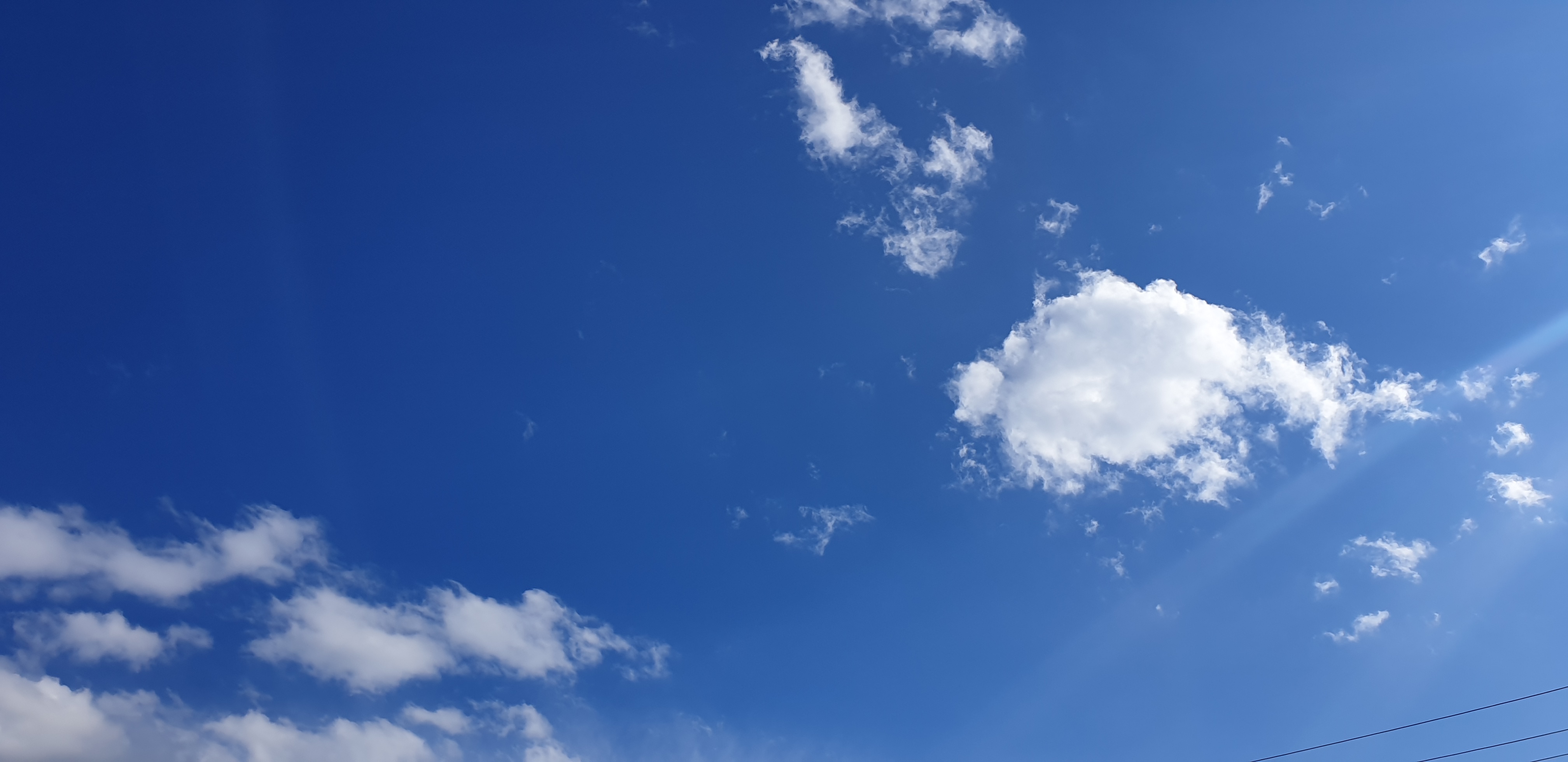
And, as for a single cloud as inspiration…

The story starts,

I was sitting down in a quiet corner of the park, the sound of children playing just audible in the background, along with a lawn mower, and the distant sounds of civilization.

I wanted to get as far away as possible, but in the concrete jungle that was not possible.

IT had bene a difficult morning, juggling customer complaints with the the call from the girl I thought was the one, but who had decided we were going in different directions and it was time.

Yes, we were literally going in different directions, she was heading off to Boston to start a new job, one that she only just decided to tell me about.

Was I disappointed? Just a little. Was it inevitable? My best friend thought so, and had said he had noticed a change in her. I had too, but was hoping it was a passing phaze.

I looked up, and there was a single cloud moving slowly across the sky, perhaps chasing after others that had passed before it.

Was it an omen. Would I become like that cloud, alone, always chasing after the impossible dream?

My phone vibrated, and I took it out. A message.

It was from the girl once of my dreams. I had not expected to hear from her again.

It was a short message, just one word.

“Help”

© Charles Heath 2021

Inspiration, maybe – Volume 1

50 photographs, 50 stories, of which there is one of the 50 below.

They all start with –

A picture paints … well, as many words as you like.  For instance:

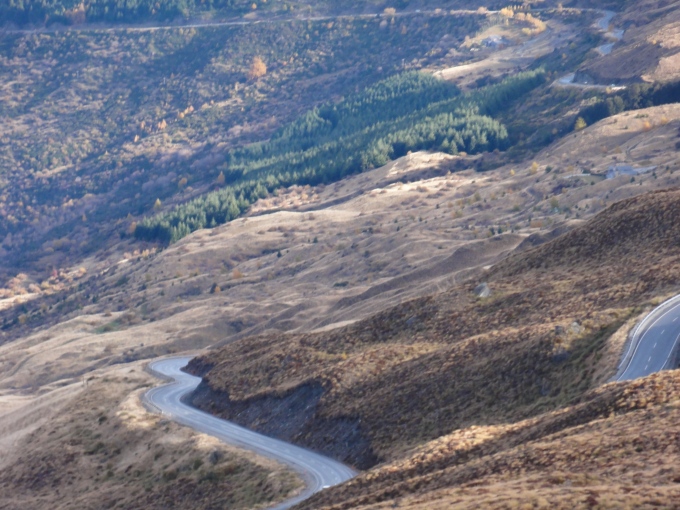
lookingdownfromcoronetpeak

And the story:

It was once said that a desperate man has everything to lose.

The man I was chasing was desperate, but I, on the other hand, was more desperate to catch him.

He’d left a trail of dead people from one end of the island to the other.

The team had put in a lot of effort to locate him, and now his capture was imminent.  We were following the car he was in, from a discrete distance, and, at the appropriate time, we would catch up, pull him over, and make the arrest.

There was nowhere for him to go.

The road led to a dead-end, and the only way off the mountain was back down the road were now on.  Which was why I was somewhat surprised when we discovered where he was.

Where was he going?

“Damn,” I heard Alan mutter.  He was driving, being careful not to get too close, but not far enough away to lose sight of him.

“What?”

“I think he’s made us.”

“How?”

“Dumb bad luck, I’m guessing.  Or he expected we’d follow him up the mountain.  He’s just sped up.”

“How far away?”

“A half-mile.  We should see him higher up when we turn the next corner.”

It took an eternity to get there, and when we did, Alan was right, only he was further on than we thought.”

“Step on it.  Let’s catch him up before he gets to the top.”

Easy to say, not so easy to do.  The road was treacherous, and in places just gravel, and there were no guard rails to stop a three thousand footfall down the mountainside.

Good thing then I had the foresight to have three agents on the hill for just such a scenario.

Ten minutes later, we were in sight of the car, still moving quickly, but we were going slightly faster.  We’d catch up just short of the summit car park.

Or so we thought.

Coming quickly around another corner we almost slammed into the car we’d been chasing.

“What the hell…” Aland muttered.

I was out of the car, and over to see if he was in it, but I knew that it was only a slender possibility.  The car was empty, and no indication where he went.

Certainly not up the road.  It was relatively straightforward for the next mile, at which we would have reached the summit.  Up the mountainside from here, or down.

I looked up.  Nothing.

Alan yelled out, “He’s not going down, not that I can see, but if he did, there’s hardly a foothold and that’s a long fall.”

Then where did he go?

Then a man looking very much like our quarry came out from behind a rock embedded just a short distance up the hill.

“Sorry,” he said quite calmly.  “Had to go if you know what I mean.”

I’d lost him.

It was as simple as that.

I had been led a merry chase up the hill, and all the time he was getting away in a different direction.

I’d fallen for the oldest trick in the book, letting my desperation blind me to the disguise that anyone else would see through in an instant.

It was a lonely sight, looking down that road, knowing that I had to go all that way down again, only this time, without having to throw caution to the wind.

“Maybe next time,” Alan said.

“We’ll get him.  It’s just a matter of time.”

© Charles Heath 2019-2021

Find this and other stories in “Inspiration, maybe”  available soon.

InspirationMaybe1v1