In a word: Great

Or is it grate?

Is it possible to mix the two up?  I don’t think so.

Great usually means: everything is great, or good, or excellent, whatever degree of goodness you want to put to it.

It could also mean something else, like:  Well, you were a great help! when in fact you want to say how useless they were.

Large or little.

Like all creatures great and small,  Why not say big or small.  Big doesn’t quite have the same effect.

Of course, you could be a great person, well, what I really mean is distinguished.  Besides, great could mean way above average, too.  Or grand, or impressive, the list goes on.

And haven’t we all, at some time had a great-aunt.  No not the good one, the ‘great’ one, denoting her seniority, not necessarily how nice she is.


As for the other grate, we can build a fire in it.

Or add an ‘un’ in front and ‘ful’ at the end, to denote what parents sometimes think of their children

Or get a block of cheese and ‘grate’ it into small shreds.

Or speak in a voice that grates on your nerves, possibly by that great-aunt.

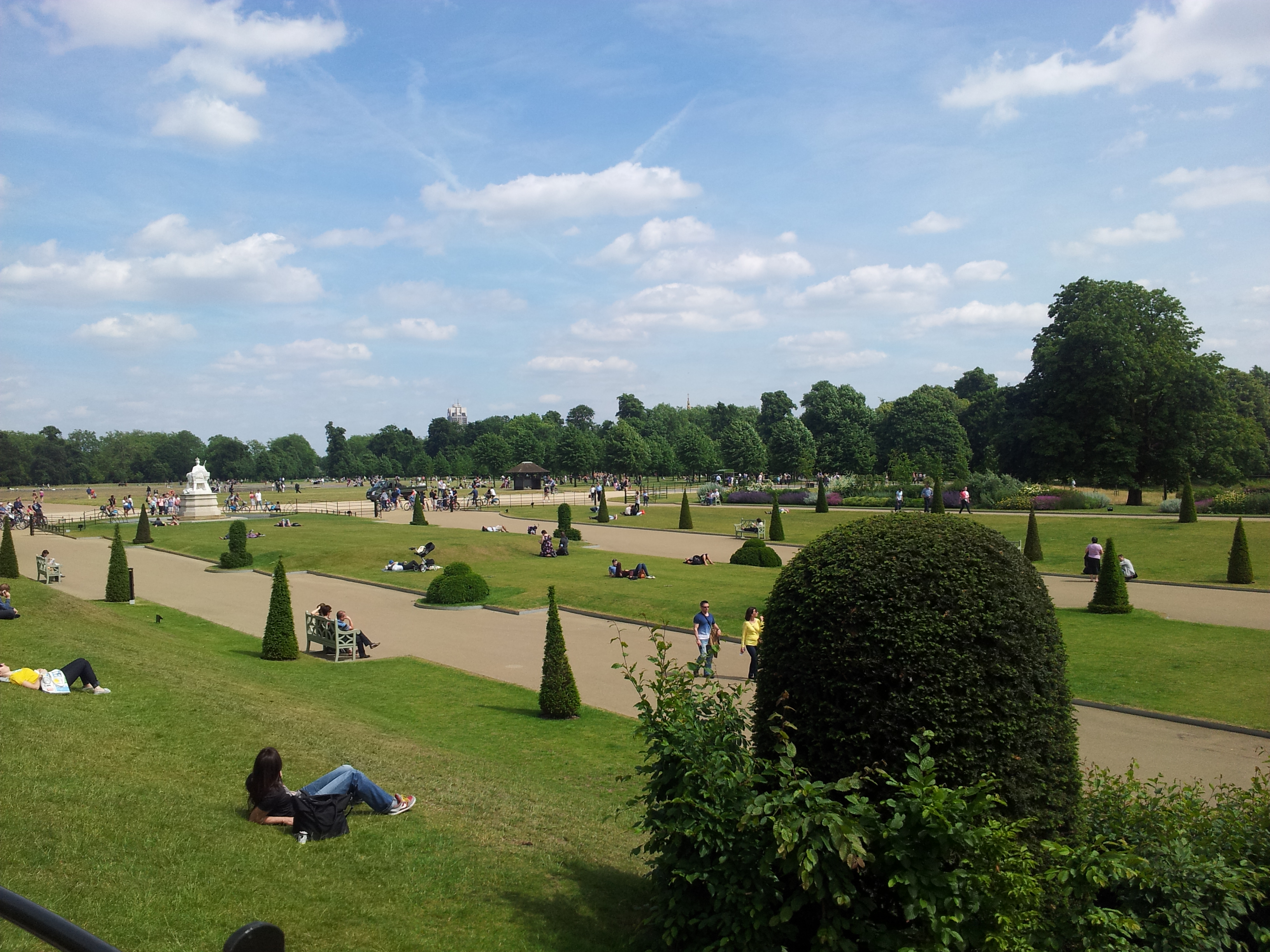
Searching for locations: Kensington Palace, gardens, and high tea at the Orangery

We have been to this palace several times, the last being with our granddaughters.

Anyone can take a photo of the front door, I think I have done one better, and taken a picture of the back door, hidden behind an ice cream vendor.

Excellent security measures in place!

2013-06-29 13.35.32

But after visiting the palace for as long as the children could retain interest, which was beginning to wane after an hour or so, we came out to go to the Orangery and see if we could treat them to afternoon tea.

2013-06-29 14.51.04

The Orangery is at the end of this walkway.  More on this experience below.

Moving on…

2013-06-29 14.51.16

It was a few minutes looking at round trees and squirrels which seemed to be in abundance.  Maybe the squirrels were being spoiled by eating leftovers from the Orangery.

But the gardens beckoned.

2013-06-29 14.51.55

Lots of green and color.  This was in winter so the sun was a bonus.

We were expecting snow, but no such luck!

2013-06-29 14.52.38

Not even the pond was frozen over.

2013-06-29 14.54.05

Such was the good weather in the middle of winter, a great many people turned out to bask in what little sun there was.

Don’t worry, the next day it started raining again, and didn’t end till we left.

But, there’s only so much sun one can handle in London, and we were getting hungry.  Whilst not expecting it would be available, or the girls would actually like cucumber sandwiches, we were hoping for them to, at the very least, have a new culinary experience.

As for us, we have a quest of sorts, depending on which country we’re in, and in London, it is a quest to find new places to have high tea as we had exhausted the favorites like Selfridges, Harrods, and Fortnum and Mason.

We had our fingers crossed.

There are a number of stops on the tour bus, you know the one, or two, with the word Highlights in its name.  It’s easier to get on one of these than try to navigate your own way around, and it took us to Kensington Palace.

The weather had improved, we were hoping it would be one of those days with a surprise or two left in it.

We saw this white building tucked away near Kensington Palace and after doing the regulation tour we were up for a cup of tea and a cake.

Instead, we found they had High Tea and that was it.

orangery3

The English seem to have a knack for pulling off some of the best sandwiches, particularly those of the cucumber variety, and definitely my absolute favorite.

Here we had the Queen’s tea.

orangery2

In fact, at each of the establishments mentioned above, we had their signature tea, served in fine bone china cups.

Ah, what it must have been like in the olden days of the British Empire!

The cinema of my dreams – I always wanted to write a war story – Episode 25

For a story that was conceived during those long boring hours flying in a steel cocoon, striving to keep away the thoughts that the plane and everyone in it could just simply disappear as planes have in the past, it has come a long way.

Whilst I have always had a fascination with what happened during the second world war, not the battles or fighting, but in the more obscure events that took place, I decided to pen my own little sidebar to what was a long and bitter war.

And, so, it continues…

Rolf Mayer had always had a dream to travel to other planets, and when he heard that the government was putting together a team of scientists with the express intention of building rockets, he gathered up his few belongings and traveled to Pennemunde to join the group being led by Werner von Braun.

At first, he had been turned away, but a chance meeting with von Braun changed his fortune.  

But, when Adolf Hitler came to power, it seemed that quest to reach the other planets became a quest to build a military weapon that would devastate an enemy city.  He had expressed his opposition to the project, but that was silenced when some Nazi party officials came from Berlin to give those scientists with reservations an ‘attitude readjustment’.

From then on all of the scientists knew when their allegiances lay and that there would be no time for traveling to the stars, even though, secretly, he drew on the experience and knowledge of the rockets they were building and testing to design his own rocket.  One day.

Then, as if only weeks had passed, the war had been declared, and the scientists had to work harder on creating a weapon which, in its first instance became known as the V1 flying bomb.  V, of course, stood for vengeance.

Later, when the enemy had bombed Pennemunde out of existence they moved to Nordhausen.  This place was different, underground where it could not be bombed, but there was something rather sinister about it.  Slave labor, prisoners from a local concentration camp were forced to work there, and the souls that he saw were not fit for work, or for anything else.

At Nordhausen, they worked on the V2 rockets, rockets in the true sense of the word, and it was abhorrent to him that they should be used for wholesale murder rather than their true purpose.  A promotion to Haupsturnfuhere in the SS and making him responsible for the horrific crimes being committed against humanity was the last straw.

He had enough information to create his own rocket based on the success of the V2, and it was time to leave, get away from this place before it killed him too.  There was only one problem, the real SS was watching, everyone and everything.  They trusted no-one, not even their own fellow officers.

Mayer was one of the scientists lucky enough to get a billet to the town nearby.  It was quiet enough, but he believed everyone living there knew what was going on, and worse, they knew about the concentration camp and the evil that went on inside.  Worse still, he knew everyone was watching everyone else, and reporting back to the SS anything out of the ordinary, including newcomers.

One such man came into the town, dressed as Obersturnfurer with one other SS officer in a car.  Everyone knew how impossible it was to get fuel, or if you had a car, a permit to use it except for essential services, or if it was requisitioned.

They were SS, so no one questioned why they were there.  But that didn’t mean that whispers of their presence didn’t filter around the town.  Just the very mention of the SS gave most people cold shivers.

Mayer heard about the two mysterious visitors when he arrived downstairs where he was lodging.  

“They were asking about the people staying here and wanted to see their papers.  I think they’re looking for someone, someone from the factory.”

“Nonsense.  They’re probably here to see some of their friends up at the camp.”

With that, he dismissed the visitors from his mind and went up to his room.  He unlocked the door and went in.  A moment later he realized his room had been thoroughly searched, and the mess left as a warning.  Had someone told the SS of his discontent.  He hadn’t said as much, but attitude and body language would have told a different story.

Then the door closed behind him with a bang, and the moment a hand touched his shoulder he jumped in fright.

There’s been a man behind the door.

“I suggest you do not speak or do anything that might bring attention to us.  Am I clear?”

Mayer nodded.

“Good.”

Another man, dressed in the uniform of a SS Standartenfuhrer, stepped out of the shadows in front of him holding a folder, the folder that contained his drawings and specifications for a more advanced V2 rocket,

Condemning evidence of him being a traitor to the Reich unless he could put a different spin on it.  He waited to see what the Standartenfuher had to say.

“This is damning evidence of your traitorous behavior.  We received information that you were stealing secrets from the Reich?  For whom, Mayer?  The British or the Americans?”

“I did not steal anything.  I work on the plans here in my spare time, away from that place.”  He realized the moment he said it, it might not be the best idea to be critical of anything, because it was always taken as a criticism of the Reich itself.

“Are you displeased with your working environment.  No one else has raised such issues.”

“No, no,” he added hastily, “it was not what I meant.  It’s just difficult to think clearly on problems when we’re under so much pressure.”

The Standartenfuhrer shook his head.  “Enough Mayer.  You are coming with us to explain yourself.”

“You need to clear this….”

“We don’t need anyone’s permission, Mayer.  We walk out of here, into the car, and not a word to anyone.  Any trouble I will not hesitate to shoot you.  Understand?”

Mayer nodded.

This wasn’t good.  Arrested by the SS.  There could be only one outcome.  It wouldn’t matter what he said, it would be the cells and then the firing squad.  He’d heard the rumors.

The other SS officer went first, the Mayer, then the Standartenfuhrer, down the stairs and past the owner of the boarding house.  The Standartenfuhrer stopped, and said, “This man’s papers, now.”

The owner stepped back into a room and came out a minute later and handed the Standartenfuhrer the document.

“No one is to be told what happened here.  Not unless you want us to come back and arrest your family.”

“Yes sir,” the owner said, very scared.

The proceeded to the car, got in, Mayer in the back with the Standartenfuhrer, and they drove off.  Only two people saw the whole event, and because it was by the SS, they were not going to tell anyone.

“Where are we going?” Mayer asked.

“Headquarters.  You will be wise to sit, be quiet and say nothing under any circumstances.”

Headquarters was in Berlin, at least that’s where he went to be made an officer of the SS, as a Hauptsturmfuhrer to give him the necessary authority to take charge of certain aspects of the production process of the V2 rockets.

And that included work on improving the guidance system.

But, he noticed they were not going north, but south.

© Charles Heath 2020

Travelling after a pandemic: Destination Hobart

 Brisbane to Hobart by … is it Qantas or not?

I knew there was a reason why we don’t travel anymore.

And now, everyone is letting go of the Covid shackles, and the airports are overwhelmed.

Yesterday, the Qantas baggage system broke down and caused endless delays.  Today, we’re in a queue that’s literally a mile long, just to be screened before we even get into the terminal.

And, we are in a smaller plane operated by Qantas Link, the main airline’s feeder.  Confusingly, it has two names, National Jet Systems, and Qantas Link, the name painted on the aircraft.

Our plane is a Boeing 717, but it is actually an MD 95, made by McDonnell Douglas before Boeing took them over.


And so, it begins…

Boarding time comes and goes, as it always seems to, this time that age-old excuse, the flight attendants are on an incoming flight that is delayed but is on the ground.

That could mean almost anything, but in this case, we’re told, that they are coming from another satellite some distance away.  Well, at least they will get some exercise.

9:56. The attendants arrived.  They just got off the plane from Newcastle, so it can be confusing, going from destination to destination, well, at least for me it would be.  For them, it’s all in a day’s work.

I asked for early boarding because Rosemary cannot walk very well, so it remains to be seen if this happens.

It does, and it’s a slow walk downstairs, and upstairs, but we have to wait because there is a sewerage spill and while waiting to get clearance to board, we’re getting a birds-eye view of the poor man who has to clean it up doesn’t make the wait any easier.

By 10:10, we were on the plane and seated.

We’re organizing a wheelchair and assistance at Hobart, to make things easier.

Minutes later our traveling companions are boarding.

Some confusion reigns, we are sitting in the wrong seats, row 5 instead of row 6.  A bit of seat shuffling and everything is good.

10:30:  The sewerage spill has been cleaned up.  The front door is still open, but they just connected the tow vehicle.

10:33: Doors closed.  10:35:  Push back.  10:40: Heading to the runway.  10:45: Take off, or is that wheels up? It’s not on the new second runway, perhaps because there are so many complaints from the residents nearby.

11:00: Time for a snack.  It’s Tomato Salsa with corn chips, almonds, and pretzels.  60 grams worth, small but reasonably tasty.

Now we’re left to our own devices, as there is no onboard entertainment, and the plane is too small and too old to have onboard Wi-Fi.

Perhaps a siesta, but the seat is too uncomfortable to find a position that will allow it, so I guess a bit of writing is in order.

That and staring out the window and noticing that we have been hugging the coastline almost all the way south, except for when we were crossing Bass Strait, 32,000 feet above the waves.

Bass Strait is not a waterway you want to willingly cross at the best of times, and I have, once, crossed it at the worst of times, and it wasn’t fun.

1:00: Startin that, you would expect from such conditions.

I had expected, given the forecast for rain and heavy winds that we would have a treacherous landing but it was not, the rain had passed and the wind not as bad, and got on the ground without much ado.

It was exactly as the pilot said, 1:30 pm.

We were the last to disembark, with a wheelchair at the end of the disembarkation ramp, there are no air bridges here in Hobart.

My first impression of the airport, it’s like a country town with a tin shed, though the terminal looks a lot different inside than outside. And they do have international flights.

Our bags we out by the time we reached the baggage carousel, then it was off to the car rental counter for an effortless and pain-free pickup.

The worst thing was the distance from the terminal to where the car was parked.

“Sunday in New York”, a romantic adventure that’s not a walk in the park!

“Sunday in New York” is ultimately a story about trust, and what happens when a marriage is stretched to its limits.

When Harry Steele attends a lunch with his manager, Barclay, to discuss a promotion that any junior executive would accept in a heartbeat, it is the fact his wife, Alison, who previously professed her reservations about Barclay, also agreed to attend, that casts a small element of doubt in his mind.

From that moment, his life, in the company, in deciding what to do, his marriage, his very life, spirals out of control.

There is no one big factor that can prove Harry’s worst fears, that his marriage is over, just a number of small, interconnecting events, when piled on top of each other, points to a cataclysmic end to everything he had believed in.

Trust is lost firstly in his best friend and mentor, Andy, who only hints of impending disaster, Sasha, a woman whom he saved, and who appears to have motives of her own, and then in his wife, Alison, as he discovered piece by piece damning evidence she is about to leave him for another man.

Can we trust what we see with our eyes or trust what we hear?

Haven’t we all jumped to conclusions at least once in our lives?

Can Alison, a woman whose self-belief and confidence is about to be put to the ultimate test, find a way of proving their relationship is as strong as it has ever been?

As they say in the classics, read on!

Purchase:

http://tinyurl.com/Amazon-SundayInNewYork

Memories of the conversations with my cat – 1

As some may be aware, but many not, Chester, my faithful writing assistant, mice catcher, and general pain in the neck, passed away about 2 years ago, and I still miss him.

This is my way of remembering him.

For those who have not had the chance to read about all of his exploits, I will run the series again from Episode 1

These are the memories of our time together…

20151219_163950

This is Chester.

Don’t be fooled by the benign expression, I’m getting the ‘your conversation better improve, and quickly’ look.

I guess it’s the talkative Tonkinese in him, tempered by the crabby Siamese part.

But …

We were talking about the state of the world, and he agrees it isn’t looking good, especially for travelers in Europe.  Of course, he is averse to either of us leaving him alone for any length of time, so he would say it was unsafe and we’d better stay at home.hat

I suppose that selfish part comes from the Burmese in him.

However …

I have scratched Germany, Austria, France and England off the list for the time being and consider it’s time to see a lot more of Italy.

We’ve been there several times, to Rome, in summer, to look at the Ancient ruins (Chester was rather impressed when I showed him a picture of the Collosseum), to Florence several times, just for the ambiance, and to Venice simply because we love it.

Then, we have also spent a few days in Tuscany, in an apartment very close to the town center of Greve in Chianti.

Chester, of course, was dismissive, but, he says, if we agree to take him with us …

An excerpt from “What Sets Us Apart”, a mystery with a twist

See excerpt from the story below, just a taste of what’s in store…

http://amzn.to/2Eryfth

whatsetscover

McCallister was old school, a man who would most likely fit in perfectly campaigning on the battlefields of Europe during the Second World War. He’d been like a fish out of water in the army, post-Falklands, and while he retired a hero, he still felt he’d more to give.

He’d applied and was accepted as head of a SWAT team, and, watching him now as he and his men disembarked from the truck in almost military precision, a look passed between Annette, the police liaison officer, and I that said she’d seen it all before. I know I had.

There was a one in four chance his team would be selected for this operation, and she had been hoping it would be one of the other three. While waiting for them to arrive she filled me in on the various teams. His was the least co-operative, and the more likely to make ad-hoc decisions rather than adhere to the plan, or any orders that may come from the officer in charge.

This, she said quite bluntly, was going to end badly.

I still had no idea why Prendergast instructed me to attend the scene of what looked to be a normal domestic operation, but as the nominated expert in the field in these types of situations, it was fairly clear he wasn’t taking any chances. It was always a matter of opinion between us, and generally I lost.

In this case, it was an anonymous report identifying what the authorities believed were explosives in one of the dockside sheds where explosives were not supposed to be.

The only reason why the report was given any credence was the man, while not identifying himself by name, said he’d been an explosive expert once and recognized the boxes. That could mean anything, but the Chief Constable was a cautious man.

With his men settled and preparing their weapons, McCallister came over to the command post, not much more than the SUV my liaison and I arrived in, with weapons, bulletproof vests, and rolls of tape to cordon off the area afterward. We both had coffee, steaming in the cold early morning air. Dawn was slowly approaching and although rain had been forecast it had yet to arrive.

A man by the name of Benson was in charge. He too had groaned when he saw McCallister.

“A fine morning for it.” McCallister was the only enthusiastic one here.

He didn’t say what ‘it’ was, but I thought it might eventually be mayhem.

“Let’s hope the rain stays away. It’s going to be difficult enough without it,” Benson said, rubbing his hands together. We had been waiting for the SWAT team to arrive, and another team to take up their position under the wharf, and who was in the final stages of securing their position.

While we were waiting we drew up the plan. I’d go in first to check on what we were dealing with, and what type of explosives. The SWAT team, in the meantime, were to ensure all the exits to the shed were covered. When I gave the signal, they were to enter and secure the building. We were not expecting anyone inside or out, and no movement had been detected in the last hour since our arrival and deployment.

“What’s the current situation?”

“I’ve got eyes on the building, and a team coming in from the waterside, underneath. Its slow progress, but they’re nearly there. Once they’re in place, we’re sending McKenzie in.”

He looked in my direction.

“With due respect sir, shouldn’t it be one of us?” McCallister glared at me with the contempt that only a decorated military officer could.

“No. I have orders from above, much higher than I care to argue with, so, McCallister, no gung-ho heroics for the moment. Just be ready to move on my command, and make sure you have three teams at the exit points, ready to secure the building.”

McCallister opened his mouth, no doubt to question those orders, but instead closed it again. “Yes sir,” he muttered and turned away heading back to his men.

“You’re not going to have much time before he storms the battlements,” Benson quietly said to me, a hint of exasperation in his tone. “I’m dreading the paperwork.”

It was exactly what my liaison officer said when she saw McCallister arriving.

The water team sent their ‘in position’ signal, and we were ready to go.

In the hour or so we’d been on site nothing had stirred, no arrivals, no departures, and no sign anyone was inside, but that didn’t mean we were alone. Nor did it mean I was going to walk in and see immediately what was going on. If it was a cache of explosives then it was possible the building was booby-trapped in any number of ways, there could be sentries or guards, and they had eyes on us, or it might be a false alarm.

I was hoping for the latter.

I put on the bulletproof vest, thinking it was a poor substitute for full battle armor against an exploding bomb, but we were still treating this as a ‘suspected’ case. I noticed my liaison officer was pulling on her bulletproof vest too.

“You don’t have to go. This is my party, not yours,” I said.

“The Chief Constable told me to stick to you like glue, sir.”

I looked at Benson. “Talk some sense into her please, this is not a kindergarten outing.”

He shrugged. Seeing McCallister had taken all the fight out of him. “Orders are orders. If that’s what the Chief Constable requested …”

Madness. I glared at her, and she gave me a wan smile. “Stay behind me then, and don’t do anything stupid.”

“Believe me, I won’t be.” She pulled out and checked her weapon, chambering the first round. It made a reassuring sound.

Suited up, weapons readied, a last sip of the coffee in a stomach that was already churning from nerves and tension, I looked at the target, one hundred yards distant and thought it was going to be the longest hundred yards I’d ever traversed. At least for this week.

A swirling mist rolled in and caused a slight change in plans.

Because the front of the buildings was constantly illuminated by large overhead arc lamps, my intention had been to approach the building from the rear where there was less light and more cover. Despite the lack of movement, if there were explosives in that building, there’d be ‘enemy’ surveillance somewhere, and, after making that assumption, I believed it was going to be easier and less noticeable to use the darkness as a cover.

It was a result of the consultation, and studying the plans of the warehouse, plans that showed three entrances, the main front hangar type doors, a side entrance for truck entry and exit and a small door in the rear, at the end of an internal passage leading to several offices. I also assumed it was the exit used when smokers needed a break. Our entry would be by the rear door or failing that, the side entrance where a door was built into the larger sliding doors. In both cases, the locks would not present a problem.

The change in the weather made the approach shorter, and given the density of the mist now turning into a fog, we were able to approach by the front, hugging the walls, and moving quickly while there was cover. I could feel the dampness of the mist and shivered more than once.

It was nerves more than the cold.

I could also feel rather than see the presence of Annette behind me, and once felt her breath on my neck when we stopped for a quick reconnaissance.

It was the same for McCallister’s men. I could feel them following us, quickly and quietly, and expected, if I turned around, to see him breathing down my neck too.

It added to the tension.

My plan was still to enter by the back door.

We slipped up the alley between the two sheds to the rear corner and stopped. I heard a noise coming from the rear of the building, and the light tap on the shoulder told me Annette had heard it too. I put my hand up to signal her to wait, and as a swirl of mist rolled in, I slipped around the corner heading towards where I’d last seen the glow of a cigarette.

The mist cleared, and we saw each other at the same time. He was a bearded man in battle fatigues, not the average dockside security guard.

He was quick, but my slight element of surprise was his undoing, and he was down and unconscious in less than a few seconds with barely a sound beyond the body hitting the ground. Zip ties secured his hands and legs, and tape his mouth. Annette joined me a minute after securing him.

A glance at the body then me, “I can see why they, whoever they are, sent you.”

She’d asked who I worked for, and I didn’t answer. It was best she didn’t know.

“Stay behind me,” I said, more urgency in my tone. If there was one, there’d be another.

Luck was with us so far. A man outside smoking meant no booby traps on the back door, and quite possibly there’d be none inside. But it indicated there were more men inside, and if so, it appeared they were very well trained. If that were the case, they would be formidable opponents.

The fear factor increased exponentially.

I slowly opened the door and looked in. A pale light shone from within the warehouse itself, one that was not bright enough to be detected from outside. None of the offices had lights on, so it was possible they were vacant. I realized then they had blacked out the windows. Why hadn’t someone checked this?

Once inside, the door closed behind us, progress was slow and careful. She remained directly behind me, gun ready to shoot anything that moved. I had a momentary thought for McCallister and his men, securing the perimeter.

At the end of the corridor, the extent of the warehouse stretched before us. The pale lighting made it seem like a vast empty cavern, except for a long trestle table along one side, and, behind it, stacks of wooden crates, some opened. It looked like a production line.

To get to the table from where we were was a ten-yard walk in the open. There was no cover. If we stuck to the walls, there was equally no cover and a longer walk.

We needed a distraction.

As if on cue, the two main entrances disintegrated into flying shrapnel accompanied by a deafening explosion that momentarily disoriented both Annette and I. Through the smoke and dust kicked up I saw three men appear from behind the wooden crates, each with what looked like machine guns, spraying bullets in the direction of the incoming SWAT members.

They never had a chance, cut down before they made ten steps into the building.

By the time I’d recovered, my head heavy, eyes watering and ears still ringing, I took several steps towards them, managing to take down two of the gunmen but not the third.

I heard a voice, Annette’s I think, yell out, “Oh, God, he’s got a trigger,” just before another explosion, though all I remember in that split second was a bright flash, the intense heat, something very heavy smashing into my chest knocking the wind out of me, and then the sensation of flying, just before I hit the wall.

I spent four weeks in an induced coma, three months being stitched back together and another six learning to do all those basic actions everyone took for granted. It was twelve months almost to the day when I was released from the hospital, physically, except for a few alterations required after being hit by shrapnel, looking the same as I always had.

But mentally? The document I’d signed on release said it all, ‘not fit for active duty; discharged’.

It was in the name of David Cheney. For all intents and purposes, Alistair McKenzie was killed in that warehouse, and for the first time ever, an agent left the Department, the first to retire alive.

I was not sure I liked the idea of making history.


© Charles Heath 2016-2020

A photograph from the inspirational bin – 19

Does a rainy, cold, miserable sort of day usually reflect your mood?

It could be said the outlook is bleak, but from where I’m sitting, it might be more picturesque.

This photo was taken from the veranda of one of four cottages that have, one one side, a macadamia farm, and on the other, a valley with a small river running through it.

I’m told there is reasonably good fishing in the river.

But, on a good day, with blue skies and sunshine, the outlook is completely different.

This is the sort of place you go to do nothing, perhaps read a book, do a crossword, but nothing substantial.

We come here to wind down, and take several days to do it.

But, as for a story…

I have in mind a theme of a man on the run, from his past, his demons, and a very dangerous criminal.

Yes, it’s that old story of someone witnessing what they shouldn’t, and paying the price because they did.

Now, hiding out in the country, it’s only a matter of time before they are discovered.

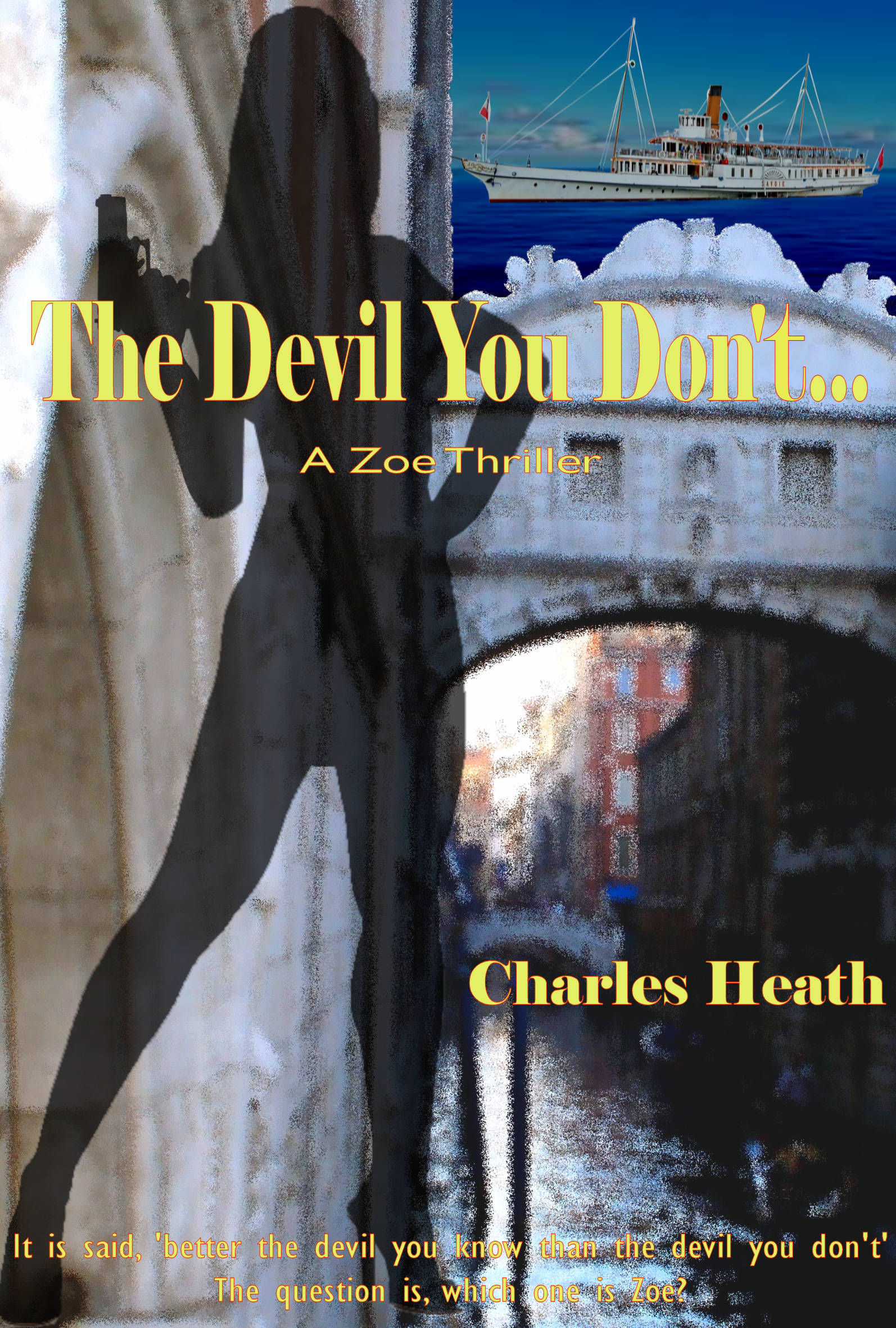
“The Devil You Don’t” – A beta readers view

It could be said that of all the women one could meet, whether contrived or by sheer luck, what are the odds it would turn out to be the woman who was being paid a very large sum to kill you.

John Pennington is a man who may be lucky in business, but not so lucky in love. He has just broken up with Phillipa Sternhaven, the woman he thought was the one, but relatives and circumstances, and perhaps because she was a ‘princess’, may also have contributed to the end result.

So, what do you do when you are heartbroken?

That is a story that slowly unfolds, from the first meeting with his nemesis on Lake Geneva, all the way to a hotel room in Sorrento, where he learns the shattering truth.

What should have been a high turns out to be something else entirely, and from that point every thing goes to hell in a handbasket.

He suddenly realises his so-called friend Sebastian has not exactly told him the truth about a small job he asked him to do, the woman he is falling in love with is not quite who she says she is, and he is caught in the middle of a war between two men who consider people becoming collateral damage as part of their business.

The story paints the characters cleverly displaying all their flaws and weaknesses. The locations add to the story at times taking me back down memory lane, especially to Venice where in those back streets I confess it’s not all that hard to get lost.

All in all a thoroughly entertaining story with, for once, a satisfying end.

Available on Amazon here: https://amzn.to/2Xyh1ow

Plots ripped from newspaper headlines – 2

What if … (2)

So, today’s seeming straightforward news event that didn’t make the front page, nor the next three,  
is about the death of a man and a woman who had just begun dating, their bodies being found in an ordinary suburban house.

The police received a call regarding their welfare and upon visiting the house, found the man and woman lying side by side on the floor, deceased.

The police were not treating the deaths as suspicious.

So …

What if …

The first thing that leaps off the page is the fact the police are not treating the deaths as suspicious.

That’s exactly the moment that investigators should be looking at the situation a little more closely because, in our scenario, the scene has a staged look about it, and on the surface, it appears to be a simple case of a dual drug overdose.

Firstly, the friends of the two were not aware they were ‘doing drugs’ and if they were, lying on the floor at home was the last place it would happen.

No drugs were found in the house, and the sniffer dogs could find no trace of any except on the bodies.

Secondly, in the upstairs office, a laptop computer was missing, only the cable and mouse were still sitting on the table.  Curiously both their cell phones were missing, but nothing else.  Between them, they had about 500 pounds, which meant, if there was foul play, the perpetrator had very specific items to take.

Nothing else was disturbed.

Thirdly, a quick examination of the bodies showed the woman had bruising to her neck, a sign that someone had held her in a choke hold perhaps, but the coroner would have a closer look.

Fourthly, a simple check on the names comes back with an access denied flag on the male.

That, as far as Detective Chief Inspector Barnes was concerned, was enough to change the investigation from death by misadventure, to a suspicious, possible murder.