Let’s talk history

What happened yesterday is history, but that’s not necessarily how we view what is history and what isn’t.

Similarly what is and what isn’t history is usually decided on by academics, because history texts that are used in schools are not written by ‘the man in the street’ authors. They’re usually university types who specialise in a particular field, or specialise section of history.

Even then one doubts that what is written is not a consensus of a panel.

So, when we talk about re-writing history, that takes a very brave bunch of people who want to buck the norm.

Our history, that which was taught when I went to school,. about our own country, Australia, started in 1770. Some brave soul tried to say it began earlier than that, before Captain Cook and the British arrived, out up a flag pole, and declared it belonged to Britain, like in 1606 when the Dutch explorer Willem Janszoon landed on the Cape York peninsula, only it wasn’t called that then.

And he might have been as surprised as Captain Cook that there were people here to observe their arrival. Yes, people had been living in this country for tens of thousands of years before the Europeans arrived.

But that was not what we were taught. No, Captain Cook, 1770, the a fleet of ships in 1788, and off we run as a new country, and a dumping ground for Britain’s convicts. Our history starts there, and then meanders through time, dividing the country up into states, having famous explorers like Burke and Wills, and Blaxland, Wentworth, and Lawson, Hume and Hovell.

And we commemorate all these people and those who were in charge over the years, with names of states, cities, rivers, mountains, everything under the sun. You’ve only got to glance at the list of hundreds of these forefathers and explorers to see just how many places in this country were named after them.

No heed was taken of what they may have been called before because no one really understood the languages of the first people who lived here. And they never seem to rate as a matter of study for us children back then.

Now, as people have begun to realise our history goes way, way back, and that there should be a nod to those inhabitants, they are considering re-writing some of our history to incorporate these people. And change the names of places to their original. A famous instance of recent renaming is of Ayers Rock, now called Uluru.

Even then, Australian History didn’t rate very highly, and I have to say, as a child at school 50 odd years ago, I learned more about the British Empire/Commonwealth, and about the English kings and queens, than we did about our own Governor Generals, Prime Ministers and State Premiers.

Could I tell you the name of our first Prime Minister? No. I can say when Australia became Australia, yes. 1901. Can I tell you the first King of England? Yes, William the Conqueror in 1066. There were kings before that but they only ruled of parts of England.

But over the years since I have read the odd book of Australian History but for some reason it never quite seems as colourful or as interesting as that of England or Scotland, or even some of the European countries.

Now, since I’ve been reading about what’s happening in the United States I have begin to take an interest in American history, and it, too, seems to suffer the same problems we have with ours, a bunch of academics decided what it was, and what it would not include, and then there is this thing called the 1619 project.

Wow, that seems to have stirred up a hornet’s nest.

Can’t wait to see what happens next.

An excerpt from “What Sets Us Apart”, a mystery with a twist

See excerpt from the story below, just a taste of what’s in store…

http://amzn.to/2Eryfth

whatsetscover

McCallister was old school, a man who would most likely fit in perfectly campaigning on the battlefields of Europe during the Second World War. He’d been like a fish out of water in the army, post-Falklands, and while he retired a hero, he still felt he’d more to give.

He’d applied and was accepted as head of a SWAT team, and, watching him now as he and his men disembarked from the truck in almost military precision, a look passed between Annette, the police liaison officer, and I that said she’d seen it all before. I know I had.

There was a one in four chance his team would be selected for this operation, and she had been hoping it would be one of the other three. While waiting for them to arrive she filled me in on the various teams. His was the least co-operative, and the more likely to make ad-hoc decisions rather than adhere to the plan, or any orders that may come from the officer in charge.

This, she said quite bluntly, was going to end badly.

I still had no idea why Prendergast instructed me to attend the scene of what looked to be a normal domestic operation, but as the nominated expert in the field in these types of situations, it was fairly clear he wasn’t taking any chances. It was always a matter of opinion between us, and generally I lost.

In this case, it was an anonymous report identifying what the authorities believed were explosives in one of the dockside sheds where explosives were not supposed to be.

The only reason why the report was given any credence was the man, while not identifying himself by name, said he’d been an explosive expert once and recognized the boxes. That could mean anything, but the Chief Constable was a cautious man.

With his men settled and preparing their weapons, McCallister came over to the command post, not much more than the SUV my liaison and I arrived in, with weapons, bulletproof vests, and rolls of tape to cordon off the area afterward. We both had coffee, steaming in the cold early morning air. Dawn was slowly approaching and although rain had been forecast it had yet to arrive.

A man by the name of Benson was in charge. He too had groaned when he saw McCallister.

“A fine morning for it.” McCallister was the only enthusiastic one here.

He didn’t say what ‘it’ was, but I thought it might eventually be mayhem.

“Let’s hope the rain stays away. It’s going to be difficult enough without it,” Benson said, rubbing his hands together. We had been waiting for the SWAT team to arrive, and another team to take up their position under the wharf, and who was in the final stages of securing their position.

While we were waiting we drew up the plan. I’d go in first to check on what we were dealing with, and what type of explosives. The SWAT team, in the meantime, were to ensure all the exits to the shed were covered. When I gave the signal, they were to enter and secure the building. We were not expecting anyone inside or out, and no movement had been detected in the last hour since our arrival and deployment.

“What’s the current situation?”

“I’ve got eyes on the building, and a team coming in from the waterside, underneath. Its slow progress, but they’re nearly there. Once they’re in place, we’re sending McKenzie in.”

He looked in my direction.

“With due respect sir, shouldn’t it be one of us?” McCallister glared at me with the contempt that only a decorated military officer could.

“No. I have orders from above, much higher than I care to argue with, so, McCallister, no gung-ho heroics for the moment. Just be ready to move on my command, and make sure you have three teams at the exit points, ready to secure the building.”

McCallister opened his mouth, no doubt to question those orders, but instead closed it again. “Yes sir,” he muttered and turned away heading back to his men.

“You’re not going to have much time before he storms the battlements,” Benson quietly said to me, a hint of exasperation in his tone. “I’m dreading the paperwork.”

It was exactly what my liaison officer said when she saw McCallister arriving.

The water team sent their ‘in position’ signal, and we were ready to go.

In the hour or so we’d been on site nothing had stirred, no arrivals, no departures, and no sign anyone was inside, but that didn’t mean we were alone. Nor did it mean I was going to walk in and see immediately what was going on. If it was a cache of explosives then it was possible the building was booby-trapped in any number of ways, there could be sentries or guards, and they had eyes on us, or it might be a false alarm.

I was hoping for the latter.

I put on the bulletproof vest, thinking it was a poor substitute for full battle armor against an exploding bomb, but we were still treating this as a ‘suspected’ case. I noticed my liaison officer was pulling on her bulletproof vest too.

“You don’t have to go. This is my party, not yours,” I said.

“The Chief Constable told me to stick to you like glue, sir.”

I looked at Benson. “Talk some sense into her please, this is not a kindergarten outing.”

He shrugged. Seeing McCallister had taken all the fight out of him. “Orders are orders. If that’s what the Chief Constable requested …”

Madness. I glared at her, and she gave me a wan smile. “Stay behind me then, and don’t do anything stupid.”

“Believe me, I won’t be.” She pulled out and checked her weapon, chambering the first round. It made a reassuring sound.

Suited up, weapons readied, a last sip of the coffee in a stomach that was already churning from nerves and tension, I looked at the target, one hundred yards distant and thought it was going to be the longest hundred yards I’d ever traversed. At least for this week.

A swirling mist rolled in and caused a slight change in plans.

Because the front of the buildings was constantly illuminated by large overhead arc lamps, my intention had been to approach the building from the rear where there was less light and more cover. Despite the lack of movement, if there were explosives in that building, there’d be ‘enemy’ surveillance somewhere, and, after making that assumption, I believed it was going to be easier and less noticeable to use the darkness as a cover.

It was a result of the consultation, and studying the plans of the warehouse, plans that showed three entrances, the main front hangar type doors, a side entrance for truck entry and exit and a small door in the rear, at the end of an internal passage leading to several offices. I also assumed it was the exit used when smokers needed a break. Our entry would be by the rear door or failing that, the side entrance where a door was built into the larger sliding doors. In both cases, the locks would not present a problem.

The change in the weather made the approach shorter, and given the density of the mist now turning into a fog, we were able to approach by the front, hugging the walls, and moving quickly while there was cover. I could feel the dampness of the mist and shivered more than once.

It was nerves more than the cold.

I could also feel rather than see the presence of Annette behind me, and once felt her breath on my neck when we stopped for a quick reconnaissance.

It was the same for McCallister’s men. I could feel them following us, quickly and quietly, and expected, if I turned around, to see him breathing down my neck too.

It added to the tension.

My plan was still to enter by the back door.

We slipped up the alley between the two sheds to the rear corner and stopped. I heard a noise coming from the rear of the building, and the light tap on the shoulder told me Annette had heard it too. I put my hand up to signal her to wait, and as a swirl of mist rolled in, I slipped around the corner heading towards where I’d last seen the glow of a cigarette.

The mist cleared, and we saw each other at the same time. He was a bearded man in battle fatigues, not the average dockside security guard.

He was quick, but my slight element of surprise was his undoing, and he was down and unconscious in less than a few seconds with barely a sound beyond the body hitting the ground. Zip ties secured his hands and legs, and tape his mouth. Annette joined me a minute after securing him.

A glance at the body then me, “I can see why they, whoever they are, sent you.”

She’d asked who I worked for, and I didn’t answer. It was best she didn’t know.

“Stay behind me,” I said, more urgency in my tone. If there was one, there’d be another.

Luck was with us so far. A man outside smoking meant no booby traps on the back door, and quite possibly there’d be none inside. But it indicated there were more men inside, and if so, it appeared they were very well trained. If that were the case, they would be formidable opponents.

The fear factor increased exponentially.

I slowly opened the door and looked in. A pale light shone from within the warehouse itself, one that was not bright enough to be detected from outside. None of the offices had lights on, so it was possible they were vacant. I realized then they had blacked out the windows. Why hadn’t someone checked this?

Once inside, the door closed behind us, progress was slow and careful. She remained directly behind me, gun ready to shoot anything that moved. I had a momentary thought for McCallister and his men, securing the perimeter.

At the end of the corridor, the extent of the warehouse stretched before us. The pale lighting made it seem like a vast empty cavern, except for a long trestle table along one side, and, behind it, stacks of wooden crates, some opened. It looked like a production line.

To get to the table from where we were was a ten-yard walk in the open. There was no cover. If we stuck to the walls, there was equally no cover and a longer walk.

We needed a distraction.

As if on cue, the two main entrances disintegrated into flying shrapnel accompanied by a deafening explosion that momentarily disoriented both Annette and I. Through the smoke and dust kicked up I saw three men appear from behind the wooden crates, each with what looked like machine guns, spraying bullets in the direction of the incoming SWAT members.

They never had a chance, cut down before they made ten steps into the building.

By the time I’d recovered, my head heavy, eyes watering and ears still ringing, I took several steps towards them, managing to take down two of the gunmen but not the third.

I heard a voice, Annette’s I think, yell out, “Oh, God, he’s got a trigger,” just before another explosion, though all I remember in that split second was a bright flash, the intense heat, something very heavy smashing into my chest knocking the wind out of me, and then the sensation of flying, just before I hit the wall.

I spent four weeks in an induced coma, three months being stitched back together and another six learning to do all those basic actions everyone took for granted. It was twelve months almost to the day when I was released from the hospital, physically, except for a few alterations required after being hit by shrapnel, looking the same as I always had.

But mentally? The document I’d signed on release said it all, ‘not fit for active duty; discharged’.

It was in the name of David Cheney. For all intents and purposes, Alistair McKenzie was killed in that warehouse, and for the first time ever, an agent left the Department, the first to retire alive.

I was not sure I liked the idea of making history.


© Charles Heath 2016-2020

It all started in Venice – Episode

An interview with Jaime Meyers

I went in and closed the door, leaning against it.  She glared at me, for a moment not recognising who it was, then the expression changed.

And it gave me a tell.

“You’re supposed to be in Venice,” she said, with a hint of amusement in her tone.

“You’re not supposed to be in here, and yet here you are.”

“It’s all part of a witch hunt.  We’ve been down this road before, and like the last time, and the time before that, they’ve got nothing on me.  They know it and you should know it too, but if you’re retired, why are you here?”

“Your new best friend forever, Larry.  You know he wants me dead.”

“He says you killed his brother, but he’s never said anything about killing you, just getting justice for his brother.  Through the legal system.”

“Of course he would say that.  I assure you I had nothing to do with his brother’s death but that’s another story.”  I crossed to the chair and sat down taking a moment to look at her.

Drugs, alcohol and stress had taken the shine off what had once been a stunningly beautiful young woman.  The loss of her father and betrayal of her husband had taken their toll.

“If that’s the case perhaps you should tell me what happened so I can make up my own mind.  After all, there are always two sides to a story.”

I shook my head.  “That would be a pointless exercise.  Let’s talk about you instead, and the reason why you’re sitting in that chair.  Larry.  Until you took up with him, we had no idea who you were or what you were doing and had no reason to find out.  Larry, on the other hand, well, he’s shoulder deep in a shit pile of criminal activity, and my old boss, when I used to work for him, is very interested in everyone who even looks sideways at him.  So, bottom line, you’re only here because of him, and because of him I know everything there is to know about.”

“So you say, but there’s nothing to know.  Never was, and Larry is just a friend who’s going through a rough patch.”

“If you mean losing out on a fifty-million pound inheritance because he killed his brother is a rough patch, then your right.”

“I don’t know anything about that.  All I know is his wife is being difficult.”

“That’s the same line all married men use.”

Her expression sharpened conveying annoyance.  “It’s not that sort of relationship.” 

“Not what his wife is telling his mother back in Sorrento.  And that’s saying something considering how much Brenda hates his mother.”

A change in expression.  Another tell, a nerve hit.

“How do I know this?”  I asked the question for her.  “Simple, and perhaps I will give you a side of the story.  His mother crossed paths with one of my investigations back when I worked in intelligence as an analyst and I got to know her quite well.  As a favourable, knowing I was in a position to help, she asked me to watch over his brother, her youngest son.”

I could see the question before she could ask it.

“Before you tell me I didn’t do a very good job, I was at the handoff Larry sent him to that went bad, one he was told would be a simple briefcase exchange, and ended up having to defend him in what became an impossible situation.”

“What was in the briefcases?”

An odd question but I could see from the furrowed brow that she had seized on a significant detail.

“I don’t know and didn’t ask.  In my position, it was better not to know, but you can guess.  I’m sure you are aware of Larry’s interests.”

She didn’t say, but she knew.  My guess had been drugs on one side and money on the other.  It was anything but a simple job and my reasoning was Larry tried to keep it low-key using a lesser-known courier without backup, and someone found out.  With drugs and cask on that scale, it was too much of a temptation to pass up.

“Anyway, he was shot, not fatally, I patched him up, he called Larry and I stayed with him until Larry arrived, but left before Larry saw me, for obvious reasons.  If you talk to his mother she will verify everything I said.  She was still talking to him after I left and up to the point where he could see Larry coming.  After that. He was DOA at the hospital.  You can draw your own conclusions but 50 million is a great incentive to use a particular situation to get rid of a problem.”

“An interesting story, as you say, but I’m not likely to be asking anyone anything because I’m just not interested, in you or him.”

“As I said before, a pointless exercise.  But, interested or not, you will be helping us with our problem with Larry and his explosives.”

“‘I know nothing about that.”

“Well, let’s talk about something you do know about.  Emily Broadhurst, or to Wendy, Aunt May.”

The look on that fraction a second was both malevolent and fearful.

“I don’t know what you’re talking about.”

I shrugged.  “I thought you might say that.”  I took out my cell phone and dialled one of the two numbers displayed.  “Let’s bring them in and have a chat, see what they have to say.”  A voice answered on the other end.  “George.  Bring them in.”

“Stop.”  She glared at her lawyer.  “Give us the room.”

“I strongly suggest…”

“Give me the room.  Your objection is noted.”

Her lawyer reluctantly got up and left the room.  She glared at the policewoman standing by the door.

“Pretend she’s not here,” I said.  “She has to be here for your safety and is the very soul of discretion.”  I looked up at the camera.  “This is not to be recorded or observed, so camera off.”  I waited until the red light below the camera went off.

I could see she was about to say something, more than likely regrettable, but understandable.

“Let me say this before you say something you will regret.  You’ve been lying to me.  I don’t ask questions I don’t have answers to.  Because you started working with Larry, we went the extra mile on your life and operations.  You were there when the crates were delivered, as was Larry himself and he told you what was in there.  So, where there’s one lie, what is there you can say that cannot be taken with a grain of salt.”

“Be that as it may…”

“No.  You are the head of a criminal organisation.  It might be dressed up very cleverly to look like something else, but we have a very clear view of what goes on.  To be honest, we don’t care.  You’re not the focus of my ex-bosses obsession.  And, believe me when I tell you, I don’t like being Larry’s target.”

“Then make him disappear.”

“Unfortunately, despite what you and others might think, we did not unilaterally kill people for no reason, and, even if I still worked for that organisation, I wasn’t able to make people disappear.  The paperwork would be horrendous, along with endless external, internal and government reviews.”

“Then what do you want me to do?  I’m not an informer, nor will I become an informant.”  Spoken by a person who still thought they had a choice.

“You’re going to do what you negotiate with the police, who, despite your endless denials, are aware of the truth.  So, first things first, you are going to ignore Larry, and not proceed with any of the arrangements you may have agreed with him..  You can do that with plausible deniability, telling him leaving C4 in your warehouse was not an act of good faith since the police now want your hide for it.  Once again I will reiterate, I’m not interested in you, and nor is my ex-boss, so you are in a unique position to use whatever knowledge you have as leverage for your freedom.”

“And the matter you brought up?”

“Will never see the light of day, or be mentioned by anyone ever again.  Unless you break our agreement.  I used to have the best investigative team on the planet, and they can find anyone or anything, so if you’re thinking of running, don’t.  My ex-boss will have no hesitation in destroying you and your organisation.”

“And yet you say you work for no one.”

“Haven’t for years.  I retired and hope to stay that way, but my wife died, and Larry decided to come after me.  At the moment I don’t have much to live for, so if you want to get in my bad books, believe me you’ll not live to regret it.  When I walk out of this room, don’t get in my sights.”

“And why should I take you at your word?”

“I swear it on my wife’s grave.  Good enough?”

It seemed it was.

© Charles Heath 2022

An excerpt from “One Last Look”: Charlotte is no ordinary girl

This is currently available at Amazon herehttp://amzn.to/2CqUBcz


I’d read about out of body experiences, and like everyone else, thought it was nonsense.  Some people claimed to see themselves in the operating theatre, medical staff frantically trying to revive them, and being surrounded by white light.

I was definitely looking down, but it wasn’t me I was looking at.

It was two children, a boy and a girl, with their parents, in a park.

The boy was Alan.  He was about six or seven.  The girl was Louise, and she was five years old.  She had long red hair and looked the image of her mother.

I remember it now, it was Louise’s birthday and we went down to Bournemouth to visit our Grandmother, and it was the last time we were all together as a family.

We were flying homemade kites our father had made for us, and after we lay there looking up at the sky, making animals out of the clouds.  I saw an elephant, Louise saw a giraffe.

We were so happy then.

Before the tragedy.


When I looked again ten years had passed and we were living in hell.  Louise and I had become very adept at survival in a world we really didn’t understand, surrounded by people who wanted to crush our souls.

It was not a life a normal child had, our foster parents never quite the sort of people who were adequately equipped for two broken-hearted children.  They tried their best, but their best was not good enough.

Every day it was a battle, to avoid the Bannister’s and Archie in particular, every day he made advances towards Louise and every day she fended him off.

Until one day she couldn’t.

Now I was sitting in the hospital, holding Louise’s hand.  She was in a coma, and the doctors didn’t think she would wake from it.  The damage done to her was too severe.

The doctors were wrong.

She woke, briefly, to name her five assailants.  It was enough to have them arrested.  It was not enough to have them convicted.

Justice would have to be served by other means.


I was outside the Bannister’s home.

I’d made my way there without really thinking, after watching Louise die.  It was like being on autopilot, and I had no control over what I was doing.  I had murder in mind.  It was why I was holding an iron bar.

Skulking in the shadows.  It was not very different from the way the Bannister’s operated.

I waited till Archie came out.  I knew he eventually would.  The police had taken him to the station for questioning, and then let him go.  I didn’t understand why, nor did I care.

I followed him up the towpath, waiting till he stopped to light a cigarette, then came out of the shadows.

“Wotcha got there Alan?” he asked when he saw me.  He knew what it was, and what it was for.

It was the first time I’d seen the fear in his eyes.  He was alone.

“Justice.”

“For that slut of a sister of yours.  I had nuffing to do with it.”

“She said otherwise, Archie.”

“She never said nuffing, you just made it up.”  An attempt at bluster, but there was no confidence in his voice.

I held up the pipe.  It had blood on it.  Willy’s blood.  “She may or may not have Archie, but Willy didn’t make it up.  He sang like a bird.  That’s his blood, probably brains on the pipe too, Archie, and yours will be there soon enough.”

“He dunnit, not me.  Lyin’ bastard would say anything to save his own skin.”  Definitely scared now, he was looking to run away.

“No, Archie.  He didn’t.  I’m coming for you.  All of you Bannisters.  And everyone who touched my sister.”


It was the recurring nightmare I had for years afterwards.

I closed my eyes and tried to shut out the thoughts, the images of Louise, the phone call, the visit to the hospital and being there when she succumbed to her injuries.  Those were the very worst few hours of my life.

She had asked me to come to the railway station and walk home with her, and I was running late.  If I had left when I was supposed to, it would never have happened and for years afterwards, I blamed myself for her death.

If only I’d not been late…

When the police finally caught the rapists, I’d known all along who they’d be; antagonists from school, the ring leader, Archie Bannister, a spurned boyfriend, a boy whose parents, ubiquitously known to all as ‘the Bannister’s, dealt in violence and crime and who owned the neighbourhood.  The sins of the father had been very definitely passed onto the son.

At school, I used to be the whipping boy, Archie, a few grades ahead of me, made a point of belting me and a few of the other boys, to make sure the rest did as they were told.  He liked Louise, but she had no time for a bully like him, even when he promised he would ‘protect’ me.

I knew the gang members, the boys who tow-kowed to save getting beaten up, and after the police couldn’t get enough information to prosecute them because everyone was too afraid to speak out, I went after Willy.  There was always a weak link in a group, and he was it.

He worked in a factory, did long hours on a Wednesday and came home after dark alone.  It was a half mile walk, through a park.  The night I approached him, I smashed the lights and left it in darkness.  He nearly changed his mind and went the long way home.

He didn’t.

It took an hour and a half to get the names.  At first, when he saw me, he laughed.  He said I would be next, and that was four words more than he knew he should have said.

When I found him alone the next morning I showed him the iron bar and told him he was on the list.  I didn’t kill him then, he could wait his turn, and worry about what was going to happen to him.

When the police came to visit me shortly after that encounter, no doubt at the behest of the Bannister’s, the neighbourhood closed ranks and gave me an ironclad alibi.  The Bannister’s then came to visit me and threatened me.  I told them their days were numbered and showed them the door.

At the trial, he and his friends got off on a technicality.  The police had failed to do their job properly, but it was not the police, but a single policeman, corrupted by the Bannisters.

Archie could help but rub it in my face.  He was invincible.

Joe Collins took 12 bullets and six hours to bleed out.  He apologized, he pleaded, he cried, he begged.  I didn’t care.

Barry Mills, a strong lad with a mind to hurting people, Archie’s enforcer, almost got the better of me.  I had to hit him more times than I wanted to, and in the end, I had to be satisfied that he died a short but agonizing death.

I revisited Willy in the hospital.  He’d recovered enough to recognize me, and why I’d come.  Suffocation was too good for him.

David Williams, second in command of the gang, was as tough and nasty as the Bannisters.  His family were forging a partnership with the Bannister’s to make them even more powerful.  Outwardly David was a pleasant sort of chap, affable, polite, and well mannered.  A lot of people didn’t believe he could be like, or working with, the Bannisters.

He and I met in the pub.  We got along like old friends.  He said Willy had just named anyone he could think of, and that he was innocent of any charges.  We shook hands and parted as friends.

Three hours later he was sitting in a chair in the middle of a disused factory, blindfolded and scared.  I sat and watched him, listened to him, first threatening me, and then finally pleading with me.  He’d guessed who it was that had kidnapped him.

When it was dark, I took the blindfold off and shone a very bright light in his eyes.  I asked him if the violence he had visited upon my sister was worth it.  He told me he was just a spectator.

I’d read the coroner’s report.  They all had a turn.  He was a liar.

He took nineteen bullets to die.

Then came Archie.

The same factory only this time there were four seats.  Anna Bannister, brothel owner, Spike Bannister, head of the family, Emily Bannister, sister, and who had nothing to do with their criminal activities.  She just had the misfortune of sharing their name.

Archie’s father told me how he was going to destroy me, and everyone I knew.

A well-placed bullet between the eyes shut him up.

Archie’s mother cursed me.  I let her suffer for an hour before I put her out of her misery.

Archie remained stony-faced until I came to Emily.  The death of his parents meant he would become head of the family.  I guess their deaths meant as little to him as they did me.

He was a little more worried about his sister.

I told him it was confession time.

He told her it was little more than a forced confession and he had done nothing to deserve my retribution.

I shrugged and shot her, and we both watched her fall to the ground screaming in agony.  I told him if he wanted her to live, he had to genuinely confess to his crimes.  This time he did, it all poured out of him.

I went over to Emily.  He watched in horror as I untied her bindings and pulled her up off the floor, suffering only from a small wound in her arm.  Without saying a word she took the gun and walked over to stand behind him.

“Louise was my friend, Archie.  My friend.”

Then she shot him.  Six times.

To me, after saying what looked like a prayer, she said, “Killing them all will not bring her back, Alan, and I doubt she would approve of any of this.  May God have mercy on your soul.”


Now I was in jail.  I’d spent three hours detailing the deaths of the five boys, everything I’d done; a full confession.  Without my sister, my life was nothing.  I didn’t want to go back to the foster parents; I doubt they’d take back a murderer.

They were not allowed to.

For a month I lived in a small cell, in solitary, no visitors.  I believed I was in the queue to be executed, and I had mentally prepared myself for the end.

Then I was told I had a visitor, and I was expecting a priest.

Instead, it was a man called McTavish. Short, wiry, and with an accent that I could barely understand.

“You’ve been a bad boy, Alan.”

When I saw it was not the priest I told the jailers not to let him in, I didn’t want to speak to anyone.  They ignored me.  I’d expected he was a psychiatrist, come to see whether I should be shipped off to the asylum.

I was beginning to think I was going mad.

I ignored him.

“I am the difference between you living or dying Alan, it’s as simple as that.  You’d be a wise man to listen to what I have to offer.”

Death sounded good.  I told him to go away.

He didn’t.  Persistent bugger.

I was handcuffed to the table.  The prison officers thought I was dangerous.  Five, plus two, murders, I guess they had a right to think that.  McTavish sat opposite me, ignoring my request to leave.

“Why’d you do it?”

“You know why.”  Maybe if I spoke he’d go away.

“Your sister.  By all accounts, the scum that did for her deserved what they got.”

“It was murder just the same.  No difference between scum and proper people.”

“You like killing?”

“No-one does.”

“No, I dare say you’re right.  But you’re different, Alan.  As clean and merciless killing I’ve ever seen.  We can use a man like you.”

“We?”

“A group of individuals who clean up the scum.”

I looked up to see his expression, one of benevolence, totally out of character for a man like him.  It looked like I didn’t have a choice.


Trained, cleared, and ready to go.

I hadn’t realized there were so many people who were, for all intents and purposes, invisible.  People that came and went, in malls, in hotels, trains, buses, airports, everywhere, people no one gave a second glance.

People like me.

In a mall, I became a shopper.

In a hotel, I was just another guest heading to his room.

On a bus or a train, I was just another commuter.

At the airport, I became a pilot.  I didn’t need to know how to fly; everyone just accepted a pilot in a pilot suit was just what he looked like.

I had a passkey.

I had the correct documents to get me onto the plane.

That walk down the air bridge was the longest of my life.  Waiting for the call from the gate, waiting for one of the air bridge staff to challenge me, stepping onto the plane.

Two pilots and a steward.  A team.  On the plane early before the rest of the crew.  A group that was committing a crime, had committed a number of crimes and thought they’d got away with it.

Until the judge, the jury and their executioner arrived.

Me.

Quick, clean, merciless.  Done.

I was now an operational field agent.


I was older now, and I could see in the mirror I was starting to go grey at the sides.  It was far too early in my life for this, but I expect it had something to do with my employment.

I didn’t recognize the man who looked back at me.

It was certainly not Alan McKenzie, nor was there any part of that fifteen-year-old who had made the decision to exact revenge.

Given a choice; I would not have gone down this path.

Or so I kept telling myself each time a little more of my soul was sold to the devil.

I was Barry Gamble.

I was Lenny Buckman.

I was Jimmy Hosen.

I was anyone but the person I wanted to be.

That’s what I told Louise, standing in front of her grave, and trying to apologize for all the harm, all the people I’d killed for that one rash decision.  If she was still alive she would be horrified, and ashamed.

Head bowed, tears streamed down my face.

God had gone on holiday and wasn’t there to hand out any forgiveness.  Not that day.  Not any day.


New York, New Years Eve.

I was at the end of a long tour, dragged out of a holiday and back into the fray, chasing down another scumbag.  They were scumbags, and I’d become an automaton hunting them down and dispatching them to what McTavish called a better place.

This time I failed.

A few drinks to blot out the failure, a blonde woman who pushed my buttons, a room in a hotel, any hotel, it was like being on the merry-go-round, round and round and round…

Her name was Silvia or Sandra, or someone I’d met before, but couldn’t quite place her.  It could be an enemy agent for all I knew or all I cared right then.

I was done.

I’d had enough.

I gave her the gun.

I begged her to kill me.

She didn’t.

Instead, I simply cried, letting the pent up emotion loose after being suppressed for so long, and she stayed with me, holding me close, and saying I was safe, that she knew exactly how I felt.

How could she?  No one could know what I’d been through.

I remembered her name after she had gone.

Amanda.

I remembered she had an imperfection in her right eye.

Someone else had the same imperfection.

I couldn’t remember who that was.

Not then.


I had a dingy flat in Kensington, a place that I rarely stayed in if I could help it.  After five-star hotel rooms, it made me feel shabby.

The end of another mission, I was on my way home, the underground, a bus, and then a walk.

It was late.

People were spilling out of the pub after the last drinks.  Most in good spirits, others slightly more boisterous.

A loud-mouthed chap bumped into me, the sort who had one too many, and was ready to take on all comers.

He turned on me, “Watch where you’re going, you fool.”

Two of his friends dragged him away.  He shrugged them off, squared up.

I punched him hard, in the stomach, and he fell backwards onto the ground.  I looked at his two friends.  “Take him home before someone makes mincemeat out of him.”

They grabbed his arms, lifted him off the ground and took him away.

Out of the corner of my eye, I could see a woman, early thirties, quite attractive, but very, very drunk.  She staggered from the bar, bumped into me, and finished up sitting on the side of the road.

I looked around to see where her friends were.  The exodus from the pub was over and the few nearby were leaving to go home.

She was alone, drunk, and by the look of her, unable to move.

I sat beside her.  “Where are your friends?”

“Dunno.”

“You need help?”

She looked up, and sideways at me.  She didn’t look the sort who would get in this state.  Or maybe she was, I was a terrible judge of women.

“Who are you?” she asked.

“Nobody.”  I was exactly how I felt.

“Well Mr Nobody, I’m drunk, and I don’t care.  Just leave me here to rot.”

She put her head back between her knees, and it looked to me she was trying to stop the spinning sensation in her head.

Been there before, and it’s not a good feeling.

“Where are your friends?” I asked again.

“Got none.”

“Perhaps I should take you home.”

“I have no home.”

“You don’t look like a homeless person.  If I’m not mistaken, those shoes are worth more than my weekly salary.”  I’d seen them advertised, in the airline magazine, don’t ask me why the ad caught my attention.

She lifted her head and looked at me again.  “You a smart fucking arse are you?”

“I have my moments.”

“Have them somewhere else.”

She rested her head against my shoulder.  We were the only two left in the street, and suddenly in darkness when the proprietor turned off the outside lights.

“Take me home,” she said suddenly.

“Where is your place?”

“Don’t have one.  Take me to your place.”

“You won’t like it.”

“I’m drunk.  What’s not to like until tomorrow.”

I helped her to her feet.  “You have a name?”

“Charlotte.”


The wedding was in a small church.  We had been away for a weekend in the country, somewhere in the Cotswolds, and found this idyllic spot.  Graves going back to the dawn of time, a beautiful garden tended by the vicar and his wife, an astonishing vista over hills and down dales.

On a spring afternoon with the sun, the flowers, and the peacefulness of the country.

I had two people at the wedding, the best man, Bradley, and my boss, Watkins.

Charlotte had her sisters Melissa and Isobel, and Isobel’s husband Giovanni, and their daughter Felicity.

And one more person who was as mysterious as she was attractive, a rather interesting combination as she was well over retirement age.  She arrived late and left early.

Aunt Agatha.

She looked me up and down with what I’d call a withering look.  “There’s more to you than meets the eye,” she said enigmatically.

“Likewise I’m sure,” I said.  It earned me an elbow in the ribs from Charlotte.  It was clear she feared this woman.

“Why did you come,” Charlotte asked.

“You know why.”

Agatha looked at me.  “I like you.  Take care of my granddaughter.  You do not want me for an enemy.”

OK, now she officially scared me.

She thrust a cheque into my hand, smiled, and left.

“Who is she,” I asked after we watched her depart.

“Certainly not my fairy godmother.”

Charlotte never mentioned her again.


Zurich in summer, not exactly my favourite place.

Instead of going to visit her sister Isobel, we stayed at a hotel in Beethovenstrasse and Isobel and Felicity came to us.  Her husband was not with her this time.

Felicity was three or four and looked very much like her mother.  She also looked very much like Charlotte, and I’d remarked on it once before and it received a sharp rebuke.

We’d been twice before, and rather than talk to her sister, Charlotte spent her time with Felicity, and they were, together, like old friends.  For so few visits they had a remarkable rapport.

I had not broached the subject of children with Charlotte, not after one such discussion where she had said she had no desire to be a mother.  It had not been a subject before and wasn’t once since.

Perhaps like all Aunts, she liked the idea of playing with a child for a while and then give it back.

Felicity was curious as to who I was, but never ventured too close.  I believed a child could sense the evil in adults and had seen through my facade of friendliness.  We were never close.

But…

This time, when observing the two together, something quite out of left field popped into my head.  It was not possible, not by any stretch of the imagination, but I thought she looked like my mother.

And Charlotte had seen me looking in their direction.  “You seem distracted,” she said.

“I was just remembering my mother.  Odd moment, haven’t done so for a very long time.”

“Why now?”  I think she had a look of concern on her face.

“Her birthday, I guess,” I said, the first excuse I could think of.

Another look and I was wrong.  She looked like Isobel or Charlotte, or if I wanted to believe it possible, Melissa too.


I was crying, tears streaming down my face.

I was in pain, searing pain from my lower back stretching down into my legs, and I was barely able to breathe.

It was like coming up for air.

It was like Snow White bringing Prince Charming back to life.  I could feel what I thought was a gentle kiss and tears dropping on my cheeks, and when I opened my eyes, I saw Charlotte slowly lifting her head, a hand gently stroking the hair off my forehead.

And in a very soft voice, she said, “Hi.”

I could not speak, but I think I smiled.  It was the girl with the imperfection in her right eye.  Everything fell into place, and I knew, in that instant that we were irrevocably meant to be together.

“Welcome back.”


© Charles Heath 2016-2019

onelastlookcoverfinal2

In a word: Angle

We all know this to be an intersection of two lines like a crossroad is at a 90-degree angle

But…

It’s an angle bracket that keeps the shelf up, hopefully with books on it.

Did you know that it was something someone did in order to get something?

She began to angle for an invitation to a party that she would not normally be invited to, or he has angled his answers to the prospective employer in a bid to be more likely to be selected for the position.

It can also refer to a position, or judgement, so that someone might say, try and see it from my angle, or another angle.

Or that it refers to fishing, and the fisherman or woman is known as an angler.

It can be a position from which something is viewed, or in crime parlance, the CSI people will work out the angle of the bullet’s entry do they can locate the position of the shooter.

Angle can refer to people of Germanic origin, such as an Anglo Saxon

And, here’s something even I didn’t know, in Astrology, it is each of the four cardinal points of a chart, from which the first, fourth, seventh, and tenth houses extend anticlockwise respectively.

The cinema of my dreams – Was it just another surveillance job – Episode 26

I’m back home and this story has been sitting on a back burner for a few months, waiting for some more to be written.

The trouble is, there are also other stories to write, and I’m not very good at prioritizing.

But, here we are, a few minutes opened up and it didn’t take long to get back into the groove.

Maury drops in for a search


I moved to the doorway and switched off the light, sending the room back into inky darkness.  Not good for the eyes, going bright light to instant dark.  We stood together behind the door as it opened inwards, Jan ready with her gun.

The door opened slowly, at the same time letting light in from the corridor, making it easier to see.

Opened fully, the visitor tentatively stepped into the room, and once the shape moved past the door, I slammed it shut and Jan lunged with the gun.  

I was not sure what result she was expecting but the person fought back, and as they turned to wrench the gun out of her hand, I let loose a punch, aiming for the head, and as hard as I could.  I head a cracking sound followed by a thump as the body hit the ground.

When I turned the light back on, there were two surprises.  The first, that I’d managed to knock someone out, and the second, Maury was back for a second look.

Why?

It didn’t matter.  He wasn’t going to be unconscious for very long.  Jan had some twine in her room, I wasn’t going to ask why, and she tied his hands and legs together, trussed almost like a turkey.

We left him on the floor when he’d fallen.  Unconscious, he was too heavy to move, or lift.

“Is this man Severin, Maury or Nobbin?” she asked.  She’d saved the questions until after he’d been neutralized, and we’d taken his gun off him.  Also, a knife.  She’d also look through his pockets to see if he carried any identification.  He didn’t, and I wouldn’t expect to find anything.  At the moment I was the same, and since I threw the phone’s sim card, I was now completely anonymous.

“Maury,” I said.

“The attack dog?”

“Not able to attack us at the moment, but yes.  I wonder why he came back?”

“We should ask him,” she said, “when he wakes up.”

We were sitting in the chairs, turned around to face Maury lying on the ground.  He had wriggled, and realizing he was tied up, tried harder to escape the bonds, and then relaxed when he realized he couldn’t.

His eyes turned to us, and it felt like a death stare.  

“This is a mistake,” he said.  “untie these ropes and I might make an exception for you.

“Why are you here?” I asked him.

“That’s none of your business.”

“But it is mine.  This is my flat, and you’re trespassing,” Jan said.

He switched his death gaze to her.

“I’m not here to cause trouble.”

“Then why are you here?”

“To ask you if your next-door neighbor left anything here with you to collect at a later date.”

No doubt with a menacing attitude, which would end in violence because Maury was not the sort to take no for an answer.

“Most people would knock on the door, and politely wait until it was answered.”

Most people.

“I was told there would be no one at home.”

“And it couldn’t wait until I returned?  I’m sorry, but you have broken into my flat and I’m going to call the police.”

He looked at me.

“That’s not a good idea.  Tell her, Jackson.”

“I don’t work for you, or Severin, anymore.  In fact, when I went back into the office, I got dragged aside and interrogated.  No one seems to know who you and Severin are.”

“That’s because our operation was on a need to know basis.  How do you think our business works?  Not by telling everyone what you’re doing.  Now untie me, and I’ll be on my way.”

“No,” Jan said.  “Not until you tell us exactly who you are and who you work for, and why you deemed it necessary to murder O’Connell.”

Maury looked at me again, and there was no mistaking the anger.

“You do understand what the Official Secrets Act means, don’t you Jackson?”

“More or less.  But it depends on who it is you speak to whether that’s relevant or not.”

Back to Jan.  

“Who are you, then?”

“As you keep pulling out of your hat, it’s on a need to know basis, and, of course, we just tell everyone what we’re doing either.  But one thing I’m sure of, we do not go around killing agents.  As far as I can tell, O’Connell was working for an agency, possibly yours but I don’t think so, and in the course of his investigation, he came across some valuable information.  Information, I’m told, you want.  What is it and why?”

“Are you serious?”

He shifted his glare back to me.

“Seriously Jackson, who is this person?”

“Someone, I fear, who is going to cause you a great deal of grief if you don’t answer her questions.”

“Don’t be ridiculous.  I don’t have to tall you or anyone else the nature of my business.”

I saw her shake her head.  “I take it, that’s a no.”  She shrugged and pulled out her phone and dialed a number.  “Always the hard way with you people.”

“Sir,” she said when the call was answered.  “I’ve got a character named Maury tied up in my flat.  Breaking and entering for starters.  Yes, I’ll be here.”

She put the phone back in her bag.  “They’ll be here in ten minutes.”

All we had to do was hope that Maury didn’t have a backup.

© Charles Heath 2020

Searching for locations: Driving in ice and snow, Canada

This morning started with a visit to the car rental place in Vancouver.  It reinforced the notion that you can be given the address and still not find the place.  It happened in Washington where it was hiding in the back of the main railway station, and it happened again in Vancouver when it was hidden inside a hotel.

We simply walked straight past it.  Pity there wasn’t a sign to let people know.

However…

We went in expecting a Grand Jeep Cherokee and walked out with a Ford Flex, suitable for three people and four large suitcases.  It actually seats 7, but forget the baggage, you’d be lucky to get two large suitcases in that configuration.

It is more than adequate for our requirements.

Things to note, it was delivered with just over a quarter of a tank of gas, and it had only done about 11,000 km, so it’s relatively new.  It’s reasonably spacious, and when the extra seats are folded down, there is plenty of baggage space.

So far, so good.

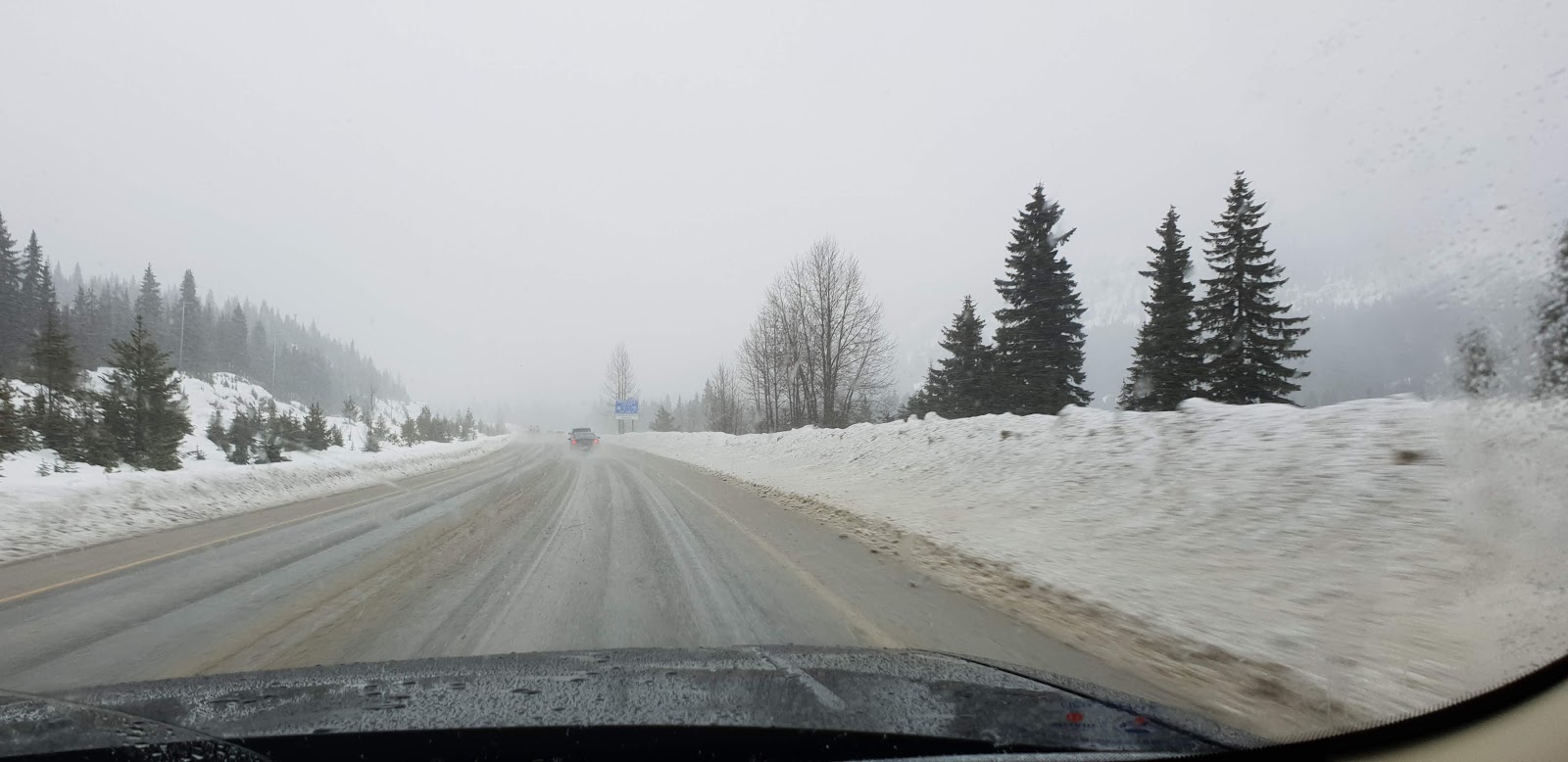
We finally leave the hotel at about half-past ten, and it is raining.  It is a simple task to get on Highway 1, the TransCanada Highway, initially, and then onto Highway 5, the Coquihalla Highway for the trip to Kamloops.

It rains all the way to the top of the mountain, progress hampered from time to time by water sprays from both vehicles and trucks.  The rain is relentless.  At the top of the mountain, the rain turns into snow and the road surface to slush.  It’s 0 degrees, but being the afternoon, I was not expecting it to turn to ice very quickly.

On the other side of the mountain, closer to Kamloops, there was sleet, then rain, then nothing, the last 100kms or so, in reasonably dry conditions.

Outside Kamloops, and in the town itself, there was evidence of snow recently cleared, and slushy roads.  Cars in various places were covered in snow, indicating the most recent falls had been the night before.

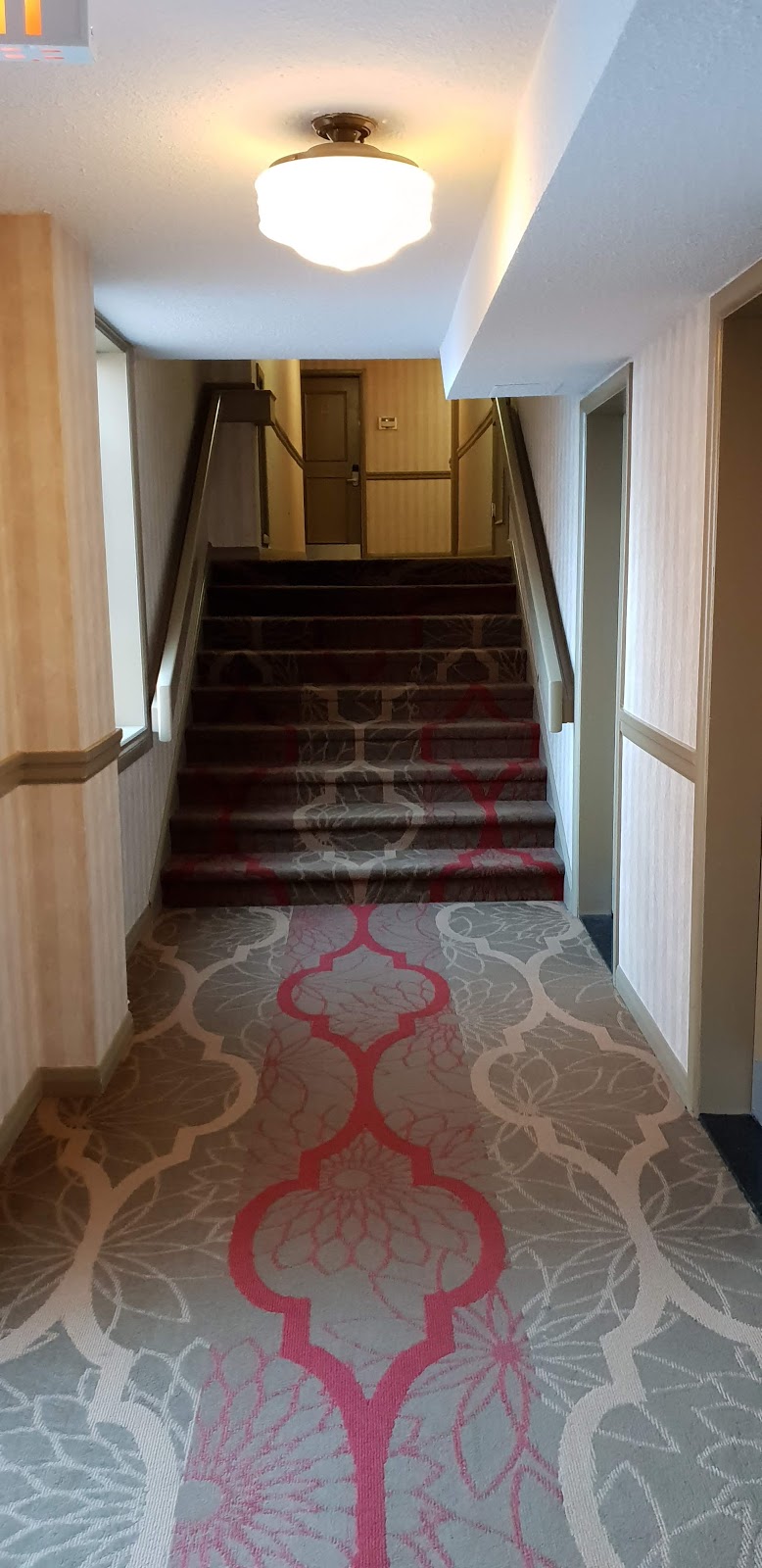
We’re staying at the Park Hotel, a heritage building, apparently built in the later 1920s.  In the style of the time, it is a little like a rabbit warren with passages turning off in a number of directions, and showing it is spread across a number of different buildings.

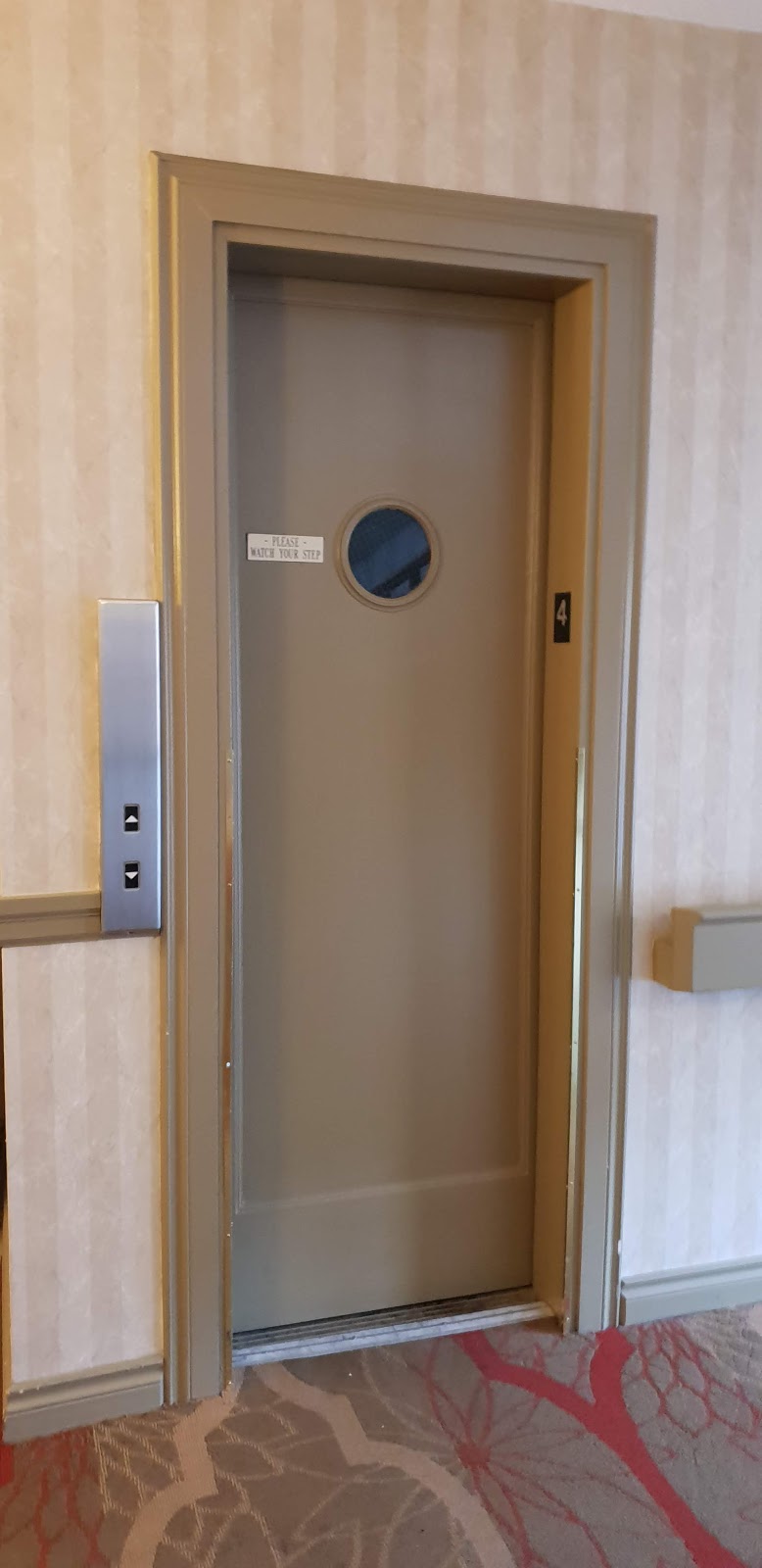
It has the original Otis elevator that can take a maximum of four passengers, and a sign on the wall that says “no horseplay inside the elevator” which is a rather interesting expression that only someone of my vintage would understand.  And, for those without a sense of humor, you definitely couldn’t fit a horse in it to play with.

The thing is, how do you find a balance between keeping the old world charm with modern-day expectations.  You can’t.  Some hotels try valiantly to get that balance.  Here, it is simply old world charm, which I guess we should be grateful for because sooner rather than later it’s going to disappear forever.

In my writer’s mind, given the importance of the railways, this was probably a thriving place for travelers, and once upon a time, there were a lot more hotels like this one.

A photograph from the inspirational bin – 32

This is a spot behind a group of restaurants at Victoria Point, Queensland.

But it could be anywhere, like a spot we saw on a boat trip on a river in the Daintree, in far north Queensland

So, this could be a spot, not far inland from the ocean where smugglers, or drug runners come ashore, in a place so remote they would never get caught.

Unless an enterprising federal agent comes up with a plan to track them from the ocean side using satellite images, or reported sightings of suspicious activity.

My money is on a random sighting, a vague report files in a small town police station, and a body washed up in shore, apparently the victim of a crocodile attack. Or not a crocodile.

It cold be a fishing trip gone wrong in a backwater stream, a weekend away by a dialled group of friends, who are not really friends, which all comes to a head when one of the friends go missing.

Or, I’d you like the idea of historical drama, a story about the first expedition from the bottom of Australia to the very top, for the first time, with all the hazards of rivers to cross, paths to create though the bush, the heat, the animals, the local inhabitants who have yet to see Europeans.

To be honest, I would not want to be one of those early explorers, especially those who went inland and struck desert, or died just short of their goal.

Just as an aside, we did learn about these people, Hume and Hovell, Blaxland, Wentworth and Lawson, Burke and Wills, and others.

I always wanted to see the planets – Episode 32

What does it say when you can’t trust the man in charge?

The Admiral was looking tired, possibly the result of being woken, yet again, in the dead hours of the night.

Out in space, we should be keeping earth time, in fact, we probably were, but I didn’t think to check before calling.

The matter was urgent, or at least I thought it was.

I’d just relayed the events leading up to the attack and the result. For some odd reason I didn’t think he looked pleased.

“I sent two shuttles over and they’ve confirmed 11 fatalities and one escapee who transported to the larger ship moments before the attack. I told them to set a geosychronous orbit around the moon coronas until you work out what you want to do with them. Their systems have been encrypted, so they can’t be resurrected.”

“And the base?”

“We understand it’s beneath the surface of the moon, accessible only by transporter. Our physist says she knows where the plutonium is.”

“I take it there are people down there?”

“Skeleton staff. It’s a new base, recently built, but we don’t know its purpose.”

“Definitely not alien then?”

“Unless the criminal world has made the first contact before us, and if they have, it can’t be for the betterment of mankind.”

I was no expert but at that moment I got the distinct impression that the Admiral was hiding something, or had information that might be useful to us.

Until now I hadn’t had time to think about all the events leading up to this point in time, but somewhere in the back of my mind, it had been processing everything that had happened, to do with the ship and even before that.

And the question that leapt out was, why me?

What was the compelling reason to appoint me as first officer to this particular ship at this particular time? I had no doubt there were a hundred others equally or better qualified than I was, and yet, my name was pulled out of the hat, and I could remember distinctly the captain of the ship I’d been completing my training, as surprised as I was that I’d been selected.

Them, out of left field, a memory came back, one o had tried to bury very deep, of an incident no one could explain, let alone comprehend because it was as if it never happened. I had no proof, and there was no one else left alive to corroborate what I believed to be the facts.

Solar stress, it had been called. The psychiatrist who handled the debriefing told me it was nothing more than an over-active imagination, fuelled by overwork, sleep deprivation, and the deaths of my family members on an outpost on the moon when I’d been visiting them.

That diagnosis alone should have prevented my appointment, and yet here I was.

“Then it’s no longer your problem. We’ll take it from here. There’s a ship on its way. Your mission is to proceed as planned.”

“And the other ship that fled? I’m sure they’re no to going to just forgive and forget.”

“The chances are they will. Now they know you have superior firepower, and the speed to hunt them down, they will not be coming back for a second encounter. If you do come across them, you can deal with them as you wish, but that is not the priority. You have your orders.”

The screen went blank.

Yes, he was definitely hiding something.

© Charles Heath 2021

The cinema of my dreams – I always wanted to go on a treasure hunt – Episode 82

Here’s the thing…

Every time I close my eyes, I see something different.

I’d like to think the cinema of my dreams is playing a double feature but it’s a bit like a comedy cartoon night on Fox.

But these dreams are nothing to laugh about.

Once again there’s a new installment of an old feature, and we’re back on the treasure hunt.

The rescue story

When I woke again, it was noticeable that it was light outside the room, even though the curtains were drawn.

My mother was sitting, or rather slumping, in the chair beside the bed, asleep.  She looked tired, worse, like she had been to hell and back.

I guess the thought of losing me, after my father, might have been too much for her to bear.  It also brought up the question of why I hadn’t told her what I was doing.  At the time, it didn’t seem to matter, I’d always be coming home, and there was no question in my mind that anything bad might happen to me.

So, of course, there was an easy answer and a more complicated answer, but I had to hope she wasn’t going to jump to any conclusions before I had a chance to explain.  And then, when I thought about it, what could I say that was not going to tip her over the edge?  In not planning for the worst eventuality, the worst had happened.

I’d done everything I said I would never do, and for selfish reasons.  It was nearly the death of me.  How could I expect her to understand any of it?

She stirred, then slowly sat up, and stretched.  Those chairs were not comfortable at the best of times.

“I’m sorry,” I said, my voice barely above a whisper.

She stopped mid-stretch and looked at me.  It was not with anger or annoyance, but relief.

“How are you?”  She lowered her hands to take mine in hers.

It was a strange question, given my condition, and being in a hospital.  Yet, I guess everyone asked that same question out of courtesy or to make polite conversation.

“I’m told I’ll live.”

“A good thing too.  I’m glad they found you.”

“Who?”

“You know, that slip of a girl you told me you liked, but she was too good for you, or some such nonsense.”

“Charlene?”

“The sheriff’s daughter, yes.”

“She still is.”

“Only in your mind Sam.”

Forever the matchmaker even on my near-death bed, she had always been looking for the right girl, never accepting that our station in life made certain choices impossible.  And, even if Charlene liked me, she would not be allowed, but that was something my mother would never understand.

“What day is it?”  I had no idea of the date or time for that matter, but it had to be days later.

“Thursday. You were missing for nearly eight days, and it’s been a further five days while being treated for severe dehydration.”

First question, what happened to Boggs?

It was as if my mother could read my mind.  “I was told that when they found you, you were asking about Boggs.  I’m sorry to tell you he was found deceased yesterday in one of the caves.”

Had he got lost, or did Alex and Vince go after him too?  They hadn’t left in the same direction, so in all likelihood, he simply got lost, though being the climber and cave Explorer he was, that seemed unlikely.

“That Cossatino girl recovered quickly, but she’s still here, under observation.  She’s been saying she’s not leaving until she sees you.  I’m not sure that’s a good idea, Sam. The sheriff is considering charges against that whole family.”

“She didn’t do anything wrong.  It was her brother and Alex who tied us up and left us for dead.”

She didn’t get time to respond, but the astonished look on her face told me something was very amiss.  The sheriff and Charlene had arrived with the doctor, and a nurse who hustled her out of the room.

The doctor examined me, asked a few questions to determine whether I could withstand an interrogation, and then left me with the interrogators, the sheriff, standing back after closing the door, and Charlene, in the seat my mother just vacated.

She had her notepad open on a blank page.

“Firstly, I should apologize for taking so long to send out a search party.  For the record, I received your text message.  I assume you sent that before you left.”

“As we walked out the door of the shoreside hut.  I assume that was the first place you looked.”

It was obvious it wasn’t, so I was beginning 5o wonder what happened.  My first question was, “when did you find out we were missing.”

“Your mother came to the office two days after the message.  She said you hadn’t come home but wasn’t overly worried because she assumed you were with Nadia.  She only came because your work had asked her if you were ill because you hadn’t turned up for your shift, and that it was the first time.”

“As a courtesy to your mother Sam, I said I would look into it.  I went to the warehouse and Alex said you had taken off with Nadia and had left him in a difficult position.”  The sheriff wasn’t making excuses, just reporting the facts.

I hadn’t been thinking about Alex simply because I didn’t want to, not right then, but I was probably going to have to.  My first thought went to Nadia, who, by the time we realized that we might die, had all but signed his death warrant.  If she survived, she was going to kill him, and her brother, and her explicit description of how she was going to make them suffer made me shudder.

Charlene noticed.  “Again, I’m sorry, but we have to go through this.  What happened after you left the hut?  Take your time.  I know this might be painful, but it is necessary.”

Given what the sheriff just said, I had a feeling that implicating Alex wasn’t going to be easy.  Having a head start on us, he had time to get a story out there, and friends who would readily lie for them.

And Nadia being on the outside of her family, the Cossatinos would close ranks around Vince, and between Alex and Vince, refute any allegation I made, and quite possibly Nadia too.

It would be good to know what she was thinking.

“For whom?  Because from where I’m sitting, and judging by the expressions on your faces, I’m the one who’s in trouble here.”

“We just want the facts, Sam.”

“It seems to me you’ve already got them, and what I have to say, if there was anything to say, is irrelevant.  I don’t know anything about what happened to Boggs, and I’m not prepared to speculate.  I don’t know what Nadia told you, but I remember very little about what happened, except we were in a cave, and then I woke up here.”

It then occurred to me to look at my wrists, and there were only faint marks to show I’d been tied up.  I knew then someone had come back and untied us, so that if we hadn’t been found, our deaths would not be suspicious.

“We just want your side of the story.”

So the Benderby’s could refute it once the sheriff delivered my statement.

“You just got it.  If Nadia gave you hers, then that should be it.”

“Nadia won’t tell us anything, not even why she was in the cave.  It seems it was a place where pirates might once have visited, but except for a bundle of straw and an empty chest, there was nothing.”

And there it was.  The bodies had been removed, the crime scene cleansed, and we were simply trespassers the Cossatino’s could prosecute.

“Boggs had taken us spelunking, obviously in a place we shouldn’t, but I thought with Nadia coming with us, we didn’t need permission.  Perhaps the assumption was wrong.”

“Cossatino isn’t interested in charging anyone with anything.  He’s just happy we found his daughter.”

Pity the feeling between daughter and father wasn’t mutual.

“The good tidings abound.  Everyone is happy.”

“I’d still like to know why you were adamant Alex had something to do with the professor’s death.”

“I don’t.  I hate the bastard, it’s as simple as that.”

“We know the professor was killed at the mall, you got that right, and dumped on Rico’s boat, but there was no evidence Alex was there, or any safe, desk or anything except dust.”

Of course.  Alex had been on a massive clean-up exercise, just in case we survived.  It was going to be a very interesting first meeting when I saw him again.

“A good guess then.  I’m no longer interested in treasure, Boggs, God rest his soul, or anyone else for that matter.  Soon as you’re done with me, I’m gone, and you will never see me again.”

With that I rolled over to face the other way, the interview as far as I was concerned, done.

“This isn’t over Sam.”  Charlene was disappointed but she’d get over it. 

And my estimation of her just fell below zero.  It was clear Alex had got to her. And she believed his story.

Of course, I just realized what I’d said to my mother, and had to hope she didn’t repeat it.  But, knowing her affiliation with Benderby, I had no doubt she would tell him, so I could expect a visit from his lawyers, threatening all kinds of punitive action if I dared to repeat it.

As for Nadia, the fact she said nothing told me everything.  Both Alex and Vince were going to face a different type of justice, and I was going to ask her for an invitation.

© Charles Heath 2020-2022