Searching for locations: Off to Philadelphia

We are up early and I mean early because we decided to take on Philadelphia the next day, and instead of taking public transport because all the fares I could find were ridiculous, we hired a car.

Again the words ‘or similar’ foiled us.  All charged up and excited its quarter to eight in the morning we arrive at the Avis center just a five-minute walk from our hotel.

Shock number one.  We finish up with some crappy Nissan the desk lady was using as her personal car.

She lied about the car being full of petrol, it was not.

We asked for a GPS and all it was was a glorified phone.  She switched it on, the first didn’t work but the second displayed a screen and that was enough for her to say it was set up and working.

You guessed it, another barefaced lie.

We put it in the car, switched it on, and it was in French.  She hadn’t checked the language of the last user.

We took it back and she had the audacity to call us ‘stupid’, blaming us for breaking it, and then she couldn’t fix it so she gave us another one which I’m sure she checked for English.

The question, if she could set these things up, why couldn’t she instantly fix it?

Sorry, the woman was arrogant and very nasty, and not a good advertisement for Avis or the U.S.A as a place to visit.  I shall never use Avis in America again if she’s the best they can put at the front desk.

Still seething from that encounter it was a good thing I wasn’t driving.

I remember when I was writing Echoes From The Past I had a sequence of events starting in Lower Manhattan and ending up in Philadelphia.  In that narrative, I was not sure if the main character used the Lincoln tunnel, which, on this occasion, we did.

As it turned out the drive was reasonably accurate in that we also followed the i95 turnpike and a number of tolls along the way.  Unfortunately, our mode of transport was not quite as luxurious as my characters.

Once in Philadelphia, we managed to find the Swann Memorial Fountain at Logan Square…

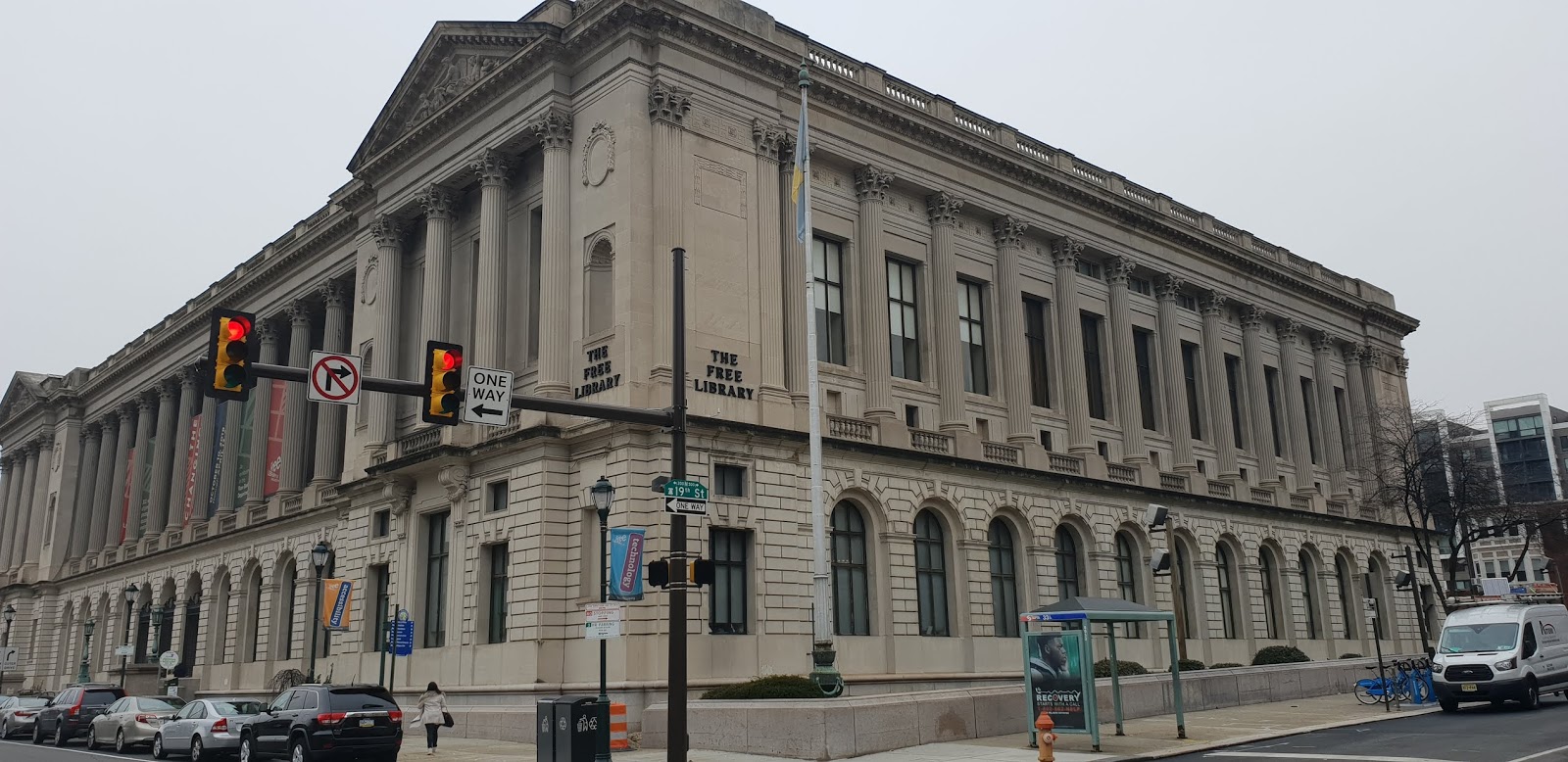
and parked the car outside the Free Library.

From there we walked to the city center, what some might call City Hall, a rather large and impressive stone structure, and then ended up at stop number six of the big bus tour.

Big bus tour

There are 27 stops of which we got on at 6 and got off at 1, managed by a miracle of fate to get back on at 1 and got off at 8 where our car was parked.  By then we were frozen solid.

But…

There’s always an intervening adventure with our outings and the quest was to find the best place to have a Philly Cheese Steak.

Between stops 1 and 6 when we were not on the bus, we hailed a cab, deciding not to wander around the city looking for a Philly Cheese Steak place ourselves.

We had a side mission to the side mission and got the cab driver to take us back to the car so we could lengthen the parking time.  This done, he took us to what he believed was the best Philly Cheese Steak place.

It was a long and convoluted ride that showed us the real Philadelphia, where the citizens live, not the showpiece tourist attractions.

It was somewhere in little Italy. A place called Geno’s steaks, a new and shiny restaurant where there was only seating outside.  Mid-afternoon, it was cold.

But were they the best Philly Cheese Steaks.  I’m not an expert so I don’t really know.  What I do know is the cheesy steak in a roll was absolutely delicious.  Freshly cooked in front of you, the steak slices were still dripping juices as they were put on the roll with a layer of cheese and onions which you have to ask for.

And at ten dollars each, it turned out to be less than the cab fare to get there.

Of course being dropped in Little Italy in America on the 20th Anniversary of the Sopranos, conjured up too many nightmares to be walking the streets in the fading afternoon lights.

Two boys on bikes who looked like thugs in hoodies scared us into a cab and back to the bus stop to do the last eight stops before going home.

All in all, a very interesting if not at times scary adventure.

Short Story Writing – Don’t try this at home! – Part 6

This is not a treatise, but a tongue in cheek, discussion on how to write short stories.   Suffice to say this is not the definitive way of doing it, just mine.  It works for me – it might not work for you.

Now, there’s this thing called continuity, but it covers a whole range of writing sins, most of which I eventually get caught out.  Films sometimes miss a few items, like back in the roman days, there are plane trails in the sky, in a 1920’s period piece, there’s a mobile phone sitting on a desk.

Like one minute the hero has a gun, and the next he’s fighting for his life with a knife, and, hey presto, there’s that gun again.  The error might not be that big but you can’t pull out a weapon you don’t have or wasn’t there in the first place.

Similarly, the hero pulls out a mobile phone, but there’s only one problem, it’s 1980, and there are no mobile phones.  Our problem might be that we are so used to doing and using certain things that we might forget, for a minute or two, that were not available in the past.

Then there’s places like hotels and restaurants, both of which change hands and close and reopen with a different owner like someone changes their socks.  There’s no substitute for checking, on the internet of course, whether a Hilton Hotel was in 6th Avenue, New York, in 1920.

The answer is no.  The first Hilton Hotel was in Waco in 1927.  The New York Hilton opened in 1963.

The same goes for the fashion of the day.

I’m no fashion guru, but I have to rely on Google once again to fill in the gaps.

And my all-time favourite, getting the right make and model of car.

Oh, and just for good measure, back in the old days they used acoustic couplers to attach to phones via a serial port to dial-up not a server, but a BBS, Bulletin Board Service, at a rate of 300 baud, or a little while later, 1,200 baud.

There was no internet in general use.  If you wanted to call the office when out, use a telephone box.  Or carrier pigeon.

And the use of language, there’s a lot of stuff relevant today that was not used back then, and there was a lot of stuff back then that isn’t tolerated now.  Some of it might be hard to get your head around. 

It isn’t for me, because I can remember the 1970s and 1980s, but I’m not too sure about allowing some of what happened then to creep into my work.

So, you get the picture.  Try to use the past as the past, or leave it in the past.

Unless it’s a book about time travel, then all bets are off.

In a word: Line (and there’s more)

There’s more to that word ‘line’, a lot more, making it more confusing, especially for those learning English as a second language.

I keep thinking how I could explain some of the sayings, but the fact is, it’s only my interpretation, which could possibly have nothing to do with its real meaning if it has one.

Such as,

Hook, line, and sinker

We would like to think that this is only used in a fishing depot, but while it is generally, there are other meanings, one of which is, a con artist has taken in a victim completely, or as the saying goes, hook, line, and sinker.

At the end of the line

Exactly what it t says though the connotations of this expression vary.

For me, the most common use is when you’re waiting, like for a table in a restaurant with a time-specific reservation, and you see people who arrive after you, getting a table before you, it’s like being continually sent to the end of the line.

Line ball decision

This is a little more obscure, but for me, it means the result could go either way, and it’s a matter of making a call. The problem is both decisions are right, and unfortunately, you’re the poor sod who has to decide.

It of course partners very well with you can’t please everyone all of the time.

These are the most difficult because one side is going to be aggrieved at the decision especially when it is supposed to be impartial and sometimes isn’t.

Get it over the line

This, of course, has many connotations in sport, particularly rugby when the aim is to get the ball over the try line.

But another more vicarious meaning might be from a senior salesman to a junior, get [the sale] over the line, i.e. get it signed sealed and delivered by any means possible by close of business.

Line of credit

A more straight forward use of the word, meaning the bank will extend credit up to a certain limit, but it’s generally quite large and can feel like its neverending.

Until you have to pay it back.

There’s more, but it can wait till another day.

“Trouble in Store” – Short stories my way: Adding a catalyst

Just when there’s enough complication in the story, we could leave it there with the current three protagonists and see what happens.

But I like mayhem.

So rather than another customer, it’s time to add a complication; an off duty policeman, or more to the point, policewoman.  A beat cop, if they still exist.

Her back story in a sentence or so:

It had been another long day at the office for Officer Margaret O’Donnell, or, out in the streets, coping with people who either didn’t know or didn’t care about the law.

People who couldn’t cross the road where there were crossings and lights to protect them, silly girls shoplifting on a dare, and boys who thought they were men and could walk on water.

The one they scraped of the road would never get to grow up, and his mother, well, she was not doing another call on a family to give them the bad news.

That was her day.  So far.

What is she doing near the shop?  She lives around the corner.  Perhaps she knows the reputation of the shopkeeper or perhaps not.  It’s not relevant, then, as it is a place she avoids.

Now, she may not have the option.  She sees the shop is still open, past the usual closing time.

Let’s continue:

She came around the corner into the street where she lived and saw the lights were on in the corner store.

She looked at her watch and saw it was ten minutes to midnight.  Long past closing time.  She looked through the window but from the other side of the road and could only see three heads and little else.

Damn, she thought, I’m going to have to check it out.  There were rumors, and she hoped they were not true.

Meanwhile, back in the shop how are the others faring?

The shopkeeper is in an invidious position, he can’t supply the kids with the drugs and get them out, not in front of the customer.

The fact the girl has a gun makes the situation almost impossible.  What would happen if he suggests the customer leave?  Without him, the situation would be simpler.

Alphonse had only a few moments to sum up the situation, and the sum of those deliberations was the remove the only problem, the customer.

He could still salvage this:

The shopkeeper changed his expression to one more placatory, and said quietly to the girl, ‘Look, this is not this chap’s problem.’  He nodded in the direction of the customer.  ‘I’m sure he’d rather not be here, and you would glad of one less distraction.’

He could see she was wavering, she was not holding the gun so steadily, and the longer this dragged on, the more nervous and unpredictable she would become.

And in the longer game, the customer would sing his praises no matter what happened after he left.

The girl looked at Jack.  The shopkeeper was right.  If he wasn’t here this could be over.  But there was another problem.  It didn’t look like Simmo was in any shape to get away.  In fact, this was looking more like a suicide mission.

She waved the gun in his direction.  ‘Get out now, before I change my mind.’

As the gun turned to the shopkeeper, Jack wasn’t going to wait to be asked twice and started sidling towards the door.

What happens next?


And the story for this section, with a few minor changes:


It had been another long day at the office for Officer Margaret O’Donnell, or, out in the streets, coping with people who either didn’t know or didn’t care about the law.

People who couldn’t cross the road where there were crossings and lights to protect them, silly girls shoplifting on a dare, and boys who thought they were men and could walk on water.

The one they scraped of the road would never get to grow up, and his mother, well, she was not doing another call on a family to give them the bad news.

That was her day.  So far.  For now, she was glad to be getting home, putting her feet up, and forgetting about everything until the next morning when it would start all over again.

Coming around that last corner, the home stretch she called it, she was directly opposite the corner shop, usually closed at this hour of the night.  It was not.  The lights were still on.

She looked at her watch and saw it was ten minutes to midnight, and long past closing time.  She looked through the window but from the other side of the road and could only see three heads and little else.

Damn, she thought, I’m going to have to check it out.  There were rumors, and she hoped they were not true.


The shopkeeper changed his expression to one more placatory, and said quietly to the girl, ‘Look, this is not this chap’s problem.’  He nodded in the direction of the customer.  ‘I’m sure he’d rather not be here, and you would glad of one less distraction.’

He could see she was wavering, she was not holding the gun so steadily, and the longer this dragged on, the more nervous and unpredictable she would become.

And in the longer game, the customer would sing his praises no matter what happened after he left.

The girl looked at Jack.  The shopkeeper was right.  If he wasn’t here this could be over.  But there was another problem.  It didn’t look like Simmo was in any shape to get away.  In fact, this was looking more like a suicide mission.

She waved the gun in his direction.  ‘Get out now, before I change my mind.’

As the gun turned to the shopkeeper, Jack wasn’t going to wait to be asked twice and started sidling towards the door.


Next:  Actions have consequences


© Charles Heath 2016-2020

“Sunday in New York”, a romantic adventure that’s not a walk in the park!

“Sunday in New York” is ultimately a story about trust, and what happens when a marriage is stretched to its limits.

When Harry Steele attends a lunch with his manager, Barclay, to discuss a promotion that any junior executive would accept in a heartbeat, it is the fact his wife, Alison, who previously professed her reservations about Barclay, also agreed to attend, that casts a small element of doubt in his mind.

From that moment, his life, in the company, in deciding what to do, his marriage, his very life, spirals out of control.

There is no one big factor that can prove Harry’s worst fears, that his marriage is over, just a number of small, interconnecting events, when piled on top of each other, points to a cataclysmic end to everything he had believed in.

Trust is lost firstly in his best friend and mentor, Andy, who only hints of impending disaster, Sasha, a woman whom he saved, and who appears to have motives of her own, and then in his wife, Alison, as he discovered piece by piece damning evidence she is about to leave him for another man.

Can we trust what we see with our eyes or trust what we hear?

Haven’t we all jumped to conclusions at least once in our lives?

Can Alison, a woman whose self-belief and confidence is about to be put to the ultimate test, find a way of proving their relationship is as strong as it has ever been?

As they say in the classics, read on!

Purchase:

http://tinyurl.com/Amazon-SundayInNewYork

Writing about writing a book – Day 27

Well, it’s been a monumental process to get to the point where I think I can start writing Chapter One.

This, of course, might not be the first chapter, it might finish up somewhere else.

If there was a plan, then this would be chapter one.  In fact, right now, I’m going to sit down and do a plan with as much as I know about where the book is heading.

One, about Bill and his introduction to the reader

Two, a phone call to interrupt the dream

Three, having to go into work – there’s a disaster going on, and he’s the only one who can fix it.

Well, not necessarily others, but this is the nineteen seventies/eighties, and women were still not looked upon or considered as being able to hold the same position as Bill – we’ve certainly come a long way in forty years.

And that, of course, is anther stream in the book, proving that woman, and one in particular is clever and given the recognition she deserves.

I’ve also got to remember that there is no internet, and there are no mobile phones and a lot of other stuff that is now regarded as commonplace and taken for granted.

We had telephone boxes, telephones on desks that connected to a switchboard, dumb terminals connected to mainframes, modems that were bulky and very very slow, and comms ran very differently to those today, and networking was a variety of technologies that mostly don’t exist anymore, like ethernet and token ring, and software like 3Com and Novell.

I know I’m going to forget sometimes because it’s going to be hard not to have the MC pull out his cellphone and call on the spot.

Anyway, here’s the first attempt…


A cool breeze blew briskly across meadows of tall grass, giving the impression of the ocean in a storm.  High above, clouds scudded across the sky, occasionally allowing the sun to shine through to bathe the ground in the sunshine, intensifying the richness of the greens and browns.

It was spring.  Trees were displaying new growth, and flowers were starting to show the promise of summery delight.  An occasional light shower of rain added to the delightful aromas, particularly where the grass had recently been mowed.

I was there, too, with my grandmother, the woman who had, for the most part, brought me up at her country residence.  But, as I got older, the dream changed and sometimes there were storm clouds on the horizon, or I was caught in the rain, alone and frightened, or lost in the woods in the dark.

There were other visions like these from my childhood, now a million years away somewhere in a distant past that was hard to remember or say where and when they belonged.  It was a pity some were now based on images stolen from the start of a movie seen on TV late at night as I was trying to get to sleep.  Or that the psychiatrist had said there was some trauma from my early childhood, trying to work its way out.

Like every other morning, these images came to me as I was hovering somewhere between conscious and unconscious, just before the alarm went off.  Then it did, filling the room with a shrill noise that would have woken the dead.

I cursed, and then dragged myself over to the other side of the bed where I’d put the alarm clock, and hit it, killing the shrill sound.  I’d put it there so I would have to wake up to turn it off.  And, worse, I’d forgotten to turn it off the night before because it was, technically, the first day of my holiday.

Not that I really wanted one because since Ellen left, my life consisted of work, work, and more work.  It kept my mind off being alone, and in an empty apartment except for the books, a bed, a table, and two chairs, a desk, and a well-worn lounge chair.  I’d been there for years and still hadn’t bought any new furniture or anything else for that matter.

And the last holiday I’d gone on had been organized by Ellen fifteen years ago in Italy after our two daughters had finished school and graduated almost top of their class.  We’d been happier then, but happiness was fleeting for me, and soon after the rot had set in, and it was the beginning of the end.

I remembered it only too clearly, coming home, opening a letter addressed to her, and finding proof of what I think I’d known all along.  She was having an affair, had been for quite some time.

It should not have been a surprise given what I had put her through over the years, since my discharge from the Army, and the nightmares active service had fueled, but it was and sent me spiraling to a new low.

But that was five years ago.  I came out of the fog a year after that.  Ellen was gone, the girls came to see me from time to time, and all I had left were memories.

I rolled over and tried to go back to sleep.  I was on holiday.  No work, no pressure, nothing.  I could go back to my grandmother’s house and visit.  I had been promising myself I’d do that soon, even if it was now a country hotel.  From the advertising it had not changed one bit, the house and grounds intact.

Or I could throw a dart at a map and get on the next plane there, though knowing my ability with a dart, it would be in the middle of the ocean.

I could do almost anything I wanted.


It’s not much, just a taste.  But it’s enough for now.  I’ve made a start.  Now, all I have to do is come up with the next 100,000 words or so.


© Charles Heath 2016-2020

An excerpt from “What Sets Us Apart”, a mystery with a twist

See excerpt from the story below, just a taste of what’s in store…

http://amzn.to/2Eryfth

whatsetscover

McCallister was old school, a man who would most likely fit in perfectly campaigning on the battlefields of Europe during the Second World War. He’d been like a fish out of water in the army, post-Falklands, and while he retired a hero, he still felt he’d more to give.

He’d applied and was accepted as head of a SWAT team, and, watching him now as he and his men disembarked from the truck in almost military precision, a look passed between Annette, the police liaison officer, and I that said she’d seen it all before. I know I had.

There was a one in four chance his team would be selected for this operation, and she had been hoping it would be one of the other three. While waiting for them to arrive she filled me in on the various teams. His was the least co-operative, and the more likely to make ad-hoc decisions rather than adhere to the plan, or any orders that may come from the officer in charge.

This, she said quite bluntly, was going to end badly.

I still had no idea why Prendergast instructed me to attend the scene of what looked to be a normal domestic operation, but as the nominated expert in the field in these types of situations, it was fairly clear he wasn’t taking any chances. It was always a matter of opinion between us, and generally I lost.

In this case, it was an anonymous report identifying what the authorities believed were explosives in one of the dockside sheds where explosives were not supposed to be.

The only reason why the report was given any credence was the man, while not identifying himself by name, said he’d been an explosive expert once and recognized the boxes. That could mean anything, but the Chief Constable was a cautious man.

With his men settled and preparing their weapons, McCallister came over to the command post, not much more than the SUV my liaison and I arrived in, with weapons, bulletproof vests, and rolls of tape to cordon off the area afterward. We both had coffee, steaming in the cold early morning air. Dawn was slowly approaching and although rain had been forecast it had yet to arrive.

A man by the name of Benson was in charge. He too had groaned when he saw McCallister.

“A fine morning for it.” McCallister was the only enthusiastic one here.

He didn’t say what ‘it’ was, but I thought it might eventually be mayhem.

“Let’s hope the rain stays away. It’s going to be difficult enough without it,” Benson said, rubbing his hands together. We had been waiting for the SWAT team to arrive, and another team to take up their position under the wharf, and who was in the final stages of securing their position.

While we were waiting we drew up the plan. I’d go in first to check on what we were dealing with, and what type of explosives. The SWAT team, in the meantime, were to ensure all the exits to the shed were covered. When I gave the signal, they were to enter and secure the building. We were not expecting anyone inside or out, and no movement had been detected in the last hour since our arrival and deployment.

“What’s the current situation?”

“I’ve got eyes on the building, and a team coming in from the waterside, underneath. Its slow progress, but they’re nearly there. Once they’re in place, we’re sending McKenzie in.”

He looked in my direction.

“With due respect sir, shouldn’t it be one of us?” McCallister glared at me with the contempt that only a decorated military officer could.

“No. I have orders from above, much higher than I care to argue with, so, McCallister, no gung-ho heroics for the moment. Just be ready to move on my command, and make sure you have three teams at the exit points, ready to secure the building.”

McCallister opened his mouth, no doubt to question those orders, but instead closed it again. “Yes sir,” he muttered and turned away heading back to his men.

“You’re not going to have much time before he storms the battlements,” Benson quietly said to me, a hint of exasperation in his tone. “I’m dreading the paperwork.”

It was exactly what my liaison officer said when she saw McCallister arriving.

The water team sent their ‘in position’ signal, and we were ready to go.

In the hour or so we’d been on site nothing had stirred, no arrivals, no departures, and no sign anyone was inside, but that didn’t mean we were alone. Nor did it mean I was going to walk in and see immediately what was going on. If it was a cache of explosives then it was possible the building was booby-trapped in any number of ways, there could be sentries or guards, and they had eyes on us, or it might be a false alarm.

I was hoping for the latter.

I put on the bulletproof vest, thinking it was a poor substitute for full battle armor against an exploding bomb, but we were still treating this as a ‘suspected’ case. I noticed my liaison officer was pulling on her bulletproof vest too.

“You don’t have to go. This is my party, not yours,” I said.

“The Chief Constable told me to stick to you like glue, sir.”

I looked at Benson. “Talk some sense into her please, this is not a kindergarten outing.”

He shrugged. Seeing McCallister had taken all the fight out of him. “Orders are orders. If that’s what the Chief Constable requested …”

Madness. I glared at her, and she gave me a wan smile. “Stay behind me then, and don’t do anything stupid.”

“Believe me, I won’t be.” She pulled out and checked her weapon, chambering the first round. It made a reassuring sound.

Suited up, weapons readied, a last sip of the coffee in a stomach that was already churning from nerves and tension, I looked at the target, one hundred yards distant and thought it was going to be the longest hundred yards I’d ever traversed. At least for this week.

A swirling mist rolled in and caused a slight change in plans.

Because the front of the buildings was constantly illuminated by large overhead arc lamps, my intention had been to approach the building from the rear where there was less light and more cover. Despite the lack of movement, if there were explosives in that building, there’d be ‘enemy’ surveillance somewhere, and, after making that assumption, I believed it was going to be easier and less noticeable to use the darkness as a cover.

It was a result of the consultation, and studying the plans of the warehouse, plans that showed three entrances, the main front hangar type doors, a side entrance for truck entry and exit and a small door in the rear, at the end of an internal passage leading to several offices. I also assumed it was the exit used when smokers needed a break. Our entry would be by the rear door or failing that, the side entrance where a door was built into the larger sliding doors. In both cases, the locks would not present a problem.

The change in the weather made the approach shorter, and given the density of the mist now turning into a fog, we were able to approach by the front, hugging the walls, and moving quickly while there was cover. I could feel the dampness of the mist and shivered more than once.

It was nerves more than the cold.

I could also feel rather than see the presence of Annette behind me, and once felt her breath on my neck when we stopped for a quick reconnaissance.

It was the same for McCallister’s men. I could feel them following us, quickly and quietly, and expected, if I turned around, to see him breathing down my neck too.

It added to the tension.

My plan was still to enter by the back door.

We slipped up the alley between the two sheds to the rear corner and stopped. I heard a noise coming from the rear of the building, and the light tap on the shoulder told me Annette had heard it too. I put my hand up to signal her to wait, and as a swirl of mist rolled in, I slipped around the corner heading towards where I’d last seen the glow of a cigarette.

The mist cleared, and we saw each other at the same time. He was a bearded man in battle fatigues, not the average dockside security guard.

He was quick, but my slight element of surprise was his undoing, and he was down and unconscious in less than a few seconds with barely a sound beyond the body hitting the ground. Zip ties secured his hands and legs, and tape his mouth. Annette joined me a minute after securing him.

A glance at the body then me, “I can see why they, whoever they are, sent you.”

She’d asked who I worked for, and I didn’t answer. It was best she didn’t know.

“Stay behind me,” I said, more urgency in my tone. If there was one, there’d be another.

Luck was with us so far. A man outside smoking meant no booby traps on the back door, and quite possibly there’d be none inside. But it indicated there were more men inside, and if so, it appeared they were very well trained. If that were the case, they would be formidable opponents.

The fear factor increased exponentially.

I slowly opened the door and looked in. A pale light shone from within the warehouse itself, one that was not bright enough to be detected from outside. None of the offices had lights on, so it was possible they were vacant. I realized then they had blacked out the windows. Why hadn’t someone checked this?

Once inside, the door closed behind us, progress was slow and careful. She remained directly behind me, gun ready to shoot anything that moved. I had a momentary thought for McCallister and his men, securing the perimeter.

At the end of the corridor, the extent of the warehouse stretched before us. The pale lighting made it seem like a vast empty cavern, except for a long trestle table along one side, and, behind it, stacks of wooden crates, some opened. It looked like a production line.

To get to the table from where we were was a ten-yard walk in the open. There was no cover. If we stuck to the walls, there was equally no cover and a longer walk.

We needed a distraction.

As if on cue, the two main entrances disintegrated into flying shrapnel accompanied by a deafening explosion that momentarily disoriented both Annette and I. Through the smoke and dust kicked up I saw three men appear from behind the wooden crates, each with what looked like machine guns, spraying bullets in the direction of the incoming SWAT members.

They never had a chance, cut down before they made ten steps into the building.

By the time I’d recovered, my head heavy, eyes watering and ears still ringing, I took several steps towards them, managing to take down two of the gunmen but not the third.

I heard a voice, Annette’s I think, yell out, “Oh, God, he’s got a trigger,” just before another explosion, though all I remember in that split second was a bright flash, the intense heat, something very heavy smashing into my chest knocking the wind out of me, and then the sensation of flying, just before I hit the wall.

I spent four weeks in an induced coma, three months being stitched back together and another six learning to do all those basic actions everyone took for granted. It was twelve months almost to the day when I was released from the hospital, physically, except for a few alterations required after being hit by shrapnel, looking the same as I always had.

But mentally? The document I’d signed on release said it all, ‘not fit for active duty; discharged’.

It was in the name of David Cheney. For all intents and purposes, Alistair McKenzie was killed in that warehouse, and for the first time ever, an agent left the Department, the first to retire alive.

I was not sure I liked the idea of making history.


© Charles Heath 2016-2020

What do these mean?

I’ve been reading the latest headlines and picked out a few:


The seems to be a currency war,

Oil prices are set to rise in line with a cut in production,

Some tankers will not be playing the Hormuz strait,

There was a massive power outage in the UK,

Gold prices are rising,

North Korea is shooting missiles into the sea

The USA needs more missiles,

There are Chinese survey vessels in the South China Sea,

In Russia there is an explosion on a secret base with nuclear implications, and,

There might be a global recession coming.


What do all these events mean?  Nothing really when taken individually, but when you start combining them, then the thriller writer in me starts to see all sorts of conspiracies and plotlines for stories.

For instance

Take that explosion in Russia, and the fact the word nuclear is attached to it, and then look at the massive power outage in the UK.  What if that site was a laboratory, working on small,  powerful bombs that can easily be carried, installed, in or around vital infrastructure, and in that quest for smaller and more powerful something goes wrong.

After all, isn’t that what testing is for?

And the fact there’s been one major event involving vital infrastructure, should we be looking for more?  Then there are a few problems with bombs being attached to tankers in the Hormuz Strait.  Does anyone see the potential for an apocalyptic event coming on?

Then there’s North Korea firing test missiles, and the US calling for more missiles to add to their arsenal.  Are they using North Korea as an excuse?  Or is there something more sinister going on with Chinese survey vessels in the South China Sea.  What if they’re not really survey vessels?

Then there’s a small matter of rising oil prices.  Whilst the same report might say that the rise is due to OPEC cutting output, there could be other reasons, such as the currency war that’s about to erupt, and will this pre-emp a global recession.  A good indicator to impending disaster, wars, and other maladies is the rising price of gold.

The gold market goes into overdrive when currency starts to lose value, recessions are coming or have arrived, or there is about to be a war, or there is one.  The US and China are facing off, the US and half the middle east is a disaster waiting to happen, and, hang on, but North Korea is being provocative, and in a late development, India and Pakistan are facing off over Kashmir.

Are we surprised people are turning to gold?

Maybe I should go back to doing the crossword, and ignoring the news.


“The Devil You Don’t” – A beta readers view

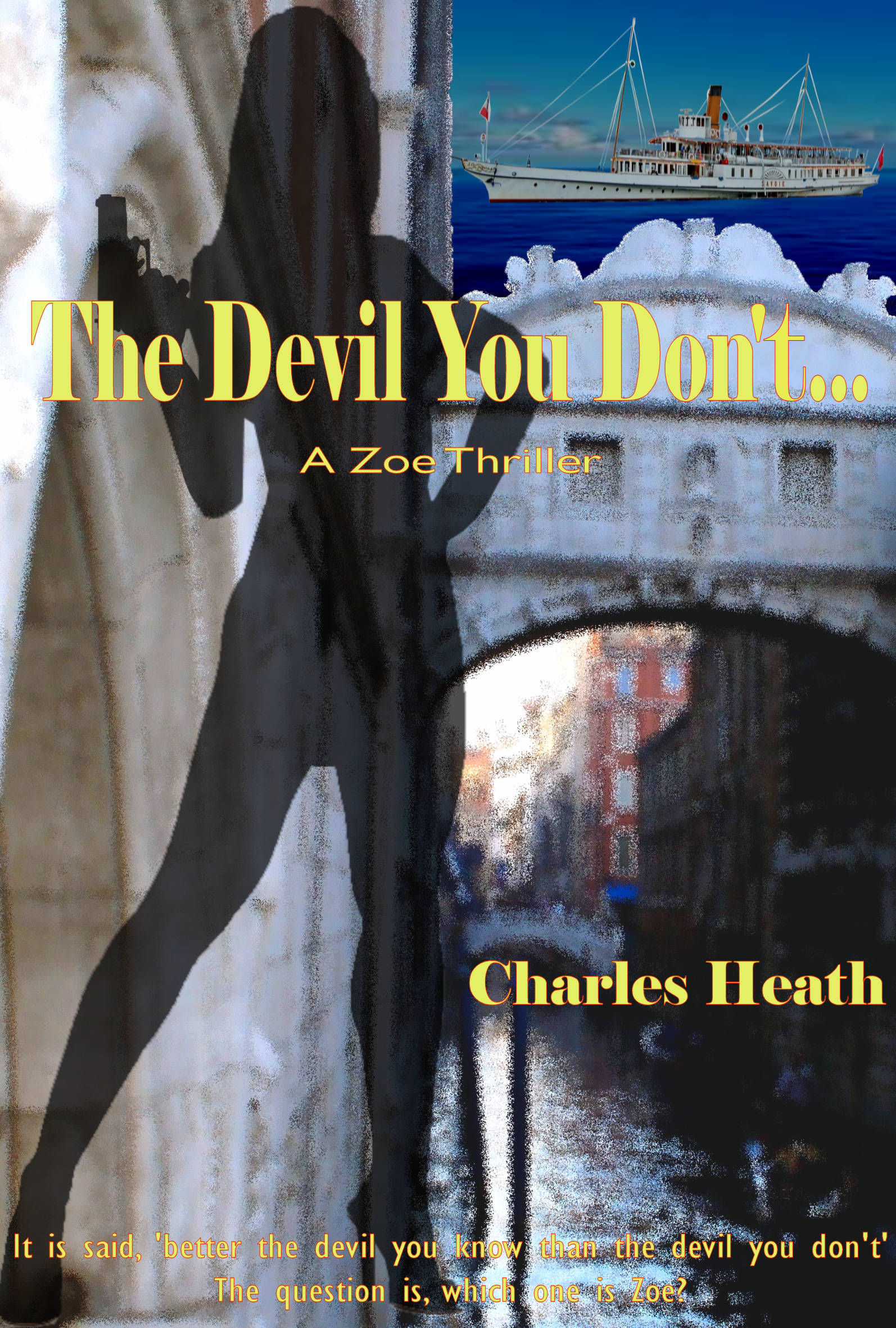
It could be said that of all the women one could meet, whether contrived or by sheer luck, what are the odds it would turn out to be the woman who was being paid a very large sum to kill you.

John Pennington is a man who may be lucky in business, but not so lucky in love. He has just broken up with Phillipa Sternhaven, the woman he thought was the one, but relatives and circumstances, and perhaps because she was a ‘princess’, may also have contributed to the end result.

So, what do you do when you are heartbroken?

That is a story that slowly unfolds, from the first meeting with his nemesis on Lake Geneva, all the way to a hotel room in Sorrento, where he learns the shattering truth.

What should have been a high turns out to be something else entirely, and from that point every thing goes to hell in a handbasket.

He suddenly realises his so-called friend Sebastian has not exactly told him the truth about a small job he asked him to do, the woman he is falling in love with is not quite who she says she is, and he is caught in the middle of a war between two men who consider people becoming collateral damage as part of their business.

The story paints the characters cleverly displaying all their flaws and weaknesses. The locations add to the story at times taking me back down memory lane, especially to Venice where in those back streets I confess it’s not all that hard to get lost.

All in all a thoroughly entertaining story with, for once, a satisfying end.

Available on Amazon here: https://amzn.to/2Xyh1ow

Follow that cab… – A short story

Nothing ever good comes from eavesdropping.

Or, so my mother said, once, with such feeling that I suspect she had some experience of having done so. It might explain the enmity between her and her older sister, the aunt we never saw.

Except all that changed when I received an odd email from a woman who claimed to be that very aunt.

We had all been warned about scams that came from dubious sources online, and this initially struck me as one. I would need more information before I answered.

That meant poking the bear, that is, asking my mother about her sister.

And coming right out with the words she hoped she’d never heard.

“Aunt Guenivere sent me an email, asking if we could meet. It seems she wants to meet the nephew she hasn’t seen since I was born. What happened to you two?”

It brought a look of total hatred in return.

“You would be wise not to respond. That woman is just plain evil.”

“You do realize that a statement like that makes it even more imperative that I should meet her. If you’re not going to tell me what happened, I’m sure she will.”

“Then if you must, you must.”

It wasn’t resignation but suppressed rage. Whatever had happened, it was something she believed no one would believe her, or understand, least of all me.

With that, she stood, and walked out of the room, leaving me with the ominous feeling that it would be the last time I saw her.
After verifying that my so-called aunt was Aunt Guenivere, I arranged a meeting in a public place, a tea room in the next town to where I lived. And it wasn’t going to be hard to recognize her, she would just an older version of my mother.

I knew this because I had found a photograph of my mother and her two sisters, all of who looked very much alike. I’d know about the younger sister, she had died in an accidental car crash many years before, and what my mother regarded as a wasted life.

I saw her about the same time she saw me.

And she just made it to the table when her cell phone rang. She smiled, put a hand up and asked for a moment, and then went back outside. I watched her walk up and down, slowly at first, but I could see the conversation was getting heated.

After a few minutes, I went outside to see if I could be of any assistance.

Apparently not. One look was enough, and I knew what it meant. At least her sister and my mother shared the same facial expressions when angry.

Then the conversation ended. I thought, for a moment, she was going to throw the phone on the ground, and only just managed to stop herself.

Instead, she came over and said. “I’m sorry but something has come up and I have to go. I’ll call you.”

With that, she waved down a taxi, one stopped, and she jumped in.

Another pulled in behind her taxi and on the spur of the moment, and said with a flourish, “Follow that cab.”

The driver turned to look at me, and then said, “You’re kidding.”

I held up a hundred dollar note and said, seriously, “This is yours if you don’t lose them.”

Incentive enough.

It was a lot easier to follow that taxi than I thought. We caught up and the first set of lights and then proceeded to miss every second intersection as if the universe knew I needed to keep her in sight.

All the way to the upper west side and a very expensive apartment block. I paid the cabbie and jumped out, just in time to see a very familiar figure join my aunt.

My father.

And they didn’t look like people who didn’t know each other, or who were at war.

They remained outside the apartment block, and I could see my father had arrived by cab, and it was waiting for him.

I got as close as I could, hidden effectively behind the bushes that lined the building entrance. They were speaking loudly, which surprised me

“What the hell were you thinking,” he said, not angrily, but I could tell he was agitated.

“I was thinking it was time someone told him the truth.”

What truth?

“You know what Evelyn thinks of that, and I do too. You made an agreement.”

“I’ve changed my mind. After all, he is my son, not hers.”

—–

© Charles Heath 2020-2021