Skeletons in the closet, and doppelgangers

A story called “Mistaken Identity”

How many of us have skeletons in the closet that we know nothing about? The skeletons we know about generally stay there, but those we do not, well, they have a habit of coming out of left field when we least expect it.

In this case, when you see your photo on a TV screen with the accompanying text that says you are wanted by every law enforcement agency in Europe, you’re in a state of shock, only to be compounded by those same police, armed and menacing, kicking the door down.

I’d been thinking about this premise for a while after I discovered my mother had a boyfriend before she married my father, a boyfriend who was, by all accounts, the man who was the love of her life.

Then, in terms of coming up with an idea for a story, what if she had a child by him that we didn’t know about, which might mean I had a half brother or sister I knew nothing about. It’s not an uncommon occurrence from what I’ve been researching.

There are many ways of putting a spin on this story.

Then, in the back of my mind, I remembered a story an acquaintance at work was once telling us over morning tea, that a friend of a friend had a mother who had a twin sister and that each of the sisters had a son by the same father, without each knowing of the father’s actions, both growing up without the other having any knowledge of their half brother, only to meet by accident on the other side of the world.

It was an encounter that in the scheme of things might never have happened, and each would have remained oblivious of the other.

For one sister, the relationship was over before she discovered she was pregnant, and therefore had not told the man he was a father. It was no surprise the relationship foundered when she discovered he was also having a relationship with her sister, a discovery that caused her to cut all ties with both of them and never speak to either from that day.

It’s a story with more twists and turns than a country lane!

And a great idea for a story.

That story is called ‘Mistaken Identity’.

Read an extract tomorrow.

Writing about writing a book – Day 14 Continues

Whilst Davenport’s backstory is now coming together, I’m back with the main character, and working on a bit of his backstory too, mainly what he is about to remember of his past, locked away for many years, most likely caused by the trauma he suffered at the hands of the enemy, though the definition of ‘enemy’ here will have a number of different meanings.

These first dreams are disjointed but point to one certainty, Bill was, for a time, a prisoner, whether it was as a prisoner of war, or something else, he is yet to discover.

Another certainty he will learn in time is that he holds a secret, a secret several people would like to find out about, and who will go to extreme lengths to get it from him.

This memory fragment confirms he was a prisoner, despite the assurances to the contrary:


I woke suddenly, tense, eyes open, and alert.  I could feel the fear coursing through my veins, every nerve end tingling.

I had only one thought in mind.

Escape.

Now.

Before it started again.

I moved my hand and found it strapped down as was my other hand and my legs.  I was barely able to move.

A sudden jolt of pain went through me, starting at my shoulder where the knife had been dug in and twisted, the memory of which was very clear in my mind.  It increased as I struggled against the restraints, the fear of it happening again stirring me to try harder.

I’d been here before and the result was bad.

Very bad.

I struggled harder.

I looked around and saw no one or anything else.  The room seemed different from the one I last remembered, more closed in, claustrophobic.  The light came on, bright neon lights, blinding me.  The flash I got before I closed my eyes, it was a hospital room.  I was captive, and it was after the torture session, where the doctors put me back together just enough to last the next session.

Torture, recovery, torture, recovery, over and over, night, day, light, dark, warm, cold.  I had no idea where I was, what day, week, month, or year it was, when I’d last eaten, or eaten at all.

And I didn’t know why.

Why they didn’t kill me and get it over with.  I didn’t know anything.

The door opened and I opened my eyes, now a little more adjusted to the bright light.  He came over and looked down at me.

Chinese.

The enemy.

One of the insidious men keeping me alive.

I kept my eyes on him as he looked at the folder beside the bed, and checked my vital signs.

“How are we this morning?”

English, with only a trace of a Chinese accent.  They all spoke nearly perfect English, confusing me, making me think I was safe.  That I would talk to them.  Confide in them.

I didn’t feel safe and I had nothing to say.

“You had a very bad night.”

Tell me something I didn’t know.  I struggled against the restraints.

“They’re for your own protection.  You tried to get out of bed and reopened your wound.  I’m sorry, but we have had to restrain you.”

“Let me go,” I hissed, “or kill me.”

“I assure you no one wants to kill you.”

I didn’t believe him.  He was trying to trick me.  Trying to allay my fears.  I knew all of their tricks now.

I had to escape.  I had to get away or die trying.  I could not take another session.  Not in that dark, dank, evil room.

I tried harder to escape, felt the restraining hands of his friends, holding me down as he administered another injection, silence, and darkness closing in once again.


Still not sure where this is going, but it’s defining the past of our main character, and will become a lot clearer as the story progresses.

I am intending for these dreams, if extracted and put in order, will be the basis of the missing past the main character has not been able to remember, and given how horrific some of them are, it’s no surprise they’ve been buried very deep in his subconscious.


© Charles Heath 2015-2020

An excerpt from “Amnesia”, a work in progress

I remembered a bang.
I remembered the car slewing sideways.
I remember another bang, and then it was lights out.
When I opened my eyes again, I saw the sky.
Or I could be under water.
Everything was blurred.
I tried to focus but I couldn’t. My eyes were full of water.
What happened?
Why was I lying down?
Where was I?
I cast my mind back, trying to remember.
It was a blank.
What, when, who, why and where, questions I should easily be able to answer. Questions any normal person could answer.
I tried to move. Bad, bad mistake.
I did not realise the scream I heard was my own. Just before my body shut down.

“My God! What happened?”
I could hear, not see. I was moving, lying down, looking up.
I was blind. Everything was black.
“Car accident, hit a tree, sent the passenger flying through the windscreen. Pity to poor bastard didn’t get the message that seat belts save lives.”
Was I that poor bastard?
“Report?” A new voice, male, authoritative.
“Multiple lacerations, broken collar bone, broken arm in three places, both legs broken below the knees, one badly. We are not sure of internal injuries, but ruptured spleen, cracked ribs and pierced right lung are fairly evident, x-rays will confirm that and anything else.”
“What isn’t broken?”
“His neck.”
“Then I would have to say we are looking at the luckiest man on the planet.”
I heard shuffling of pages.
“OR1 ready?”
“Yes. On standby since we were first advised.”
“Good. Let’s see if we can weave some magic.”

Magic.
It was the first word that popped into my head when I surfaced from the bottom of the lake. That first breath, after holding it for so long, was sublime, and, in reality, agonising.

Magic, because it seemed like I’d spent a long time under water.
Or somewhere.
I tried to speak, but couldn’t. The words were just in my head.
Was it night or was it day?
Was it hot, or was it cold?
Where was I?
Around me it felt cool.
It was very quiet. No noise except for the hissing of air through an air-conditioning vent. Or perhaps that was the sound of pure silence. And with it the revelation that silence was not silent. It was noisy.
I didn’t try to move.
Instinctively, somehow I knew not to.
A previous bad experience?
I heard what sounded like a door opening, and very quiet footsteps slowly come into the room. They stopped. I could hear breathing, slightly laboured, a sound I’d heard before.
My grandfather.
He had smoked all his life, until he was diagnosed with lung cancer. But for years before that he had emphysema. The person in the room was on their way, down the same path. I could smell the smoke.
I wanted to tell whoever it was the hazards of smoking.
I couldn’t.
I heard a metallic clanging sound from the end of the bed. A moment later the clicking of a pen, then writing.
“You are in a hospital.” A female voice suddenly said. “You’ve been in a very bad accident. You cannot talk, or move, all you can do, for the moment, is listen to me. I am a nurse. You have been here for 45 days, and just come out of a medically induced coma. There is nothing to be afraid of.”
She had a very soothing voice.
I felt her fingers stroke the back of my hand.
“Everything is fine.”
Define fine, I thought. I wanted to ask her what ‘fine’ meant.
“Just count backwards from 10.”
Why?
I didn’t reach seven.

Over the next ten days, that voice became my lifeline to sanity. Every morning I longed to hear it, if only for the few moments she was in the room, those few waking moments when I believed she, and someone else who never spoke, were doing tests. I knew it had to be someone else because I could smell the essence of lavender. My grandmother had worn a similar scent.
It rose above the disinfectant.
I also believed she was another doctor, not the one who had been there the day I arrived. Not the one who had used some ‘magic’ and kept me alive.
It was then, in those moments before she put me under again, that I thought, what if I was paralysed? It would explain a lot. A chill went through me.

The next morning she was back.
“My name is Winifred. We don’t know what your name is, not yet. In a few days, you will be better, and you will be able to ask us questions. You were in an accident, and you were very badly injured, but I can assure you there will be no lasting damage.”
More tests, and then, when I expected the lights to go out, they didn’t. Not for a few minutes more. Perhaps this was how I would be integrated back into the world. A little bit at a time.
The next morning, she came later than usual, and I’d been awake for a few minutes. “You have bandages over your eyes and face. You had bad lacerations to your face, and glass in your eyes. We will know more when the bandages come off in a few days. Your face will take longer to heal. It was necessary to do some plastic surgery.”
Lacerations, glass in my eyes, car accident, plastic surgery. By logical deduction, I knew I was the poor bastard thrown through the windscreen. It was a fleeting memory from the day I was admitted.
How could that happen?
That was the first of many startling revelations. The second was the fact I could not remember the crash. Equally shocking, in that same moment was the fact I could not remember before the crash either, and only vague memories after.
But the most shattering of all these revelations was the one where I realised I could not remember my name.
I tried to calm down, sensing a rising panic.
I was just disoriented, I told myself. After 45 days in an induced coma, it had messed with my mind, and it was only a temporary lapse. Yes, that’s what it was, a temporary lapse. I would remember tomorrow. Or the next day.
Sleep was a blessed relief.

The next day I didn’t wake feeling nauseous. Perhaps they’d lowered the pain medication. I’d heard that morphine could have that effect. Then, how could I know that, but not who I am?
I knew now Winifred the nurse was preparing me for something very bad. She was upbeat, and soothing, giving me a new piece of information each morning. This morning, “You do not need to be afraid. Everything is going to be fine. The doctor tells me you are going to recover with very little scarring. You will need some physiotherapy to recover from your physical injuries, but that’s in the future. We need to let you mend a little bit more before then.”
So, I was not going to be able to leap out of bed, and walk out of the hospital any time soon. I don’t suppose I’d ever leapt out of bed, except as a young boy. I suspect I’d sustained a few broken bones. I guess learning to walk again was the least of my problems.
But, there was something else. I picked it up in the timbre of her voice, a hesitation, or reluctance. It sent another chill through me.
This time I was left awake for an hour before she returned.
This time sleep was restless.
There were scenes playing in my mind, nothing I recognised, and nothing lasting longer than a glimpse. Me. Others, people I didn’t know. Or perhaps I knew them and couldn’t remember them.
Until they disappeared, slowly like the glowing dot in the centre of the computer screen, before finally fading to black.

The morning the bandages were to come off she came in bright and early and woken me. I had another restless night, the images becoming clearer, but nothing recognisable.
“This morning the doctor will be removing the bandages over your eyes. Don’t expect an immediate effect. Your sight may come back quickly or it may come back slowly, but we believe it will come back.”
I wanted to believe I was not expecting anything, but I was. It was probably human nature. I did not want to be blind as well as paralysed. I had to have at least one reason to live.
I dozed again until I felt a gentle hand on my shoulder. I could smell the lavender, the other doctor was back. And I knew the hand on my shoulder was Winifred’s. She told me not to be frightened.
I was amazed to realise in that moment, I wasn’t.
I heard the scissors cutting the bandages.
I felt the bandage being removed, and the pressure coming off my eyes. I could feel the pads covering both eyes.
Then a moment where nothing happened.
Then the pads being gently lift and removed.
Nothing.
I blinked my eyes, once, twice. Nothing.
“Just hold on a moment,” Winifred said. A few seconds later I could feel a cool towel wiping my face, and then gently wiping my eyes. Perhaps there was ointment, or something else in them.
Then a flash. Well, not a flash, but like when a light is turned on and off. A moment later, it was brighter, not the inky blackness of before, but a shade of grey.
She wiped my eyes again.
I blinked a few more times, and then the light returned, and it was like looking through water, at distorted and blurry objects in the distance.
I blinked again, and she wiped my eyes again.
Blurry objects took shape. A face looking down on me, an elderly lady with a kindly face, surely Winifred, who was smiling. And on the opposite side of the bed, the doctor, a Chinese woman of indescribable beauty.
I nodded.
“You can see?”
I nodded again.
“Clearly?”
I nodded.
“Very good. We will just draw the curtains now. We don’t want to overdo it. Tomorrow we will be taking off the bandages on your face. Then, it will be the next milestone. Talking.”
I couldn’t wait.

When morning came, I found myself afraid. Winifred had mentioned scarring, there were bandages on my face. I knew, but wasn’t quite sure how I knew, I wasn’t the handsomest of men before the accident, so this might be an improvement.
I was not sure why I didn’t think it would be the case.
They came at mid morning, the nurse, Winifred, and the doctor, the exquisite Chinese. Perhaps she was the distraction, taking my mind of the reality of what I was about to see.
Another doctor came into the room, before the bandages were removed, and he was introduced as the plastic surgeon that had ‘repaired’ the ravages of the accident. It had been no easy job, but, with a degree of egotism, he did say he was one of the best in the world.
I found it hard to believe, if he was, that he would be at a small country hospital.
“Now just remember, what you might see now is not how you will look in a few months time.”
Warning enough.
The Chinese doctor started removing the bandages. She did it slowly, and made sure it did not hurt. My skin was very tender, and I suspect still bruised, either from the accident or the surgery, I didn’t know.
Then it was done.
The plastic surgeon gave his work a thorough examination and seemed pleased with his work. “Coming along nicely,” he said to the other doctor. He issued some instructions on how to manage the skin, nodded to me, and I thanked him before he left.
I noticed Winifred had a mirror in her hand, and was somewhat reticent in using it. “As I said,” she said noticing me looking at the mirror, “what you see now will not be the final result. The doctor said it was going to heal with very little scarring. You have been very fortunate he was available. Are you ready?”
I nodded.
She showed me.
I tried not to be reviled at the red and purple mess that used to be my face. At a guess I would have to say he had to put it all back together again, but, not knowing what I looked like before, I had no benchmark. All I had was a snippet of memory that told me I was not the tall, dark, and handsome type.
And I still could not talk. There was a reason, he had worked on that area too. Just breathing hurt. I think I would save up anything I had to say for another day. I could not even smile. Or frown. Or grimace.
“We’ll leave you for a while. Everyone needs a little time to get used to the change. I suspect you are not sure if there has been an improvement on last year’s model. Well, time will tell.”
A new face?
I could not remember the old one.
My memory still hadn’t returned.

Have you ever tried writing on a bus?

It’s amazing how quickly you discover the imperfections of road makers.

As odd as that sounds, a recent trip on a bus, actually earlier today, in fact, got me thinking about just how bad some of our roads really are.

As any writer will tell you, that half an hour or so on the trip to work or home, is just waiting for a few lines to be written, on your phone, or on your tablet.  I venture to suggest a laptop computer just might be a little difficult, and prone to stray eyes from the people sitting or standing near you.

And the tightness of the space available to you.  I know, I’ve tried.

But, if you’re not in the mood to research, I did a little of that too, by the way, the desire to write is tempered by the movement of the bus and your ability to type coherent words on a small keyboard in a very large, rocking, metal thing.

I have to say I have a large streak of jealousy for those people who can hammer out large texts to their friends while riding the bus, and in the most awkward of conditions, using both thumbs, and carrying 26 bags of groceries and dry cleaning, as well as having a full on political discussion with the person sitting/standing next to them.

Even when the bus hits a pothole, does a sudden lurch that sents the unsuspecting sprawling.

With my interactive word completer turned on, it is astonishing what words finish up in my small attempt at writing as my fingers fail to find the right letters, and creates what only could be described as the ramblings of a madman.

Perhaps I might have better luck tomorrow.


The story behind the story – Echoes from the Past

The novel ‘Echoes from the past’ started out as a short story I wrote about 30 years ago, titled ‘The birthday’.

My idea was to take a normal person out of their comfort zone and led on a short but very frightening journey to a place where a surprise birthday party had been arranged.

Thus the very large man with a scar and a red tie was created.

So was the friend with the limousine who worked as a pilot.

So were the two women, Wendy and Angelina, who were Flight Attendants that the pilot friend asked to join the conspiracy.

I was going to rework the short story, then about ten pages long, into something a little more.

And like all re-writes, especially those I have anything to do with, it turned into a novel.

There was motivation.  I had told some colleagues at the place where I worked at the time that I liked writing, and they wanted a sample.  I was going to give them the re-worked short story.  Instead, I gave them ‘Echoes from the past’

Originally it was not set anywhere in particular.

But when considering a location, I had, at the time, recently been to New York in December, and visited Brooklyn and Queens, as well as a lot of New York itself.  We were there for New Years, and it was an experience I’ll never forget.

One evening we were out late, and finished up in Brooklyn Heights, near the waterfront, and there was rain and snow, it was cold and wet, and there were apartment buildings shimmering in the street light, and I thought, this is the place where my main character will live.

It had a very spooky atmosphere, the sort where ghosts would not be unexpected.  I felt more than one shiver go up and down my spine in the few minutes I was there.

I had taken notes, as I always do, of everywhere we went so I had a ready supply of locations I could use, changing the names in some cases.

Fifth Avenue near the Rockefeller center is amazing at first light, and late at night with the Seasonal decorations and lights.

The original main character was a shy and man of few friends, hence not expecting the surprise party.  I enhanced that shyness into purposely lonely because of an issue from his past that leaves him always looking over his shoulder and ready to move on at the slightest hint of trouble.  No friends, no relationships, just a very low profile.

Then I thought, what if he breaks the cardinal rule, and begins a relationship?

But it is also as much an exploration of a damaged soul, as it is the search for a normal life, without having any idea what normal was, and how the understanding of one person can sometimes make all the difference in what we may think or feel.

And, of course, I wanted a happy ending.

Except for the bad guys.


Get it here:  https://amzn.to/2CYKxu4

newechocover5rs


“Do you believe in g..g..ghosts…?”, a short story

Inside the old building, it was very quiet and almost cold.

Strange, perhaps, because outside the temperature was bordering on the record hottest day ever, nearly 45 degrees centigrade.

The people who’d built this building nearly a hundred years before must have known how to keep that heat at bay, using sandstone.

Back then, the sandstone would have looked very impressive, but now after many years of being closed off and left abandoned, the outside was stained by modern-day pollutants giving it a black streaky look, and inside layers of dust, easily stirred up as we walked slowly into the main foyer.

It was huge, the roof, ornate, with four huge chandelier lights hanging down, and wood paneling, giving way to a long counter with brass serving cages highlighting its former use; a bank.

In its day it would have conveyed the power and wealth so that its customers could trust the money to. Of course, that was before the global economy, online banking, and a raft of the new and different institutions all vying for that same money.

Then it was a simple choice of a few, now it was a few thousand.

“How many years had this been closed up?” I asked.

“Close to twenty, maybe twenty-five. It was supposed to be pulled down, but someone got it on the heritage list, and that put an end to it. “

Phil was the history nut. He’s spent a month looking into the building, finding construction plans, and correspondence dating back to before and during the construction.

Building methods, he said, that didn’t exist today and were far in advance of anything of its type for the period. It was the reason we were standing in the foyer now.

We were budding civil engineers, and the university had managed to organize a visit, at our own risk. The owner of the building had made sure we’d signed a health and safety waiver before granting access.

And the caretaker only took us as far as the front door. He gave us his cell number to call when we were finished. When we asked him why he didn’t want to come in with us, he didn’t say but it was clear to me he was afraid of something.

But neither of us believed in ghosts.

“You can see aspects of cathedrals in the design,” Phil said. ” You could quite easily turn this space into a church.”

“Or a very large wine cellar.” I brought a thermometer with me, and inside where we were standing it was the ideal temperature to store wine.

Behind the teller cages were four large iron doors to the vaults. They were huge, and once contained a large amount of cash, gold, and whatever else was deemed valuable.

They were all empty now, the shelves and floor had scattered pieces of bank stationery, and in a corner, several cardboard boxes, covered in even more dust.

Behind the vaults were offices, half-height with glass dividers, the desks and chairs still in place, and some with wooden filing cabinets drawers half-open.

Others had benches, and one, set in the corner, very large, and looked like the manager’s office. Unlike the other office which had linoleum tiles, this one had carpet. In a corner was a large mirror backed cabinet, with several half-empty bottles on it.

“Adds a whole new meaning to aged whiskey, don’t you think.” Phil looked at it but didn’t pick it up.

“I wonder why they left it,” I muttered. The place had the feel of having been left in a hurry, not taking everything with them.

I shivered, but it was not from the cold.

We went back to the foyer and the elevator lobby. They were fine examples of the sort of caged elevators that belonged in that time, and which there were very few working examples these days.

The elevators would have a driver, he would pull back an inner and outer door when the car arrived on a floor, and close both again when everyone was aboard.

Both cars were on the ground floor, with the shutter doors closed, and when I tried to open one, I found it had been welded shut. The other car was not sitting level with the floor and the reason for that, the cable that raised and lowered it was broken.

Restoring them would be a huge job and would not be in their original condition due to occupational health and safety issues.

The staircase wound around the elevator cage, going up to the mezzanine floor or down to the basement.

“Up or down?” He asked.

“Where do you want to go first?”

“Down. There’s supposed to be a large vault, probably where the safety deposit boxes are.”

And the restrooms I thought. Not that I was thinking of going.

As we descended the stairs it was like going down into a mine shaft, getting darker, and the rising odor of damp, and mustiness. I suspect it would have been the same back when it was first built being so close to the shoreline of the bay, not more than half a mile away.

The land this building and a number of others in a similar style, was built on was originally a swamp, and it was thought that the seawater still found its way this far inshore. But the foundations were incredibly strong and extensive which was why there’d been no shifting or cracking anywhere in the ten-story structure.

At the bottom, there was a huge arch, with built-in brass caging with two huge gates, both open. It was like the entrance to a mythical Aladdin’s cave.

There was also an indefinable aura coming from the depths of that room. That, and a movement of cold air. Curiously, the air down there was not musty but had a tinge of saltiness to it.

Was there a natural air freshener effect coming from somewhere within that vault.

“Are we going in?”

I checked my torch beam, still very bright. I pointed it into the blackness and after a minute checking, I said, “We’re here, so why not.”

We had to walk down a dozen steps then pass under through the open gates into the room. There was a second set of gates, the same as the first, about thirty feet from the first, and, in between, a number of cubicles where customers collected their boxes.

Beyond the second set of gates was a large circular reinforced safe door high enough for us to walk through.

This cavernous space stretched back quite a distance, and along the walls, rows, and rows of safety deposit boxes, some half hanging out of their housing, and a lot more stacked haphazardly on the floor.

I checked a few but they were all empty.

I shivered again. It felt like there was a presence in the room. I turned to ask Phil, but he wasn’t there. I hadn’t heard him walk away, and there were only two sets of footprints on the floor, his and mine, and both ended where I was standing.

It was as if he had disappeared into thin air.

I called out his name, and it echoed off the walls in the confined space. No answer from him.

I went further into the room, thinking he might have ventured towards the end while my back was turned, but he hadn’t. Nor had he left because there were only footprints coming in, not going out.

I turned to retrace my steps and stopped suddenly. An old man, in clothes that didn’t belong to this era, was standing where Phil had last been.

He was looking at me, but not inclined to talk.

“Hello. I didn’t see you come down.”

Seconds later the figure dissolved in front of me and there was no one but me standing in the room.

“Joe.”

Phil, from behind me. I turned and there he was large as life.

“Where were you?”

“I’ve been here all the time. Who were you just talking to?”

“There was an old man, standing just over there,” I said pointing to somewhere between Phil and the entrance.

“I didn’t see anyone. Are you sure you’re not having me on?”

“No. He’s right behind you.” The old man had reappeared.

Phil shook his head, believing I was trying to fool him.

That changed when the man touched his shoulder, and Phil shrieked.

And almost ran out of the room. It took a few minutes for him to catch his breath and steady the palpitating heart.

“Are you real?” I asked, not quite sure what to say.

“To me, I am. To anyone else, let’s just say you are the first not got faint, or run away.”

“Are you a ghost?” Phil wasn’t exactly sure what he was saying.

“Apparently I am and will be until you find out who killed me “

Ok, so what was it called, stuck in the afterlife or limbo until closure?

“When?”

“25 years ago, just before the bank closed. It’s the reason why it’s empty now.”

“And you’re saying we find the killer and you get to leave?”

“Exactly. Now shoo. Go and find him.”

We looked at each other in surprise, or more like shock, then back to the man. Only he was no longer there.

“What the…” Phil sail. “It’s time to go.”

“What about the man and finding his killer?”

“What man? We saw nothing. We’re done here.”

I shrugged. Phil turned to leave, but only managed to take three steps before the gates at the entrance closed with a loud clang.

When he crossed the room to stand in front, he tried pulling them open.

“Locked,” he said. Flat, and without panic, he added, “I guess it looks like we have a murder to solve.”

© Charles Heath 2019-2020

An excerpt from “The Devil You Don’t”

Available on Amazon Kindle here:  https://amzn.to/2Xyh1ow


By the time I returned to the Savoie, the rain had finally stopped, and there was a streak of blue sky to offer some hope the day would improve.

The ship was not crowded, the possibility of bad weather perhaps holding back potential passengers.  Of those I saw, a number of them would be aboard for the lunch by Phillippe Chevrier.  I thought about it, but the Concierge had told me about several restaurants in Yvoire and had given me a hand-drawn map of the village.  I think he came from the area because he spoke with the pride and knowledge of a resident.

I was looking down from the upper deck observing the last of the boarding passengers when I saw a woman, notable for her red coat and matching shoes, making a last-minute dash to get on board just before the gangway was removed.  In fact, her ungainly manner of boarding had also captured a few of the other passenger’s attention.  Now they would have something else to talk about, other than the possibility of further rain.

I saw her smile at the deckhand, but he did not smile back.  He was not impressed with her bravado, perhaps because of possible injury.  He looked at her ticket then nodded dismissively, and went back to his duties in getting the ship underway.  I was going to check the departure time, but I, like the other passengers, had my attention diverted to the woman in red.

From what I could see there was something about her.  It struck me when the light caught her as she turned to look down the deck, giving me a perfect profile.  I was going to say she looked foreign, but here, as in almost anywhere in Europe, that described just about everyone.  Perhaps I was just comparing her to Phillipa, so definitively British, whereas this woman was very definitely not.

She was perhaps in her 30’s, slim or perhaps the word I’d use was lissom, and had the look and manner of a model.  I say that because Phillipa had dragged me to most of the showings, whether in Milan, Rome, New York, London, or Paris.  The clothes were familiar, and in the back of my mind, I had a feeling I’d seen her before.

Or perhaps, to me, all models looked the same.

She looked up in my direction, and before I could divert my eyes, she locked on.  I could feel her gaze boring into me, and then it was gone as if she had been looking straight through me.  I remained out on deck as the ship got underway, watching her disappear inside the cabin.  My curiosity was piqued, so I decided to keep an eye out for her.

I could feel the coolness of the air as the ship picked up speed, not that it was going to be very fast.  With stops, the trip would take nearly two hours to get to my destination.  It would turn back almost immediately, but I was going to stay until the evening when it returned at about half eight.  It would give me enough time to sample the local fare, and take a tour of the medieval village.

Few other passengers ventured out on the deck, most staying inside or going to lunch.  After a short time, I came back down to the main deck and headed forward.  I wanted to clear my head by concentrating on the movement of the vessel through the water, breathing in the crisp, clean air, and let the peacefulness of the surroundings envelope me.

It didn’t work.

I knew it wouldn’t be long before I started thinking about why things hadn’t worked, and what part I played in it.  And the usual question that came to mind when something didn’t work out.  What was wrong with me?

I usually blamed it on my upbringing.

I had one of those so-called privileged lives, a nanny till I was old enough to go to boarding school, then sent to the best schools in the land.  There I learned everything I needed to be the son of a Duke, or, as my father called it in one of his lighter moments, nobility in waiting.

Had this been five or six hundred years ago, I would need to have sword and jousting skills, or if it had been a few hundred years later a keen military mind.  If nothing else I could ride a horse, and go on hunts, or did until they became not the thing to do.

I learned six languages, and everything I needed to become a diplomat in the far-flung British Empire, except the Empire had become the Commonwealth, and then, when no-one was looking, Britain’s influence in the world finally disappeared.  I was a man without a cause, without a vocation, and no place to go.

Computers were the new vogue and I had an aptitude for programming.  I guess that went hand in hand with mathematics, which although I hated the subject, I excelled in.  Both I and another noble outcast used to toss ideas around in school, but when it came to the end of our education, he chose to enter the public service, and I took a few of those ideas we had mulled over and turned them into a company.

About a year ago, I was made an offer I couldn’t refuse.  There were so many zeroes on the end of it I just said yes, put the money into a very grateful bank, and was still trying to come to terms with it.

Sadly, I still had no idea what I was going to do with the rest of my life.  My parents had asked me to come back home and help manage the estate, and I did for a few weeks.  It was as long as it took for my parents to drive me insane.

Back in the city, I spent a few months looking for a mundane job, but there were very few that suited the qualifications I had, and the rest, I think I intimidated the interviewer simply because of who I was.  In that time I’d also featured on the cover of the Economist, and through my well-meaning accountant, started involving myself with various charities, earning the title ‘philanthropist’.

And despite all of this exposure, even making one of those ubiquitous ‘eligible bachelor’ lists, I still could not find ‘the one’, the woman I wanted to spend the rest of my life with.  Phillipa seemed to fit the bill, but in time she proved to be a troubled soul with ‘Daddy’ issues.  I knew that in building a relationship compromise was necessary, but with her, in the end, everything was a compromise and what had happened was always going to be the end result.

It was perhaps a by-product of the whole nobility thing.  There was a certain expectation I had to fulfill, to my peers, contemporaries, parents and family, and those who either liked or hated what it represented.  The problem was, I didn’t feel like I belonged.  Not like my friend from schooldays, and now obscure acquaintance, Sebastian.  He had been elevated to his Dukedom early when his father died when he was in his twenties.  He had managed to fade from the limelight and was rarely mentioned either in the papers or the gossip columns.  He was one of the lucky ones.

I had managed to keep a similarly low profile until I met Phillipa.  From that moment, my obscurity disappeared.  It was, I could see now, part of a plan put in place by Phillipa’s father, a man who hogged the limelight with his daughter, to raise the profile of the family name and through it their businesses.  He was nothing if not the consummate self-advertisement.

Perhaps I was supposed to be the last piece of the puzzle, the attachment to the establishment, that link with a class of people he would not normally get in the front door.  There was nothing refined about him or his family, and more than once I’d noticed my contemporaries cringe at the mention of his name, or any reference of my association with him.

Yet could I truthfully say I really wanted to go back to the obscurity I had before Phillipa?  For all her faults, there were times when she had been fun to be with, particularly when I first met her when she had a certain air of unpredictability.  That had slowly disappeared as she became part of her father’s plan for the future.  She just failed to see how much he was using her.

Or perhaps, over time, I had become cynical.

I thought about calling her.  It was one of those moments of weakness when I felt alone, more alone than usual.

I diverted my attention back to my surroundings and the shoreline.  Out of the corner of my eye, I could see the woman in the red coat, making a move.  The red coat was like a beacon, a sort of fire engine red.  It was not the sort of coat most of the women I knew would wear, but on her, it looked terrific.  In fact, her sublime beauty was the one other attribute that was distinctly noticeable, along with the fact her hair was short, rather than long, and jet black.

I had to wrench my attention away from her.

A few minutes later several other passengers came out of the cabin for a walk around the deck, perhaps to get some exercise, perhaps checking up on me, or perhaps I was being paranoid.  I waited till they passed on their way forward, and I turned and headed aft.

I watched the wake sluicing out from under the stern for a few minutes, before retracing my steps to the front of the ship and there I stood against the railing, watching the bow carve its way through the water.  It was almost mesmerizing.  There, I emptied my mind of thoughts about Phillipa, and thoughts about the woman in the red coat.

Until a female voice behind me said, “Having a bad day?”

I started, caught by surprise, and slowly turned.  The woman in the red coat had somehow got very close me without my realizing it.  How did she do that?  I was so surprised I couldn’t answer immediately.

“I do hope you are not contemplating jumping.  I hear the water is very cold.”

Closer up, I could see what I’d missed when I saw her on the main deck.  There was a slight hint of Chinese, or Oriental, in her particularly around the eyes, and of her hair which was jet black.  An ancestor twice or more removed had left their mark, not in a dominant way, but more subtle, and easily missed except from a very short distance away, like now.

Other than that, she was quite possibly Eastern European, perhaps Russian, though that covered a lot of territory.  The incongruity of it was that she spoke with an American accent, and fluent enough for me to believe English was her first language.

Usually, I could ‘read’ people, but she was a clean slate.  Her expression was one of amusement, but with cold eyes.  My first thought, then, was to be careful.

“No.  Not yet.”  I coughed to clear my throat because I could hardly speak.  And blushed, because that was what I did when confronted by a woman, beautiful or otherwise.

The amusement gave way to a hint of a smile that brightened her demeanor as a little warmth reached her eyes.  “So that’s a maybe.  Should I change into my lifesaving gear, just in case?”

It conjured up a rather interesting image in my mind until I reluctantly dismissed it.

“Perhaps I should move away from the edge,” I said, moving sideways until I was back on the main deck, a few feet further away.  Her eyes had followed me, and when I stopped she turned to face me again.  She did not move closer.

I realized then she had removed her beret and it was in her left side coat pocket.  “Thanks for your concern …?”

“Zoe.”

“Thanks for your concern, Zoe.  By the way, my name is John.”

She smiled again, perhaps in an attempt to put me at ease.  “I saw you earlier, you looked so sad, I thought …”

“I might throw myself overboard?”

“An idiotic notion I admit, but it is better to be safe than sorry.”

Then she tilted her head to one side then the other, looking intently at me.  “You seem to be familiar.  Do I know you?”

I tried to think of where I may have seen her before, but all I could remember was what I’d thought earlier when I first saw her; she was a model and had been at one of the showings.  If she was, it would be more likely she would remember Phillipa, not me.  Phillipa always had to sit in the front row.

“Probably not.”  I also didn’t mention the fact she may have seen my picture in the society pages of several tabloid newspapers because she didn’t look the sort of woman who needed a daily dose of the comings and goings, and, more often than not, scandal associated with so-called celebrities.

She gave me a look, one that told me she had just realized who I was.  “Yes, I remember now.  You made the front cover of the Economist.  You sold your company for a small fortune.”

Of course.  She was not the first who had recognized me from that cover.  It had raised my profile considerably, but not the Sternhaven’s.  That article had not mentioned Phillipa or her family.  I suspect Grandmother had something to do with that, and it was, now I thought about it, another nail in the coffin that was my relationship with Phillipa.

“I wouldn’t say it was a fortune, small or otherwise, just fortunate.”  Each time, I found myself playing down the wealth aspect of the business deal.

“Perhaps then, as the journalist wrote, you were lucky.  It is not, I think, a good time for internet-based companies.”

The latter statement was an interesting fact, one she read in the Financial Times which had made that exact comment recently.

“But I am boring you.”  She smiled again.  “I should be minding my own business and leaving you to your thoughts.  I am sorry.”

She turned to leave and took a few steps towards the main cabin.

“You’re not boring me,” I said, thinking I was letting my paranoia get the better of me.  It had been Sebastian on learning of my good fortune, who had warned me against ‘a certain element here and abroad’ whose sole aim would be to separate me from my money.  He was not very subtle when he described their methods.

But I knew he was right.  I should have let her walk away.

She stopped and turned around.  “You seem nothing like the man I read about in the Economist.”

A sudden and awful thought popped into my head.  Those words were part of a very familiar opening gambit.  “Are you a reporter?”

I was not sure if she looked surprised, or amused.  “Do I look like one?”

I silently cursed myself for speaking before thinking, and then immediately ignored my own admonishment.  “People rarely look like what they are.”

I saw the subtle shake of the head and expected her to take her leave.  Instead she astonished me.

“I fear we have got off on the wrong foot.  To be honest, I’m not usually this forward, but you seemed like you needed cheering up when probably the opposite is true.  Aside from the fact this excursion was probably a bad idea.  And,” she added with a little shrug, “perhaps I talk too much.”

I was not sure what I thought of her after that extraordinary admission. It was not something I would do, but it was an interesting way to approach someone and have them ignoring their natural instinct.  I would let Sebastian whisper in my ear for a little longer and see where this was going.

“Oddly enough, I was thinking the same thing.  I was supposed to be traveling with my prospective bride.  I think you can imagine how that turned out.”

“She’s not here?”

“No.”

“She’s in the cabin?”  Her eyes strayed in that direction for a moment then came back to me.  She seemed surprised I might be traveling with someone.

“No.  She is back in England, and the wedding is off.  So is the relationship.  She dumped me by text.”

OK, why was I sharing this humiliating piece of information with her?  I still couldn’t be sure she was not a reporter.

She motioned to an empty seat, back from the edge.  No walking the plank today.  She moved towards it and sat down.  She showed no signs of being cold, nor interested in the breeze upsetting her hair.  Phillipa would be having a tantrum about now, being kept outside, and freaking out over what the breeze might be doing to her appearance.

I wondered, if only for a few seconds if she used this approach with anyone else.  I guess I was a little different, a seemingly rich businessman alone on a ferry on Lake Geneva, contemplating the way his life had gone so completely off track.

She watched as I sat at the other end of the bench, leaving about a yard between us.  After I leaned back and made myself as comfortable as I could, she said, “I have also experienced something similar, though not by text message.  It is difficult, the first few days.”

“I saw it coming.”

“I did not.”  She frowned, a sort of lifeless expression taking over, perhaps brought on by the memory of what had happened to her.  “But it is done, and I moved on.  Was she the love of your life?”

OK, that was unexpected.

When I didn’t answer, she said, “I am sorry.  Sometimes I ask personal questions without realizing what I’m doing.  It is none of my business.”  She shivered.  “Perhaps we should go back inside.”

She stood, and held out her hand.  Should I take it and be drawn into her web?  I thought of Sebastian.  What would he do in this situation?

I took her hand in mine and let her pull me gently to my feet.  “Wise choice,” she said, looking up at the sky.

It just started to rain.


© Charles Heath 2015-2020

newdevilcvr6

In a word: Fourth

When you realize you are the fourth child, you are really hoping that the split is two boys and two girls.  Woe betide you if you are a boy and you have three sisters.  It could also be as interesting, notice I didn’t say intolerable) if you are a girl with three brothers.

Hang on, I know someone who was in that exact same situation.  Fortunately, being a girl and the youngest, she could do no wrong in the eyes of her father.

But I digress (as usual)

The meaning of fourth is self-evident, just count to four and it’s the fourth number, perhaps better explained by the fact it is one after the third in a series

Then we use it with other words like,

Fourth-gear, usually reserved for the highway where one expects to geta clear run.  Of course, with more and more cars on the road, sometimes it’s difficult to get out of second.

The fourth estate, no, not what a rich person owns, along with a lot more one guesses, but another name for the press.

One fourth, your share of an estate, if of course, you have three other siblings.  And, in murder mysteries, usually those fourths seem to die mysteriously, and your fourth becomes a third, a half, and then you go to jail.

in fourth place, where it seems all the horse I back run

And,

This is not to be confused with the word forth, which sounds the same but means something entirely different, like

I’m sure we’ve all been told to go forth and be something or other, which means to go forward or come out of hiding

It is also a Scottish river, one notably called the Firth of Forth, and if it sounds odd, so do a lot things in Scotland

You could also place back and forth, much the same as you would in a hospital waiting for the birth of your first child.

The cinema of my dreams – Was it just another surveillance job – Episode 31

I’m back home and this story has been sitting on a back burner for a few months, waiting for some more to be written.

The trouble is, there are also other stories to write, and I’m not very good at prioritizing.

But, here we are, a few minutes opened up and it didn’t take long to get back into the groove.

Chasing leads, maybe


Was it too late to admit that I was way in over my head?

Of course, it should not come as a surprise that Jan would know of his alter ego if she was the friend she said she was.  Her name was on that scrap of paper with part of the address, and I should have guessed.

Again, my lack of knowledge and training was letting me down.

Now it seemed I had both Severin and Maury, Nobbin and Josephine, and Jan all working against me.

He had more enemies that I did, which begged the question, what the hell was he in to?  What could he possibly have found that was so damaging?

Perhaps I’d find that out if or when I found the missing USB drive.

In the meantime, I had to get back to the hotel before Jan did and try and keep a straight face.

But just as I started to put the seat belt on, another figure was walking from the road towards the front door.  A man, tall, with a purposeful stride.  

The light was still on so I would get to see who it was once he reached the door.  Then I saw the front door open, and Jan standing in it.  A second later I saw the face, just as he passed through the doorway and the door shut.

Severin.

She had lied.  So, why was it making me so angry?

I should have realized the whole Maury thing was a setup.  She hadn’t called her office, she had called Severin, and he can’t have been far away to get there in the time he had.

So, why didn’t he drag me off?

Easy.  So I would see the need to keep working with Jan, and in doing so, when I found the USB I’d tell her, and the next minute I’d get whacked over the head, and lose it.

Damn.

I was being played like a finely tuned fiddle.

But at least I knew about the car and had removed any evidence and the letters that were left on the ground inside the door.  It was something, and she would not find anything to help her, even if she knew he had a car.  It meant I was one step ahead of her.

After thanking a last look at the block, I left.  Better to find somewhere else to stay, just for tonight, and then go back to the hotel in Charing Cross and see if she returned.

I found a small hotel just off Bromley Road, a short distance down Avondale Road.  Out of the way and unassuming, with car parking that couldn’t be seen from the main road.  The late hour raised an eyebrow, but I used the excuse of getting in late from the airport.  After all, it was 02:30 in the morning and I was surprised there was anyone available on the front counter.

He gave me a room tucked away in a corner where there was only one entrance, and I could see anyone coming.  I wasn’t expecting anything, but just in case I had checked the car for a tracker.

None that I could find.

I needed sleep, but lying there staring at the ceiling, I replayed the arrival of Jan at the flat, followed by Severin.  It was a reminder that I should not believe or trust anyone.

It reminded me of the words of one of the instructors who said, one morning, quite abruptly, that we were about to become the loneliest people in the world.  If we trusted anyone, even if they were from our own side, it could mean one thing and one thing only.  Death.

We could not and should not trust anyone.

We should not believe a word of anything anyone tells us.

We should not recruit anyone from outside the service because unless they could be fully vetted, they could be your undoing.

We could not have friends, and certainly no romantic interests otherwise they would be used as leverage against us.

It was the worse hour lecture we’d been given, and the instructor had told us he had left the best till last.  It was time to decide whether we wanted to go on or bail.  Several had.

I didn’t think, then, it would be a problem.

Now, I was beginning to think otherwise.


© Charles Heath 2020

Searching for locations: Vancouver, Canada – 3

It’s always a given that whatever city you stay in unless it’s overnight, you go on a tour and see the sights.

Even when you’re staying a short distance from the city, you may make the effort to catch a train or bus, then get on the hop on hop off tour.  There’s always one in just about every city you visit.

Vancouver was no exception.

Except…

We arrived in the rain, went to sleep while the rain came down, woke up to the rain, and a heavy dose of jet lag or perhaps it was more that we had spent 24 and a half hours traveling from Brisbane to Vancouver via Shanghai.

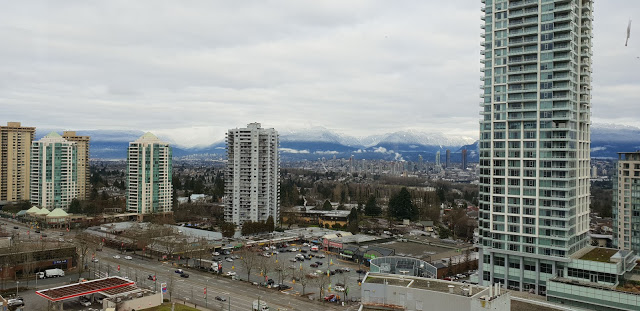
We had an excellent view out the window of our room looking towards the shopping mall, and the steady falling rain.

 I felt sorry watching the construction workers on the building site that was the main vista we had to look at.

It could have been worse.  Endless mountains with snow on them.

What to do.  Venture out in the rain and go on the tour, on pop over to the shopping mall and pick up a few boxing day bargains, no, sorry, boxing week bargains.

We have had some experience going on hop on hop off tours in open-top buses in the rain.  And the last time was not a pleasant experience, even though we learned a valuable lesson, not to stand in front of a cannon and yell ‘fire’.  Apparently, that’s how Admiral Nelson lost his arm.

But…

The shopping mall won.

We’d wait and see if the weather improved.  Hang on, isn’t Vancouver near Seattle and doesn’t it rain 300 days of the year?

Not holding my breath.

I feel sorry for the construction workers again.  Still raining, still cold, and still no reason to get out of bed.

Day 2 in Vancouver turned out to be the same as day 1.

Hang on, there’s a development.

We’re on the 16th floor and up at those lofty heights, we can see not only the rain but intermingled with it a few flakes of snow.

Whilst we procrastinate about what we’re going to do, the snowflakes increase into small flurries.

Yep, we’re off to the mall again and go for a walk in the snow.

On the way back we drop into the Boston Pizza, which has a sports bar and there you can sit, drink, eat, and watch the ice hockey, or whatever sort is going at the time.

Today it’s a junior ice hockey tournament, but Canada was not playing.  Just the same, a long cold beer and ice hockey? How close to heaven is that?

I can now cross that off the bucket list.

Day 3, we’re going on a great rail journey, well, we are going to get the train to the city and collect the rental car, a car on the booking form that was supposedly a Jeep Grand Cherokee or similar.

Of course, ‘or similar’ are the words to be feared here because in truth the rental company can throw anything at you, so long as it matches the brief, three people and three large suitcases.

And, you guessed it…

The ‘or similar’ got us a Fort Flex.

Sounded like some place where exhausted soldiers were fending of the Indians in a last ditch battle.

Perhaps one or two too many American movies I think.