An excerpt from “Mistaken Identity” – a work in progress

The odds of any one of us having a doppelganger are quite high. Whether or not you got to meet him or her, or be confronted by them was significantly lower. Except of course, unless you are a celebrity.

It was a phenomenon remarkable only for the fact, at times, certain high profile people, notorious or not, had doubles if only to put off enemies or the general public. Sometimes we see people in the street, people who look like someone we knew, and made the mistake of approaching them like a long lost friend, only to discover an embarrassed individual desperately trying to get away for what they perceive is a stalker or worse.

And then sometimes in is a picture that looms up on a TV screen, an almost exact likeness of you. At first you are fascinated, and then according to the circumstances, and narrative that is attached to that picture, either flattered or horrified.

For me one turned to the other when I saw an almost likeness of me flash up on the screen when I turned the TV on in my room. What looked to be my photo, with only minor differences, was in the corner of the screen, the news reader speaking in rapid Italian, so fast I could only translate every second or third word.

But the one word I did recognize was murder. The photo of the man up on the screen was the subject of an extensive manhunt. The crime, murder of woman in the very same hotel I was staying, and it was being played out live several floors above me. The gist of the story, the woman had been seen with, and staying with the man who was my double, and, less than an hour ago, the body had been discovered by a chambermaid.

The killer, the announcer said, was believed to be still in the hotel because the woman had died shortly before she had been discovered.

I watched, at first fascinated at that I was seeing. I guess I should have been horrified, but at that moment it didn’t register that I might be mistaken for that man.

Not until an another five minutes had passed, and I was watching the police in full riot gear, with a camera crew following behind, coming up a passage towards a room. Live action of the arrest of the suspected killer the breathless commentator said.

Then, suddenly, there was a pounding on the door. On the TV screen, plain to see, was the number of my room.
I looked through the peep hole and saw an army of police officers. It didn’t take much to realize what had happened. The hotel staff had identified me as the man in the photograph on the TV and called the police.

Horrified wasn’t what I was feeling right then.

It was fear.

My last memory was the door crashing open, the wood splintering, and men rushing into the room, screaming at me, waving guns, and when I put my hands up to defend myself, I heard a gunshot.

And in one very confused and probably near death experience, I thought I saw my mother, and thinking what was she doing in Rome?

I was the archetypal nobody.

I lived in a small flat, I drove a nondescript car, had an average job in a low profile travel agency, was single, and currently not involved in a relationship, no children, and according to my workmates, no life.

They were wrong. I was one of those people who preferred their own company, I had a cat, and travelled whenever I could. And I did have a ‘thing’ for Rosalie, one of the reasons why I stayed at the travel agency. I didn’t expect anything to come of it, but one could always hope.

I was both pleased and excited to be going to the conference. It was my first, and the glimpse I had seen of it had whetted my appetite for more information about the nuances of my profession.

Some would say that a travel agent wasn’t much of a job, but to me, it was every bit as demanding as being an accountant or a lawyer. You were providing a customer with a service, and arguably more people needed a travel agent than a lawyer. At least that was what I told myself, as I watched more and more people start using the internet, and our relevance slowly dissipating.

This conference was about countering that trend.

The trip over had been uneventful. I was met at the airport and taken to the hotel where the conference was being held with a number of other delegates who had arrived on the same plane. I had mingled with a number of other delegates at the pre conference get together, including one whose name was Maryanne.

She was an unusual young woman, not the sort that I usually met, because she was the one who was usually surrounded by all the boys, the life of the party. In normal circumstances, I would not have introduced myself to her, but she had approached me. Why did I think that may have been significant? All of this ran through my mind, culminating in the last event on the highlight reel, the door bursting open, men rushing into my room, and then one of the policemen opened fire.

I replayed that last scene again, trying to see the face of my assailant, but it was just a sea of men in battle dress, bullet proof vests and helmets, accompanied by screaming and yelling, some of which I identified as “Get on the floor”.

Then came the shot.

Why ask me to get on the floor if all they were going to do was shoot me. I was putting my hands up at the time, in surrender, not reaching for a weapon.

Then I saw the face again, hovering in the background like a ghost. My mother. Only the hair was different, and her clothes, and then the image was going, perhaps a figment of my imagination brought on by pain killing drugs. I tried to imagine the scene again, but this time it played out, without the image of my mother.

I opened my eyes took stock of my surroundings. What I felt in that exact moment couldn’t be described. I should most likely be dead, the result of a gunshot wound. I guess I should be thankful the shooter hadn’t aimed at anything vital, but that was the only item on the plus side.

I was in a hospital room with a policeman by the door. He was reading a newspaper, and sitting uncomfortably on a small chair. He gave me a quick glance when he heard me move slightly, but didn’t acknowledge me with either a nod, or a greeting, just went back to the paper.

If I still had a police guard, then I was still considered a suspect. What was interesting was that I was not handcuffed to the bed. Perhaps that only happened in TV shows. Or maybe they knew I couldn’t run because my injuries were too serious. Or the guard would shoot me long before my feet hit the floor. I knew the police well enough now to know they would shoot first and ask questions later.

On the physical side, I had a large bandage over the top left corner of my chest, extending over my shoulder. A little poking and prodding determined the bullet had hit somewhere between the top of my rib cage and my shoulder. Nothing vital there, but my arm might be somewhat useless for a while, depending on what the bullet hit on the way in, or through.

It didn’t feel like there were any broken or damaged bones.

That was the good news.

On the other side of the ledger, my mental state, there was only one word that could describe it. Terrified. I was looking at a murder charge and jail time, a lot of it. Murder usually had a long time in jail attached to it.

Whatever had happened, I didn’t do it. I know I didn’t do it, but I had to try and explain this to people who had already made up their minds. I searched my mind for evidence. It was there, but in the confused state brought on by the medication, all I could think about was jail, and the sort of company I was going to have.

I think death would have been preferable.

Half an hour later, maybe longer, I was drifting in an out of consciousness, a nurse, or what I thought was a nurse, came into the room. The guard stood, checked her ID card, and then stood by the door.

She came over and stood beside the bed. “How are you?” she asked, first in Italian, and when I pretended I didn’t understand, she asked the same question in accented English.

“Alive, I guess,” I said. “No one has come and told what my condition is yet. You are my first visitor. Can you tell me?”

“Of course. You are very lucky to be alive. You will be fine and make a full recovery. The doctors here are excellent at their work.”

“What happens now?”

“I check you, and then you have a another visitor. He is from the British Embassy I think. But he will have to wait until I have finished my examination.”

I realized then she was a doctor, not a nurse.

My second visitor was a man, dressed in a suit the sort of which I associated with the British Civil Service.  He was not very old which told me he was probably a recent graduate on his first posting, the junior officer who drew the short straw.

The guard checked his ID but again did not leave the room, sitting back down and going back to his newspaper.

My visitor introduced himself as Alex Jordan from the British Embassy in Rome and that he had been asked by the Ambassador to sort out what he labelled a tricky mess.

For starters, it was good to see that someone cared about what happened to me.  But, equally, I knew the mantra, get into trouble overseas, and there is not much we can do to help you.  So, after that lengthy introduction, I had to wonder why he was here.

I said, “They think I am an international criminal by the name of Jacob Westerbury, whose picture looks just like me, and apparently for them it is an open and shut case.”  I could still hear the fragments of the yelling as the police burst through the door, at the same time telling me to get on the floor with my hands over my head.

“It’s not.  They know they’ve got the wrong man, which is why I’m here.  There is the issue of what had been described as excessive force, and the fact you were shot had made it an all-round embarrassment for them.”

“Then why are you here?  Shouldn’t they be here apologizing?”

“That is why you have another visitor.  I only took precedence because I insisted I speak with you first.  I have come, basically to ask you for a favour.  This situation has afforded us with an opportunity.  We would like you to sign the official document which basically indemnifies them against any legal proceedings.”

Curious.  What sort of opportunity was he talking about?  Was this a matter than could get difficult and I could be charged by the Italian Government, even if I wasn’t guilty, or was it one of those hush hush type deals, you do this for us, we’ll help you out with that.  “What sort of opportunity?”

“We want to get our hands on Jacob Westerbury as much as they do.  They’ve made a mistake, and we’d like to use that to get custody of him if or when he is arrested in this country.  I’m sure you would also like this man brought into custody as soon as possible so you will stop being confused with him.  I can only imagine what it was like to be arrested in the manner you were.  And I would not blame you if you wanted to get some compensation for what they’ve done.  But.  There are bigger issues in play here, and you would be doing this for your country.”

I wondered what would happen if I didn’t agree to his proposal.  I had to ask, “What if I don’t?”

His expression didn’t change.  “I’m sure you are a sensible man Mr Pargeter, who is more than willing to help his country whenever he can.  They have agreed to take care of all your hospital expenses, and refund the cost of the Conference, and travel.  I’m sure I could also get them to pay for a few days at Capri, or Sorrento if you like, before you go home.  What do you say?”

There was only one thing I could say.  Wasn’t it treason if you went against your country’s wishes?

“I’m not an unreasonable man, Alex.  Go do your deal, and I’ll sign the papers.”

“Good man.”

After Alex left, the doctor came back to announce the arrival of a woman, by the way she had announced herself, the publicity officer from the Italian police. When she came into the room, she was not dressed in a uniform.

The doctor left after giving a brief report to the civilian at the door. I understood the gist of it, “The patient has recovered excellently and the wounds are healing as expected. There is no cause for concern.”

That was a relief.

While the doctor was speaking to the civilian, I speculated on who she might be. She was young, not more than thirty, conservatively dressed so an official of some kind, but not necessarily with the police. Did they have prosecutors? I was unfamiliar with the Italian legal system.

She had long wavy black hair and the sort of sultry looks of an Italian movie star, and her presence made me more curious than fearful though I couldn’t say why.

The woman then spoke to the guard, and he reluctantly got up and left the room, closing the door behind him.
She checked the door, and then came back towards me, standing at the end of the bed. Now alone, she said, “A few questions before we begin.” Her English was only slightly accented. “Your name is Jack Pargeter?”

I nodded. “Yes.”

“You are in Rome to attend the Travel Agents Conference at the Hilton Hotel?”

“Yes.”

“You attended a preconference introduction on the evening of the 25th, after arriving from London at approximately 4:25 pm.”

“About that time, yes. I know it was about five when the bus came to collect me, and several others, to take us to the hotel.”

She smiled. It was then I noticed she was reading from a small notepad.

“It was ten past five to be precise. The driver had been held up in traffic. We have a number of witnesses who saw you on the plane, on the bus, at the hotel, and with the aid of closed circuit TV we have established you are not the criminal Jacob Westerbury.”

She put her note book back in her bag and then said, “My name is Vicenza Andretti and I am with the prosecutor’s office. I am here to formally apologize for the situation that can only be described as a case of mistaken identity. I assure you it is not the habit of our police officers to shoot people unless they have a very strong reason for doing so. I understand that in the confusion of the arrest one of our officers accidentally discharged his weapon. We are undergoing a very thorough investigation into the circumstances of this event.”

I was not sure why, but between the time I had spoken to the embassy official and now, something about letting them off so easily was bugging me. I could see why they had sent her. It would be difficult to be angry or annoyed with her.

But I was annoyed.

“Do you often send a whole squad of trigger happy riot police to arrest a single man?” It came out harsher than I intended.

“My men believed they were dealing with a dangerous criminal.”

“Do I look like a dangerous criminal?” And then I realized if it was mistaken identity, the answer would be yes.

She saw the look on my face, and said quietly, “I think you know the answer to that question, Mr. Pargeter.”

“Well, it was overkill.”

“As I said, we are very sorry for the circumstances you now find yourself in. You must understand that we honestly believed we were dealing with an armed and dangerous murderer, and we were acting within our mandate. My department will cover your medical expenses, and any other amounts for the inconvenience this has caused you. I believe you were attending a conference at your hotel. I am very sorry but given the medical circumstances you have, you will have to remain here for a few more days.”

“I guess, then, I should thank you for not killing me.”

Her expression told me that was not the best thing I could have said in the circumstances.

“I mean, I should thank you for the hospital and the care. But a question or two of my own. May I?”

She nodded.

“Did you catch this Jacob Westerbury character?”

“No. In the confusion created by your arrest he escaped. Once we realized we had made a mistake and reviewed the close circuit TV, we tracked him leaving by a rear exit.”

“Are you sure it was one of your men who shot me?”

I watched as her expression changed, to one of surprise.

“You don’t think it was one of my men?”

“Oddly enough no. But don’t ask me why.”

“It is very interesting that you should say that, because in our initial investigation, it appeared none of our officer’s weapons had been discharged. A forensic investigation into the bullet tells us it was one that is used in our weapons, but…”

I could see their dilemma.

“Have you any enemies that would want to shoot you Mr Pargeter?”

That was absurd because I had no enemies, at least none that I knew of, much less anyone who would want me dead.

“Not that I’m aware of.”

“Then it is strange, and will perhaps remain a mystery. I will let you know if anything more is revealed in our investigation.”

She took an envelope out of her briefcase and opened it, pulling out several sheets of paper.

I knew what it was. A verbal apology was one thing, but a signed waiver would cover them legally. They had sent a pretty girl to charm me. Perhaps using anyone else it would not have worked. There was potential for a huge litigation payout here, and someone more ruthless would jump at the chance of making a few million out of the Italian Government.

“We need a signature on this document,” she said.

“Absolving you of any wrong doing?”

“I have apologized. We will take whatever measures are required for your comfort after this event. We are accepting responsibility for our actions, and are being reasonable.”

They were. I took the pen from her and signed the documents.

“You couldn’t add dinner with you on that list of benefits?” No harm in asking.

“I am unfortunately unavailable.”

I smiled. “It wasn’t a request for a date, just dinner. You can tell me about Rome, as only a resident can. Please.”

She looked me up and down, searching for the ulterior motive. When she couldn’t find one, she said, “We shall see once the hospital discharges you in a few days.”

“Then I’ll pencil you in?”

She looked at me quizzically. “What is this pencil me in?”

“It’s an English colloquialism. It means maybe. As when you write something in pencil, it is easy to erase it.”

A momentary frown, then recognition and a smile. “I shall remember that. Thank-you for your time and co-operation Mr. Pargeter. Good morning.”

© Charles Heath 2015-2021

A moment to slip back into the past

Television is a great recorder of the past, and most channels, and especially cable tv have great libraries of films that go back more than a hundred years.

And, whilst it’s possible that modern-day films and television series can try to recapture the past, the English as an exception being very good at it, often it is impossible to capture it correctly.

But, if you have a film shot in the moment, then you have a visual record of what life, and what was once part of our world before you in all its dated glory. The pity of it is that, then, we never appreciated it.

After all, in those particular times, who had the time to figuratively stop and smell the roses. Back then as life was going on, we were all tied up with just trying to get through each day.

Years later, often on reflection, we try to remember the old days, and, maybe, remember some of what it was like, but the chances are that change came far too rapidly, and often too radical, that it erases what we thought we knew existed before.

My grandmother’s house is a case in point. In its place is a multi-lane superhighway, and there’s nothing left to remind us, or anyone of it, just some old sepia photographs.

I was reminded of how volatile history really is when watching an old documentary, in black and white, and how the city I grew up in used to look.

Then, even though it seemed large to me then, it was a smaller city, with suburbs that stretched about ten or so miles in every direction, and the outer suburbs were where people moved to get a larger block, and countrified atmosphere.

Now, those outer suburbs are no longer spacious properties, the acreage subdivided and the old owners now much richer for a decision made with profit not being the motivator, and the current suburban sprawl is now out to forty or fifty miles.

The reason for the distance is no longer the thought of open spaces and cleaner air, the reason for moving now is that land further out is cheaper, and can make buying that first house more affordable.

This is where I tip my hat to the writers of historical fiction. I myself am writing a story based in the 1970s, and it’s difficult to find what is and isn’t time-specific.

If only I had a dollar for every time I went to write the character pulling out his or her mobile phone.

What I’ve found is the necessity to research, and this has amounted to finding old films, documentaries of the day, and a more fascinating source of information, the newspapers of the day.

The latter especially has provoked a lot of memories and a lot of stuff I thought I’d forgotten, some of it by choice, but others that were poignant.

Yes, and don’t get me started on the distractions.

If only I’d started this project earlier…

An excerpt from “The Things We Do For Love”; In love, Henry was all at sea!

In the distance he could hear the dinner bell ringing and roused himself.  Feeling the dampness of the pillow, and fearing the ravages of pent up emotion, he considered not going down but thought it best not to upset Mrs. Mac, especially after he said he would be dining.

In the event, he wished he had reneged, especially when he discovered he was not the only guest staying at the hotel.

Whilst he’d been reminiscing, another guest, a young lady, had arrived.  He’d heard her and Mrs. Mac coming up the stairs, and then shown to a room on the same floor, perhaps at the other end of the passage.

Henry caught his first glimpse of her when she appeared at the door to the dining room, waiting for Mrs. Mac to show her to a table.

She was about mid-twenties, slim, long brown hair, and the grace and elegance of a woman associated with countless fashion magazines.  She was, he thought, stunningly beautiful with not a hair out of place, and make-up flawlessly applied.  Her clothes were black, simple, elegant, and expensive, the sort an heiress or wife of a millionaire might condescend to wear to a lesser occasion than dinner.

Then there was her expression; cold, forbidding, almost frightening in its intensity.  And her eyes, piercingly blue and yet laced with pain.  Dracula’s daughter was his immediate description of her.

All in all, he considered, the only thing they had in common was, like him, she seemed totally out of place.

Mrs. Mac came out of the kitchen, wiping her hands on her apron.  She was, she informed him earlier, chef, waitress, hotelier, barmaid, and cleaner all rolled into one.  Coming up to the new arrival she said, “Ah, Miss Andrews, I’m glad you decided to have dinner.  Would you like to sit with Mr. Henshaw, or would you like to have a table of your own?”

Henry could feel her icy stare as she sized up his appeal as a dining companion, making the hair on the back on his neck stand up.  He purposely didn’t look back.  In his estimation, his appeal rating was minus six.  Out of a thousand!

“If Mr. Henshaw doesn’t mind….”  She looked at him, leaving the query in mid-air.

He didn’t mind and said so.  Perhaps he’d underestimated his rating.

“Good.”  Mrs. Mac promptly ushered her over.  Henry stood, made sure she was seated properly and sat.

“Thank you.  You are most kind.”  The way she said it suggested snobbish overtones.

“I try to be when I can.”  It was supposed to nullify her sarcastic tone but made him sound a little silly, and when she gave him another of her icy glares, he regretted it.

Mrs. Mac quickly intervened, asking, “Would you care for the soup?”

They did, and, after writing the order on her pad, she gave them each a look, imperceptibly shook her head, and returned to the kitchen.

Before Michelle spoke to him again, she had another quick look at him, trying to fathom who and what he might be.  There was something about him.

His eyes, they mirrored the same sadness she felt, and, yes, there was something else, that it looked like he had been crying?  There was a tinge of redness.

Perhaps, she thought, he was here for the same reason she was.

No.  That wasn’t possible.

Then she said, without thinking, “Do you have any particular reason for coming here?”  Seconds later she realized she’s spoken it out loud, had hadn’t meant to actually ask, it just came out.

It took him by surprise, obviously not the first question he was expecting her to ask of him.

“No, other than it is as far from civilization, and home, as I could get.”

At least we agree on that, she thought.

It was obvious he was running away from something as well.

Given the isolation of the village and lack of geographic hospitality, it was, from her point of view, ideal.  All she had to do was avoid him, and that wouldn’t be difficult.

After getting through this evening first.

“Yes,” she agreed.  “It is that.”

A few seconds passed, and she thought she could feel his eyes on her and wasn’t going to look up.

Until he asked, “What’s your reason?”

Slight abrupt in manner, perhaps as a result of her question, and the manner in which she asked it.

She looked up.  “Rest.  And have some time to myself.”

She hoped he would notice the emphasis she had placed on the word ‘herself’ and take due note.  No doubt, she thought,  she had completely different ideas of what constituted a holiday than he, not that she had actually said she was here for a holiday.

Mrs. Mac arrived at a fortuitous moment to save them from further conversation.


Over the entree, she wondered if she had made a mistake coming to the hotel.  Of course, there had been no possible way she could know than anyone else might have booked the same hotel, but realized it was foolish to think she might end up in it by herself.

Was that what she was expecting?

Not a mistake then, but an unfortunate set of circumstances, which could be overcome by being sensible.

Yet, there he was, and it made her curious, not that he was a man, by himself, in the middle of nowhere, hiding like she was, but for very different reasons.

On discreet observance whilst they ate, she gained the impression his air of light-heartedness was forced and he had no sense of humor.

This feeling was engendered by his looks, unruly dark hair, and permanent frown.  And then there was his abysmal taste in clothes on a tall, lanky frame.  They were quality but totally unsuited to the wearer.

Rebellion was written all over him.

The only other thought crossing her mind, and rather incongruously, was he could do with a decent feed.  In that respect, she knew now from the mountain of food in front of her, he had come to the right place.

“Mr. Henshaw?”

He looked up.  “Henshaw is too formal.  Henry sounds much better,” he said, with a slight hint of gruffness.

“Then my name is Michelle.”

Mrs. Mac came in to take their order for the only main course, gather up the entree dishes, then return to the kitchen.

“Staying long?” she asked.

“About three weeks.  Yourself?”

“About the same.”

The conversation dried up.

Neither looked at the other, rather at the walls, out the window, towards the kitchen, anywhere.  It was, she thought, almost unbearably awkward.


Mrs. Mac returned with a large tray with dishes on it, setting it down on the table next to theirs.

“Not as good as the usual cook,” she said, serving up the dinner expertly, “but it comes a good second, even if I do say so myself.  Care for some wine?”

Henry looked at Michelle.  “What do you think?”

“I’m used to my dining companions making the decision.”

You would, he thought.  He couldn’t help but notice the cutting edge of her tone.  Then, to Mrs. Mac, he named a particular White Burgundy he liked and she bustled off.

“I hope you like it,” he said, acknowledging her previous comment with a smile that had nothing to do with humor.

“Yes, so do I.”

Both made a start on the main course, a concoction of chicken and vegetables that were delicious, Henry thought, when compared to the bland food he received at home and sometimes aboard my ship.

It was five minutes before Mrs. Mac returned with the bottle and two glasses.  After opening it and pouring the drinks, she left them alone again.

Henry resumed the conversation.  “How did you arrive?  I came by train.”

“By car.”

“Did you drive yourself?”

And he thought, a few seconds later, that was a silly question, otherwise she would not be alone, and certainly not sitting at this table. With him.

“After a fashion.”

He could see that she was formulating a retort in her mind, then changed it, instead, smiling for the first time, and it served to lighten the atmosphere.

And in doing so, it showed him she had another more pleasant side despite the fact she was trying not to look happy.

“My father reckons I’m just another of ‘those’ women drivers,” she added.

“Whatever for?”

“The first and only time he came with me I had an accident.  I ran up the back of another car.  Of course, it didn’t matter to him the other driver was driving like a startled rabbit.”

“It doesn’t help,” he agreed.

“Do you drive?”

“Mostly people up the wall.”  His attempt at humor failed.  “Actually,” he added quickly, “I’ve got a very old Morris that manages to get me where I’m going.”

The apple pie and cream for dessert came and went and the rapport between them improved as the wine disappeared and the coffee came.  Both had found, after getting to know each other better, their first impressions were not necessarily correct.

“Enjoy the food?” Mrs. Mac asked, suddenly reappearing.

“Beautifully cooked and delicious to eat,” Michelle said, and Henry endorsed her remarks.

“Ah, it does my heart good to hear such genuine compliments,” she said, smiling.  She collected the last of the dishes and disappeared yet again.

“What do you do for a living,” Michelle asked in an off-hand manner.

He had a feeling she was not particularly interested and it was just making conversation.

“I’m a purser.”

“A what?”

“A purser.  I work on a ship doing the paperwork, that sort of thing.”

“I see.”

“And you?”

“I was a model.”

“Was?”

“Until I had an accident, a rather bad one.”

“Oh, I’m sorry.”

So that explained the odd feeling he had about her.

As the evening had worn on, he began to think there might be something wrong, seriously wrong with her because she didn’t look too well.  Even the carefully applied makeup, from close up, didn’t hide the very pale, and tired look, or the sunken, dark ringed eyes.

“I try not to think about it, but it doesn’t necessarily work.  I’ve come here for peace and quiet, away from doctors and parents.”

“Then you will not have to worry about me annoying you.  I’m one of those fall-asleep-reading-a-book types.”

Perhaps it would be like ships passing in the night and then smiled to himself about the analogy.

Dinner now over, they separated.

Henry went back to the lounge to read a few pages of his book before going to bed, and Michelle went up to her room to retire for the night.

But try as he might, he was unable to read, his mind dwelling on the unusual, yet the compellingly mysterious person he would be sharing the hotel with.

Overlaying that original blurred image of her standing in the doorway was another of her haunting expressions that had, he finally conceded, taken his breath away, and a look that had sent more than one tingle down his spine.

She may not have thought much of him, but she had certainly made an impression on him.


© Charles Heath 2015-2020

lovecoverfinal1

“Chance Encounter”, A short story

The afternoon rush hour jammed the exit roads, particularly those to the beach.  Nearly everyone was heading for relief from the heat wave, now in its tenth consecutive day.  What had started out a novelty was now just tiresome, with no forecast respite.

A light breeze tried to fan away the afternoon heat, but it had little impact.  The temperature was still hovering in the high 30’s when Bill left the office at 6:30 that evening.

On the road it was little better, and hotter in the car than out.  There was no point running the air conditioner in those conditions, as both he and many others had discovered.  The stop-start traffic made it worse, and people who had already suffered enough were close to breaking point.

Once again, the traffic stopped, and tempers frayed to the point of blowing horns and yelling forlorn abuse at some unseen driver or cause.  It was a no-win situation, and to Bill, a waste of time and energy.  His time and energy, he thought, was best directed at analysis.  Yet how different had the afternoon been to what was currently happening?

In charge of the Customer Service centre for the area’s electricity supplier, it had been difficult to say the least.  That afternoon had seen the highest consumption of electricity since the heat wave began, since time immemorial for that matter, and had started to affect the functionality of the grid, with the first failures occurring. 

It had been predicted, but was not expected quite this early, and as parts of the city were beginning to feel the effect of temporary blackouts, his, and his staff’s work had begun to receive the full effect of the community’s contempt and hatred. 

The traffic disaster was not a patch on the abuse both he and members of his staff had received that afternoon, and he instinctively knew it was not going to improve.

Normally he would stay on and help the incoming supervisor.  This time, someone else could handle the problems.  Doing the usual Friday afternoon desk clean up, he’d found the invitation to Wally’s stag party and as best man, he was obligated to go.  One of the other and more compelling reasons was to see which of his colleagues would make a fool of themselves.

It didn’t take long to get home and change into what he considered proper party attire.  He smiled at the thought of being an anachronism from a bygone age, and of what others thought of him.  He was too old to change.

Before leaving, he lingered over several glasses of champagne, and strawberries, trying to get into the mood.  At the same time, he surveyed the ravages of middle management pressures.  Just a year in the job had aged him five, and a tinges of grey beginning to appear at the sides.

A wave of tiredness came over him.  The thought of staying home and immersing himself in classical music and another bottle of champagne crossed his mind, but he said he would go.  Wally was one of the few he could call a true friend.  He would go, but not stay long.

As usual, he was late.

Groups had spilled out onto the front veranda, and onto the front lawn.  He knew most of the partygoers by sight, if not by name.  Acquaintances, not friends.  Not the sort of people he usually mingled with.  He exchanged greetings, accepted drinks, and tried to maintain appearances.

It didn’t take long to realise it was a mistake.  The carnival atmosphere and good cheer all around him made him feel melancholier, as a wave of loneliness closed around him like the night air.

He knew only too well what the problem was but had no idea how to deal with it.  Neither his upbringing, nor experience was of any use.  It would require outside help; the sort Wally had already offered.  Just when would he do something about it, if at all?  If the truth were known, Bill was too frightened of the consequences, of getting hurt.  Perhaps a few more drinks…

Making his way through the crowded rooms towards the back of the house, he felt the deadening effect of the alcohol beginning to fight off the empty feeling within.

He made desultory conversation with a secretary he knew was high on the dating list for most junior executives, deriving some pleasure in the thought she talked to him, then to another young lady who worked his shift, whom he thought both intelligent and charming, and whose behaviour didn’t shatter his assumptions as some others had.

As the night wore on. it became evident few had noticed his arrival, even fewer his sudden disappearance to the back veranda, overlooking the ocean.  He had seen Wally on one occasion when he was trying to drink about 10 gallons of beer in one attempt and thought it wise not to interrupt.

It was, he thought, all part of the game, to drink so much he would forget how it was when he was single, though Bill doubted he could do it in a single night.  Bill could hardly wait till the wedding the next afternoon.

He looked back momentarily at the apparent abandon of the other guests, hearing the muted murmur of endless conversations, and loud music.  Everyone was having a good time, as it should be.

The gentle, soothing, lapping of the tide on the beach beckoned him.  He put his empty glass on a ledge and went quietly down the stairs onto the sand.  A refreshing, cool breeze rolled in with the tide, immediately improving his mood.

At the water’s edge, he paused momentarily to soak in the calming atmosphere, then put his hands in his pockets and headed for the pier.  A leisurely stroll there and back would be sufficient break to enable him to endure the rest of the evening.  Yes, he would stay, if only to see that Wally didn’t overindulge.  After all, some duties did fall on the incumbent best man.

Occasionally he kicked the sand with the toe of his shoe, once for a thoroughly detestable human relations consultant, and another for a particularly annoying assistant.  It scuffed the high polish, but he didn’t care.  This was a time where near impeccable would be good enough.

He was alone, and in more ways than one, he thought, but it was more by design than by accident.  He had recently been involved in a relationship that was doomed before it began.  Work had always pushed that side of his life into second place because he let it.

Now, having thought about it rationally for the first time, he realised it was time to place less importance on work, and more to giving any sort of relationship a chance.

Wally had offered to find him someone, but knowing Wally as he did, Bill had declined.  Of course, to Wally ‘no’ really meant go ahead anyway.  While at the party, he had surveyed those he thought Wally might have invited as potential matches, some voluptuous, some half-naked, some painted, some all three.

There was no doubting their intent, and he had seen the same in the singles bars when on the town with Wally when they had nothing better to do with a Friday night.  Yet, none of those he’d seen, then or now, matched his criteria.  Were his standards set too high?  Wally never said it, but the fact he didn’t said more than if he had said it out loud.

Bill sighed.  Perhaps he was too set in his ways and unable to change.

Adjoining the pier was the old amusement centre, burnt down several years before.  It was the reason for the closing of the beach, and its recent exclusivity to those nearby backing onto the beach.  All that remained was the scorched concrete floor and parts of the walls.  It was these remains he had just gone under.

Beneath them, the sounds of the sea and the night were more pronounced, creating an eerie, sinister feeling.  The smell of the burnt timber still hung in the air, despite the intervening years.

“Hi!”  A feminine voice came out from the shadows, behind one of the pylons nearby.

He started violently, not expecting anyone else.  It took a moment to collect his thoughts, then turn to see who she was. 

“Oh,” was all he could say to the now visible girl’s outline etched against the distant city lights.

Both came out the other side together into the half-light, leaving the gloom behind.  She began, “I hope I didn’t scare you back there?”

“Only half to death.”  He brushed the non-existent wrinkles out of his dinner suit, more a reflex action, then put his hands back in his pockets, composure regained.

“I’m awfully sorry.  I didn’t mean to.”

He was a little angry, and turning to her, said quietly, “Then what was….” He stopped suddenly, surprised at what he saw.  Tall, well proportioned, dressed in expensive eveningwear, much the same as he was.  He instantly realised she could almost pass as an exact replica of Venus except for the untidyish, waist length hair.

“I don’t know.  I guess I wanted to talk to someone, you were handy, so I just said ‘hi’.”  Her tone was apprehensive, with a slight tremor in it. 

She smiled nervously, yet in a way, he noticed it totally changed her appearance, and his heart missed a beat.

“Oh,” he said again, subconsciously feeling she had put him in his place.  He shook his head and looked again, disbelieving what he saw.

“I hope you don’t mind?”

“Don’t mind what?”  He’d lost track of the conversation, and realised he was quickly moving towards looking and sounding like a gibbering idiot.  It was, he realised, just like every other time when faced with a beautiful woman.

“Me talking to you.”

He took a deep breath and tried to remain calm.  He could feel a runnel of sweat slide down the side of his face, “No.  Not really.  It’s just the diversion I need”.  He looked at the sand, the sea, then her.  “I have a feeling I’ve seen you before.” 

He moved on, and so did she, both in unison.

“Staring at you from the pages of magazines?”

“I guess so.  What did you do?  Rob a bank?  Divorce a Prince, or millionaire?”

“As if.  Nothing quite as exotic, or exciting, I’m afraid.  Just draped in clothes or plastered in make-up.  Boring huh?”

“No.  Not really.”

“You’re a bit hard up for new lines?”

He shrugged.  It was difficult talking to this woman, and, lacking in confidence, he was starting to feel a little embarrassed.

She changed the subject.  “Do you live here?”

“No….”

“Don’t say it, not really!” she interrupted.

He sighed, trying to regain composure.  “OK.  I was at a party.”

“Aha.  Now we’re getting somewhere.”  Then she gave him a curious look.  “Was?”  Then, after he didn’t answer, “How come you’re not with the others, having a good time?”

“Perhaps I’m not cut out to ‘have a good time’.  Actually, I thought I’d take a time out from the frenetic pace and get some fresh air.”

“And now the fresh air had lost its appeal?”

“I didn’t say that.”  Did that come out sounding flustered?  It was how he felt inside.  He was going to have to try harder if he was to keep her interest.  “It’s beginning to get interesting.  And I still can’t place where I’ve seen you before.”  He shook his head.  “No matter.  What brings you here?”

“Someone told me about this place a long time ago.  I thought I’d come and check it out.”

He turned and headed back, deciding the diversion had exceeded the time limit he’d set, and it had now become an elongated absence.  She did the same.

“And what do you think?” he asked.

“About what?”

This conversation would sound very strange if anyone else was nearby listening to them.  Luckily, there wasn’t.  “This place.”

“Very peaceful, secluded, interesting, as you said.”

“Interesting in what way?”  Damn, had he asked that already?

“Well …”  She shrugged, then asked, “Do you always walk around with your hands in your pockets?”

Simple answer, yes.  “Can’t think of where else to put them.” 

What did it have to do with her anyway?  And, in that instant, he realised that it he who was the problem here, not her.

“What if you were to hold a girl’s hand?”

“I don’t know of any who would want me to.”

“Would you like to hold mine?”

“Why?  Is it going to run away?”

She smiled.  “More than likely.”

He stopped.  She stopped.  He surveyed her with a critical eye.

“Aha.  The eye that asks, ‘Who is the disreputable and outrageous person who dares to ask such a thing?’

He smiled and took her hand in his.  It was soft and warm, and sent a slight tingle up his spine.

“I talk too much. Don’t I?” she asked suddenly, after they started walking again.

“No.”

She sighed.  “Here we go again.”

On the other side of the pier there was an old car park, no longer used.  Along the beach front was a long, low stone wall, and they headed towards it.  Once there, they sat down to watch darkness finally settle in, the last of the sun’s rays melting in a glorious display of reds, oranges, and yellows.

Without speaking, they were content to listen to the waves, feel the cooling breeze, and watch the sea glisten in the moonlight. 

Nothing happened for an indeterminable length of time, during which he nearly forgot she was there.  He suddenly snapped out of it when he heard a match rasping.

He turned to see her trying to light a cigarette, but her hand was shaking so much, the match went out.  She tried again, but the same thing happened.  She savagely threw the cigarette away and pounded her hand on the cement as though it was something she hated.

He took a pack of cigarettes and a lighter out of his coat pocket and offered her one.

“No.  It’s reason enough to try to give it up,” she said quietly.

He returned the items to his pocket and took her hand in his, looked carefully at it, then kissed it.  “Trying to dent cement is not wise unless you are superman or Supergirl.  I know.  I tried once and broke three fingers.  Fortunately, nothing is broken.”

She moved closer.  “Thanks.”

“For what?”

“Making me feel silly.”

“But … I didn’t mean to … I mean …”

She leaned towards him and kissed his lips.  “Hush.”

He held her hand up and looked at it, rather than her, trying to get a grip on his emotions, and saying, a good dead steadier than he felt, “I need a third hand.  Do you think I could have it?”

“With pleasure.  It’s apparently no good to me anymore.”

“Why?”

“Shakes too much.”

“Perhaps I could use it to massage my face.”  He gently moved her hand down the side of his face and again felt a tingle up his spine.  Again, he kissed it gently where she had hit it, not knowing why, just that it seemed like the right thing to do.

“Perhaps not.  Seems to me you have a case of bad nerves.  These are familiar symptoms.  You need a rest, perhaps a holiday, and complete relaxation.  That will be a five-dollar consultation fee.”

She smiled.  “Will you stop it.”

“Why?  It makes you smile.”

“Your right, of course.  I need a rest.  The last six months have been horrible, working day and night, and a failed relationship on top of it.”  She sighed.  “I feel sleepy.”  She leaned against him, putting her arms around him for balance.

“Hey, no.  You can’t do that.”  He fended her off gently.  “I’ve got a party to get back to, and by now I think I should be missed.  God knows what Wally will think.”

He stood and she rolled sideways.  “Oh, come on.”  He looked up towards the sky.  “Why did you make some women like this for,” he muttered.  Then he put his arms around her and lifted her to her feet.  She leaned back against him and he could feel how warm and soft she was.  It was a battle just to make sure he kept his hands in the right places, and she wasn’t making it easy for him.

He held her up then moved around to the front and caught her just as she began to fall forward.  It was exasperating, and yet amusing.  He let her go and she began to fall down, so he caught her again.

She was smiling.

“Beware the smile on the face of the tiger,” he muttered.  His face was level with hers and just then an idea came to him.  He kissed her forehead, nose, chin, then finally her lips, and she came to life.

It was just what she was hoping would happen.  Instead of surprising her, she surprised him by responding in kind; leaving him with a feeling he’d never experienced before.  And a heart rate that was off the chart.

“Now, if only you’d tried that earlier,” she said.

He looked her straight in the eye.  “Just who are you?”

“Me.”

“Does ‘me’ have a name?”

“Do you want ‘me’ to have name?”

“Yes.”

“Claire.”

“Then you may call me Bill.  Do you often pick up strange lonely men on secluded beaches?”

“No.”

“Infuse life into otherwise dead souls?”

“No.”

“Just happened to be the one thing I needed right now?”

She smiled; a smile that made his heart do double somersaults.

“Perhaps a yes.”

“Can I see you again?  I have to see you again.”

“Have to?”

“Like to, then.”

“Perhaps.”

“When?”

“Soon, perhaps sooner than you think.  Do you have to go back?”

“Yes.  If I don’t, Wally will be mad at me.”  He pulled out a notebook and pencil he always carried with him.  “Where do you live?”

She told him.

“If I come by Sunday may I take you out, a drive, somewhere up the coast.  Fresh sea air, total relaxation.”

“Part of the therapy I’m paying five dollars for?”

He brushed a few strands of hair out of her eyes, feeling her warm soft skin under his hand, then kissed her.  “Until the next time.” 

She smiled again. “Until the next time.”

He turned and headed back to the party, not looking back.

No one noticed his absence; despite the fact over an hour had lapsed.  He resumed his place on the veranda, new drink in hand looking vacantly towards the pier, wondering if he would see her again, if she were just a figment of his imagination.  It was just too good to be true.

“Ah, Bill.  I thought I would find you here.  Thinking about a walk.  No, I see you’ve already been.”  Wally sounded sober and looked it.  Perhaps this was all just a dream.

He looked down.  His shoes still had sand on them.  He looked at Wally and smiled.  “Fresh air.  Contemplating the human condition.  You know what I’m like at parties.”

“Better than you think.  What did you think of her?”

“Her?”

“The so-called blind date.  I didn’t think a formal introduction would work.”

Bill shrugged.  “Very nice, but a little…”

Wally smiled the same unique smile of hers.

“Your sister?”

Wally nodded.  “Take exceptionally good care of her my friend.  She’s very vulnerable at the moment, and I couldn’t think of anyone better to look after her.”  He held up his glass.  “Cheers.”

© Charles Heath 2020

‘Sunday in New York’ – A beta reader’s view

I’m not a fan of romance novels but …

There was something about this one that resonated with me.

This is a novel about a world generally ruled by perception, and how people perceive what they see, what they are told, and what they want to believe.

I’ve been guilty of it myself as I’m sure we all gave one time or another.

For the the main characters Harry and Alison there is others issues driving their relationship.

For Alison, it is a loss of self worth through losing her job and from losing her mother and, in a sense, her sister.

For Harry it is the fact he has a beautiful and desirable wife, and his belief she is the object of other men’s desires, and one in particular, his immediate superior.

Between observation, the less than honest motives of his friends, a lot of jumping to conclusions based on very little fact, and you have the basis of one very interesting story.

When it all come to a head, Alison finds herself in a desperate situation, she realises only the truth will save their marriage.

But is it all the truth?

What would we do in similar circumstances?

Rarely does a book have me so enthralled that I could not put it down until I knew the result. They might be considered two people who should have known better, but as is often the case, they had to get past what they both thought was the truth.

And the moral of this story, if it could be said there is one, nothing is ever what it seems.

Available on Amazon here: amzn.to/2H7ALs8

In a word: Order

I gave the order to my assistant to order the supplies we needed in order to maintain stock levels.

Oh, yes, the word order is one of my favourites, because it can confuse the hell out of many people in its simplicity and yet complexity.

I gave the order, it’s what happens in the armed forces, and a lot of other places, but mostly we would associate it with organisations that have hierarchical authority.

The military, for one, cut orders, the means of sending one of its minions to another place, or to do a specific job.

Order supplies, well, just about anyone can order something from somewhere, usually on the internet, and sometimes require or are given an order number so it can be tracked.

In order to maintain, in order to get what I want, in order to get elected, this is just another way of using the word, with the aim of achieving something, though I’m sure there’s probably a better way of expressing these sentiments.

Law and order, well, doesn’t everyone want this, and doesn’t it always turn up in an election campaign, and seems to be the first thing sacrificed after the election.  The thing is, no one can guarantee law and order.

There is the law and there is administering it.  There is no order that comes with it, we just hope that order is maintained, and deplore the situation when it isn’t.

Perhaps in order to maintain law and order, we might need more police.

Then, of course, there is alphabetical order, and numerical order, where things can be designated from A to Z, like this challenge, or from 1 to 10, or more.  We can sort words alphabetically, numbers numerically and data items by keys or an index.

This is naturally called a sort order.

Then there is my car, or bike, or washing machine, or mixmaster.  They are currently in good working order, though that might not last.

And lastly, in deference to all those out there who are thinking of becoming dictators, it’s always possible, one day, there will be a new world order.  They might actually be in their own particular order, whose intellect might be (?) of the highest order.

Surely that is one order too many.

The cinema of my dreams – Was it just another surveillance job – Episode 33

I’m back home and this story has been sitting on a back burner for a few months, waiting for some more to be written.

The trouble is, there are also other stories to write, and I’m not very good at prioritizing.

But, here we are, a few minutes opened up and it didn’t take long to get back into the groove.

Chasing leads, maybe


Monica, from the last interrogation, had brought a file.  It looked the same as the last one she brought with her, the one with my name on it.

This time it was thicker.

Intelligence gathering at its finest.  There’d be stuff in there that even I didn’t know about me.

She didn’t open it, just looked at me.

“What have you been doing?”

“Working?”

“For whom?”

“Nobbin, of course.  I am now assigned to his section.  Did you do that?”

“He did.  He tells me you’re working on the O’Connell investigation.”

“Is that what it’s called.  He never told me that.  And I had to find out where I’d been assigned by logging onto a computer.  An email or letter would have made my life a little easier.”

“You’re just lucky you’re still working here.  Now, tell me more about this Severin character.”

“I told you everything I knew the last time you spoke to me.  Apparently, you seemed to know who it was.  Perhaps you might tell me, too.”

“It’s…”

“And,” I interrupted, “don’t tell me it’s above my pay grade.  I was potentially working for traitors and could have finished up in jail for treason.”

“You might still get there.”

Then why hadn’t she had me arrested and thrown in a dungeon the last time we met?  There was an easy answer to that question.  She needed me out in the field.  Nobbin needed me in the field.  They presumably needed me to remain available to Severin for whatever reason.

“What do you want?”

She opened the file, turned a few pages, and stopped at a yellow sheet of paper.  I wasn’t able to read it upside down, but it had very small spidery writing on it.

Then she looked at me again.

“Some secret documents appear to have gone missing.  We believe that is to say Director Dobbin thinks these may have been on a USB drive that was in the possession of O’Connell at the time of his death.  You were there at the time of his death.  You can see where this is going…”

No matter which answers I gave it was the wrong one, which led to do not pass go and do not collect two hundred dollars, or pounds as the case may be.

“I haven’t got it, and he didn’t tell me where it was, and I saw him die.”

“If you say so.”  She went back to the file and turned some more pagers.

“What do you mean?”

She looked up.  “So far, there’s no body been recovered, or any evidence there was a shooting where you said it was.”

“Are you trying to tell me he’s alive, because if you are, then I must be a very poor judge of people who have no pulse.  He was not about to get up and walk away.”

“Did you see the body removed?”

Now there’s an interesting point.  I had done as I was told and left when told to.  I assumed Severin would sort the problem out, in fact, hadn’t he called in the cleaners?  I saw a white van.

Actually, when I thought about it, I had no idea what happened after I left.  And, now that I remember, I didn’t see anyone get out of the white van.

Could bodies get up and walk?

I was beginning to think they could.

© Charles Heath 2020

Searching for locations: Vancouver to Kamloops, Canada

This morning started with a visit to the car rental place in Vancouver.  It reinforced the notion that you can be given the address and still not find the place.  It happened in Washington where it was hiding in the back of the main railway station, and it happened again in Vancouver when it was hidden inside a hotel.

We simply walked straight past it.  Pity there wasn’t a sign to let people know.

However…

We went in expecting a Grand Jeep Cherokee and walked out with a Ford Flex, suitable for three people and four large suitcases.  It actually seats 7, but forget the baggage, you’d be lucky to get two large suitcases in that configuration.

It is more than adequate for our requirements.

Things to note, it was delivered with just over a quarter of a tank of gas, and it had only done about 11,000 km, so it’s relatively new.  It’s reasonably spacious, and when the extra seats are folded down, there is plenty of baggage space.

So far, so good.

We finally leave the hotel about half-past ten, and it is raining.  It is a simple task to get on Highway 1, the TransCanada Highway, initially, and then onto Highway 5, the Coquihalla highway for the trip to Kamloops.

It rains all the way to the top of the mountain, progress hampered from time to time by water sprays from both vehicles and trucks.  The rain is relentless.  At the top of the mountain, the rain turns into snow and the road surface to slush.  It’s 0 degrees, but being the afternoon, I was not expecting it to turn to ice very quickly.

On the other side of the mountain, closer to Kamloops, there was sleet, then rain, then nothing, the last 100kms or so, in reasonably dry conditions.

Outside Kamloops, and in the town itself, there was evidence of snow recently cleared, and slushy roads.  Cars in various places were covered in snow, indicating the most recent falls had been the night before.

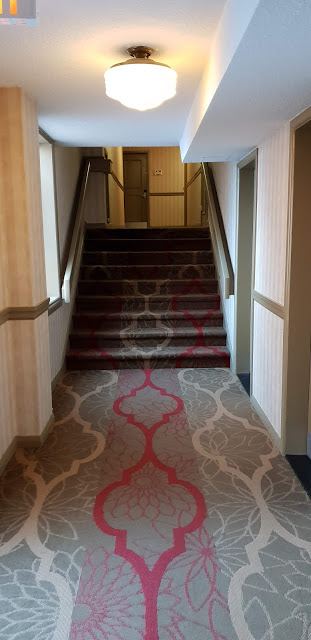
We’re staying at the Park Hotel, a heritage building, apparently built in the later 1920s.  In the style of the time, it is a little like a rabbit warren with passages turning off in a number of directions, and showing it is spread across a number of different buildings.

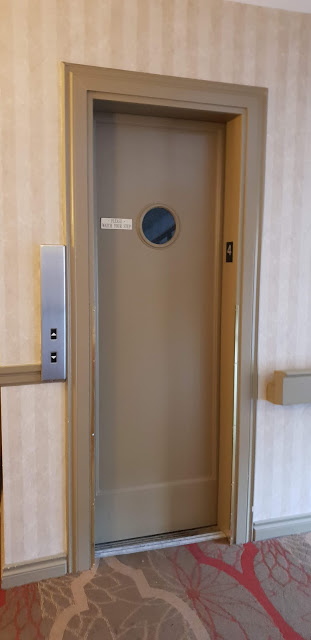
It has the original Otis elevator that can take a maximum of four passengers, and a sign on the wall that says “no horseplay inside the elevator” which is a rather interesting expression that only someone of my vintage would understand.  And, for those without a sense of humor, you definitely couldn’t fit a horse in it to play with.

The thing is, how do you find a balance between keeping the old world charm with modern day expectations.  You can’t.  Some hotels try valiantly to get that balance.  Here, it is simply old world charm, which I guess we should be grateful for because sooner rather than later it’s going to disappear forever.

In my writer’s mind, given the importance of the railways, this was probably a thriving place for travelers and once upon a time, there were a lot more hotels like this one.

A photograph from the inspirational bin – 39

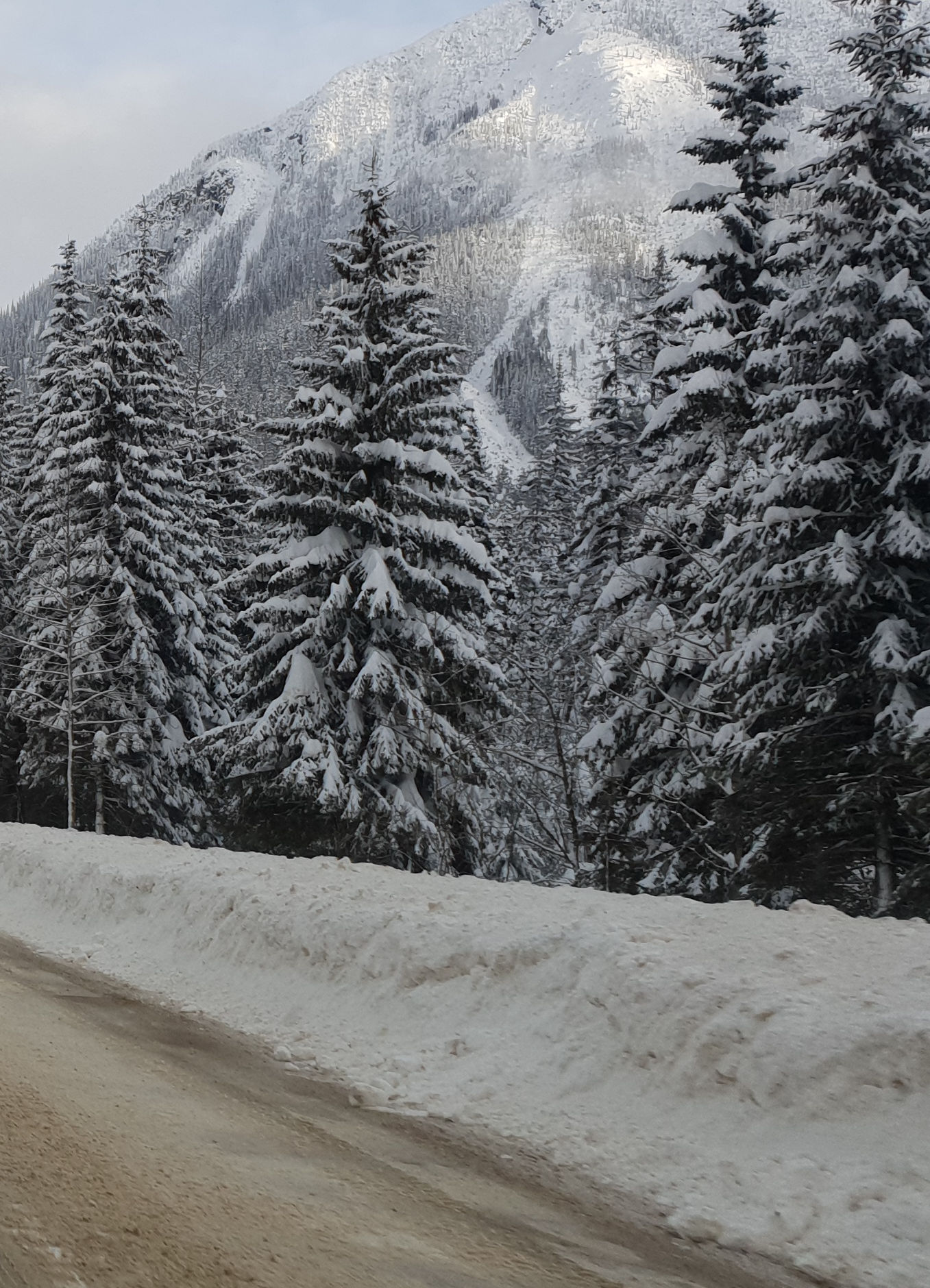
This is what we saw driving along the Coquihalla Highway in Canada, a rather infamous stretch of road featured on the Discovery Channel, and yes, we saw a number of cars and trucks off the side of the road, and not in a good way

The road was iced over in place, and driving was difficult, but on the plus side the scenery was spectacular, and it was hard not to be distracted when driving.

But, inspiration for a story? It might go something like this:

Arty was adamant that he knew the best where man in the business.

That might gave been true if he was in the middle of the city where there were endless tests and turns that could be used to lost chasing police vehicles.

But that didn’t apply to the open road, and one that was think with ice and snow, even if it had recently been cleared.

But that wasn’t as bad as the fact that we had got free of the city, lost the pursuing cars, changed vehicles, and got away free.

All he had to fo was follow the road.

Except Arty had a temper, and getting stuck behind an old van going ever so slowly on the road, caused him to first blast them with horn, then start doing dangerous accelations up behind them, and then attempt to overtake on a bend in the road.

That might not have been so bad if there had not been an oncoming car, but there was.

Even that might not have been so bad if the car had not been a police vehicle.

But the real kicker: Arty lost control of the car and we went sailing off the edge of the road into a ravine, landing on soft ice which after a minute started cracking and then gave way.

The last place I wanted to be was to be sinking into a freezing cold river, but there we were, all frantically trying to get out.

Fortunately, I did, but not before I was soaking wet, and almost frozen. The rest didn’t make it.

The cinema of my dreams – I always wanted to see the planets – Episode 39

Talk fast, and hope like hell!

Oh, to be back on a cargo ship with three other crew members and a robot that wasn’t trying to destroy ships and murder crew members.

On the cargo ship, the captain could hide in his or her cabin behind the bridge and never come out except to tell the robot he or she was doing a good job.

Sometimes you’d see the crew in the mess hall.

No major life-changing decisions.  It was point A to point B without drama, hold-ups, or anything really.

Not like being the captain of a brand-new class of explorer’s vessels with over 2,000 crewmen on the outer edges of our galaxy, on the verge of being destroyed.

“So, for the benefit of a human without the resources of countless generations of knowledge, and experience of countless alien entities, who or what are you that can make such a life-changing decision?  Especially after you said that we would be safe.”

“If you are inferring that I am a robot programmed to not look rationally at the pros and cons of any case you put to me, or that I am devoid of any empathy, you’re wrong.  That I should make such a threat, in our experience, you humans tend to do one of two possible actions, you retaliate with violence, or you make a rational argument. As for who I am, I have a living body that requires nourishment and ages not unlike your own, hosting a fully cognisant member of our race.  The only difference is that I do not appear in my true form, in deference to making your interaction simpler.  I could take any one of a hundred different forms, depending on whom we hold discussions.”

That cleared several questions that had formed in my mind.  This race was very advanced, being able to put their consciousness into another, or any, body.  Did that mean they never died?  Not the time to ask.  The fact they had found a way to assess human reaction to stress, or life or death situations so simply showed they had been observing us a long time.

“We chose not to shoot first.  You will see we might be at a battle state, but that’s only for our protection.  You cannot hold us responsible for the actions of that other ship because as far as the whole of our planet is concerned, we were the first to come here, and as the first, our mission is not to shoot first and ask questions later, as much as it is to explore, and learn.  The keyword is learning.”

“These are words, and our experiences with humans have taught us that what you say and what you do are quite often two entirely different things.”

My experience too, and it was an all too familiar scenario.  I suspect that the motives of my masters might equally be received with some skeptics, because not everyone in the alliance was on the same page, and decisions were sometimes based on possible shifting alliances.

Space travel still had a gloss on it, and everyone was looking to get a seat at the table.  I had no doubt my new friend, I’d I could call him that, would be equally aware of the situation, as it appeared he did, and it spoke volumes about the levels of their penetration in our world.

“I think, then, our best course of action is to prove we mean what we say.  You were chasing that other vessel, the one you say the occupants committed crimes upon people in your galaxy.”

“They did.  We were, but there was a measured reluctance on the part of the other crew members to pursue them beyond the limits of our galaxy.  Exploration is one thing, an offense that might cause conflict is something else.”

So, they had problems with being the instigators of actions that might be misinterpreted.

“Then let us apprehend them, and we will render the justice together.  I have no trouble bringing people who have criminal intentions to justice.  I would prefer it to be ours, but for the sake of creating at least an initial relationship between our worlds, I will accept the responsibility.”

I could see Nancy looking at me with a look that would kill mortal men and understood her concern.  This was going to be a tough sell all round

“It would be acceptable as a preliminary basis for discussions.  My people would consider your input if or when any or all of those responsible for crimes were arraigned.”

Good enough, for the moment.

“Excellent.  Now, could you lift the block you have on our communications so I can get the first officer on to finding where their ship is “

“You may have a hard job catching them.  Their ship is, as far as we are aware, the fastest your galaxy has.”

“Not quite, but that’s a discussion for another day.”

The green bar on my communicator returned.

“Number one.”

A moment later he came back with, Sir, you are OK?”

“Fine.  Have you been monitoring that Russian vessel?”

“Yes, sir.  It’s about a half-hour from here.”

“Good.  Ready the ship for pursuit.  We have a few questions that need answering.  I’ll explain more when I get back.”

“You can come with us, on our ship, or in yours.  I will communicate your existence with my superiors, just not the fact you’ve infiltrated us in deference to your people if you want to get them out, or declare their presence, a situation we can control if you agree to sit down and talk about it.  I suspect that they’ve been helping more than hindering, other than just keeping you informed of our progress.”

I didn’t get a smile, but that invisible change in expression was an interesting indicator.

“I’ll stay, we’ll follow discreetly.  Your actions will be judged, Captain.”

“No pressure then.  Could you send the names, or if not, photos, of the offenders?  How many are there?”

“Six.  We shall.  Good luck.”

The next instant I was back on the deck of my own ship.

© Charles Heath 2021-2022