The A to Z Challenge – W is for “What are the odds…”


I’m not a betting man.

I’d been to the horse races a few times, but every time I backed a horse to win, it would come last, and if I backed it to place, it would come fourth.

Then, every time I bought a lottery ticket, my numbers never seemed to come out, as if they were heavier than the others.

You get the picture, gambling, and I didn’t get along.

That being said, Vernon, a friend from school days, and then, having made the graduate program for the same company, remained friends into adult life. He was a betting man, he bet me he would be married first, he picked horses that came first, and always walked out of a casino with more than he walked in with.

And he was right, he got married first, had children first, settled into a manager’s role, and was content.

I was not so eager to follow in his footsteps; I often said that I hadn’t found the right girl yet, but the truth was, I wasn’t exactly putting myself out there. A couple of bad experiences had put me off the whole idea.

He had a side bet with another of our friends that I would not get married before I was forty. He had mentioned it to me some time ago, and I’d agreed with him; it was a safe bet.

The thing was, Evie had learned about that bet, and it was, in her mind, a situation tailor-made for her, being Vernon’s very popular wife, and not one to pass up a romantic challenge. Not after Vernon had suddenly decided to make a bet with her, to find me a girlfriend. With a time limit, of course, of six weeks. Just to make it interesting.

Of course, I had no clue this challenge existed, not until much later.

What I did knew was that she had a vast array of both married and single girlfriends and acquaintances, and was known to throw memorable parties on a Friday night. She had issued me with a standing invitation a long time ago, one that kept promising to honor, but I never seemed to get there.

I knew some of her friends were singles, and that she had a reputation of being something of a matchmaker. Vernon told me that those Friday night affairs were where some of his other friends had found romance and that it wouldn’t surprise him if I was not a target.

I agreed with him, but coincidentally, right after he said this, I got a call from Evie who all but ordered me to attend this Friday’s festivities. I was going to decline, but she added it was Chloe’s fifth birthday, and as her Godfather, I was obligated to attend.

It had been an honor when Vernon first asked me, it still is, but it seemed to me it was going to be used for some other reason, so I was going to have to be on my guard.

Over the years I had met most of Evie’s girlfriends and they were fun, yes, I’d heard about the exploits on weekends in Vegas, but it was not for me. I was the quiet, shy type, and they, in a nutshell, were not.
I’d met most of Evie’s family. She was one of five girls, the one in the middle. The two older sisters were professionals, one a doctor, the other, Geraldine, a lawyer. The two younger sisters were more hands-on, the second youngest, Zoe, was a home caterer, and the youngest, Yasmine, with no head for, or desire to own, a business, was more carefree. Like Evie, she was family orientated and still lived with her parents. The most level headed, and the one they all turned to for advice, was Melanie, the eldest.

She was the first person I saw after I arrived. I thought I would get there early because I never wanted to make an entrance.

“I haven’t seen you around for a while,” Melanie said, already a champagne flute filled, in her hand. Something else I knew, she liked to drink wine. She was also married, but I remembered her husband was away a lot.

“Part of the low profile I try to keep. How is Leonard, still the king of frequent flyer points?” His travels had finally earned him a special card reserved for very few.

“He’s in Paris, probably with his mistress.” She shrugged. “Husbands are like accessories these days. You can keep them or throw them out. I’m sure Genevieve will get tired of his soon and send him back.”

A unique attitude, for one who was supposed to give advice.

“You’re still not married, I see, Good choice. Marriage these days seems to be only good for a year or two, then sue the other for everything they’ve got. Sorry, I lost a case today, so I’m feeling a little cynical. Come back when I’ve had a dozen champagnes.”

She suddenly spotted on of Vernon’s neighbors and headed in his direction.

Zoe was walking past with a tray of canapes in her hand and stopped. “Ian? It is you. It’s so long since I’ve seen you.”

“Geraldine’s wedding. You catered that. A splendid feast I might add.”

Geraldine’s wedding had been a year ago, and after everyone had gone home, I found Zoe out the back in tears. She didn’t tell me then what had happened, but we talked for hours. Out of all the Wolverhampton’s, she was the most sensible, and the one I liked the most. But, like all those like her, she was spoken for.

“It was. How have you been?”

“Working, eating, sleeping, repeat.”

“It’s a bit like that, isn’t it? It gets to the point where all the days seem to run into each other, and in the end, you don’t know what day it is. That’s why I have a smartphone. It’s certainly smarter than I am.”

Something I had learned in that discussion was the fact she suffered from low self-esteem, perhaps from being a younger sister, perhaps because her parents had higher hopes for her than just being a caterer. Given her grades at school and later university, she could have been anything.

I was going to disagree with her and sing her praises, but one of her serving staff came up, told her there was a problem.

She sighed, handed the tray to the new girl, and a wan smile, disappeared towards the back of the house.

I thought then that I should leave because I doubted I would be missed.
Whenever I had to go to a party, particularly like one of these, where no one was sitting, and everyone was mingling, I usually set myself a task, picking a focal point and then following it all night. This night it turned out to be Zoe. I was curious about how she managed, running staff, organizing food and drinks, organizing the waitstaff, and managing crises.

In between times, Evie was introducing me to various people, married and unmarried, without appearing to do her ‘magical’ thing. Vernon made sure I remained in the mainstream, and not ‘hiding’ as he called it, and the conversation centered on football and baseball when I with the men, and about vacations and children when I was with the married women and their husbands, and gossip when I was with the single and divorced women.

And all the while I kept an eye on Zoe, zipping in and out of the back rooms, in earnest discussion with what I assumed were prospective new clients, and occasionally on the phone. Not once did she take a spell, and relax for a few minutes.

It was, I had to admit by the end of the night, a pleasant way to spend a few hours, made all the more pleasant by not having to worry about Evie trying to ‘match; me to any of her single friends, though she made sure I knew who they were. Of course, as always, there was not one or another that fitted what was my subconscious selection test. There was one whom I agreed to call and have coffee, but that was an open-ended arrangement, done to please Evie more than anything else.

After the last guest left, I wandered out the back. Vernon had asked me to stay, sample a new after-dinner wine he had discovered.

I’d been there for about half an hour when, instead of Vernon, Zoe came out with two glasses in hand.

“Vernon has stood you up, I’m afraid. He’s getting to be an old married man who had to be in bed before midnight. You’ll just have to settle for my company.”

“So long as you are going to tell me how I should be married, have two and a half children, and be living in a grand house in the suburbs, your company will be fine.”

She handed me a glass and sat next to me on the swing seat. It was a clear, cool night, and I’d been spending the time searching the stars for constellations. Sorry, I was never very good at astronomy.

“You don’t want that?”

“I don’t know what I want. Wouldn’t that all fall into place when you found the perfect partner?”

“Is there such a thing as a perfect partner? We start out thinking that, think we’ve found it, then the bastard goes off and had an affair.”

There was a lot of anger in those last few words of her statement. It explained the few heated exchanges I’d seen her have in what she thought were private moments. I wasn’t prying, I just happened to be nearby at the time.

“Then perhaps my expectations have been set too high. I’m sorry.”

“Don’t be. Everyone told me what he was like.” She shrugged. “Another box ticked for life’s experiences.”

We drank wine and sat in silence. Unlike some others that evening, where it was kind of awkward, I didn’t feel that with Zoe. In fact, I was not sure what it felt like. Companionable?

“Look, I don’t have the best sort of shoulder to cry on, but if you need someone to listen, it’s one thing I’m good at.”

There were tears forming in her eyes and I’d only just noticed them in the moonlight.

“I could do with a hug. Are you any good at those?”

“I could try, and you could let me know. Always looking to add strings to that proverbial bow.”

She smiled. “What are you doing tomorrow?”

“Nothing in particular. Why?”

“I need someone to just take me away from all this, if only for an hour or two. Vernon said you have a cabin by the lake, and I’ve never been fishing. Is it too forward for me to ask, I mean, sorry, sometimes I just speak before I think.”

“One thing at a time. Hug first, then fishing. Maybe.”
Upstairs, Evie rested her head on Vernon’s shoulder as they both looked out over the back garden, and, more specifically at Ian and Zoe on the swing chair.

“What are the odds, Eve. I told you he had a thing for her,” Vernon said.

“I would have said ten to one against. It’s so unlike her. I mean, he’s just so boring.”

“Is he now? That’s just the impression he gives everyone else. So much for your matchmaking.”

© Charles Heath 2020-2021

An excerpt from “The Devil You Don’t”

Available on Amazon Kindle here:  https://amzn.to/2Xyh1ow


By the time I returned to the Savoie, the rain had finally stopped, and there was a streak of blue sky to offer some hope the day would improve.

The ship was not crowded, the possibility of bad weather perhaps holding back potential passengers.  Of those I saw, a number of them would be aboard for the lunch by Phillippe Chevrier.  I thought about it, but the Concierge had told me about several restaurants in Yvoire and had given me a hand-drawn map of the village.  I think he came from the area because he spoke with the pride and knowledge of a resident.

I was looking down from the upper deck observing the last of the boarding passengers when I saw a woman, notable for her red coat and matching shoes, making a last-minute dash to get on board just before the gangway was removed.  In fact, her ungainly manner of boarding had also captured a few of the other passenger’s attention.  Now they would have something else to talk about, other than the possibility of further rain.

I saw her smile at the deckhand, but he did not smile back.  He was not impressed with her bravado, perhaps because of possible injury.  He looked at her ticket then nodded dismissively, and went back to his duties in getting the ship underway.  I was going to check the departure time, but I, like the other passengers, had my attention diverted to the woman in red.

From what I could see there was something about her.  It struck me when the light caught her as she turned to look down the deck, giving me a perfect profile.  I was going to say she looked foreign, but here, as in almost anywhere in Europe, that described just about everyone.  Perhaps I was just comparing her to Phillipa, so definitively British, whereas this woman was very definitely not.

She was perhaps in her 30’s, slim or perhaps the word I’d use was lissom, and had the look and manner of a model.  I say that because Phillipa had dragged me to most of the showings, whether in Milan, Rome, New York, London, or Paris.  The clothes were familiar, and in the back of my mind, I had a feeling I’d seen her before.

Or perhaps, to me, all models looked the same.

She looked up in my direction, and before I could divert my eyes, she locked on.  I could feel her gaze boring into me, and then it was gone as if she had been looking straight through me.  I remained out on deck as the ship got underway, watching her disappear inside the cabin.  My curiosity was piqued, so I decided to keep an eye out for her.

I could feel the coolness of the air as the ship picked up speed, not that it was going to be very fast.  With stops, the trip would take nearly two hours to get to my destination.  It would turn back almost immediately, but I was going to stay until the evening when it returned at about half eight.  It would give me enough time to sample the local fare, and take a tour of the medieval village.

Few other passengers ventured out on the deck, most staying inside or going to lunch.  After a short time, I came back down to the main deck and headed forward.  I wanted to clear my head by concentrating on the movement of the vessel through the water, breathing in the crisp, clean air, and let the peacefulness of the surroundings envelope me.

It didn’t work.

I knew it wouldn’t be long before I started thinking about why things hadn’t worked, and what part I played in it.  And the usual question that came to mind when something didn’t work out.  What was wrong with me?

I usually blamed it on my upbringing.

I had one of those so-called privileged lives, a nanny till I was old enough to go to boarding school, then sent to the best schools in the land.  There I learned everything I needed to be the son of a Duke, or, as my father called it in one of his lighter moments, nobility in waiting.

Had this been five or six hundred years ago, I would need to have sword and jousting skills, or if it had been a few hundred years later a keen military mind.  If nothing else I could ride a horse, and go on hunts, or did until they became not the thing to do.

I learned six languages, and everything I needed to become a diplomat in the far-flung British Empire, except the Empire had become the Commonwealth, and then, when no-one was looking, Britain’s influence in the world finally disappeared.  I was a man without a cause, without a vocation, and no place to go.

Computers were the new vogue and I had an aptitude for programming.  I guess that went hand in hand with mathematics, which although I hated the subject, I excelled in.  Both I and another noble outcast used to toss ideas around in school, but when it came to the end of our education, he chose to enter the public service, and I took a few of those ideas we had mulled over and turned them into a company.

About a year ago, I was made an offer I couldn’t refuse.  There were so many zeroes on the end of it I just said yes, put the money into a very grateful bank, and was still trying to come to terms with it.

Sadly, I still had no idea what I was going to do with the rest of my life.  My parents had asked me to come back home and help manage the estate, and I did for a few weeks.  It was as long as it took for my parents to drive me insane.

Back in the city, I spent a few months looking for a mundane job, but there were very few that suited the qualifications I had, and the rest, I think I intimidated the interviewer simply because of who I was.  In that time I’d also featured on the cover of the Economist, and through my well-meaning accountant, started involving myself with various charities, earning the title ‘philanthropist’.

And despite all of this exposure, even making one of those ubiquitous ‘eligible bachelor’ lists, I still could not find ‘the one’, the woman I wanted to spend the rest of my life with.  Phillipa seemed to fit the bill, but in time she proved to be a troubled soul with ‘Daddy’ issues.  I knew that in building a relationship compromise was necessary, but with her, in the end, everything was a compromise and what had happened was always going to be the end result.

It was perhaps a by-product of the whole nobility thing.  There was a certain expectation I had to fulfill, to my peers, contemporaries, parents and family, and those who either liked or hated what it represented.  The problem was, I didn’t feel like I belonged.  Not like my friend from schooldays, and now obscure acquaintance, Sebastian.  He had been elevated to his Dukedom early when his father died when he was in his twenties.  He had managed to fade from the limelight and was rarely mentioned either in the papers or the gossip columns.  He was one of the lucky ones.

I had managed to keep a similarly low profile until I met Phillipa.  From that moment, my obscurity disappeared.  It was, I could see now, part of a plan put in place by Phillipa’s father, a man who hogged the limelight with his daughter, to raise the profile of the family name and through it their businesses.  He was nothing if not the consummate self-advertisement.

Perhaps I was supposed to be the last piece of the puzzle, the attachment to the establishment, that link with a class of people he would not normally get in the front door.  There was nothing refined about him or his family, and more than once I’d noticed my contemporaries cringe at the mention of his name, or any reference of my association with him.

Yet could I truthfully say I really wanted to go back to the obscurity I had before Phillipa?  For all her faults, there were times when she had been fun to be with, particularly when I first met her when she had a certain air of unpredictability.  That had slowly disappeared as she became part of her father’s plan for the future.  She just failed to see how much he was using her.

Or perhaps, over time, I had become cynical.

I thought about calling her.  It was one of those moments of weakness when I felt alone, more alone than usual.

I diverted my attention back to my surroundings and the shoreline.  Out of the corner of my eye, I could see the woman in the red coat, making a move.  The red coat was like a beacon, a sort of fire engine red.  It was not the sort of coat most of the women I knew would wear, but on her, it looked terrific.  In fact, her sublime beauty was the one other attribute that was distinctly noticeable, along with the fact her hair was short, rather than long, and jet black.

I had to wrench my attention away from her.

A few minutes later several other passengers came out of the cabin for a walk around the deck, perhaps to get some exercise, perhaps checking up on me, or perhaps I was being paranoid.  I waited till they passed on their way forward, and I turned and headed aft.

I watched the wake sluicing out from under the stern for a few minutes, before retracing my steps to the front of the ship and there I stood against the railing, watching the bow carve its way through the water.  It was almost mesmerizing.  There, I emptied my mind of thoughts about Phillipa, and thoughts about the woman in the red coat.

Until a female voice behind me said, “Having a bad day?”

I started, caught by surprise, and slowly turned.  The woman in the red coat had somehow got very close me without my realizing it.  How did she do that?  I was so surprised I couldn’t answer immediately.

“I do hope you are not contemplating jumping.  I hear the water is very cold.”

Closer up, I could see what I’d missed when I saw her on the main deck.  There was a slight hint of Chinese, or Oriental, in her particularly around the eyes, and of her hair which was jet black.  An ancestor twice or more removed had left their mark, not in a dominant way, but more subtle, and easily missed except from a very short distance away, like now.

Other than that, she was quite possibly Eastern European, perhaps Russian, though that covered a lot of territory.  The incongruity of it was that she spoke with an American accent, and fluent enough for me to believe English was her first language.

Usually, I could ‘read’ people, but she was a clean slate.  Her expression was one of amusement, but with cold eyes.  My first thought, then, was to be careful.

“No.  Not yet.”  I coughed to clear my throat because I could hardly speak.  And blushed, because that was what I did when confronted by a woman, beautiful or otherwise.

The amusement gave way to a hint of a smile that brightened her demeanor as a little warmth reached her eyes.  “So that’s a maybe.  Should I change into my lifesaving gear, just in case?”

It conjured up a rather interesting image in my mind until I reluctantly dismissed it.

“Perhaps I should move away from the edge,” I said, moving sideways until I was back on the main deck, a few feet further away.  Her eyes had followed me, and when I stopped she turned to face me again.  She did not move closer.

I realized then she had removed her beret and it was in her left side coat pocket.  “Thanks for your concern …?”

“Zoe.”

“Thanks for your concern, Zoe.  By the way, my name is John.”

She smiled again, perhaps in an attempt to put me at ease.  “I saw you earlier, you looked so sad, I thought …”

“I might throw myself overboard?”

“An idiotic notion I admit, but it is better to be safe than sorry.”

Then she tilted her head to one side then the other, looking intently at me.  “You seem to be familiar.  Do I know you?”

I tried to think of where I may have seen her before, but all I could remember was what I’d thought earlier when I first saw her; she was a model and had been at one of the showings.  If she was, it would be more likely she would remember Phillipa, not me.  Phillipa always had to sit in the front row.

“Probably not.”  I also didn’t mention the fact she may have seen my picture in the society pages of several tabloid newspapers because she didn’t look the sort of woman who needed a daily dose of the comings and goings, and, more often than not, scandal associated with so-called celebrities.

She gave me a look, one that told me she had just realized who I was.  “Yes, I remember now.  You made the front cover of the Economist.  You sold your company for a small fortune.”

Of course.  She was not the first who had recognized me from that cover.  It had raised my profile considerably, but not the Sternhaven’s.  That article had not mentioned Phillipa or her family.  I suspect Grandmother had something to do with that, and it was, now I thought about it, another nail in the coffin that was my relationship with Phillipa.

“I wouldn’t say it was a fortune, small or otherwise, just fortunate.”  Each time, I found myself playing down the wealth aspect of the business deal.

“Perhaps then, as the journalist wrote, you were lucky.  It is not, I think, a good time for internet-based companies.”

The latter statement was an interesting fact, one she read in the Financial Times which had made that exact comment recently.

“But I am boring you.”  She smiled again.  “I should be minding my own business and leaving you to your thoughts.  I am sorry.”

She turned to leave and took a few steps towards the main cabin.

“You’re not boring me,” I said, thinking I was letting my paranoia get the better of me.  It had been Sebastian on learning of my good fortune, who had warned me against ‘a certain element here and abroad’ whose sole aim would be to separate me from my money.  He was not very subtle when he described their methods.

But I knew he was right.  I should have let her walk away.

She stopped and turned around.  “You seem nothing like the man I read about in the Economist.”

A sudden and awful thought popped into my head.  Those words were part of a very familiar opening gambit.  “Are you a reporter?”

I was not sure if she looked surprised, or amused.  “Do I look like one?”

I silently cursed myself for speaking before thinking, and then immediately ignored my own admonishment.  “People rarely look like what they are.”

I saw the subtle shake of the head and expected her to take her leave.  Instead she astonished me.

“I fear we have got off on the wrong foot.  To be honest, I’m not usually this forward, but you seemed like you needed cheering up when probably the opposite is true.  Aside from the fact this excursion was probably a bad idea.  And,” she added with a little shrug, “perhaps I talk too much.”

I was not sure what I thought of her after that extraordinary admission. It was not something I would do, but it was an interesting way to approach someone and have them ignoring their natural instinct.  I would let Sebastian whisper in my ear for a little longer and see where this was going.

“Oddly enough, I was thinking the same thing.  I was supposed to be traveling with my prospective bride.  I think you can imagine how that turned out.”

“She’s not here?”

“No.”

“She’s in the cabin?”  Her eyes strayed in that direction for a moment then came back to me.  She seemed surprised I might be traveling with someone.

“No.  She is back in England, and the wedding is off.  So is the relationship.  She dumped me by text.”

OK, why was I sharing this humiliating piece of information with her?  I still couldn’t be sure she was not a reporter.

She motioned to an empty seat, back from the edge.  No walking the plank today.  She moved towards it and sat down.  She showed no signs of being cold, nor interested in the breeze upsetting her hair.  Phillipa would be having a tantrum about now, being kept outside, and freaking out over what the breeze might be doing to her appearance.

I wondered, if only for a few seconds if she used this approach with anyone else.  I guess I was a little different, a seemingly rich businessman alone on a ferry on Lake Geneva, contemplating the way his life had gone so completely off track.

She watched as I sat at the other end of the bench, leaving about a yard between us.  After I leaned back and made myself as comfortable as I could, she said, “I have also experienced something similar, though not by text message.  It is difficult, the first few days.”

“I saw it coming.”

“I did not.”  She frowned, a sort of lifeless expression taking over, perhaps brought on by the memory of what had happened to her.  “But it is done, and I moved on.  Was she the love of your life?”

OK, that was unexpected.

When I didn’t answer, she said, “I am sorry.  Sometimes I ask personal questions without realizing what I’m doing.  It is none of my business.”  She shivered.  “Perhaps we should go back inside.”

She stood, and held out her hand.  Should I take it and be drawn into her web?  I thought of Sebastian.  What would he do in this situation?

I took her hand in mine and let her pull me gently to my feet.  “Wise choice,” she said, looking up at the sky.

It just started to rain.


© Charles Heath 2015-2020

newdevilcvr6

Searching for locations: New York to Vancouver

The flight from Newark via Air Canada to Vancouver is about 5:30pm so we are slated to be picked up by the limousine about 2:30.

We have to be out of our room by 11am so we decided the day before that on our last day in New York we’d go to the Times Square red lobster.
It gives us about three hours to get there, eat, and get back.

It’s always fun packing bags the day you leave, so most of the hard work was done earlier. This time it’s particularly a trial because we have so much stuff to fit into a small space, and weight considerations are always paramount because of the 23kg limit.

Outside is has gone from minus four to minus two in the two hours before we leave the hotel at 11:30, but that’s not so much of a problem because we have a long walk from 56th street to 41st street to warm us up.

At least today it’s not so cold, as it has been previously.

At Red Lobster it’s not difficult to make a decision on what to have, the mix and match special, with Lobster alfredo, filet mignon, and parrot island coconut shrimp, with walts special, though what that will remain a surprise until it is served.

To drink, it was the Blue moon beer, wheat type.

For appetizers, we had scones that are supposedly bread but to me are dipped in garlic butter and baked like a scone. Australian style. They are absolutely delicious.

There is an expression a one drink screamer and we’ve got one, but the truth is the drinks are very lethal. Pure alcohol and ice with a touch of soda.

The meals at this Red Lobster are definitely better than those we had in Vancouver, except for the pasta with lobster I had which was little more than a tasteless congealed mess after it reached the table. This did not detract from the deliciously cooked and served seafood that accompanied it.

All in all, after such a great lunch and the thought of having to walk ten blocks the decision was unanimous to get a cab which took us back to the hotel by a rather interesting, if not exactly the most direct, route. I think the driver guessed we were tourists.

We are picked up at the hotel by a driver in a large Toyota which had enough space for 3 passengers and all our bags. The driver was chatty and being foreign, preferred soccer to the other traditional American sport. Don’t ask me how the conversation turned to sports, but we may have mentioned we went to the ice hockey.

At Newark airport, all I have room for is a glass of burned beer, whatever that means, though it has an odd taste, and a Samuel Adams 76 special which was rather tasty.

Today we are flying in a Boeing 787-9 Dreamliner with a maximum of 298 passengers in three classes.

It looks very new even though it is about 6 months old. It has seating of 3 x 3 x 3, and we are in row 19, just behind the premium economy cabin, and the closest to the front of the plane of all the Air Canada flights.

Engine startup is loud at the lower revolutions with the vibration going through the airframe. Like all planes, the flaps being extended, it is very noisy. All of the vibrations go away when the engines are up to speed. On take off the engines at max are not as noisy and other planes and relatively quiet. It will be interesting to see what the landing is like.

In flight when not experiencing turbulence the ride is very smooth and reasonably quiet which is better than the other planes with seeming continuous engine whining and the flow of air past the fuselage.

The seats are comfortable but still just a little small and the middle passenger can be tightly squeezed in if the two on either side are larger than normal. The seats fully recline but the seatback is not completely in your face, and bearable when you recline your own seat.

There are several seats by the toilets that would be terrible on a long-distance flight because the passenger inevitably comes very close to the seat when entering and leaving. As for the toilets, they are larger than any of the other airplanes, and so too, coincidentally, are the windows.

The plane also makes the same amount of noise when it lands so I’m failing to see what’s so good about it. I’ve also been in an Airbus A350 and those planes are nothing to write home about either.

I suspect the only advantage of having planes is for airlines. Fewer costs and more sardined passengers.

It’s something else I can write off my bucket list.

When we arrive back in Vancouver it’s the same reasonably simple process to get through immigration.

Outside our driver is waiting and this time we have an Escalade picking us up. A very large SUV that fits us all and our luggage.

But…

We were lucky because we were supposed to be picked up in a sedan and the baggage would not have fitted which would have involved one of us taking a cab with the extra luggage.

He was in the neighborhood and picked up the call. His advice, called the service and request a bigger car and pay the difference. We did. It was going to cost another 20 dollars.

As for the hotel, what is it with hotels and late-night arrivals? We get in, the check-in was smooth, we get to the room. Very large with a separate bedroom. But only a sofa bed.

It was not a desirable option, not before 24 hours in relatively squashed plane seats, so it necessitated a change of rooms to one a bit smaller, but a corner room with a reasonable view, and two proper beds.

Late night, need rest, but we have free breakfast so there will be no tarrying next morning. We have to be down by 9am being Sunday.

Besides, we have a mission. There is a toys-are-us nearby and it does have the toy we want. All we need to find is a cab.

An excerpt from “If Only” – a work in progress

Investigation of crimes doesn’t always go according to plan, nor does the perpetrator get either found or punished.

That was particularly true in my case.  The murderer was incredibly careful in not leaving any evidence behind, to the extent that the police could not rule out whether it was a male or a female.

At one stage the police thought I had murdered my own wife though how I could be on a train at the time of the murder was beyond me.  I had witnesses and a cast-iron alibi.

The officer in charge was Detective First Grade Gabrielle Walters.  She came to me on the day after the murder seeking answers to the usual questions like, when was the last time you saw your wife, did you argue, the neighbors reckon there were heated discussions the day before.

Routine was the word she used.

Her Sargeant was a surly piece of work whose intention was to get answers or, more likely, a confession by any or all means possible.  I could sense the raging violence within him.  Fortunately, common sense prevailed.

Over the course of the next few weeks, once I’d been cleared of committing the crime, Gabrielle made a point of keeping me informed of the progress.

After three months the updates were more sporadic, and when, for lack of progress, it became a cold case, communication ceased.

But it was not the last I saw of Gabrielle.

The shock of finding Vanessa was more devastating than the fact she was now gone, and those images lived on in the same nightmare that came to visit me every night when I closed my eyes.

For months I was barely functioning, to the extent I had all but lost my job, and quite a few friends, particularly those who were more attached to Vanessa rather than me.

They didn’t understand how it could affect me so much, and since it had not happened to them, my tart replies of ‘you wouldn’t understand’ were met with equally short retorts.  Some questioned my sanity, even, for a time, so did I.

No one, it seemed, could understand what it was like, no one except Gabrielle.

She was by her own admission, damaged goods, having been the victim of a similar incident, a boyfriend who turned out to be an awfully bad boy.  Her story varied only in she had been made to witness his execution.  Her nightmare, in reliving that moment in time, was how she was still alive and, to this day, had no idea why she’d been spared.

It was a story she told me one night, some months after the investigation had been scaled down.  I was still looking for the bottom of a bottle and an emotional mess.  Perhaps it struck a resonance with her; she’d been there and managed to come out the other side.

What happened become our secret, a once-only night together that meant a great deal to me, and by mutual agreement, it was not spoken of again.  It was as if she knew exactly what was required to set me on the path to recovery.

And it had.

Since then, we saw each about once a month in a cafe.   I had been surprised to hear from her again shortly after that eventful night when she called to set it up, ostensibly for her to provide me with any updates on the case, but perhaps we had, after that unspoken night, formed a closer bond than either of us wanted to admit.

We generally talked for hours over wine, then dinner and coffee.  It took a while for me to realize that all she had was her work, personal relationships were nigh on impossible in a job that left little or no spare time for anything else.

She’d always said that if I had any questions or problems about the case, or if there was anything that might come to me that might be relevant, even after all this time, all I had to do was call her.

I wondered if this text message was in that category.  I was certain it would interest the police and I had no doubt they could trace the message’s origin, but there was that tiny degree of doubt, about whether or not I could trust her to tell me what the message meant.

I reached for the phone then put it back down again.  I’d think about it and decide tomorrow.

© Charles Heath 2018-2020

Short Story writing – Part 1

This is not a treatise, but a tongue in cheek, discussion on how to write short stories.   Suffice to say this is not the definitive way of doing it, just mine.  It works for me – it might not work for you.

Everyone has one in them, possibly more, and me, well, it’s how I keep the wolves from the door.

Yes, I read my stories to them and they fall asleep.

Or maybe not, I’m never quite sure what effect anything I write has on anyone.  And, reading a lot of the posts on how to handle bad reviews and rejection, such a recurrent theme, I don’t think I want to.

Ignorance is bliss, is it not?

Well, one day I’m sure something will happen.  It’s probably in the seven stages of writing:

Euphoria

Planning

Research

Writing

Failure

Search for the guilty

Distinction for the uninvolved

I guess you don’t fail if you don’t put it out there.  Searching for the guilty, well, there’s only one person to blame, the editor, and distinction for the uninvolved, didn’t your friend, relation, confidente, significant other, say it wasn’t going to work?

But, despite everything, I like writing short stories and try to produce one in a single sitting.  I try to keep the word count down, but the stories, somehow they just evolve in my head and don’t want to end the main character’s story.

In reality, there is no end to the story unless they die, and then, of course, the story branches off, just like a family tree,

Some stories are so intricate, they need another story to fill in the gaps, and then another because the plot is running through your head at a thousand miles an hour and your fingers won’t stop typing, because if you do, it will all dissipate into thin air like smoke.

Stories can, you know, dissipate like smoke, one minute your mining a rich vein the next, you’ve hit a ton of worthless quartz.

Then all the constraints come into play, nagging at the back of your mind, and you find yourself waking up in a bath of sweat crying out, I didn’t do it, the crime that is, not lose the best 2,000 words you’ve ever written.

But that’s all of those words you write, isn’t it?

But I digress, and I’ll write some more on the subject, what was it again?

“The Things We Do For Love” – Coming soon

Is love the metaphorical equivalent to ‘walking the plank’; a dive into uncharted waters?

For Henry the only romance he was interested in was a life at sea, and when away from it, he strived to find sanctuary from his family and perhaps life itself.  It takes him to a small village by the sea, s place he never expected to find another just like him, Michelle, whom he soon discovers is as mysterious as she is beautiful.

Henry had long since given up the notion of finding romance, and Michelle couldn’t get involved for reasons she could never explain, but in the end both acknowledge that something happened the moment they first met.  

Plans were made, plans were revised, and hopes were shattered.

A chance encounter causes Michelle’s past to catch up with her, and whatever hope she had of having a normal life with Henry, or anyone else, is gone.  To keep him alive she has to destroy her blossoming relationship, an act that breaks her heart and shatters his.

But can love conquer all?

It takes a few words of encouragement from an unlikely source to send Henry and his friend Radly on an odyssey into the darkest corners of the red light district in a race against time to find and rescue the woman he finally realizes is the love of his life.

The cover, at the moment, looks like this:

lovecoverfinal1

In a word: Freeze

Yes, if the temperature was 20 degrees below zero and the forecast for the net week was the same, then that would be the big freeze.

In a more understandable way of putting it, to freeze something is to preserve it at a temperature below zero.

Some things don’t freeze, like petrol.

And you want to hope that you put antifreeze in your radiator otherwise you are going to have big problems with your car in winter.

It also means to stand still.

You can also isolate someone by freezing them out.

And freeze in fear, unable to move, like a deer in headlights.

But the worst example of a freeze is when your computer stops, and you forgot to save that 200-page novel, thereby being lost forever.

No.  That would never happen, you had autosave on, didn’t you?

Didn’t you??????????

Freeze is not to be confused with a frieze which is a broad horizontal band of sculpted or painted decoration, especially on a wall near the ceiling.

Or frees, which in some countries type of football described multiple free kicks, in one sense, and, in another, what you do when you let them go, e.g. he frees the dog.

The cinema of my dreams – I always wanted to write a war story – Episode 36

For a story that was conceived during those long boring hours flying in a steel cocoon, striving to keep away the thoughts that the plane and everyone in it could just simply disappear as planes have in the past, it has come a long way.

Whilst I have always had a fascination with what happened during the second world war, not the battles or fighting, but in the more obscure events that took place, I decided to pen my own little sidebar to what was a long and bitter war.

And, so, it continues…

Jackerby came back and sat down.  It was clear he was annoyed his lunch was interrupted.

“Atherton’s not among those Leonardo brought back.”

Johannsen silently breathed a sigh of relief.  While he was still outside there was hope he would not get hurt.  If he had the sense to keep his head down.  Anyone else, Johannesen would not have cared.

“Who did Leonardo bring in?”

“Some woman called Martina, the one he says is in charge of the resistance.  He said he raided their last stronghold, killed everyone except the three people he knew were in the resistance.  They’re now in the dungeons.”

“We should be down there asking questions.”  A pointed glare from Wallace carried the message, what are you doing here?

“No use.  He nearly killed them, and it’ll take a while for them to recover.”

“To find out where Atherton is?”

“It seems that was the least of his concerns.  Apparently, she apparently humiliated him so he was more interested in payback.”

“It wouldn’t be hard to humiliate a fool like him,” Johannsen muttered.

Wallace glared at him.  “You should have more faith in our Italian friends, Richard.”

“My faith in him extends only to the fact he will drink the cellar dry.”

Wallace shrugged.  “Once he’s served his purpose…” and left it at that.  “Have you got onto London and asked them for further information on Mayer?”

“I think, by now, they would have tumbled to what’s going on here.  Especially after I saw Atherton come out of the radio room just before Jackerby arrived.  I asked the operator, and he gave me a coded message, but it’s not like any code I’ve seen.”

“And you’re telling me this now?”

“At least he didn’t smash it, which is what I would have done.  We haven’t heard any more from High Command other than to say the traitor was thought to be heading for Innsbruck and coming over the mountains near the Brenner Pass.  They’ve got people looking, but nothing as yet.”

“Now we’ve lost Carmichael, do we have a description of him?”

“Yes.”

“Good.  At least something is happening.”


After lunch, Johannsson went down to the dungeon to check on the prisoners.  Wallace had assigned their ‘welfare’ to him.  It was a difficult assignment seeing they arrived both exhausted, weak, and then subjected to an initial interrogation that determined whether or not they got medicines or food.

Most were left to starve.  Any women were sent to the soldier’s barracks, where they were out of his control.  None had ever come back, and he was ordered not to go check on them.

All told, there were 12 still in cells, with three due to be executed later that day.  All had worked in an armaments factory and had admitted to having information about the bombs that were being dropped over England.

Another six had yet to say what information they had, and had been subjected to severe torture, the handiwork of two of Jackerby’s men, and who Johannsen thought had been trained by the Gestapo.  In fact, he believed they were Gestapo, and that Jackerby, though he didn’t have the uniform, was a ranking SS officer.

Not a man to cross.  Leonardo would find that out soon enough.

The most recent three, the resistance fighters were put in separate cells next to each other.  The guards had been told to listen to any conversations they had, and report.  As yet, none of them had spoken.

Considering the condition they arrived in, that was no surprise.

He stood outside the cell holding the woman they called Martina.

The leader.

She hadn’t moved from the moment she had been dropped there.

A guard appeared beside him.

“Nothing yet?” Johansson asked him.

“I doubt they’ll speak again.  If that’s what Leonardo does to his so-called countrymen; I’d hate to see what he does to his enemies.”

“You let me know if she says anything.”

The soldier nodded, then went back to his station.

The other two were men, one old, one younger.  An odd group to be part of the resistance.  The woman he could understand and was the key. 

He now believed Atherton would come to rescue her.  Like any good British soldier, his empathy would be his downfall.

© Charles Heath 2020

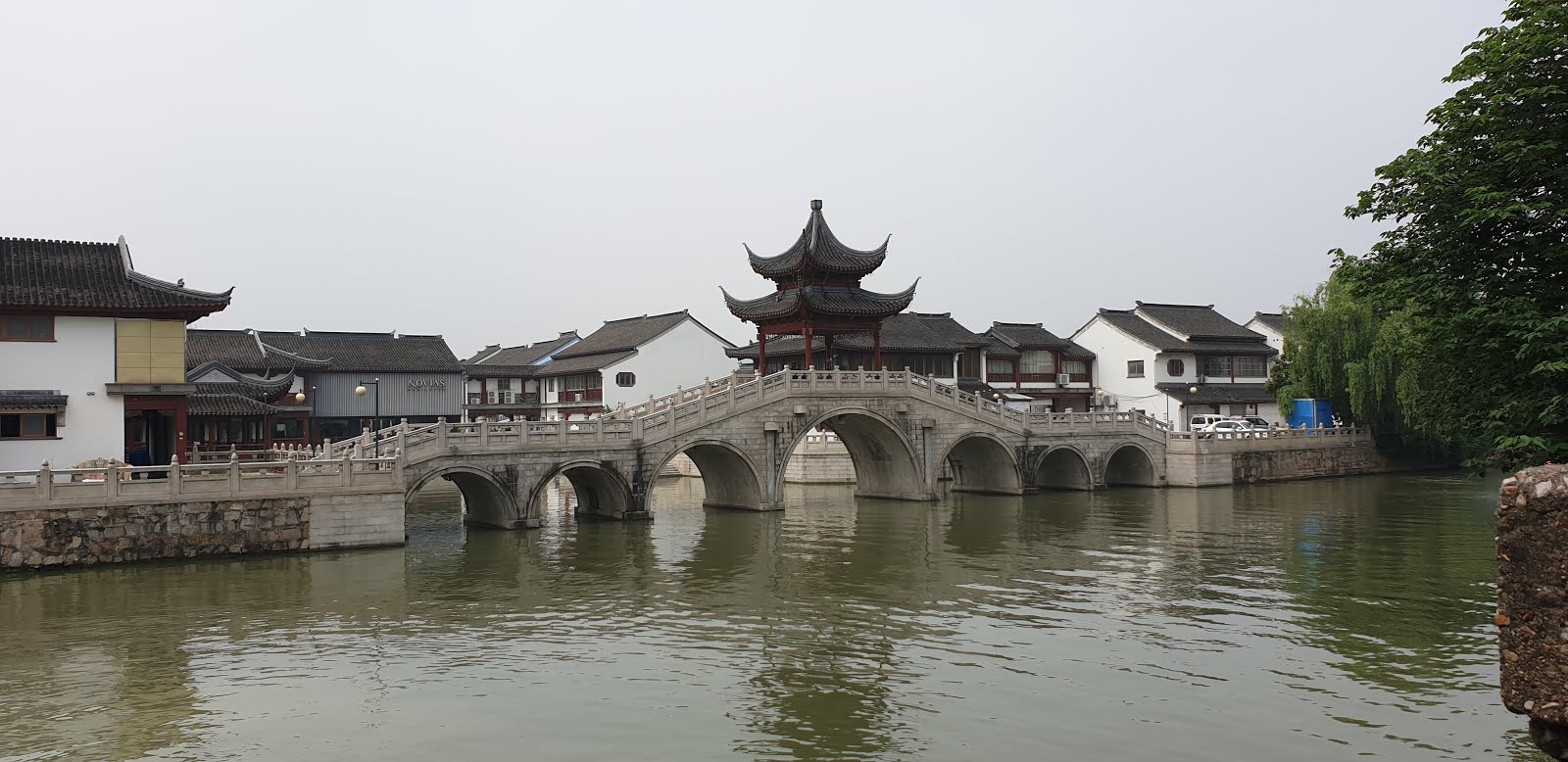
Searching for locations: The canals of Suzhou, China

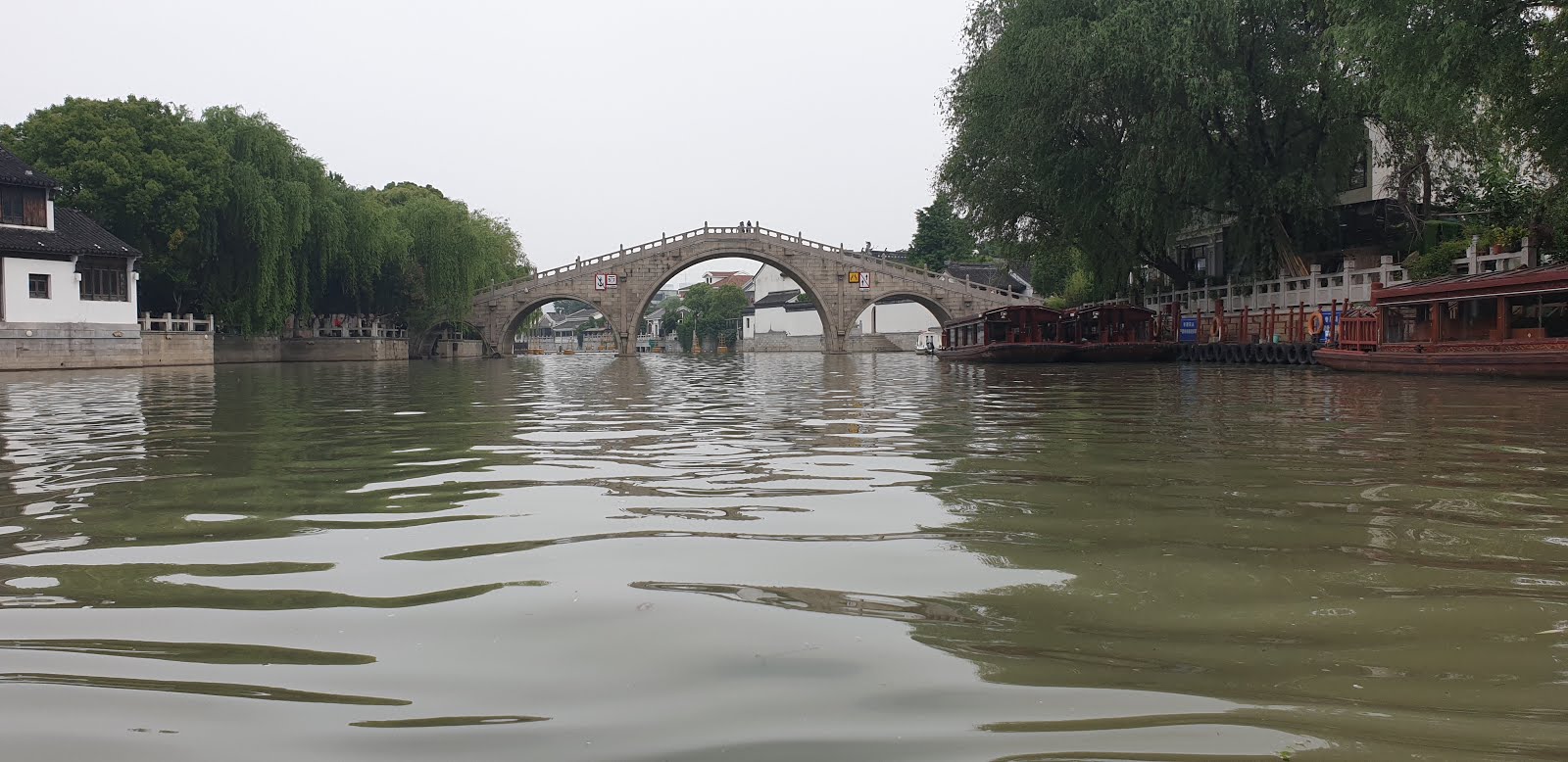
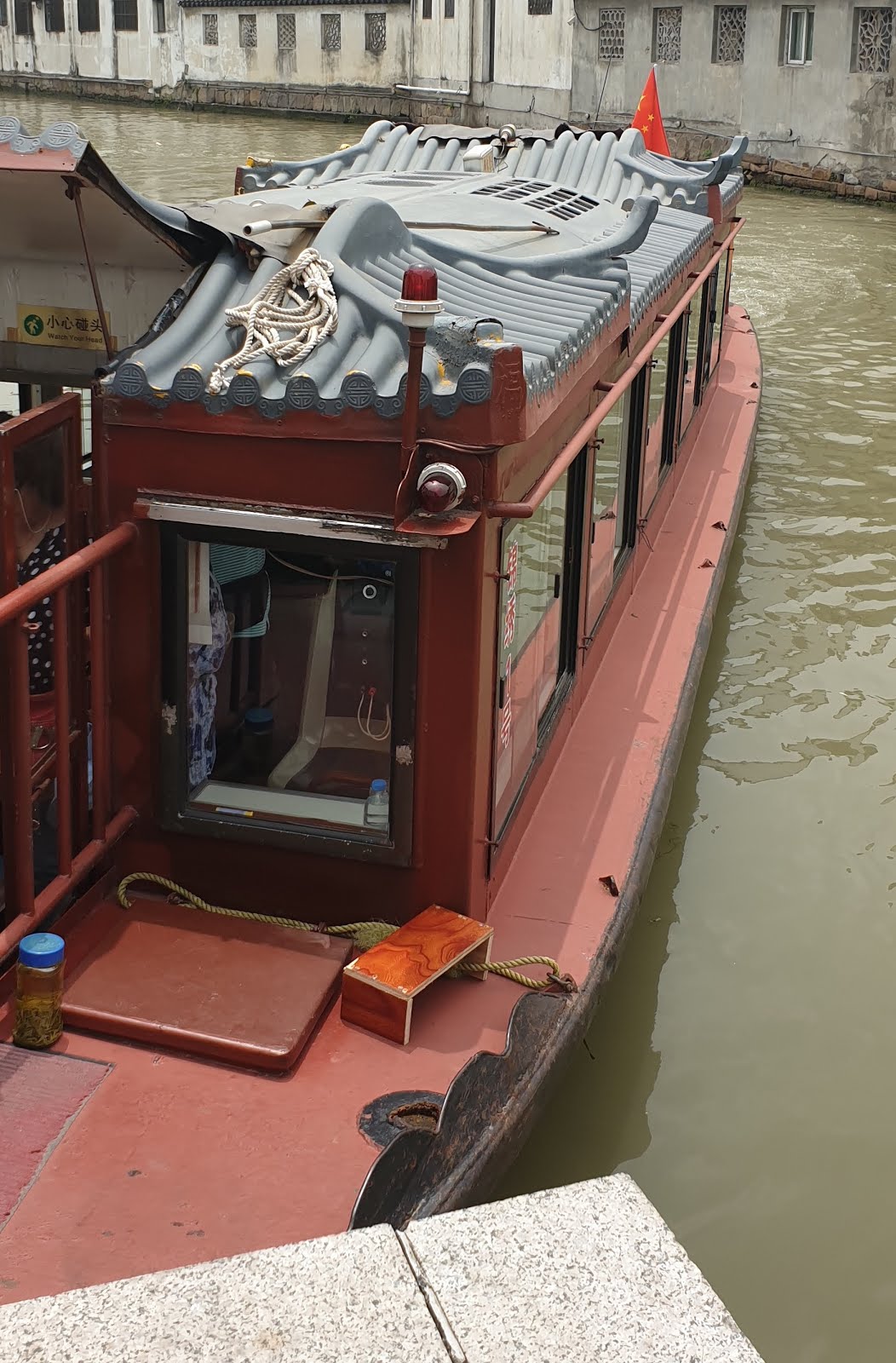
This morning is a boat ride that will take us along a small portion of the main canal, and we head through a number of back streets, to a landing where there are a number of boats all vying with each other to get us passengers on boats.

But…

These boats don’t have a wharf to tie up to and then put out a stable gangplank.  No.  They just more into a concrete step and you take your life in your hands getting on.  One wrong step and you’re in the canal.  And not a very clean one at that.

That’s if another boat doesn’t come along and bumps you, knocking you off balance.  We managed not to lose anyone in boarding the vessel.

This is where we get on the boat

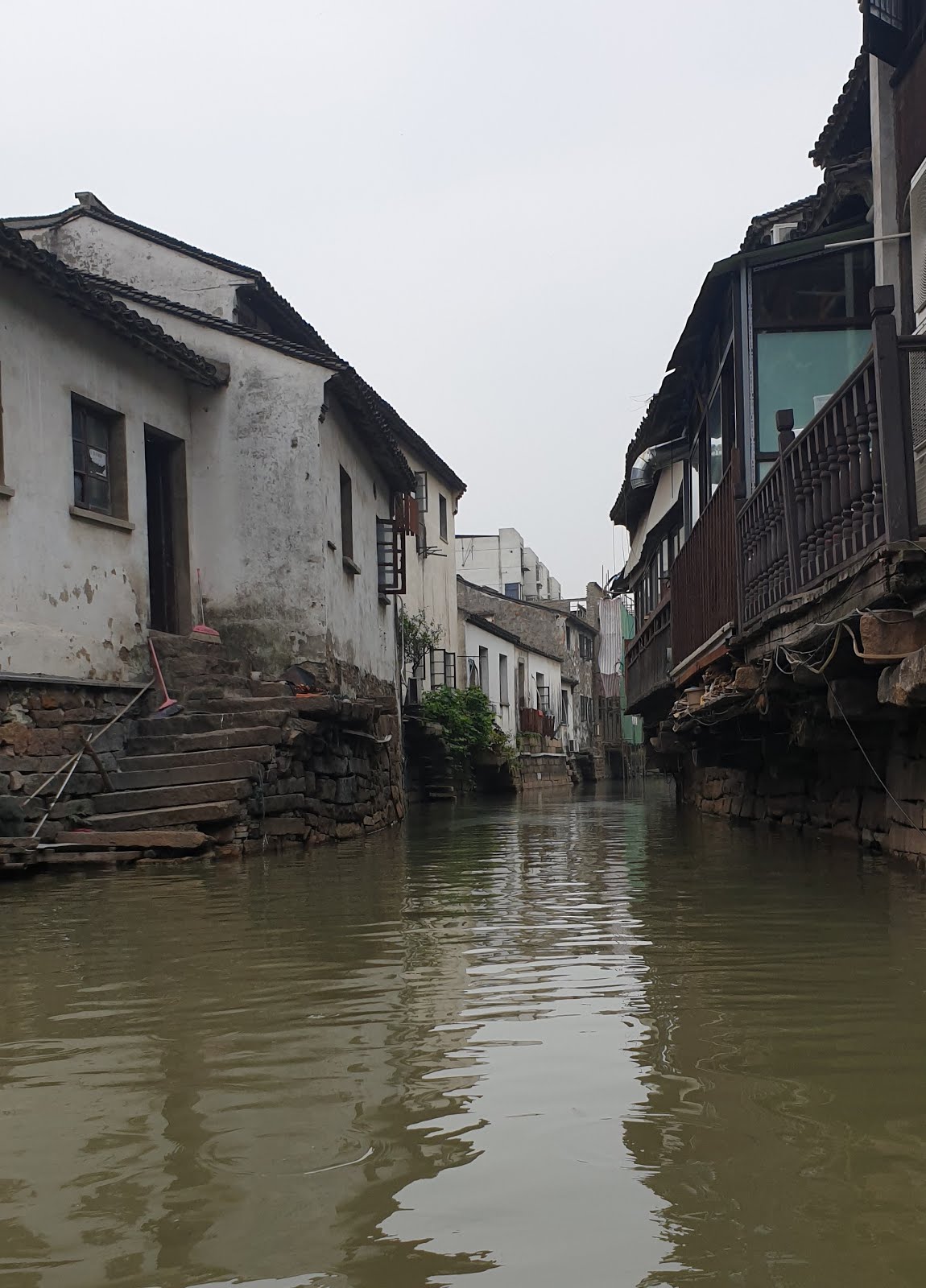
We go along what appears to be downstream towards another larger canal, past tree-lined streets until the canal narrows and we’re looking at the backs of houses, which look very dilapidated.

And the canals?  Well, it’s not quite like it is in Venice

Though some parts of the canal look better than others

What doesn’t bear thinking about is the electrical wiring which is a nightmarish spider web of cables going off in all directions.  How anyone could troubleshoot problems is beyond me.

We pass under a number of bridges, and then, about 30 minutes after leaving, we reach a larger canal and do a 180-degree turn, and head back to a drop off point the will enable us to walk through a typical everyday Chinese market for food and the other items.

This drop off point is much the same as the starting point, a concrete step which is as hazardous as the first.  At least we don’t have to compete with other boats for the landing spot.

We take a leisurely stroll down a small section of Pingjiang Road with small shops on either side, selling all manner of goods

but my interest is in the food and the prices, which at times seem quite expensive for so-called local people, so maybe because the tourists go down this street every day, the prices have been inflated accordingly.

I find it rather disappointing.

We walk to the bridge, go under to the other side crossing the canal and find the coffee shop which is also the meeting place.

So…

When is a coffee shop not a coffee shop, when it takes an eternity to make a cup of coffee, we waited 25 minutes?

We also ordered beef black pepper rice and it took 20 minutes before it arrived, but it was well worth the wait.  Strands of perfectly cooked beef with onion, carrot, and capsicum, with a very peppery and spicy sauce, with a side of boiled rice.

A pizza was ordered too but it did not arrive at all before we left.

Not your average to be read list

A long time ago, when I was 17 or 18, I used to do a lot of reading.  It was a long ride in on the train from home to work, and back again, and I did, then, have the time to read.

Having my own money, I was able to buy my own books, and these generally ran to mysteries and thriller, and naval stories.  The later took my interest for a while because I had notions of becoming an Ensign until I realized I needed better educational qualifications and a higher level of fitness.

So much for those aspirations, so I just read about what it would be like.

However…

I worked with a number of interesting characters, including one, a chap who was about 25, really old and wise to a 17-year-old, who deplored my reading choices.

It seemed Agatha Christie, Ngaio Marsh, Brian Callison, Hammond Innes, and Alistair Maclean didn’t quite fit the reading profile he thought I should follow.

Well, I hadn’t been to university, and I hadn’t realized there was such a thing as English, or any other, literature.  He was adamant that if I wanted to call myself a ‘man of books’ I had to read ‘proper’ books.

So, what eventuated, was a reading list.

If I wanted to converse with him on literature, I had to read every book on the list.

And I wanted to appear, at least, slightly more sophisticated, that the reader of penny dreadfuls.  I didn’t know what that meant, and in those days there was no internet, so it remained for a long time a phrase of mystery.

But, the reading list,

‘Hard Times,’ and ‘Bleak House’ by Charles Dickens

‘Seven Pillars of Wisdom’ by T.E. Lawrence, yes, that famous man who was better known as Lawrence of Arabia

‘Tess of the D’Urbervilles’ by Thomas Hardy, which fuelled a desire to read most of Hardy’s books

‘The Day of the Triffids’, by John Wyndham, a rather strange addition to the list since it was science fiction.  I suspect he was a closet Trekker.

‘To the Lighthouse’, by Virginia Wolff

‘Pride and Prejudice’ by Jane Austen

‘And Quietly Flows the Don’ by Mikhail Alexandrovich Sholokhov.  I had great fears that I would have to learn Russian, but that wasn’t the only shock, so was the size of the book

‘War and Peace’, talking about long books, by Leo Tolstoy

‘One Day in the Life of Ivan Denisovich’ by Aleksandr Solzhenitsyn, and thereby concluding the Russian classics

Of course, your definition of literature can change, and as a result of reading all of these books, and it took quite some time, and this led to selecting a more interesting collection of books to read, which he, in some small measure, took the credit for.

I discovered R.F Delderfield, and the trilogy, ‘A Horseman Riding By’, which led to ‘The Headmaster’, ‘The Avenue’, and ‘God is an Englishman’

C.S. Forester and the Hornblower series, but who also wrote several mysteries

F. Scott Fitzgerald and ‘The Great Gatsby’ as well as several other classics

Eric Ambler, master of thrillers from the ’30s and ’50s, particularly spy novels, and was probably the one who introduced me to the world of espionage

and last but not least, Dashiell Hammett’s ‘The Maltese Falcon’.