A photograph from the inspirational bin – 14

I’m always rummaging through the endless photographs that, if you were to ask me, I would vehemently deny I took.

It’s like the camera on my phone takes them itself, you know, the latest upgrade they didn’t tell you about, the artificial intelligence.

OK, so it’s simply a ferry crossing a wide stretch of water. You ask, why didn’t they build a bridge? A good question, and not one I can answer.

But, what does the thought of a ferry conjure up?

It brought to mind the film Jaws, and the summer visitors to the island, or should I say, shark hunting ground.

Here?

Perhaps a little less sinister…or not.

To me, at this point, it suggests the possibility of a get away, depending on what side you’re on, mainland, or island. I’m going to say, you’re on the island and going back to the mainland.

Running.

The island is like one of those remote places, with one way in and one way out. a place where people go to try and breathe life back into a marriage that’s falling apart under the stresses of city life, but it failed.

The problem wasn’t the fact you didn’t see each other enough, it’s just that you had grown to dislike each other, and going into a small isolated situation only made the problem worse.

It was just easier to blame everything else.

But going home, well that’s a whole different kettle of fish, because bridges were burned before you left, and going back, well, there was going to be grovelling involved.

Or not.

There’s a story here, but not right now. Perhaps in a day or two.

It’s late, very late, and I need some sleep … well, thinking time.

I always wanted to see the planets – Episode 14

We have an unusual visitor

The captain seemed calm for a man with a ray gun that could be used on him at any moment.

I cursed the fact we were not allowed to carry weapons, even if they were standard issue revolvers that shot just plain bullets.

But we were on a peaceful mission to discover new life in outer space. We just didn’t expect to find it so soon, within our own solar system. After all we’ve been out to as far as Pluto, and a little beyond for at least ten years without any encounters like this.

If the captain was remaining calm, so would I.

“What sort of help, sir?”

“Identifying the mineral the thieves just took so they can return it. Apparently, these space pirates have spies on Earth who have been there for quite some time, looking at our defence systems.”

That statement begged so many questions I didn’t know where to start. The first, though, was this one of the pirates acting like the space police, for reasons yet unknown?

Had the captain considered this possibility.

“Then they picked a doozie to steal. If they understand the potential of the material…”

Our visitor cut in, “We are well aware of the possibilities of using plutonium in bombs and the damage it can do. We have similar material, but far less accessible.

“How long is a long time?”

OK, I was stuck on this whole invasion thing. It would be naïve of me to think we were the only life forms in space, but actually discovering we were not against assuming so was a little daunting, and a lot to take in.

“Since before your so called second world war. But all of this is irrelevant. Your superior says the decision to join us is meant to be a joint decision between you two.”

“Again, what sort of help can we provide you. We do not have the same speed capability, nor beaming technology, except for moving inanimate objects. And I suspect you know of our weapons capability.”

“You understand the nature of plutonium, and how to transport it safely. I suspect the fools who took it have no understanding of its danger to life forms. When we catch up with them, we’ll need your expertise to render it safe, and then take it back.”

“You know where they are?”

“Where they’re headed, yes. It’s one of the moons of the planet you call Uranus, called Oberon.”

“It’s a bit cold there, and we have been there and found nothing.”

“Did you look under the ice?”

Good point. But, of course, it didn’t answer the fundamental question that just rose to the surface, why was the captain deferring to me when he needed no such help in the decision making process?

I shrugged. “Well, we’ve got nothing better to do.”

© Charles Heath 2021

The cinema of my dreams – I always wanted to go on a treasure hunt – Episode 64

Here’s the thing…

Every time I close my eyes, I see something different.

I’d like to think the cinema of my dreams is playing a double feature but it’s a bit like a comedy cartoon night on Fox.

But these dreams are nothing to laugh about.

Once again there’s a new installment of an old feature, and we’re back on the treasure hunt.

The Ormiston’s from the papers

The Ormiston story and that of the thousand or so acres between the sea and the mountains are now known as Patterson’s reach, but once called The Grove, began in 1865 when the original Henrich Ormiston arrived from Germany.

Originally intending to go to Australia to grow grapes in South Australia, instead, his fate turned West to the Americas, and, eventually, this part of Florida.  He started out with the intention of growing grapes, but when that failed to materialize, he moved on to Oranges, hence the name, The Grove.

He had married before leaving Germany and had two children, Marta and Gunter before leaving, and Friedrich after he arrived in 1866.  That Friedrich died, according to the gravestone, in 1924.  Neither Marta nor Gunter stayed, leaving Friedrich to carry on the business, have an only child which he named after his father, Heinrich, born in 1899 and who died in 1976.  He in turn had a single son, which he named Friedrich, the infamous person with who Boggs father had a tempestuous business relationship.

Friedrich was born in 1932, during the depression, and it was about that time that the notion there might be buried treasure, somewhere along that coastal area of Florida, floated by a university professor, Emil Stravinsky, who specialized in old pirates.  He had published a book that basically speculated where treasure might be found, and one of those areas was right smack bang in the middle of The Grove.

This information was plucked from the paper’s births, death, and marriages column around the specified dates, the death notices giving some light on the respective Ormiston’s life and toils on their land.

Heinrich, Friedrich’s father, fell for the story hook line and sinker, and with a promise to share the proceeds of an estimated multimillion-dollar trove, invested a fair chunk of the savings he’d amassed over the years in the first of many treasure hunts.  The name Stravinsky rang a bell in my head.

A quick look forward to the most recent editions showed it was the man who had died on Rico’s boat, who was, in fact, a third-generation relative of the original professor, an archaeologist in his own right, and digging a bit further into the story, the paper had published a dozen or so extracts from the professor’s book, hinting their subject matter had been derived from a particular pirate’s log, and from notes made over the years of research by the professor.  It sounded like there was a diary.

I was going to have to find a copy of the professor’s book, which, if it had been published nearly 90 years ago, would now be out of print.

When the father, Heinrich had failed to locate the treasure, the son Friedrich continued the search, only he put more time and effort into more meticulous research rather than take the professor’s word of its whereabouts.

This was about the time Boggs’s father came into the picture.

He had lived and worked in the Caribbean and discovered quite by chance when a storm had blown his boat way off course on a weekend sailing run, the ruins of an encampment and hidden inlet on an uninhabited island where he believed the pirate had operated from.

While waiting to be rescued, the storm had damaged his boat, he took the time to explore, and although he hadn’t told anyone at the time of his rescue, he had discovered a box buried near where a building had once stood containing a map, several coins, a sextant, and a flag.  The news of those discoveries came some years later when it was revealed he’s struck a deal with Ormiston to renew the search for the treasure.

When the result of that expedition came to nothing, each of the partners blamed the other for the lack of success, with Ormiston all but telling anyone who would listen that Boggs had created the map himself for the purpose of extorting money under false pretenses.

Boggs then had to produce the map, where it was authenticated as a map that had been created at the time of the pirate’s reign, but no one could say whether it was just an invention of someone at the time, or it was real.  The fact nothing was found suggested the latter, and it marked to start of the feud between Boggs and Ormiston.

The question in my mind was whether Boggs had that particular map, and had he shown it briefly to me?  Certainly, one of the maps he had was quite old, but there were so many variations, and they all looked equally as old, it was hard to tell.

One point I was quite certain on, none of the maps I’d seen showed the treasure’s final resting place as being in a cave, and I got the impression just before when I’d run into Boggs, that it was exactly where he was going.

Had that been the clue his father had referred to?  Even with the so-called original map, if it showed the treasure hidden in a cave why did Boggs need Ormiston’s help?

Had Ormiston known that might be the final resting place of the treasure?

I would soon find out.  My next stop was the library.

© Charles Heath 2020-2022

The cinema of my dreams – Was it just another surveillance job– Episode 8

I’m back home and this story has been sitting on a back burner for a few months, waiting for some more to be written.

The trouble is, there are also other stories to write, and I’m not very good at prioritising.

But, here we are, a few minutes opened up and it didn’t take long to get back into the groove.

An interrogation and a revelation.


Debriefings were like interrogations, only friendlier.  We were trained to withstand interrogation, so it would be interesting to see how I reacted.   I had no doubt what some of the questions would be.

While I had a few minutes to myself, sitting down behind a bare metal table on a hard plastic and uncomfortable chair, with a warm cup of station house coffee, to consider the briefing.

Target, male, 6 foot 3 inches, 200 pounds, Caucasian, thought to be from either Russia or Bulgaria, but nothing to define his as such.  I had wondered, at the time, what that meant.  When I saw him in the alley I knew, then, what was meant, he looked the same as you or me.

No explanation for why he was under surveillance, but we did get a warning that he might be dangerous if he suspected he was being observed.  Right about that, given team casualties.

Main objective, who he met, talked to, and where he went, every place, every detail to be noted.  The unpredictable explosion threw the whole operation into chaos.

The door opened and a woman, middle-aged, conservatively dressed, walked in, closing it behind her.  She sat in the other chair opposite me.  She brought a file, thin, and put it in front of her on the table.

“Your name is Sam Jackson?”

“Yes.”

No introductions, nothing, just a start on the questions.  No nonsense, but I could see she was very, very angry.  With me, or those who had run a failed operation?

“How long have you been with us?”

“Eight months.”

She opened the file and glanced at the piece of paper on top.  A minute passed before she closed the file again.  “Closer to nine,” she said.

I said nothing.  I wasn’t counting the days.

“How many operations have you been on?”

“Six, including this one.”

“Who assigned you to this specific operation?”

“Couldn’t say.  I got the usual request via text message to attend a briefing at the midtown office.”

“What was the designated operation name?”

“Chancellery.”

For a brief second, there was a quizzical expression on her face, then it was gone.

“Who was running this operation?”

“Director Severin.”

A full three minutes of silence passed.  I thought she was looking at me, the sort of stare that would break a lesser man, but in the end, I think she was looking right through me.  I could not read her thoughts, but if I was to guess, they would be rather dark right now.

Then she spoke.

“You should know that there was no Chancellery on the books, and we certainly do not have a Director named Severin.”


© Charles Heath 2019

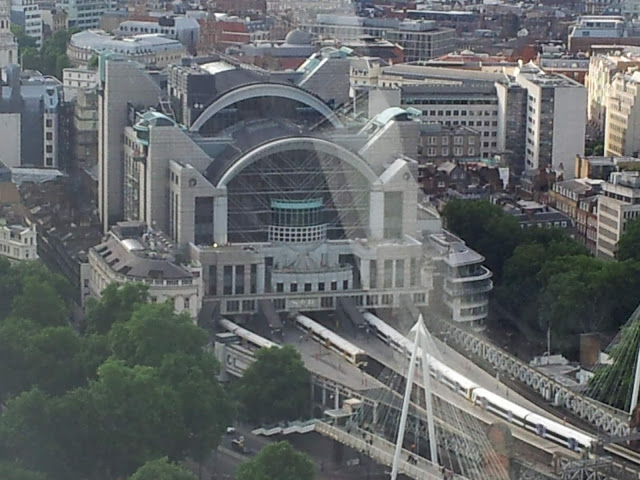
Searching for locations: A small part of London, England

We were in London in Summer, it was a fine afternoon, going into the evening and we decided to get on the London Eye.  As you can see from the clock it was near 7:00 pm.

housesofparliament3

This photo was taken as we were coming down.

Those long evenings were quite remarkable, not in the least going to a pub and sinking a few pints!  There was one such pub not far from Charing Cross Station

The pub was called ‘The Princess of Wales’

And still be light enough to find your way home.

A photograph from the inspirational bin – 14

I’m always rummaging through the endless photographs that, if you were to ask me, I would vehemently deny I took.

It’s like the camera on my phone takes them itself, you know, the latest upgrade they didn’t tell you about, the artificial intelligence.

OK, so it’s simply a ferry crossing a wide stretch of water. You ask, why didn’t they build a bridge? A good question, and not one I can answer.

But, what does the thought of a ferry conjure up?

It brought to mind the film Jaws, and the summer visitors to the island, or should I say, shark hunting ground.

Here?

Perhaps a little less sinister…or not.

To me, at this point, it suggests the possibility of a get away, depending on what side you’re on, mainland, or island. I’m going to say, you’re on the island and going back to the mainland.

Running.

The island is like one of those remote places, with one way in and one way out. a place where people go to try and breathe life back into a marriage that’s falling apart under the stresses of city life, but it failed.

The problem wasn’t the fact you didn’t see each other enough, it’s just that you had grown to dislike each other, and going into a small isolated situation only made the problem worse.

It was just easier to blame everything else.

But going home, well that’s a whole different kettle of fish, because bridges were burned before you left, and going back, well, there was going to be grovelling involved.

Or not.

There’s a story here, but not right now. Perhaps in a day or two.

It’s late, very late, and I need some sleep … well, thinking time.

I always wanted to see the planets – Episode 14

We have an unusual visitor

The captain seemed calm for a man with a ray gun that could be used on him at any moment.

I cursed the fact we were not allowed to carry weapons, even if they were standard issue revolvers that shot just plain bullets.

But we were on a peaceful mission to discover new life in outer space. We just didn’t expect to find it so soon, within our own solar system. After all we’ve been out to as far as Pluto, and a little beyond for at least ten years without any encounters like this.

If the captain was remaining calm, so would I.

“What sort of help, sir?”

“Identifying the mineral the thieves just took so they can return it. Apparently, these space pirates have spies on Earth who have been there for quite some time, looking at our defence systems.”

That statement begged so many questions I didn’t know where to start. The first, though, was this one of the pirates acting like the space police, for reasons yet unknown?

Had the captain considered this possibility.

“Then they picked a doozie to steal. If they understand the potential of the material…”

Our visitor cut in, “We are well aware of the possibilities of using plutonium in bombs and the damage it can do. We have similar material, but far less accessible.

“How long is a long time?”

OK, I was stuck on this whole invasion thing. It would be naïve of me to think we were the only life forms in space, but actually discovering we were not against assuming so was a little daunting, and a lot to take in.

“Since before your so called second world war. But all of this is irrelevant. Your superior says the decision to join us is meant to be a joint decision between you two.”

“Again, what sort of help can we provide you. We do not have the same speed capability, nor beaming technology, except for moving inanimate objects. And I suspect you know of our weapons capability.”

“You understand the nature of plutonium, and how to transport it safely. I suspect the fools who took it have no understanding of its danger to life forms. When we catch up with them, we’ll need your expertise to render it safe, and then take it back.”

“You know where they are?”

“Where they’re headed, yes. It’s one of the moons of the planet you call Uranus, called Oberon.”

“It’s a bit cold there, and we have been there and found nothing.”

“Did you look under the ice?”

Good point. But, of course, it didn’t answer the fundamental question that just rose to the surface, why was the captain deferring to me when he needed no such help in the decision making process?

I shrugged. “Well, we’ve got nothing better to do.”

© Charles Heath 2021

The cinema of my dreams – I always wanted to go on a treasure hunt – Episode 64

Here’s the thing…

Every time I close my eyes, I see something different.

I’d like to think the cinema of my dreams is playing a double feature but it’s a bit like a comedy cartoon night on Fox.

But these dreams are nothing to laugh about.

Once again there’s a new installment of an old feature, and we’re back on the treasure hunt.

The Ormiston’s from the papers

The Ormiston story and that of the thousand or so acres between the sea and the mountains are now known as Patterson’s reach, but once called The Grove, began in 1865 when the original Henrich Ormiston arrived from Germany.

Originally intending to go to Australia to grow grapes in South Australia, instead, his fate turned West to the Americas, and, eventually, this part of Florida.  He started out with the intention of growing grapes, but when that failed to materialize, he moved on to Oranges, hence the name, The Grove.

He had married before leaving Germany and had two children, Marta and Gunter before leaving, and Friedrich after he arrived in 1866.  That Friedrich died, according to the gravestone, in 1924.  Neither Marta nor Gunter stayed, leaving Friedrich to carry on the business, have an only child which he named after his father, Heinrich, born in 1899 and who died in 1976.  He in turn had a single son, which he named Friedrich, the infamous person with who Boggs father had a tempestuous business relationship.

Friedrich was born in 1932, during the depression, and it was about that time that the notion there might be buried treasure, somewhere along that coastal area of Florida, floated by a university professor, Emil Stravinsky, who specialized in old pirates.  He had published a book that basically speculated where treasure might be found, and one of those areas was right smack bang in the middle of The Grove.

This information was plucked from the paper’s births, death, and marriages column around the specified dates, the death notices giving some light on the respective Ormiston’s life and toils on their land.

Heinrich, Friedrich’s father, fell for the story hook line and sinker, and with a promise to share the proceeds of an estimated multimillion-dollar trove, invested a fair chunk of the savings he’d amassed over the years in the first of many treasure hunts.  The name Stravinsky rang a bell in my head.

A quick look forward to the most recent editions showed it was the man who had died on Rico’s boat, who was, in fact, a third-generation relative of the original professor, an archaeologist in his own right, and digging a bit further into the story, the paper had published a dozen or so extracts from the professor’s book, hinting their subject matter had been derived from a particular pirate’s log, and from notes made over the years of research by the professor.  It sounded like there was a diary.

I was going to have to find a copy of the professor’s book, which, if it had been published nearly 90 years ago, would now be out of print.

When the father, Heinrich had failed to locate the treasure, the son Friedrich continued the search, only he put more time and effort into more meticulous research rather than take the professor’s word of its whereabouts.

This was about the time Boggs’s father came into the picture.

He had lived and worked in the Caribbean and discovered quite by chance when a storm had blown his boat way off course on a weekend sailing run, the ruins of an encampment and hidden inlet on an uninhabited island where he believed the pirate had operated from.

While waiting to be rescued, the storm had damaged his boat, he took the time to explore, and although he hadn’t told anyone at the time of his rescue, he had discovered a box buried near where a building had once stood containing a map, several coins, a sextant, and a flag.  The news of those discoveries came some years later when it was revealed he’s struck a deal with Ormiston to renew the search for the treasure.

When the result of that expedition came to nothing, each of the partners blamed the other for the lack of success, with Ormiston all but telling anyone who would listen that Boggs had created the map himself for the purpose of extorting money under false pretenses.

Boggs then had to produce the map, where it was authenticated as a map that had been created at the time of the pirate’s reign, but no one could say whether it was just an invention of someone at the time, or it was real.  The fact nothing was found suggested the latter, and it marked to start of the feud between Boggs and Ormiston.

The question in my mind was whether Boggs had that particular map, and had he shown it briefly to me?  Certainly, one of the maps he had was quite old, but there were so many variations, and they all looked equally as old, it was hard to tell.

One point I was quite certain on, none of the maps I’d seen showed the treasure’s final resting place as being in a cave, and I got the impression just before when I’d run into Boggs, that it was exactly where he was going.

Had that been the clue his father had referred to?  Even with the so-called original map, if it showed the treasure hidden in a cave why did Boggs need Ormiston’s help?

Had Ormiston known that might be the final resting place of the treasure?

I would soon find out.  My next stop was the library.

© Charles Heath 2020-2022

“One Last Look”, nothing is what it seems

A single event can have enormous consequences.

A single event driven by fate, after Ben told his wife Charlotte he would be late home one night, he left early, and by chance discovers his wife having dinner in their favourite restaurant with another man.

A single event where it could be said Ben was in the wrong place at the wrong time.

Who was this man? Why was she having dinner with him?

A simple truth to explain the single event was all Ben required. Instead, Charlotte told him a lie.

A single event that forces Ben to question everything he thought he knew about his wife, and the people who are around her.

After a near-death experience and forced retirement into a world he is unfamiliar with, Ben finds himself once again drawn back into that life of lies, violence, and intrigue.

From London to a small village in Tuscany, little by little Ben discovers who the woman he married is, and the real reason why fate had brought them together.

It is available on Amazon here:  http://amzn.to/2CqUBcz

Writing about writing a book – a novel twist

I have decided to write about the process for me to write a book, working on the book at the same time.  The character writing the book is fictional and bears no relation to me, well, mostly not.

You will join me on the rollercoaster.

It will be appearing a bit at a time over the coming months, with the first instalment below.

Day One

I woke to a day where the sun was shining through the crack in the curtains.  It was not so much the brightness, but the fact it was moving, the gentle breeze moving the curtains and creating a strobing effect.

It was the first day of the rest of my life.

I was about to start the next Pulitzer Prize for literature.  Or something like that.

For so many years now my life had been weighed down by the monotony of a job I hated, a life that was going nowhere, and the pursuit of that no existent fortune that I believed was the answer to all my problems.

Those prayers to the great God Money were never heeded.

So, contrary to the well-meaning advice everyone gave me, I ignored them all, sold off the albatross around my neck, a house with a gigantic mortgage attached, and moved into a small but comfortable garret in a picturesque part of town.

It was called a ‘renovators’ delight.  What did it matter the wallpaper was peeling the paint fading and the carpet had seen better days.

It was mine.

Whether or not in the coming days, weeks, or months, I was a ‘renovator’ would be interesting.

My wife, Anne, had often said I wouldn’t know which end of the hammer to use.

Oh, and did I tell you, I moved on from her, or probably it was the other way around.  I’d let her down one too many times, she said, and found someone else more ‘reliable’.

Good for her, my brother had always said she deserved someone better, and it surprised me the marriage lasted as long as it did.  I still loved her, I always would.

I sprung out of bed and opened the curtains.  Spread out in front of me was a blue sky, bright sunshine casting its glow over the park and gardens opposite.

On my darkest days, I used to sit on a bench and watch the ducks swimming in the pond.  I wanted a carefree life like they had, and that was my dream.

Now I was living the dream.

Or would be till the money ran out.

I had enough for a year.

The second bedroom was the writing room.  The walls were lined with shelves, books by my favourite authors, books on writing, all dog-eared and well-read.

The typewriter was sitting on the desk waiting for the first words to be written.

I had a computer, but I was not going to use it for the second draft.

I had a supply of writing pads.  Like the great authors, I was going to write the first draft by hand, revise, and then type it.

I was going to be old school.


I sat down, picked up a pen, and scratched my head.

I began writing, ‘It was a dark and stormy night’.

That was a far as I got.

Maybe this was going to be harder than I thought.

Perhaps after coffee and toast …


© Charles Heath 2016-2019