Inspiration, maybe – Volume 1

50 photographs, 50 stories, of which there is one of the 50 below.

They all start with –

A picture paints … well, as many words as you like.  For instance:

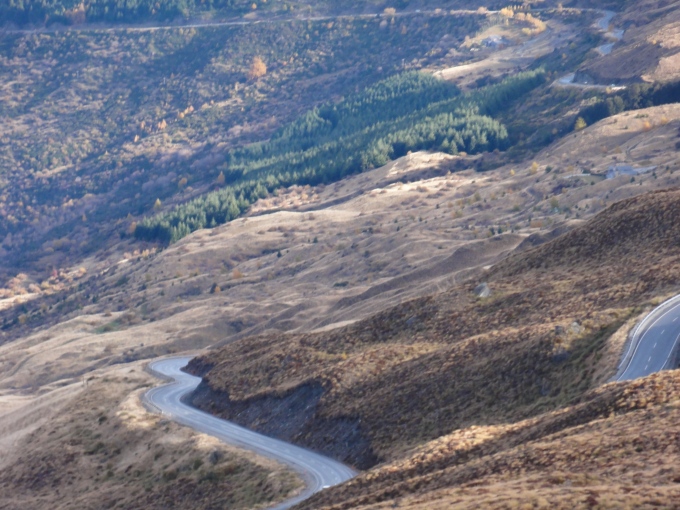
lookingdownfromcoronetpeak

And the story:

It was once said that a desperate man has everything to lose.

The man I was chasing was desperate, but I, on the other hand, was more desperate to catch him.

He’d left a trail of dead people from one end of the island to the other.

The team had put in a lot of effort to locate him, and now his capture was imminent.  We were following the car he was in, from a discrete distance, and, at the appropriate time, we would catch up, pull him over, and make the arrest.

There was nowhere for him to go.

The road led to a dead-end, and the only way off the mountain was back down the road were now on.  Which was why I was somewhat surprised when we discovered where he was.

Where was he going?

“Damn,” I heard Alan mutter.  He was driving, being careful not to get too close, but not far enough away to lose sight of him.

“What?”

“I think he’s made us.”

“How?”

“Dumb bad luck, I’m guessing.  Or he expected we’d follow him up the mountain.  He’s just sped up.”

“How far away?”

“A half-mile.  We should see him higher up when we turn the next corner.”

It took an eternity to get there, and when we did, Alan was right, only he was further on than we thought.”

“Step on it.  Let’s catch him up before he gets to the top.”

Easy to say, not so easy to do.  The road was treacherous, and in places just gravel, and there were no guard rails to stop a three thousand footfall down the mountainside.

Good thing then I had the foresight to have three agents on the hill for just such a scenario.

Ten minutes later, we were in sight of the car, still moving quickly, but we were going slightly faster.  We’d catch up just short of the summit car park.

Or so we thought.

Coming quickly around another corner we almost slammed into the car we’d been chasing.

“What the hell…” Aland muttered.

I was out of the car, and over to see if he was in it, but I knew that it was only a slender possibility.  The car was empty, and no indication where he went.

Certainly not up the road.  It was relatively straightforward for the next mile, at which we would have reached the summit.  Up the mountainside from here, or down.

I looked up.  Nothing.

Alan yelled out, “He’s not going down, not that I can see, but if he did, there’s hardly a foothold and that’s a long fall.”

Then where did he go?

Then a man looking very much like our quarry came out from behind a rock embedded just a short distance up the hill.

“Sorry,” he said quite calmly.  “Had to go if you know what I mean.”

I’d lost him.

It was as simple as that.

I had been led a merry chase up the hill, and all the time he was getting away in a different direction.

I’d fallen for the oldest trick in the book, letting my desperation blind me to the disguise that anyone else would see through in an instant.

It was a lonely sight, looking down that road, knowing that I had to go all that way down again, only this time, without having to throw caution to the wind.

“Maybe next time,” Alan said.

“We’ll get him.  It’s just a matter of time.”

© Charles Heath 2019-2021

Find this and other stories in “Inspiration, maybe”  available soon.

InspirationMaybe1v1

NaNoWriMo – April 2022 – Day 26

First Dig Two Graves, the second Zoe thriller.

I’m going over the conversation Olga is having with John now that he is her prisoner.

On the first run through it seemed to make sense, but as we all know, when you read the conversation out loud, often it sounds terrible.

A question of, “Would I say that?”

Whilst snatching John off the street was a rather simple task, made easier by the fact he was not expecting it, Olga is not sure whether it is a big act.

Working with Irina has made her wary of everyone and everything, even more so since Irina had left her charge, but she knows just how much Irina evolved into the Zoe her son tried to keep on a leash, with spectacularly awful results.

Had she been training John to be like her?

Has Sebastian been training John to become a spy, or was he one already?  After all, why is someone like John, if he is that reputed computer nerd type, doing with a girl like Irina.

Her preference would have to be someone strong, authoritative, masculine, like Alistair.  The problem was she hadn’t driven out all of the emotions  in the time she spent with her.

So, sitting opposite each other, John and Olga try to do their individual assessments.

She finally admits that she doesn’t want to kill Irina, just rehabilitate her.

John, of course, is horrified at the thought of them brainwashing her, especially if they send her after him again.

It comes down to a single point.  Will he do as she asks, and invite her to come and get him?

What neither of them realizes Irina already knows where they are, and any plans Olga might have will be useless.

Today’s writing, with Irina, otherwise know as Zoe, on the way, 1,232 words, for a total of 63,154.

The first case of PI Walthenson – “A Case of Working With the Jones Brothers”

This case has everything, red herrings, jealous brothers, femme fatales, and at the heart of it all, greed.

See below for an excerpt from the book…

Coming soon!

PIWalthJones1

An excerpt from the book:

When Harry took the time to consider his position, a rather uncomfortable position at that, he concluded that he was somehow involved in another case that meant very little to him.

Not that it wasn’t important in some way he was yet to determine, it was just that his curiosity had got the better of him, and it had led to this: sitting in a chair, securely bound, waiting for someone one of his captors had called Doug.

It was not the name that worried him so much, it was the evil laugh that had come after the name was spoken.

Doug what? Doug the ‘destroyer’, Doug the ‘dangerous’, Doug the ‘deadly’; there was any number of sinister connotations, and perhaps that was the point of the laugh, to make it more frightening than it was.

But there was no doubt about one thing in his mind right then: he’d made a mistake. A very big. and costly, mistake. Just how big the cost, no doubt he would soon find out.

His mother, and his grandmother, the wisest person he had ever known, had once told him never to eavesdrop.

At the time he couldn’t help himself and instead of minding his own business, listening to a one-sided conversation which ended with a time and a place. The very nature of the person receiving the call was, at the very least, sinister, and, because of the cryptic conversation, there appeared to be, or at least to Harry, criminal activity involved.

For several days he had wrestled with the thought of whether he should go. Stay on the fringe, keep out of sight, observe and report to the police if it was a crime. Instead, he had willingly gone down the rabbit hole.

Now, sitting in an uncomfortable chair, several heat lamps hanging over his head, he was perspiring, and if perspiration could be used as a measure of fear, then Harry’s fear was at the highest level.

Another runnel of sweat rolled into his left eye, and, having his hands tied, literally, it made it impossible to clear it. The burning sensation momentarily took his mind off his predicament. He cursed and then shook his head trying to prevent a re-occurrence. It was to no avail.

Let the stinging sensation be a reminder of what was right and what was wrong.

It was obvious that it was the right place and the right time, but in considering his current perilous situation, it definitely was the wrong place to be, at the worst possible time.

It was meant to be his escape, an escape from the generations of lawyers, what were to Harry, dry, dusty men who had been in business since George Washington said to the first Walthenson to step foot on American soil, ‘Why don’t you become a lawyer?” when asked what he could do for the great man.

Or so it was handed down as lore, though Harry didn’t think Washington meant it literally, the Walthenson’s, then as now, were not shy of taking advice.

Except, of course, when it came to Harry.

He was, Harry’s father was prone to saying, the exception to every rule. Harry guessed his father was referring to the fact his son wanted to be a Private Detective rather than a dry, dusty lawyer. Just the clothes were enough to turn Harry off the profession.

So, with a little of the money Harry inherited from one of his aunts, he leased an office in Gramercy Park and had it renovated to look like the Sam Spade detective agency, you know the one, Spade and Archer, and The Maltese Falcon.

There’s a movie and a book by Dashiell Hammett if you’re interested.

So, there it was, painted on the opaque glass inset of the front door, ‘Harold Walthenson, Private Detective’.

There was enough money to hire an assistant, and it took a week before the right person came along, or, more to the point, didn’t just see his business plan as something sinister. Ellen, a tall cool woman in a long black dress, or so the words of a song in his head told him, fitted in perfectly.

She’d seen the movie, but she said with a grin, Harry was no Humphrey Bogart.

Of course not, he said, he didn’t smoke.

Three months on the job, and it had been a few calls, no ‘real’ cases, nothing but missing animals, and other miscellaneous items. What he really wanted was a missing person. Or perhaps a beguiling, sophisticated woman who was as deadly as she was charming, looking for an errant husband, perhaps one that she had already ‘dispatched’.

Or for a tall, dark and handsome foreigner who spoke in riddles and in heavily accented English, a spy, or perhaps an assassin, in town to take out the mayor. The man was such an imbecile Harry had considered doing it himself.

Now, in a back room of a disused warehouse, that wishful thinking might be just about to come to a very abrupt end, with none of the romanticized trappings of the business befalling him. No beguiling women, no sinister criminals, no stupid policemen.

Just a nasty little man whose only concern was how quickly or how slowly Harry’s end was going to be.

© Charles Heath 2019

A photograph from the Inspirational bin – 36

This is an inlet near Port Macquarie in northern New South Wales. It is adjacent to a caravan and camping park, close to the ocean and parklands.

But, for our purposes, this scene is going to have a few more interesting connotations than just a few campers going for a jog along the beach, fishing in the estuary, or further out to sea on the other side of the wall in the background.

Firstly, to my favorite kind of story, a spy story…

It’s basically the evil billionaire’s backyard to his island hideaway, and our hero intends to come ashore at night and do battle with the guards, break into the underground holding cells and save the girl.

As always, saving the world comes second!

Or, it’s a place like Fantasy Island, without the landing strip on the beach, where people come to have their fantasies fulfilled. OK, to start there are no robots that are going to go berserk, that’s so ten years ago.

And, no, the hosts won’t be dressed in white safari suits. They went out in the 70s.

Then, I suppose, a story that I like, about people who have secrets, people who are broken, people who just want to get away from everyone else, come to this island where they can live in anonymity, without having to interact with anyone unless they want to.

Two such people accidentally meet.

What happens after that, that’s up to them!

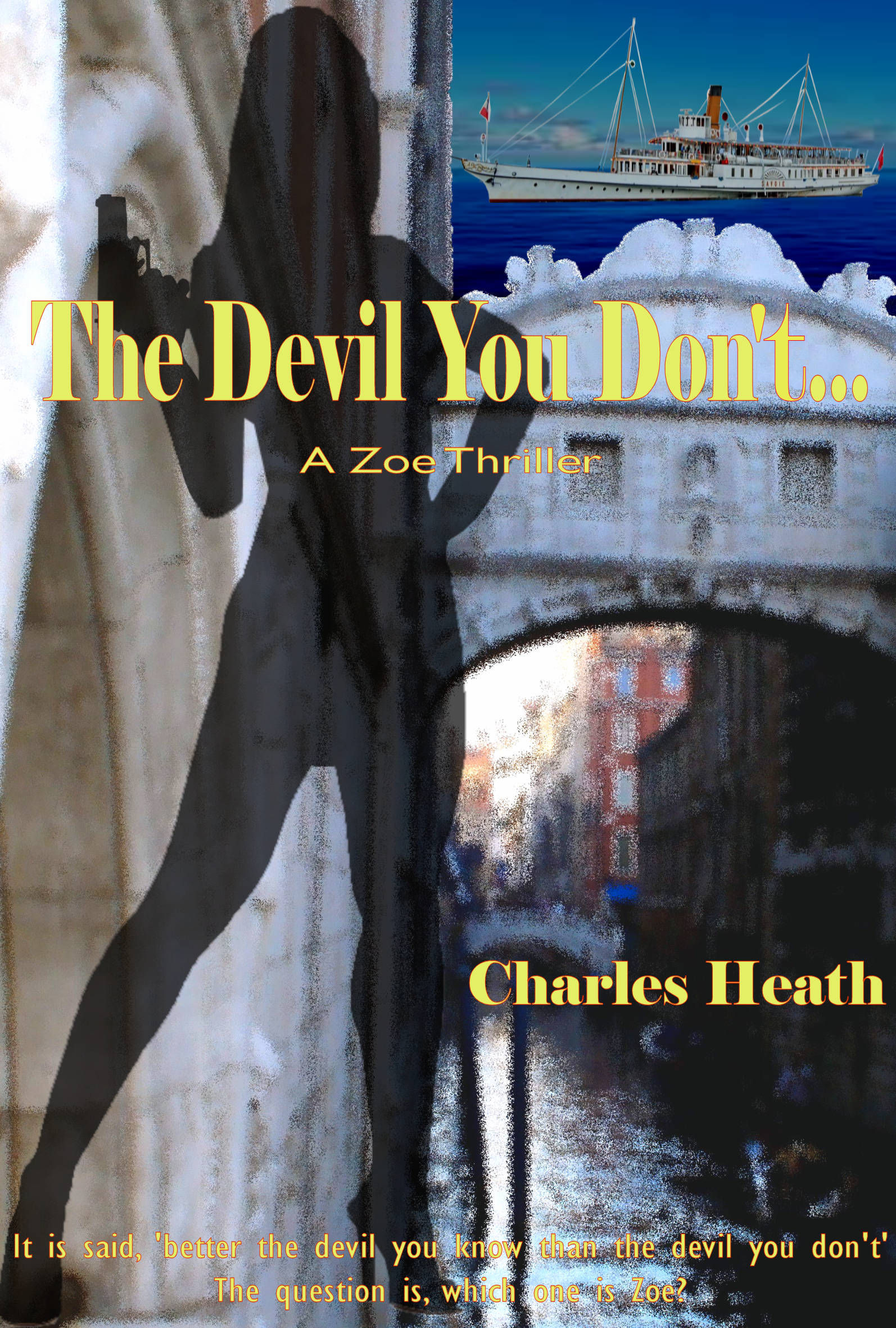
An excerpt from “The Devil You Don’t”

Available on Amazon Kindle here:  https://amzn.to/2Xyh1ow


By the time I returned to the Savoie, the rain had finally stopped, and there was a streak of blue sky to offer some hope the day would improve.

The ship was not crowded, the possibility of bad weather perhaps holding back potential passengers.  Of those I saw, a number of them would be aboard for the lunch by Phillippe Chevrier.  I thought about it, but the Concierge had told me about several restaurants in Yvoire and had given me a hand-drawn map of the village.  I think he came from the area because he spoke with the pride and knowledge of a resident.

I was looking down from the upper deck observing the last of the boarding passengers when I saw a woman, notable for her red coat and matching shoes, making a last-minute dash to get on board just before the gangway was removed.  In fact, her ungainly manner of boarding had also captured a few of the other passenger’s attention.  Now they would have something else to talk about, other than the possibility of further rain.

I saw her smile at the deckhand, but he did not smile back.  He was not impressed with her bravado, perhaps because of possible injury.  He looked at her ticket then nodded dismissively, and went back to his duties in getting the ship underway.  I was going to check the departure time, but I, like the other passengers, had my attention diverted to the woman in red.

From what I could see there was something about her.  It struck me when the light caught her as she turned to look down the deck, giving me a perfect profile.  I was going to say she looked foreign, but here, as in almost anywhere in Europe, that described just about everyone.  Perhaps I was just comparing her to Phillipa, so definitively British, whereas this woman was very definitely not.

She was perhaps in her 30’s, slim or perhaps the word I’d use was lissom, and had the look and manner of a model.  I say that because Phillipa had dragged me to most of the showings, whether in Milan, Rome, New York, London, or Paris.  The clothes were familiar, and in the back of my mind, I had a feeling I’d seen her before.

Or perhaps, to me, all models looked the same.

She looked up in my direction, and before I could divert my eyes, she locked on.  I could feel her gaze boring into me, and then it was gone as if she had been looking straight through me.  I remained out on deck as the ship got underway, watching her disappear inside the cabin.  My curiosity was piqued, so I decided to keep an eye out for her.

I could feel the coolness of the air as the ship picked up speed, not that it was going to be very fast.  With stops, the trip would take nearly two hours to get to my destination.  It would turn back almost immediately, but I was going to stay until the evening when it returned at about half eight.  It would give me enough time to sample the local fare, and take a tour of the medieval village.

Few other passengers ventured out on the deck, most staying inside or going to lunch.  After a short time, I came back down to the main deck and headed forward.  I wanted to clear my head by concentrating on the movement of the vessel through the water, breathing in the crisp, clean air, and let the peacefulness of the surroundings envelope me.

It didn’t work.

I knew it wouldn’t be long before I started thinking about why things hadn’t worked, and what part I played in it.  And the usual question that came to mind when something didn’t work out.  What was wrong with me?

I usually blamed it on my upbringing.

I had one of those so-called privileged lives, a nanny till I was old enough to go to boarding school, then sent to the best schools in the land.  There I learned everything I needed to be the son of a Duke, or, as my father called it in one of his lighter moments, nobility in waiting.

Had this been five or six hundred years ago, I would need to have sword and jousting skills, or if it had been a few hundred years later a keen military mind.  If nothing else I could ride a horse, and go on hunts, or did until they became not the thing to do.

I learned six languages, and everything I needed to become a diplomat in the far-flung British Empire, except the Empire had become the Commonwealth, and then, when no-one was looking, Britain’s influence in the world finally disappeared.  I was a man without a cause, without a vocation, and no place to go.

Computers were the new vogue and I had an aptitude for programming.  I guess that went hand in hand with mathematics, which although I hated the subject, I excelled in.  Both I and another noble outcast used to toss ideas around in school, but when it came to the end of our education, he chose to enter the public service, and I took a few of those ideas we had mulled over and turned them into a company.

About a year ago, I was made an offer I couldn’t refuse.  There were so many zeroes on the end of it I just said yes, put the money into a very grateful bank, and was still trying to come to terms with it.

Sadly, I still had no idea what I was going to do with the rest of my life.  My parents had asked me to come back home and help manage the estate, and I did for a few weeks.  It was as long as it took for my parents to drive me insane.

Back in the city, I spent a few months looking for a mundane job, but there were very few that suited the qualifications I had, and the rest, I think I intimidated the interviewer simply because of who I was.  In that time I’d also featured on the cover of the Economist, and through my well-meaning accountant, started involving myself with various charities, earning the title ‘philanthropist’.

And despite all of this exposure, even making one of those ubiquitous ‘eligible bachelor’ lists, I still could not find ‘the one’, the woman I wanted to spend the rest of my life with.  Phillipa seemed to fit the bill, but in time she proved to be a troubled soul with ‘Daddy’ issues.  I knew that in building a relationship compromise was necessary, but with her, in the end, everything was a compromise and what had happened was always going to be the end result.

It was perhaps a by-product of the whole nobility thing.  There was a certain expectation I had to fulfill, to my peers, contemporaries, parents and family, and those who either liked or hated what it represented.  The problem was, I didn’t feel like I belonged.  Not like my friend from schooldays, and now obscure acquaintance, Sebastian.  He had been elevated to his Dukedom early when his father died when he was in his twenties.  He had managed to fade from the limelight and was rarely mentioned either in the papers or the gossip columns.  He was one of the lucky ones.

I had managed to keep a similarly low profile until I met Phillipa.  From that moment, my obscurity disappeared.  It was, I could see now, part of a plan put in place by Phillipa’s father, a man who hogged the limelight with his daughter, to raise the profile of the family name and through it their businesses.  He was nothing if not the consummate self-advertisement.

Perhaps I was supposed to be the last piece of the puzzle, the attachment to the establishment, that link with a class of people he would not normally get in the front door.  There was nothing refined about him or his family, and more than once I’d noticed my contemporaries cringe at the mention of his name, or any reference of my association with him.

Yet could I truthfully say I really wanted to go back to the obscurity I had before Phillipa?  For all her faults, there were times when she had been fun to be with, particularly when I first met her when she had a certain air of unpredictability.  That had slowly disappeared as she became part of her father’s plan for the future.  She just failed to see how much he was using her.

Or perhaps, over time, I had become cynical.

I thought about calling her.  It was one of those moments of weakness when I felt alone, more alone than usual.

I diverted my attention back to my surroundings and the shoreline.  Out of the corner of my eye, I could see the woman in the red coat, making a move.  The red coat was like a beacon, a sort of fire engine red.  It was not the sort of coat most of the women I knew would wear, but on her, it looked terrific.  In fact, her sublime beauty was the one other attribute that was distinctly noticeable, along with the fact her hair was short, rather than long, and jet black.

I had to wrench my attention away from her.

A few minutes later several other passengers came out of the cabin for a walk around the deck, perhaps to get some exercise, perhaps checking up on me, or perhaps I was being paranoid.  I waited till they passed on their way forward, and I turned and headed aft.

I watched the wake sluicing out from under the stern for a few minutes, before retracing my steps to the front of the ship and there I stood against the railing, watching the bow carve its way through the water.  It was almost mesmerizing.  There, I emptied my mind of thoughts about Phillipa, and thoughts about the woman in the red coat.

Until a female voice behind me said, “Having a bad day?”

I started, caught by surprise, and slowly turned.  The woman in the red coat had somehow got very close me without my realizing it.  How did she do that?  I was so surprised I couldn’t answer immediately.

“I do hope you are not contemplating jumping.  I hear the water is very cold.”

Closer up, I could see what I’d missed when I saw her on the main deck.  There was a slight hint of Chinese, or Oriental, in her particularly around the eyes, and of her hair which was jet black.  An ancestor twice or more removed had left their mark, not in a dominant way, but more subtle, and easily missed except from a very short distance away, like now.

Other than that, she was quite possibly Eastern European, perhaps Russian, though that covered a lot of territory.  The incongruity of it was that she spoke with an American accent, and fluent enough for me to believe English was her first language.

Usually, I could ‘read’ people, but she was a clean slate.  Her expression was one of amusement, but with cold eyes.  My first thought, then, was to be careful.

“No.  Not yet.”  I coughed to clear my throat because I could hardly speak.  And blushed, because that was what I did when confronted by a woman, beautiful or otherwise.

The amusement gave way to a hint of a smile that brightened her demeanor as a little warmth reached her eyes.  “So that’s a maybe.  Should I change into my lifesaving gear, just in case?”

It conjured up a rather interesting image in my mind until I reluctantly dismissed it.

“Perhaps I should move away from the edge,” I said, moving sideways until I was back on the main deck, a few feet further away.  Her eyes had followed me, and when I stopped she turned to face me again.  She did not move closer.

I realized then she had removed her beret and it was in her left side coat pocket.  “Thanks for your concern …?”

“Zoe.”

“Thanks for your concern, Zoe.  By the way, my name is John.”

She smiled again, perhaps in an attempt to put me at ease.  “I saw you earlier, you looked so sad, I thought …”

“I might throw myself overboard?”

“An idiotic notion I admit, but it is better to be safe than sorry.”

Then she tilted her head to one side then the other, looking intently at me.  “You seem to be familiar.  Do I know you?”

I tried to think of where I may have seen her before, but all I could remember was what I’d thought earlier when I first saw her; she was a model and had been at one of the showings.  If she was, it would be more likely she would remember Phillipa, not me.  Phillipa always had to sit in the front row.

“Probably not.”  I also didn’t mention the fact she may have seen my picture in the society pages of several tabloid newspapers because she didn’t look the sort of woman who needed a daily dose of the comings and goings, and, more often than not, scandal associated with so-called celebrities.

She gave me a look, one that told me she had just realized who I was.  “Yes, I remember now.  You made the front cover of the Economist.  You sold your company for a small fortune.”

Of course.  She was not the first who had recognized me from that cover.  It had raised my profile considerably, but not the Sternhaven’s.  That article had not mentioned Phillipa or her family.  I suspect Grandmother had something to do with that, and it was, now I thought about it, another nail in the coffin that was my relationship with Phillipa.

“I wouldn’t say it was a fortune, small or otherwise, just fortunate.”  Each time, I found myself playing down the wealth aspect of the business deal.

“Perhaps then, as the journalist wrote, you were lucky.  It is not, I think, a good time for internet-based companies.”

The latter statement was an interesting fact, one she read in the Financial Times which had made that exact comment recently.

“But I am boring you.”  She smiled again.  “I should be minding my own business and leaving you to your thoughts.  I am sorry.”

She turned to leave and took a few steps towards the main cabin.

“You’re not boring me,” I said, thinking I was letting my paranoia get the better of me.  It had been Sebastian on learning of my good fortune, who had warned me against ‘a certain element here and abroad’ whose sole aim would be to separate me from my money.  He was not very subtle when he described their methods.

But I knew he was right.  I should have let her walk away.

She stopped and turned around.  “You seem nothing like the man I read about in the Economist.”

A sudden and awful thought popped into my head.  Those words were part of a very familiar opening gambit.  “Are you a reporter?”

I was not sure if she looked surprised, or amused.  “Do I look like one?”

I silently cursed myself for speaking before thinking, and then immediately ignored my own admonishment.  “People rarely look like what they are.”

I saw the subtle shake of the head and expected her to take her leave.  Instead she astonished me.

“I fear we have got off on the wrong foot.  To be honest, I’m not usually this forward, but you seemed like you needed cheering up when probably the opposite is true.  Aside from the fact this excursion was probably a bad idea.  And,” she added with a little shrug, “perhaps I talk too much.”

I was not sure what I thought of her after that extraordinary admission. It was not something I would do, but it was an interesting way to approach someone and have them ignoring their natural instinct.  I would let Sebastian whisper in my ear for a little longer and see where this was going.

“Oddly enough, I was thinking the same thing.  I was supposed to be traveling with my prospective bride.  I think you can imagine how that turned out.”

“She’s not here?”

“No.”

“She’s in the cabin?”  Her eyes strayed in that direction for a moment then came back to me.  She seemed surprised I might be traveling with someone.

“No.  She is back in England, and the wedding is off.  So is the relationship.  She dumped me by text.”

OK, why was I sharing this humiliating piece of information with her?  I still couldn’t be sure she was not a reporter.

She motioned to an empty seat, back from the edge.  No walking the plank today.  She moved towards it and sat down.  She showed no signs of being cold, nor interested in the breeze upsetting her hair.  Phillipa would be having a tantrum about now, being kept outside, and freaking out over what the breeze might be doing to her appearance.

I wondered, if only for a few seconds if she used this approach with anyone else.  I guess I was a little different, a seemingly rich businessman alone on a ferry on Lake Geneva, contemplating the way his life had gone so completely off track.

She watched as I sat at the other end of the bench, leaving about a yard between us.  After I leaned back and made myself as comfortable as I could, she said, “I have also experienced something similar, though not by text message.  It is difficult, the first few days.”

“I saw it coming.”

“I did not.”  She frowned, a sort of lifeless expression taking over, perhaps brought on by the memory of what had happened to her.  “But it is done, and I moved on.  Was she the love of your life?”

OK, that was unexpected.

When I didn’t answer, she said, “I am sorry.  Sometimes I ask personal questions without realizing what I’m doing.  It is none of my business.”  She shivered.  “Perhaps we should go back inside.”

She stood, and held out her hand.  Should I take it and be drawn into her web?  I thought of Sebastian.  What would he do in this situation?

I took her hand in mine and let her pull me gently to my feet.  “Wise choice,” she said, looking up at the sky.

It just started to rain.


© Charles Heath 2015-2020
newdevilcvr6

In a word: Bore, or is that boar

I’ve had the ubiquitous pleasure of being called one, and that is, a bore.

Probably because I spend so much time telling people about the joys and woes of being a writer.

You can be a tedious bore, cooking could be a bore, and then you could bore someone to death, and then you will bore the responsibility of, yes, doing just that.

Would it be murder or manslaughter?

But, of course, there are other meanings of the word, such as, on my farm I have a bore.

No, we’re not talking about the farmhand, but where artesian water is brought to the surface, in what would otherwise be very arid land.

Or, could be the size of a drill hole, and in a specific instance the measurement of the circular space that piston goes up and down.  And if you increase the size of the bore, the more powerful the engine.

Or it could refer to the size of a gun barrel, for all of you who are crime fiction writers.

But, let’s not after all of that, confuse it with another interpretation of the word, boar, which is basically a male pig.

It could also just as easily describe certain men.

Then there is another interpretation, boor, which is an extremely rude person, or a peasant, a country bumpkin or a yokel.

I’ve only seen the latter in old American movies.

There is one more, rather obscure interpretation, and that is boer, which is a Dutch South African, who at the turn of the last century found themselves embroiled in a war with the British.

The cinema of my dreams – I always wanted to write a war story – Episode 1

It’s the story that was inspired by the Castello di Briolio, which had small aspirations when first conceived, but now it’s reached a point where we need to fill in a few blanks at the start.

Thus, a revised Episode One


“You have got the guards set up on the back wall,” I asked Jackerby, the officer in charge of the rearguards.

“Can you see them?” he said in a tone that dripped sarcasm.

I didn’t like Jackerby, he seemed far too sure of himself and his men, and so far, we hadn’t had to rely on them.

But I expected that time was coming, and sooner than both of us wanted to believe.

“No.”

“Then no one else will either.  Trust me; no one will be coming over the back wall.”

That was a matter of opinion, and, in my assessment of the fortifications, and the security precautions, about the only way the enemy could attack us, was from the sky.

And that was, given the current situation the enemy were in, practically impossible.  But, as my old commander used to say, ‘This is war, anything is possible, and when you least expect it.’

I’d survived four years of it, and didn’t want to be one of those who didn’t make it to the end.  For that reason, I trusted no one, and particularly people who said ‘trust me’.

I glanced along the back wall again, just to make sure, but it didn’t make me feel any safer.

“I’ll be in the command post if you need me, and it has a clear view of anything coming.”

“Excellent,” I said, trying to sound more confident that I felt.


We were in an old castle, though not strictly speaking a real castle, built only a few hundred years ago.  It was an enemy stronghold up until a month ago when, acting on advice from the local resistance that the enemy strength had dropped as they had begun to retreat, a strike force came and liberated it.

And, given its strategic position between the front line and the sea it became a gateway for anyone who wanted to escape the Germans and what was left of the Italians.

That also included departing boffins from the Reich, looking to bargain their way to a new home in England or the US.

To oversee that operation was a Colonel called Johansson, along with a dozen or so specialist soldiers, and the operation had been running smoothly.

Then came an attempted incursion, where a group of enemy soldiers who were fighting to the end, made a brave attempt to take the castle back.,  They failed, because of a twelfth-hour arrival of a Major called Jackerby, and a small motley crew of men.

When I read the report after the battle, it seemed odd.

As a result of his help, Jackerby was recruited by Johansson, in circumstances that seemed a little too coincidental for my liking.  Johansson was too easy going for me, and although he had not made a mistake, yet, I felt sure one was going to happen on my watch.

I came later, sent by Command to ‘lend assistance where possible’ to the operation, assistance the good Colonel took no pains to tell command he didn’t need.  But they didn’t give him a choice.

Except…

On my way there, my driver and I had almost reached the castle when we were caught in a roadside bomb.  The driver was killed, and I’d been saved by a dog, one we had found on the side of the road, badly in need of water, and food.

I had brought him with me.  The thought of doing so, at the time, had been on the end of a single idea, a dog could not betray me, men and women could.  And the fact its name was Jack seemed to me to be rather poetic, if not somewhat ironic in the circumstances.


There was a communication in my pocket, one I’d received earlier in the afternoon, sent in a onetime code no one but I could decode.

A warning of a second attempt on the castle by the enemy, but for reasons unknown.

Tonight.


Jack and I were in the guard tower at the south-western corner of the castle.  It overlooked the valley and gave a clear view of anyone or anything coming from that quadrant.  If I was going to retake the castle, that’s where I’d launch an attack from.

Of course, if it came by air, you’d expect to hear it.

I didn’t, but Jack did.  He suddenly stood and made a small moaning noise, as if he knew quiet communication was needed.  The stiffness in his body told me it was danger.

Then I saw it, just as I came out of the guardhouse onto the gravel path, the moonlight shining of very large wings, and for a moment it didn’t make sense until I realized it was a glider.

Silent.  It passed, and behind I could see parachutes, then the sound of boots on the gravel walkways just down from the tower.  A precision flight and precision landing of a dozen stormtroopers.

And Jackerby’s guards were nowhere to be seen.


© Charles Heath 2018-2019

“Oh my God!” – a short story


I was one of six people who answered a house-sitting ad.  What stood out was the money, as was intended.

When I arrived at the interview, held in an accountant’s office downtown, there was no suggestion that it was a trick, or there were ulterior motives.

Just $5,000 for a week’s work.  Move-in, act as a security guard, and check all entrances and exits, and all rooms that had windows to the outside every four or so hours, particularly at night.

The reason?

The owner had to maintain residence in the house for the week, as he was going away, under a clause in the sale contract.  The reason for hiring civilians, that it was too expensive to get live-in people from a security company.

The owner freely admitted he was a cheapskate.

But for someone like me, the $5,000 was a lot of money and would help pay beck everyone I owed money to.

I earnestly pleaded my case, submitted myself to a background check, and then waited to hear back.

When I didn’t hear anything by the due date I figured some other lucky person had pleaded a better case, then, exactly a week later I got the call.

The next day a courier delivered the keys to the house and the address.  My week started at exactly 9am the next morning.

The cab dropped Mr off at the front gate of the house, only it wasn’t a house so much as a mansion, and one that had seen better days.

It was at the end of the street, behind two large gates, and a high brick fence.  I could see the driveway on the other side, and just make out the house behind the unkempt shrubbery.

I had a bunch of keys, and it took a few attempts to find the one that fitted the lock and chain preventing the gates from opening.

I just unlocked it when another car pulled up in the same place my can had, and a young woman got out.  She rescued her sports bag from the trunk and paid the cabbie.

“Who are you,” she said.

“The caretaker for the next week.  I might ask the same question.”

“The ex-wife with nowhere to go.”

No one mentioned an ex-wife that was part of the deal.

“I wasn’t told anyone else would be here, so it would be best you left.”

I slipped the lock back in place and stood my ground.  She could be anyone.

She pulled out her phone and rang a number.

A heard the voice on the other end say hello.

“You can tell your deadhead caretaker that I’m staying for a few days.”

Then I watched her expression turn very dark, and then the words, “I have nowhere else to go, and it will only be a few days.”  Then silence and an accompanying ground, ending with, “You don’t want me to come after you because you know how that will end”.

She listened, then handed the phone to me.

“Hello.”

“I’m the owner requesting the service.  You are not responsible for her, but if she becomes a problem, lock her in the basement.”

Then he hung up. It was not the best of answers to the problem.

“Are you going to open the gate?”

I shook my head and then pretended to fumble through the keys looking for the right one.  “You know this place,” I asked without turning around.

“No.  The bastard didn’t tell me about a lot of the stuff he owns.”  Her tone bristled with resentment.

I ‘found’ the key and opened the lock and started pulling the chain through the fence.  I could feel her eyes burning into my back.

When I swung open the gate, she barged past and kept walking.  I stepped through, and immediately felt the change in the temperature.  It was cold, even though the sun was out and I could feel an unnatural chill go through me.

By the time I closed and relocked the gate she had gone as far as, and round a slight bend in the driveway.  I thought about hurrying to catch up, but I didn’t think it mattered, she didn’t have a key.  Or perhaps I hoped she didn’t have one.

I headed towards the house at a leisurely pace.  I didn’t have to be there in the next instant, and I wanted to do a little survey of the grounds.  If I was checking windows, then I needed to know what the access might be like through any of them.

As I got closer to the house, the overgrowth was worse, but that might have been because no one could see it from the roadside, or through the iron gate.

Accessibility via the gardens would-be problematic for anyone who attempted it because there was no easy access.  It was one less immediate problem to deal with.

The driveway widened out into a large gravel-covered square outside the front of the house.  It had an archway under which cars could stop and let out passengers undercover, ideal for ball goers, which meant the house had been built somewhere during the last century.

There were aspects that would warrant me taking a look on the internet about its history.

She was waiting outside the door, showing some exertion, and the mad dash had been for nothing.

“I take it you have a key?”

I decided to ignore that.  I hoped she would disappear to another part of the house and leave me alone.  I had too much to do without having to worry about where she was, or what she was doing.  It seemed, base on the short time I spoke to him, that the owner had a mistake marrying her if they were in fact married.  Ex could mean almost anything these days.

Again, I made a show of trying to find the right key, though in the end it was hit and miss, and it took the fourth of fifth attempt to find it.

The door was solid oak, but it swung open easily and silently.  I had expected it to make a squeaking sound, one associated with rusty hinges.  This time she was a little more circumspect when she passed by me.  I followed and closed and locked the door behind me.

Inside was nothing like I expected.  Whilst the outside looked like the building hadn’t been tended to for years, inside had been recently renovated, and had that new house smell of new carpets and painted walls.

There was a high vaulted roof, and a mezzanine that was accessed by a beautifully restored wooden staircase and ran around the whole upper floor so that anyone could stand anywhere near the balustrading and look down into the living space, and, towards the back, the kitchen and entertaining area.

The walls had strategically placed paintings, real paintings, that looked old, but I doubted were originals, because if they were similar to those I’d seen in a lot of English country estates they would be priceless, but not left in an empty building.

I had also kept her in the corner of my eye, watching her look around almost in awe.

“What do you think these paintings are worth?”

Was she going to suddenly take an inventory?

“Not a lot.  You don’t leave masterpieces in an abandoned house.  I suspect nothing in here would be worth much, and really only for decorative purposes so the owner can have a better chance of selling the place.  Empty cavernous buildings do not sell well.”

“What are you again?”

“No one of any particular note.  I’ve been asked to look after the place for the next week until it is handed over to the new owners.  Aside from that, I know nothing about the place, nor do I want to.  According to the note I got with the key, there are bedrooms off that mezzanine you can see up there.”  I pointed to the balustrading.  The kitchen has food, enough for the few days I’ll be here, but I’m sure there’s enough to share.”

“Good.  You won’t see me again if I can help it.”

I watched her walk to the staircase and go upstairs.  The mud map told me there were bedrooms up of the mezzanine, and also across from this area.  There was another large room adjacent to this, a games area or room big enough to hold a ball, a part of the original house, and which led out onto the side lawns.  I’d check later to see what the access was like because I suspected there would be a few doors that led out from the hall to the garden.

When she disappeared along the upstairs passageway, I headed towards the next room.  IT was large, larger than that next door, and had another grand staircase leading down to the dance floor.  I guess the people used to stay in rooms upstairs, get dressed, then make a grand entrance down those stairs.

I hadn’t expected this house to be anything like the old country estates, and it was a little like icing of the cake.  I would have to explore, and transport myself back to the old days, and imagine what it was like.

She was true to her word, and I didn’t see her the next morning.  I was staying a world away from her.  I was in the refurbished old section and she was staying in the newly renovated and modernized part of the house.

I did discover, on the first day of getting my bearings and checking all of the entrances and windows ready for my rounds, that above the bedrooms on the second floor of the old section, there was a third floor with a number of smaller rooms which I assumed were where the servants lived.

I stayed in one of those rooms.  The other main bedrooms, with ornate fireplaces and large shuttered windows, smelled a little too musty for me, and I wasn’t about to present someone with an open window.  The views from the balconies were remarkable too or would have been in the garden had been kept in its original state.

In the distance, I could see what might have once been a summerhouse and promised myself a look at it later.  A long day had come to a tiring end, and I was only destined for a few hours’ sleep before embarking on my first-midnight run.   I was going to do one at eight, after eating, another at midnight, and another at six in the morning.  I’d make adjustments to the schedule after running the first full night’s program.

I brought my special alarm with me, the one that didn’t make a sound but was very effective in waking me.  It was fortuitous, because I had not been expected someone else to come along for the ride, and didn’t want them to know where and when I would be doing the rounds.

It had taken longer than I expected to get to sleep, the sounds of the housekeeping me awake.  Usually a sound sleeper, perhaps it was the first night in different, and unusual surroundings.

I shuddered as I got out of bed, a cold air surrounding me, a feeling like that when I walked through the gate.  I had the sensation that someone was in the room with me, but in the harsh light after putting the bedside light on, it was clearly my imagination playing tricks.

I dressed quickly and headed out.

The inside of the house was very dark, and the light from my torch stabbed a beam of light through what might have been an inky void.  The circle of light on the walls was never still, and I realized that my hand had acquired a touch of the shakes.

Creaking sounds as I walked across the flooring had not been discernible the previous night, and it was odd they only happened at night.  A thought that the house may be haunted when through my mind, but I didn’t believe in ghosts or anything like that.

The creaking sounds followed me as I started my inspection.  I headed downstairs, and once I reached the back end of what I was going to call the ballroom.  Before I went to bed the previous evening, I drew up a rough map of the places I would be going, ticking them off as I went.

The first inspection was of the doors that led out onto the lawns.  The floor-to-ceiling windows were not curtained, and outside the undergrowth was partially illuminated by moonlight.  The day had been warm, that period in autumn leading into winter where the days were clear but getting colder.  Outside I could see a clear starry night.

Then, out of the corner of my eye, I thought I saw the flash of a torchlight in the gardens.  I stopped and looked more carefully, but there was nothing.  I waited for about ten minutes, but there was still no movement.

I was going to have to park my imagination before starting rounds or I’d never get the job done.

I went out of the room and into the living area.  There seemed to be lights all around me, those small pilot lights that told you appliances were on standby.

I was heading towards the stairs when suddenly there was a blood-curdling scream, followed by what sounded like a gunshot, a sharp loud bang that, on top of the scream, made me jump.

The woman.

I raced as fast as I could up the stairs.  The sounds had come from there, but when I reached the top of the stairs, I realized I had no idea in which direction it came from.  Pointing the torch in both directions, there was nothing to see.

I could see a passage that might lead to the bedrooms on this level, and headed towards it, moving slowly, keeping as quiet as I could, listening for anything, or if someone else was lurking.

I heard a door slam, the echo coming down the passage.  I flashed the light up the passage, but it didn’t seem to penetrate the darkness.  I moved quickly towards the end, half expecting to see someone.

Then I tripped over, and as I tried to get to my feet, realized it was a body.  I flashed the torch on it, and it was the woman.

Dead, a gunshot wound in the chest, and blood everywhere.

I scrambled to my feet, and ran towards the end of the passage, and stopped at what appeared to be a dead end.  With nowhere to go, I turned.

I wasn’t alone, just hearing before seeing the presence of another person, but it was too late to react.  I felt an object hitting me on the back of the head, and after that, nothing.

I could feel a hand shaking me, and a voice coming out of the fog.  I opened my eyes and found myself in completely different surroundings.

A large ornate bedroom, and a four-poster bed, like I had been transported back to another age.  Then I remembered I had been in a large house that had been renovated, and this was probably one of the other bedrooms on the floor where the woman had been staying.

Then I remembered the body, being hit, and sat up.

A voice beside me was saying, “You’re having that nightmare again, aren’t you?”

It was a familiar voice.

I turned to see the woman who I had just moments before had seen dead, the body on the floor of the passage.

“You’re dead,” I said, in a strangely detached tone.

“I know.  I’m supposed to be.  You helped me set it up so I could escape that lunatic ex-husband of mine.”

I must have looked puzzled.

“Don’t worry.  The doctor says your memory will return, one day.  But, for now, all you need to do is rest.  All you need to know is that we’re safe, thanks to you.”

© Charles Heath 2021

A Movie Review – Emma

This is not the first time I have seen a movie about Jane Austen’s Emma. The last one starred Gwyneth Paltrow who did a reasonable job of being the self-appointed matchmaker. In this new edition, the role of Emma went to Anya Taylor-Joy whom I thought was the better of the two.

In every one of these period pieces, it is always a treat to see who’s been roped into an acting role from a long list of old and new British television and film stars.

I was particularly pleased with Bill Nighy’s rendition of Mr. Woodhouse’s role, the running gag of searching for those invisible draughts, and strategic use of the fireside panels.

Rupert Graves, as Mr. Weston, the recipient of Emma’s matchmaking prowess (or otherwise) was also a welcome addition to what was an almost flawless selection of cast members.

But, other than the familiar plotline that included attempted matchmaking and the exercise of privilege, two things stood out. Johnny Flynn’s rendition of Mr. Knightley didn’t sit well with me as I kept going back to previous actors who filled the role, and who were in my opinion, better, and the other, the treatment of the clergy.

It seems to me that Jane Austen didn’t have much time for them because both in this and in Pride and Prejudice, the role seemed to require a buffoon rather than someone sensible. Perhaps it was best portrayed as such as it added some comic light relief from some of the more stodgy moments.

I give it a three out of five stars.

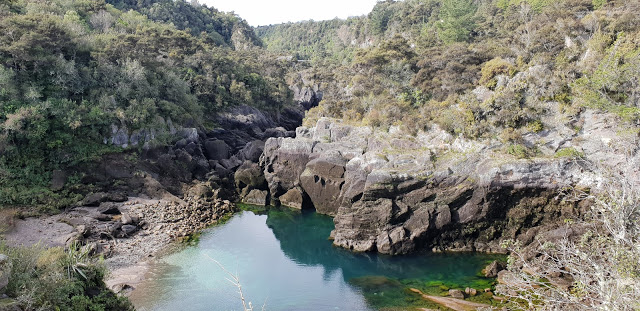
Searching for locations: Aratiatia Dam, Taupo, New Zealand

Aratiatia Dam water release, Taupo

The Aratiatia Dam, rapids, and hydroelectric power station are located on the Waikato River, New Zealand’s longest river.  It is about 16km from Taupo, and 6km from Huka falls, and there is a walking track, for the fit, of course, between the two water attractions.

This happens three or four times every day, depending on the season, and lasts about 15 minutes.  Water is released at the rate of about 80,000 liters a second, so it is quite a lot of water being sent through the rapids.

There are a number of viewing points, the most popular being from the bridge, where I took these photos, and 5 minutes down the walking track to the ridgeline where you can get an overview of the river.

This is looking towards the rapids, as the catchment leading to the rapids starts to fill

The pool is almost full and the excess is starting its journey towards the rapids

Now full, the rapids are at capacity as up to 80,000 liters a second are heading down a 28-meter drop heading towards the hydroelectric power station.

And once full at the bottom, there is a jet boat ride available for a closer view of the water, and a few thrills to go with it.