“Echoes From The Past”, a past buried, but not deep enough


What happens when your past finally catches up with you?

Christmas is just around the corner, a time to be with family. For Will Mason, an orphan since he was fourteen, it is a time for reflection on what his life could have been, and what it could be.

Until a chance encounter brings back to life the reasons for his twenty years of self-imposed exile from a life only normal people could have. From that moment Will’s life slowly starts to unravel and it’s obvious to him it’s time to move on.

This time, however, there is more at stake.

Will has broken his number one rule, don’t get involved.

With his nemesis, Eddie Jamieson, suddenly within reach, and a blossoming relationship with an office colleague, Maria, about to change everything, Will has to make a choice. Quietly leave, or finally, make a stand.

But as Will soon discovers, when other people are involved there is going to be terrible consequences no matter what choice he makes.

https://amzn.to/2CYKxu4

newechocover5rs

NaNoWriMo – April 2022 – Day 8

First Dig Two Graves, the second Zoe thriller.

Having discovered that the person who had ordered the contract on her head had a code name of Romanov, and was last known to be in Bratislava, Zoe heads off to track the person down. She suspects it is one of the groups she had trained with at one point, but it could be anyone.

Back home, John discovers who Sebastian’s boss is, having been whisked away by limousine to an undisclosed location, where he is told that Zoe/Natasha and a host of other identities is not the person he thinks she is, and is told that it would be in his best interests to tell them where she is.

John gets to read a very illuminating file on her, which in turn does not put the fear of God into him as was hoped, but makes him more determined than ever to find her.

Wilt the help of the new investigator friends Rupert and a reluctant Isobel.

This story is a tangled web of pursuers who all have different agendas, people who are highly skilled in tracking and killing.

John needs to find her more than ever because of whom he believes is the one who wants her dead.

Sebastian is about to be caught up in a situation he never envisaged, his desire to find and recruit her, to tell her to stay away from John, and ordered by his boss to capture her for interrogation.

Today’s writing, with John facing off against Sebastian’s boss, 4,192 words, for a total of 22,247.

“Sunday in New York”, a romantic adventure that’s not a walk in the park!

“Sunday in New York” is ultimately a story about trust, and what happens when a marriage is stretched to its limits.

When Harry Steele attends a lunch with his manager, Barclay, to discuss a promotion that any junior executive would accept in a heartbeat, it is the fact his wife, Alison, who previously professed her reservations about Barclay, also agreed to attend, that casts a small element of doubt in his mind.

From that moment, his life, in the company, in deciding what to do, his marriage, his very life, spirals out of control.

There is no one big factor that can prove Harry’s worst fears, that his marriage is over, just a number of small, interconnecting events, when piled on top of each other, points to a cataclysmic end to everything he had believed in.

Trust is lost firstly in his best friend and mentor, Andy, who only hints of impending disaster, Sasha, a woman whom he saved, and who appears to have motives of her own, and then in his wife, Alison, as he discovered piece by piece damning evidence she is about to leave him for another man.

Can we trust what we see with our eyes or trust what we hear?

Haven’t we all jumped to conclusions at least once in our lives?

Can Alison, a woman whose self-belief and confidence is about to be put to the ultimate test, find a way of proving their relationship is as strong as it has ever been?

As they say in the classics, read on!

Purchase:

http://tinyurl.com/Amazon-SundayInNewYork

A photograph from the inspirational bin – 19

Does a rainy, cold, miserable sort of day usually reflect your mood?

It could be said the outlook is bleak, but from where I’m sitting, it might be more picturesque.

This photo was taken from the veranda of one of four cottages that have, one one side, a macadamia farm, and on the other, a valley with a small river running through it.

I’m told there is reasonably good fishing in the river.

But, on a good day, with blue skies and sunshine, the outlook is completely different.

This is the sort of place you go to do nothing, perhaps read a book, do a crossword, but nothing substantial.

We come here to wind down, and take several days to do it.

But, as for a story…

I have in mind a theme of a man on the run, from his past, his demons, and a very dangerous criminal.

Yes, it’s that old story of someone witnessing what they shouldn’t, and paying the price because they did.

Now, hiding out in the country, it’s only a matter of time before they are discovered.

In a word: Pad

Here is another of those three letter words that can have so many meanings that it is nigh on impossible to pin it down.

You have to use it in a sentence which all but explains it.

For instance,

A pad might be a writing pad, or a note pad, something on which you can write, notes, stories, anything really, even doodles.

Cats, dogs, a lot of animals have padded feet.  I’d say, for a cat, those pads would be like shock absorbers.

You can pad an expense account with false expenditure in an accounting sense, I’m sure a lot of people are tempted to do so.

I know places, where a single man might live, is called a bachelor pad.  So many men like to think they may have one, but it takes money to buy the accouterments of seduction.

Then there’s a medical dressing, a square of gauze called a pad, usually absorbent and soaked in disinfectant to help protect and repair a wound.

Shoulder pads, for broader shoulders

KInee pads, for when crashing off a bike

Shin pads for soccer, and ice hockey players

A helipad which is for helicopter landings and takeoffs, much the same as a launch pad for rockets.  Unfortunately, rockets do not generally have a tendency to land, not unless they are bombs, like the V1 and V2 rockets of WW2.

It could also be someone walking around a house in socks, the man stealthily approached the thief, padding silently in his socks so he wouldn’t be heard.

And lastly,

A place for frogs to hang out, ie, the flat leaves of a water Lilly.

Any more?

I’m sure there is, just let me know.


The cinema of my dreams – I never wanted to go to Africa – Episode 28

Our hero knows he’s in serious trouble.

The problem is, there are familiar faces and a question of who is a friend and who is foe made all the more difficult because of the enemy, if it was the enemy, simply because it didn’t look or sound or act like the enemy.

Now, it appears, his problems stem from another operation he participated in.

I was escorted to a small room that adjoined the interview room, and I was separated from the main event by a one-way mirror.

It was a cliché, but not surprising.

The interrogation room was much the same as an office, with a table, two chairs, and on the side, a cabinet, closed up, an interesting addition to what might be called a boring room.

It was currently empty, and I was the only one in this small room, sitting at a counter, looking in.  In front of me was a stack of writing pads, pens and pencils.  I wondered if I was the only party that was about to observe Lallo and the new arrival.

Five minutes passed before the door to the room next door opened and a hooded man was led in.  His hands were cuffed, and his legs had chains, standard prisoner gear.  

From the man’s manner and body language, it appeared to me as though he was surprised he was being treated so badly, and was not forcefully resistant, but wasn’t making it easy for his captors.

He was asked to sit, and when he didn’t he was forced to sit, with some force, and then his hands were locked onto the metal bar at the table.  His legs were locked to a lower bar.  A precaution in case he decided to attack his interrogator.

One thing I knew for sure, this man would not give up information willingly.

Once he was secured, one guard took up station inside the door, and the other left.  That’s when Lallo made his appearance.  He came in, put a file on the desk, nodded to the guard who remove3d the hood, and then he sat.

I’d expected to see Lallo in full uniform.  He was not.  He was, if anything, dressed casually.  The man on the other side was in a cream suit, very crumpled and slightly stained as if he had not changed during the entire journey from capture to this room.

No doubt part of his conditioning.

“Mr Jacobi, that is your name isn’t it?”

The man stared at him sullenly.  I got the impression he was usually the one asking the questions, not the other way around.

The man lifted his head and stared straight at Lallo.  It was not a look I’d want to be on the end of, but Lallo, I suspect, had been on the end of a lot worse.  And a closer inspection of his face, and features, I noticed that someone had already started the harsher form of interrogation.

“You know this already.  I am an employee of the United States Government, your Government, and you will regret treating me like this.”

“That may be so, but you have failed to define what part of the Government it is you work for.  Is it the CIA?”

Another withering stare, followed by, “You people are so incompetent, the left-hand does not know what the right hand is doing.  I require a telephone so that I can contact my liaison, and this farce will stop, and you will be reprimanded very severely.”

“I seriously doubt anyone knows you are missing yet.  Maybe after a week or so, but we know you keep to yourself, and very few people know your business, a situation, I assure you, benefits us more than it benefits you.  So I will assume you are Jacobi.”

There was a knock on the door, and Monroe came in with a small box, handed it to Lallo, and then left again.

Lallo looked in the box, then pulled out a plastic evidence bag with a mobile phone in it, and put it on the table.  “This is the phone you use to call General Bahti, your contact inside the current government.  It seems it is not registered with a telephone network in your country, but another, shall we say neutral, country.

He reached into the box and pulled out another plastic evidence bag also with mobile phone in it.  “This phone,” he held it up, “is the one you use to talk to the, shall we call them the local resistance.  It’s so much nicer than calling them rebels.”

The man’s eyes followed each bag from the box to the table.  He was almost expressionless.

Then Lallo pulled out another bag, with another phone, “This is the phone which you make and receive calls from your American contact.  It is what we call a burner phone, and was given to you, we think, on a recent visit to this country, by that contact.  I am assuming this is the person you wish to call and who will stop this farce.”

If Lallo was expecting the man to break down there and then, he was sadly mistaken.  There was little if any movement in his expression, perhaps just enough for Lallo to assume he’d got the men behind the phones correct.  That he was basically unmoved at Lallo’s revelations told me this man had a resolve Lallo was going to find hard to shake.

Lallo took the third phone out of the evidence bag and pushed it across the table towards the man.  “You can call your contact now, and you can tell him I would like to speak to him.”

© Charles Heath 2019-2022

Knowledge can be dangerous… – A short story

It was, perhaps, the saddest week of my life.

It started with a phone call, then a visit by two police officers.  It was about my parents, but the news could not be imparted over the phone, only in person.  That statement alone told me it was very bad news, so I assumed the worst.

The two police officers, standing at the front door, grim expressions on their faces, completed the picture.  The news, my parents were dead, killed in a freak car accident.

At first, it didn’t sink in.  They were on their way back from another of their extensive holidays, one of many since my father had retired.  I’d seen them probably six months out of the last five years, and the only reason they were returning this time was that my mother needed an operation.

They hadn’t told me why, not that they ever told me very much any time since the day I’d been born, but that was who they were.  I thought them eccentric, being older when I’d come along, and others thought them, well, eccentric.

And being an only child, they packed me off to boarding school, then university, and then found me a job in London, and set me up so that I would only see them weekends if they were home.

I had once wondered if they ever cared about me, keeping me at arm’s length, but my mother some time ago had taken me aside and explained why.  It was my father’s family tradition.  The only part I’d missed was a nanny.

It most likely explained why I didn’t feel their passing as much as I should.

A week later, after a strange funeral where a great many people I’d never met before, and oddly who knew about me, I found myself sitting in the sunroom, a glass of scotch in one hand, and an envelope with my name on it, in the other.

The solicitor, a man I’d never met before, had given it to me at the funeral.   We had, as far as I knew an elderly fellow, one of my father’s old school friends, as the family solicitor, but he hadn’t shown at the funeral and wasn’t at home when I called in on my way home.

It was all very odd.

I refilled the glass and took another look at the envelope.  It was not new, in fact, it had the yellow tinge of age, with discoloration where the flap was.  The writing was almost a scrawl, but identifiable as my father’s handwriting, perhaps an early version as it was now definitely an illegible scrawl.

I’d compared it with the note he’d left me before they had embarked on their last adventure, everything I had to do while caretaking their house.  The last paragraph was the most interesting, instructing me to be present when the cleaning lady came, he’d all but accused her of stealing the candlesticks.

To be honest, I hadn’t realized there were candlesticks to steal, but there they were, on the mantlepiece over the fire in the dining room.  The whole house was almost like being in an adventure park, stairs going up to an array of rooms, mostly no longer used, and staircase to the attic, and then another going down to the cellar.  The attic was locked and had been for as long as I could remember, and the cellar was dank and draughty.

Much like the whole house, but not surprising, it was over 200 years old.

And perhaps it was now mine.  The solicitor, a man by the name of Sir Percival Algernon Bridgewater, had intimated that it might be the last will and testament and had asked me to tell him if it was.  I was surprised that Sir Percival didn’t have the document in question.

And equally. so that the man I knew as his solicitor, Lawerence Wellingham, didn’t have a copy of my father’s last will and testament either.

I finished the drink, picked up the envelope, and opened it.

It contained two sheets of paper, the will, and a letter.  A very short letter.

“If you are reading this I have died before my time.  You will need to find Albert Stritching, and ask him to help you find the murderer.”

Even the tenor of that letter didn’t faze me as it should have, because at this point nothing would surprise me.  In fact, as I  unfolded the document that proclaimed it was the will, I was ready for it to say that whole of his estate and belongings were to be left to some charity, and I would get an annual stipend of a thousand pounds.

In fact, it didn’t.  The whole of his estate was left to my mother should she outlive him, or in the event of her prior decease, to me.

I had to put all of those surprises on hold to answer a knock on the door.

Lawerence Wellingham.

I stood too e side, let him pass, closed the door, and followed him into the front room, the one my mother called the ‘drawing room’ though I never knew why.

He sat in one of the large, comfortable lounge chairs.  I sat in the other.

I showed him the will.  I kept the other back, not knowing what to make of it.

“No surprise there,” Wellingham said.

“Did you have any idea what my father used to do, beyond being, as he put it, a freelance diplomat?”

I thought it a rather odd description but it was better than one he once proffered, ‘I do odd jobs for the government’.

“I didn’t ask.  Knowledge can be dangerous, particularly when associated with your father.  Most of us preferred not to know, but one thing I can tell you.  If anyone tries to tell you what happened to your parents was not an accident, ignore them.  Go live your life, and keep those memories you have of them in the past, and don’t look back.  They were good people, Ken, remember them as such.”

We reminisced for the next hour, making a dent in the scotch, one of my father’s favorite, and he left.

Alone again, the thoughts went back to the second note from my father.  That’s when the house phone rang.

Before I could answer it, a voice said, “My name is Stritching.  Your father might have mentioned me?  We need to talk.”

—-

© Charles Heath 2020-2021

Writing about writing a book – Day 25

We’ve been given the introduction to who Barry McDougall is, or the man otherwise known as ‘Brainless’, and after three days of trying to get it straight, this is the first rough draft of his start in the story.

Barry, whose daring selfless deeds earned him the nickname Brainless because that was the only way to describe the motivation behind them, was one of the regular soldiers, and, for a long time, had been my only true friend.  His was a reputation both friends and foes alike considered awesome.  He’d been in Vietnam, and later just turned up at Davenport’s camp, reporting for duty.

Davenport was more surprised than I was at his arrival, but obviously, after checking his credentials, he was impressed because he let him stay.  And it would be true to say, if he had not, I would not be here now.

So Barry was just the sort of person I needed to help me.

That was the good news.

The bad news was Barry, at the best of times, either on one of his ‘benders’ using drugs or alcohol, whatever was easier to get at the time, lost to everyone, or locked up in a mental institution, having admitted himself.  He had no interest in participating in life, hadn’t worked in years, and often said, in moments when he was at his lowest, that he did not care if he lived or died.  It had not always been that way, but his demons had all but taken him over, and despite the help, I tried to give him, nothing could shake him out of this lethargy.  He said once he envied me that I could not remember the dark days, and, now those memories had returned, I knew what he meant.

For a long time, I could not understand why he didn’t try harder to help himself, and I guess he humored me by accepting the jobs I’d found him, and the help I offered.  I owed him a great deal, but that was probably the one honorable thing about him, he never expected, nor wanted, anything in return.

He tried to make a go of being a police officer and lasted several years before he resigned over an incident that didn’t reach the papers.  There was, he said, no place for heroics in modern society.  I hadn’t got to the bottom of it, but I heard he shot some thieves at a time when the police were trying to promote a pacifist image.

He tried a few other occupations with an equal lack of success, so now he survived on whatever money I gave him.  He lived on the street, and when he was not there, I knew he could be found in a bar, in one of the more seedier parts of the city, a ubiquitous underground bar called Jackson’s, named after a man who had a salubrious reputation that hovered between load shark and saint, and who was reputed to be buried under the storeroom floor.  The present owner, or what I assumed to be the owner, was a large, gruff, ex-prizefighter, who had the proverbial heart of gold, most of the time, and who took my money and looked after Barry without making it look like he was.

I’d called the bartender in advance, and he said he was in his usual spot, and that it was at the start of the next cycle, having just discharged himself from the hospital after a bout of pneumonia.  It was, he said, getting worse, and taking longer to recover.

It was probably only a matter of time before it took him, so perhaps this time I would have to try harder to convince him to give up his nomadic lifestyle.

When I walked in, the aroma of spilled beer, stale sweat, and vomit, mingled with the industrial-strength carbolic cleaner almost took my breath away.  In the corner, two construction workers were sitting, quietly smoking and drinking large glasses of beer.  In the other, Barry was being held up by the table, an untouched double scotch sitting in front of him.  Sitting at the bar was a woman of indeterminate age, badly made up, and thin to the point of emaciation.  I was not sure what she was drinking, or what it was she was smoking, but I could smell it from the front doorway.

The bartender, Ogilvy, no first name given, was pretending to polish glasses, standing at the end of the bar, looking at the television, playing some daytime soap.  He didn’t look over when I came in, but I knew he didn’t miss anything.  I saw him flick a glance at Barry, and then shake his head.  I think he cared as much about Barry as I did, but could recognize the sadness within him.  As much as Ogilvy said, which wasn’t much, he too had seen service in Vietnam, and it had affected him too.

I ordered an orange juice, caught the glances from the construction workers, and a steely look from the woman then went over to Barry’s table and sat down.  Despite the loud scraping noise when I moved the chair, or the creaking as I sat in it, Barry didn’t move.

Whilst the bar had that seedy aroma, Barry was showing the signs of having spent time on the street.  It was one of the disadvantages of having no permanent residence and though there was a shower at the bar which Ogilvy let Barry use from time to time, he obviously hadn’t for a few days.

Getting all of this background in shape is hard work, and having toiled long and hard, tomorrow I’ll have a go at getting Barry back.

© Charles Heath 2016-2021

Searching for locations: Vancouver, Canada – 3

It’s always a given that whatever city you stay in unless it’s overnight, you go on a tour and see the sights.

Even when you’re staying a short distance from the city, you may make the effort to catch a train or bus, then get on the hop on hop off tour.  There’s always one in just about every city you visit.

Vancouver was no exception.

Except…

We arrived in the rain, went to sleep while the rain came down, woke up to the rain, and a heavy dose of jet lag or perhaps it was more that we had spent 24 and a half hours traveling from Brisbane to Vancouver via Shanghai.

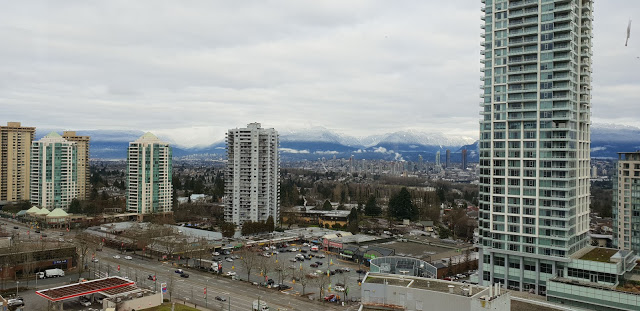
We had an excellent view out the window of our room looking towards the shopping mall, and the steady falling rain.

 I felt sorry watching the construction workers on the building site that was the main vista we had to look at.

It could have been worse.  Endless mountains with snow on them.

What to do.  Venture out in the rain and go on the tour, on pop over to the shopping mall and pick up a few boxing day bargains, no, sorry, boxing week bargains.

We have had some experience going on hop on hop off tours in open-top buses in the rain.  And the last time was not a pleasant experience, even though we learned a valuable lesson, not to stand in front of a cannon and yell ‘fire’.  Apparently, that’s how Admiral Nelson lost his arm.

But…

The shopping mall won.

We’d wait and see if the weather improved.  Hang on, isn’t Vancouver near Seattle and doesn’t it rain 300 days of the year?

Not holding my breath.

I feel sorry for the construction workers again.  Still raining, still cold, and still no reason to get out of bed.

Day 2 in Vancouver turned out to be the same as day 1.

Hang on, there’s a development.

We’re on the 16th floor and up at those lofty heights, we can see not only the rain but intermingled with it a few flakes of snow.

Whilst we procrastinate about what we’re going to do, the snowflakes increase into small flurries.

Yep, we’re off to the mall again and go for a walk in the snow.

On the way back we drop into the Boston Pizza, which has a sports bar and there you can sit, drink, eat, and watch the ice hockey, or whatever sort is going at the time.

Today it’s a junior ice hockey tournament, but Canada was not playing.  Just the same, a long cold beer and ice hockey? How close to heaven is that?

I can now cross that off the bucket list.

Day 3, we’re going on a great rail journey, well, we are going to get the train to the city and collect the rental car, a car on the booking form that was supposedly a Jeep Grand Cherokee or similar.

Of course, ‘or similar’ are the words to be feared here because in truth the rental company can throw anything at you, so long as it matches the brief, three people and three large suitcases.

And, you guessed it…

The ‘or similar’ got us a Fort Flex.

Sounded like some place where exhausted soldiers were fending of the Indians in a last ditch battle.

Perhaps one or two too many American movies I think.

Memories of the conversations with my cat – 97

As some may be aware, but many not, Chester, my faithful writing assistant, mice catcher, and general pain in the neck, passed away some months ago.

Recently I was running a series based on his adventures, under the title of Past Conversations with my cat.

For those who have not had the chance to read about all of his exploits I will run the series again from Episode 1

These are the memories of our time together…

20161008_135142

This is Chester

Still hiding away.

Like any wise, old, skeptical cat, he’s not believing the good news.

We do not have a COVID 19 case in our house. Of course, we had to wait an agonizing 24 hours before we got the good news by phone.

It shows that our testing labs are getting through the tests, of which I heard in the news there were about 4,000, with only 10 or so new cases countrywide.

Queensland had none overnight, so if our case had been positive, we would have been in the news for al; the wrong reasons.

So, after broadcasting the news, that is, walking up and down the passage saying it was safe to come out, there’s still no sign of him.

But…

I have a cunning plan.

I bought a can of his absolute favorite food.

Come dinner time I’m putting it out.


Of course, food trumps fear every time.

He walks past me on his way to the tasty treats, the tail movements indicating he is not a happy cat.

The things I have to suffer at the hands of you humans, he mutters.

So, I say casually, we have guests for dinner.

He stops, turns his head in that dismissive manner of his.
What else can you do to me?

COVID 19, Grandchildren, I suppose you’re going to let me outside.

Do you want to go outside?

With COVID 19 lurking on every corner?

It’s under control.

Right. I’ve been watching TV. You do realize there’s good news and fake news, and there’s more of the latter than the former.

So, he’s going with the confuse the poor human with blather.

It’s working. I say, Go back into hiding. I was quite enjoying the silence.

After dinner, he says, ending the conversation with the angry tail swish. Yes, we are not amused.