An excerpt from “Betrayal” – a work in progress

It could have been anywhere in the world, she thought, but it wasn’t.  It was in a city where if anything were to go wrong…

She sighed and came away from the window and looked around the room.  It was quite large and expensively furnished.  It was one of several she had been visiting in the last three months.

Quite elegant too, as the hotel had its origins dating back to before the revolution in 1917.  At least, currently, there would not be a team of KGB agents somewhere in the basement monitoring everything that happened in the room.

There was no such thing as the KGB anymore, though there was an FSB, but such organisations were of no interest to her.

She was here to meet with Vladimir.

She smiled to herself when she thought of him, such an interesting man whose command of English was as good as her command of Russian, though she had not told him of that ability.

All her knew of her was that she was American, worked in the Embassy as a clerk, nothing important, who life both at work and at home was boring.  Not that she had blurted that out the first tie she met, or even the second.

That first time, at a function in the Embassy, was a chance meeting, a catching of his eye as he looked around the room, looking, as he had told her later, for someone who might not be as boring as the function itself.

It was a celebration, honouring one of the Embassy officials on his service in Moscow, and the fact he was returning home after 10 years.  She had been there one, and still hadn’t met all the staff.

They had talked, Vladimir knew a great deal about England, having been stationed there for a year or two, and had politely asked questions about where she lived, her family, and of course what her role was, all questions she fended off with an air of disinterested interest.

It fascinated him, as she knew it would, a sort of mental sparring as one would do with swords, if this was a fencing match.

They had said they might or might not meet again when the party was over, but she suspected there would be another opportunity.  She knew the signs of a man who was interested in her, and Vladimir was interested.

The second time came in the form of an invitation to an art gallery, and a viewing of the works of a prominent Russian artist, an invitation she politely declined.  After all, invitations issued to Embassy staff held all sorts of connotations, or so she was told by the Security officer when she told him.

Then, it went quiet for a month.  There was a party at the American embassy and along with several other staff members, she was invited.  She had not expected to meet Vladimir, but it was a pleasant surprise when she saw him, on the other side of the room, talking to several military men.

A pleasant afternoon ensued.

And it was no surprise that they kept running into each other at the various events on the diplomatic schedule.

By the fifth meeting, they were like old friends.  She had broached the subject of being involved in a plutonic relationship with him with the head of security at the embassy.  Normally for a member of her rank it would not be allowed, but in this instance it was.

She did not work in any sensitive areas, and, as the security officer had said, she might just happen upon something that might be useful.  In that regard, she was to keep her eyes and ears open, and file a report each time she met him.

After that discussion she got the impression her superiors considered Vladimir more than just a casual visitor on the diplomatic circuit.  She also formed the impression the he might consider her an ‘asset’, a word that had been used at the meeting with security and the ambassador.

It was where the word ‘spy’ popped into her head and sent a tingle down her spine.  She was not a spy, but the thought of it, well, it would be fascinating to see what happened.

A Russian friend.  That’s what she would call him.

And over time, that relationship blossomed, until, after a visit to the ballet, late and snowing, he invited her to his apartment not far from the ballet venue.  It was like treading on thin ice, but after champagne and an introduction to caviar, she felt like a giddy schoolgirl.

Even so, she had made him promise that he remain on his best behaviour.  It could have been very easy to fall under the spell of a perfect evening, but he promised, showed her to a separate bedroom, and after a brief kiss, their first, she did not see him until the next morning.

So, it began.

It was an interesting report she filed after that encounter, one where she had expected to be reprimanded.

She wasn’t.

It wasn’t until six weeks had passed when he asked her if she would like to take a trip to the country.  It would involve staying in a hotel, that they would have separate rooms.  When she reported the invitation, no objection was raised, only a caution; keep her wits about her.

Perhaps, she had thought, they were looking forward to a more extensive report.  After all, her reports on the places, and the people, and the conversations she overheard, were no doubt entertaining reading for some.

But this visit was where the nature of the relationship changed, and it was one that she did not immediately report.  She had realised at some point before the weekend away, that she had feelings for him, and it was not that he was pushing her in that direction or manipulating her in any way.

It was just one of those moments where, after a grand dinner, a lot of champagne, and delightful company, things happen.  Standing at the door to her room, a lingering kiss, not intentional on her part, and it just happened.

And for not one moment did she believe she had been compromised, but for some reason she had not reported that subtle change in the relationship to the powers that be, and so far, no one had any inkling.

She took off her coat and placed it carefully of the back of one of the ornate chairs in the room.  She stopped for a moment to look at a framed photograph on the wall, one representing Red Square.

Then, after a minute or two, she went to the mini bar and took out the bottle of champagne that had been left there for them, a treat arranged by Vladimir for each encounter.

There were two champagne flutes set aside on the bar, next to a bowl of fruit.  She picked up the apple and thought how Eve must have felt in the garden of Eden, and the temptation.

Later perhaps, after…

She smiled at the thought and put the apple back.

A glance at her watch told her it was time for his arrival.  It was if anything, the one trait she didn’t like, and that was his punctuality.  A glance at the clock on the room wall was a minute slow.

The doorbell to the room rang, right on the appointed time.

She put the bottle down and walked over to the door.

A smile on her face, she opened the door.

It was not Vladimir.  It was her worst nightmare.

© Charles Heath 2020

A photograph from the inspirational bin – 24

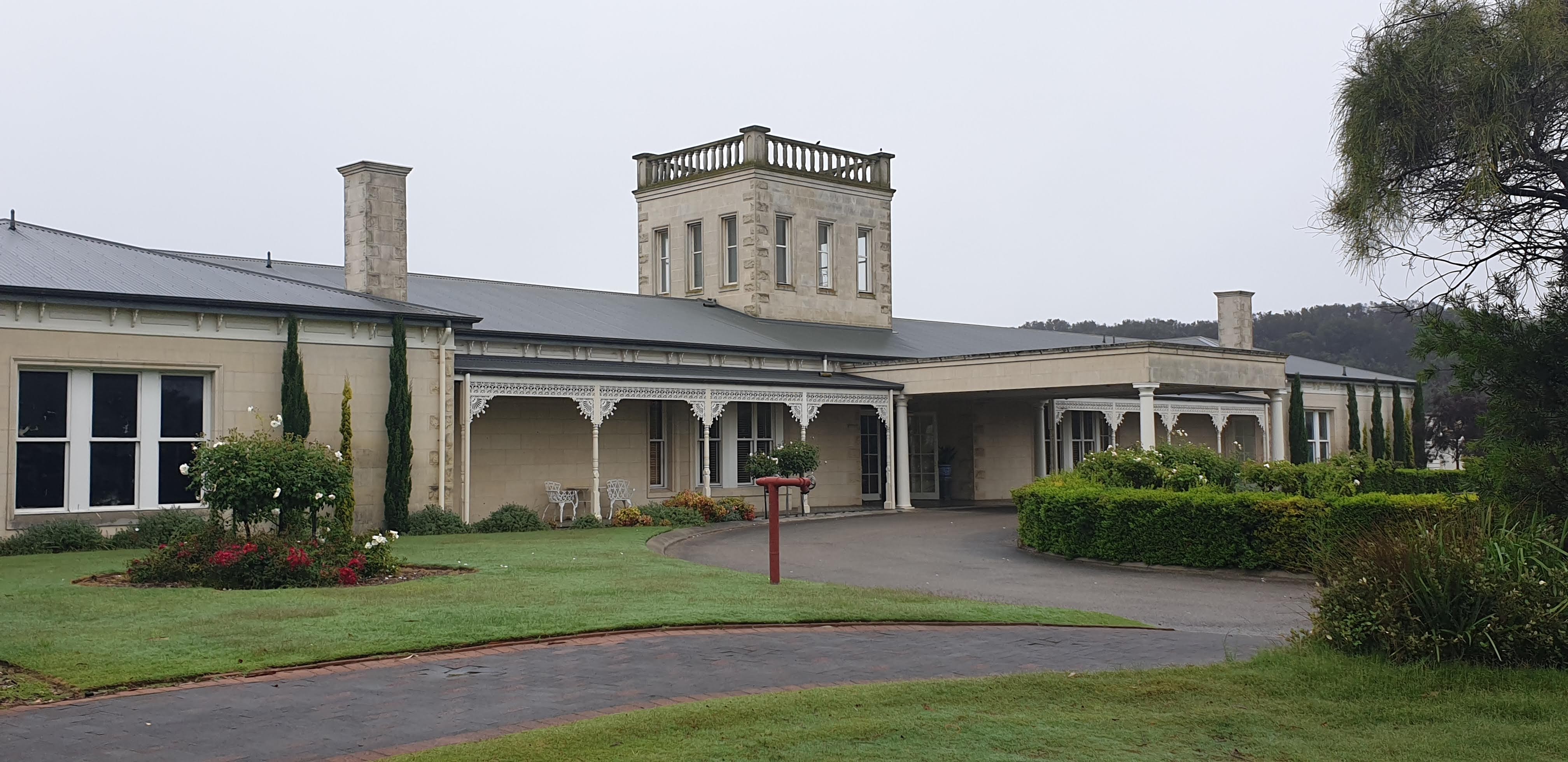
When I first saw it I thought it was an old country estate, converted and expanded into a golf clubhouse.

It wasn’t.  It is a purpose-built clubhouse and function center for corporate seminars and wedding receptions, as well as catering to the golfer, and golf tournaments.

20200215_100153

It also has a very good outlook over the golf course.

But, in my writer’s mind, this will provide inspiration for a story that could be set in a large country house,  with the central tower and lookout featuring in what might be a grisly death, and a group of guests who have gathered together to enact a mock murder that turns out to be very real.

Yes, the idea has been done to death over many many years, but I have a few new twists in mind.

Stay tuned.

Inspiration, maybe – Volume 1

50 photographs, 50 stories, of which there is one of the 50 below.

They all start with –

A picture paints … well, as many words as you like.  For instance:

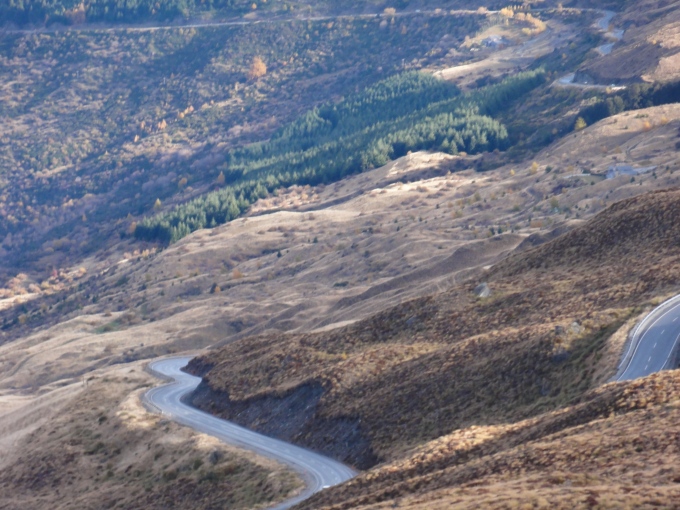
lookingdownfromcoronetpeak

And the story:

It was once said that a desperate man has everything to lose.

The man I was chasing was desperate, but I, on the other hand, was more desperate to catch him.

He’d left a trail of dead people from one end of the island to the other.

The team had put in a lot of effort to locate him, and now his capture was imminent.  We were following the car he was in, from a discrete distance, and, at the appropriate time, we would catch up, pull him over, and make the arrest.

There was nowhere for him to go.

The road led to a dead-end, and the only way off the mountain was back down the road were now on.  Which was why I was somewhat surprised when we discovered where he was.

Where was he going?

“Damn,” I heard Alan mutter.  He was driving, being careful not to get too close, but not far enough away to lose sight of him.

“What?”

“I think he’s made us.”

“How?”

“Dumb bad luck, I’m guessing.  Or he expected we’d follow him up the mountain.  He’s just sped up.”

“How far away?”

“A half-mile.  We should see him higher up when we turn the next corner.”

It took an eternity to get there, and when we did, Alan was right, only he was further on than we thought.”

“Step on it.  Let’s catch him up before he gets to the top.”

Easy to say, not so easy to do.  The road was treacherous, and in places just gravel, and there were no guard rails to stop a three thousand footfall down the mountainside.

Good thing then I had the foresight to have three agents on the hill for just such a scenario.

Ten minutes later, we were in sight of the car, still moving quickly, but we were going slightly faster.  We’d catch up just short of the summit car park.

Or so we thought.

Coming quickly around another corner we almost slammed into the car we’d been chasing.

“What the hell…” Aland muttered.

I was out of the car, and over to see if he was in it, but I knew that it was only a slender possibility.  The car was empty, and no indication where he went.

Certainly not up the road.  It was relatively straightforward for the next mile, at which we would have reached the summit.  Up the mountainside from here, or down.

I looked up.  Nothing.

Alan yelled out, “He’s not going down, not that I can see, but if he did, there’s hardly a foothold and that’s a long fall.”

Then where did he go?

Then a man looking very much like our quarry came out from behind a rock embedded just a short distance up the hill.

“Sorry,” he said quite calmly.  “Had to go if you know what I mean.”

I’d lost him.

It was as simple as that.

I had been led a merry chase up the hill, and all the time he was getting away in a different direction.

I’d fallen for the oldest trick in the book, letting my desperation blind me to the disguise that anyone else would see through in an instant.

It was a lonely sight, looking down that road, knowing that I had to go all that way down again, only this time, without having to throw caution to the wind.

“Maybe next time,” Alan said.

“We’ll get him.  It’s just a matter of time.”

© Charles Heath 2019-2021

Find this and other stories in “Inspiration, maybe”  available soon.

InspirationMaybe1v1

In a word: Angle

We all know this to be an intersection of two lines like a crossroad is at a 90-degree angle

But…

It’s an angle bracket that keeps the shelf up, hopefully with books on it.

Did you know that it was something someone did in order to get something?

She began to angle for an invitation to a party that she would not normally be invited to, or he has angled his answers to the prospective employer in a bid to be more likely to be selected for the position.

It can also refer to a position, or judgement, so that someone might say, try and see it from my angle, or another angle.

Or that it refers to fishing, and the fisherman or woman is known as an angler.

It can be a position from which something is viewed, or in crime parlance, the CSI people will work out the angle of the bullet’s entry do they can locate the position of the shooter.

Angle can refer to people of Germanic origin, such as an Anglo Saxon

And, here’s something even I didn’t know, in Astrology, it is each of the four cardinal points of a chart, from which the first, fourth, seventh, and tenth houses extend anticlockwise respectively.

The cinema of my dreams – I never wanted to go to Africa – Episode 35

Our hero knows he’s in serious trouble.

The problem is, there are familiar faces and a question of who is a friend and who is foe made all the more difficult because of the enemy, if it was the enemy, simply because it didn’t look or sound or act like the enemy.

Now, it appears, his problems stem from another operation he participated in, and because of it, he has now been roped into what might be called a suicide mission.


04:00 in Africa was an interesting time of the morning, especially after a few hours of intense rain during the night.  I could see what the Colonel meant if it had been raining because outside the barracks it was very wet.

Whilst the others appeared to get some sleep, in a much better environment than the back of an aircraft, I lay awake, at first waiting for the sound of the aircraft leaving, and then listening to the rain that started an hour or so later, followed by the sounds that came afterward.  It was never silent, and there was always that suspicion of being attacked when you’re at your most vulnerable.  I had a weapon ready, just in case.

Outside the cloud cover had gone and it looked like it would be a fine day.

When I did the headcount, I noticed Mobley was missing as agreed, and by the time we had assembled, the cars had arrived.  We would be driving ourselves in a convoy behind Monroe and the Colonel, who was no longer dressed in army fatigues, along with Jacobi and one of his guards.

For the trip, we had been supplied with the western notion of jungle wear, safari suits, that identified us not only garrulous visitors, but typical tourists hardly prepared for what was to come.  It made a good cover for a group of ‘fools’ making a documentary.  

All we had to do was get to the location for the exchange of the hostages reportedly between Aba, a town in the Democratic Republic of the Congo, and somewhere on the outskirts of the Park.  It was going to be an easy drive from Uganda to Aba, then the situation might change.

I was going to be in the rear vehicle, with Leslie Davies.  The more I thought about her being assigned to this mission, it seemed she was here solely for her ability to fly anything with wings.  It was the part that was missed on her resume, perhaps for a reason, but whatever that reason was, it would become clear eventually.


We left at 04:05.  Monroe had a slight problem starting her car.

Other than exchanging a few words before getting on the plane and then getting off the plane, Davies and I had not spoken.  After half an hour of driving in silence, I decided to break the ice.

“What did you do to get nominated for this mission?”

A glance sideways gave me no indication of her thoughts, or what look was hidden behind the aviator sunglasses.  I hadn’t seen her smile, or talk to any of the other team members other than a few brief words with Monroe, likely because she was the only other female.

Even then, I didn’t get the impression they were going to be best friends.

“Best you don’t know.”

Her reply came about three minutes after I’d asked, and at a point where I assumed she was going to ignore me.

“Let’s say I’m curious.”

“Curiosity killed the cat.”

“I’m not a cat.”

Another two minutes of silence, then, “Disobeyed a direct order.”

Not as bad as killing your immediate superior because you didn’t like him.  And I could sympathize.  Some orders were utterly ridiculous.

“Not a bad thing.”

“Not what the court-martial thought.”

I noticed she didn’t use sir.  I could live with that.

“You volunteer?”

“In a manner of speaking.  You?”

She raised her glasses slightly and gave me a sideways glance.

“In a manner of speaking.  Been here before, not that it was for very long, and in a different part of the country, but the powers that be deemed my experience adequate for the mission.”

“I take it the mission isn’t to take pictures of animals?”

It might.  Just not the animals you’re expecting.”


It was our lucky day.  At the Vurra customs post we were met by a Ugandan official who had been forewarned of our arrival, and whom I expect was well compensated for his work, and after going through a half-hour of paperwork, we were taken to the Congo counterpart with whom Jacobi weaved his magic.

I say lucky because the border crossing was often closed, either because of the weather, the road conditions, or the fact neither country was talking to the other, though it was more to do with the Congo villagers and their dispute over lands that stretched into Uganda.

We arrived with a number of trucks, to join a long line waiting to cross, and included were several United Nations vehicles.

Everyone seemed to take the delays and administrative diligence in their stride.

We were moving again, behind several tracks, almost an hour and a half after arriving.  All of the crates of equipment had been opened and inspected, as had our packs, and the raft of documents Monroe had been supplied.  She had a satellite phone at the ready in case we needed to make any calls, though I was not sure what Bamfield would have been able to do.

But, after a few tense moments, everyone lost interest in the documentary crew and moved onto the next vehicle.

Jacobi said it was the easiest crossing he’d made.

About a half-hour, after we had driven on our way, then my radio crackled, and Mobley reported in.  He had just crossed over and was behind us, and a number of trucks.

I got a strange look from Davies.

“Insurance,” was all I said.  “Which no one else needs to know about.”

The road was not exactly in the best of condition in places and having four-wheel drives was a help.  The lie of the land was quite flat, and we passed a lot of small villages and curious looks from the villagers.  Some parts of the road were quite bad, and we had to drive very slowly, especially where it was damp, but for the most part, it was reasonably dry and the roads were navigable.

Other times, Jacobi said, after the rains, those same roads were impossible to drive on and would often see villagers out trying to help the truck drivers keep moving.

I had expected to run into a number of soldiers, but for the first few hours after leaving the border, there wasn’t a lot to see other than flat land, villages, and people on the side of the road, along with the occasional vehicle, belying the fact it was a major road between the border and a town called Aba, a distance that was measured at about 170 kilometers.

Anywhere else in the world it would have taken about an hour and a half, but here, it was early afternoon and finally on a stretch of reasonable road into Aba.  A refuel and we’d be on our way quickly.  The first of the kidnappers appointed times was 16:00 hours and I was hoping the roads would get us there by that time.


© Charles Heath 2019-2020

Jump Now – A short story

It was 2 am, the ideal time to assemble a team that would be clandestinely boarding a vessel.

Dark and moonless, it was fortuitous rather than planned, and, dressed in black from head to toe, it was hard to see the others in the inky darkness.  At least something was on our side.

Up until this point, we’d had nothing but bad luck, though I was more of the opinion we had a traitor in our midst because some of the events could not have any other explanation.

It had caused me to be far more selective in who I gave details of the mission to.

Each of the four team members had arrived and let themselves into the shed.  It was not far from the ocean, and a small pier where there was a landing craft waiting.  From there, it would be a half-hour trip out to the ship in question, where, if we got close enough, we would either have to go over the side and swim, or pull alongside, but either way we’d have to go up a rope.

A lot depended on the crew member we had recruited getting a rope overboard, and given the luck we had so far, if there was a flaw in the plan, that was it.

Aside from the four people sitting in front of me, there were only three others privy to what was about to happen.  Now, with recent events, it was hard to imagine that one of them could betray us. That’s why I hadn’t completely told them what they were about to do, just that they needed to be prepared to get wet.

“I’m sure, now we’re here, you can tell us what’s going on.”  Robert was the most trusted of my team and my best friend.

“And why all the hush-hush,”  Linda added.  She had been amused at the secrecy and my explanation.

I was never very good at spinning a story.  She knew that but had not questioned why.

“It’s been touch and go for the last week.  It’s why we’ve all been on standby, with this last-minute call out.  We’ve been waiting for a particular ship to leave port, and now it has.  So, without further ado, let’s get to it.  A boat ride, just enough time to gather the courage to the sticking point, and then with any luck we won’t have to go into the water and swim, but a short shimmy up a rope.  I hope you’ve all been working out.”

The boat ride was in silence.  I’d worked with this group before and they were not big on talking.  Aside from the fact that noise traveled over water, and since we had a specially silenced motor on the boat, there was not going to be any unnecessary conversation.

We could see the ship once we reached the headland, and aside from it’s running lights, there were lights where I presumed the bridge was, and several in the crew quarters.  Closer again, I got the impression it was not moving, or if it was, it was very slow.  It was hard to tell in the darkness.  That same darkness aided our approach.

When we were within several hundred yards I could see that the ship was not moving, and, in fact, had the anchor out.

That was not expected.  Were they waiting for us?  Had they discovered the cream member who was working with us?  We’d know soon enough if there was no rope in the designated point, not far forward of the stern, a spot where we could maneuver the boat under the hull curvature.

The driver piloted the boat slowly to the designated point and the rope was there.  He would stay with the boat and wait.  The four of us would go up and collect what we came for.

I watched the three go up the rope before me, waiting for the last to stop at the top and then go over the side onto the deck.  It took nearly a minute before I got the signal it was clear to follow.

It had been too easy.

I went up the rope slowly, slower than the others, something else other than the object of the exercise on my mind.  Not three days before I had a conversation with my boss, telling him that I’d been doing the job too long and that it was time to retire.  Approaching forty wasn’t exactly retirement age, but in this job, lasting that long was almost a miracle.  The places I’d been, the sights I’d seen, and the people I’d met.  And how many lives I’d used up.

It was a dangerous thing, thinking about anything other than the job when you’re on the job.

I reached the top and pulled myself over the railing and onto the deck.  A little off balance it took a moment to stand.  By then it was too late.

Two of the three other members of the team were sitting by the superstructure, heads on their heads, two members of the crew were watching them, guns at the ready, and Linda had one pointing at me.

“I can’t imagine how MacIntyre thought he was going to convince Petra to defect.  Or how this charade of a rescue attempt was ever going to work.”

I put my hands up.  Not entirely unexpected.  “It was not the mission objective.”

“What…”

I was surprised that she had made her move so early.  If it was my operation, I would wait until we were well into the superstructure, heading to the cabin where Petra would be waiting, and then make the move.

Three seconds, three shots, two guards taken out, and Linda incapacitated.  She would not be moving or fighting back any time soon.  The Petra came out of the shadows, and I collected Linda’s gun and stood near her, just in case Petra missed the target.

Petra cut the two other’s bindings, and said, “get to the side and jump now.”

Linda looked up at me.  “What now?”

I shrugged.  “Time for us to leave.”  I gave Petra a nod, and she went over to the side, took one look back at Linda, shook her head, then jumped.

“You’re just going to leave me here?”

“If it were up to me, I’d shoot you, but MacIntire is getting a little soft in his old age.  But yes, I’m leaving you here.  Now, I really must go.”

I took a last look at Linda, who realized that if she moved it would only worsen her injury, and jumped, not exactly my preferred way of leaving the ship.

The boat came up alongside me and two hands dragged me on board, at the same time we could hear the sound of the anchor chain being pulled up, and the propellers creating a wash as the ship started moving.

Job done, and not one that pleased me.  “Let’s go home,” I told the driver, “it’s past my bedtime.”

—-

© Charles Heath 2020-2021

Writing about writing a book – Day 32

I used to have these strange ideas about upper management, and in some cases, how they lived in offices up in the clouds.

The perks, I guess, of making it to the top, a combination, sometimes, of good luck and in others hard work.

Perhaps I make too much of it, but it is only an observation from someone who never quite made it to the top of the pile.  Alas, I didn’t have that killer instinct, nor the desire to use others on my way to the top.

But, those notions stuck with me and had found their way into this story.

It also introduces a new character, one that has an idea he might be in trouble though not quite why.

I stopped for a moment to take in the vista   It was like stepping into a different world.  Everything was new, clean and fresh.  Strategically placed flowers, carpets deep piled and clean, expensive landscape paintings adorned the walls, and the support staff tucked away on various nooks and crannies, usually smiling and happy.  And why not?  They were far, far away from the problematic day to day running of the company.  Here the tea, coffee, and sugar didn’t come from tiny paper packets and taste like floor sweepings.

Merrilyn, Aitchison’s personal assistant, had the gift of being able to dress to suit the weather or mood.  This particular day, the bright colors were in deference to the coming of spring.  Added to this was her impeccable manner and attitude.  It was hard to believe she was still in her early twenties.

She smiled as I turned the corner and headed towards Aitchison’s office, in a manner that infused all who came near her with equal joy and enthusiasm.  It brightened my morning.

“How do you di it?” I asked.  It was a standard question.

“Do what?”  It was the standard reply.

“Manage to look so good on a Monday morning.”

“It’s called grooming, Bill.  “What can we do for you?”

“Mr. Aitchison wishes to see me.  Perhaps it will finally be a promotion to these lofty heights.”

“There’s a long queue before you.”

“Sad, but true.”  I shrugged.  “But you never know. I live in hope if only to be near you.”

She smiled again.  “Perhaps one day.”  Then, in an instant, she switched to somber, efficient, business mode, “Go on in.  I’m sure he’s expecting you.”

I knocked on his door, waited for the muffled “Enter”, and went in.

Thick carpet, velvet wallpaper, mahogany furniture, the best examples of comfortable easy chairs arranged around a coffee table, the office was one of the perks of the job.  There was a carefully hidden private bar somewhere in the room, and the subject of much lower floor speculation.  Everyone who lived on the lower floors aspired to this level of luxury and recognition of personal achievement.

He pointed to the chair in front of his desk without looking up from the file he was reading.  On his desk were two glasses and a bottle of Scotch.  He leaned forward, took a sip out of one, and then returned his original position, leaning back as far as the large, leather-covered and padded seat would let him.  He looked agitated, far from his usual self-assured and calm demeanor.

He was one of the very few in the executive who frequently came down to visit us, and always had an amicable manner, whether the news was good or bad.  That amiable manner was missing this morning, replaced by something I’d not seen in him before.

Or in anyone else for a long, long time.  Fear.

He looked up, took his reading glasses off and placed them carefully on the desk.  “Did Benton tell you what happened?”  His tone was constricted, tinged with worry.  Yes.  The eyes gave it away.  I’d seen the look before, in a momentary flash, a detail in memory rising to the surface.

“Yes.  Briefly.  He said it was something to do with Richardson.  Rather melodramatic to be suiciding in his office, or words to that effect.”

“Well, the police might be calling it a suicide, and that fool Benton would like it to be suicide, but in my opinion, it’s a case of murder.”  He emptied the glass and poured another.  The rim of the bottle rattled on the rim of the glass.  He was shaking and trying to keep it under control.  “He’s dead.  Very dead.”

It took a few moments before I realized the importance of his statement.  Dead was serious, very dead was very serious.

“How?”  My voice moved up one octave.  I wondered where this was heading.  Why he was telling me?

“One shot to the head.  He was supposedly holding the gun when they found him, making it look a perfectly normal suicide.”

I quickly reviewed the rest of what I knew about Richardson, albeit second hand.

His wife had walked out on him.  He spent a few months trying to climb into the bottle, came out of it fairly well, and had recently struck up a friendship with one of the many middle-aged women who worked in the office.  Speculation had it she was already married.  It was not a course I would take in similar circumstances, but he was closer to a number of them than most.  Suicide seemed a bit out of character.

Was Aitchison also was suggesting that might be the case?

Or did he know something about Richardson the rest of us didn’t?

“He didn’t seem the type,” I said, expecting a rebuke.  I was not sure if Aitchison was asking for an opinion.

“No he was not, and I agree you.  Everyone seems to have thrown caution to the wind, and want this case settled, and the police out of here.  But, not at the expense of a good man’s name.”

“So, I take it you think otherwise?”

© Charles Heath 2015-2021

Searching for locations: Auckland, New Zealand, a rare day for the port

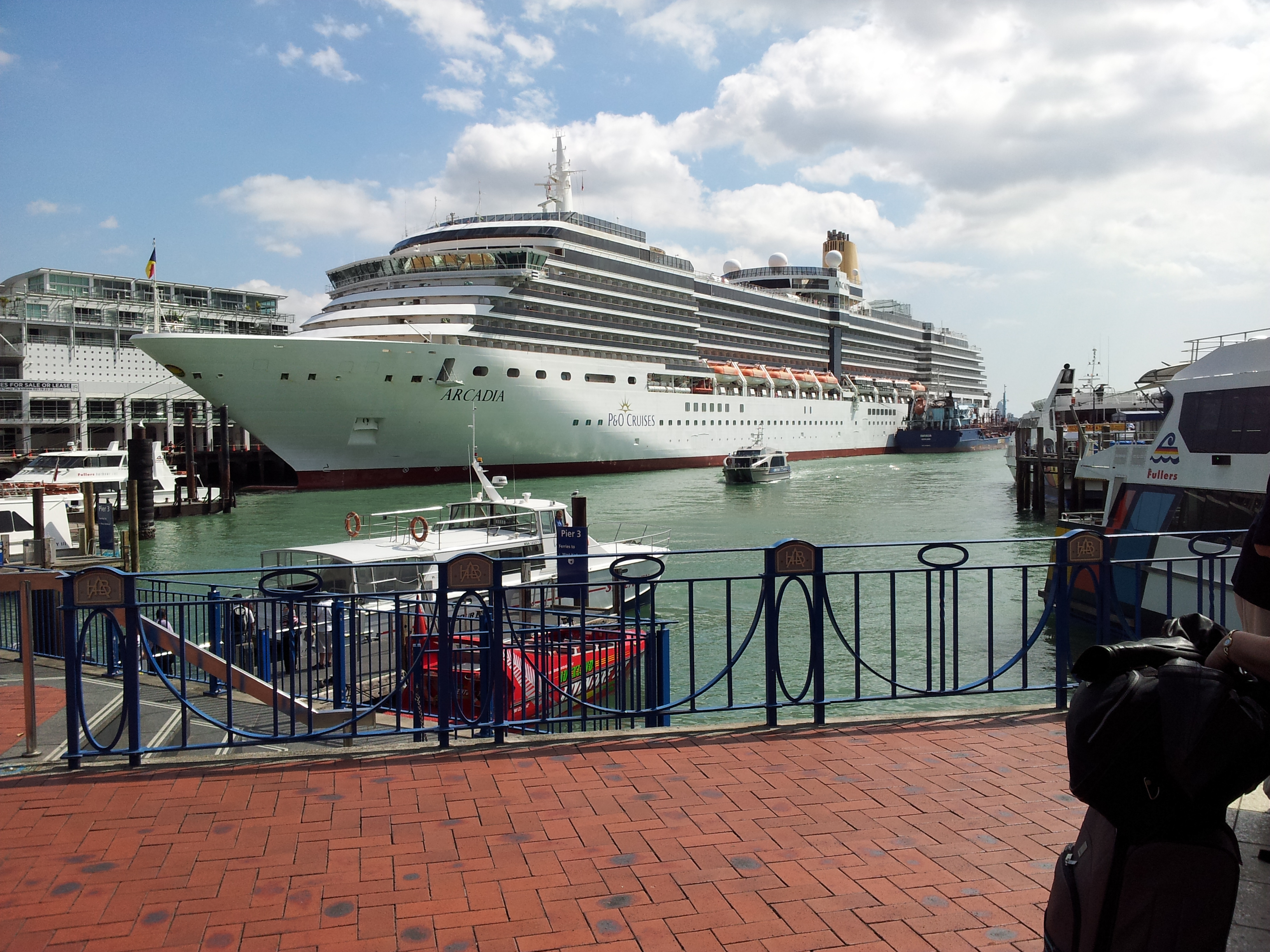
We were staying at the Hilton and advised there would be a large cruise liner berthing next to the hotel.  There was the Arcadia.

2013-03-08 11.51.48

This is the view from the other side of the hotel.  Where our room was, we could almost walk onto the aft end of the ship.

We were also told this was a rather extraordinary day because there were two cruise ships in the port. particularly because it was near the end of the cruising season.

The other ship was two berths along, the Sun Princess.

2013-03-08 11.56.17

Not as big as the Arcadia, up close it was still very impressive.

The cinema of my dreams – Was it just another surveillance job – Episode 48

I’m back home and this story has been sitting on the back burner for a few months, waiting for some more to be written.

The trouble is, there are also other stories to write, and I’m not very good at prioritizing.

But, here we are, a few minutes opened up and it didn’t take long to get back into the groove.

Chasing leads, maybe


“You haven’t been truthful with me, have you?” 

That was Dobbin’s opening shot once we were in the car and out in traffic.  It was as if he was worried someone would be listening in on our conversation.

“Says the spider to the fly.  Isn’t it the nature of this business not to play all your cards at once?”

“You’ve been in this business all of five minutes.  You don’t get the right to play cards.”

“I’m still alive, no thanks to anyone but my own skill.”

I could see the disdain in his expression, and the annoyance in his eyes.  Perhaps he was a man used to getting his own way.  I was expecting a retort, but he said nothing.

“How many different organizations do you work for, or is it none, and you just have fake IDs to get you in the door?”

“Need to know.  Have you found O’Connell yet?”

“He’s dead.  I saw him killed in an alley.  I’m sure Maury and Severin had him shot, no coincidence they turned up just after he hit the ground.  I searched the body, there was nothing on it.  Before he was shot, he told me to speak to you.  I did.  Anything else I’m doing is for my own protection.  Assigning Jan to befriend me, then play me would have been a good plan if I hadn’t found out.  I know she found O’Connell’s other residence, but I’m willing to bet she found as much as I did nothing.  Your people do that to Maury?”

“In a manner of speaking.  He wasn’t going to talk, and we couldn’t let him back on the street.”

“And knowing that I would go back to the hotel, what were you hoping for, that I would get arrested for his murder?”

“We were hoping you would glean information from her handler, or the police.  Seems both are either tight-lipped, or they know nothing.  Her handler is an incompetent fool.”

“Where is she?”

“Waiting for you at her apartment.  I want the pair of you to find O’Connell.  He either has the information, or he knows where it is.  They found the charred remains of a body in the cafe where the explosion was, a freelance reporter, who, according to his editor, had the story of the century.  No other details, though.”

“That either means military or industrial secrets.  Why would the reporter want to meet with O’Connell?”

“That’s not your concern.”

“Well, you’re wrong if you think O’Connell had the USB.  He didn’t get inside the cafe before it blew up, I know, I was there, and witness the whole event.  You know the drill, he goes past, checking to see if the target is in place, then makes sure the location is clear, then goes back and facilitates the handover.  He only just got past the front when the bomb went off.  I’m sure you’ve seen the CCTV footage.”

Yes, his expression told me he had.

“So how do you come to the conclusion he still has it?”

Never cite logical arguments to a man who lives in a fantasy world.

“Law of averages tells me there is a copy, and O’Connell would have made sure there was a backup plan, and location.”

It then struck me, after having talked to O’Connell, and knowing Dobbin knew O’Connell was still alive because he had rescued him from the alley and Severin’s cleaners.  It was not just a matter of getting him to admit it, and the fact O’Connell had done a runner on him.

“You seem convinced O’Connell is still alive.”

He glared at me.  Truth or dare?

“Because he is.  The trouble is, he’s gone to ground and I can’t raise him.  He was supposed to wait a few days in a safe place while we hunted down Severin and Maury.  We had one, but not the other.  I doubt he’ll surface before he gets word that Severin has been neutralized.  Every hour that information is still out there, is the chance it will fall into the wrong hands, so we need him and the information found.”

“You think he’s gone rogue.”

“I don’t think anything.

The car stopped outside O’Connell’s apartment block.

“Place nice with Jan, and find him and the information.

I got out of the car and watched it rejoin the traffic.

Before heading to the front entrance, my phone rang.  Odd, because only two people knew my number, and it was neither of those two.

Curiosity overcame reluctance to answer.  “Yes.”

“I’m texting a meeting point.  Be there at six.”  The line went dead before I could say anything.  Four hours.

No doubting the voice.  Severin.  And he sounded scared.

I wondered if he knew what had happened to his partner in crime.

© Charles Heath 2020-2022

“Sunday in New York”, a romantic adventure that’s not a walk in the park!

“Sunday in New York” is ultimately a story about trust, and what happens when a marriage is stretched to its limits.

When Harry Steele attends a lunch with his manager, Barclay, to discuss a promotion that any junior executive would accept in a heartbeat, it is the fact his wife, Alison, who previously professed her reservations about Barclay, also agreed to attend, that casts a small element of doubt in his mind.

From that moment, his life, in the company, in deciding what to do, his marriage, his very life, spirals out of control.

There is no one big factor that can prove Harry’s worst fears, that his marriage is over, just a number of small, interconnecting events, when piled on top of each other, points to a cataclysmic end to everything he had believed in.

Trust is lost firstly in his best friend and mentor, Andy, who only hints of impending disaster, Sasha, a woman whom he saved, and who appears to have motives of her own, and then in his wife, Alison, as he discovered piece by piece damning evidence she is about to leave him for another man.

Can we trust what we see with our eyes or trust what we hear?

Haven’t we all jumped to conclusions at least once in our lives?

Can Alison, a woman whose self-belief and confidence is about to be put to the ultimate test, find a way of proving their relationship is as strong as it has ever been?

As they say in the classics, read on!

Purchase:

http://tinyurl.com/Amazon-SundayInNewYork