NaNoWriMo – April 2022 – Day 21

First Dig Two Graves, the second Zoe thriller.

But, here’s the thing.

John and Zoe are nowhere near Vienna, Zoe having gone to Bucharest and then Zurich on her way back to see John who was going to pick her up from the airport, then the both of them were going to Lucerne for a few days.

A reminiscing cruise on Lake Geneva had been on the cards, but there might not be time.

First, they had to do some work on charting who was trying to kill her, because she has finally come to the realization that there is more than one.  Her visit to Bucharest yielded another name, quite possibly the person who was masquerading as Komarov.

Second, John was intending to introduce her to the new members of their team, the team he hasn’t quite got around to telling her about, who will be dedicated to research, investigation, and, via Isobel and the dark web, organizing the hits.

John had decided that she should not out there be distracted by finding work, just doing the work.  He was going to take care of the rest.

Perhaps a good time would be over dinner?

Meanwhile, Sebastian and Rupert are on surveillance duties while Isobel is tracking down which hotel the lovebirds are staying in. As soon as she has the information, Rupert is on the job.

She then moved to track John, knowing Zoe will be with him because she has seen the passenger lists for flights from Bucharest to anywhere.

Both are thankful neither John nor Zoe was in Vienna, which then makes it a priority that neither Worthington of Arabella should leave, except to go back home.  Although they hadn’t established it was the reason Worthington was in Vienna, it was too close to the bungled attempt on their lives for them not to draw the appropriate conclusion.

Sebastian has a plan B that no one was going to like, not even himself.

Plan A was yet to be formulated.

Today’s writing, with Zoe languishing in a dungeon waiting for a white knight, 1,566 words, for a total of 54,355.

An excerpt from “What Sets Us Apart”, a mystery with a twist

See excerpt from the story below, just a taste of what’s in store…

http://amzn.to/2Eryfth

whatsetscover

McCallister was old school, a man who would most likely fit in perfectly campaigning on the battlefields of Europe during the Second World War. He’d been like a fish out of water in the army, post-Falklands, and while he retired a hero, he still felt he’d more to give.

He’d applied and was accepted as head of a SWAT team, and, watching him now as he and his men disembarked from the truck in almost military precision, a look passed between Annette, the police liaison officer, and I that said she’d seen it all before. I know I had.

There was a one in four chance his team would be selected for this operation, and she had been hoping it would be one of the other three. While waiting for them to arrive she filled me in on the various teams. His was the least co-operative, and the more likely to make ad-hoc decisions rather than adhere to the plan, or any orders that may come from the officer in charge.

This, she said quite bluntly, was going to end badly.

I still had no idea why Prendergast instructed me to attend the scene of what looked to be a normal domestic operation, but as the nominated expert in the field in these types of situations, it was fairly clear he wasn’t taking any chances. It was always a matter of opinion between us, and generally I lost.

In this case, it was an anonymous report identifying what the authorities believed were explosives in one of the dockside sheds where explosives were not supposed to be.

The only reason why the report was given any credence was the man, while not identifying himself by name, said he’d been an explosive expert once and recognized the boxes. That could mean anything, but the Chief Constable was a cautious man.

With his men settled and preparing their weapons, McCallister came over to the command post, not much more than the SUV my liaison and I arrived in, with weapons, bulletproof vests, and rolls of tape to cordon off the area afterward. We both had coffee, steaming in the cold early morning air. Dawn was slowly approaching and although rain had been forecast it had yet to arrive.

A man by the name of Benson was in charge. He too had groaned when he saw McCallister.

“A fine morning for it.” McCallister was the only enthusiastic one here.

He didn’t say what ‘it’ was, but I thought it might eventually be mayhem.

“Let’s hope the rain stays away. It’s going to be difficult enough without it,” Benson said, rubbing his hands together. We had been waiting for the SWAT team to arrive, and another team to take up their position under the wharf, and who was in the final stages of securing their position.

While we were waiting we drew up the plan. I’d go in first to check on what we were dealing with, and what type of explosives. The SWAT team, in the meantime, were to ensure all the exits to the shed were covered. When I gave the signal, they were to enter and secure the building. We were not expecting anyone inside or out, and no movement had been detected in the last hour since our arrival and deployment.

“What’s the current situation?”

“I’ve got eyes on the building, and a team coming in from the waterside, underneath. Its slow progress, but they’re nearly there. Once they’re in place, we’re sending McKenzie in.”

He looked in my direction.

“With due respect sir, shouldn’t it be one of us?” McCallister glared at me with the contempt that only a decorated military officer could.

“No. I have orders from above, much higher than I care to argue with, so, McCallister, no gung-ho heroics for the moment. Just be ready to move on my command, and make sure you have three teams at the exit points, ready to secure the building.”

McCallister opened his mouth, no doubt to question those orders, but instead closed it again. “Yes sir,” he muttered and turned away heading back to his men.

“You’re not going to have much time before he storms the battlements,” Benson quietly said to me, a hint of exasperation in his tone. “I’m dreading the paperwork.”

It was exactly what my liaison officer said when she saw McCallister arriving.

The water team sent their ‘in position’ signal, and we were ready to go.

In the hour or so we’d been on site nothing had stirred, no arrivals, no departures, and no sign anyone was inside, but that didn’t mean we were alone. Nor did it mean I was going to walk in and see immediately what was going on. If it was a cache of explosives then it was possible the building was booby-trapped in any number of ways, there could be sentries or guards, and they had eyes on us, or it might be a false alarm.

I was hoping for the latter.

I put on the bulletproof vest, thinking it was a poor substitute for full battle armor against an exploding bomb, but we were still treating this as a ‘suspected’ case. I noticed my liaison officer was pulling on her bulletproof vest too.

“You don’t have to go. This is my party, not yours,” I said.

“The Chief Constable told me to stick to you like glue, sir.”

I looked at Benson. “Talk some sense into her please, this is not a kindergarten outing.”

He shrugged. Seeing McCallister had taken all the fight out of him. “Orders are orders. If that’s what the Chief Constable requested …”

Madness. I glared at her, and she gave me a wan smile. “Stay behind me then, and don’t do anything stupid.”

“Believe me, I won’t be.” She pulled out and checked her weapon, chambering the first round. It made a reassuring sound.

Suited up, weapons readied, a last sip of the coffee in a stomach that was already churning from nerves and tension, I looked at the target, one hundred yards distant and thought it was going to be the longest hundred yards I’d ever traversed. At least for this week.

A swirling mist rolled in and caused a slight change in plans.

Because the front of the buildings was constantly illuminated by large overhead arc lamps, my intention had been to approach the building from the rear where there was less light and more cover. Despite the lack of movement, if there were explosives in that building, there’d be ‘enemy’ surveillance somewhere, and, after making that assumption, I believed it was going to be easier and less noticeable to use the darkness as a cover.

It was a result of the consultation, and studying the plans of the warehouse, plans that showed three entrances, the main front hangar type doors, a side entrance for truck entry and exit and a small door in the rear, at the end of an internal passage leading to several offices. I also assumed it was the exit used when smokers needed a break. Our entry would be by the rear door or failing that, the side entrance where a door was built into the larger sliding doors. In both cases, the locks would not present a problem.

The change in the weather made the approach shorter, and given the density of the mist now turning into a fog, we were able to approach by the front, hugging the walls, and moving quickly while there was cover. I could feel the dampness of the mist and shivered more than once.

It was nerves more than the cold.

I could also feel rather than see the presence of Annette behind me, and once felt her breath on my neck when we stopped for a quick reconnaissance.

It was the same for McCallister’s men. I could feel them following us, quickly and quietly, and expected, if I turned around, to see him breathing down my neck too.

It added to the tension.

My plan was still to enter by the back door.

We slipped up the alley between the two sheds to the rear corner and stopped. I heard a noise coming from the rear of the building, and the light tap on the shoulder told me Annette had heard it too. I put my hand up to signal her to wait, and as a swirl of mist rolled in, I slipped around the corner heading towards where I’d last seen the glow of a cigarette.

The mist cleared, and we saw each other at the same time. He was a bearded man in battle fatigues, not the average dockside security guard.

He was quick, but my slight element of surprise was his undoing, and he was down and unconscious in less than a few seconds with barely a sound beyond the body hitting the ground. Zip ties secured his hands and legs, and tape his mouth. Annette joined me a minute after securing him.

A glance at the body then me, “I can see why they, whoever they are, sent you.”

She’d asked who I worked for, and I didn’t answer. It was best she didn’t know.

“Stay behind me,” I said, more urgency in my tone. If there was one, there’d be another.

Luck was with us so far. A man outside smoking meant no booby traps on the back door, and quite possibly there’d be none inside. But it indicated there were more men inside, and if so, it appeared they were very well trained. If that were the case, they would be formidable opponents.

The fear factor increased exponentially.

I slowly opened the door and looked in. A pale light shone from within the warehouse itself, one that was not bright enough to be detected from outside. None of the offices had lights on, so it was possible they were vacant. I realized then they had blacked out the windows. Why hadn’t someone checked this?

Once inside, the door closed behind us, progress was slow and careful. She remained directly behind me, gun ready to shoot anything that moved. I had a momentary thought for McCallister and his men, securing the perimeter.

At the end of the corridor, the extent of the warehouse stretched before us. The pale lighting made it seem like a vast empty cavern, except for a long trestle table along one side, and, behind it, stacks of wooden crates, some opened. It looked like a production line.

To get to the table from where we were was a ten-yard walk in the open. There was no cover. If we stuck to the walls, there was equally no cover and a longer walk.

We needed a distraction.

As if on cue, the two main entrances disintegrated into flying shrapnel accompanied by a deafening explosion that momentarily disoriented both Annette and I. Through the smoke and dust kicked up I saw three men appear from behind the wooden crates, each with what looked like machine guns, spraying bullets in the direction of the incoming SWAT members.

They never had a chance, cut down before they made ten steps into the building.

By the time I’d recovered, my head heavy, eyes watering and ears still ringing, I took several steps towards them, managing to take down two of the gunmen but not the third.

I heard a voice, Annette’s I think, yell out, “Oh, God, he’s got a trigger,” just before another explosion, though all I remember in that split second was a bright flash, the intense heat, something very heavy smashing into my chest knocking the wind out of me, and then the sensation of flying, just before I hit the wall.

I spent four weeks in an induced coma, three months being stitched back together and another six learning to do all those basic actions everyone took for granted. It was twelve months almost to the day when I was released from the hospital, physically, except for a few alterations required after being hit by shrapnel, looking the same as I always had.

But mentally? The document I’d signed on release said it all, ‘not fit for active duty; discharged’.

It was in the name of David Cheney. For all intents and purposes, Alistair McKenzie was killed in that warehouse, and for the first time ever, an agent left the Department, the first to retire alive.

I was not sure I liked the idea of making history.


© Charles Heath 2016-2020

A photograph from the inspirational bin – 31

This is rugged bushland not far from suburbia, though you wouldn’t know exactly where it is just by looking at the photograph

But, for the writer, this is an excellent setting.

For instance, once again we are out wandering in the bush, lost. It’s not hard to get lost, and stay lost if there are no recognizable landmarks, and given we all walk with a bias to one side or the other, and we have to avoid objects like trees, ravines, animals, and rocks, keeping a straight line is impossible.

But the question is, how did you get into the bush in the first place?

It’s not as if you would deliberately go there, just to if you can get lost.

No, my idea is that you have been kidnapped and drugged, then taken to a location either in the book of a car or just in the back seat with a hood, then dropped off and left to die

The criminals in this story are more efficient in getting rid of pesky witnesses.

Or maybe it’s something less sinister, like going out and counting the koalas in the bush, well, what’s left of the bush as the suburban spray takes more and more of the koala’s habitat.

And it could also be like the planet of the apes, the koalas start fighting back.

Stranger things have been known to happen.

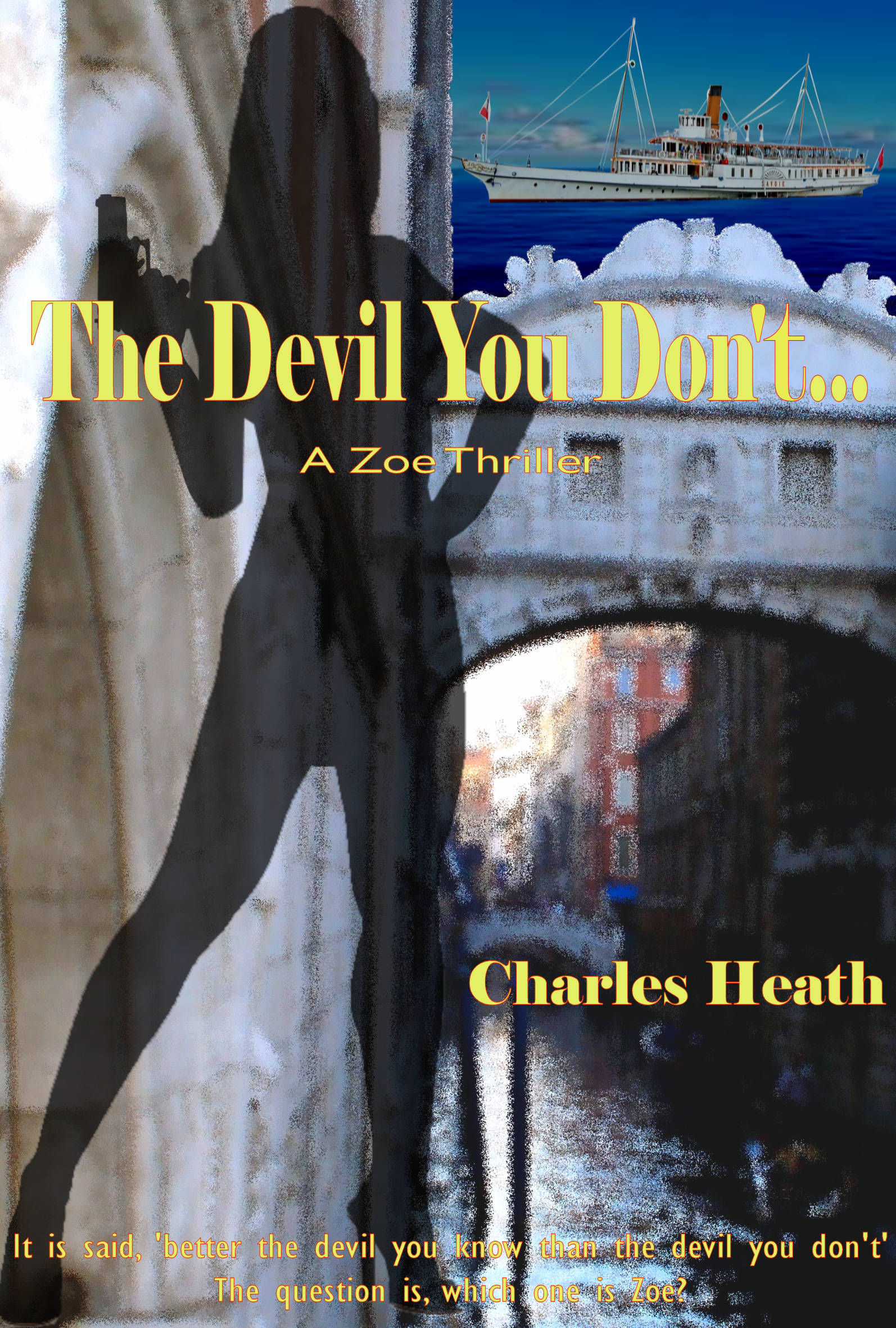
“The Devil You Don’t” – A beta readers view

It could be said that of all the women one could meet, whether contrived or by sheer luck, what are the odds it would turn out to be the woman who was being paid a very large sum to kill you.

John Pennington is a man who may be lucky in business, but not so lucky in love. He has just broken up with Phillipa Sternhaven, the woman he thought was the one, but relatives and circumstances, and perhaps because she was a ‘princess’, may also have contributed to the end result.

So, what do you do when you are heartbroken?

That is a story that slowly unfolds, from the first meeting with his nemesis on Lake Geneva, all the way to a hotel room in Sorrento, where he learns the shattering truth.

What should have been a high turns out to be something else entirely, and from that point every thing goes to hell in a handbasket.

He suddenly realises his so-called friend Sebastian has not exactly told him the truth about a small job he asked him to do, the woman he is falling in love with is not quite who she says she is, and he is caught in the middle of a war between two men who consider people becoming collateral damage as part of their business.

The story paints the characters cleverly displaying all their flaws and weaknesses. The locations add to the story at times taking me back down memory lane, especially to Venice where in those back streets I confess it’s not all that hard to get lost.

All in all a thoroughly entertaining story with, for once, a satisfying end.

Available on Amazon here: https://amzn.to/2Xyh1ow

In a word: Key

So, as we all know, a key is used to lock or unlock a door, gate, or something else.  It’s either made of shiny metal, brass, or rusty iron, it can be small, or very, very big, as is the key to a dungeon.

We can have one key or we can have many or even a master key that unlocks everything, very handy if you have a house full of locked rooms.

People always seem to want to steal them, especially in crime shows.

There is also an item called a key card.  Not the metal thing, but a plastic thing, that opens doors.  Odd that it’s called keyless entry!

Then there’s what is known as the key to something, i.e. you might have the key to his or her heart, metaphorically speaking.

And in that metaphorical sense, it opens up pandora’s box with a plethora of different meanings.

He had the key to the puzzle.

I wish sometimes I had the key to be able to write better, that that one particular key eludes me.

There are keys on a keyboard, the ones you use on computers and calculators.  They were originally on typewriters.  You can also find keys on a piano, or an accordion, and some other musical instruments.

A key can also be a master index field, or unique identifier, in a database, particularly those kept on computers.

And,

there’s a host of other uses for the word key, such as

roughening a surface

describing the shooting area on a basketball court

a group, or one, of small coral islets

matching words to pictures

or, you’re just too keyed up to sleep.


The cinema of my dreams – I never wanted to go to Africa – Episode 41

Our hero knows he’s in serious trouble.

The problem is, there are familiar faces and a question of who is a friend and who is foe made all the more difficult because of the enemy, if it was the enemy, simply because it didn’t look or sound or act like the enemy.

Now, it appears, his problems stem from another operation he participated in, and because of it, he has now been roped into what might be called a suicide mission.


“That was far to bloody easy.”  I heard Monroe’s voice come over the radio, not long after we left the camp.

“It was a bit easier than I thought.  But I did make it quite clear if we didn’t all leave in one piece we’d reduce his camp to rubble with everyone in it.”

“He knows the territory.  Something’s waiting for us out here.”

Something indeed.

Back at the camp, not only had the commander’s men search for the hidden weapons, and, when everyone checked, were still there, they had also taken off the crates with the film equipment.  I was not sure what the commander was intending to do with the equipment, but what disappointed me was the fact we hadn’t taken the time to rescue the rocket launcher.

Now the commander had it.

If he bothered to search the crates properly.  I suspect he was yet to do so.  What we had rescued and successfully hidden were the C4 explosives and detonators.  They might come in useful at the airstrip.

Just before we reached the fork in the road, where we would be turning left to head towards the airfield, and surprisingly had not run into any of the commander’s men, we stopped and let Monroe and Shurl out to make a sweep towards the airstrip, not too far away.

I also called up Mobley to see how he was.

The Colonel answered.  “Everything is under control now.”

I didn’t like the sound of that.  “What happened?”

“The kidnappers send out a team to intercept us on the way to the airstrip.  It wasn’t a stretch to imagine they would know what we were planning because they’d know we would not be retracing out steps to Uganda.  Got them before they got a shot off.  I suspect there are Government troops at the airstrip, it’s too important to let anything happen to rich foreigners coming to see their wildlife reserve.  There are several troop carriers, and we’ve seen a few men on the outskirts patrolling.  There’s several at the gate if you could call it that.”

“Is there a plane there?”

“As it happens there is.  A grand old DC3.  It’s not a charter plane, so I’m guessing it belongs to an overentitled American big game hunter or the photographic variety.  At least I’m hoping that’s the case.”

“What do you recommend?”

“Not to storm the field.  You’re going to have to find another means of getting here, preferably without any fanfare.”

My first choice was to go in and get out, with as little firefight as possible, particularly in case they started shooting at the plane.  If I was reading between the lines properly, the Colonel was telling me there were more troops there than we could handle quickly and quietly.

“Very good.  Can you get sight on just how many troops are there, and if you can see who’s in charge?”

“Will try.”

Monroe had been standing next to me during the exchange.

“Three in place, two more on the perimeter, if we can cover as many as possible, you might be able to take the rest from the inside.”

Secreting the weapons again, maybe.  It was a possibility, but going in with hidden weapons, and then found by the guards at the gate, who would be more efficient and careful searchers than the kidnappers, it would create hostility and itchy trigger fingers.

“No.  We have to find some way of letting them feel as though they have complete control of the situation.  They know we’re coming; the commander would have told them.”  The only reason why he was still the cat who ate the canary.  He might even have told them he had some men waiting as the first line of defense.

The airstrip commander would then know we were armed and relatively dangerous.

It was time for yet another dangerous gambit.

I picked up the radio.  “Colonel?”

A second later, “Sergeant?”

“Whatever happens in the next twenty minutes or so, just ignore it.  It’s not much of a plan, but it will get us onto the field.”

“And then?”

“Hopefully some divine intervention.”

Monroe looked skeptical.  “You’re going to just drive up to the gate and surrender?”

“Not exactly.  It won’t be fait accompli until we reach the terminal, or hanger, or whatever the commander has set up as headquarters.  They’ll have most of our weapons, yes.  But they won’t have all of us.”

“No.  But they’ll know we have a sniper, so one of you are going to have to allow yourself to be captured, just to ease their minds.”

“Leaving one of us and Mobley and the Ugandans.  Can we trust them?”

“I hope so, otherwise this could go badly.  But, today, I’m an optimist.  We’ve got this far.”

Trying to show more confidence in the plan that I had.  It was always a worry when you had to trust people you didn’t know.  That had been the problem the last time.  At least this time we had managed to get the hostages.  It was always going to be a problem getting them out.

Monroe gave me one of her special, you’re a fool, looks.  “I hope you know what you’re doing.”  She then nodded in Shurl’s direction and they disappeared into the bush again.

I gestured to Davies to come over.

“Did you find out what sort of plane it is?”

“Hopefully.  The Colonel tells men there’s a DC3 off the airstrip.  I assume you can fly one.”

She smiled, the first time since this operation had started.  “Sure can.  I spent three summers putting one back together.  My dad has a sort of airplane museum.  A DC3, a DC4, and a Lancaster, a very sorry looking Lancaster at that.  Shouldn’t be a problem.”

“Then try to not get shot.”

“Do my very best not to.”

Once again, it was time to go.  Going into the unknown was getting to be the norm, but hopefully, this would be the last time.  I didn’t consider it wise to advise the hostages, they had their own problems to worry about.


© Charles Heath 2020

Endless flight – a short story

It had been billed as the longest commercial flight in the world.  London to Sydney.

Previous times it had been flown, it was devoid of passengers and cargo, except for a few reporters and airline staff; not more than about 20.

The plane, state of the art, was capable of flying twenty-one hours straight.  We would only need Nineteen and a half.  It was the first flight of its kind, and we were the first to participate in what was being touted as history-making.

I was on board only because I’d won a competition.  To be honest, I couldn’t believe my luck.

I guess it was the same for the other 287 of us on board.  With baggage and cargo included, oh, and not forgetting fuel, I guess our biggest concern was getting off the ground.

It wasn’t long before that fear had been dispelled, though for a moment more than one of us thought we might not get into the air.  There were collective sighs of relief when we finally lurched into the air.

Once the seat belt sign went off, the First Officer spoke to the passengers, more or less telling us we were going to make history and to sit back and enjoy the in-flight service.

I guess it was ironic that as someone who didn’t like flying I was in this plane.  The thing is, I didn’t expect to win the competition.  But, I was on board for the experience and was going to make the most of it.  I’d brought half a dozen crossword books.

I woke from an uneasy sleep about two hours before I e plane was due to land.  The cabin lights had come on, and breakfast was about to be served.

Everyone else was in varying states of awareness.  Some hadn’t slept at all, which was what usually happened to me, and they looked like I felt.  Bleary-eyed and half awake.

I looked at the flight path in the headrest in front of me, and it said we had about an hour and fifty minutes, and from the outset, precisely on time.  We’d had headwinds and tailwinds but neither had any lasting effect on our arrival time.

Something else did.  After breakfast had been cleared away, and we were all getting ready for the last hour of the flight, word came through from the flight deck that we had to go into a holding pattern due to a problem on the ground.

The first question on everyone’s mind, did we have enough fuel.  The Captain, this time, allayed that fear.

But, I was sitting over the wing where I could see the engine.  I was not an expert but I thought I’d heard a murmur, the sort an engine made where the fuel supply was running out.

Perhaps not.  Perhaps it was my overwrought imagination after not enough proper sleep.

Another half-hour passed, and I could feel a change in the plane’s flight.  I was now listening and waiting and interpreting.  The Captain said the problem was resolved and we were cleared to land.

That’s when the engine outside my window stuttered, if only for a fraction of a second.

Fortunately, we were well into our descent, and I could see the ground below.  Now, going through some low cloud, the ride became bumpy, and I was sure it was covering the more frequent stuttering of the engine, and once, I was not the only one to hear it.

As the wheels went down and clunked into place, I think the engine stopped, though I couldn’t be sure, because there was little or no change in the plane’s flight other than a slight change in the plane’s speed but not its rate of descent, and none of us would have been any wiser had the pilot, in his usual calm manner, not told us there was a small problem with one of the engines but there was no problem with landing, and we would be on the ground in ten minutes.

In fact, the landing was, as any other I’d been on, flawless, even though I was sure I heard a slight stutter in the other ending, but by that time we were on the ground.

The only difference between this and any other landing was the accompaniment of several emergency services trucks, and the fact we were not going to a gate.  Instead, we were taken to a bay not far from the runways, and then calmly taken off the plane.

From the ground, just before being loaded onto a bus, I could see the plane, and it looked the same as it had any other time.

What did bother me was several words spoken by what looked to be an engineer.  He said, “That plane was literally flying on vapor.  What you’re seeing is 228 of the luckiest people in the world.”

If ever there was an excuse to buy a lottery ticket…

© Charles Heath 2020-2021

My cell phone is going off

I’m back to writing, sitting at the desk, pad in front of me, pen in hand.

The only thing lacking, an idea.

It’s 9:03 am, too early to start on a six-pack.

To be honest, the last thing I needed was a distraction, and, having forgotten to put my cell phone on silent, it starts buzzing, indicating there are new messages, or notifications from all those social media sites like Twitter, Facebook, WordPress, Blogger…

Then the advice from all the so-called marketing gurus starts to swirl around in my head, and instead of writing, I’m now fretting over my social media presence.

The more I read the more it bothers me that if I don’t have the right social media presence if I do not start to build an email list, all of my efforts in writing a book will come to naught.

That’s when I start trawling the internet for information on marketing and found a plethora of people offering any amount of advice for anything between a ‘small amount’ to a rather large amount that gives comprehensive coverage of most social media platforms for periods of a day, a week or a month. 

I move on to the people who offer advice for a cost on how to build a following, how to build a web presence, how to get a thousand Twitter followers, how to get thousands of email followers before the launch.

The trouble is I’m writing a novel, not a nonfiction book, or have some marvelous 30-page ebook on how to do something, for free just to drive people to my site.

I’m a novelist, not a handyman so those ideas while good is not going to help me.

Yet another problem to wrestle with along with actually creating a product to sell in the first place.

Except I’m supposed to be writing for the love of it without the premeditated idea of writing for gain or getting rich quick.

What am I missing here?

So should l be writing short stories and offering them for free to drive people to my site?  These would have to be genre-specific so it needs time and effort and fit into a convenient size story that will highlight or showcase my talent.

Some time ago I created a website on one of those so-called free sites, but it’s rather basic and not great. Of course, if I want it to be better, all I have to do is hand over a great wad of money I don’t have to make it better. So much for free!

I don’t think I will have a good night’s sleep again with all of these social media problems I’m having.

Oh well, back to the book.  It’s time to have a nightmare of a different sort!

Searchings for locations: Oreti Village – No two sunrises are the same – 1

Oreti village, Pukawa Bay, North Island, New Zealand

On the southern tip of Lake Taupo

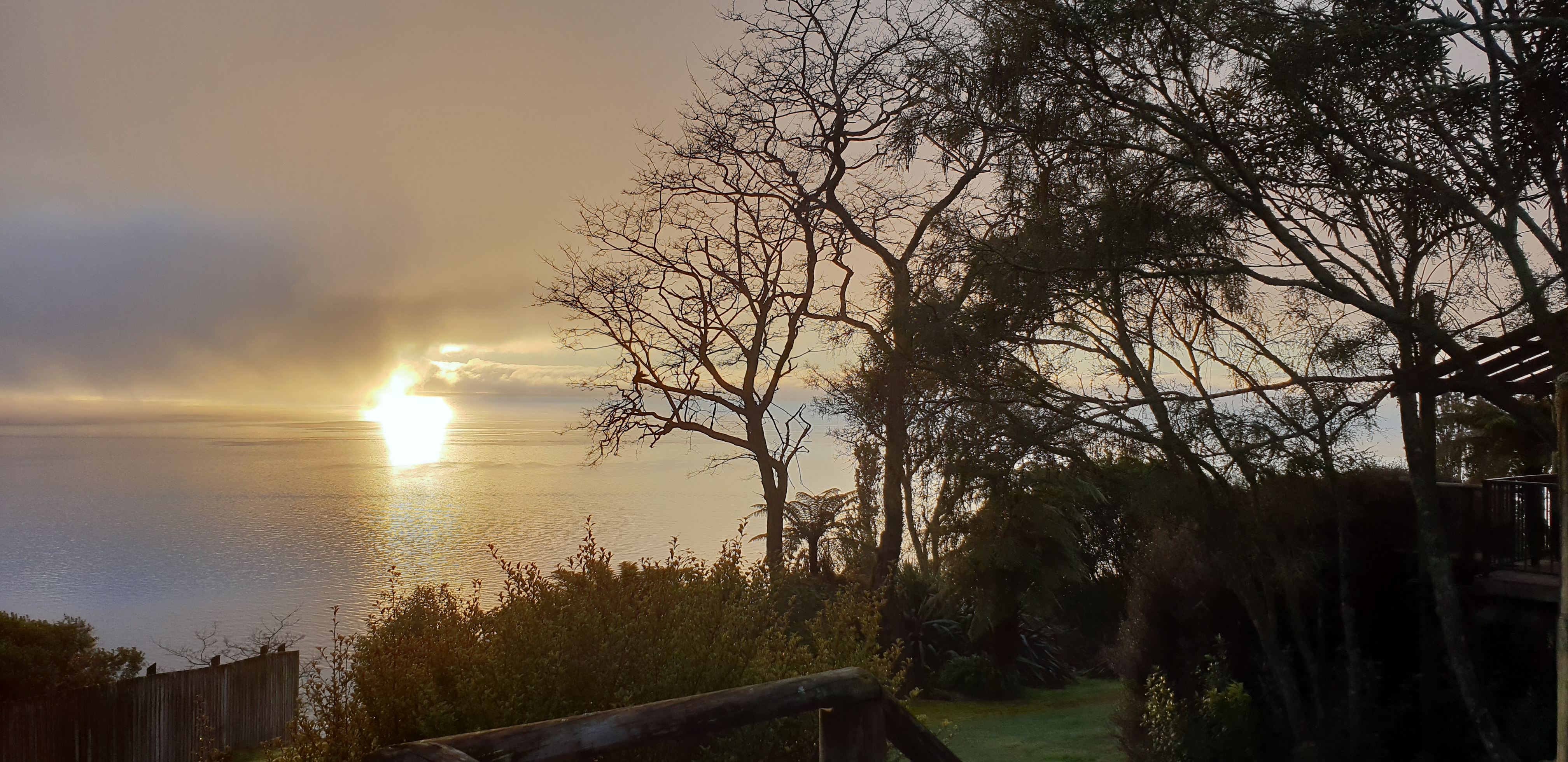
Our first morning there, a Saturday.  Winter.  Cold.  And a beautiful sunrise.

20180812_073230

This was taken from the balcony, overlooking the lake.

The sun is just creeping up over the horizon

20180812_073241

It gradually gets lighter, and then the sun breaks free of the low cloud

It lights up the balcony

20180811_074651

And the trees just beyond, a cascade of colorful ferns.

20180811_074622

It looks like its going to be a fine day, our first for this trip, and we will be heading to the mountains to see snow, for the first time for two of our granddaughters.

The cinema of my dreams – I always wanted to go on a treasure hunt – Episode 2

Here’s the thing.

Every time I close my eyes, I see something different.

I’d like to think the cinema of my dreams is playing a double feature but it’s a bit like a comedy cartoon night on Fox.

But these dreams are nothing to laugh about.


I never realized Boggs had this thing for treasure.  Seems a long time ago one of his relatives was a diver, found a wreck, and with it gold bullion.  He became rich, and the wealth in the family lasted till Boggs’ grandfather, who frittered away the last of the fortune on dodgy land schemes and supposed match tree forests in Ecuador.

It was up to him, Boggs told me, to restore the family fortune.

I couldn’t see how this was going to happen sitting in a bar that openly advertised treasure maps and an owner who was only too happy to tell the story of the Spaniard to anyone who’d listen.

The problem was, no two versions of the story were the same.

Whilst Boggs was taking in the fourth or fifth rendition of the story, I looked around at the clientele.  They were certainly more interesting than the treasure.

Mostly here for the sun and surf, there were two notable exceptions, and if I was to guess, they looked Spanish.

Or was it my imagination working overtime.

They seemed very interested in Boggs, from time to time looking over at him, and then muttering to each other.  Conveniently, they were along the path to the restroom, so I took a stroll, and lingering a moment near their table, I listened to the conversation.

In Spanish.

My Spanish was a little rusty but what I thought I heard, “Boy, map, find out what he knows, gold, and it’s in the hills somewhere.

The phrase, there’s gold in them thar hills came to mind.

But for the moment I think we had a problem.

When I came out of the restroom, the first thing I noticed was the two Spaniards had left.  When I looked over towards the bar, where I left Boggs, I noticed he too, was missing.

All of a sudden I had a very bad feeling.

I ran outside, just in time to see the two men bundling Boggs into the back of a car, and drive off.


That’s where I fell asleep