In a word: Flight

There is a saying, if God wanted us to fly then he would have given us wings.

Unfortunately, he didn’t, so we do not get to know what it’s like to be in flight,

Unless…

We take an aeroplane, which usually has a flight number such as QF607, or in conversation, ‘I’ll be taking the 6 o’clock flight’.

If someone runs away, then we say they have taken flight.

If we roll back a few years, say about 80, to World War 2, flight tales on a whole new meaning.

It refers to a group of planes, in one case a number of spitfires, or,

The man in charge, a flight lieutenant, also colloquially known as ‘flight’.

This is not be confused with the word flite which has several very obscure meanings,

First, it means to quarrel or argue, or engage in a debate, and

Second, to make a complaint.

But one that sticks in my my mind is Flyte, from Brideshead Revisited.  they were a very interesting family.

The cinema of my dreams – Was it just another surveillance job – Episode 40

I’m back home and this story has been sitting on a back burner for a few months, waiting for some more to be written.

The trouble is, there are also other stories to write, and I’m not very good at prioritizing.

But, here we are, a few minutes opened up and it didn’t take long to get back into the groove.

Chasing leads, maybe

Darkness fell in a noticeably short time, and we left the pub at about six. In the hour so we have been there I’d been keeping a close eye on the comings and goings, and in particular, if O’Connell came in, or someone else that might look like him.

He hadn’t, nor had any mythical family members.  Well, it had been a long shot.

Jennifer hadn’t volunteered anything more to the conversation and sat working her way through a piece of fried fish and a bowl of chips.  Neither had looked appetizing.  I would have bet she’d have the chicken, but I was wrong, and probably it wasn’t going to be the first time.

“Do you have a gun?”

It was after ten minutes of silence.  It worried me that she didn’t ask how far it was or how long it would take.  And then, out of nowhere, the gun question.

“No.  Why would I have a gun.?”

“We were issued with weapons.  I still have mine.”

“Did you bring it with you?”

“No.  Like I told you, I didn’t think I was still working for the Department.  They didn’t ask for it back, so I didn’t give it to them.”

“Or the identities?”

“No.  It was odd though; they didn’t ask about them either.”

“Maybe they were going to wait a while and then ask you back.”

This was a weird conversation to be having.  By this time we were in Peaslake Lane, and not far from the house I pulled over to the side of the road, under a tree.

The houses were set back in a rural setting.  Between the darkness and the undergrowth, the chances were we could get to the house without being seen.  From where I was sitting, no windows or doors were visible.

I made sure the car’s internal light didn’t go on the moment the door was open.

“Are you bringing your cell phone?”

“Why.  I’m not envisaging having to call anyone, nor am I expecting a call.”

I shrugged, and slipped mine into a pocket where I could easily reach it I needed to.

I got out of the car, and she followed.  She left he bag in the car.  The first sign of training kicking in; eave all un-necessary baggage behind.  Perhaps having a gun might have been a good option if we ran into trouble.

Oddly enough, now that I thought about it, Monica hadn’t asked for mine back either, but it was sitting at home in a safe, along with the five other identities Severin had issued each of us with.

I locked the car, equally as silent and invisible as she joined me.

“Which house?”

“Three along.  Follow me and keep your eyes and ears peeled.”

I didn’t have to tell her, but it didn’t hurt to emphasize the importance of stealth.  There were people home in other houses, lights in windows just discernible through the trees, one house a window without a curtain, a view into the dining room, but there was no one at the table.

If we were visiting them, perhaps we’d be in time for dinner.

The house we were looking for was in darkness from our approach.

“You keep an eye open this side, and I’ll go around the other, then come back.  I’ll see if there’s an easy entry point.”

“What if someone is home?”

“Doesn’t look like it from here, and I’ll be surprised if there is.”

A moment later she had disappeared into the shrub line and I was heading across the front of the house, heading for the other side.  I kept well away from the front door, just in case there was a motion light, or worse, a motion detector that might set off a silent alarm.

But, that might already have happened, and if it had, no one had made a move inside.

Down the side was walls and windows, no doors or French doors leading out into the garden.  None of the windows were at a decent height for us to clamber through, and if we had to, it was going to be difficult.

I continued on, around the back, where there was more success.  French doors leading onto a patio, and then the lawn.  In the corner was a greenhouse, and next to that a rose garden.  Or at least that was what both looked like in the dark.

The moon, for the moment, was hidden by dark clouds.

Perhaps it would rain, though it had not been in the forecast, but, this was England, and it could rain at any time, especially when you didn’t want or need it.  There was no light, or motion sensor over the French doors, so I crossed the patio and looked through the doors.

I had expected curtains, but these hadn’t been completely drawn.  No large light or lamp on, but there were indicator lights, several red and one a particularly bright blue, casting a rather long shadow over furniture and what looked to be a carpet square.

Out of curiosity, I tried the door.

It was open.

Then I had the blind panic moment of thinking it might be alarmed.

I shut it again and waited.

© Charles Heath 2020

Writing about writing a book – Day 4

Of course, by this time, a lot has changed and what I had discussed before now needs a few changes, so I have made the necessary amendments where required to the narrative, but that doesn’t mean I won’t revisit it sometime in the future.


It was a late night last night, reading and rereading, considering plot lines, new characters, and demolishing a six-pack.

It’s debatable if it is helping the creative process.  It has left me with a slight headache.

I drag myself out of bed and look out the window.  Bright sunshine, blue sky, slight breeze.

11:00 am.  Half the day is gone.

My stomach rumbles, I need something to eat.  I stagger out to the kitchen and look in the fridge.  OK, too busy to go shopping, time to make time.  A writer has to eat!


Three hours have passed and it’s mid-afternoon.  A new plan is required.  I need to make sure I don’t waste the day and write a certain number of words, otherwise, this book will never get written.

Bed: midnight

Rise: 7:00 am, go for a run to clear the head

Breakfast: 8:00 am

Writing: 9:00 am to ??

Let’s just see if that works tomorrow.


I sit down and stare at the pad.

Plotting:  Our main character is an IT department manager, whose main responsibility from the start, and at that time, he was alone and not the manager of anything, was setting up and keeping the network running.  These were the early days of Ethernet, token ring, and 3-Com, in moving from mainframes to desktops and servers.

I remember it well, and my first client/server network was 3-Com and Ethernet.

In the story scenario, Bill literally is indispensable because the job he performs is single point sensitive, even though Benton refuses to act on employing another network engineer.  This is art imitating life because so many places have similar situations.

So the reason why Benton is calling Bill; there is a crisis.

Some accountant is found shot dead at his desk, novel but not unheard of.  I know a few accountants who deserve just that.

That’s not the problem though, it’s the fact the network is down, and Benton is almost hysterical (after he makes a promise to his superiors that he can’t keep!).  Nothing unusual there with the sort of person he is, and like many in similar situations.


Scribble, scribble …


Another five minutes, then the phone began its shrill insistence again.  Before it rang again, I’d moved it from the floor to the bed.  I counted the rings, to ten, and then picked up the receiver.

“Bill?  Don’t hang up.”  Almost pleading.

“Why?  You said I should go, away from work, away from the phones, away to recharge my batteries, I believe you said.”

“That was Friday.  This is Monday. You’re needed.  Richardson has been found shot dead by his desk.  All hell has broken loose!”  Benton rarely used adjectives, so I assumed when he said all hell had broken loose, it meant something had happened he couldn’t fix.  His flowery language and telegram style had momentarily distracted my attention from Richardson’s fate.

Harold Richardson was an accountant, rather stuffy, but good at his job.  I’d spoken to him probably twice in as many years, and he didn’t strike me as the sort who would kill himself.  So why did I think that?  Benton had only said he was shot.

Benton’s voice went up an octave, a sure sign he was going into meltdown.  “It’s a circus down here.  Jennifer is missing, Giles is not in yet, the network is down, and that bunch of nincompoops you call support staff are running around the office like headless chooks.”

It all came out in a nonstop sentence, followed by a gasp for air.  It gave me time to sift the facts.  Jennifer, the Assistant Manager, and responsible for data entry and accounts maintenance, was not there, which in itself was unusual, because she kept longer hours than me, Peter Giles, my youthful assistant, just out of university and still being beaten into shape was also not in, and that was usual, so it could only mean one thing.

The network was down.

It was my responsibility since I’d recommended it and then won the support of management over his objections, and following that it had become a point of continual contention, a petty war neither of us was going to win.

I tried to keep the joy out of my voice. 

He’d also vetoed my recommendation for an extra full-time network engineer as my alternative, and in doing so Benton had made my job become single point sensitive.  There was no one to replace me if anything went wrong.


Richardson has nothing to do with the plot, he just happened to be in the wrong place at the wrong time, but someone else further up the chain of command will be.  That’s something to look forward to, though I’ve yet to decide what happens.

As for Benton, he will linger around for a while, but has no real part to play, except perhaps as the comic light relief.  He will get a rude awakening at the end.

Try not to make it too technical, no one really wants to know about computer systems, just the machinations of the people who are creating the problems and why.


© Charles Heath 2016 – 2020

Memories of the conversations with my cat – 64

As some may be aware, but many not, Chester, my faithful writing assistant, mice catcher, and general pain in the neck, passed away some months ago.

Recently I was running a series based on his adventures, under the title of Past Conversations with my cat.

For those who have not had the chance to read about all of his exploits I will run the series again from Episode 1

These are the memories of our time together…

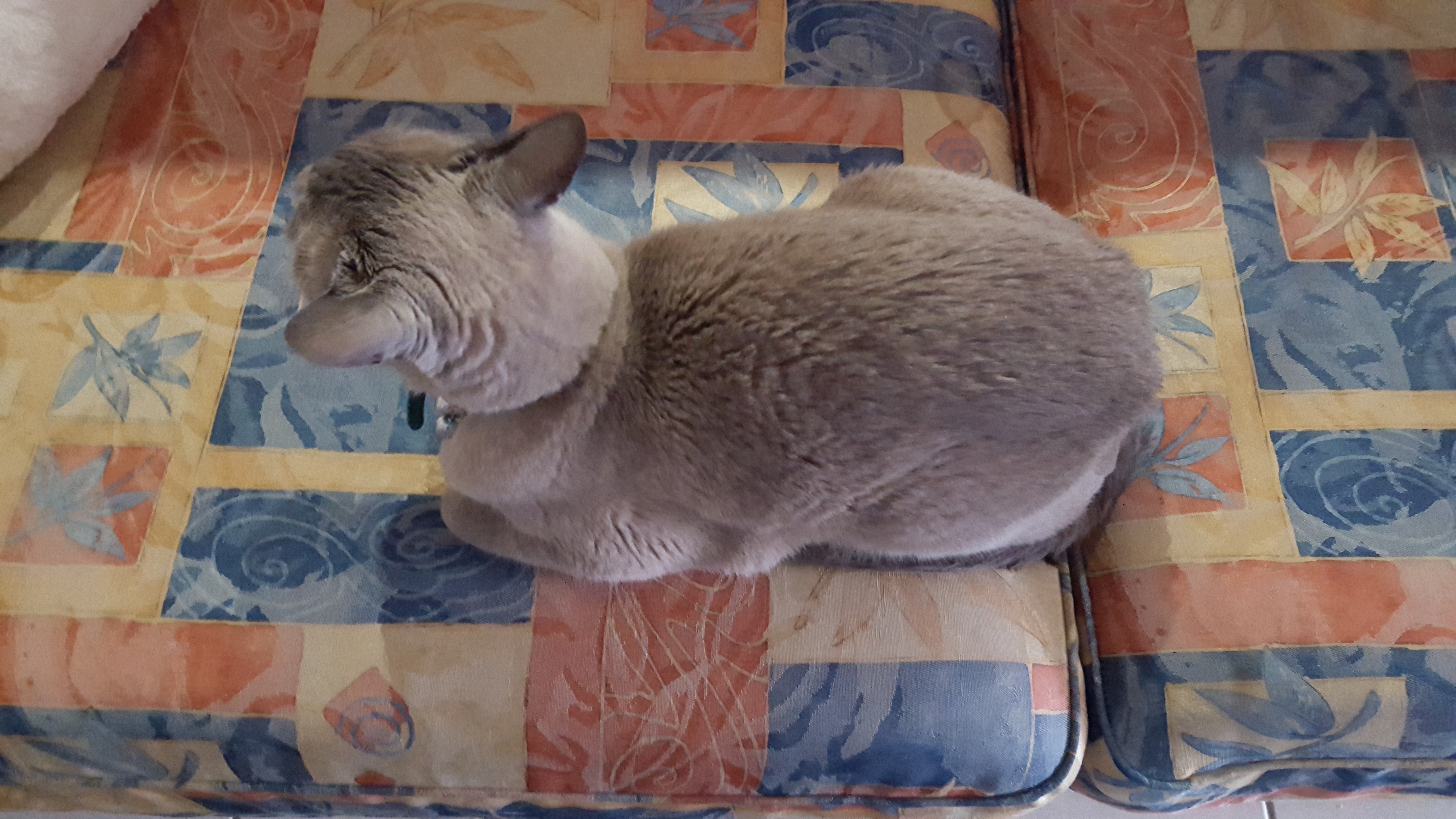
20161008_135120

This is Chester.  He’s decided to look the other way.

We are not on very good terms.  Three times in a row he’s decided to wake me at some ungodly hour of the morning on the pretence that he needs feeding, and three times he’s sniffed it and walked haughtily away.

If that was not bad enough, he’s now barracking for any other team than the Maple Leafs.  And to make matters worse, he’s now calling them losers, which technically is correct, but we are missing Marner, and Tavares needs more time to get back into it, and I can’t tell you where Mathews is, but he needs to come back real soon.

On top of this, I’m starting to feel for Anderson because they got rid of Hutchinson as a backup goalie and I didn’t think he was that bad.

Trust Chester to say that Hutchinson hadn’t been in a winning side for a while.  Obviously, he’s a keen observer of the game, or he’s figured out how to use my phone and the NHL / Maple Leafs apps.

OK, enough of the boring stuff.

I’m in need of some mood music so I put on Vivaldi’s Four Seasons.  Yes, it’s definitely annoying Chester.

Karma!


The colour purple

You would think, being one of a dozen colours that pip onto your head when asked, name a dozen colours, that it would be easy to find almost anything.

Wrong.

We are on a quest to find bridesmaid dresses in, you guessed it, any shade of purple.

We might as well be looking for gold nuggets.  In fact, we’d have a better chance of finding gold than a purple dress.

And, seven stores later, five of which are specialty fashion boutiques, sorry, no one is doing purple. Maybe a dash here or there, but it’s lost in the overall dress that may have flowers or a Picasso abstract.

OK, so the dresses are for a 15-year-old and a 12-year-old, you would think you could go to a Target, or K Mart, or Cotton On, or perhaps the Guess type of store that caters to that 13 to 25 market.

Think again.

Purple, mauve, lilac, or any shade in between just isn’t on the rack.

I suddenly consider the notion of phoning a supermodel and then convincing her to wear every shade of purple every waking hour in public, thus setting a new trend.

I’m betting that within a week, every store on the planet will have purple clothes in stock.

Of course, there is only one flaw in the master plan. I don’t know any supermodels.

So, this search is going to have a bad ending. I’m guessing the bride’s decision for purple and white as the signature color scheme was made before discovering that practically nothing comes in purple.

No the way, it was originally lilac, but that is impossible, not unless there are about 3 years before the wedding and you can get to Hong Kong to have the dresses specially made.

We’ve got about three weeks.

Yes, there’s another thing about this wedding. From announcement to the big day, is six weeks. Logistically, it can’t be done. Practically, there’s going to be a ward in the mental hospital for the wedding party, even if they pull it off.

Meanwhile, it’s back on the trail. There’s one more level to trawl, in what is a very large shopping mall.

And for the first day after the easing of many of the drastic Covid restrictions, it seems everyone for miles around has descended on this very place.

Sigh!

Then, majestically appearing through the mist…

No, not sunshine! A purple dress.

I am all astonishment. And, it’s not just one, there are several.

Hold that thought…

Alas, we find the dress, but not the colour, well, not in that store. Now it’s a matter of phoning other stores to see if they have any purple stock.

I’ll let you know what happens next!

An excerpt from “One Last Look”: Charlotte is no ordinary girl

This is currently available at Amazon herehttp://amzn.to/2CqUBcz


I’d read about out of body experiences, and like everyone else, thought it was nonsense.  Some people claimed to see themselves in the operating theatre, medical staff frantically trying to revive them, and being surrounded by white light.

I was definitely looking down, but it wasn’t me I was looking at.

It was two children, a boy and a girl, with their parents, in a park.

The boy was Alan.  He was about six or seven.  The girl was Louise, and she was five years old.  She had long red hair and looked the image of her mother.

I remember it now, it was Louise’s birthday and we went down to Bournemouth to visit our Grandmother, and it was the last time we were all together as a family.

We were flying homemade kites our father had made for us, and after we lay there looking up at the sky, making animals out of the clouds.  I saw an elephant, Louise saw a giraffe.

We were so happy then.

Before the tragedy.


When I looked again ten years had passed and we were living in hell.  Louise and I had become very adept at survival in a world we really didn’t understand, surrounded by people who wanted to crush our souls.

It was not a life a normal child had, our foster parents never quite the sort of people who were adequately equipped for two broken-hearted children.  They tried their best, but their best was not good enough.

Every day it was a battle, to avoid the Bannister’s and Archie in particular, every day he made advances towards Louise and every day she fended him off.

Until one day she couldn’t.

Now I was sitting in the hospital, holding Louise’s hand.  She was in a coma, and the doctors didn’t think she would wake from it.  The damage done to her was too severe.

The doctors were wrong.

She woke, briefly, to name her five assailants.  It was enough to have them arrested.  It was not enough to have them convicted.

Justice would have to be served by other means.


I was outside the Bannister’s home.

I’d made my way there without really thinking, after watching Louise die.  It was like being on autopilot, and I had no control over what I was doing.  I had murder in mind.  It was why I was holding an iron bar.

Skulking in the shadows.  It was not very different from the way the Bannister’s operated.

I waited till Archie came out.  I knew he eventually would.  The police had taken him to the station for questioning, and then let him go.  I didn’t understand why, nor did I care.

I followed him up the towpath, waiting till he stopped to light a cigarette, then came out of the shadows.

“Wotcha got there Alan?” he asked when he saw me.  He knew what it was, and what it was for.

It was the first time I’d seen the fear in his eyes.  He was alone.

“Justice.”

“For that slut of a sister of yours.  I had nuffing to do with it.”

“She said otherwise, Archie.”

“She never said nuffing, you just made it up.”  An attempt at bluster, but there was no confidence in his voice.

I held up the pipe.  It had blood on it.  Willy’s blood.  “She may or may not have Archie, but Willy didn’t make it up.  He sang like a bird.  That’s his blood, probably brains on the pipe too, Archie, and yours will be there soon enough.”

“He dunnit, not me.  Lyin’ bastard would say anything to save his own skin.”  Definitely scared now, he was looking to run away.

“No, Archie.  He didn’t.  I’m coming for you.  All of you Bannisters.  And everyone who touched my sister.”


It was the recurring nightmare I had for years afterwards.

I closed my eyes and tried to shut out the thoughts, the images of Louise, the phone call, the visit to the hospital and being there when she succumbed to her injuries.  Those were the very worst few hours of my life.

She had asked me to come to the railway station and walk home with her, and I was running late.  If I had left when I was supposed to, it would never have happened and for years afterwards, I blamed myself for her death.

If only I’d not been late…

When the police finally caught the rapists, I’d known all along who they’d be; antagonists from school, the ring leader, Archie Bannister, a spurned boyfriend, a boy whose parents, ubiquitously known to all as ‘the Bannister’s, dealt in violence and crime and who owned the neighbourhood.  The sins of the father had been very definitely passed onto the son.

At school, I used to be the whipping boy, Archie, a few grades ahead of me, made a point of belting me and a few of the other boys, to make sure the rest did as they were told.  He liked Louise, but she had no time for a bully like him, even when he promised he would ‘protect’ me.

I knew the gang members, the boys who tow-kowed to save getting beaten up, and after the police couldn’t get enough information to prosecute them because everyone was too afraid to speak out, I went after Willy.  There was always a weak link in a group, and he was it.

He worked in a factory, did long hours on a Wednesday and came home after dark alone.  It was a half mile walk, through a park.  The night I approached him, I smashed the lights and left it in darkness.  He nearly changed his mind and went the long way home.

He didn’t.

It took an hour and a half to get the names.  At first, when he saw me, he laughed.  He said I would be next, and that was four words more than he knew he should have said.

When I found him alone the next morning I showed him the iron bar and told him he was on the list.  I didn’t kill him then, he could wait his turn, and worry about what was going to happen to him.

When the police came to visit me shortly after that encounter, no doubt at the behest of the Bannister’s, the neighbourhood closed ranks and gave me an ironclad alibi.  The Bannister’s then came to visit me and threatened me.  I told them their days were numbered and showed them the door.

At the trial, he and his friends got off on a technicality.  The police had failed to do their job properly, but it was not the police, but a single policeman, corrupted by the Bannisters.

Archie could help but rub it in my face.  He was invincible.

Joe Collins took 12 bullets and six hours to bleed out.  He apologized, he pleaded, he cried, he begged.  I didn’t care.

Barry Mills, a strong lad with a mind to hurting people, Archie’s enforcer, almost got the better of me.  I had to hit him more times than I wanted to, and in the end, I had to be satisfied that he died a short but agonizing death.

I revisited Willy in the hospital.  He’d recovered enough to recognize me, and why I’d come.  Suffocation was too good for him.

David Williams, second in command of the gang, was as tough and nasty as the Bannisters.  His family were forging a partnership with the Bannister’s to make them even more powerful.  Outwardly David was a pleasant sort of chap, affable, polite, and well mannered.  A lot of people didn’t believe he could be like, or working with, the Bannisters.

He and I met in the pub.  We got along like old friends.  He said Willy had just named anyone he could think of, and that he was innocent of any charges.  We shook hands and parted as friends.

Three hours later he was sitting in a chair in the middle of a disused factory, blindfolded and scared.  I sat and watched him, listened to him, first threatening me, and then finally pleading with me.  He’d guessed who it was that had kidnapped him.

When it was dark, I took the blindfold off and shone a very bright light in his eyes.  I asked him if the violence he had visited upon my sister was worth it.  He told me he was just a spectator.

I’d read the coroner’s report.  They all had a turn.  He was a liar.

He took nineteen bullets to die.

Then came Archie.

The same factory only this time there were four seats.  Anna Bannister, brothel owner, Spike Bannister, head of the family, Emily Bannister, sister, and who had nothing to do with their criminal activities.  She just had the misfortune of sharing their name.

Archie’s father told me how he was going to destroy me, and everyone I knew.

A well-placed bullet between the eyes shut him up.

Archie’s mother cursed me.  I let her suffer for an hour before I put her out of her misery.

Archie remained stony-faced until I came to Emily.  The death of his parents meant he would become head of the family.  I guess their deaths meant as little to him as they did me.

He was a little more worried about his sister.

I told him it was confession time.

He told her it was little more than a forced confession and he had done nothing to deserve my retribution.

I shrugged and shot her, and we both watched her fall to the ground screaming in agony.  I told him if he wanted her to live, he had to genuinely confess to his crimes.  This time he did, it all poured out of him.

I went over to Emily.  He watched in horror as I untied her bindings and pulled her up off the floor, suffering only from a small wound in her arm.  Without saying a word she took the gun and walked over to stand behind him.

“Louise was my friend, Archie.  My friend.”

Then she shot him.  Six times.

To me, after saying what looked like a prayer, she said, “Killing them all will not bring her back, Alan, and I doubt she would approve of any of this.  May God have mercy on your soul.”


Now I was in jail.  I’d spent three hours detailing the deaths of the five boys, everything I’d done; a full confession.  Without my sister, my life was nothing.  I didn’t want to go back to the foster parents; I doubt they’d take back a murderer.

They were not allowed to.

For a month I lived in a small cell, in solitary, no visitors.  I believed I was in the queue to be executed, and I had mentally prepared myself for the end.

Then I was told I had a visitor, and I was expecting a priest.

Instead, it was a man called McTavish. Short, wiry, and with an accent that I could barely understand.

“You’ve been a bad boy, Alan.”

When I saw it was not the priest I told the jailers not to let him in, I didn’t want to speak to anyone.  They ignored me.  I’d expected he was a psychiatrist, come to see whether I should be shipped off to the asylum.

I was beginning to think I was going mad.

I ignored him.

“I am the difference between you living or dying Alan, it’s as simple as that.  You’d be a wise man to listen to what I have to offer.”

Death sounded good.  I told him to go away.

He didn’t.  Persistent bugger.

I was handcuffed to the table.  The prison officers thought I was dangerous.  Five, plus two, murders, I guess they had a right to think that.  McTavish sat opposite me, ignoring my request to leave.

“Why’d you do it?”

“You know why.”  Maybe if I spoke he’d go away.

“Your sister.  By all accounts, the scum that did for her deserved what they got.”

“It was murder just the same.  No difference between scum and proper people.”

“You like killing?”

“No-one does.”

“No, I dare say you’re right.  But you’re different, Alan.  As clean and merciless killing I’ve ever seen.  We can use a man like you.”

“We?”

“A group of individuals who clean up the scum.”

I looked up to see his expression, one of benevolence, totally out of character for a man like him.  It looked like I didn’t have a choice.


Trained, cleared, and ready to go.

I hadn’t realized there were so many people who were, for all intents and purposes, invisible.  People that came and went, in malls, in hotels, trains, buses, airports, everywhere, people no one gave a second glance.

People like me.

In a mall, I became a shopper.

In a hotel, I was just another guest heading to his room.

On a bus or a train, I was just another commuter.

At the airport, I became a pilot.  I didn’t need to know how to fly; everyone just accepted a pilot in a pilot suit was just what he looked like.

I had a passkey.

I had the correct documents to get me onto the plane.

That walk down the air bridge was the longest of my life.  Waiting for the call from the gate, waiting for one of the air bridge staff to challenge me, stepping onto the plane.

Two pilots and a steward.  A team.  On the plane early before the rest of the crew.  A group that was committing a crime, had committed a number of crimes and thought they’d got away with it.

Until the judge, the jury and their executioner arrived.

Me.

Quick, clean, merciless.  Done.

I was now an operational field agent.


I was older now, and I could see in the mirror I was starting to go grey at the sides.  It was far too early in my life for this, but I expect it had something to do with my employment.

I didn’t recognize the man who looked back at me.

It was certainly not Alan McKenzie, nor was there any part of that fifteen-year-old who had made the decision to exact revenge.

Given a choice; I would not have gone down this path.

Or so I kept telling myself each time a little more of my soul was sold to the devil.

I was Barry Gamble.

I was Lenny Buckman.

I was Jimmy Hosen.

I was anyone but the person I wanted to be.

That’s what I told Louise, standing in front of her grave, and trying to apologize for all the harm, all the people I’d killed for that one rash decision.  If she was still alive she would be horrified, and ashamed.

Head bowed, tears streamed down my face.

God had gone on holiday and wasn’t there to hand out any forgiveness.  Not that day.  Not any day.


New York, New Years Eve.

I was at the end of a long tour, dragged out of a holiday and back into the fray, chasing down another scumbag.  They were scumbags, and I’d become an automaton hunting them down and dispatching them to what McTavish called a better place.

This time I failed.

A few drinks to blot out the failure, a blonde woman who pushed my buttons, a room in a hotel, any hotel, it was like being on the merry-go-round, round and round and round…

Her name was Silvia or Sandra, or someone I’d met before, but couldn’t quite place her.  It could be an enemy agent for all I knew or all I cared right then.

I was done.

I’d had enough.

I gave her the gun.

I begged her to kill me.

She didn’t.

Instead, I simply cried, letting the pent up emotion loose after being suppressed for so long, and she stayed with me, holding me close, and saying I was safe, that she knew exactly how I felt.

How could she?  No one could know what I’d been through.

I remembered her name after she had gone.

Amanda.

I remembered she had an imperfection in her right eye.

Someone else had the same imperfection.

I couldn’t remember who that was.

Not then.


I had a dingy flat in Kensington, a place that I rarely stayed in if I could help it.  After five-star hotel rooms, it made me feel shabby.

The end of another mission, I was on my way home, the underground, a bus, and then a walk.

It was late.

People were spilling out of the pub after the last drinks.  Most in good spirits, others slightly more boisterous.

A loud-mouthed chap bumped into me, the sort who had one too many, and was ready to take on all comers.

He turned on me, “Watch where you’re going, you fool.”

Two of his friends dragged him away.  He shrugged them off, squared up.

I punched him hard, in the stomach, and he fell backwards onto the ground.  I looked at his two friends.  “Take him home before someone makes mincemeat out of him.”

They grabbed his arms, lifted him off the ground and took him away.

Out of the corner of my eye, I could see a woman, early thirties, quite attractive, but very, very drunk.  She staggered from the bar, bumped into me, and finished up sitting on the side of the road.

I looked around to see where her friends were.  The exodus from the pub was over and the few nearby were leaving to go home.

She was alone, drunk, and by the look of her, unable to move.

I sat beside her.  “Where are your friends?”

“Dunno.”

“You need help?”

She looked up, and sideways at me.  She didn’t look the sort who would get in this state.  Or maybe she was, I was a terrible judge of women.

“Who are you?” she asked.

“Nobody.”  I was exactly how I felt.

“Well Mr Nobody, I’m drunk, and I don’t care.  Just leave me here to rot.”

She put her head back between her knees, and it looked to me she was trying to stop the spinning sensation in her head.

Been there before, and it’s not a good feeling.

“Where are your friends?” I asked again.

“Got none.”

“Perhaps I should take you home.”

“I have no home.”

“You don’t look like a homeless person.  If I’m not mistaken, those shoes are worth more than my weekly salary.”  I’d seen them advertised, in the airline magazine, don’t ask me why the ad caught my attention.

She lifted her head and looked at me again.  “You a smart fucking arse are you?”

“I have my moments.”

“Have them somewhere else.”

She rested her head against my shoulder.  We were the only two left in the street, and suddenly in darkness when the proprietor turned off the outside lights.

“Take me home,” she said suddenly.

“Where is your place?”

“Don’t have one.  Take me to your place.”

“You won’t like it.”

“I’m drunk.  What’s not to like until tomorrow.”

I helped her to her feet.  “You have a name?”

“Charlotte.”


The wedding was in a small church.  We had been away for a weekend in the country, somewhere in the Cotswolds, and found this idyllic spot.  Graves going back to the dawn of time, a beautiful garden tended by the vicar and his wife, an astonishing vista over hills and down dales.

On a spring afternoon with the sun, the flowers, and the peacefulness of the country.

I had two people at the wedding, the best man, Bradley, and my boss, Watkins.

Charlotte had her sisters Melissa and Isobel, and Isobel’s husband Giovanni, and their daughter Felicity.

And one more person who was as mysterious as she was attractive, a rather interesting combination as she was well over retirement age.  She arrived late and left early.

Aunt Agatha.

She looked me up and down with what I’d call a withering look.  “There’s more to you than meets the eye,” she said enigmatically.

“Likewise I’m sure,” I said.  It earned me an elbow in the ribs from Charlotte.  It was clear she feared this woman.

“Why did you come,” Charlotte asked.

“You know why.”

Agatha looked at me.  “I like you.  Take care of my granddaughter.  You do not want me for an enemy.”

OK, now she officially scared me.

She thrust a cheque into my hand, smiled, and left.

“Who is she,” I asked after we watched her depart.

“Certainly not my fairy godmother.”

Charlotte never mentioned her again.


Zurich in summer, not exactly my favourite place.

Instead of going to visit her sister Isobel, we stayed at a hotel in Beethovenstrasse and Isobel and Felicity came to us.  Her husband was not with her this time.

Felicity was three or four and looked very much like her mother.  She also looked very much like Charlotte, and I’d remarked on it once before and it received a sharp rebuke.

We’d been twice before, and rather than talk to her sister, Charlotte spent her time with Felicity, and they were, together, like old friends.  For so few visits they had a remarkable rapport.

I had not broached the subject of children with Charlotte, not after one such discussion where she had said she had no desire to be a mother.  It had not been a subject before and wasn’t once since.

Perhaps like all Aunts, she liked the idea of playing with a child for a while and then give it back.

Felicity was curious as to who I was, but never ventured too close.  I believed a child could sense the evil in adults and had seen through my facade of friendliness.  We were never close.

But…

This time, when observing the two together, something quite out of left field popped into my head.  It was not possible, not by any stretch of the imagination, but I thought she looked like my mother.

And Charlotte had seen me looking in their direction.  “You seem distracted,” she said.

“I was just remembering my mother.  Odd moment, haven’t done so for a very long time.”

“Why now?”  I think she had a look of concern on her face.

“Her birthday, I guess,” I said, the first excuse I could think of.

Another look and I was wrong.  She looked like Isobel or Charlotte, or if I wanted to believe it possible, Melissa too.


I was crying, tears streaming down my face.

I was in pain, searing pain from my lower back stretching down into my legs, and I was barely able to breathe.

It was like coming up for air.

It was like Snow White bringing Prince Charming back to life.  I could feel what I thought was a gentle kiss and tears dropping on my cheeks, and when I opened my eyes, I saw Charlotte slowly lifting her head, a hand gently stroking the hair off my forehead.

And in a very soft voice, she said, “Hi.”

I could not speak, but I think I smiled.  It was the girl with the imperfection in her right eye.  Everything fell into place, and I knew, in that instant that we were irrevocably meant to be together.

“Welcome back.”


© Charles Heath 2016-2019

onelastlookcoverfinal2

Searching for locations: The Pagoda Forest, near Zhengzhou City, Henan Province, China

The pagoda forest

After another exhausting walk, by now the heat was beginning to take its toll on everyone, we arrived at the pagoda forest.

A little history first:

The pagoda forest is located west of the Shaolin Temple and the foot of a hill.  As the largest pagoda forest in China, it covers approximately 20,000 square meters and has about 230 pagodas build from the Tang Dynasty (618-907) to the Qing Dynasty (1644-1911).

Each pagoda is the tomb of an eminent monk from the Shaolin Temple.  Graceful and exquisite, they belong to different eras and constructed in different styles.  The first pagoda was thought to be built in 791.

It is now a world heritage site.

No, it’s not a forest with trees it’s a collection of over 200 pagodas, each a tribute to a head monk at the temple and it goes back a long time.  The tribute can have one, three, five, or a maximum of seven layers.  The ashes of the individual are buried under the base of the pagoda.

The size, height, and story of the pagoda indicate its accomplishments, prestige, merits, and virtues. Each pagoda was carved with the exact date of construction and brief inscriptions and has its own style with various shapes such as a polygonal, cylindrical, vase, conical and monolithic.

This is one of the more recently constructed pagodas

There are pagodas for eminent foreign monks also in the forest.

From there we get a ride back on the back of a large electric wagon

to the front entrance courtyard where drinks and ice creams can be bought, and a visit to the all-important happy place.

Then it’s back to the hotel.

“Echoes From The Past”, a past buried, but not deep enough


What happens when your past finally catches up with you?

Christmas is just around the corner, a time to be with family. For Will Mason, an orphan since he was fourteen, it is a time for reflection on what his life could have been, and what it could be.

Until a chance encounter brings back to life the reasons for his twenty years of self-imposed exile from a life only normal people could have. From that moment Will’s life slowly starts to unravel and it’s obvious to him it’s time to move on.

This time, however, there is more at stake.

Will has broken his number one rule, don’t get involved.

With his nemesis, Eddie Jamieson, suddenly within reach, and a blossoming relationship with an office colleague, Maria, about to change everything, Will has to make a choice. Quietly leave, or finally, make a stand.

But as Will soon discovers, when other people are involved there is going to be terrible consequences no matter what choice he makes.

https://amzn.to/2CYKxu4

newechocover5rs

The fourth attempt, other factors, and people

There are two other characters that will be used in this rewrite, the second an addition to give the main character a means of letting the reader get to know a bit about him.

His name is Milt, an African American that’s always been on the fringe.  Another who is a victim of his circumstances but not letting it get the better of him, the sort of man who makes the best of a bad situation.

He’s seen active service in the army, honourably discharged, but still affected though not as bad as some of those he served with.  He is in fact the ideal man for the job, with combat experience, so he’s not likely to get flustered in a shit storm.

And probably not the man you want on this site.  Being in desperate circumstances doesn’t mean you do desperate things.

He is one of a team of four and our main character drew the straw to partner him.  There are two others, based on the other side of the park, neither of whom are trustworthy, Smithy, the overall leader, to whom they all report at shift start and end, and Carruthers, an Englishman reputed to be ex SAS, but no one is inclined to believe him. 

The scars on his neck tell a story, but it was left to the other’s imagination, as he doesn’t talk about it.  Milt was of the opinion he was captured in Afghanistan and tortured, but that could be just be canteen scuttlebutt.

Whatever the circumstances, Graham kept away from him as much as possible, and was glad when he didn’t have to partner him for the shift.

The other character. Penelope has featured in the earlier versions of the story.  Over the changes her background has changed, but I’ve settled on a medical surgeon career, renown for doing tricky procedures with a high success rate, and in doing so gained a reputation, some not always good.

Wealth and ego don’t always make a good pair, and marrying wealth brings its own rewards and pitfalls, particularly when you discover the man you married isn’t exactly whom you thought he was.

It is of course a typical scenario, but I’m going to try and weave it differently.  There will be no more teasers until the story starts.

But she will be introduced earlier than in the previous iterations because she needs some backstory too, otherwise just arriving at Graham’s work and getting shot, while provoking a volatile situation that drags the reader in, out of left field is not exactly the best start.

So, let’s begin.

© Charles Heath 2022

“Sunday in New York”, a romantic adventure that’s not a walk in the park!

“Sunday in New York” is ultimately a story about trust, and what happens when a marriage is stretched to its limits.

When Harry Steele attends a lunch with his manager, Barclay, to discuss a promotion that any junior executive would accept in a heartbeat, it is the fact his wife, Alison, who previously professed her reservations about Barclay, also agreed to attend, that casts a small element of doubt in his mind.

From that moment, his life, in the company, in deciding what to do, his marriage, his very life, spirals out of control.

There is no one big factor that can prove Harry’s worst fears, that his marriage is over, just a number of small, interconnecting events, when piled on top of each other, points to a cataclysmic end to everything he had believed in.

Trust is lost firstly in his best friend and mentor, Andy, who only hints of impending disaster, Sasha, a woman whom he saved, and who appears to have motives of her own, and then in his wife, Alison, as he discovered piece by piece damning evidence she is about to leave him for another man.

Can we trust what we see with our eyes or trust what we hear?

Haven’t we all jumped to conclusions at least once in our lives?

Can Alison, a woman whose self-belief and confidence is about to be put to the ultimate test, find a way of proving their relationship is as strong as it has ever been?

As they say in the classics, read on!

Purchase:

http://tinyurl.com/Amazon-SundayInNewYork