Searching for locations: The canals of Suzhou, China

This morning is a boat ride that will take us along a small portion of the main canal, and we head through a number of back streets, to a landing where there are a number of boats all vying with each other to get us passengers on boats.

But…

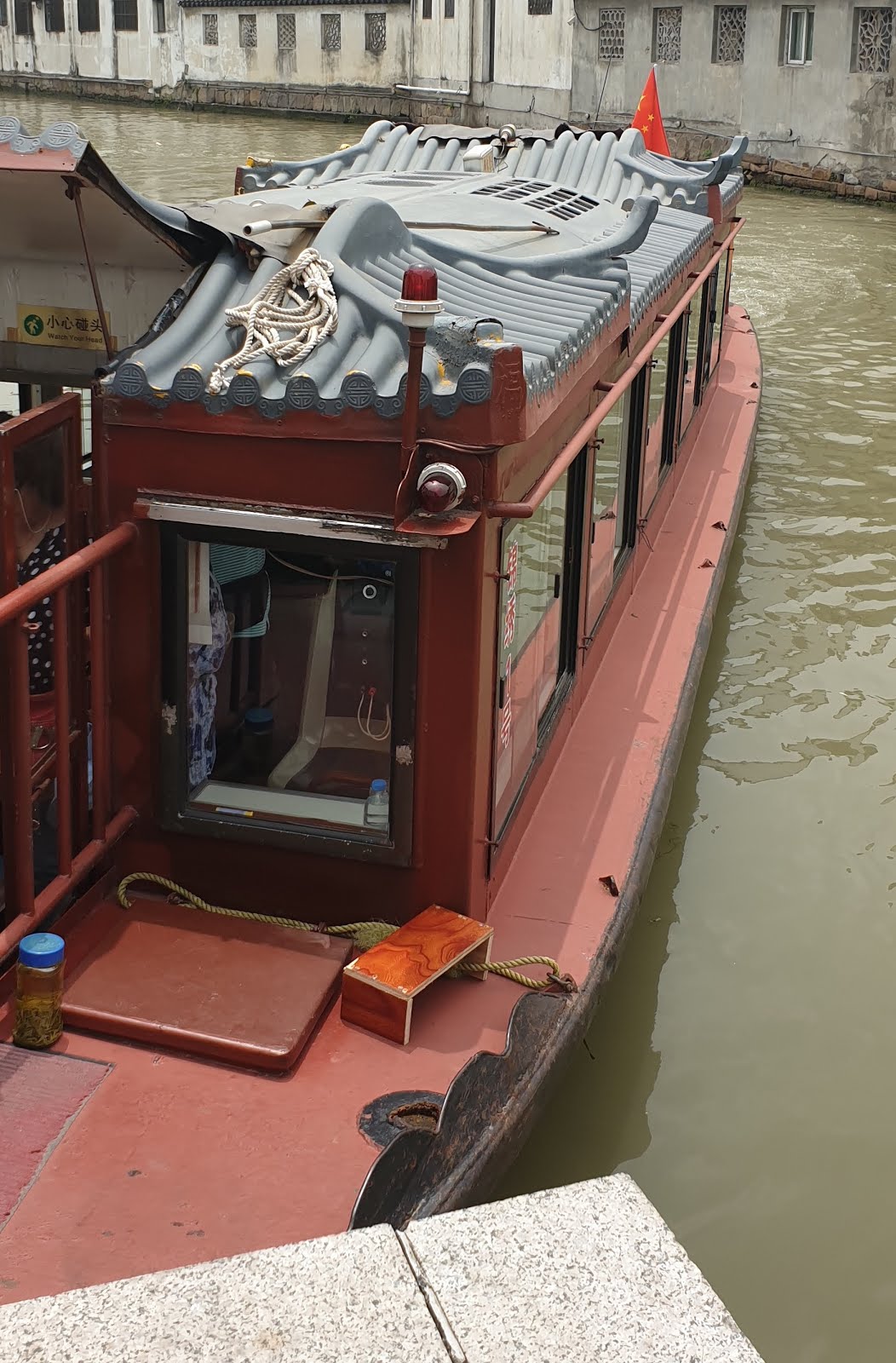
These boats don’t have a wharf to tie up to and then put out a stable gangplank.  No.  They just more into a concrete step and you take your life in your hands getting on.  One wrong step and you’re in the canal.  And not a very clean one at that.

That’s if another boat doesn’t come along and bumps you, knocking you off balance.  We managed not to lose anyone in boarding the vessel.

This is where we get on the boat

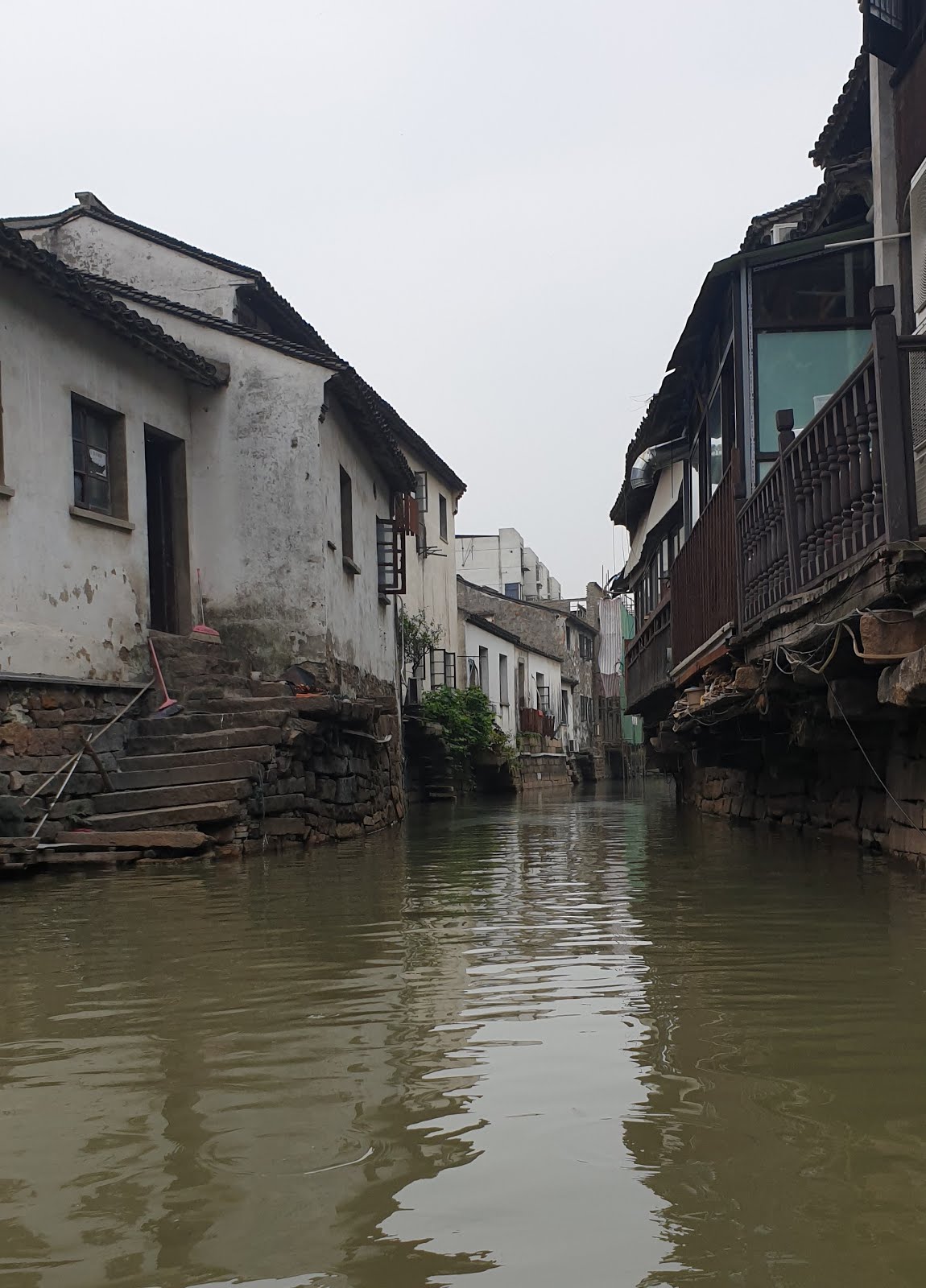
We go along what appears to be downstream towards another larger canal, past tree-lined streets until the canal narrows and we’re looking at the backs of houses, which look very dilapidated.

And the canals?  Well, it’s not quite like it is in Venice

Though some parts of the canal look better than others

What doesn’t bear thinking about is the electrical wiring which is a nightmarish spider web of cables going off in all directions.  How anyone could troubleshoot problems is beyond me.

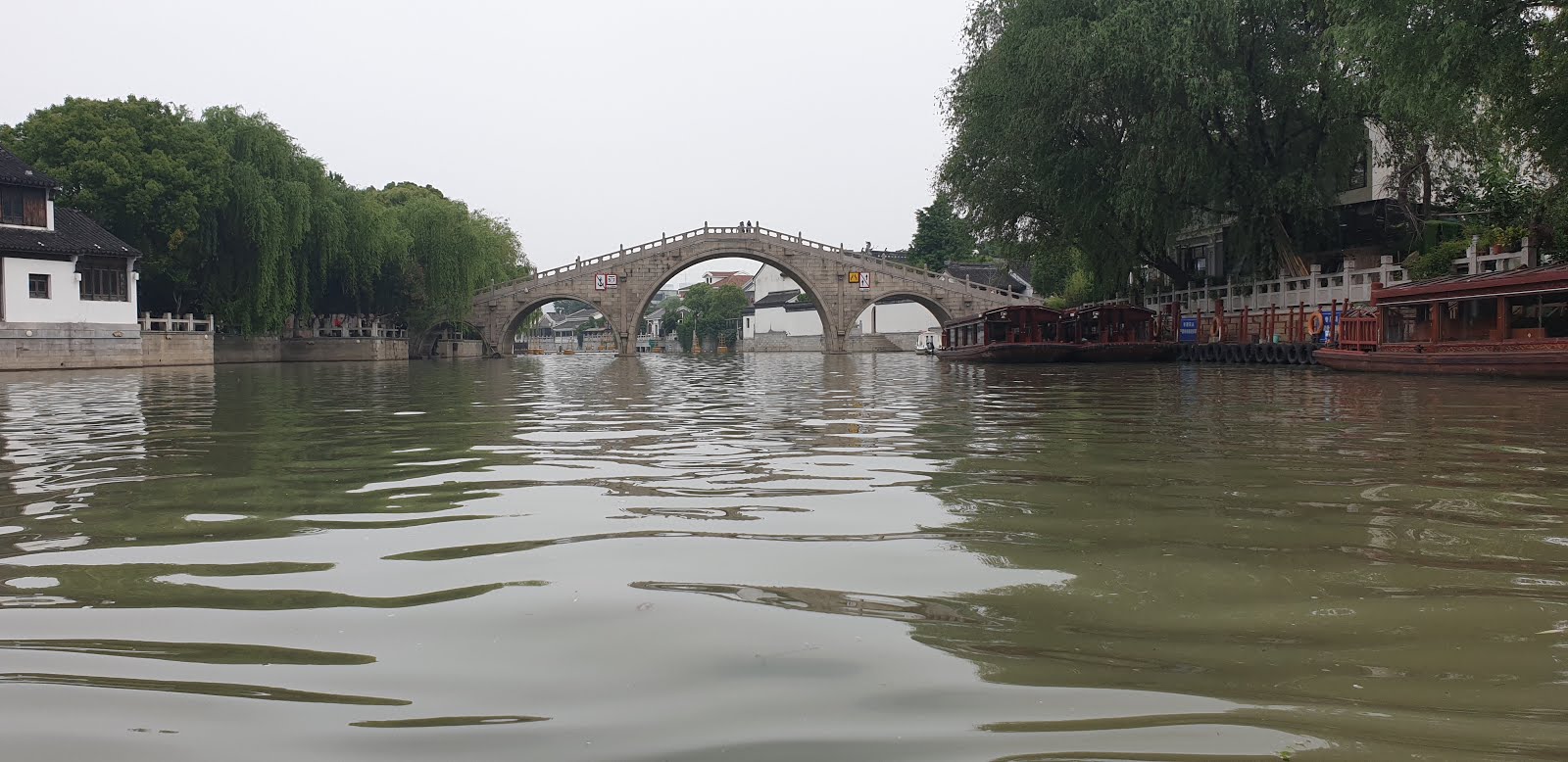
We pass under a number of bridges, and then, about 30 minutes after leaving, we reach a larger canal and do a 180-degree turn, and head back to a drop off point the will enable us to walk through a typical everyday Chinese market for food and the other items.

This drop off point is much the same as the starting point, a concrete step which is as hazardous as the first.  At least we don’t have to compete with other boats for the landing spot.

We take a leisurely stroll down a small section of Pingjiang Road with small shops on either side, selling all manner of goods

but my interest is in the food and the prices, which at times seem quite expensive for so-called local people, so maybe because the tourists go down this street every day, the prices have been inflated accordingly.

I find it rather disappointing.

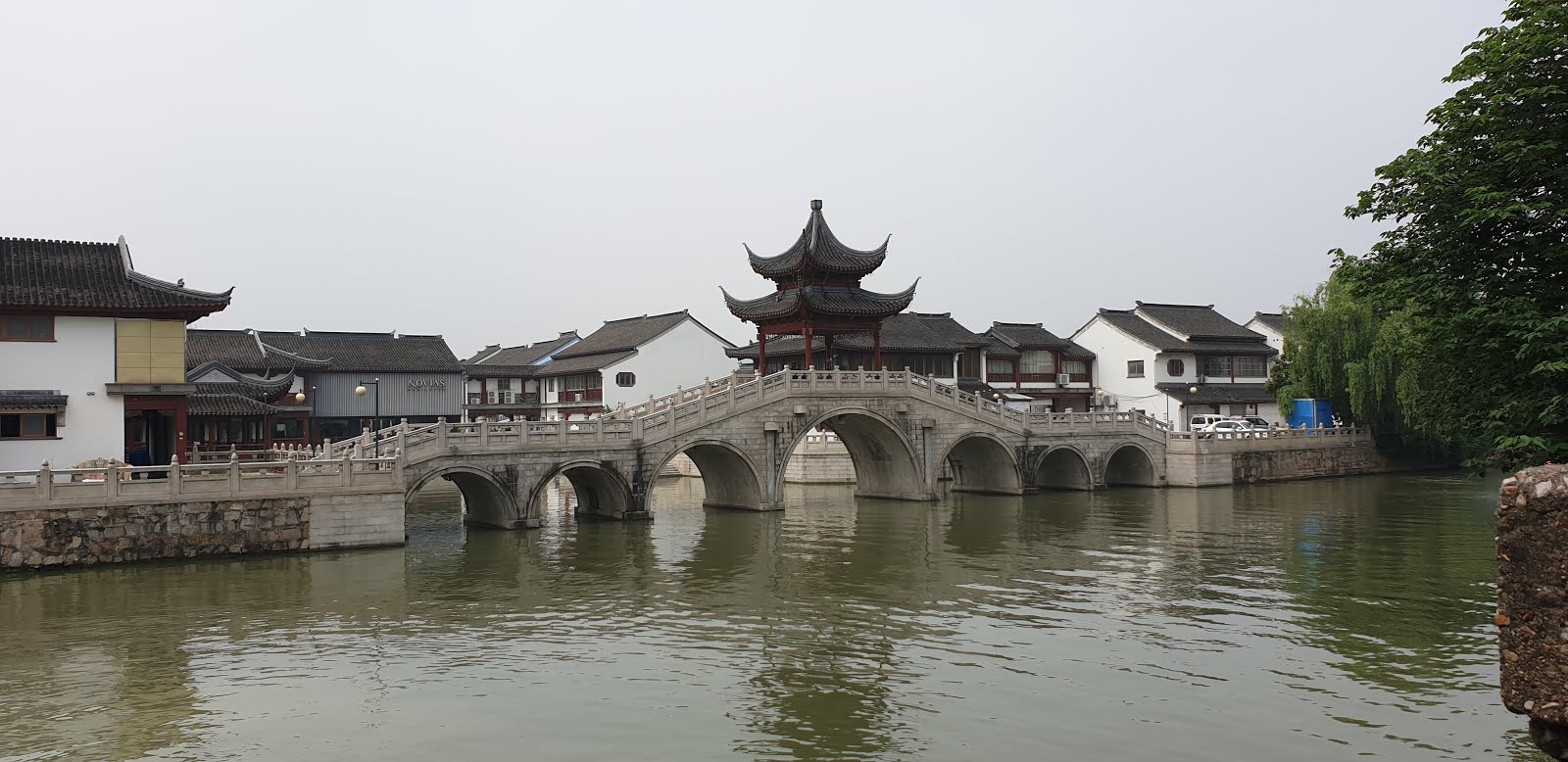
We walk to the bridge, go under to the other side crossing the canal and find the coffee shop which is also the meeting place.

So…

When is a coffee shop not a coffee shop, when it takes an eternity to make a cup of coffee, we waited 25 minutes?

We also ordered beef black pepper rice and it took 20 minutes before it arrived, but it was well worth the wait.  Strands of perfectly cooked beef with onion, carrot, and capsicum, with a very peppery and spicy sauce, with a side of boiled rice.

A pizza was ordered too but it did not arrive at all before we left.

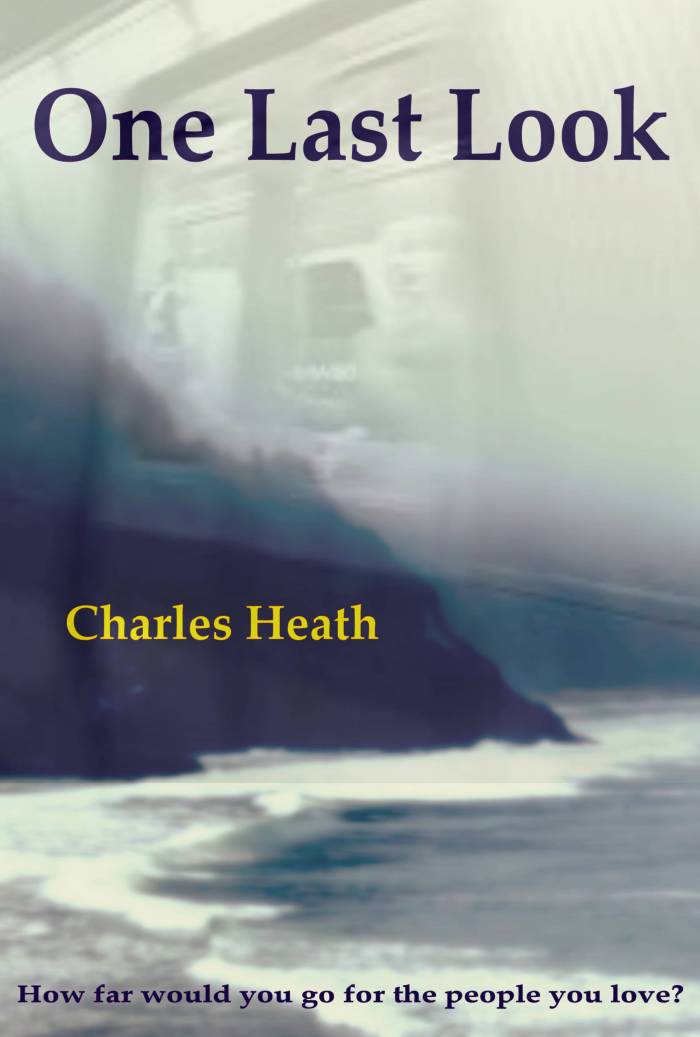
An excerpt from “One Last Look”: Charlotte is no ordinary girl

This is currently available at Amazon herehttp://amzn.to/2CqUBcz


I’d read about out of body experiences, and like everyone else, thought it was nonsense.  Some people claimed to see themselves in the operating theatre, medical staff frantically trying to revive them, and being surrounded by white light.

I was definitely looking down, but it wasn’t me I was looking at.

It was two children, a boy and a girl, with their parents, in a park.

The boy was Alan.  He was about six or seven.  The girl was Louise, and she was five years old.  She had long red hair and looked the image of her mother.

I remember it now, it was Louise’s birthday and we went down to Bournemouth to visit our Grandmother, and it was the last time we were all together as a family.

We were flying homemade kites our father had made for us, and after we lay there looking up at the sky, making animals out of the clouds.  I saw an elephant, Louise saw a giraffe.

We were so happy then.

Before the tragedy.


When I looked again ten years had passed and we were living in hell.  Louise and I had become very adept at survival in a world we really didn’t understand, surrounded by people who wanted to crush our souls.

It was not a life a normal child had, our foster parents never quite the sort of people who were adequately equipped for two broken-hearted children.  They tried their best, but their best was not good enough.

Every day it was a battle, to avoid the Bannister’s and Archie in particular, every day he made advances towards Louise and every day she fended him off.

Until one day she couldn’t.

Now I was sitting in the hospital, holding Louise’s hand.  She was in a coma, and the doctors didn’t think she would wake from it.  The damage done to her was too severe.

The doctors were wrong.

She woke, briefly, to name her five assailants.  It was enough to have them arrested.  It was not enough to have them convicted.

Justice would have to be served by other means.


I was outside the Bannister’s home.

I’d made my way there without really thinking, after watching Louise die.  It was like being on autopilot, and I had no control over what I was doing.  I had murder in mind.  It was why I was holding an iron bar.

Skulking in the shadows.  It was not very different from the way the Bannister’s operated.

I waited till Archie came out.  I knew he eventually would.  The police had taken him to the station for questioning, and then let him go.  I didn’t understand why, nor did I care.

I followed him up the towpath, waiting till he stopped to light a cigarette, then came out of the shadows.

“Wotcha got there Alan?” he asked when he saw me.  He knew what it was, and what it was for.

It was the first time I’d seen the fear in his eyes.  He was alone.

“Justice.”

“For that slut of a sister of yours.  I had nuffing to do with it.”

“She said otherwise, Archie.”

“She never said nuffing, you just made it up.”  An attempt at bluster, but there was no confidence in his voice.

I held up the pipe.  It had blood on it.  Willy’s blood.  “She may or may not have Archie, but Willy didn’t make it up.  He sang like a bird.  That’s his blood, probably brains on the pipe too, Archie, and yours will be there soon enough.”

“He dunnit, not me.  Lyin’ bastard would say anything to save his own skin.”  Definitely scared now, he was looking to run away.

“No, Archie.  He didn’t.  I’m coming for you.  All of you Bannisters.  And everyone who touched my sister.”


It was the recurring nightmare I had for years afterwards.

I closed my eyes and tried to shut out the thoughts, the images of Louise, the phone call, the visit to the hospital and being there when she succumbed to her injuries.  Those were the very worst few hours of my life.

She had asked me to come to the railway station and walk home with her, and I was running late.  If I had left when I was supposed to, it would never have happened and for years afterwards, I blamed myself for her death.

If only I’d not been late…

When the police finally caught the rapists, I’d known all along who they’d be; antagonists from school, the ring leader, Archie Bannister, a spurned boyfriend, a boy whose parents, ubiquitously known to all as ‘the Bannister’s, dealt in violence and crime and who owned the neighbourhood.  The sins of the father had been very definitely passed onto the son.

At school, I used to be the whipping boy, Archie, a few grades ahead of me, made a point of belting me and a few of the other boys, to make sure the rest did as they were told.  He liked Louise, but she had no time for a bully like him, even when he promised he would ‘protect’ me.

I knew the gang members, the boys who tow-kowed to save getting beaten up, and after the police couldn’t get enough information to prosecute them because everyone was too afraid to speak out, I went after Willy.  There was always a weak link in a group, and he was it.

He worked in a factory, did long hours on a Wednesday and came home after dark alone.  It was a half mile walk, through a park.  The night I approached him, I smashed the lights and left it in darkness.  He nearly changed his mind and went the long way home.

He didn’t.

It took an hour and a half to get the names.  At first, when he saw me, he laughed.  He said I would be next, and that was four words more than he knew he should have said.

When I found him alone the next morning I showed him the iron bar and told him he was on the list.  I didn’t kill him then, he could wait his turn, and worry about what was going to happen to him.

When the police came to visit me shortly after that encounter, no doubt at the behest of the Bannister’s, the neighbourhood closed ranks and gave me an ironclad alibi.  The Bannister’s then came to visit me and threatened me.  I told them their days were numbered and showed them the door.

At the trial, he and his friends got off on a technicality.  The police had failed to do their job properly, but it was not the police, but a single policeman, corrupted by the Bannisters.

Archie could help but rub it in my face.  He was invincible.

Joe Collins took 12 bullets and six hours to bleed out.  He apologized, he pleaded, he cried, he begged.  I didn’t care.

Barry Mills, a strong lad with a mind to hurting people, Archie’s enforcer, almost got the better of me.  I had to hit him more times than I wanted to, and in the end, I had to be satisfied that he died a short but agonizing death.

I revisited Willy in the hospital.  He’d recovered enough to recognize me, and why I’d come.  Suffocation was too good for him.

David Williams, second in command of the gang, was as tough and nasty as the Bannisters.  His family were forging a partnership with the Bannister’s to make them even more powerful.  Outwardly David was a pleasant sort of chap, affable, polite, and well mannered.  A lot of people didn’t believe he could be like, or working with, the Bannisters.

He and I met in the pub.  We got along like old friends.  He said Willy had just named anyone he could think of, and that he was innocent of any charges.  We shook hands and parted as friends.

Three hours later he was sitting in a chair in the middle of a disused factory, blindfolded and scared.  I sat and watched him, listened to him, first threatening me, and then finally pleading with me.  He’d guessed who it was that had kidnapped him.

When it was dark, I took the blindfold off and shone a very bright light in his eyes.  I asked him if the violence he had visited upon my sister was worth it.  He told me he was just a spectator.

I’d read the coroner’s report.  They all had a turn.  He was a liar.

He took nineteen bullets to die.

Then came Archie.

The same factory only this time there were four seats.  Anna Bannister, brothel owner, Spike Bannister, head of the family, Emily Bannister, sister, and who had nothing to do with their criminal activities.  She just had the misfortune of sharing their name.

Archie’s father told me how he was going to destroy me, and everyone I knew.

A well-placed bullet between the eyes shut him up.

Archie’s mother cursed me.  I let her suffer for an hour before I put her out of her misery.

Archie remained stony-faced until I came to Emily.  The death of his parents meant he would become head of the family.  I guess their deaths meant as little to him as they did me.

He was a little more worried about his sister.

I told him it was confession time.

He told her it was little more than a forced confession and he had done nothing to deserve my retribution.

I shrugged and shot her, and we both watched her fall to the ground screaming in agony.  I told him if he wanted her to live, he had to genuinely confess to his crimes.  This time he did, it all poured out of him.

I went over to Emily.  He watched in horror as I untied her bindings and pulled her up off the floor, suffering only from a small wound in her arm.  Without saying a word she took the gun and walked over to stand behind him.

“Louise was my friend, Archie.  My friend.”

Then she shot him.  Six times.

To me, after saying what looked like a prayer, she said, “Killing them all will not bring her back, Alan, and I doubt she would approve of any of this.  May God have mercy on your soul.”


Now I was in jail.  I’d spent three hours detailing the deaths of the five boys, everything I’d done; a full confession.  Without my sister, my life was nothing.  I didn’t want to go back to the foster parents; I doubt they’d take back a murderer.

They were not allowed to.

For a month I lived in a small cell, in solitary, no visitors.  I believed I was in the queue to be executed, and I had mentally prepared myself for the end.

Then I was told I had a visitor, and I was expecting a priest.

Instead, it was a man called McTavish. Short, wiry, and with an accent that I could barely understand.

“You’ve been a bad boy, Alan.”

When I saw it was not the priest I told the jailers not to let him in, I didn’t want to speak to anyone.  They ignored me.  I’d expected he was a psychiatrist, come to see whether I should be shipped off to the asylum.

I was beginning to think I was going mad.

I ignored him.

“I am the difference between you living or dying Alan, it’s as simple as that.  You’d be a wise man to listen to what I have to offer.”

Death sounded good.  I told him to go away.

He didn’t.  Persistent bugger.

I was handcuffed to the table.  The prison officers thought I was dangerous.  Five, plus two, murders, I guess they had a right to think that.  McTavish sat opposite me, ignoring my request to leave.

“Why’d you do it?”

“You know why.”  Maybe if I spoke he’d go away.

“Your sister.  By all accounts, the scum that did for her deserved what they got.”

“It was murder just the same.  No difference between scum and proper people.”

“You like killing?”

“No-one does.”

“No, I dare say you’re right.  But you’re different, Alan.  As clean and merciless killing I’ve ever seen.  We can use a man like you.”

“We?”

“A group of individuals who clean up the scum.”

I looked up to see his expression, one of benevolence, totally out of character for a man like him.  It looked like I didn’t have a choice.


Trained, cleared, and ready to go.

I hadn’t realized there were so many people who were, for all intents and purposes, invisible.  People that came and went, in malls, in hotels, trains, buses, airports, everywhere, people no one gave a second glance.

People like me.

In a mall, I became a shopper.

In a hotel, I was just another guest heading to his room.

On a bus or a train, I was just another commuter.

At the airport, I became a pilot.  I didn’t need to know how to fly; everyone just accepted a pilot in a pilot suit was just what he looked like.

I had a passkey.

I had the correct documents to get me onto the plane.

That walk down the air bridge was the longest of my life.  Waiting for the call from the gate, waiting for one of the air bridge staff to challenge me, stepping onto the plane.

Two pilots and a steward.  A team.  On the plane early before the rest of the crew.  A group that was committing a crime, had committed a number of crimes and thought they’d got away with it.

Until the judge, the jury and their executioner arrived.

Me.

Quick, clean, merciless.  Done.

I was now an operational field agent.


I was older now, and I could see in the mirror I was starting to go grey at the sides.  It was far too early in my life for this, but I expect it had something to do with my employment.

I didn’t recognize the man who looked back at me.

It was certainly not Alan McKenzie, nor was there any part of that fifteen-year-old who had made the decision to exact revenge.

Given a choice; I would not have gone down this path.

Or so I kept telling myself each time a little more of my soul was sold to the devil.

I was Barry Gamble.

I was Lenny Buckman.

I was Jimmy Hosen.

I was anyone but the person I wanted to be.

That’s what I told Louise, standing in front of her grave, and trying to apologize for all the harm, all the people I’d killed for that one rash decision.  If she was still alive she would be horrified, and ashamed.

Head bowed, tears streamed down my face.

God had gone on holiday and wasn’t there to hand out any forgiveness.  Not that day.  Not any day.


New York, New Years Eve.

I was at the end of a long tour, dragged out of a holiday and back into the fray, chasing down another scumbag.  They were scumbags, and I’d become an automaton hunting them down and dispatching them to what McTavish called a better place.

This time I failed.

A few drinks to blot out the failure, a blonde woman who pushed my buttons, a room in a hotel, any hotel, it was like being on the merry-go-round, round and round and round…

Her name was Silvia or Sandra, or someone I’d met before, but couldn’t quite place her.  It could be an enemy agent for all I knew or all I cared right then.

I was done.

I’d had enough.

I gave her the gun.

I begged her to kill me.

She didn’t.

Instead, I simply cried, letting the pent up emotion loose after being suppressed for so long, and she stayed with me, holding me close, and saying I was safe, that she knew exactly how I felt.

How could she?  No one could know what I’d been through.

I remembered her name after she had gone.

Amanda.

I remembered she had an imperfection in her right eye.

Someone else had the same imperfection.

I couldn’t remember who that was.

Not then.


I had a dingy flat in Kensington, a place that I rarely stayed in if I could help it.  After five-star hotel rooms, it made me feel shabby.

The end of another mission, I was on my way home, the underground, a bus, and then a walk.

It was late.

People were spilling out of the pub after the last drinks.  Most in good spirits, others slightly more boisterous.

A loud-mouthed chap bumped into me, the sort who had one too many, and was ready to take on all comers.

He turned on me, “Watch where you’re going, you fool.”

Two of his friends dragged him away.  He shrugged them off, squared up.

I punched him hard, in the stomach, and he fell backwards onto the ground.  I looked at his two friends.  “Take him home before someone makes mincemeat out of him.”

They grabbed his arms, lifted him off the ground and took him away.

Out of the corner of my eye, I could see a woman, early thirties, quite attractive, but very, very drunk.  She staggered from the bar, bumped into me, and finished up sitting on the side of the road.

I looked around to see where her friends were.  The exodus from the pub was over and the few nearby were leaving to go home.

She was alone, drunk, and by the look of her, unable to move.

I sat beside her.  “Where are your friends?”

“Dunno.”

“You need help?”

She looked up, and sideways at me.  She didn’t look the sort who would get in this state.  Or maybe she was, I was a terrible judge of women.

“Who are you?” she asked.

“Nobody.”  I was exactly how I felt.

“Well Mr Nobody, I’m drunk, and I don’t care.  Just leave me here to rot.”

She put her head back between her knees, and it looked to me she was trying to stop the spinning sensation in her head.

Been there before, and it’s not a good feeling.

“Where are your friends?” I asked again.

“Got none.”

“Perhaps I should take you home.”

“I have no home.”

“You don’t look like a homeless person.  If I’m not mistaken, those shoes are worth more than my weekly salary.”  I’d seen them advertised, in the airline magazine, don’t ask me why the ad caught my attention.

She lifted her head and looked at me again.  “You a smart fucking arse are you?”

“I have my moments.”

“Have them somewhere else.”

She rested her head against my shoulder.  We were the only two left in the street, and suddenly in darkness when the proprietor turned off the outside lights.

“Take me home,” she said suddenly.

“Where is your place?”

“Don’t have one.  Take me to your place.”

“You won’t like it.”

“I’m drunk.  What’s not to like until tomorrow.”

I helped her to her feet.  “You have a name?”

“Charlotte.”


The wedding was in a small church.  We had been away for a weekend in the country, somewhere in the Cotswolds, and found this idyllic spot.  Graves going back to the dawn of time, a beautiful garden tended by the vicar and his wife, an astonishing vista over hills and down dales.

On a spring afternoon with the sun, the flowers, and the peacefulness of the country.

I had two people at the wedding, the best man, Bradley, and my boss, Watkins.

Charlotte had her sisters Melissa and Isobel, and Isobel’s husband Giovanni, and their daughter Felicity.

And one more person who was as mysterious as she was attractive, a rather interesting combination as she was well over retirement age.  She arrived late and left early.

Aunt Agatha.

She looked me up and down with what I’d call a withering look.  “There’s more to you than meets the eye,” she said enigmatically.

“Likewise I’m sure,” I said.  It earned me an elbow in the ribs from Charlotte.  It was clear she feared this woman.

“Why did you come,” Charlotte asked.

“You know why.”

Agatha looked at me.  “I like you.  Take care of my granddaughter.  You do not want me for an enemy.”

OK, now she officially scared me.

She thrust a cheque into my hand, smiled, and left.

“Who is she,” I asked after we watched her depart.

“Certainly not my fairy godmother.”

Charlotte never mentioned her again.


Zurich in summer, not exactly my favourite place.

Instead of going to visit her sister Isobel, we stayed at a hotel in Beethovenstrasse and Isobel and Felicity came to us.  Her husband was not with her this time.

Felicity was three or four and looked very much like her mother.  She also looked very much like Charlotte, and I’d remarked on it once before and it received a sharp rebuke.

We’d been twice before, and rather than talk to her sister, Charlotte spent her time with Felicity, and they were, together, like old friends.  For so few visits they had a remarkable rapport.

I had not broached the subject of children with Charlotte, not after one such discussion where she had said she had no desire to be a mother.  It had not been a subject before and wasn’t once since.

Perhaps like all Aunts, she liked the idea of playing with a child for a while and then give it back.

Felicity was curious as to who I was, but never ventured too close.  I believed a child could sense the evil in adults and had seen through my facade of friendliness.  We were never close.

But…

This time, when observing the two together, something quite out of left field popped into my head.  It was not possible, not by any stretch of the imagination, but I thought she looked like my mother.

And Charlotte had seen me looking in their direction.  “You seem distracted,” she said.

“I was just remembering my mother.  Odd moment, haven’t done so for a very long time.”

“Why now?”  I think she had a look of concern on her face.

“Her birthday, I guess,” I said, the first excuse I could think of.

Another look and I was wrong.  She looked like Isobel or Charlotte, or if I wanted to believe it possible, Melissa too.


I was crying, tears streaming down my face.

I was in pain, searing pain from my lower back stretching down into my legs, and I was barely able to breathe.

It was like coming up for air.

It was like Snow White bringing Prince Charming back to life.  I could feel what I thought was a gentle kiss and tears dropping on my cheeks, and when I opened my eyes, I saw Charlotte slowly lifting her head, a hand gently stroking the hair off my forehead.

And in a very soft voice, she said, “Hi.”

I could not speak, but I think I smiled.  It was the girl with the imperfection in her right eye.  Everything fell into place, and I knew, in that instant that we were irrevocably meant to be together.

“Welcome back.”


© Charles Heath 2016-2019
onelastlookcoverfinal2

What makes a character – 1 – The beginnings of a writer

My characters are many, a diverse group of people that are based on people I know, people I’ve known, people I’ve met, or seen, or interacted with. Some of them make up a single character with several traits.

Some are like me, but most are people I would have like to have been rather than the dull as ditchwater person I am. No-one wants to read about dull people, they want someone larger than life, someone who can do the impossible, or at the very least, the improbably.

I’ve always wanted to be someone else. For a long time I never liked who I was, and, to a certain extent, I still don’t. That was a result of the early stages of my life, those years the form who we are going to be.

And, had you asked me 50 years ago whether I would be the person I am now, I’d probably laugh and say it would be impossible. Yet here I am, and it’s nothing like what I thought I would be.

But, for now, lets look at the traits that live in some of my characterisations.

For instance, to understand the influences people have on us, I use my father, a man always voted for a particular political party, and that alone was an influence on who I would vote for when I got old enough, after listening for years his reasons for hating the opposition. For years he aired his grievances, which, at the time, he believed were real and caused by that opposition party.

Politics can be very polarising. There’s also a saying, throw enough mud, some of it sticks. That, of course applied to a great many things. Another was only the rich could afford a University education, and for years I believed that. It was, he said, how the rich kept their influence over, and suppress the poor.

It was a similar case with religion, another polarising topic, and my family were Protestants and therefore didn’t like other religions such as Catholics. It didn’t strike me till much later in life why this was so. But as a child we were sent to Sunday school and, irregularly, to church services of the Presbyterian faith.

Then there were our relatives, none of whom we ever really met. I knew we had relatives, my fathers parents because for a while we used to visit them every month or so where my father would cut their lawn, and my mother had a mother, he father had died not long after I’d been born.

My father had a lot of brothers and a sister. My mother had a brother and a sister. She also had an aunt that I’m sure I met several times before she died. But these are fleeting memories. We saw my father’s brothers and sister rarely, so rarely now I don’t remember them. The same applied to my mother’s sister, of whom I got the impression she was immensely jealous of.

I never understood why. Not then, any way.

But as for my mother’s mother, our grandmother, she was a likable soul who lived in the country, and she never came to see us, we went to see her, but those visits were long after we stopped seeing my father’s parents.

At the time we were young, she lived in the country, and we had to drive there which took time we didn’t seem to have.

Later in my pre teens my brother and I used to stay at her house for a week or two during the school holidays. It was a very large house on a large block, very old with high ceilings and large rooms, and we always had lots to eat, and delicious food at that, and we couldn’t understand why we didn’t have the same with our parents.

Of course there was a reason for that too, but this only became clear a few years ago when my brother started collecting information for a family history. My brother hunted down all of the relatives that were still alive and began to learn why we never saw them. It was not because of them, but because of my parents.

One stark revelation was that nearly all of them were better off than we were.

So here was my early childhood in equally stark reality.

It would be easy to blame parents for everything, but that’s the easy way out, and probably what every child who felt they were deprived of a proper life would do. More than likely, for years, that’s exactly how I felt, and, equally, the reason why I withdrew into a whole different world, or worlds, of my own.

I might not have put words on paper, but in my mind stories were beginning and evolving, stories that I told others to hide what I really was, and what I felt.

“Echoes From The Past”, a past buried, but not deep enough


What happens when your past finally catches up with you?

Christmas is just around the corner, a time to be with family. For Will Mason, an orphan since he was fourteen, it is a time for reflection on what his life could have been, and what it could be.

Until a chance encounter brings back to life the reasons for his twenty years of self-imposed exile from a life only normal people could have. From that moment Will’s life slowly starts to unravel and it’s obvious to him it’s time to move on.

This time, however, there is more at stake.

Will has broken his number one rule, don’t get involved.

With his nemesis, Eddie Jamieson, suddenly within reach, and a blossoming relationship with an office colleague, Maria, about to change everything, Will has to make a choice. Quietly leave, or finally, make a stand.

But as Will soon discovers, when other people are involved there is going to be terrible consequences no matter what choice he makes.

https://amzn.to/2CYKxu4

newechocover5rs

Is there something wrong?

I asked myself that question when about 1000 odd words into a current short story, one that I continue to go back to, but found an initial reluctance to write, and now seems to be difficult to continue.

Is the reason because I don’t feel like writing, that I’ve written myself into a corner, the story isn’t flowing, or there’s something else I’d rather be doing…

Like, scouring the internet…

Working on writing some blog posts, like this one…

Checking my email…

Checking my other blogs to see how many people have viewed my recent posts,

Or just puddle with anything other than what I should be doing.

The thing is, I know where most of the stories are going, it’s just a matter of sitting down, picking up the threads, and writing. Certainly, I could be working on one or another right now.

But, something is nagging at me.

I thought it was that I wanted to write another Being Inspired piece, having the photo I wanted to use for inspiration in my head. I sat down this morning and started it, and got seven or eight paragraphs done, and then it was time to go down to breakfast.

Attention diverted.

I could have written more after breakfast, but that seemed to segue into a chat over coffee that ran into lunch. It’s odd how it seems there is so much to talk about.

Then it’s been one excuse after another that has kept me from picking up that story and running with it. I could do it now, but that reluctance remains.

Perhaps tomorrow.

For now, I’m going to work on some crosswords and see if that doesn’t inspire me, and if it doesn’t I could always have an early night.

It’s the same every time we go away, on the run all day doing touristy stuff, making notes for later on, on the run, and then getting back to the room exhausted. After all, there is so much to see and do.

Maybe I’ll just reflect on today and worry about it tomorrow, except…

We have an equally hectic day planned.

Maybe I’ll get that holiday from writing after all.

“Sunday in New York”, a romantic adventure that’s not a walk in the park!

“Sunday in New York” is ultimately a story about trust, and what happens when a marriage is stretched to its limits.

When Harry Steele attends a lunch with his manager, Barclay, to discuss a promotion that any junior executive would accept in a heartbeat, it is the fact his wife, Alison, who previously professed her reservations about Barclay, also agreed to attend, that casts a small element of doubt in his mind.

From that moment, his life, in the company, in deciding what to do, his marriage, his very life, spirals out of control.

There is no one big factor that can prove Harry’s worst fears, that his marriage is over, just a number of small, interconnecting events, when piled on top of each other, points to a cataclysmic end to everything he had believed in.

Trust is lost firstly in his best friend and mentor, Andy, who only hints of impending disaster, Sasha, a woman whom he saved, and who appears to have motives of her own, and then in his wife, Alison, as he discovered piece by piece damning evidence she is about to leave him for another man.

Can we trust what we see with our eyes or trust what we hear?

Haven’t we all jumped to conclusions at least once in our lives?

Can Alison, a woman whose self-belief and confidence is about to be put to the ultimate test, find a way of proving their relationship is as strong as it has ever been?

As they say in the classics, read on!

Purchase:

http://tinyurl.com/Amazon-SundayInNewYork

In a word: Vision

I had one myself once, whether it was a peek into my future, or whether it was just playing out a scene for one of my stories, it was rather intense.

That variation of the word vision is one that uses one’s imagination. I do it quite a lot, and I call it the cinema of my dreams.

But…

Vision, in the simplest sense of the word, is sight, what you see.

People can try to make it better, like movie studios, who have called it rather interesting titles such as VistaVision or Panavision, either of which sounds quite remarkable, and it may have been back in the day, but it’s probably quite ordinary these days.

A vision, in another sense, might be something like a dream as mentioned before, which might happen when we are asleep, but if awake, it might be because we are very bored with our job and we’re imagining what it would be like at Santorini or the Bahamas, or anywhere but where you are now.

It might also describe our particular slant on what else we would like to happen, whether at work or somewhere else, but it’s usually confined to our closest circle of friends. Bosses never invite nor want to hear plebs ideas of improving their lot.

Hence, I have a vision…

But no one will listen. Perhaps if I was Martin Luther King, things might be different.

Then, at the end of it all…

There are visions and then there are visions, like seeing something that no one else can see, whether driven by hallucinogenic drugs or magic mushrooms, or you just happened to be there to see what no one else could.

Dragons, lizard people, or the Virgin Mary.

And no, I have not seen any of the above.

Yet.

The cinema of my dreams – I never wanted to go to Africa – Episode 2

On the ground, not daring to move

Lying there, afraid to move, I honestly believed that was just the stupidest thing I’d ever done.

Aside from the fact I could see we were about to be blown to kingdom come by a rocket, I had that split second to decide if I wanted to be incinerated, or in possession of 206 broken bones.

I guess I was assuming I’d survive the landing. 

After all the helicopter was only about twenty to thirty feet above the ground and not moving very fast, in fact, it was slowing, and turning away, when the pilot saw the rocket launcher.

I could hear the crackling of fire not far from me, a result of the helicopter hitting the ground.  It wasn’t a large explosion, and certainly not accompanied by a hail of red-hot metal parts.

Not yet.

I moved and it hurt.  Understandable.  But there didn’t seem to be any broken bones, which was nothing short of a miracle.  I did try to affect a roll when landing as we were trained in parachute jumping, and maybe that had helped.

Enough time to recover, I rolled over and got to my knees.  Ok, that hurt, twinges in my lower back, a slight sprain in my right ankle.  No running then.

Then I heard the gears crunching, so sort an old Toyota pickup would make, followed by an over-revving engine.  A novice driver.  Or a man in a hurry.

Damn.

The pickup was coming back to check the wreckage.

And if there were any survivors.

No gun, lost that in the jump.  But, as luck would have it, an AK47 was lying on the ground between me and the burning wreckage.

Only one problem.  The pickup would be on me before I could get to it.

Is this the very definition of being between a rock and a hard place?

Writing about writing a book – Day 7

Even God got to rest of the seventh day perhaps to admire his handiwork, but for a writer there is no rest.

I have to go to lunch with an old friend who is concerned that I have locked myself away in a garret and will wither and die, the same as not admitting myself it was time to move on.  There is the woman you marry, and your one true love, the one you can say anything to and is taken.  Marilyn is that person.  I’m not sure how this lunch will go.

Perhaps a little more work on the plot, and a few drinks to settle the nerves.


Still working on the characters (and all need a lot more work, particularly Davenport, oh, and by the way, he’s new):


Richardson – Vanilla Office worker in the wrong place at the wrong time

Gator, Inspector – Jaded policeman not far from retirement, overlooked for promotion, and always on the fringe.  Will this be his big case before he retires?

Halligan – General Manager, also a field agent who failed to complete his mission.  More on what that mission was is coming.

Bill Chandler, we seem to have him under control, except for one small detail, his memories will return.

Jennifer, Chandler’s friend, sister to Manilow, not all she appears to be.  Spoiler alert!  Manilow is another new character who will appear in Bill’s dreams (nightmares)

Benton, Chandler’s immediate superior, yes man, and eternal pessimist.

Aitchison, security chief, aka Colonel Warburton, Manilow’s old commanding officer, repatriated home after making some discoveries about wartime activities.

Wiesenthal – US management employee of Transworld

Giles – Chandler’s hardware assistant

Kowalski – executive promoted to head of security, also new, the cast is getting longer

Andy Collins –from the US, worked with Chandler around at the inception of the network installation, working with Chandler recently when updates were carried out

Davenport, aka Alphonse DeAngelo, Chandler’s old nemesis, ex-Army Colonel, and he will be a piece of work


The plotline continues but I’m not sure if this will be the eventual direction it will go.  There will be a lot of writing before now and then:


Chandler thinks he now has time for some private investigation because a lot of things about the recent events didn’t add up.  However, in the meantime, the perils of domesticity close in around Bill, the first morning with Jennifer.

A visit to the office, unscheduled, by Bill, brings to light a number of changes; new security and monitoring of movements, making it difficult for Bill to do anything.  Kowalski has replaced Aitchison as head of security, and Bill must pay him a visit.

Kowalski is full of sympathy and advises Bill that he has a lot of leave to be taken in order to get better, and a bonus as well.  He should not return until fully recovered, and then to a promotion.  In other words, Bill reads this as –’Stay Away’.

Giles gives more information of the network problems, and the disaster surrounding the backup tapes, with information that had been requested by Gator.  Of course, there was no information of the backup tapes provided, because they had been destroyed.  Was it on purpose or by accident?

Another dream and Brainless looms large and lifelike in their first meeting.

At his home to finish collecting his clothes and gear, he wakes up and remembers why he’s there.  He had removed a tape from a little-used system he’d installed for another purpose, and had brought it to his own PC to see whether there was any evidence on it – given that every other tape either proved Aitchison and Halligan guilty or had been destroyed by well-meaning but apparently incompetent consultants.  His tape has interesting information, which he notes, then hides the tape.


Dear God is that the time?  I’m late.


More tomorrow!

© Charles Heath 2016-2019

Memories of the conversations with my cat – 70

As some may be aware, but many not, Chester, my faithful writing assistant, mice catcher, and general pain in the neck, passed away some months ago.

Recently I was running a series based on his adventures, under the title of Past Conversations with my cat.

For those who have not had the chance to read about all of his exploits I will run the series again from Episode 1

These are the memories of our time together…

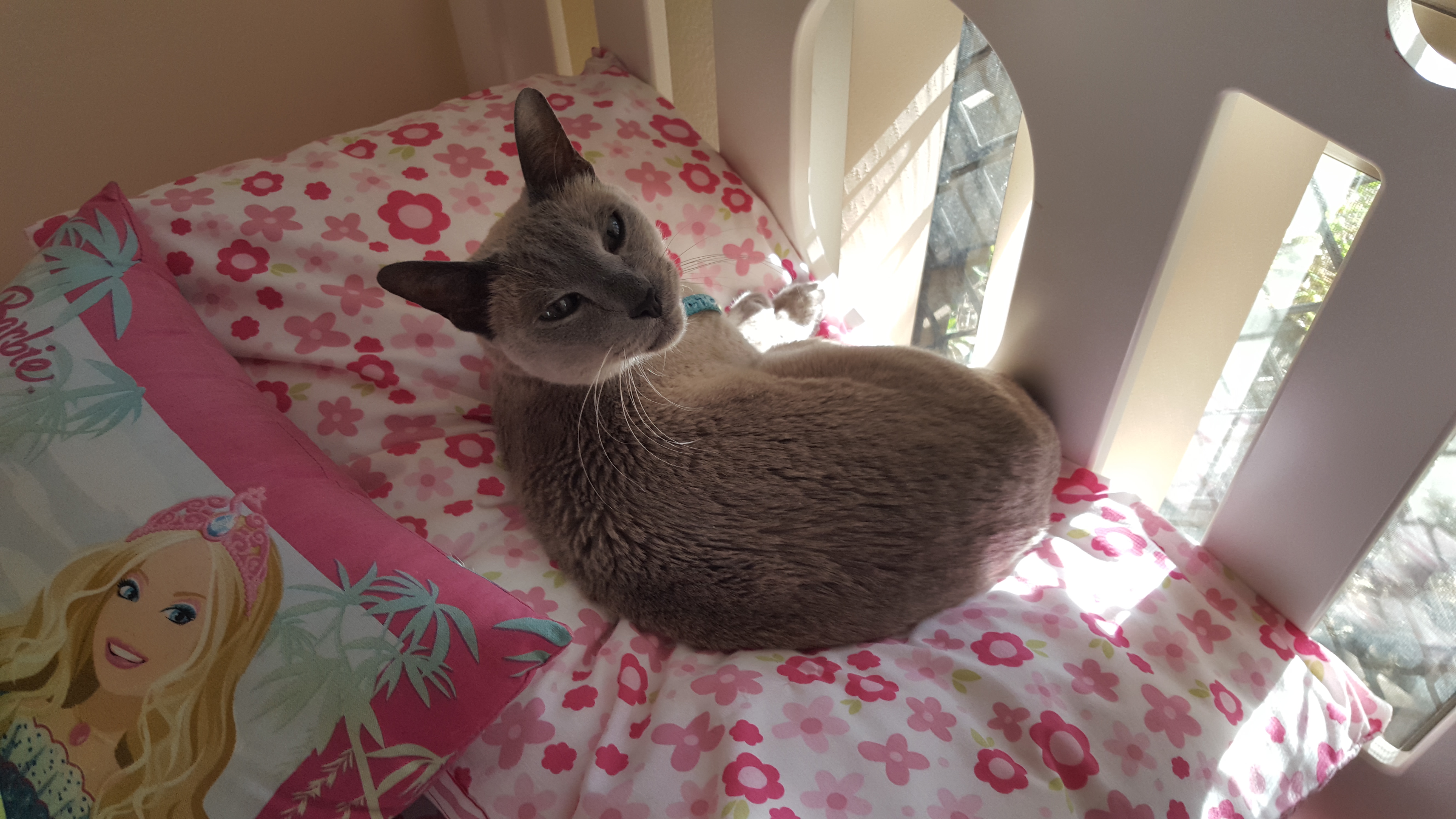
20161004_162739

This is Chester.  He’s checking the outside temperature.

And the heat goes on with no relief in sight.

Chester has taken to spreading out on the cool tiles floor, trying to get some sleep.

He tells me its too hot for the mice to come out.

I believe him.

I was going to chat about the so-called climate emergency, but here’s the thing. It’s been this hot before, endless days of relentless heat, days where the temperature hits 40 degrees centigrade in the shade.

It happened when we came to Queensland for a holiday 30 odd years ago, and long before Chester was thought of.

The first day it rained. After that it was nearly two weeks of very hot days.

We live in the tropics. You could expect more rain, but rain is a fickle thing.

We have bushfires everywhere, and Chester can’t sit at the doorways because of the pervading smoke permeating in the atmosphere.

I should be writing he says, but instead I’m on a settee in the living room, under a slowly rotating fan.

He jumps up and joins me, the sitting on my lap, not exactly the coolest spot to be. He’s getting the effects of the fan, I’m not and I’m guessing that’s the point.

I tell him he can go for a run outside, something I’ve never let him do.

He sees it for the gesture it is and climbs down, back to the cool floor. I get a long cold stare, and then he leaves me in peace.

No work today, for either of us. I can do without the verbal sparring.

Perhaps there will be a cool change tomorrow.