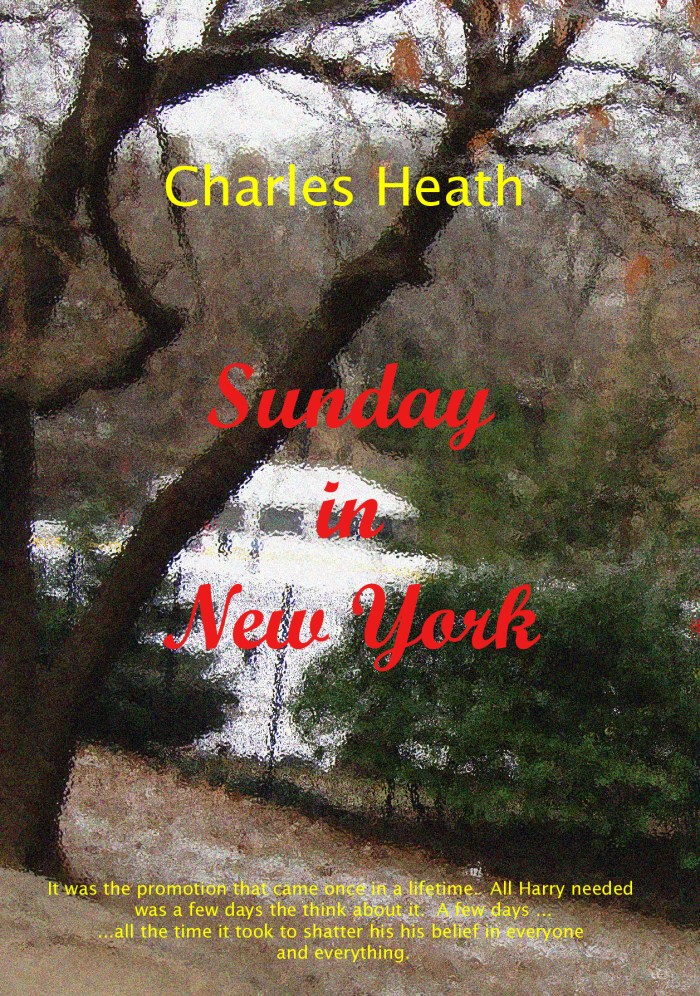
“Sunday in New York”, a romantic adventure that’s not a walk in the park!

“Sunday in New York” is ultimately a story about trust, and what happens when a marriage is stretched to its limits.

When Harry Steele attends a lunch with his manager, Barclay, to discuss a promotion that any junior executive would accept in a heartbeat, it is the fact his wife, Alison, who previously professed her reservations about Barclay, also agreed to attend, that casts a small element of doubt in his mind.

From that moment, his life, in the company, in deciding what to do, his marriage, his very life, spirals out of control.

There is no one big factor that can prove Harry’s worst fears, that his marriage is over, just a number of small, interconnecting events, when piled on top of each other, points to a cataclysmic end to everything he had believed in.

Trust is lost firstly in his best friend and mentor, Andy, who only hints of impending disaster, Sasha, a woman whom he saved, and who appears to have motives of her own, and then in his wife, Alison, as he discovered piece by piece damning evidence she is about to leave him for another man.

Can we trust what we see with our eyes or trust what we hear?

Haven’t we all jumped to conclusions at least once in our lives?

Can Alison, a woman whose self-belief and confidence is about to be put to the ultimate test, find a way of proving their relationship is as strong as it has ever been?

As they say in the classics, read on!

Purchase:

http://tinyurl.com/Amazon-SundayInNewYork

Searching for locations: Lake Louise to Toronto, via Calgary

All the worries we thought we might have in getting from Lake Louise to Calgary, in the end, it was just like driving to work, only a little longer.

When we left the Fairmont, the car had two frozen bottles of water and a frozen donut, left in the car for the two days we were there, so hiding in the garage might not be a good idea.

At the garage where we refueled, it was so cold I could barely clean the windows and glad to get back into the warmth inside the car.

Thankfully as we got closer to Calgary, it got warmer.

We bypass the city going to the airport, but, as it turns out, we would not have had much time to look around anyway.It’s nice to go to an airport and actually find the car rental returns first go with adequate signing to get there.

Returning the car took a few extra minutes because we were at the end of a dozen or so others who turned up at the same time.  All good, they remembered giving us a half full petrol tank.

At the check-in, it is very smooth sailing, the kiosk working and once the booking reference was entered, it spat out the desired number of boarding passes and baggage tags.

Then to baggage drop, through customs where I managed to lose my jacket, which is amazing that you would be allowed to leave anything behind.

So…

We have an hour and a half to kill, so a long soda and two long island teas settle the pre-flight nerves if we had any to start with.

Time to consider the vagaries of the flight.

Today we’re on an Airbus a320, and we are seated in the very last row, row 33.  It’s always a bad thing to look up planes on seatguru.com, because it has painted them as the worst on the plane.

What’s the downside, sometimes the seat pitch is less than further up the plane, the seats don’t recline and you get the seat in front in your face, and you get the constant flushing of the toilets.  And my major bugbear there’s no overhead luggage space.

What’s the reality?

To begin with, the seats recline, but not very much.  We’ll wait till the plane is cruising before judging how far the seats recline in front of us.

The seat pitch is good and it doesn’t feel like were cramped into a small space, but again this is relative to what happens with the seat in front.

Overhead baggage space, none whatsoever, so if you don’t get on first you are basically screwed.  We were almost first to the rear of the plane so I suspect others also know about the lack of overhead bin space.

Being at the read most part of the plane affords you a view of how the baggage handlers treat your baggage, and it’s interesting, to say the least.  They smile a lot, so I suspect that a few bags might get the ‘treatment’.

Enough already.

We’re now backing out of the bay ready to leave.

We’re getting endless announcements in foreign languages so when next I fly with Air Canada I should at least learn French.

Or not…

Ah, the smell of kerosene floods our end of the plane.  So much for air quality, which so it happens is being covered in the safety video at the exact same time.

But as it turned out, the flight was uneventful.

An excerpt from “What Sets Us Apart”, a mystery with a twist

See excerpt from the story below, just a taste of what’s in store…

http://amzn.to/2Eryfth

whatsetscover

McCallister was old school, a man who would most likely fit in perfectly campaigning on the battlefields of Europe during the Second World War. He’d been like a fish out of water in the army, post-Falklands, and while he retired a hero, he still felt he’d more to give.

He’d applied and was accepted as head of a SWAT team, and, watching him now as he and his men disembarked from the truck in almost military precision, a look passed between Annette, the police liaison officer, and I that said she’d seen it all before. I know I had.

There was a one in four chance his team would be selected for this operation, and she had been hoping it would be one of the other three. While waiting for them to arrive she filled me in on the various teams. His was the least co-operative, and the more likely to make ad-hoc decisions rather than adhere to the plan, or any orders that may come from the officer in charge.

This, she said quite bluntly, was going to end badly.

I still had no idea why Prendergast instructed me to attend the scene of what looked to be a normal domestic operation, but as the nominated expert in the field in these types of situations, it was fairly clear he wasn’t taking any chances. It was always a matter of opinion between us, and generally I lost.

In this case, it was an anonymous report identifying what the authorities believed were explosives in one of the dockside sheds where explosives were not supposed to be.

The only reason why the report was given any credence was the man, while not identifying himself by name, said he’d been an explosive expert once and recognized the boxes. That could mean anything, but the Chief Constable was a cautious man.

With his men settled and preparing their weapons, McCallister came over to the command post, not much more than the SUV my liaison and I arrived in, with weapons, bulletproof vests, and rolls of tape to cordon off the area afterward. We both had coffee, steaming in the cold early morning air. Dawn was slowly approaching and although rain had been forecast it had yet to arrive.

A man by the name of Benson was in charge. He too had groaned when he saw McCallister.

“A fine morning for it.” McCallister was the only enthusiastic one here.

He didn’t say what ‘it’ was, but I thought it might eventually be mayhem.

“Let’s hope the rain stays away. It’s going to be difficult enough without it,” Benson said, rubbing his hands together. We had been waiting for the SWAT team to arrive, and another team to take up their position under the wharf, and who was in the final stages of securing their position.

While we were waiting we drew up the plan. I’d go in first to check on what we were dealing with, and what type of explosives. The SWAT team, in the meantime, were to ensure all the exits to the shed were covered. When I gave the signal, they were to enter and secure the building. We were not expecting anyone inside or out, and no movement had been detected in the last hour since our arrival and deployment.

“What’s the current situation?”

“I’ve got eyes on the building, and a team coming in from the waterside, underneath. Its slow progress, but they’re nearly there. Once they’re in place, we’re sending McKenzie in.”

He looked in my direction.

“With due respect sir, shouldn’t it be one of us?” McCallister glared at me with the contempt that only a decorated military officer could.

“No. I have orders from above, much higher than I care to argue with, so, McCallister, no gung-ho heroics for the moment. Just be ready to move on my command, and make sure you have three teams at the exit points, ready to secure the building.”

McCallister opened his mouth, no doubt to question those orders, but instead closed it again. “Yes sir,” he muttered and turned away heading back to his men.

“You’re not going to have much time before he storms the battlements,” Benson quietly said to me, a hint of exasperation in his tone. “I’m dreading the paperwork.”

It was exactly what my liaison officer said when she saw McCallister arriving.

The water team sent their ‘in position’ signal, and we were ready to go.

In the hour or so we’d been on site nothing had stirred, no arrivals, no departures, and no sign anyone was inside, but that didn’t mean we were alone. Nor did it mean I was going to walk in and see immediately what was going on. If it was a cache of explosives then it was possible the building was booby-trapped in any number of ways, there could be sentries or guards, and they had eyes on us, or it might be a false alarm.

I was hoping for the latter.

I put on the bulletproof vest, thinking it was a poor substitute for full battle armor against an exploding bomb, but we were still treating this as a ‘suspected’ case. I noticed my liaison officer was pulling on her bulletproof vest too.

“You don’t have to go. This is my party, not yours,” I said.

“The Chief Constable told me to stick to you like glue, sir.”

I looked at Benson. “Talk some sense into her please, this is not a kindergarten outing.”

He shrugged. Seeing McCallister had taken all the fight out of him. “Orders are orders. If that’s what the Chief Constable requested …”

Madness. I glared at her, and she gave me a wan smile. “Stay behind me then, and don’t do anything stupid.”

“Believe me, I won’t be.” She pulled out and checked her weapon, chambering the first round. It made a reassuring sound.

Suited up, weapons readied, a last sip of the coffee in a stomach that was already churning from nerves and tension, I looked at the target, one hundred yards distant and thought it was going to be the longest hundred yards I’d ever traversed. At least for this week.

A swirling mist rolled in and caused a slight change in plans.

Because the front of the buildings was constantly illuminated by large overhead arc lamps, my intention had been to approach the building from the rear where there was less light and more cover. Despite the lack of movement, if there were explosives in that building, there’d be ‘enemy’ surveillance somewhere, and, after making that assumption, I believed it was going to be easier and less noticeable to use the darkness as a cover.

It was a result of the consultation, and studying the plans of the warehouse, plans that showed three entrances, the main front hangar type doors, a side entrance for truck entry and exit and a small door in the rear, at the end of an internal passage leading to several offices. I also assumed it was the exit used when smokers needed a break. Our entry would be by the rear door or failing that, the side entrance where a door was built into the larger sliding doors. In both cases, the locks would not present a problem.

The change in the weather made the approach shorter, and given the density of the mist now turning into a fog, we were able to approach by the front, hugging the walls, and moving quickly while there was cover. I could feel the dampness of the mist and shivered more than once.

It was nerves more than the cold.

I could also feel rather than see the presence of Annette behind me, and once felt her breath on my neck when we stopped for a quick reconnaissance.

It was the same for McCallister’s men. I could feel them following us, quickly and quietly, and expected, if I turned around, to see him breathing down my neck too.

It added to the tension.

My plan was still to enter by the back door.

We slipped up the alley between the two sheds to the rear corner and stopped. I heard a noise coming from the rear of the building, and the light tap on the shoulder told me Annette had heard it too. I put my hand up to signal her to wait, and as a swirl of mist rolled in, I slipped around the corner heading towards where I’d last seen the glow of a cigarette.

The mist cleared, and we saw each other at the same time. He was a bearded man in battle fatigues, not the average dockside security guard.

He was quick, but my slight element of surprise was his undoing, and he was down and unconscious in less than a few seconds with barely a sound beyond the body hitting the ground. Zip ties secured his hands and legs, and tape his mouth. Annette joined me a minute after securing him.

A glance at the body then me, “I can see why they, whoever they are, sent you.”

She’d asked who I worked for, and I didn’t answer. It was best she didn’t know.

“Stay behind me,” I said, more urgency in my tone. If there was one, there’d be another.

Luck was with us so far. A man outside smoking meant no booby traps on the back door, and quite possibly there’d be none inside. But it indicated there were more men inside, and if so, it appeared they were very well trained. If that were the case, they would be formidable opponents.

The fear factor increased exponentially.

I slowly opened the door and looked in. A pale light shone from within the warehouse itself, one that was not bright enough to be detected from outside. None of the offices had lights on, so it was possible they were vacant. I realized then they had blacked out the windows. Why hadn’t someone checked this?

Once inside, the door closed behind us, progress was slow and careful. She remained directly behind me, gun ready to shoot anything that moved. I had a momentary thought for McCallister and his men, securing the perimeter.

At the end of the corridor, the extent of the warehouse stretched before us. The pale lighting made it seem like a vast empty cavern, except for a long trestle table along one side, and, behind it, stacks of wooden crates, some opened. It looked like a production line.

To get to the table from where we were was a ten-yard walk in the open. There was no cover. If we stuck to the walls, there was equally no cover and a longer walk.

We needed a distraction.

As if on cue, the two main entrances disintegrated into flying shrapnel accompanied by a deafening explosion that momentarily disoriented both Annette and I. Through the smoke and dust kicked up I saw three men appear from behind the wooden crates, each with what looked like machine guns, spraying bullets in the direction of the incoming SWAT members.

They never had a chance, cut down before they made ten steps into the building.

By the time I’d recovered, my head heavy, eyes watering and ears still ringing, I took several steps towards them, managing to take down two of the gunmen but not the third.

I heard a voice, Annette’s I think, yell out, “Oh, God, he’s got a trigger,” just before another explosion, though all I remember in that split second was a bright flash, the intense heat, something very heavy smashing into my chest knocking the wind out of me, and then the sensation of flying, just before I hit the wall.

I spent four weeks in an induced coma, three months being stitched back together and another six learning to do all those basic actions everyone took for granted. It was twelve months almost to the day when I was released from the hospital, physically, except for a few alterations required after being hit by shrapnel, looking the same as I always had.

But mentally? The document I’d signed on release said it all, ‘not fit for active duty; discharged’.

It was in the name of David Cheney. For all intents and purposes, Alistair McKenzie was killed in that warehouse, and for the first time ever, an agent left the Department, the first to retire alive.

I was not sure I liked the idea of making history.


© Charles Heath 2016-2020

That rather odd world of customer complaints

I was going to write more about the waiting game, where it is the peak hour for shoppers and there’s only two cash registers open, or the bank tellers at lunchtime …

On and on. Nothing will change except for some of us, an increase in grey hair.

Time to move on, and get off my soapbox.

Perhaps we could delve into the online world of customer complaints.

It’s an interesting place, when I want to buy something, or see something that is too good to be true, I hit the computer, dial-up google, and go into investigative mode.

But, here’s the thing,

The only people who go online, by and large, are there to complain. Yes, there are a few positives, like five out of five stars, then the numbers show up for four stars, three stars, etc.

You get the impression that the owner of the product or service had written several 5-star good reports to counterbalance the negativity, which sometimes all belabor the same point.

For a long time when I saw the bad reports and very few good reports I thought the product was no good, but recently, when talking to someone whose product was for sale, and had a few bad reviews, they said if a customer is satisfied, why did they need to file a report. People had expressed their good opinion but had not added a review.

That might well be the case.

As an example, I looked at several river cruises in Europe and their operators. I then went online to check the customer ratings, because these river cruises are very expensive, so you need to know you’re getting value for money.

Nearly all of the reviews were bad and lacked any credible numbers. Those that were on the site were critical of the food the hygiene of the staff, the inability to get more than 1 ‘free’ drink with lunch or dinner, and substitute boats that were terrible.

Food and wine were the heart of this cruise, as well as cabin comfort, and the last thing you need is to be sick for the duration of the cruise.

I have to say I’m put off.

Perhaps I might revise my policy of looking for information on the internet. If the bad customer feedback continues we may never go anywhere ever again

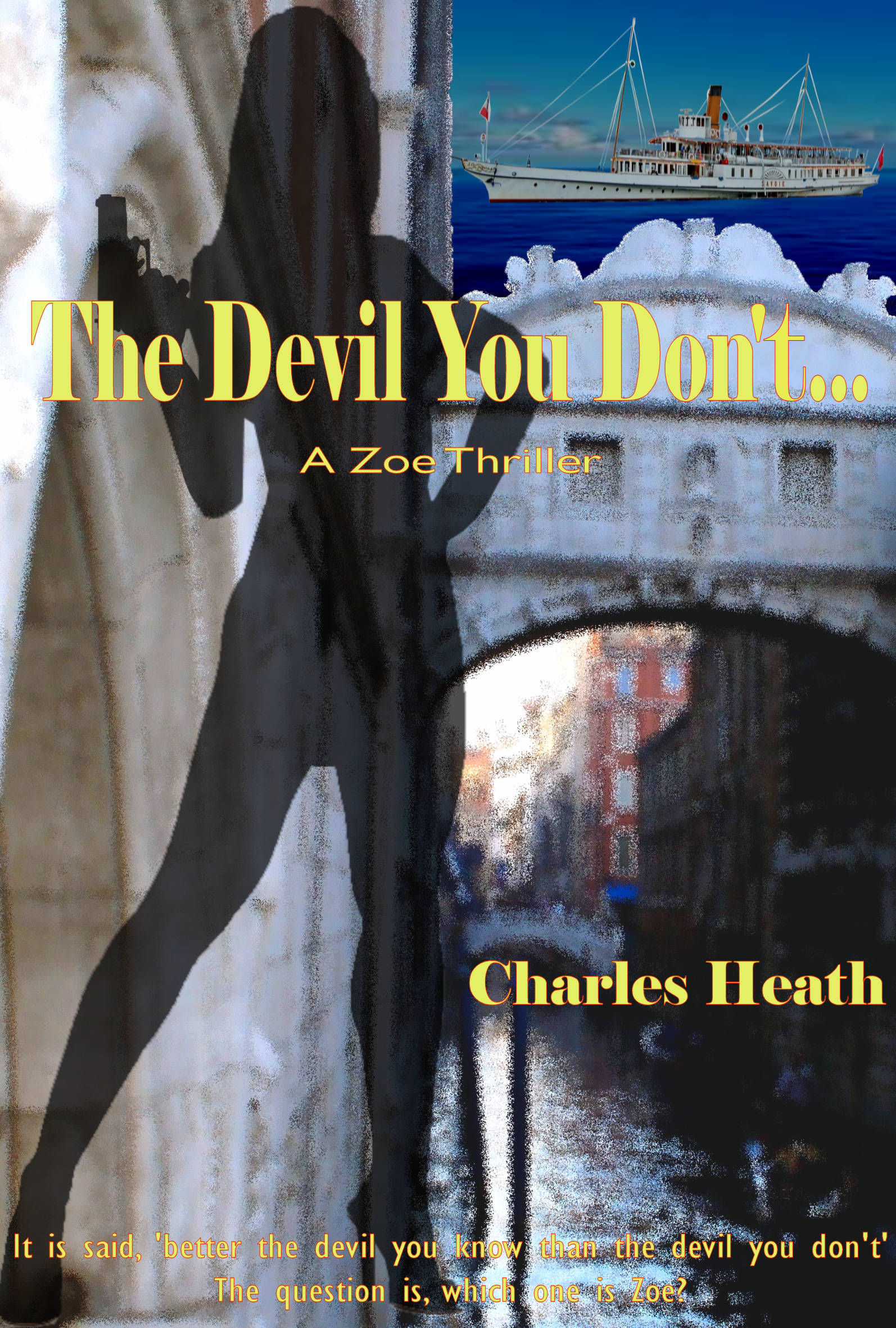
“The Devil You Don’t” – A beta readers view

It could be said that of all the women one could meet, whether contrived or by sheer luck, what are the odds it would turn out to be the woman who was being paid a very large sum to kill you.

John Pennington is a man who may be lucky in business, but not so lucky in love. He has just broken up with Phillipa Sternhaven, the woman he thought was the one, but relatives and circumstances, and perhaps because she was a ‘princess’, may also have contributed to the end result.

So, what do you do when you are heartbroken?

That is a story that slowly unfolds, from the first meeting with his nemesis on Lake Geneva, all the way to a hotel room in Sorrento, where he learns the shattering truth.

What should have been a high turns out to be something else entirely, and from that point every thing goes to hell in a handbasket.

He suddenly realises his so-called friend Sebastian has not exactly told him the truth about a small job he asked him to do, the woman he is falling in love with is not quite who she says she is, and he is caught in the middle of a war between two men who consider people becoming collateral damage as part of their business.

The story paints the characters cleverly displaying all their flaws and weaknesses. The locations add to the story at times taking me back down memory lane, especially to Venice where in those back streets I confess it’s not all that hard to get lost.

All in all a thoroughly entertaining story with, for once, a satisfying end.

Available on Amazon here: https://amzn.to/2Xyh1ow

The cinema of my dreams – It’s a treasure hunt – Episode 56

Here’s the thing…

Every time I close my eyes, I see something different.

I’d like to think the cinema of my dreams is playing a double feature but it’s a bit like a comedy cartoon night on Fox.

But these dreams are nothing to laugh about.

Once again there’s a new installment of an old feature, and we’re back on the treasure hunt.

Our local area had six churches.  We really only needed two, the catholic church, a big, imposing stone structure that was almost a mini cathedral, showing the wealth and influence of the church, commanding the best location.

The other, a protestant church, a very old, simple wooden structure that had been on its less salubrious site, once belonging to the missionaries who inhabited the land with the first settlers, before the Pope saw an opportunity, and moved in.

Nadia and her family were catholic.  So were the Benderby’s.

My family was protestant, well, not really churchgoers at all, which was a contradictory standpoint because nearly everyone else in the area were devout worshippers.  I remembered my father’s comments, when he was alive, watching all the sheep going to be fleeced every Sunday at the big church on the hill.

To me, the devoutness of the Benderby’s and Cossatino’s seemed at odds with their profession, as most of their activities were sins against God, and proving my father’s point.  I never saw the point of it, but nevertheless, my mother dragged me to church, in my younger days, every other Sunday just in case my soul needed saving.

Now, standing in the graveyard beside the imposing but badly in need of repairs catholic citadel, I felt a shiver go through me.  Mid-morning, there was a cool breeze at odds with the warmth of the sun beating down from a cloudless sky.

“You feel that?” I asked Nadia.

She was in a very summery dress and sun hat, looking at a group of gravestones belonging to the Archer family, going back over a hundred years.

“Ghosts, perhaps?  I hadn’t realized Mrs. Archer had died.”

“You’ve been away.  A lot has happened in the last year or so.”

“I liked her.  She used to look after Vince and me when we were kids.  He used to terrorize her.”

Somehow that didn’t surprise me.  It was rumored Vince was given a gun when he was five years old and his father taught him how to use it.  Once, he was caught bringing it to school.  Now, given the number of school shootings, it hardly registered back then other than a rebuke from the headmaster.

A half-hour later, after surveying a graveyard that had a lot of the areas most prominent people buried there, I came across an almost disintegrated stone that marked the final resting place of Friedrich Ormiston, the son of Heinrich who died in 1976, the same year as Friedrich which was an odd coincidence.

A little further investigation showed there was another Heinrich who died in 1899, and another Friedrich, who died in 1924. It showed there had been Ormiston’s around these parts for over 150 years.  A little further away there were two more gravestones, more recent, belonging to Wendy and Alan, both of whom died within a year of each other 5 years ago.

I took notes on each of the Ormiston’s, their birth dates and death dates, so I could possibly look them up in the parish records, and the local newspaper office, The Jefferson Leader, a publication that was still produced to this day, and it’s current editor, once an old friend from school who had expansive aspirations in the world of journalism and ended up back home tending to the paper his great, great grandfather started.

It seemed a lot of us from that generation couldn’t escape the clutches of our town or families.

“You’d think there’d be a mausoleum or something.”  Nadia had come up from behind and startled me.

“Perhaps the treasure quests took all the money.  Besides, after you’re dead, you don’t really care where you finish up.”

“You’ve seen the monument our family has.  I’m not looking forward to finishing up there.”

I’d seen it, on the other side of the graveyard, along with a dozen others, all in a row, like a row of houses in the more affluent part of the town.  The Cossatino’s were larger than life in death too.

“I hope the bed is comfortable, you’re going to be there a long time.”

She gave me one of her ‘if looks could kill’, the smiled, perhaps deciding it was my feeble attempt at humor.

“I take it we’re finished.  I think I’m beginning to believe there really are ghosts here.” 

I saw her shiver, and then I felt it, a cold rush of air, and what might have been a hand on my shoulder.

“I think it’s time to leave.”  I shut the notebook, put it in my pocket.

She did not need to be asked twice.  Curiously, as we made our way towards the gate, I thought I saw the priest looking at us from the front doorway of the church, but when I looked back there was no one there.

© Charles Heath 2020-2022

An excerpt from “The Things We Do For Love”; In love, Henry was all at sea!

In the distance he could hear the dinner bell ringing and roused himself.  Feeling the dampness of the pillow, and fearing the ravages of pent up emotion, he considered not going down but thought it best not to upset Mrs. Mac, especially after he said he would be dining.

In the event, he wished he had reneged, especially when he discovered he was not the only guest staying at the hotel.

Whilst he’d been reminiscing, another guest, a young lady, had arrived.  He’d heard her and Mrs. Mac coming up the stairs, and then shown to a room on the same floor, perhaps at the other end of the passage.

Henry caught his first glimpse of her when she appeared at the door to the dining room, waiting for Mrs. Mac to show her to a table.

She was about mid-twenties, slim, long brown hair, and the grace and elegance of a woman associated with countless fashion magazines.  She was, he thought, stunningly beautiful with not a hair out of place, and make-up flawlessly applied.  Her clothes were black, simple, elegant, and expensive, the sort an heiress or wife of a millionaire might condescend to wear to a lesser occasion than dinner.

Then there was her expression; cold, forbidding, almost frightening in its intensity.  And her eyes, piercingly blue and yet laced with pain.  Dracula’s daughter was his immediate description of her.

All in all, he considered, the only thing they had in common was, like him, she seemed totally out of place.

Mrs. Mac came out of the kitchen, wiping her hands on her apron.  She was, she informed him earlier, chef, waitress, hotelier, barmaid, and cleaner all rolled into one.  Coming up to the new arrival she said, “Ah, Miss Andrews, I’m glad you decided to have dinner.  Would you like to sit with Mr. Henshaw, or would you like to have a table of your own?”

Henry could feel her icy stare as she sized up his appeal as a dining companion, making the hair on the back on his neck stand up.  He purposely didn’t look back.  In his estimation, his appeal rating was minus six.  Out of a thousand!

“If Mr. Henshaw doesn’t mind….”  She looked at him, leaving the query in mid-air.

He didn’t mind and said so.  Perhaps he’d underestimated his rating.

“Good.”  Mrs. Mac promptly ushered her over.  Henry stood, made sure she was seated properly and sat.

“Thank you.  You are most kind.”  The way she said it suggested snobbish overtones.

“I try to be when I can.”  It was supposed to nullify her sarcastic tone but made him sound a little silly, and when she gave him another of her icy glares, he regretted it.

Mrs. Mac quickly intervened, asking, “Would you care for the soup?”

They did, and, after writing the order on her pad, she gave them each a look, imperceptibly shook her head, and returned to the kitchen.

Before Michelle spoke to him again, she had another quick look at him, trying to fathom who and what he might be.  There was something about him.

His eyes, they mirrored the same sadness she felt, and, yes, there was something else, that it looked like he had been crying?  There was a tinge of redness.

Perhaps, she thought, he was here for the same reason she was.

No.  That wasn’t possible.

Then she said, without thinking, “Do you have any particular reason for coming here?”  Seconds later she realized she’s spoken it out loud, had hadn’t meant to actually ask, it just came out.

It took him by surprise, obviously not the first question he was expecting her to ask of him.

“No, other than it is as far from civilization, and home, as I could get.”

At least we agree on that, she thought.

It was obvious he was running away from something as well.

Given the isolation of the village and lack of geographic hospitality, it was, from her point of view, ideal.  All she had to do was avoid him, and that wouldn’t be difficult.

After getting through this evening first.

“Yes,” she agreed.  “It is that.”

A few seconds passed, and she thought she could feel his eyes on her and wasn’t going to look up.

Until he asked, “What’s your reason?”

Slight abrupt in manner, perhaps as a result of her question, and the manner in which she asked it.

She looked up.  “Rest.  And have some time to myself.”

She hoped he would notice the emphasis she had placed on the word ‘herself’ and take due note.  No doubt, she thought,  she had completely different ideas of what constituted a holiday than he, not that she had actually said she was here for a holiday.

Mrs. Mac arrived at a fortuitous moment to save them from further conversation.


Over the entree, she wondered if she had made a mistake coming to the hotel.  Of course, there had been no possible way she could know than anyone else might have booked the same hotel, but realized it was foolish to think she might end up in it by herself.

Was that what she was expecting?

Not a mistake then, but an unfortunate set of circumstances, which could be overcome by being sensible.

Yet, there he was, and it made her curious, not that he was a man, by himself, in the middle of nowhere, hiding like she was, but for very different reasons.

On discreet observance whilst they ate, she gained the impression his air of light-heartedness was forced and he had no sense of humor.

This feeling was engendered by his looks, unruly dark hair, and permanent frown.  And then there was his abysmal taste in clothes on a tall, lanky frame.  They were quality but totally unsuited to the wearer.

Rebellion was written all over him.

The only other thought crossing her mind, and rather incongruously, was he could do with a decent feed.  In that respect, she knew now from the mountain of food in front of her, he had come to the right place.

“Mr. Henshaw?”

He looked up.  “Henshaw is too formal.  Henry sounds much better,” he said, with a slight hint of gruffness.

“Then my name is Michelle.”

Mrs. Mac came in to take their order for the only main course, gather up the entree dishes, then return to the kitchen.

“Staying long?” she asked.

“About three weeks.  Yourself?”

“About the same.”

The conversation dried up.

Neither looked at the other, rather at the walls, out the window, towards the kitchen, anywhere.  It was, she thought, almost unbearably awkward.


Mrs. Mac returned with a large tray with dishes on it, setting it down on the table next to theirs.

“Not as good as the usual cook,” she said, serving up the dinner expertly, “but it comes a good second, even if I do say so myself.  Care for some wine?”

Henry looked at Michelle.  “What do you think?”

“I’m used to my dining companions making the decision.”

You would, he thought.  He couldn’t help but notice the cutting edge of her tone.  Then, to Mrs. Mac, he named a particular White Burgundy he liked and she bustled off.

“I hope you like it,” he said, acknowledging her previous comment with a smile that had nothing to do with humor.

“Yes, so do I.”

Both made a start on the main course, a concoction of chicken and vegetables that were delicious, Henry thought, when compared to the bland food he received at home and sometimes aboard my ship.

It was five minutes before Mrs. Mac returned with the bottle and two glasses.  After opening it and pouring the drinks, she left them alone again.

Henry resumed the conversation.  “How did you arrive?  I came by train.”

“By car.”

“Did you drive yourself?”

And he thought, a few seconds later, that was a silly question, otherwise she would not be alone, and certainly not sitting at this table. With him.

“After a fashion.”

He could see that she was formulating a retort in her mind, then changed it, instead, smiling for the first time, and it served to lighten the atmosphere.

And in doing so, it showed him she had another more pleasant side despite the fact she was trying not to look happy.

“My father reckons I’m just another of ‘those’ women drivers,” she added.

“Whatever for?”

“The first and only time he came with me I had an accident.  I ran up the back of another car.  Of course, it didn’t matter to him the other driver was driving like a startled rabbit.”

“It doesn’t help,” he agreed.

“Do you drive?”

“Mostly people up the wall.”  His attempt at humor failed.  “Actually,” he added quickly, “I’ve got a very old Morris that manages to get me where I’m going.”

The apple pie and cream for dessert came and went and the rapport between them improved as the wine disappeared and the coffee came.  Both had found, after getting to know each other better, their first impressions were not necessarily correct.

“Enjoy the food?” Mrs. Mac asked, suddenly reappearing.

“Beautifully cooked and delicious to eat,” Michelle said, and Henry endorsed her remarks.

“Ah, it does my heart good to hear such genuine compliments,” she said, smiling.  She collected the last of the dishes and disappeared yet again.

“What do you do for a living,” Michelle asked in an off-hand manner.

He had a feeling she was not particularly interested and it was just making conversation.

“I’m a purser.”

“A what?”

“A purser.  I work on a ship doing the paperwork, that sort of thing.”

“I see.”

“And you?”

“I was a model.”

“Was?”

“Until I had an accident, a rather bad one.”

“Oh, I’m sorry.”

So that explained the odd feeling he had about her.

As the evening had worn on, he began to think there might be something wrong, seriously wrong with her because she didn’t look too well.  Even the carefully applied makeup, from close up, didn’t hide the very pale, and tired look, or the sunken, dark ringed eyes.

“I try not to think about it, but it doesn’t necessarily work.  I’ve come here for peace and quiet, away from doctors and parents.”

“Then you will not have to worry about me annoying you.  I’m one of those fall-asleep-reading-a-book types.”

Perhaps it would be like ships passing in the night and then smiled to himself about the analogy.

Dinner now over, they separated.

Henry went back to the lounge to read a few pages of his book before going to bed, and Michelle went up to her room to retire for the night.

But try as he might, he was unable to read, his mind dwelling on the unusual, yet the compellingly mysterious person he would be sharing the hotel with.

Overlaying that original blurred image of her standing in the doorway was another of her haunting expressions that had, he finally conceded, taken his breath away, and a look that had sent more than one tingle down his spine.

She may not have thought much of him, but she had certainly made an impression on him.


© Charles Heath 2015-2020

lovecoverfinal1

In a word: Meat

We all know what meat is, the flesh of an animal like cattle, pigs, sheep, even goats.

It can be used to describe a pie, such as a meat pie, but the odd thing is that it doesn’t have to have 100% meat in it.

It can be used in the context of humans, depending on when you eat certain types of food that will put meat on your bones.

Meat can also be used to describe the fleshy part of nuts, fruit, or eggs.

Then there’s the meat of the matter, which is the crux or basis of the argument or message you want to get across.

And a rather interesting if not obscure meaning is to describe a favorite occupation or activity.

Another form of the word is meet; what we do at a coffee shop, on a date, at a pub, or any number of different places.

We can gather together for a meeting, such as a board of directors or a committee.

It can be used to describe an athletic or swimming carnival.

How about you meet me halfway, in a negotiation, not on a long road trip

To dole out or allot something like punishment, is to mete it out.

Good thing then, we don’t live in the dark ages, all manner of bad punishments were meted put to the serfs.

The cinema of my dreams – Was it just another surveillance job – Episode 14

I’m back home and this story has been sitting on a back burner for a few months, waiting for some more to be written.

The trouble is, there are also other stories to write, and I’m not very good at prioritising.

But, here we are, a few minutes opened up and it didn’t take long to get back into the groove.

Was I working for a ghost?


Training sometimes was one of those things that went in one ear and came out the other.  That accounted for the boring bits, but our instructors called it tradecraft. 

I guess I should have taken more notice at the time.

Home was a bedsit in Bloomsbury, Not far from the Russell Square underground station, on the ground floor overlooking the small park.  Sometimes, in summer I would sit there and watch the world go by, thinking there had to be more to life than waiting for an opportunity.

To do what, at the time, I didn’t know.  But, when this opportunity presented itself, oddly as a rather strange ad in the help wanted pages of the newspaper, I guess the people who put it there were looking for the curious sort, with a sense of adventure.

My first impression of the job was that of a courier who would be required to travel a lot.  It said, in part, “must be prepared to travel to different locations worldwide, understand the requirement of confidentiality, and must be able to respond to emergencies that might occur in the carrying out of your duties.”

To me, it spelled courier, though I rather hoped it wasn’t the briefcase handcuffed to a wrist sort and no guns.

After the first interview, I think I had guessed correctly, though, in subsequent training, the word tradecraft put a slightly different slant to the job.  That, and the surveillance module, sold to us as “you need to know if you are being followed, recognise hostiles, and be able to deal with them.”

But, it was the notion that we should get out of any habits we had, those that made us predictable to an enemy, yes, they actually used the word, enemy.  Like for instance, if we caught the same train, or bus, into the city.  If we went to the same cafe for coffee, restaurant for lunch or dinner, met people in a pub on the same day, same time, each week.

Before all this, I found comfort in a regular schedule.  I hated being late, except when the transport system let me down.  I had a regular stop off on the way to the office for coffee, and usually went to the same cafe for lunch at the same time.

Inevitably I would leave home at the same time and quite often return home at the same time.  OK, I was boring and predictable.  Now it was a little different, with some variation in departure and arrival times, as well as the places I stopped for coffee, and lunch or dinner.

This day I was very late, after dark in fact, getting back to the flat.

I went in after checking for mail, not that anyone ever sent letters these days, unlocked my door, went in and switched on the light.

The whole of the living space had been trashed.  Well, more to the point, someone had checked everywhere it was possible to hide anything, which I didn’t, and hadn’t bothered cleaning up after them.

Had they been interrupted?

If that had happened the landlady would be down in a flash the moment I walked in the door, not to commiserate on my bad luck, but to issue me with an eviction notice.  Very little was tolerated in her establishment.

That she hadn’t told me that whoever did this had done it very quietly, and without anyone knowing.  We had been taught the same procedures which is why I recognised the signs.  This had to be done by my previous employers.  The only question I had was why?

I had nothing they could possibly want.

I took a few minutes to clean up the mess so that instead of a thorough trashing, it just looked like the aftermath of a wild party, then went out to get a coffee and think about why this had happened.

Not far up the road was a cafe I went to for dinner if I wasn’t doing something else, and, lo and behold, the minute I walked in the door, there was Severin, sitting at the back half disguised by the evening newspaper.

Obviously, he’d been waiting for me.

Yes, now I understood the implications of being someone who did the same thing over and over.

There was no mistaking the invitation, and, after briefly considering ignoring him, realised that was not going to work.  After seeing what happened to O’Connor at their hand, I didn’t want to join him.

I sat down.  “I have to say this is an unexpected surprise.”

He put the paper down.  “For both of us, I can assure you.  I’ll get straight to the point.  I want the USB.”

“What USB?”

“That your target was carrying, it wasn’t on him, so by elimination, not being anywhere at the crime scene, you must have it.  He either gave it to you, or you took it from him.  Where is it?”

I took a minute to process what he was saying.  I had not seen a USB, not had he given me one, not was there one nearby.  I would have seen it.  No need to pretend to be surprised.  I was.

“I haven’t got it.”

“He didn’t give you anything?”

“How could he, you were there just about the same time as I was.  And after you shot him, he had nothing on him.  Whatever you’re looking for, it must still be in the alley, or he hid it somewhere else.  And since you shot him, I doubt whether you’ll ever find out.”

He shook his head and folded his paper.  “If you’ve got it we’ll find out. and it will not bode well for you.  And if you accidentally find it, here’s my card.  Call me.”

He dropped a card on the table as he got up.

I picked it up just as he stopped and turned to give me a last look before walking out the door.  There was no mistaking the intent, if they thought I had it, I’d be dead now.”

And it meant that the evidence O’Conner was referring to was on a USB.  All I had to do was find it.  Or Nobbin did.


© Charles Heath 2019

“Trouble in Store” – Short stories my way: Setting the scene

I used to like writing short stories, somewhere between two and five thousand words, but, in the end, it was too much hard work.

No chance of getting into stride with a location description, no real chance of giving a background to a character, it was simply a case of diving straight in.

But …

I’ve been thinking about writing a short story, starting it with a short succinct sentence that will set the tone.

Something like:  “Jack was staring down the barrel of a gun”

What then?

Should he start analyzing what sort of gun it was, did it have a light trigger, was the person holding it shaking, a man or a woman, or a child?

Location, in a house, a disused factory, a shop, a petrol station, the side of the road.

So, where was Jack?

Something like:  “He had gone down to the corner shop to get a pack of cigarettes.”

For himself or someone else?  Is it day, is it night, or somewhere in between?

Something like:  “He had to hustle because he knew the shopkeeper, Alphonse, liked to close at 11:00 pm sharp, and came through the door, the sound of the bell ringing loudly and the door bashed into it.”

So, Jack’s state of mind, he is in a hurry, careless coming through the door, not expecting anything out of the ordinary.

How would you react when you saw a gun, pointed at Alphonse until the sound of the door warning bell attracted the gunman’s attention?

Is it a gunman?

Something like:  “It took a second, perhaps three, to sum up the situation.  Young girl, about 16 or 17, scared, looking sideways at a man on the ground, Alphonse, and then Jack.  A Luger, German, a relic of WW2, perhaps her father’s souvenir, now pointing at him.”

The punch line:  Cigarettes can kill in more ways than one.

The revelation:  The corner store also supplied the local drug addicts.

The revised start is now:

Jack was staring down the barrel of a gun.

He had gone down to the corner shop to get a pack of cigarettes.

He had to hustle because he knew the shopkeeper, Alphonse, liked to close at 11:00 pm sharp.  His momentum propelled him through the door, causing the customer warning bell to ring loudly as the door bashed into it, and before the sound had died away, he knew he was in trouble.

It took a second, perhaps three, to sum up the situation. 

Young girl, about 16 or 17, scared, looking sideways at a man on the ground, then Alphonse, and then Jack.  He recognized the gun, a Luger, German, relic of WW2, perhaps her father’s souvenir, now pointing at him then Alphonse, then back to him.

Jack to another second or two to consider if he could disarm her.  No, the distance was too great.  He put his hands out where she could see them.  No sudden movements, try to remain calm, his heart rate up to the point of cardiac arrest.

Pointing with the gun, she said, “Come in, close the door, and move towards the counter.”

Everything but her hand steady as a rock.  The only telltale sign of stress, the bead of perspiration on her brow.  It was 40 degrees Fahrenheit in the shop.

Jack shivered and then did as he was told.  She was in an unpredictable category.

“What’s wrong with your friend?”  Jack tried the friendly approach, as he took several slow steps sideways towards the counter.

The shopkeeper, Alphonse, seemed calmer than usual, or the exact opposite spoke instead, “I suspect he’s an addict, looking for a score.  At the end of his tether, my guess, and came to the wrong place.” 

Wrong time, wrong place, in more ways than one Jack thought, now realizing he had walked into a very dangerous situation.  She didn’t look like a user.  The boy on the ground, he did, and he looked like he was going through the beginnings of withdrawal.

 “Simmo said you sell shit.  You wanna live, ante up.”  She was glaring at Alphonse. 

The language was not her own, she had been to a better class of school, a good girl going through a bad boy phase.

Nest time, point of view.

© Charles Heath 2016-2021