Have you ever tried writing on a bus?

It’s amazing how quickly you discover the imperfections of road makers.

As odd as that sounds, a recent trip on a bus, actually earlier today, in fact, got me thinking about just how bad some of our roads really are.

As any writer will tell you, that half an hour or so on the trip to work or home, is just waiting for a few lines to be written, on your phone, or on your tablet.  I venture to suggest a laptop computer just might be a little difficult, and prone to stray eyes from the people sitting or standing near you.

And the tightness of the space available to you.  I know, I’ve tried.

But, if you’re not in the mood to research, I did a little of that too, by the way, the desire to write is tempered by the movement of the bus and your ability to type coherent words on a small keyboard in a very large, rocking, metal thing.

I have to say I have a large streak of jealousy for those people who can hammer out large texts to their friends while riding the bus, and in the most awkward of conditions, using both thumbs, and carrying 26 bags of groceries and dry cleaning, as well as having a full on political discussion with the person sitting/standing next to them.

Even when the bus hits a pothole, does a sudden lurch that sents the unsuspecting sprawling.

With my interactive word completer turned on, it is astonishing what words finish up in my small attempt at writing as my fingers fail to find the right letters, and creates what only could be described as the ramblings of a madman.

Perhaps I might have better luck tomorrow.


Have you ever tried writing on a bus?

It’s amazing how quickly you discover the imperfections of road makers.

As odd as that sounds, a recent trip on a bus, actually earlier today, in fact, got me thinking about just how bad some of our roads really are.

As any writer will tell you, that half an hour or so on the trip to work or home, is just waiting for a few lines to be written, on your phone, or on your tablet.  I venture to suggest a laptop computer just might be a little difficult, and prone to stray eyes from the people sitting or standing near you.

And the tightness of the space available to you.  I know, I’ve tried.

But, if you’re not in the mood to research, I did a little of that too, by the way, the desire to write is tempered by the movement of the bus and your ability to type coherent words on a small keyboard in a very large, rocking, metal thing.

I have to say I have a large streak of jealousy for those people who can hammer out large texts to their friends while riding the bus, and in the most awkward of conditions, using both thumbs, and carrying 26 bags of groceries and dry cleaning, as well as having a full on political discussion with the person sitting/standing next to them.

Even when the bus hits a pothole, does a sudden lurch that sents the unsuspecting sprawling.

With my interactive word completer turned on, it is astonishing what words finish up in my small attempt at writing as my fingers fail to find the right letters, and creates what only could be described as the ramblings of a madman.

Perhaps I might have better luck tomorrow.


“The Devil You Don’t”, she was the girl you would not take home to your mother!

Now only $0.99 at https://amzn.to/2Xyh1ow

John Pennington’s life is in the doldrums. Looking for new opportunities, prevaricating about getting married, the only joy on the horizon was an upcoming visit to his grandmother in Sorrento, Italy.

Suddenly he is left at the check-in counter with a message on his phone telling him the marriage is off, and the relationship is over.

If only he hadn’t promised a friend he would do a favor for him in Rome.

At the first stop, Geneva, he has a chance encounter with Zoe, an intriguing woman who captures his imagination from the moment she boards the Savoire, and his life ventures into uncharted territory in more ways than one.

That ‘favor’ for his friend suddenly becomes a life-changing event, and when Zoe, the woman who he knows is too good to be true, reappears, danger and death follow.

Shot at, lied to, seduced, and drawn into a world where nothing is what it seems, John is dragged into an adrenaline-charged undertaking, where he may have been wiser to stay with the ‘devil you know’ rather than opt for the ‘devil you don’t’.

newdevilcvr6

The cinema of my dreams – It’s a treasure hunt – Episode 46

Here’s the thing…

Every time I close my eyes, I see something different.

I’d like to think the cinema of my dreams is playing a double feature but it’s a bit like a comedy cartoon night on Fox.

But these dreams are nothing to laugh about.

Once again there’s a new installment of an old feature, and we’re back on the treasure hunt.

Aside from working on what I was going to tell my mother, and Boggs for that matter, where I’d been all night, the last thing I could say was that I spent the night with Nadia.

It had a curious ring to it when I said to myself, I slept with Nadia.  Most people would take it the wrong way, but, by a quirk of fate, it was true.  I guess that little gem of truth would have to stay locked away in my head.

One the other hand, if I told my mother I was out doing reconnaissance work for Boggs, she would get very angry, messing around in Boggs’ fantasies.  She had no time for people who didn’t want to get a job, and work hard for a living.

At least I’d gone up in her estimation when I started working for the Benderby’s.

But the reconnaissance line would work with Boggs, and all I had to do was come up with a plausible set of circumstances he would believe.  At the moment, all I had was Alex going to the mall, and that I waited to see when he came out.  The question I would pose, what was he doing in there for four or five hours.

All I had to do was hope Alex had been out of town and Boggs hadn’t seen him.  Always a chance of coming unstuck.  Perhaps I should just not volunteer anything.

As for my mother, I couldn’t say I was working overtime for Benderby.  She was likely to call him and tell him off for making me work so hard. 

I was still no further advanced on that point when I got to the library. 

It was a familiar place for me, and I had spent a lot of my time there escaping the real world, and of course, being able to keep away from Alex and Vince.

The librarian, Gwen, had been there for a hundred years or more, or so they said, and she should have retired about 20 years ago.

Pity the poor mayor who got the job of telling her to leave.  Three had tried, and three had failed.  The current incumbent was smarter than that.  He just hired an assistant and told her that she had no problems handing over the reins when she was ready.

That woman, Winifred Pankhurst, no relation to the suffragette, was quiet, polite but firm in doing her duties and dealing with the public.  She and I had butted heads a few times, especially when Gwen wasn’t in, but today was not going to be one of those days.

I could see Gwen in her office, and headed straight there, under Winnie’s watchful eye.  And no, I didn’t dare call her Winnie.  Her name, she said, was Miss Pankhurst thank you very much.

Gwen looked up as I knocked on the door, and she smiled.

“Long time no see.”

It had been several weeks.  The job and everything else had made it less of a priority to get there,

“New job, crazy hours.  Never thought I’d become a working stiff.”

“About time.  All that talent being wasted.”

I came in and sat down opposite her.

“How are you?”

“Getting old.”

For her to admit that was a worry.  She was, last time I checked, somewhere between 93 and 95.  She never quite told anyone her actual date of birth, not even the Mayor’s office who employed her.  And she didn’t look a day over 80.  Good, clean living she said.

“Isn’t that inevitable?”

“For some of us.  Now, enough of being maudlin, what can I do for you?”

“What makes you think I want something?”

“That expression.  A cat’s curiosity.”

She could still see through me.  The only other people who could was my English teacher in the final year at school and my mother.

“What do you know about the Ormiston’s.”

A change in expression on her face told me it was not a surprise I was asking.  Alex’s thug had been here earlier, had someone else?

“They’re popular this week.  Young Elmer was in here a few days ago asking the same question.  I suspect he was working for Alex Benderby.”

The way she said his name, it was with the usual venom used for him.  She had a run in with Benderby a long time ago, and she’d never forgotten.  Or ever will.  That’s why Alex would never get anything from her about anything.

“He was.”

“Is this in relation to the treasure you and that lad Boggs are searching for?”

Of course, she’d know who and what was going on in this town.  No one could keep a secret from her.  Or her extensive network of old ladies in the knitting club.

“Boggs seems to think he had some idea of where it might be, though I’m not so sure.  I just go along for the ride, it balances out the depressive life we have to live living here.”

“Oh, come now.  It’s not all that bad.”

“Perhaps not, now that I have a job.  What can you tell me, if there’s anything to tell?”

“Ormiston was as bad if not worse than the Boggs, father and son alike.  He had the treasure bug too.  Obsessed.  In the end drove away his wife and family, eventually ran out of money after mounting six different search operations, and then, when that happened, sold the land to the Navy.  Quite an extensive area, about 100 square miles or so, from the coast back to the fault line.  Used to be a lake, once, now it’s just a dustbowl.”

A fault line?  This was something Boggs didn’t know about, and it could be significant.  But just how significant?

© Charles Heath 2020

“What Sets Us Apart”, a mystery with a twist

David is a man troubled by a past he is trying to forget.

Susan is rebelling against a life of privilege and an exasperated mother who holds a secret that will determine her daughter’s destiny.

They are two people brought together by chance. Or was it?

When Susan discovers her mother’s secret, she goes in search of the truth that has been hidden from her since the day she was born.

When David realizes her absence is more than the usual cooling off after another heated argument, he finds himself being slowly drawn back into his former world of deceit and lies.

Then, back with his former employers, David quickly discovers nothing is what it seems as he embarks on a dangerous mission to find Susan before he loses her forever.

http://amzn.to/2Eryfth

whatsetscover

In a word: Saw or Sore or Soar

In the first or is the second instance of the word Sore, we all know this malady can sometimes fester into something a lot worse.

Or that a person could be a sore loser

Or after spending an hour on the obstacle course, they come off very sore and sorry.  I never quite understood why they should be sorry because no one ever apologises to inanimate object.  Or do they?

Or perhaps he was sore at his friend for not telling him the truth.

Then, there’s another meaning, saw, which can mean the past tense of seeing, that is, I saw them down by the pool.

I could also use a saw, you know, that thing that custs through wood, steel, plastic, almost anything.  And yes, it’s possible someone might actually saw through a loaf of bread.

There are hand saws, electric saws, band saws, coping saws, even a bread knife, all of these have one thing in common, a serrated edge with teeth of different sizes, designed to cut, smoothly or roughly depending on the size.

Add it to bones, and you have Captain Kirk’s description of his medical officer on the Enterprise.  I’m not sure any doctor would like to be addressed as saw-bones.

But then, confusingly in the way only English can do, there’s another word that sounds exactly the same, soar

This, of course, means hovering up there in the heavens, with or without propulsion or oxygen.

Yes, it’s difficult to soar with eagles when you work with turkeys.  I’ve always liked this expression though most of the time people don’t quite understand what it means.


Was it just another surveillance job – Episode 4

I didn’t get the last part of the opening sequence sorted until after we arrived in Vancouver.  I made a start on it before breakfast was served, though it was rather odd calling it breakfast when outside the plane it was nearly six in the afternoon.

In finishing it much later, I think I’ve come up with a different direction to the one I planned, but in truth, I was never happy with where it was going from the start.

That’s why I prefer to plot on the run so that it doesn’t necessarily get bogged down with a certain result in mind.  For me, that is the biggest bugbear is writing to a plan.  For some, though, I’m sure it works.  For me, not so much.

So, what happened to the rest of the team?


Just in case I’d made a mistake, I kept one eye on the target, who seemed to be consumed by the events unfolding, and another taking a wider search of the surrounding area to make doubly sure the team was still in control of the mission.

They were not.

A hundred yards back in the direction I’d first seen the target heading when the explosion took me out of play, I found one of the team, Jack, a relatively new member of the surveillance division, roughly hidden behind a dumpster, dead, a victim of a clean, accurate, and methodical stab wound to the heart.  No noise from the weapon, or the victim.

The target knew we were onto him.  It also meant that it was likely the other two members of the team were also out of play, I preferred not to think they might be equally dead, and I didn’t think the chances were good that he might not know about me.

It wasn’t a good sign that he had come back to the site of the explosion because I doubted someone of his stature had time to stand around and watch a search and rescue.

And if he was looking for me I had to make sure he didn’t find me.  Good thing then it was exactly what I was thinking when he turned and started to scan the outer perimeter, as I had, and just managed to miss his gaze in my direction.

Yes, he was definitely looking for me, so it was a good bet he had tortured one of the others to get the information he needed.

All the more reason for me to take him down.

I moved closer, all the time keeping him under surveillance and avoiding his searching eyes. 

Then, satisfied I was not at this location, he started moving to the next, before I’d last seen him in the distance.  It was the epicentre of the explosion and the one where there was a high concentration of police and rescue workers.

He stopped.  I used the cover of the confusion, and in a way, a very efficient organization, to move closer.

I saw him take another look around, perhaps he suspected I might be near, then again satisfied, moved on.

It was clear I was not going to be able to take him on while we were in the immediate vicinity of the explosion, there were too many witnesses.  Perhaps he was hoping that the abundance of cover would aid his mission.

He stopped again, among a smaller group of observers, and checked both sides of the line.  From there he had two choices, to consider if I had retraced my steps, or gone ahead thinking I might catch up to him.  Obviously, he’d realized I’d not kept up, and it had been due to the explosion.

Just as he was about to see me on another sweep, a minor explosion of sorts came from the main disaster site, what sounded like part of the structure collapsing, which explained dust rising into the air, and when my attention returned to the spot I’d last seen him, he was gone.

Not a good sign.  He could be anywhere.

But he wasn’t just anywhere.

“Sam?”

It was an unfamiliar voice, not expected, but I’d been more or less wary from the moment I lost sight of him.  And because I had been alert, it saved me from a far worse injury.  I felt the knife thrust through the fleshy part of my side and caught him with my elbow to the side of his head which sent him sprawling and knocking the knife out of his hand and sliding into the area where three bystanders were.

The scuffled turned their attention to him first on the ground, and then hastily getting to his feet and running away, leaving the weapon behind and me chasing after him.

No one said a word.

And this time he didn’t have a very big break on me and driven by rage at what he had done to the members of my team, it didn’t take long to catch up, in a place where we were alone.

In those few steps I’d made up my mind, he was not going to walk away from this.


So, is revenge on the menu, or something else?


©  Charles Heath 2019


“Quickly, quickly…” – a short story


It was odd having a voice in your head, well, not really in your head as such, but in your ear, and sounding like it was in your head.

You could truthfully say you were hearing voices.

It was the next step after going through some very intensive training, having someone else as your eyes and ears when breaching a secure compound, and avoiding the enemy.

I’d signed on for this extra training thinking one day it would land me in the thick of the action. Some of the others thought I was mad, but someone had to do it, and the fact it was quite dangerous added just that extra bit to it.

But as they say, what you learn in training, and practise in a non-hostile environment, is nothing like being in that same situation in reality.

Now on was on my first assignment, part of an elite team, packed and taken to what was to everyone else, an unspecified location, but to us, it was the point of incursion.

The mission?

To rescue a government official (that was how he was described to us) who had been illegally detained in a foreign prison.

Our job?

To break him out and get out without the knowledge of the prison staff, or anyone representing that government. Yes, what we were doing was highly illegal, and yes, if we were caught it was more likely than not we would be executed as spies.

We were under cover in an abandoned farmhouse about three miles from the prison. We had been brought in under cover of darkness, and had only a few hours to set up, and then wait it out until the following night.

It was now or never, the weather people predicting that there would be sufficient cloud cover to make us invisible. Two of us were going in, and two remaining strategically placed outside to monitor the inside of the prison through a system of infrared scanners. We also had a floor plan of the building in which the prisoner was being held, and intelligence supplied, supposedly, by one of the prison guards who had been paid a lot of money for information on guard movements.

To me, it was a gigantic leap of faith to trust him, but I kept those thoughts to myself.

We had been over the plan a dozen times, and I’d gone through the passageways, rooms, and doors so many times I’d memorised where they were and would be able to traverse the building as if I had worked there for a lifetime. Having people outside, talking me through it was just an added benefit, along with alerts on how near the guards were to our position.

I was sure the other person going with me, a more seasoned professional who had a number of successful missions under his belt, was going through the same motions I was. After all, it was he who had devised and conducted the training.

There was a free period of several hours before departure, time to listen to some music, empty the head of unwanted thoughts, and get into the right mindset. It was no place to get tangled up in what-ifs, if anything went wrong, it was a simple matter of adapting.

Our training had reinforced the necessity to instantly gauge a situation and make changes on the fly. There would literally be no time to think.

I listened to the nuances of Chopin’s piano concertos, pretending to play the piano myself, having translated every note onto a piano key, and observing it in my mind’s eye.

My opposite number played games of chess in his head. We all had a different method of relaxing.

Until it was 22:00 hours, and time to go.

“Go left, no, hang on, go right.” The voice on my ear sounded confused and it was possible to get lefts and rights mixed up, if you were not careful.

It didn’t faze me, I knew from my study of the plans that once inside the perimeter fence, I had to go right, and head towards a concrete building the roof of which was barely above the ground.

It was once used as a helipad, and underneath, before the site became a prison, the space was used to make munitions. And it was an exceptionally large space that practically ran under the whole of the prison, built above ground.

All that had happened was the lower levels were sealed, covered over and the new structures built on top. Our access was going to be from under the ground.

Quite literally, they would not see, or hear, us coming.

The meteorological people had got it right, there was cloud cover, the moon hidden from view, and the whole perimeter was in inky darkness. Dressed in black from head to foot, the hope was we would be invisible.

There were two of us heading to the same spot, stairs that led down to a door that was once one of the entrances to the underground bunker. We were going separate ways in case one of the other was intercepted in an unforeseen event.

But, that part of the plan worked seamlessly, and we both arrived at the same place nearly at the same time.

Without the planning, we might easily have missed it because I didn’t think it would be discernable even in daylight.

I followed the Sergeant downstairs, keeping a watchful eye behind us. I stooped at the point where I could see down, and across the area we had just traversed.

Nothing else was stirring.

As expected, the door was seamless and without an apparent handle. It may have had one once, but not anymore, so anyone who did stumble across it, couldn’t get in.

Except us. We had special explosives that were designed to break the lock, and once set, would not make a lot of noise. Sixty seconds later we were inside, and the door closed so no one would know we’d broken in.

I was carrying a beacon so that the voice in my head could follow my progress. The sergeant had one too, and he led.

“Straight ahead, 200 yards, then another door. It shouldn’t be locked, but it might be closed.”

In other words, we had no way of knowing. Our informant had said no one had been down in the dungeons, as he called them, since the munition factory closed, and had been sealed up soon after the prison building had been handed over for use.

We were using night goggles, and there was a lot of rubbish strewn over the floor area so we had to carefully pick our way through which took time we really didn’t have. It looked as though our informant was right, no one had been down there for a long time. We were leaving boot prints in the dust.

We reached the door ten minutes later than estimated. Losing time would have a flow-on effect, and this operation was on a very tight time constraint.

“Once you are through the door, there’s a passage. Turn left and go about 50 paces. There should be another passage to your right.”

“Anyone down here?”

“No, but there is a half dozen prison officers above you. Standard patrol, from guardhouse to guardhouse. Unless they can hear you through five feet of solid concrete, you’re safe.”

My instincts told me five feet of concrete were not enough, but I’ll let it ride for the moment.

The door was slightly ajar and it took the two of us to pull it open so that we could get past. Behind it was the passage, going left and right. Trusting my invisible guide was not getting mixed up again, I motioned right, and we headed down the passage.

Despite the fact we should be alone, both of us were careful not to make any noise, and trod carefully.

At 50 or so paces, the passage came into sight. The sergeant went ahead. I stayed back and kept an eye in both directions. The passage before us was the one that would take us under the cell of the captive we were sent to retrieve.

There would be no blasting our way in. The floor to the cell had a grate, and when removed, a person could drop down into the ‘dungeon’. Currently, the grate was immovable, but we had the tools to fix that.

The sergeant would verify the grate was where it was supposed to be, then come back to get me.

Five minutes passed, then ten. It was not that far away.

I was about to go search when the voice in my head returned, but with panic. “We’ve been compromised. Get the hell out of there, now. Quickly…”

Then I heard what sounded like gunshots, then nothing.

A minute later there was a new voice. “I don’t know who you are, but I’d strongly advise you give yourself up to the guards. Failure to do so within one hour, I’ll execute the two men I now have in custody.”

Ahead of me there was a sudden explosion, followed by a cloud of dust and fine debris.

Hand grenade, or mine, it didn’t matter. The sergeant wouldn’t be coming back.

I sighed.

Plan B it was.

© Charles Heath 2021

Memories of the conversations with my cat – 28

As some may be aware, but many not, Chester, my faithful writing assistant, mice catcher, and general pain in the neck, passed away some months ago.

Recently I was running a series based on his adventures, under the title of Past Conversations with my cat.

For those who have not had the chance to read about all of his exploits I will run the series again from Episode 1

These are the memories of our time together…

20160928_161422

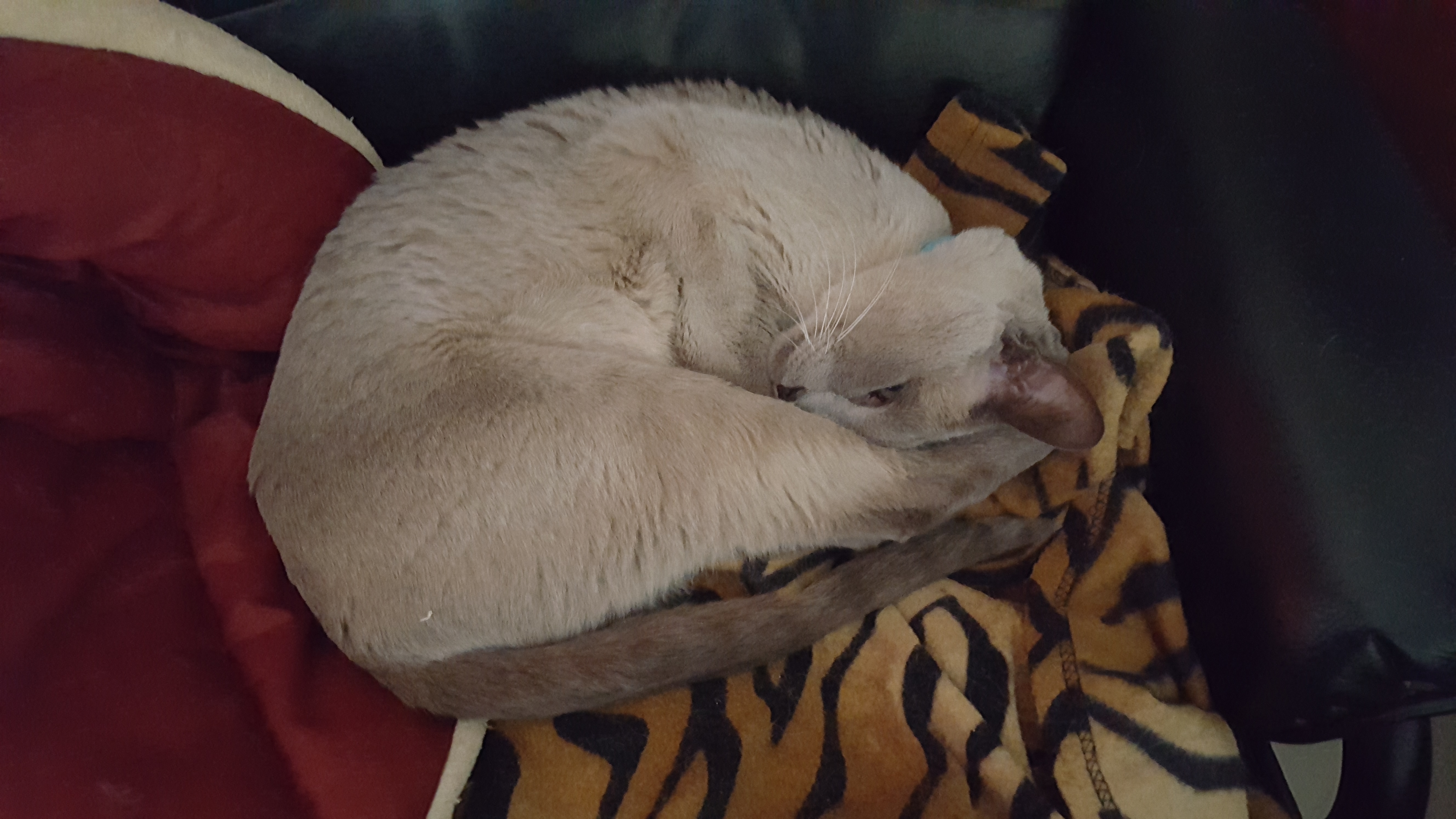
This is Chester.  He thinks it’s still winter.

It’s not, but how do you tell a cat who thinks he knows everything.

Today, we are having a battle over his bed.  The blanket needs washing.  I tell him, in as polite a manner I can muster,m there is an aroma that is bordering on unpleasant.

He tells me he can’t smell anything, and refuses to budge.

I suspect not since he is now used to it.

Not even the tempting offer of stretching out on the end of our bed has any effect.

I guess it’s the time from Plan B.

I give him one last chance.

It’s outright defiance now.

I go down to the laundry, fetch the green bucket, half fill it with hot water, and return.

He’s looking warily at me now, knowing something has changed since he last saw me.

Ah, yes, what’s that bucket for?

CAll me mean, I tell him, but nothing moves faster than a scalded cat.

Not that I would, but I think he now understands the subtle art of compromise.


An excerpt from “If Only” – a work in progress

Investigation of crimes don’t always go according to plan, nor does the perpetrator get either found or punished.

That was particularly true in my case.  The murderer was very careful in not leaving any evidence behind, to the extent that the police could not rules out whether it was a male or a  female.

At one stage the police thought I had murdered my own wife though how I could be on a train at the time of the murder was beyond me.  I had witnesses and a cast-iron alibi.

The officer in charge was Detective Inspector Gabrielle Walters.  She came to me on the day after the murder seeking answers to the usual questions when was the last time you saw your wife, did you argue, the neighbors reckon there were heated discussions the day before.

Routine was the word she used.

Her Sargeant was a surly piece of work whose intention was to get answers or, more likely, a confession by any or all means possible.  I could sense the raging violence within him.  Fortunately, common sense prevailed.

Over the course of the next few weeks, once I’d been cleared of committing the crime, Gabrielle made a point of keeping me informed of the progress.

After three months the updates were more sporadic, and when, for lack of progress, it became a cold case, communication ceased.

But it was not the last I saw of Gabrielle.

The shock of finding Vanessa was more devastating than the fact she was now gone, and those images lived on in the same nightmare that came to visit me every night when I closed my eyes.

For months I was barely functioning, to the extent I had all but lost my job, and quite a few friends, particularly those who were more attached to Vanessa rather than me.

They didn’t understand how it could affect me so much, and since it had not happened to them, my tart replies of ‘you wouldn’t understand’ were met with equally short retorts.  Some questioned my sanity, even, for a time, so did I.

No one, it seemed, could understand what it was like, no one except Gabrielle.

She was by her own admission, damaged goods, having been the victim of a similar incident, a boyfriend who turned out to be a very bad boy.  Her story varied only in she had been made to witness his execution.  Her nightmare, in reliving that moment in time, was how she was still alive and, to this day, had no idea why she’d been spared.

It was a story she told me one night, some months after the investigation had been scaled down.  I was still looking for the bottom of a bottle and an emotional mess.  Perhaps it struck a resonance with her; she’d been there and managed to come out the other side.

What happened become our secret, a once-only night together that meant a great deal to me, and by mutual agreement, it was not spoken of again.  It was as if she knew exactly what was required to set me on the path to recovery.

And it had.

Since then we saw each about once a month in a cafe.   I had been surprised to hear from her again shortly after that eventful night when she called to set it up, ostensibly for her to provide me with any updates on the case, but perhaps we had, after that unspoken night, formed a closer bond than either of us wanted to admit.

We generally talked for hours over wine, then dinner and coffee.  It took a while for me to realize that all she had was her work, personal relationships were nigh on impossible in a job that left little or no spare time for anything else.

She’d always said that if I had any questions or problems about the case, or if there was anything that might come to me that might be relevant, even after all this time, all I had to do was call her.

I wondered if this text message was in that category.  I was certain it would interest the police and I had no doubt they could trace the message’s origin, but there was that tiny degree of doubt, whether or not I could trust her to tell me what the message meant.

I reached for the phone then put it back down again.  I’d think about it and decide tomorrow.

© Charles Heath 2018-2021