Inspiration, Maybe – Volume Two

50 photographs, 50 stories, of which there is one of the 50 below.

They all start with –

A picture paints … well, as many words as you like.  For instance:

And, the story:

Have you ever watched your hopes and dreams simply just fly away?

Everything I thought I wanted and needed had just left in an aeroplane, and although I said I was not going to, i came to the airport to see the plane leave.  Not the person on it, that would have been far too difficult and emotional, but perhaps it was symbolic, the end of one life and the start of another.

But no matter what I thought or felt, we had both come to the right decision.  She needed the opportunity to spread her wings.  It was probably not the best idea for her to apply for the job without telling me, but I understood her reasons.

She was in a rut.  Though her job was a very good one, it was not as demanding as she had expected, particularly after the last promotion, but with it came resentment from others on her level, that she, the youngest of the group would get the position.

It was something that had been weighing down of her for the last three months, and if noticed it, the late nights, the moodiness, sometimes a flash of temper.  I knew she had one, no one could have such red hair and not, but she had always kept it in check.

And, then there was us, together, and after seven years, it felt like we were going nowhere.  Perhaps that was down to my lack of ambition, and though she never said it, lack of sophistication.  It hadn’t been an issue, well, not until her last promotion, and the fact she had to entertain more, and frankly I felt like an embarrassment to her.

So, there it was, three days ago, the beginning of the weekend, and we had planned to go away for a few days and take stock.  We both acknowledged we needed to talk, but it never seemed the right time.

It was then she said she had quit her job and found a new one.  Starting the following Monday.

Ok, that took me by surprise, not so much that it something I sort of guessed might happen, but that she would just blurt it out.

I think that right then, at that moment, I could feel her frustration with everything around her.

What surprised her was my reaction.  None.

I simply asked where who, and when.

A world-class newspaper, in New York, and she had to be there in a week.

A week.

It was all the time I had left with her.

I remember I just shrugged and asked if the planned weekend away was off.

She stood on the other side of the kitchen counter, hands around a cup of coffee she had just poured, and that one thing I remembered was the lone tear that ran down her cheek.

Is that all you want to know?

I did, yes, but we had lost that intimacy we used to have when she would have told me what was happening, and we would have brainstormed solutions. I might be a cabinet maker but I still had a brain, was what I overheard her tell a friend once.

There’s not much to ask, I said.  You’ve been desperately unhappy and haven’t been able to hide it all that well, you have been under a lot of pressure trying to deal with a group of troglodytes, and you’ve been leaning on Bentley’s shoulder instead of mine, and I get it, he’s got more experience in that place,  and the politics that go with it, and is still an ally.

Her immediate superior and instrumental in her getting the position, but unlike some men in his position he had not taken advantage of a situation like some men would.  And even if she had made a move, which I doubted, that was not the sort of woman she was, he would have politely declined.

One of the very few happily married men in that organisation, so I heard.

So, she said, you’re not just a pretty face.

Par for the course for a cabinet maker whose university degree is in psychology.  It doesn’t take rocket science to see what was happening to you.  I just didn’t think it was my place to jump in unless you asked me, and when you didn’t, well, that told me everything I needed to know.

Yes, our relationship had a use by date, and it was in the next few days.

I was thinking, she said, that you might come with me,  you can make cabinets anywhere.

I could, but I think the real problem wasn’t just the job.  It was everything around her and going with her, that would just be a constant reminder of what had been holding her back. I didn’t want that for her and said so.

Then the only question left was, what do we do now?

Go shopping for suitcases.  Bags to pack, and places to go.

Getting on the roller coaster is easy.  On the beginning, it’s a slow easy ride, followed by the slow climb to the top.  It’s much like some relationships, they start out easy, they require a little work to get to the next level, follows by the adrenaline rush when it all comes together.

What most people forget is that what comes down must go back up, and life is pretty much a roller coaster with highs and lows.

Our roller coaster had just come or of the final turn and we were braking so that it stops at the station.

There was no question of going with her to New York.  Yes, I promised I’d come over and visit her, but that was a promise with crossed fingers behind my back.  After a few months in t the new job the last thing shed want was a reminder of what she left behind.  New friends new life.

We packed her bags, three out everything she didn’t want, a free trips to the op shop with stiff she knew others would like to have, and basically, by the time she was ready to go, there was nothing left of her in the apartment, or anywhere.

Her friends would be seeing her off at the airport, and that’s when I told her I was not coming, that moment the taxi arrived to take her away forever.  I remember standing there, watching the taxi go.  It was going to be, and was, as hard as it was to watch the plane leave.

So, there I was, finally staring at the blank sky, around me a dozen other plane spotters, a rather motley crew of plane enthusiasts.

Already that morning there’s been 6 different types of plane depart, and I could hear another winding up its engines for take-off.

People coming, people going.

Maybe I would go to New York in a couple of months, not to see her, but just see what the attraction was.  Or maybe I would drop in, just to see how she was.

As one of my friends told me when I gave him the news, the future is never written in stone, and it’s about time you broadened your horizons.

Perhaps it was.


© Charles Heath 2020-2021

Coming soon.  Find the above story and 49 others like it in:

Searching for Locations: Waitomo caves house, North Island, New Zealand

A relatively unassuming lane leads to what could be described as a grand hotel, called Waitomo Caves Hotel.

The original hotel was built in 1908, and it was later extended in 1928.  Part of it is ‘Victorian’, based on an eastern Europe mountain chalet, and part of it is ‘Art Deco’, the concrete wing, and a feature, if it could be called that, is none of the four corners are the same.

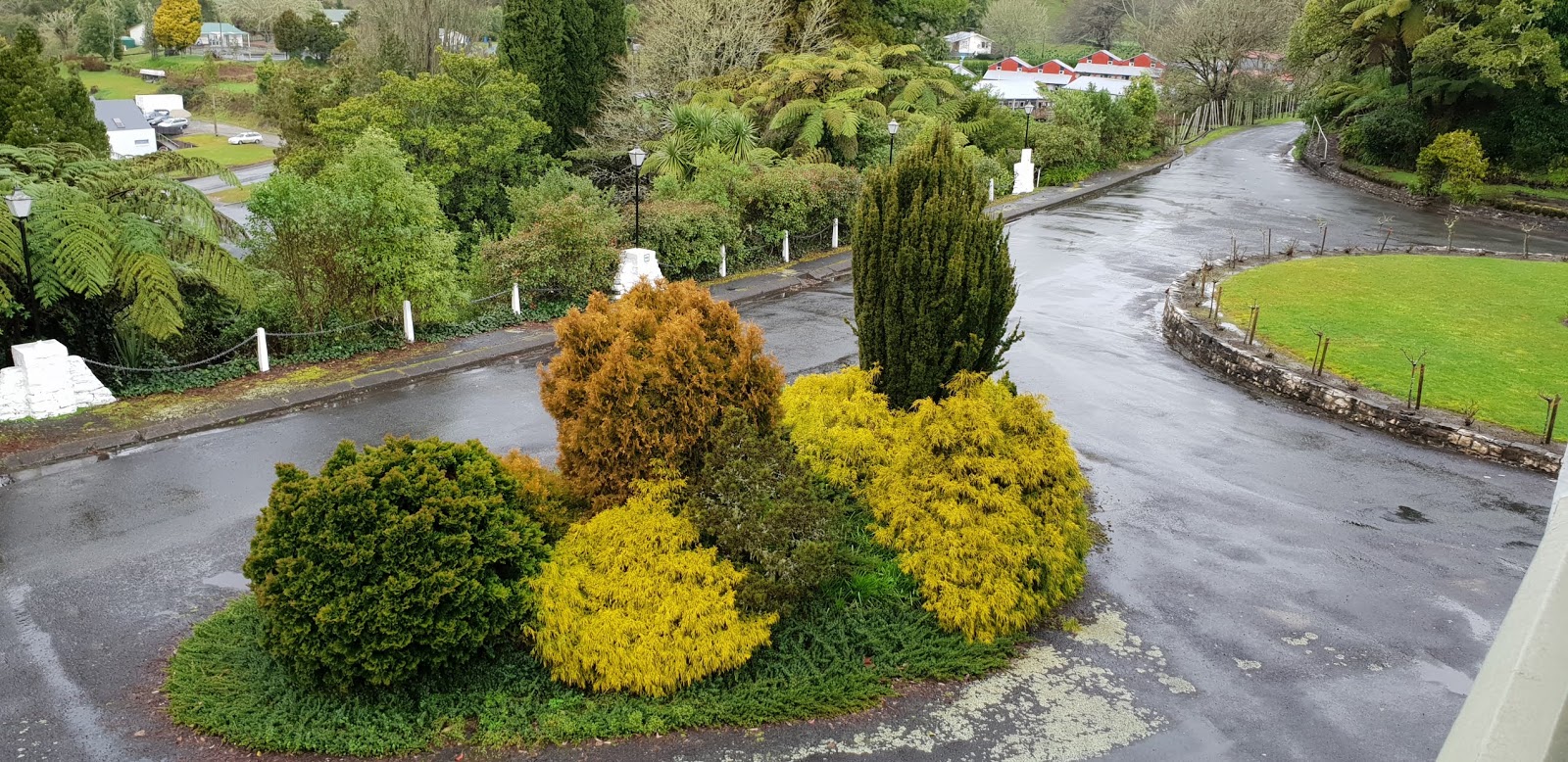
Views from the balcony show part of the surrounding gardens
 

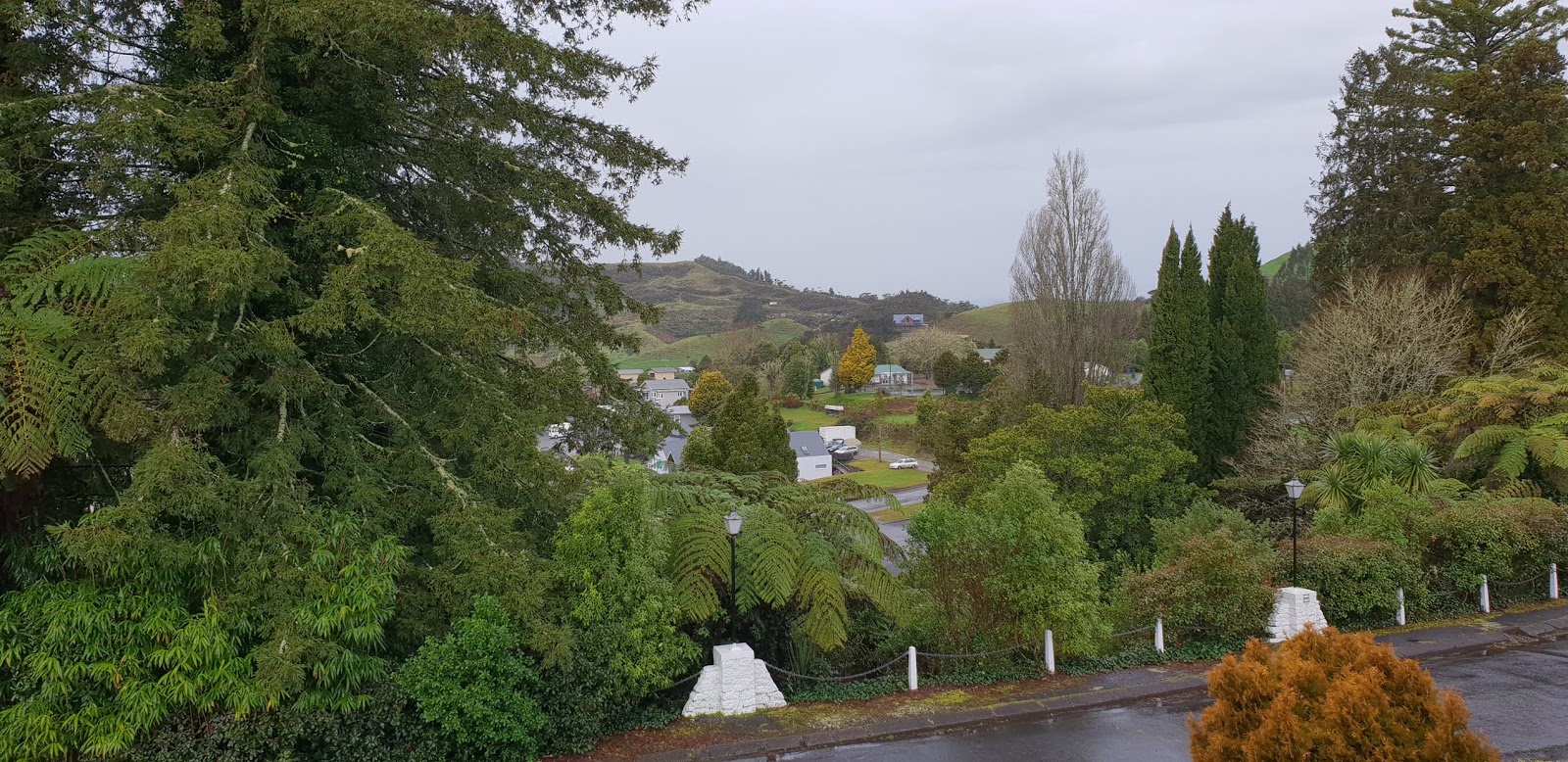
and the town of Waitomo in the distance.
 

In gloomy weather, it does look rather spooky, and I suspect there may be a ghost or two lurking somewhere in the buildings.


But…
 

This a a very interesting, and the words of one of my younger grand daughters, a very creepy place. It would make an excellent base for paranormal activity, and there could very well be ghosts walking the corridors of this hotel.

It has the long darkish passageways that lead in all directions and to almost hidden rooms, a creepy nighttime aspect, and the creaky woodwork.

I know when we were exploring, it was easy to lose your bearings, if not get lost, trying to find certain places, and once found, hard to find your way back.

All in all, it was one of the best stays in a very old place going through the throes of modernisation.

And looking at it from the outside at night, I’ll leave you with that thought…

‘What Sets Us Apart’ – A beta readers view

There’s something to be said for a story that starts like a James Bond movie, throwing you straight in the deep end, a perfect way of getting to know the main character, David, or is that Alistair?

A retired spy, well not so much a spy as a retired errand boy, David’s rather wry description of his talents, and a woman that most men would give their left arm for, not exactly the ideal couple, but there is a spark in a meeting that may or may not have been a set up.

But as the story progressed, the question I kept asking myself was why he’d bother.

And, page after unrelenting page, you find out.

Susan is exactly the sort of woman the pique his interest. Then, inexplicably, she disappears. That might have been the end to it, but Prendergast, that shadowy enigma, David’s ex boss who loves playing games with real people, gives him an ultimatum, find her or come back to work.

Nothing like an offer that’s a double edged sword!

A dragon for a mother, a sister he didn’t know about, Susan’s BFF who is not what she seems or a friend indeed, and Susan’s father who, up till David meets her, couldn’t be less interested, his nemesis proves to be the impossible dream, and he’s always just that one step behind.

When the rollercoaster finally came to a halt, and I could start breathing again, it was an ending that was completely unexpected.

I’ve been told there’s a sequel in the works.

Bring it on!

The book can be purchased here: http://amzn.to/2Eryfth

Whatever happened to pre-dinner drinks and a chat about your day?

There’s nothing more I like to do at the end of a day than sit down and have a drink, usually Scotch and Soda or Bacardi and Coke.

But that’s the problem.

What is your definition of the end of the day?

No doubt for most it is probably that time when they get home from work, and take some time between then and dinner.  From my memories of American sitcoms of the 1950s, it was over Sherry and included a summary from every one of their day.

It was a time when women, apparently, preferred to stay home than go to work.  Odd, for some reason, that Hollywood would ignore the hard-won rights of women to have jobs, though some might argue out of necessity because of the war.

There were no computer games, contrary children, and that period, for the children was between coming home from school (doing homework) and going outside to play.

Yes, none of this disappearing into dark rooms for secret conversations on mobile phones or playing games on computers, or, dare I say it, being stuck in front of a television, pigging out on snack foods.

Any man these days who thought the 1950s sitcom scenario might be a social norm would be vilified by all and sundry.  His children would be in a permanent battle to be left alone, his wife would divorce him if he even remotely suggested she stay home or have dinner on the table when he got home, and that peaceful hour or so before the expected dinner, well, that disappeared a long time ago.

If it ever existed in any era.

So much for American sitcom stereotypes.

Now, in similar sitcoms these days, the children are obnoxious to their parent, yes, every family it seems in the USA is broken, and the mother is the long-suffering one stuck with the children and having to work, whilst the ex is out having a great time with his new girlfriend/trophy wife.

Hollywood is still stereotyping, but it’s much more dark and gloomy.

This is added to the continual threat of online predators, online pornography further reducing women’s hard-won right to be seen as more than just a sex object, bullying, not only at school and online but in the workplace, and above all that it seems men still treat women as second class citizens, not the least of which are corporate entities, and government.

Oh, and the mention of having a drink before dinner in this day and age would be associated with alcoholism, or a drinking problem, caused by excessive stress, and almost always added to an apparent addiction to painkillers or antidepressants.

What might also be worse is the alarming statistics of the number of women now drinking wine by the gallon rather than a few drinks in that period between picking up the children from school and dinner, driven by, take your choice of, obnoxious children or absent-minded or chauvinistic husband.

Damn, have I stirred up a hornet’s nest?

Sorry, I think I’d better cancel the notion of having after-work drinks, and since I do the cooking, so there’s no expectation for someone else getting dinner on the table.

At least we are still married, and the children never had to deal with a broken marriage and two warring parents, but if any of the reports on why children are the way they are, I guess mine missed out on playing one parent off against the other, or get to live in different houses, or tolerate parents other boy or girlfriends, and live on junk food, well not all of the time.

Are they normal?

Perhaps when someone defines normal I will probably tell you.

I ceased being so-called chauvinistic a long time ago, and I had to have an attitude readjustment along with it, because, I’m told, we live in a different world now.

Perhaps I will have that drink or three; it’s certainly a necessity in order to watch the increasingly bad news, the antics of our politicians, and to watch the world gradually go to hell in a handbasket.

Whilst being politely told that I drink too much!


An excerpt from “Mistaken Identity” – a work in progress

The odds of any one of us having a doppelganger are quite high. Whether or not you got to meet him or her, or be confronted by them was significantly lower. Except of course, unless you are a celebrity.

It was a phenomenon remarkable only for the fact, at times, certain high profile people, notorious or not, had doubles if only to put off enemies or the general public. Sometimes we see people in the street, people who look like someone we knew, and made the mistake of approaching them like a long lost friend, only to discover an embarrassed individual desperately trying to get away for what they perceive is a stalker or worse.

And then sometimes in is a picture that looms up on a TV screen, an almost exact likeness of you. At first you are fascinated, and then according to the circumstances, and narrative that is attached to that picture, either flattered or horrified.

For me one turned to the other when I saw an almost likeness of me flash up on the screen when I turned the TV on in my room. What looked to be my photo, with only minor differences, was in the corner of the screen, the news reader speaking in rapid Italian, so fast I could only translate every second or third word.

But the one word I did recognize was murder. The photo of the man up on the screen was the subject of an extensive manhunt. The crime, murder of woman in the very same hotel I was staying, and it was being played out live several floors above me. The gist of the story, the woman had been seen with, and staying with the man who was my double, and, less than an hour ago, the body had been discovered by a chambermaid.

The killer, the announcer said, was believed to be still in the hotel because the woman had died shortly before she had been discovered.

I watched, at first fascinated at that I was seeing. I guess I should have been horrified, but at that moment it didn’t register that I might be mistaken for that man.

Not until an another five minutes had passed, and I was watching the police in full riot gear, with a camera crew following behind, coming up a passage towards a room. Live action of the arrest of the suspected killer the breathless commentator said.

Then, suddenly, there was a pounding on the door. On the TV screen, plain to see, was the number of my room.
I looked through the peep hole and saw an army of police officers. It didn’t take much to realize what had happened. The hotel staff had identified me as the man in the photograph on the TV and called the police.

Horrified wasn’t what I was feeling right then.

It was fear.

My last memory was the door crashing open, the wood splintering, and men rushing into the room, screaming at me, waving guns, and when I put my hands up to defend myself, I heard a gunshot.

And in one very confused and probably near death experience, I thought I saw my mother, and thinking what was she doing in Rome?

I was the archetypal nobody.

I lived in a small flat, I drove a nondescript car, had an average job in a low profile travel agency, was single, and currently not involved in a relationship, no children, and according to my workmates, no life.

They were wrong. I was one of those people who preferred their own company, I had a cat, and travelled whenever I could. And I did have a ‘thing’ for Rosalie, one of the reasons why I stayed at the travel agency. I didn’t expect anything to come of it, but one could always hope.

I was both pleased and excited to be going to the conference. It was my first, and the glimpse I had seen of it had whetted my appetite for more information about the nuances of my profession.

Some would say that a travel agent wasn’t much of a job, but to me, it was every bit as demanding as being an accountant or a lawyer. You were providing a customer with a service, and arguably more people needed a travel agent than a lawyer. At least that was what I told myself, as I watched more and more people start using the internet, and our relevance slowly dissipating.

This conference was about countering that trend.

The trip over had been uneventful. I was met at the airport and taken to the hotel where the conference was being held with a number of other delegates who had arrived on the same plane. I had mingled with a number of other delegates at the pre conference get together, including one whose name was Maryanne.

She was an unusual young woman, not the sort that I usually met, because she was the one who was usually surrounded by all the boys, the life of the party. In normal circumstances, I would not have introduced myself to her, but she had approached me. Why did I think that may have been significant? All of this ran through my mind, culminating in the last event on the highlight reel, the door bursting open, men rushing into my room, and then one of the policemen opened fire.

I replayed that last scene again, trying to see the face of my assailant, but it was just a sea of men in battle dress, bullet proof vests and helmets, accompanied by screaming and yelling, some of which I identified as “Get on the floor”.

Then came the shot.

Why ask me to get on the floor if all they were going to do was shoot me. I was putting my hands up at the time, in surrender, not reaching for a weapon.

Then I saw the face again, hovering in the background like a ghost. My mother. Only the hair was different, and her clothes, and then the image was going, perhaps a figment of my imagination brought on by pain killing drugs. I tried to imagine the scene again, but this time it played out, without the image of my mother.

I opened my eyes took stock of my surroundings. What I felt in that exact moment couldn’t be described. I should most likely be dead, the result of a gunshot wound. I guess I should be thankful the shooter hadn’t aimed at anything vital, but that was the only item on the plus side.

I was in a hospital room with a policeman by the door. He was reading a newspaper, and sitting uncomfortably on a small chair. He gave me a quick glance when he heard me move slightly, but didn’t acknowledge me with either a nod, or a greeting, just went back to the paper.

If I still had a police guard, then I was still considered a suspect. What was interesting was that I was not handcuffed to the bed. Perhaps that only happened in TV shows. Or maybe they knew I couldn’t run because my injuries were too serious. Or the guard would shoot me long before my feet hit the floor. I knew the police well enough now to know they would shoot first and ask questions later.

On the physical side, I had a large bandage over the top left corner of my chest, extending over my shoulder. A little poking and prodding determined the bullet had hit somewhere between the top of my rib cage and my shoulder. Nothing vital there, but my arm might be somewhat useless for a while, depending on what the bullet hit on the way in, or through.

It didn’t feel like there were any broken or damaged bones.

That was the good news.

On the other side of the ledger, my mental state, there was only one word that could describe it. Terrified. I was looking at a murder charge and jail time, a lot of it. Murder usually had a long time in jail attached to it.

Whatever had happened, I didn’t do it. I know I didn’t do it, but I had to try and explain this to people who had already made up their minds. I searched my mind for evidence. It was there, but in the confused state brought on by the medication, all I could think about was jail, and the sort of company I was going to have.

I think death would have been preferable.

Half an hour later, maybe longer, I was drifting in an out of consciousness, a nurse, or what I thought was a nurse, came into the room. The guard stood, checked her ID card, and then stood by the door.

She came over and stood beside the bed. “How are you?” she asked, first in Italian, and when I pretended I didn’t understand, she asked the same question in accented English.

“Alive, I guess,” I said. “No one has come and told what my condition is yet. You are my first visitor. Can you tell me?”

“Of course. You are very lucky to be alive. You will be fine and make a full recovery. The doctors here are excellent at their work.”

“What happens now?”

“I check you, and then you have a another visitor. He is from the British Embassy I think. But he will have to wait until I have finished my examination.”

I realized then she was a doctor, not a nurse.

My second visitor was a man, dressed in a suit the sort of which I associated with the British Civil Service.  He was not very old which told me he was probably a recent graduate on his first posting, the junior officer who drew the short straw.

The guard checked his ID but again did not leave the room, sitting back down and going back to his newspaper.

My visitor introduced himself as Alex Jordan from the British Embassy in Rome and that he had been asked by the Ambassador to sort out what he labelled a tricky mess.

For starters, it was good to see that someone cared about what happened to me.  But, equally, I knew the mantra, get into trouble overseas, and there is not much we can do to help you.  So, after that lengthy introduction, I had to wonder why he was here.

I said, “They think I am an international criminal by the name of Jacob Westerbury, whose picture looks just like me, and apparently for them it is an open and shut case.”  I could still hear the fragments of the yelling as the police burst through the door, at the same time telling me to get on the floor with my hands over my head.

“It’s not.  They know they’ve got the wrong man, which is why I’m here.  There is the issue of what had been described as excessive force, and the fact you were shot had made it an all-round embarrassment for them.”

“Then why are you here?  Shouldn’t they be here apologizing?”

“That is why you have another visitor.  I only took precedence because I insisted I speak with you first.  I have come, basically to ask you for a favour.  This situation has afforded us with an opportunity.  We would like you to sign the official document which basically indemnifies them against any legal proceedings.”

Curious.  What sort of opportunity was he talking about?  Was this a matter than could get difficult and I could be charged by the Italian Government, even if I wasn’t guilty, or was it one of those hush hush type deals, you do this for us, we’ll help you out with that.  “What sort of opportunity?”

“We want to get our hands on Jacob Westerbury as much as they do.  They’ve made a mistake, and we’d like to use that to get custody of him if or when he is arrested in this country.  I’m sure you would also like this man brought into custody as soon as possible so you will stop being confused with him.  I can only imagine what it was like to be arrested in the manner you were.  And I would not blame you if you wanted to get some compensation for what they’ve done.  But.  There are bigger issues in play here, and you would be doing this for your country.”

I wondered what would happen if I didn’t agree to his proposal.  I had to ask, “What if I don’t?”

His expression didn’t change.  “I’m sure you are a sensible man Mr Pargeter, who is more than willing to help his country whenever he can.  They have agreed to take care of all your hospital expenses, and refund the cost of the Conference, and travel.  I’m sure I could also get them to pay for a few days at Capri, or Sorrento if you like, before you go home.  What do you say?”

There was only one thing I could say.  Wasn’t it treason if you went against your country’s wishes?

“I’m not an unreasonable man, Alex.  Go do your deal, and I’ll sign the papers.”

“Good man.”

After Alex left, the doctor came back to announce the arrival of a woman, by the way she had announced herself, the publicity officer from the Italian police. When she came into the room, she was not dressed in a uniform.

The doctor left after giving a brief report to the civilian at the door. I understood the gist of it, “The patient has recovered excellently and the wounds are healing as expected. There is no cause for concern.”

That was a relief.

While the doctor was speaking to the civilian, I speculated on who she might be. She was young, not more than thirty, conservatively dressed so an official of some kind, but not necessarily with the police. Did they have prosecutors? I was unfamiliar with the Italian legal system.

She had long wavy black hair and the sort of sultry looks of an Italian movie star, and her presence made me more curious than fearful though I couldn’t say why.

The woman then spoke to the guard, and he reluctantly got up and left the room, closing the door behind him.
She checked the door, and then came back towards me, standing at the end of the bed. Now alone, she said, “A few questions before we begin.” Her English was only slightly accented. “Your name is Jack Pargeter?”

I nodded. “Yes.”

“You are in Rome to attend the Travel Agents Conference at the Hilton Hotel?”

“Yes.”

“You attended a preconference introduction on the evening of the 25th, after arriving from London at approximately 4:25 pm.”

“About that time, yes. I know it was about five when the bus came to collect me, and several others, to take us to the hotel.”

She smiled. It was then I noticed she was reading from a small notepad.

“It was ten past five to be precise. The driver had been held up in traffic. We have a number of witnesses who saw you on the plane, on the bus, at the hotel, and with the aid of closed circuit TV we have established you are not the criminal Jacob Westerbury.”

She put her note book back in her bag and then said, “My name is Vicenza Andretti and I am with the prosecutor’s office. I am here to formally apologize for the situation that can only be described as a case of mistaken identity. I assure you it is not the habit of our police officers to shoot people unless they have a very strong reason for doing so. I understand that in the confusion of the arrest one of our officers accidentally discharged his weapon. We are undergoing a very thorough investigation into the circumstances of this event.”

I was not sure why, but between the time I had spoken to the embassy official and now, something about letting them off so easily was bugging me. I could see why they had sent her. It would be difficult to be angry or annoyed with her.

But I was annoyed.

“Do you often send a whole squad of trigger happy riot police to arrest a single man?” It came out harsher than I intended.

“My men believed they were dealing with a dangerous criminal.”

“Do I look like a dangerous criminal?” And then I realized if it was mistaken identity, the answer would be yes.

She saw the look on my face, and said quietly, “I think you know the answer to that question, Mr. Pargeter.”

“Well, it was overkill.”

“As I said, we are very sorry for the circumstances you now find yourself in. You must understand that we honestly believed we were dealing with an armed and dangerous murderer, and we were acting within our mandate. My department will cover your medical expenses, and any other amounts for the inconvenience this has caused you. I believe you were attending a conference at your hotel. I am very sorry but given the medical circumstances you have, you will have to remain here for a few more days.”

“I guess, then, I should thank you for not killing me.”

Her expression told me that was not the best thing I could have said in the circumstances.

“I mean, I should thank you for the hospital and the care. But a question or two of my own. May I?”

She nodded.

“Did you catch this Jacob Westerbury character?”

“No. In the confusion created by your arrest he escaped. Once we realized we had made a mistake and reviewed the close circuit TV, we tracked him leaving by a rear exit.”

“Are you sure it was one of your men who shot me?”

I watched as her expression changed, to one of surprise.

“You don’t think it was one of my men?”

“Oddly enough no. But don’t ask me why.”

“It is very interesting that you should say that, because in our initial investigation, it appeared none of our officer’s weapons had been discharged. A forensic investigation into the bullet tells us it was one that is used in our weapons, but…”

I could see their dilemma.

“Have you any enemies that would want to shoot you Mr Pargeter?”

That was absurd because I had no enemies, at least none that I knew of, much less anyone who would want me dead.

“Not that I’m aware of.”

“Then it is strange, and will perhaps remain a mystery. I will let you know if anything more is revealed in our investigation.”

She took an envelope out of her briefcase and opened it, pulling out several sheets of paper.

I knew what it was. A verbal apology was one thing, but a signed waiver would cover them legally. They had sent a pretty girl to charm me. Perhaps using anyone else it would not have worked. There was potential for a huge litigation payout here, and someone more ruthless would jump at the chance of making a few million out of the Italian Government.

“We need a signature on this document,” she said.

“Absolving you of any wrong doing?”

“I have apologized. We will take whatever measures are required for your comfort after this event. We are accepting responsibility for our actions, and are being reasonable.”

They were. I took the pen from her and signed the documents.

“You couldn’t add dinner with you on that list of benefits?” No harm in asking.

“I am unfortunately unavailable.”

I smiled. “It wasn’t a request for a date, just dinner. You can tell me about Rome, as only a resident can. Please.”

She looked me up and down, searching for the ulterior motive. When she couldn’t find one, she said, “We shall see once the hospital discharges you in a few days.”

“Then I’ll pencil you in?”

She looked at me quizzically. “What is this pencil me in?”

“It’s an English colloquialism. It means maybe. As when you write something in pencil, it is easy to erase it.”

A momentary frown, then recognition and a smile. “I shall remember that. Thank-you for your time and co-operation Mr. Pargeter. Good morning.”

© Charles Heath 2015-2021

The cinema of my dreams – It’s a treasure hunt – Episode 27

Here’s the thing…

Every time I close my eyes, I see something different.

I’d like to think the cinema of my dreams is playing a double feature but it’s a bit like a comedy cartoon night on Fox.

But these dreams are nothing to laugh about.

Once again there’s a new instalment of an old feature, and we’re back on the treasure hunt.


I was taken to the hospital, despite the fact the paramedics deemed that I might not be as badly concussed as they first thought.  At the very least, I got a ride in the ambulance and painkilling pills that were very effective.

They kept me in the emergency department in between being taken for X-Rays, and I think something they called a CT Scan.  Whatever it was, it didn’t help my claustrophobia.  When that was completed, my mother was waiting in the cubicle.  Benderby, looking concerned, stood behind her.

After the attendant left, he said, “I’ll be going now.  Take all the time you need to recover Sam; I’ll make sure you don’t lose any wages over this.  And you can be assured that it will not happen again, and we will get the people who did this.”

“Thank you, sir.”

“I’m just glad nothing worse happened to you.”

He said something to my mother in hushed tones and then left.  My mother had got over her initial reaction, and a more curious look had replaced the one of fear.

“Tell me you didn’t try to apprehend those thieves yourself, Sam.”

“No, I didn’t.  I didn’t know there was anyone in the building until I was hit from behind.  I’m not sure what they thought they were going to find there that was of any value, it’s just parts for some of the products built there.”

“People will steal anything for money these days.  You should know that.  Times are not as good for some.  Perhaps it’s not a good idea for you to work there is this is going to happen again.”

“You heard Mr Benderby.  He’ll make sure security is improved, and I suspect I was in the wrong place at the wrong time because I don’t normally go into the warehouse itself, that someone else’s purview.  So, stop worrying, and go home.  I’m fine.”

I wished she would go.  I wanted to check if Boggs had been brought in and see what had happened to him.  I also wanted to know if the perpetrator was Vince.  If it was, Nadia was first on my list for a visit when I got out of the hospital.

It seemed to mollify her concern.

“Mr Benderby said to tell you if you need a ride home, to call this number,” she gave me a piece of paper with a phone number on it, “and a driver will come.  He’s been very nice about everything.  You will thank him.”

“I will.  Yes.  Now go home.  Get some rest.  And stop worrying about me.”


Ten minutes later, I got off the bed and stood.  Well, I tried to stand, but my head wasn’t quite ready to accept that it was in command of everything else.  It took only seconds for the room to start spinning, and I had to lie down again.

My reconnaissance was going to have to wait for an hour or so.

A nurse came and checked my blood pressure and pulse, both high but not off the chart, and she went off looking concerned.

A few minutes after that an orderly went by with another bed, empty but recently used, and I recognised him as another of the boys Boggs and I went to school with.  He was destined for bigger things, but it seems he, too, never got out of the neighbourhood.

He saw me looking at him, stopped, and his expression told me he’d recognised me.

“Sam?”

“Angelo?”

“The same.  I’ll be back after I’ve dropped off this bed.  Won’t be long.  I won’t ask how you are, you must be sick if you’re in that bed.”

True.  And it was natural to ask, ‘How are you?’ when you see someone after having not seen them a while, even if you are in a hospital.  A weird custom indeed, which occupied my thoughts till he returned.


Angelo had been the smartest kid in our class, and we had all assumed that he would become a doctor, or a lawyer, one of those jobs that made piles of money.  He was also the boy whom all the girls swooned over.

Being his friend had benefits.

Unfortunately, Boggs and I, not being the two brightest kids, didn’t register on his friend’s scale.  In his favour, he was not a bully like Monty was, but I guess that went with being one of the school’s star athletes, but he did simply ignore us.

Now, it seems the mighty had fallen.  It was a destiny that seemed to befall anyone who came from our neighbourhood.

The same could be said for Monty, who got a sports scholarship to further his sporting career, but he too stumbled at the second hurdle, being done for performance-enhancing drugs, and banished to the boondocks from whence he came.

Now, as far as I knew, he was working for the Colosimo’s.

Angelo seemed bright enough.  That impression was confirmed when he returned with two bottles of soda and handed one to me.

“Hopefully it won’t kill you,” he said, sitting down.

“Shouldn’t.  I’m here because someone hit me over the head.”

“Bar fight?”

Once, in the old days, that might be the case.  “If only I could take the bragging rights, but no.  I work over at Benderby’s warehouse, and someone broke it.  Seems I got in the way.”

“Benderby’s eh?  Thought you said you’d die before ever working for them.”

True, we all said the same, in school, as naïve children who hadn’t yet learned how tough the world was going to be.

“Needs must.  My mother isn’t getting any younger, and it’s a struggle.  But I guess you already know that.  You were going to be a doctor, not a trolley pusher.”

His shook his head.  “As you say, reality trumps dreams.  Education costs, my parents couldn’t raise the money, and, well, I think you know the rest.”

A minute’s silence for the death of whatever dreams we may have had passed.

“Have you seen Boggs.  He’s here somewhere.”

“I saw him in ER, didn’t look too good, but I think it was mostly superficial wounds.  Apparently, some unknown assailants beat him up.  You two still hang out together?”

“Off and on.”

You weren’t with him when this happened.”  He nodded towards the bandage on my head.

“No.”  but, I thought, it was most likely the same person who inflicted both injuries.  Had Boggs set us both up for some reason?  It had to do with the treasure, and now Vince was in on the act.

“Does Boggs still go on about that Pirate treasure he reckons is buried here somewhere?  I mean, his dad used to bang on about it, and there’s no doubt it got him killed.  You reckon someone went after Boggs over it?”

Angelo hadn’t forgotten that even in school, Boggs had said he was going to be a treasure hunter when he grew up, and he had a map that would be the basis of his first quest.  That same map he told me was his father’s.

That same map that had got both of us beaten up.

“Is he here, somewhere?” I asked.

“Next ward.  Last I saw he was out; they gave him a sedative so he could rest.”

Squawking sounds came out of Angelo’s communicator, and only he seemed to know what it meant. 

He stood.  “Got to go now.  Perhaps we can catch up later.”


© Charles Heath 2019

“The Devil You Don’t”, she was the girl you would not take home to your mother!

Now only $0.99 at https://amzn.to/2Xyh1ow

John Pennington’s life is in the doldrums. Looking for new opportunities, prevaricating about getting married, the only joy on the horizon was an upcoming visit to his grandmother in Sorrento, Italy.

Suddenly he is left at the check-in counter with a message on his phone telling him the marriage is off, and the relationship is over.

If only he hadn’t promised a friend he would do a favor for him in Rome.

At the first stop, Geneva, he has a chance encounter with Zoe, an intriguing woman who captures his imagination from the moment she boards the Savoire, and his life ventures into uncharted territory in more ways than one.

That ‘favor’ for his friend suddenly becomes a life-changing event, and when Zoe, the woman who he knows is too good to be true, reappears, danger and death follow.

Shot at, lied to, seduced, and drawn into a world where nothing is what it seems, John is dragged into an adrenaline-charged undertaking, where he may have been wiser to stay with the ‘devil you know’ rather than opt for the ‘devil you don’t’.

newdevilcvr6

In a word: will

Now that I’ve hit the age of 65, I now have to give some consideration to creating a will.

You know, that document that specifies which child gets what, or if you think any or all of them don’t deserve what’s left of the hard-earned millions, which cat or dog will inherit a fortune.

A will is both a reason for siblings or beneficiaries to kill to get a reward or the fact you have to make one so that the state doesn’t inherit your fortune.

This is only one use of the word.

Another might be that it’s possible to have something like the will to carry on.

Carry on what?

Life, a marriage, a business relationship.

Does it require will power, or is it a matter of where there’s a will there’s a way?

I will come over. I will turn up tomorrow.

In this sense, it is promoting futility.

Of course, seeing is believing.

And as a bit of self-serving advertising, I’m going to promote a new story, actually titled, The Will.

Inheritance can resolve monetary problems, and not only that, set one of the siblings up financially for life. All they have to do is wrest the family home from the dying fingers of a mother who had seen it all.

Into the mix comes the grandson, a man who sometimes is a son but mostly a grandson, someone who doesn’t fit in, who doesn’t want to follow family tradition, and who prefers to go to his grandmothers rather than going home to his family.

He is constantly appalled at his mother’s lack of respect for her mother and suddenly finds himself in the middle of a battle between his grandmother and her daughter, his mother, over the family estate.

Who will win?

That’s a question that will be answered when you read the book.

I always wanted to see the planets – Episode 17

In the old days it would be ‘Houston, we have a problem’

I thought about staying in the day room, not hiding, but on the pretext of getting that report ready for the Admiral, but it was only a fleeting thought.

I had been the captain of a cargo vessel, how much hard could this be?

I stepped onto the bridge, and it all felt different.

The second officer had been waiting by the door, and said, ‘We’ve picked up several alien vessels on the long range scanner, like nothing we’ve seen before.”

“Not like the vessel that you just saw? It can’t be our lucky day to find two new species within hours of each other, though I guess it’s not impossible.”

And considering we humans had been in space, and nearly to the edge of our galaxy for nearly ten years, why wait until now to make themselves known?

We arrived at the navigators console and he had the alien vessels displayed.

On screen, they were quite small, and trying to increase magnification turned them into blurs. I hadn’t seen the other ship. “Tell me we have a photograph of the alien vessel.”

“We have.”

The navigator displayed the alien vessel beside the two new ships, and at first glance they didn’t appear to be similar. We’d have to wait until we were closer.

And see if they were hostile, or not.

“How soon before we make contact?” I asked the navigator.

“About seven hours, sir.”

“Good. Keep on the trail of that vessel. Our orders are to retrieve the captain and Myers. Oh, and you’ve been promoted to Acting Number One,” I said quietly to the second officer.

“They’re not sending a replacement?” Clearly he wasn’t expecting it, and judging by his expression, not exactly happy about it.

“That is still to be decided. You have the bridge. I’ll be down in Engineering if you need me.”

Another trip in a suspect elevator that had a few creaks and groans before it delivered me safely to the engine room.

It was more a large open space that was very quiet, with banks of consoles and people in specially coloured uniforms to designate their department. Bridge crew were designated dark Green, Engineering navy blue.

I knew others were not exactly enamoured with their uniforms, but someone, or some group, had put a lot of thought into them. As for the design, well, that was a hot topic at any time among the crew.

The chief engineer, Scottish of course, had an office to himself, and had the accoutrements of his achievements scattered about, along with more interesting photographs of himself with many of the more famous people back on earth.

I had no such keepsakes.

He saw me coming and stood as I entered the office. It took a few seconds for it to register that it was a mark of respect to the captain, even though he was older, wiser, and far more experienced.

“Congratulations.”

He held out his hand and I shook it.

“I wish it was in better circumstances.”

“What exactly happened?”

“We were boarded. How they knew the captain was in his day room is anyone’s guess, but the alien beamed aboard, like we transport supplies.”

“We have yet to prove its not harmful, so these aliens must be different.”

“Except they take the same form, and speak our language.”

“No doubt using a translator. And if they can do that, then this is not the first time they have seen us.”

“But it’s the first time we’ve seen them?”

“Well, that’s a little more tricky because I think we have encountered them before. Your Admiral just uploaded a few files, and it seems we have encountered them before, though not quite so up close and personal.”

I didn’t like the way he referred to the Admiral as my Admiral, or perhaps I was not across his vernacular.

“He omitted to tell me that when I spoke to him.”

“It was in the middle of the night, and we were to get a briefing once we reached the edge of our galaxy. Van was across it, and was going to tell the crew in a few days, but this Venus thing popped up.

You know how it is, never a dull day in space.”

© Charles Heath 2021

“The End of the Road”, a short story

From the days of wandering the remote country towns of New South Wales in Australia.


The End of the Road


The man who had said that we would never make the distance was right.

It had been my idea to go ‘troppo’, forsake everything, hop on a motorbike and go around Australia.  I was, at that stage fed up with everything and, catching Harry in one of his low spots, he decided there and then he would join me.

For the first few days, we believed we were stark staring mad and talked about calling it quits, but perseverance made all the difference.  After two months we were glad we had the resolve to keep going, and in that time we had managed to see more of the Australian countryside than we’d seen all our lives.

That was until this particular morning when we arrived in Berrigum, what could have been called a one-horse town.  It consisted of one hotel, one general store (that sold everything from toothpicks to petrol) and an agricultural machinery depot.  It also had a station and some wheat silos, and this appeared to be the only reason for a town in this particular spot in the middle of nowhere.

And it was the railway station that interested Harry, who was, by this time, getting a little homesick and fed up with his motorbike.

After coughing and spluttering for the last week it had finally died, and the five-mile walk to Berrigum had not helped either his temper, or his disposition, and had only served to firm his resolve to return home.

It was hot but not unbearably so, unlike a hot summer’s day in the city, and even worse still in public transport.  For miles around as we tramped those five miles all we could see was acres and acres of wheat, but no sign of life.  It was the same when we reached the town.  It appeared all the people were either hiding or had left.  Harry suspected the latter given the state of the road, and the buildings, more or less the epitome of a ghost town.

Standing at the end of what could have been called the main street with only our own dust for company, one look took in the whole town.  In a car, one wouldn’t have given it a second look, if one had time to give it a first.  I didn’t remember seeing neither any speed restriction signs nor signpost advertising a town ahead.

And since no amount of argument could sway him from his resolve, the first objective was to get a train timetable, if such a thing existed, and make arrangements for Harry’s return.

The station was as deserted as the town itself, and a quick glance in the stationmaster’s office showed no sign of life.

Leaving the bikes on the platform outside the office, we headed for the hotel for both a drink and make enquiries about rail services.  Being a hot day and the morning’s tramp somewhat hot and dusty, we were looking forward to a cold glass (or two) of beer.

The hotel looked as though it was a hundred years old though there was no doubting a few relentless summers would reduce it to the same state.  It was as bad inside as out, though the temperature was several degrees lower, and we could sit down in what appeared to be the main bar.  We were the only occupants and still to find any sign of life.  Overhead, two fans were struggling to move the hot air around.

More than once Harry reckoned it was a ghost town and I was beginning to believe him when, after five minutes, no one arrived.

After ten, we stood, ready to leave, only to stop halfway out of our chairs when a voice behind us said, “Surely you’re not going back out there without refreshment?”

“I was beginning to think the town was deserted,” I said.

“It is during the day, but when the sun goes down…”

I didn’t ask.  We followed him to the bar where he had stationed himself behind the counter.  “The name is Jack.”  He stretched out his hand towards us.  “We don’t bother with last names here.”

“Bill,” I said, shaking it, and nodding to Harry, “Harry.”

Harry nodded and shook his hand too.

“The first one’s on the house.”  He poured three glasses and put ours in front of us.  “Cheers.”

In all cases, it went down without touching the sides (as they say) and he poured a second, at the same time asking, “What brings you to our little corner of the earth?”

“Just passing through,” I said, “Or at least for me.”

“And you?”  Jack looked at Harry.

“I can’t hack the pace.  I can truthfully say I have thoroughly enjoyed the trip so far, except for a few mishaps, but for me, it’s time to get back to the big smoke.  My ‘do your own thing’ has run out of momentum.  Do you know if there is a train that goes anywhere important?”

The publican looked at him almost pityingly.  “Important, eh?”  He rubbed his chin feigning thought.  “You make it sound like you are in purgatory.”

“Aren’t we?”

I suppose one could hardly blame Harry for his attitude.  After all, at the beginning, he had numerous accidents, caught a virus that stayed with him (and a couple of torrential downpours had done little to help it), and now his motorbike had finally died.  No wonder his humour was at an all-time low.

For a moment I thought the publican was going to tell Harry what he thought of him, but then he smiled and the tension passed.  “Perhaps to a city fellow like you it might be,” he said.  “The mail train which has a passenger carriage comes through once a week, and, my good man, you’re in luck.  Today’s the day.”

“Good.  How do I get a ticket?”

“You’d have to see the Station Master.”

“And where might he be at the moment?  We were at the station a while back and there was no sign of life.”

“Nor will there be until the train comes.  Meanwhile, there’s time enough for lunch.  I’m sure you will stay?”  He looked questioningly at us.

I looked at Harry, who nodded.

“Why not.”


Over lunch, we talked.

I remember not so long ago when I had to attend a large number of lunches where the talk was of business, or, if anything, mostly about subjects that I had no interest in.  It was always some posh restaurant, time seemed important, the atmosphere never really relaxed, and to get into a relaxed state it took a large amount of alcohol to deaden the despair and distaste of that one had to fete in order to secure their business.

How different it was here.

We talked about the country, and, after seeing as much of it, and worked on it as we had to fund our odyssey, we could talk about it authoritatively.  And, most of all, it was interesting.

The atmosphere too was entirely different than it had been in the city.  Out here the people were always friendly, people always willing to stop and talk, particularly farmers; share a drink or some food.

There was none of this carefree purposefulness in the city, and more than once I’d thought of the fact one could travel in the same train with the same people for year after year and still not know any of them.  It was the same at work.  Even after five years I still hadn’t known three-quarters of the office staff, and most of them probably didn’t want to know me.  Harry was virtually the only real friend I’d had at work.

But here, in ‘the middle of nowhere’ as Harry had called it, I felt as though I’d known the publican all of my life instead of the few short hours.


Some hours later and after much argument, where Jack and I tried to talk Harry into staying (Jack said he knew someone who could fix anything including Harry’s bike), Harry remained unconvinced and resolute.  Jack, to round off the occasion (we were the first real guests from outside he had had in a week) provided another on-the-house ale and then saw us to the station.  “After all”, he had said, “I’ve nothing else to do at the moment.”

By that time the station was showing a little more life than it had before.  A station assistant, moving several parcels with a hand trolley, slowly ambled towards the end of the platform.

And whether it could be called a platform was a debatable point.  It was a gravel and grass affair that looked more like part of cutting through a hill than a station.

At the station, Jack portentously announced he was also the stationmaster and would be only too happy to take care of Harry’s requirements.  It would be, he added, “the first passenger ticket sold for several months.”  Certainly, the ticket he handed Harry bore witness to that.  It had yellowed with age.

One would have thought with the imminent arrival of the train there would be more people, but no.  The only event had been the station assistant’s stroll to the end of the platform and back.  Now both he and Jack had disappeared into the office and we were left alone on the platform.  Very little in the whole town stirred, nor had it the whole time we’d been there.

“Well,” I said to break the silence.  “I’m sorry to see you going through with it.  I thought I might have been able to talk you out of it…”  I shrugged, leaving the sentence unfinished.

“I’m sorry to be going too, but a body can take only so much bad luck, and God knows that’s all I’ve had.”

“Yes.”  I couldn’t think of much else to say.  “But it’s been good to have your company these last few months.”

“And you.  When do you think you’ll get back?”

“When I get sick of it I suppose.”

“Look us up then when you get back.”

“I will.”

Thankfully the appearance of the train in the distance broke off the conversation.  I had begun to think of what it was going to be like out on the road with no one to talk to but myself.  The thought was a little depressing and I tried not to let it show.

We said little else until the train pulled in, three flat cars, seven enclosed wagons, a passenger carriage and the guard’s van.  The train stopped with only part of the passenger carriage and the guard’s van at the station.

The guard took aboard the parcels the station assistant had left for him earlier, and then put those that were for Berrigum on the trolley.

I shook Harry’s hand and said I’d see him around.  Then he, the motorbike, and the guard were aboard and the train was off, disappearing slowly into the afternoon haze.

The station assistant then repeated his amble to the end of the platform to collect the hand trolley.

“Staying or moving on.”  Jack had come up behind me and gave me a bit of a start.

“Staying I guess, until tomorrow or maybe later.”

“I had heard one of the farm hands is leaving tomorrow heading back to Sydney.  There could be a vacancy.”

“Sounds like a plan,” I said.

“I could put in a word for you.”

“Thanks.”

Jack just grinned and we headed for the hotel.


© Charles Heath 2016-2019