Searching for locations: Queenstown Gardens, Queenstown, New Zealand

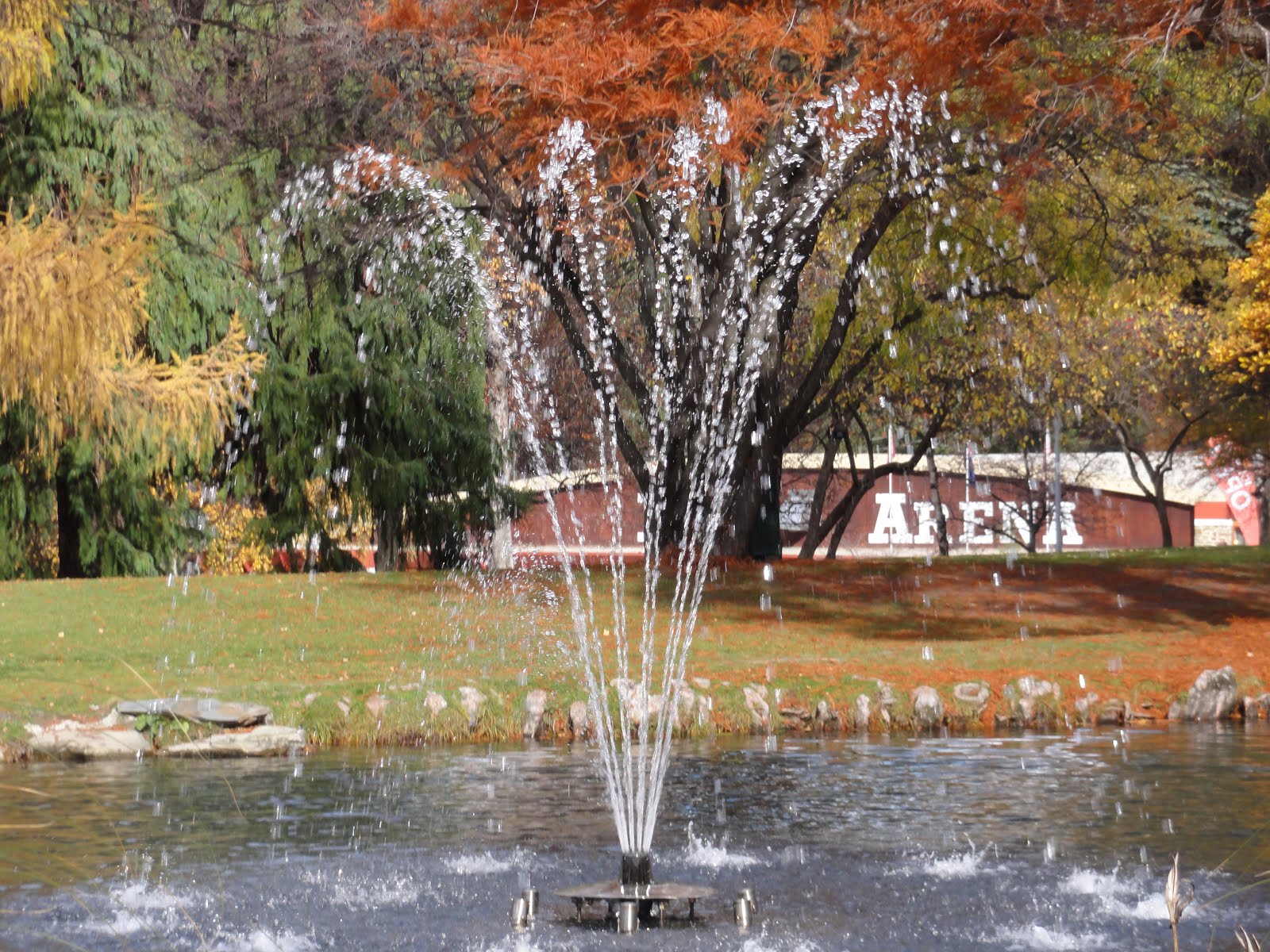
Queenstown Gardens are not far from the center of Queenstown.  They are just down the hill from where we usually stay at Queenstown Mews.

More often than not we approach the Gardens from the lakeside during our morning walk from the apartment to the coffee shop.  You can walk alongside the lake, or walk through the Gardens, which, whether in summer or winter, is a very picturesque walk.

There’s a bowling club, and I’m afraid I will never be that sort of person to take it up (not enough patience) and an Ice Arena, where, in winter I have heard players practicing ice hockey.

I’m sure, at times, ice skating can also be done.

There is a stone bridge to walk across, and in Autumn/Winter the trees can add a splash of color.

There is a large water feature with fountain, and plenty of seating around the edge of the lake, to sit and absorb the tranquility, or to have a picnic.

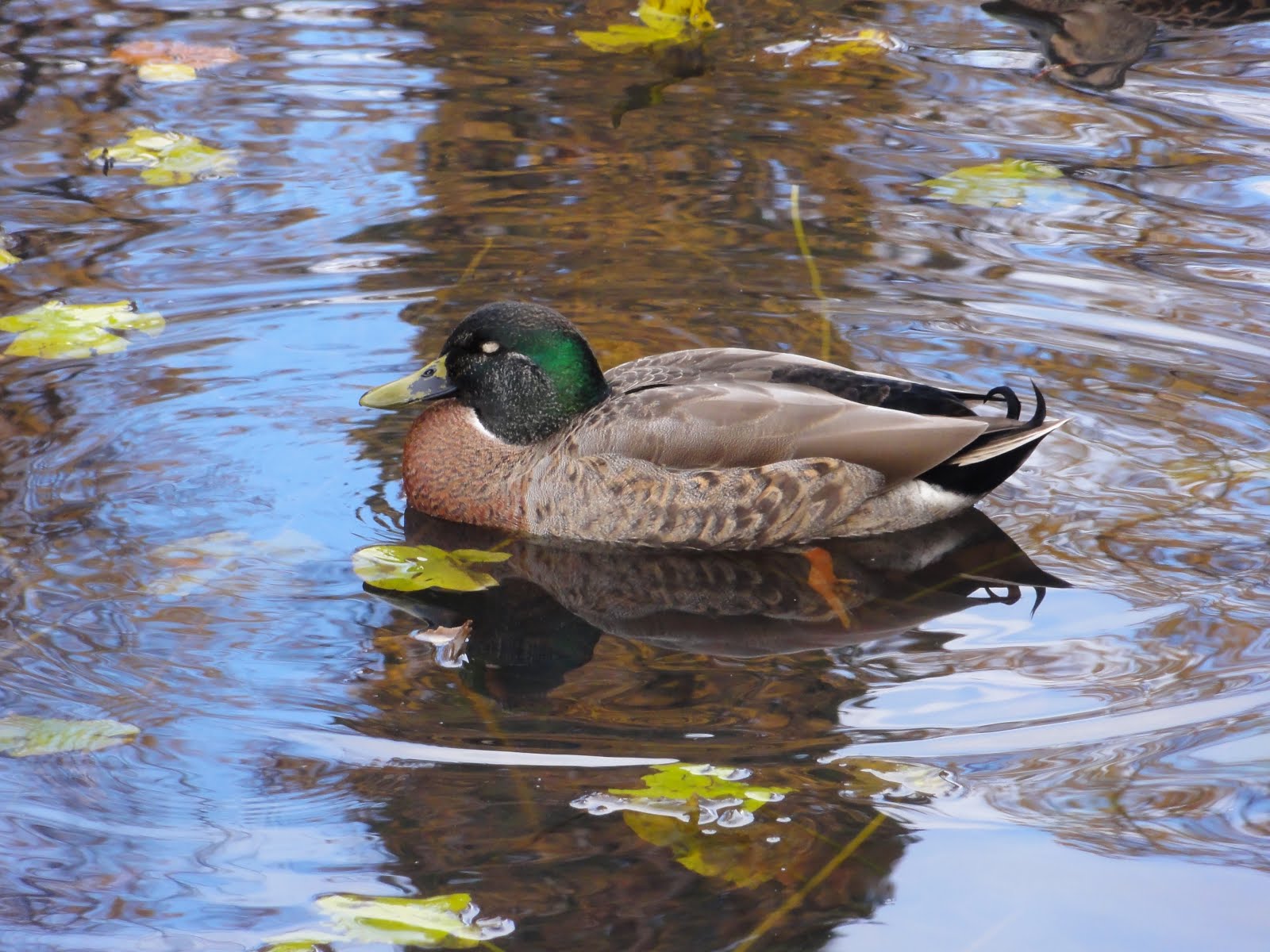
There are ducks in the pond

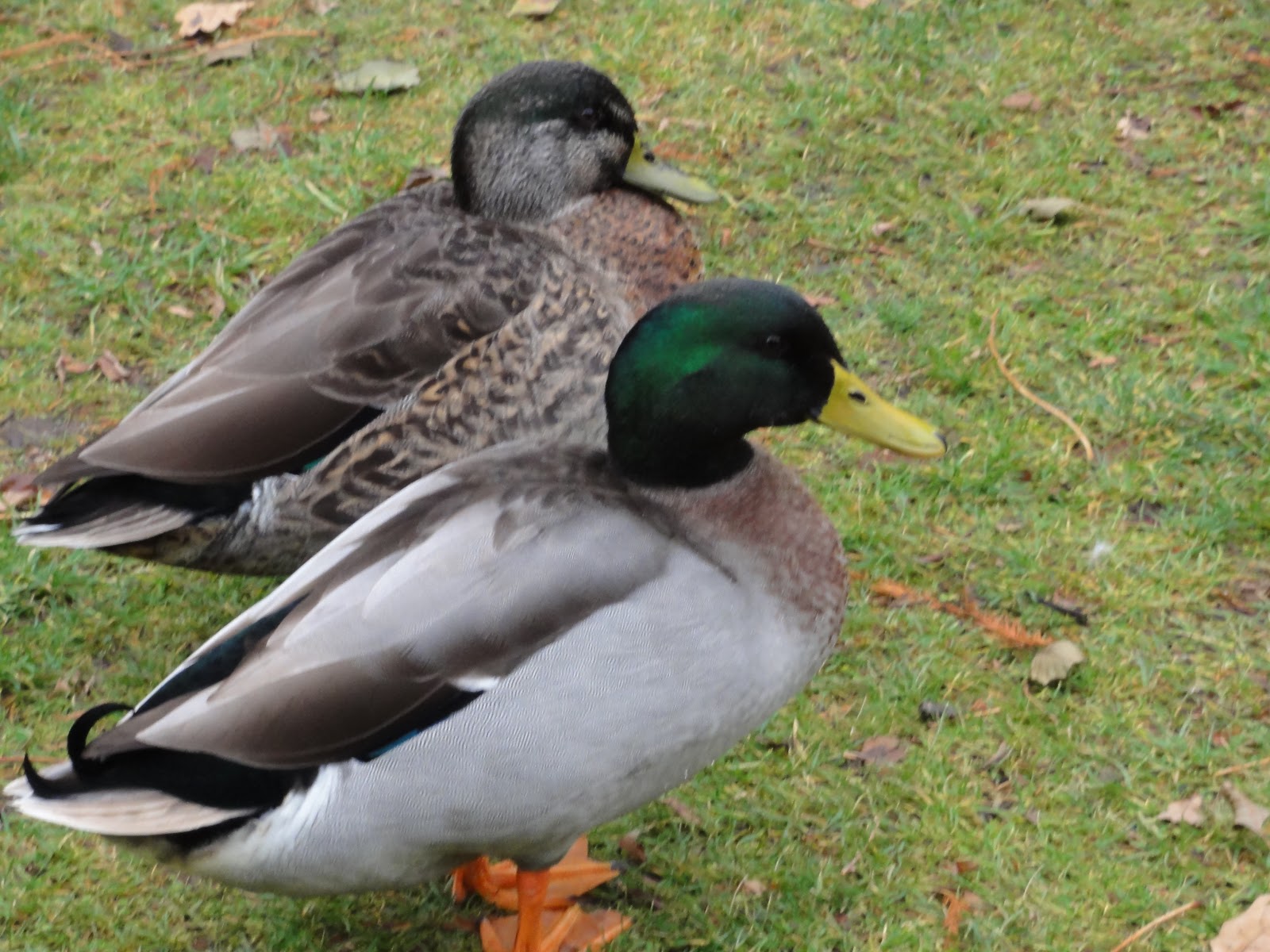
and out of the pond

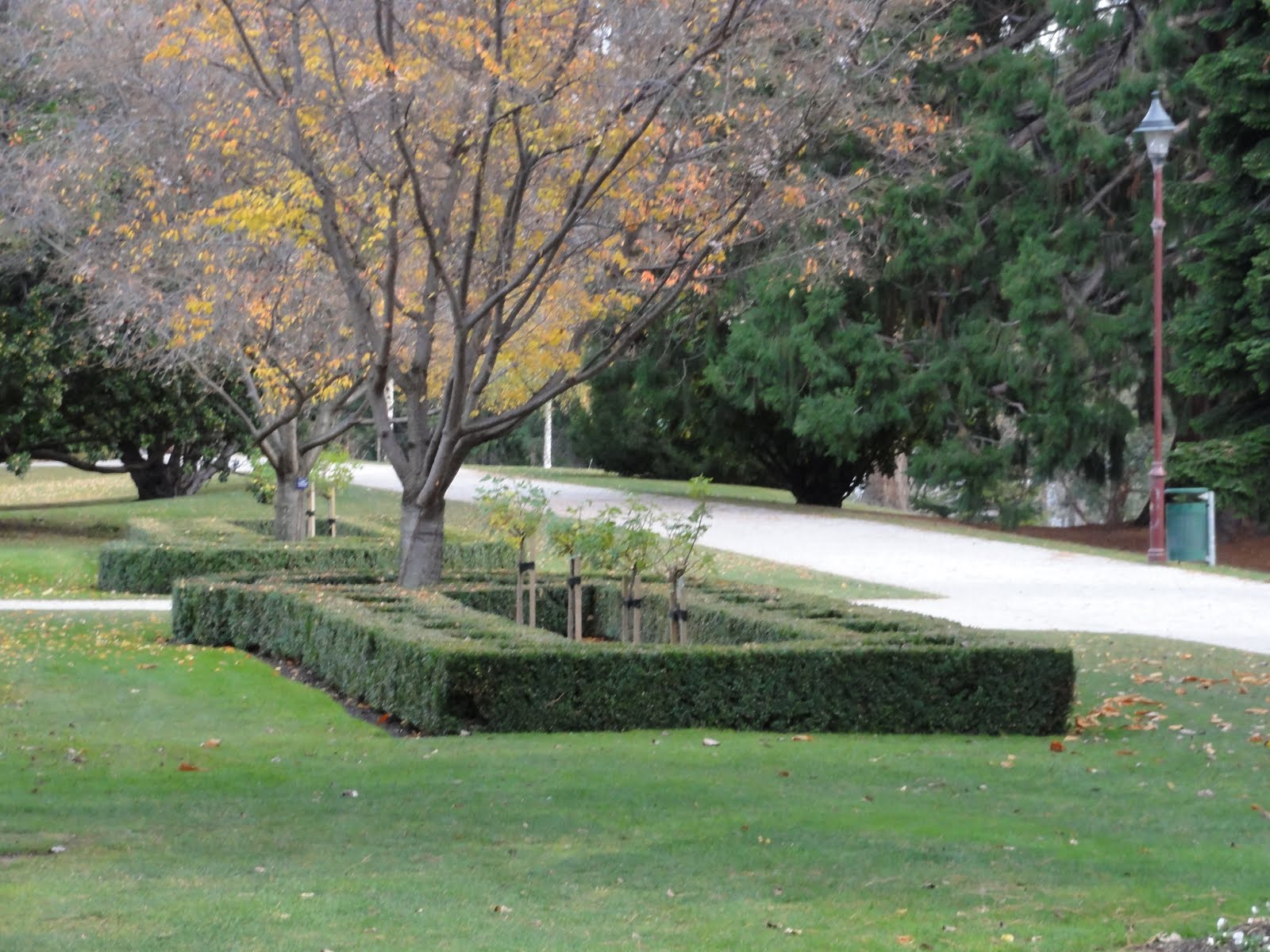
and plenty of grassed areas with flower beds which are more colorful in summer.  I have also seen the lawns covered in snow, and the fir trees that line the lake side of the gardens hang heavy with icicles.

An excerpt from “Betrayal” – a work in progress

It could have been anywhere in the world, she thought, but it wasn’t.  It was in a city where if anything were to go wrong…

She sighed and came away from the window and looked around the room.  It was quite large and expensively furnished.  It was one of several she had been visiting in the last three months.

Quite elegant too, as the hotel had its origins dating back to before the revolution in 1917.  At least, currently, there would not be a team of KGB agents somewhere in the basement monitoring everything that happened in the room.

There was no such thing as the KGB anymore, though there was an FSB, but such organisations were of no interest to her.

She was here to meet with Vladimir.

She smiled to herself when she thought of him, such an interesting man whose command of English was as good as her command of Russian, though she had not told him of that ability.

All her knew of her was that she was American, worked in the Embassy as a clerk, nothing important, who life both at work and at home was boring.  Not that she had blurted that out the first tie she met, or even the second.

That first time, at a function in the Embassy, was a chance meeting, a catching of his eye as he looked around the room, looking, as he had told her later, for someone who might not be as boring as the function itself.

It was a celebration, honouring one of the Embassy officials on his service in Moscow, and the fact he was returning home after 10 years.  She had been there one, and still hadn’t met all the staff.

They had talked, Vladimir knew a great deal about England, having been stationed there for a year or two, and had politely asked questions about where she lived, her family, and of course what her role was, all questions she fended off with an air of disinterested interest.

It fascinated him, as she knew it would, a sort of mental sparring as one would do with swords, if this was a fencing match.

They had said they might or might not meet again when the party was over, but she suspected there would be another opportunity.  She knew the signs of a man who was interested in her, and Vladimir was interested.

The second time came in the form of an invitation to an art gallery, and a viewing of the works of a prominent Russian artist, an invitation she politely declined.  After all, invitations issued to Embassy staff held all sorts of connotations, or so she was told by the Security officer when she told him.

Then, it went quiet for a month.  There was a party at the American embassy and along with several other staff members, she was invited.  She had not expected to meet Vladimir, but it was a pleasant surprise when she saw him, on the other side of the room, talking to several military men.

A pleasant afternoon ensued.

And it was no surprise that they kept running into each other at the various events on the diplomatic schedule.

By the fifth meeting, they were like old friends.  She had broached the subject of being involved in a plutonic relationship with him with the head of security at the embassy.  Normally for a member of her rank it would not be allowed, but in this instance it was.

She did not work in any sensitive areas, and, as the security officer had said, she might just happen upon something that might be useful.  In that regard, she was to keep her eyes and ears open, and file a report each time she met him.

After that discussion she got the impression her superiors considered Vladimir more than just a casual visitor on the diplomatic circuit.  She also formed the impression the he might consider her an ‘asset’, a word that had been used at the meeting with security and the ambassador.

It was where the word ‘spy’ popped into her head and sent a tingle down her spine.  She was not a spy, but the thought of it, well, it would be fascinating to see what happened.

A Russian friend.  That’s what she would call him.

And over time, that relationship blossomed, until, after a visit to the ballet, late and snowing, he invited her to his apartment not far from the ballet venue.  It was like treading on thin ice, but after champagne and an introduction to caviar, she felt like a giddy schoolgirl.

Even so, she had made him promise that he remain on his best behaviour.  It could have been very easy to fall under the spell of a perfect evening, but he promised, showed her to a separate bedroom, and after a brief kiss, their first, she did not see him until the next morning.

So, it began.

It was an interesting report she filed after that encounter, one where she had expected to be reprimanded.

She wasn’t.

It wasn’t until six weeks had passed when he asked her if she would like to take a trip to the country.  It would involve staying in a hotel, that they would have separate rooms.  When she reported the invitation, no objection was raised, only a caution; keep her wits about her.

Perhaps, she had thought, they were looking forward to a more extensive report.  After all, her reports on the places, and the people, and the conversations she overheard, were no doubt entertaining reading for some.

But this visit was where the nature of the relationship changed, and it was one that she did not immediately report.  She had realised at some point before the weekend away, that she had feelings for him, and it was not that he was pushing her in that direction or manipulating her in any way.

It was just one of those moments where, after a grand dinner, a lot of champagne, and delightful company, things happen.  Standing at the door to her room, a lingering kiss, not intentional on her part, and it just happened.

And for not one moment did she believe she had been compromised, but for some reason she had not reported that subtle change in the relationship to the powers that be, and so far, no one had any inkling.

She took off her coat and placed it carefully of the back of one of the ornate chairs in the room.  She stopped for a moment to look at a framed photograph on the wall, one representing Red Square.

Then, after a minute or two, she went to the mini bar and took out the bottle of champagne that had been left there for them, a treat arranged by Vladimir for each encounter.

There were two champagne flutes set aside on the bar, next to a bowl of fruit.  She picked up the apple and thought how Eve must have felt in the garden of Eden, and the temptation.

Later perhaps, after…

She smiled at the thought and put the apple back.

A glance at her watch told her it was time for his arrival.  It was if anything, the one trait she didn’t like, and that was his punctuality.  A glance at the clock on the room wall was a minute slow.

The doorbell to the room rang, right on the appointed time.

She put the bottle down and walked over to the door.

A smile on her face, she opened the door.

It was not Vladimir.  It was her worst nightmare.

© Charles Heath 2020

The importance of book reviews

Self-published authors are fully aware that perhaps the easiest part of the writing journey is the actual writing.  Well, compared to the marketing aspect I believe it is.

I have read a lot of articles, suggestions and tips and tricks to market the book to the reading public.  It is, to say the least, a lot harder to market eBooks than perhaps their hard or paper-back relatives.

This is despite the millions of eReaders out there.

Then there is that other fickle part of the publishing cycle, the need for reviews.

Proper reviews of course.

As we are learning, reviews can be bought.  And Amazon is out there making sure what it calls unverified reviews get removed, and stopped, and has brought in very strict control over who can leave a review.

Another site where reviews are taken seriously, is the Goodreads website where I have established a presence, and expect in due course, some reviews.

But, all the advice I have seen and read tells me that reviews should not be paid for, that reviews will come with sales.  It might be a difficult cycle, more reviews means more sales, etc.

And getting those first sales …

Therein lies the conundrum.  It is a question of paying for advertising or working it out for ourselves.  I guess if I were to get more sales, I could afford the advertising … yes, back on the merry-go-round!

And yet, the harder the road, the more I enjoy what I do.  It is exhilarating while writing, it is a joy to finish the first draft, it is an accomplishment when it is published, but when you sell that first book, well, there is no other feeling like it.

Inspiration, maybe – Volume 1

50 photographs, 50 stories, of which there is one of the 50 below.

They all start with –

A picture paints … well, as many words as you like.  For instance:

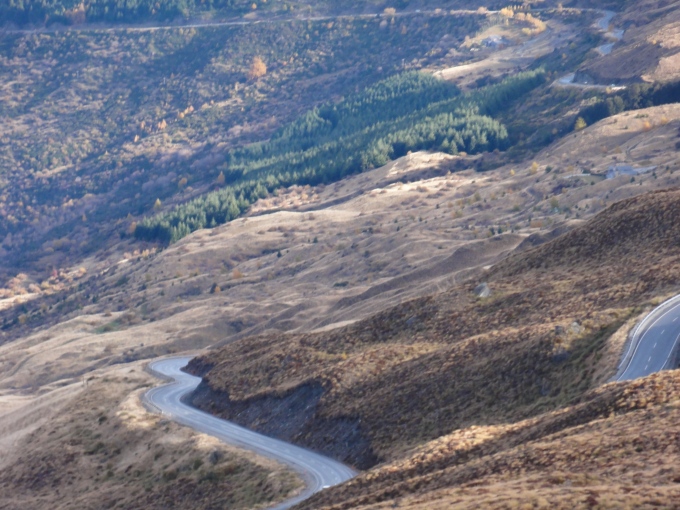
lookingdownfromcoronetpeak

And the story:

It was once said that a desperate man has everything to lose.

The man I was chasing was desperate, but I, on the other hand, was more desperate to catch him.

He’d left a trail of dead people from one end of the island to the other.

The team had put in a lot of effort to locate him, and now his capture was imminent.  We were following the car he was in, from a discrete distance, and, at the appropriate time, we would catch up, pull him over, and make the arrest.

There was nowhere for him to go.

The road led to a dead-end, and the only way off the mountain was back down the road were now on.  Which was why I was somewhat surprised when we discovered where he was.

Where was he going?

“Damn,” I heard Alan mutter.  He was driving, being careful not to get too close, but not far enough away to lose sight of him.

“What?”

“I think he’s made us.”

“How?”

“Dumb bad luck, I’m guessing.  Or he expected we’d follow him up the mountain.  He’s just sped up.”

“How far away?”

“A half-mile.  We should see him higher up when we turn the next corner.”

It took an eternity to get there, and when we did, Alan was right, only he was further on than we thought.”

“Step on it.  Let’s catch him up before he gets to the top.”

Easy to say, not so easy to do.  The road was treacherous, and in places just gravel, and there were no guard rails to stop a three thousand footfall down the mountainside.

Good thing then I had the foresight to have three agents on the hill for just such a scenario.

Ten minutes later, we were in sight of the car, still moving quickly, but we were going slightly faster.  We’d catch up just short of the summit car park.

Or so we thought.

Coming quickly around another corner we almost slammed into the car we’d been chasing.

“What the hell…” Aland muttered.

I was out of the car, and over to see if he was in it, but I knew that it was only a slender possibility.  The car was empty, and no indication where he went.

Certainly not up the road.  It was relatively straightforward for the next mile, at which we would have reached the summit.  Up the mountainside from here, or down.

I looked up.  Nothing.

Alan yelled out, “He’s not going down, not that I can see, but if he did, there’s hardly a foothold and that’s a long fall.”

Then where did he go?

Then a man looking very much like our quarry came out from behind a rock embedded just a short distance up the hill.

“Sorry,” he said quite calmly.  “Had to go if you know what I mean.”

I’d lost him.

It was as simple as that.

I had been led a merry chase up the hill, and all the time he was getting away in a different direction.

I’d fallen for the oldest trick in the book, letting my desperation blind me to the disguise that anyone else would see through in an instant.

It was a lonely sight, looking down that road, knowing that I had to go all that way down again, only this time, without having to throw caution to the wind.

“Maybe next time,” Alan said.

“We’ll get him.  It’s just a matter of time.”

© Charles Heath 2019-2021

Find this and other stories in “Inspiration, maybe”  available soon.

InspirationMaybe1v1

The cinema of my dreams – It’s a treasure hunt – Episode 31

Here’s the thing…

Every time I close my eyes, I see something different.

I’d like to think the cinema of my dreams is playing a double feature but it’s a bit like a comedy cartoon night on Fox.

But these dreams are nothing to laugh about.

Once again there’s a new instalment of an old feature, and we’re back on the treasure hunt.


Was she insinuating that Alex Benderby killed Jacob Stravinsky?

“Alex is a bully but he’s not a murderer,” I said, and wondering, at the same time, if he had finally graduated to a full-blown bad guy.

“He wouldn’t do it.  Like his old man, they get others to do their dirty work.  I’m sure the significance of Alex being out on his father’s boat was not lost on you.  You asked the questions, and now that I’ve thought about it, it’s possible those divers could have planted the body on Rico’s boat.”

It’s one thing to come up with theories, but it was entirely another to suddenly realize they might be true.  Until this point, I was happy to let Boggs have his dream that one day we might uncover a treasure trove, thinking that it was more fiction than the truth.  It made a good story, one of hope for a person who had had very little of it in the past.

Now, it was becoming horribly true.  What might amount to proof there might be treasure buried somewhere along this coast, an expert being interrogated and then killed, and a pair of what could only be described as gangsters about to start fighting over the spoils and not afraid of killing anyone who got in their way, these were omens, omens not to be ignored.

“Then don’t you think this is far too dangerous to get involved in?  Look what happened to Boggs and I.  We got off lightly if what you say is true.  I’m surprised if this Stravinsky is dead, then why isn’t Boggs?  He had the map, there’s no doubt Vice would assume he had made a copy.  What to stop him from doing the same to Boggs and Benderby did for Stravinsky?”

“Vince is not a clever as Alex.  Vince will never take over the Cossatino clan.  Alex, on the other hand, is the next generation of Benderby thugs.  But I suspect the older Benderby doesn’t know what’s going on.  Not yet anyway.”

My bottle of beer was empty.  Now I think I needed something stronger.  A lot stronger.

There was a knock on the door, which caught us both by surprise.

Are you expecting anyone?” I asked, and in the next second suspected it might be Vince, and I’d been led down the garden path to a place where I really didn’t want to be.

“No.”  She went over to the door and peered through the peephole.

“Damn,” she muttered.

Another, more demanding, knock.

She turned to look at me, “It’s Vince and my father.  I didn’t ask them to come here, and no, I didn’t tell them anything, whatever you might be thinking.”

All I was thinking right then was the coincidence of their arrival and being very afraid.

She opened the door.

Vince barged in almost pushing the door into his sister and stopped when he saw me.  At a more sedate speed, Giuliano Cossatino, Nadia’s father came into the room, and also stopped when he saw me.

There was no mistaking the malice on Vince’s face.   Nadia was right.  He was all muscle and no brain.

The older Cossatino spoke first.  “I see you have a new friend, though I would have thought you’d have better taste in men.”

“Your days of telling me what I can do and not do were over the moment you sent me away.”

“And yet you come back, slinking about like a thief in the night.  Your mother was most upset when you didn’t tell her.”

“The fact I have to, as you call it, slink back, should tell you a lot.”

“That you’re still the idiotic child you were before you went away.”

OK, now I was in the middle of a domestic family standoff.  I was waiting for the order for Vince to throw me out, quite possibly over the balcony for good measure.

“I should leave,” I said standing, “and let you two work it out.”

Vince took another step forward and was now only two paces away.  I’d have to go through him to leave.

“Stay,” Cossatino said.  “I have nothing against you.  Yet.”

“If you’re thinking this is anything but reminiscing about the old days, Mr Cossatino, then you’d be wrong.  There’s nothing between your daughter and I but air.  And,” mustering more bravado than I felt, “call your attack dog off.”

“Or what?”

“You don’t want to find out.”  Where was this coming from?  I was saying the words, but they were not my words.

“I hardly think…”

“That’s probably your biggest fault,” Nadia said, in a tone that suggested she was rapidly losing patience with her father.  

It was clear to me now, she had a hard time of it as a child, not unlike the rest of us, but for different reasons.  The bullying didn’t have to happen at school, but I could see why she had been like she was back then. 

“You never gave me any attention except to treat e like garbage, no, worse than garbage.  I can see nothing has changed.”  Then she switched her attention to Vince.  “And look at you, daddy’s little attack dog, as Sam says.  I’d start worrying Vince, because one day someone’s going to beat the crap out of you, and then you’ll be nothing, just like me.”

Vince only had one expression, so it was difficult to tell if he was worried or not.

Back to her father, “Why are you here?”

I doubt anyone had spoken to him like Nadia just did, and he looked angry.  If I hadn’t been there, I was not sure what would have happened to her.

“Your mother would like to see you.”

“You tell her to grow a backbone first, then when she does, I’ll think about it.  Now get out of my room, or I’ll call the sheriff.  At least he’s not in your back pocket.”

She picked up her phone and made ready to call.

A flick of his head got Vince to back up to the door and open it.

“You will regret this, young lady.”

“And don’t you forget I know where the skeletons are buried, so I’d leave now before some of them start rattling.”

A look of suffused anger flashed across his face, and he took a step forward.  I was not sure what to expect, but Nadia did take a step back.  She knew what he was capable of.

“We need to talk.  Don’t make me wait too long or there’ll be consequences.”

A glare at me, another for his daughter along with a shake of his head, then he left closing the door quietly after him.

I sat down before I fell down.  Nadia visibly wilted.

“I’m sorry about that.  You might have thought twice about threatening Vince.  You know he’ll come after you now.”

“Let him.  I always thought you were close to your father.”

“Daddy’s girl I was not.  Daddy’s biggest disappointment, maybe.”

“You didn’t ask him to come?”

“No.”

“But he didn’t come here to ask you to visit your mother.  It sounded like a last-minute invention.”

“It was.  My real mother is dead, and my stepmother was the reason why I was sent away.  Among other things.  No.  He was here to tell me to get closer to Alex.  It means only one thing.  This treasure hunt is about to get very, very ugly.”


© Charles Heath 2019

An excerpt from “Echoes from the Past”

Available on Amazon Kindle here:  https://amzn.to/2CYKxu4

With my attention elsewhere, I walked into a man who was hurrying in the opposite direction.  He was a big man with a scar running down the left side of his face from eye socket to mouth, and who was also wearing a black shirt with a red tie.

That was all I remembered as my heart almost stopped.

He apologized as he stepped to one side, the same way I stepped, as I also muttered an apology.

I kept my eyes down.  He was not the sort of man I wanted to recognize later in a lineup.  I stepped to the other side and so did he.  It was one of those situations.  Finally getting out of sync, he kept going in his direction, and I towards the bus, which was now pulling away from the curb.

Getting my breath back, I just stood riveted to the spot watching it join the traffic.  I looked back over my shoulder, but the man I’d run into had gone.  I shrugged and looked at my watch.  It would be a few minutes before the next bus arrived.

Wait, or walk?  I could also go by subway, but it was a long walk to the station.  What the hell, I needed the exercise.

At the first intersection, the ‘Walk’ sign had just flashed to ‘Don’t Walk’.  I thought I’d save a few minutes by not waiting for the next green light.  As I stepped onto the road, I heard the screeching of tires.

A yellow car stopped inches from me.

It was a high powered sports car, perhaps a Lamborghini.  I knew what they looked like because Marcus Bartleby owned one, as did every other junior executive in the city with a rich father.

Everyone stopped to look at me, then the car.  It was that sort of car.  I could see the driver through the windscreen shaking his fist, and I could see he was yelling too, but I couldn’t hear him.  I stepped back onto the sidewalk, and he drove on.  The moment had passed and everyone went back to their business.

My heart rate hadn’t come down from the last encounter.   Now it was approaching cardiac arrest, so I took a few minutes and several sets of lights to regain composure.

At the next intersection, I waited for the green light, and then a few seconds more, just to be sure.  I was no longer in a hurry.

At the next, I heard what sounded like a gunshot.  A few people looked around, worried expressions on their faces, but when it happened again, I saw it was an old car backfiring.  I also saw another yellow car, much the same as the one before, stopped on the side of the road.  I thought nothing of it, other than it was the second yellow car I’d seen.

At the next intersection, I realized I was subconsciously heading towards Harry’s new bar.   It was somewhere on 6th Avenue, so I continued walking in what I thought was the right direction.

I don’t know why I looked behind me at the next intersection, but I did.  There was another yellow car on the side of the road, not far from me.  It, too, looked the same as the original Lamborghini, and I was starting to think it was not a coincidence.

Moments after crossing the road, I heard the roar of a sports car engine and saw the yellow car accelerate past me.  As it passed by, I saw there were two people in it, and the blurry image of the passenger; a large man with a red tie.

Now my imagination was playing tricks.

It could not be the same man.  He was going in a different direction.

In the few minutes I’d been standing on the pavement, it had started to snow; early for this time of year, and marking the start of what could be a long cold winter.  I shuddered, and it was not necessarily because of the temperature.

I looked up and saw a neon light advertising a bar, coincidentally the one Harry had ‘found’ and, looking once in the direction of the departing yellow car, I decided to go in.  I would have a few drinks and then leave by the back door if it had one.

Just in case.

© Charles Heath 2015-2020

newechocover5rs

In a word: Stern

It’s what I’d always expected of my teachers, having to stand up the front of the classroom and look like they were in control.

These days, not so much, but back in my day, teachers, and particularly the men, were to be feared, and stern expressions were the features of an effective teacher.

So, in this context, it means a hardness or severity of manner.

Whilst in a sense that was frightening to us kids, another form of the word also can be used to express a forbidding or gloomy appearance.

Grandfathers also have that stern look, but it’s more forbidding, more authoritarian, more severe, more austere, well, you get the picture.  A six-year-old would be trembling in his or her boots.

There again, in facing up to either possibility above, you could stand firm with a stern resolve not to buckle under the pressure.

Of course, not a good idea if you’re facing a tank (with a stern-looking tank master)

Then…

If you’re standing at the end of the boat, not the front, but the rear, you would be standing at the stern of the boat, or ship.

Oddly, when issuing instructions to go in reverse, not something you would say if you were on the bridge, you would instead say, or possibly yell, full speed astern, because you’re about to hit an iceberg.

Or some idiot in a jet ski who likes to think he or she can beat the bullet (or 65,000 tonnes of a ship that has very little mobility).

I always wanted to see the planets – Episode 23

Where did that ship come from?

When I stepped out on to the bridge number one was waiting, “we received a distress call a few minutes ago, and we’ve been trying to get the ship back to get the details. Then, it just appeared.

Not far off the Port bow, another ship, about half the size of ours was not moving, and it was clear we were doing a circuit to check he outside if the ship.

“It’s the ‘Ionosphere’, one of the research vessels, but according to our records, it should be off Jupiter.”

“Is there anyway we can find out if anyone is alive on board?”

“Our sensors are not clever enough to discern life forms, at least nit yet.  They’re working on it, and it’s going to be in the next upgrade.  We basically restricted to what’s going on outside.”

“Then we’d better send a shuttle, see what’s going on.  Gather a team, take the military rather than security, and a systems expert, and head it up yourself.”

“I’ll let you know when we depart.”

“Make it sooner rather than later, there may be people who need help.  Better add a doctor to the team.”

He nodded and headed towards the elevator, calling up the shuttle bay.

The ‘Ionosphere’ was one of three older research vessels with a crew of about 290, mostly scientists.  The fact it was drifting was not a good sign.

Chalmers was the duty scientist on the bridge, and I went over to his station.

“Are you familiar with the ‘Ionosphere’?”

“Yes sir.  Spent about 6 months on the first exploration to the edge of our universe, surveying and analysing Pluto.”

“Am I correcting on assuming she was lately at Jupiter?”

“Yes sir.  She had been deployed to Saturn first, then Jupiter.”

“You hadn’t heard officially or unofficially she was due back at earth space dock any time soon?”

“No sir.  In fact I was just communicating with a colleague on board a day or so back, who said they had, or though they had discovered an anomaly in space, and had deviated towards it to investigate.  Whatever it was, it had sent some of their instruments crazy.”

Number one’s voice came over the communication system, announcing the shuttle had left the bay and was encountered to the other ship.  A minute later we could see it.

In the same instant, a thought crossed my mind, one that might explain how the ship was not far from us, and on the same course.

“Can you tell me if if Jupiter and Uranus are in alignment, along our projected trajectory?”

“As a matter of fact, they are.”

I was not the greatest scientific mind on the ship, that was why we had a first class scientific team aboard, but I could think outside the box, where some of the scientific minds were closed to ‘out there’ possibilities.

That’s why it didn’t seem impossible to me that the Ionosphere ‘hitched a ride’ in what might be called a wormhole, that sort of anomaly that Jerome Kennedy had been talking about.  It struck me that these worm holes could be like black holes and ships could enter them and come out the other side, a very great distance away, in a very short time.

It would explain how the enemy ship had disappeared, but it didn’t explain why we were able to follow a trail.

That would be a matter for Kennedy

Number one was back on the communications system with a report. “We’ve docked and come on board. At first we thought everyone was dead, there were people on the floor and hunched over in their seats, but the environment is intact and work, and they are mostly unconscious. I have gone directly to the bridge and we’ve woken the Captain. He has no idea what happened, they were investigating what he calls a ripple, and then nothing till we woke him. We’re going to look at the logs and see if what happened has been recorded.”

“Very good.”

Fifteen minutes possibly longer passed when he reported back, not exactly in the serious manner I would expect. “You are not going to believe this, sir, but the ship has just travelled a distance that would normally take them several months, in less than an hour. They were at Jupiter, sir, but that was, according to their log, no more than two hours ago.”

© Charles Heath 2021

Knowledge can be dangerous… – A short story

It was, perhaps, the saddest week of my life.

It started with a phone call, then a visit by two police officers.  It was about my parents, but the news could not be imparted over the phone, only in person.  That statement alone told me it was very bad news, so I assumed the worst.

The two police officers, standing at the front door, grim expressions on their faces, completed the picture.  The news, my parents were dead, killed in a freak car accident.

At first, it didn’t sink in.  They were on their way back from another of their extensive holidays, one of many since my father had retired.  I’d seen them probably six months out of the last five years, and the only reason they were returning this time was that my mother needed an operation.

They hadn’t told me why, not that they ever told me very much any time since the day I’d been born, but that was who they were.  I thought them eccentric, being older when I’d come along, and others thought them, well, eccentric.

And being an only child, they packed me off to boarding school, then university, and then found me a job in London, and set me up so that I would only see them weekends if they were home.

I had once wondered if they ever cared about me, keeping me at arm’s length, but my mother some time ago had taken me aside and explained why.  It was my father’s family tradition.  The only part I’d missed was a nanny.

It most likely explained why I didn’t feel their passing as much as I should.

A week later, after a strange funeral where a great many people I’d never met before, and oddly who knew about me, I found myself sitting in the sunroom, a glass of scotch in one hand, and an envelope with my name on it, in the other.

The solicitor, a man I’d never met before, had given it to me at the funeral.   We had, as far as I knew an elderly fellow, one of my father’s old school friends, as the family solicitor, but he hadn’t shown at the funeral and wasn’t at home when I called in on my way home.

It was all very odd.

I refilled the glass and took another look at the envelope.  It was not new, in fact, it had the yellow tinge of age, with discoloration where the flap was.  The writing was almost a scrawl, but identifiable as my father’s handwriting, perhaps an early version as it was now definitely an illegible scrawl.

I’d compared it with the note he’d left me before they had embarked on their last adventure, everything I had to do while caretaking their house.  The last paragraph was the most interesting, instructing me to be present when the cleaning lady came, he’d all but accused her of stealing the candlesticks.

To be honest, I hadn’t realized there were candlesticks to steal, but there they were, on the mantlepiece over the fire in the dining room.  The whole house was almost like being in an adventure park, stairs going up to an array of rooms, mostly no longer used, and staircase to the attic, and then another going down to the cellar.  The attic was locked and had been for as long as I could remember, and the cellar was dank and draughty.

Much like the whole house, but not surprising, it was over 200 years old.

And perhaps it was now mine.  The solicitor, a man by the name of Sir Percival Algernon Bridgewater, had intimated that it might be the last will and testament and had asked me to tell him if it was.  I was surprised that Sir Percival didn’t have the document in question.

And equally. so that the man I knew as his solicitor, Lawerence Wellingham, didn’t have a copy of my father’s last will and testament either.

I finished the drink, picked up the envelope, and opened it.

It contained two sheets of paper, the will, and a letter.  A very short letter.

“If you are reading this I have died before my time.  You will need to find Albert Stritching, and ask him to help you find the murderer.”

Even the tenor of that letter didn’t faze me as it should have, because at this point nothing would surprise me.  In fact, as I  unfolded the document that proclaimed it was the will, I was ready for it to say that whole of his estate and belongings were to be left to some charity, and I would get an annual stipend of a thousand pounds.

In fact, it didn’t.  The whole of his estate was left to my mother should she outlive him, or in the event of her prior decease, to me.

I had to put all of those surprises on hold to answer a knock on the door.

Lawerence Wellingham.

I stood too e side, let him pass, closed the door, and followed him into the front room, the one my mother called the ‘drawing room’ though I never knew why.

He sat in one of the large, comfortable lounge chairs.  I sat in the other.

I showed him the will.  I kept the other back, not knowing what to make of it.

“No surprise there,” Wellingham said.

“Did you have any idea what my father used to do, beyond being, as he put it, a freelance diplomat?”

I thought it a rather odd description but it was better than one he once proffered, ‘I do odd jobs for the government’.

“I didn’t ask.  Knowledge can be dangerous, particularly when associated with your father.  Most of us preferred not to know, but one thing I can tell you.  If anyone tries to tell you what happened to your parents was not an accident, ignore them.  Go live your life, and keep those memories you have of them in the past, and don’t look back.  They were good people, Ken, remember them as such.”

We reminisced for the next hour, making a dent in the scotch, one of my father’s favorite, and he left.

Alone again, the thoughts went back to the second note from my father.  That’s when the house phone rang.

Before I could answer it, a voice said, “My name is Stritching.  Your father might have mentioned me?  We need to talk.”

—-

© Charles Heath 2020-2021

Memories of the conversations with my cat – 13

As some may be aware, but many not, Chester, my faithful writing assistant, mice catcher, and general pain in the neck, passed away some months ago.

Recently I was running a series based on his adventures, under the title of Past Conversations with my cat.

For those who have not had the chance to read about all of his exploits I will run the series again from Episode 1

These are the memories of our time together…

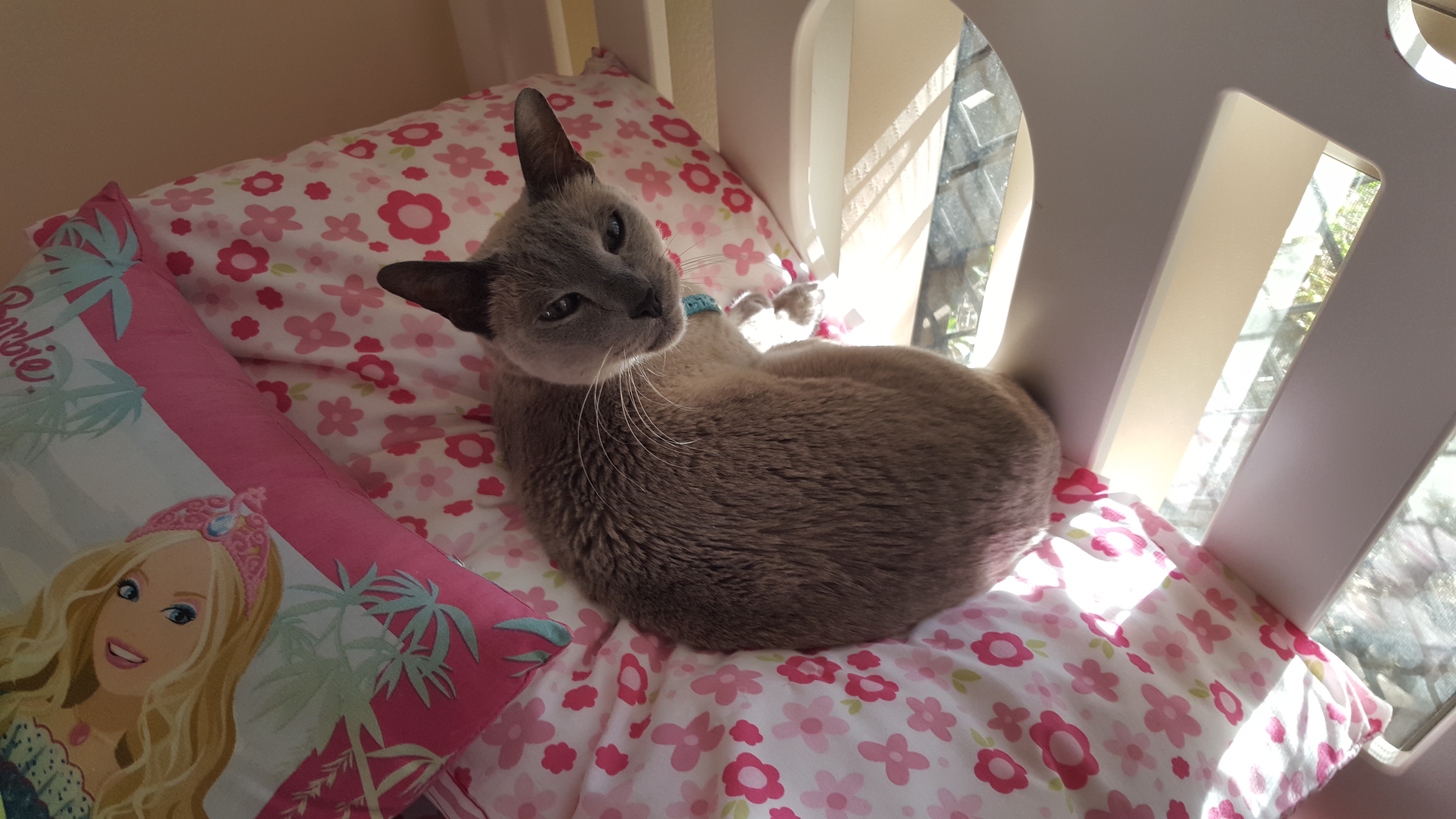
20161004_162739-1

This is Chester.  He’s pushing his luck.

We have a long-standing issue of where he can sleep and where he cannot.  He has two baskets, lined with very warm and comfortable blankets, one in our room, and one in the dining room.

Despite this, he seems to think he can sleep on the pillows in the granddaughter’s rooms, the end of our bed, on the sofa and on the lounge chair, and catching him out had=s been the catalyst for a number of arguments.

And we all know who lost those.

For a long time, he would not go into our 15-year-old granddaughter’s room, mainly because she had tormented him from an early age, but recently he had finally made up with her, but no, sleeping on her pillow was not part of the bargain.

After getting admonished for sitting on the settee, I wondered where he had got to, and it was only by chance I looked in the room.  He now got a second serve for sleeping on her pillow.

And, no, giving me the sad eyes was not going to weaken my resolve.

Looks like it’s back to his basket!