In a word: Dry

We all know what this means, without moisture, in other words not wet.

It could also mean dull factually, as in reading some non-fiction books, and quite often those prescribed as mandatory reading at school.

You could also have a dry sense of humour, where you have to be on your game to understand, or get, the humour.

It could also describe boredom by saying that it’s like watching paint dry.

For those who like a bit of a tipple, the last place you want to go is a dry bar, where no alcohol is served.

Perhaps this should be mandatory for weddings and funerals, places where feelings often run very high and do not need the stimulus of half a dozen double Scotches.

And speaking of alcohol and cider in particular, you can have it sweet, dry, or draft. Many people prefer dry, sometimes the drier the better, especially wine, and oddly martinis.

Aside from whether they are shaken or stirred.

But the most fascinating version of dry is dry cleaning. Just how can you ‘dry’ clean clothes?

Would that be what they call an oxymoron?

The cinema of my dreams – Was it just another surveillance job – Episode 6

I’m back home and this story has been sitting on a back burner for a few months, waiting for some more to be written.

The trouble is, there are also other stories to write, and I’m not very good at prioritising.

But, here we are, a few minutes opened up and it didn’t take long to get back into the groove.

Did he just witness an execution?

I could see the cogs in his mind turning over.  Calculating what it would take to get past me.

Running would only help me.

Walking, well, he wasn’t going to get far.

A fight?  He might be more experienced, but I was more angry, now controlled anger aided by rational thinking.  There would be no blindly lashing out.

Reconnaissance, Surveillance, and Self defence.

We were ten yards apart when he stopped, moving to one side near the wall.  I’d seen him looking for a weapon, but luckily none were on offer.  Someone kept this laneway very clean.

A car had been parked at the end, and I’d seen him try the doors.  Locked.  It would not be available for his escape.

He glared at me.  “You’re Jackson, right?”

A brief moment of shock.  How did he know my name?

“Who I am is irrelevant.”

“So you say.  But I can assure you this is all wrong.”

Rule number seventy, or something like that, the target will say anything to get you offside.

“You harmed my friends.”

“Then, you’re in big trouble if you regard them as friends.  In this business, we don’t have friends.”

He was right in one respect.  Having friends gave out enemies leverage.  But without friends, the loneliness of the job could break you.

But, right then I wasn’t interested in his opinion.

When I didn’t answer he said, “This is a setup.  I’m not the enemy, I’m one of you.  I made a mistake, and now they’ve set the dogs on me.”

I didn’t ask why we were following him, that was above my pay grade, added to the fact I didn’t want to know.  Knowing the perfidy of the target could compromise how I treated him.

“You’re the target, why I don’t care.”

“Look, I haven’t got much time.  Find a man called Alfred Nobbin.  I work for him.  I found something I shouldn’t, which is why you are here, now.  Tell him the evidence is ….”

I didn’t hear the bullet that killed him, but it came from behind me, hit him in the chest, its force sending him backwards, and he was dead before he hit the ground.”

I turned but there was no one there.

© Charles Heath 2019-2021

“For heaven’s sake…” – a short story

It was a combination of circumstances, not all related, but coming at me out of left field, circumstances that would prevent me from going home when I said I would.

I had every intention of getting there and as a testament to that, I had got to the airport with baggage two hours before departure time and had reached the departure gate with 20 minutes to spare, ready to board the plane.

I’d even got a business class ticket so I could travel in style.

What precipitated the set of circumstances? A simple phone call. I should have turned it off five minutes before boarding, but I didn’t but because I’d forgotten to, simply because I’d been distracted.

The call was from Penelope, my hard-working and self-sacrificing personal assistant. I had offered to take her with me so we could work on a business plan that had to be presented the day after I was scheduled to return, but she had declined, which when I thought about it, if she hadn’t it might have created problems for both of us.

With a huge restructure going on, I was running behind in getting it completed and had promised to finish it while at home.

The call: to tell me I had left a folder with vital research back on my desk, and she came to the airport to deliver it, and she was, in fact, was in the terminal building when the boarding call came.

When I met her at the gate, only a few passengers had to be loaded. Being business class had afforded me a few extra minutes. File delivered, I left her looking exasperated and headed down the boarding ramp.

I was last aboard, and seconds after being seated, the door was closed.

I quickly typed and sent a message to tell everyone I was on the plane, eliciting two responses. My mother was glad that I was finally coming, the other from my elder brother, saying he would believe it when he saw me.

It was not without reason; I’d been in this situation before; on the plane ready to go.

Last time the plane didn’t leave the gate, a small problem that caused a big delay, so much so, I couldn’t get home.

Not this time. There was a slight lurch as the push tractor started pushing the plane back from the gate. A minute or so later the pilot fired up the engines, a sure sign of a definite departure. Nothing could stop us now.

It was a reassuring vibration that ran through the plane before the engines settled into a steady whine, a sign of an older plane that had flown many miles in the past and would into the future.

We stopped while the push tractor was disengaged and then the engines picked up speed and we lurched forward, heading towards the runway for take-off. In some airports, this could take a long time, and tonight it seemed to take forever.

I looked out the window and saw a backdrop of lights against the darkness, but no indication of where we were. It didn’t look like the end of the runway because I could not see any other planes waiting to take off.

Then the engines revved louder and for a pronged period. We didn’t move but remained where we were until the engines returned to what might be called idling speed

It was followed by an announcement from the pilot, “This is the captain speaking. We have encountered an anomaly with one of the engines, so to be on the safe side, we are returning to the gate and will have the engineers have a look at it. I do not anticipate this should take longer than 30 minutes.”

A collective groan went through the airplane. Those savvy with these problems would know that the odds were we would not be leaving tonight. The airport curfew would see to that.

But a miracle could still occur.

The plane then started back to the terminal. Another message from the pilot told us we would not be going back to the gate, but to a holding area. Time to have a glass of champagne the steward was offering before going back to the terminal for what, an interminable wait.

It seemed the gods did not want me to go back home.

When we got back to the parking spot, three buses and four delays later, I headed for one of the several bars to get a drink, and perhaps something decent to eat.

Then I saw Penelope, sitting by herself, a glass of champagne sitting half drunk in front of her.

“What are you doing here?” I said as I slid onto the stool beside her.

She started, as if she had been somewhere else, and turned to see who it was. The faraway look turned into a smile when she recognized me. “Getting drunk.”

“I thought you were going home.” A nod in the direction of the bartender, followed by pointing to her glass and indicating I wanted two, got instant service.

“I saw an ex heading to a plane with his latest squeeze. Made me feel depressed. I heard your plane was returning so I decided to wait. Better to get drunk with someone you know than drink by yourself or someone you don’t. I’ve had three offers already.”

I wasn’t surprised. She was very attractive, the sort of woman who was the most popular at any of the work functions but was equally surprising was that she was not with any of those potential suitors. In fact, as far as I knew, she was not in a relationship.

“No one at home to amuse you?” It was not the sort of question I should be asking, because it was really none of my business.

It elicited a sideways glance as if I stepped over an invisible line.

“Sorry, none of my business.”

She finished off the glass in front of her, just as the new round arrived in front of her. I gave the bartender my credit card and asked him to start a tab. I’d just heard that the plane was going to be another two hours before we’d be leaving.

“I live with two other girls, but they are more interested in finding stray men and getting wasted, not necessarily in that order, and that’s not what I want to do.”

“Get wasted or find stray men?”

I was not sure how anyone had the time and inclination to do that, but a few weeks back I spent two evenings with a friend of mine whose marriage had fallen apart. The people there seemed either desperate or looking for a one-night stand. It had amused me to discover most of them were married, and not divorced, and that the girls knew what to expect.

“Both apparently.”

“How do you expect to find the man of your dreams if you don’t go looking.”

“I am, this place seems as good as any, but the man of my dreams doesn’t exist.”

The bemused expression and the tone of her voice told me she had had more than one drink before I got there. Even then, judging from several previous parties for work we had attended, she had a much greater capacity for alcohol than I had.

She finished off the glass just brought, and seconds later her eyes seemed glassy. Perhaps it was time for me to put her in a cab and send her home.

“Another,” she said, “and then you can be responsible for me.”

I had no idea what that meant, and I think, judging by the facial expressions, she didn’t really care.

“Perhaps…”

She didn’t let me finish. “Perhaps you should buy me another drink and lighten up.” And the look that came with it told me not to argue the point.

I got the bartender’s attention, and he responded by bringing two fresh glasses and a bottle. I told him to leave it. It gave me a minute or so to contemplate what she meant by ‘lighten up’. I was so used to seeing her work ethic and diligence, this was a different side to her.

I took a sip and could feel her looking at me. A glance took in the near permanent bemused expression.

“Are you going to be alright getting home?” It was probably not the question I should have asked, but in the back of my mind there was a recent briefing given to all of management on the subject of sexual harassment and intraoffice romances.

“I’m fine. It’s not as if I do this a lot, but the last week has been difficult. Not only for me, but for you too. But you have to admit you put yourself under a lot of pressure.”

She was starting to sound like my conscience. It was something I’d been thinking about on the way to the airport but decided it was part of the job, and I knew when I accepted the position what it would involve. My predecessor, much older than I was, had fallen on his sword, the pressure destroying his marriage and almost his life.

“So I said, lamely, It goes with the job, unfortunately.”

She shook her head. “No, it doesn’t. They might think it does, but they don’t care. They sit in their ivory tower and watch their minions crash and burn. There’s always someone else waiting in the wings to take your place, believe me.”

It was an interesting perspective, but where did it come from? I knew she had been at the corporation for a number of years, and I had been lucky enough to draw the long straw when having her assigned to me as my PA when I took the position. One of the other executives had lamented my good fortune, but he had also said she was one of the few who were there to guide that higher management considered were management prospects.

I just thought I was lucky.

“I might end up in that ivory tower one day.”

“Why?”

She turned to look directly at me. It made me uncomfortable now, as it had on other occasions, and I had begun to think it might have something to do with unspoken feelings. I liked her, but I doubted that was reciprocated. And, after the lecture on office romances, I promptly put those feelings in the bottom drawer and locked it.

“Doesn’t everyone aspire to be the best, and climb to the top of the corporate ladder?”

“For that, you have to be devious and ruthless, and from what I’ve seen, you’re neither. You’ve heard the expression ‘good guys come last’. It’s true.”

I was guessing from the people she had worked for, she had firsthand experience. My predecessor was a ‘good guy’ and some said he was eaten alive by the office predators. I knew who they were, and avoided them. Perhaps she knew something I didn’t, but when would she have told me? Not tonight, no one could have predicted the plane would break down.

“You’re telling me this now, why?”

“You’re smarter than all of those above you put together. You don’t need them, but they need you. But, you won’t get any concessions, not until you get near the top. By then you will have had to sell your soul to the devil.”

Good to know, on one hand, I was about to see my soul to the devil, and on the other that I was smart, just not smart enough to see the wolves in sheep’s clothing.

I noticed she hadn’t touched the latest glass of champagne. Nor was she the languid barfly she’d pretended to be earlier.

“You’re advice, if I’m listening correctly, is that I should be looking for another job.”

“Actually, you shouldn’t be listening to me at all. Too many drinks and I pontificate. Some people become happy, I become,” she shrugged, “unhappy. Take no notice.” She swung around to the front and picked up the glass.

“OK.” I turned around to look at the departures board to see my flight had been canceled, and I should go to the check-in counter. “My plane is completely broken, so it looks like I’m staying home.”

“Or you could take me to dinner.” She looked sideways again, the bemused expression back.

“Wouldn’t that be inappropriate?”

“Only if you were in upper management, married, and asking me to have an affair. Last I looked you’re not in upper management, not married, so there’s no hint of an affair. For heaven’s sake, it’s only dinner.”

She was right on all counts, and it was only dinner.

“Why not?” I said, more to myself than to her.

“Good. And you’d better get me on the plane too. We need to get that report done, and it’ll be an excuse to stay at a hotel. I know you wouldn’t want to stay in your old room at your parents’ house.”

She was right about that too, I had long outgrown them, and staying at home would only lead to arguments. “How could you possibly know that?”

She smiled. “You talk in your sleep.”

© Charles Heath 2021

Memories of the conversations with my cat – 30

As some may be aware, but many not, Chester, my faithful writing assistant, mice catcher, and general pain in the neck, passed away some months ago.

Recently I was running a series based on his adventures, under the title of Past Conversations with my cat.

For those who have not had the chance to read about all of his exploits I will run the series again from Episode 1

These are the memories of our time together…

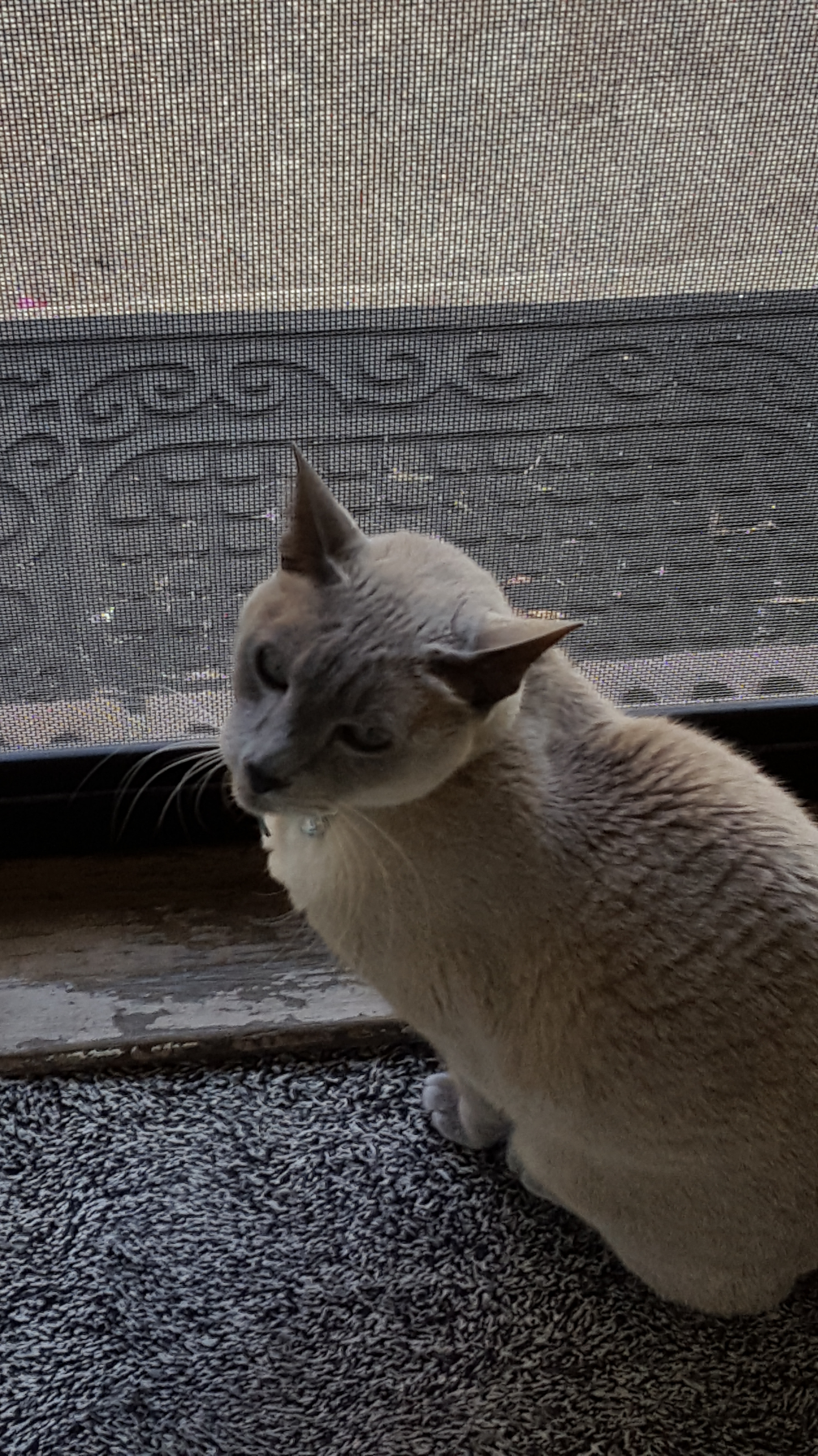
20160903_123228

This is Chester.  Waiting impatiently.

I’ve asked him to stay by the front door and let me know when the delivery man comes.

What is it we’re waiting for?

It’s a surprise.

For who?

If I told you that, then it wouldn’t be a surprise.

That, of course, sets his mind racing, because now he thinks I’ve got a surprise for him.  And the memories of that doesn’t sit well, because the half dozen practice mice I got him didn’t get used.

Why do I need to practice chasing mice that don’t move? he asked.

It was an interesting question, a led to another surprise, a half dozen clockwork mice.

He wanted to know why I was winding them up, and then, when I put them down, he simply watched then crash into the wall.

I shake my head as I walk away.  Why did I say anything?  All I had to do was open the door and he would have come, sat and waited for no reason at all.


An excerpt from “Amnesia”, a work in progress

I remembered a bang.
I remembered the car slewing sideways.
I remember another bang, and then it was lights out.
When I opened my eyes again, I saw the sky.
Or I could be under water.
Everything was blurred.
I tried to focus but I couldn’t. My eyes were full of water.
What happened?
Why was I lying down?
Where was I?
I cast my mind back, trying to remember.
It was a blank.
What, when, who, why and where, questions I should easily be able to answer. Questions any normal person could answer.
I tried to move. Bad, bad mistake.
I did not realise the scream I heard was my own. Just before my body shut down.

“My God! What happened?”
I could hear, not see. I was moving, lying down, looking up.
I was blind. Everything was black.
“Car accident, hit a tree, sent the passenger flying through the windscreen. Pity to poor bastard didn’t get the message that seat belts save lives.”
Was I that poor bastard?
“Report?” A new voice, male, authoritative.
“Multiple lacerations, broken collar bone, broken arm in three places, both legs broken below the knees, one badly. We are not sure of internal injuries, but ruptured spleen, cracked ribs and pierced right lung are fairly evident, x-rays will confirm that and anything else.”
“What isn’t broken?”
“His neck.”
“Then I would have to say we are looking at the luckiest man on the planet.”
I heard shuffling of pages.
“OR1 ready?”
“Yes. On standby since we were first advised.”
“Good. Let’s see if we can weave some magic.”

Magic.
It was the first word that popped into my head when I surfaced from the bottom of the lake. That first breath, after holding it for so long, was sublime, and, in reality, agonising.

Magic, because it seemed like I’d spent a long time under water.
Or somewhere.
I tried to speak, but couldn’t. The words were just in my head.
Was it night or was it day?
Was it hot, or was it cold?
Where was I?
Around me it felt cool.
It was very quiet. No noise except for the hissing of air through an air-conditioning vent. Or perhaps that was the sound of pure silence. And with it the revelation that silence was not silent. It was noisy.
I didn’t try to move.
Instinctively, somehow I knew not to.
A previous bad experience?
I heard what sounded like a door opening, and very quiet footsteps slowly come into the room. They stopped. I could hear breathing, slightly laboured, a sound I’d heard before.
My grandfather.
He had smoked all his life, until he was diagnosed with lung cancer. But for years before that he had emphysema. The person in the room was on their way, down the same path. I could smell the smoke.
I wanted to tell whoever it was the hazards of smoking.
I couldn’t.
I heard a metallic clanging sound from the end of the bed. A moment later the clicking of a pen, then writing.
“You are in a hospital.” A female voice suddenly said. “You’ve been in a very bad accident. You cannot talk, or move, all you can do, for the moment, is listen to me. I am a nurse. You have been here for 45 days, and just come out of a medically induced coma. There is nothing to be afraid of.”
She had a very soothing voice.
I felt her fingers stroke the back of my hand.
“Everything is fine.”
Define fine, I thought. I wanted to ask her what ‘fine’ meant.
“Just count backwards from 10.”
Why?
I didn’t reach seven.

Over the next ten days, that voice became my lifeline to sanity. Every morning I longed to hear it, if only for the few moments she was in the room, those few waking moments when I believed she, and someone else who never spoke, were doing tests. I knew it had to be someone else because I could smell the essence of lavender. My grandmother had worn a similar scent.
It rose above the disinfectant.
I also believed she was another doctor, not the one who had been there the day I arrived. Not the one who had used some ‘magic’ and kept me alive.
It was then, in those moments before she put me under again, that I thought, what if I was paralysed? It would explain a lot. A chill went through me.

The next morning she was back.
“My name is Winifred. We don’t know what your name is, not yet. In a few days, you will be better, and you will be able to ask us questions. You were in an accident, and you were very badly injured, but I can assure you there will be no lasting damage.”
More tests, and then, when I expected the lights to go out, they didn’t. Not for a few minutes more. Perhaps this was how I would be integrated back into the world. A little bit at a time.
The next morning, she came later than usual, and I’d been awake for a few minutes. “You have bandages over your eyes and face. You had bad lacerations to your face, and glass in your eyes. We will know more when the bandages come off in a few days. Your face will take longer to heal. It was necessary to do some plastic surgery.”
Lacerations, glass in my eyes, car accident, plastic surgery. By logical deduction, I knew I was the poor bastard thrown through the windscreen. It was a fleeting memory from the day I was admitted.
How could that happen?
That was the first of many startling revelations. The second was the fact I could not remember the crash. Equally shocking, in that same moment was the fact I could not remember before the crash either, and only vague memories after.
But the most shattering of all these revelations was the one where I realised I could not remember my name.
I tried to calm down, sensing a rising panic.
I was just disoriented, I told myself. After 45 days in an induced coma, it had messed with my mind, and it was only a temporary lapse. Yes, that’s what it was, a temporary lapse. I would remember tomorrow. Or the next day.
Sleep was a blessed relief.

The next day I didn’t wake feeling nauseous. Perhaps they’d lowered the pain medication. I’d heard that morphine could have that effect. Then, how could I know that, but not who I am?
I knew now Winifred the nurse was preparing me for something very bad. She was upbeat, and soothing, giving me a new piece of information each morning. This morning, “You do not need to be afraid. Everything is going to be fine. The doctor tells me you are going to recover with very little scarring. You will need some physiotherapy to recover from your physical injuries, but that’s in the future. We need to let you mend a little bit more before then.”
So, I was not going to be able to leap out of bed, and walk out of the hospital any time soon. I don’t suppose I’d ever leapt out of bed, except as a young boy. I suspect I’d sustained a few broken bones. I guess learning to walk again was the least of my problems.
But, there was something else. I picked it up in the timbre of her voice, a hesitation, or reluctance. It sent another chill through me.
This time I was left awake for an hour before she returned.
This time sleep was restless.
There were scenes playing in my mind, nothing I recognised, and nothing lasting longer than a glimpse. Me. Others, people I didn’t know. Or perhaps I knew them and couldn’t remember them.
Until they disappeared, slowly like the glowing dot in the centre of the computer screen, before finally fading to black.

The morning the bandages were to come off she came in bright and early and woken me. I had another restless night, the images becoming clearer, but nothing recognisable.
“This morning the doctor will be removing the bandages over your eyes. Don’t expect an immediate effect. Your sight may come back quickly or it may come back slowly, but we believe it will come back.”
I wanted to believe I was not expecting anything, but I was. It was probably human nature. I did not want to be blind as well as paralysed. I had to have at least one reason to live.
I dozed again until I felt a gentle hand on my shoulder. I could smell the lavender, the other doctor was back. And I knew the hand on my shoulder was Winifred’s. She told me not to be frightened.
I was amazed to realise in that moment, I wasn’t.
I heard the scissors cutting the bandages.
I felt the bandage being removed, and the pressure coming off my eyes. I could feel the pads covering both eyes.
Then a moment where nothing happened.
Then the pads being gently lift and removed.
Nothing.
I blinked my eyes, once, twice. Nothing.
“Just hold on a moment,” Winifred said. A few seconds later I could feel a cool towel wiping my face, and then gently wiping my eyes. Perhaps there was ointment, or something else in them.
Then a flash. Well, not a flash, but like when a light is turned on and off. A moment later, it was brighter, not the inky blackness of before, but a shade of grey.
She wiped my eyes again.
I blinked a few more times, and then the light returned, and it was like looking through water, at distorted and blurry objects in the distance.
I blinked again, and she wiped my eyes again.
Blurry objects took shape. A face looking down on me, an elderly lady with a kindly face, surely Winifred, who was smiling. And on the opposite side of the bed, the doctor, a Chinese woman of indescribable beauty.
I nodded.
“You can see?”
I nodded again.
“Clearly?”
I nodded.
“Very good. We will just draw the curtains now. We don’t want to overdo it. Tomorrow we will be taking off the bandages on your face. Then, it will be the next milestone. Talking.”
I couldn’t wait.

When morning came, I found myself afraid. Winifred had mentioned scarring, there were bandages on my face. I knew, but wasn’t quite sure how I knew, I wasn’t the handsomest of men before the accident, so this might be an improvement.
I was not sure why I didn’t think it would be the case.
They came at mid morning, the nurse, Winifred, and the doctor, the exquisite Chinese. Perhaps she was the distraction, taking my mind of the reality of what I was about to see.
Another doctor came into the room, before the bandages were removed, and he was introduced as the plastic surgeon that had ‘repaired’ the ravages of the accident. It had been no easy job, but, with a degree of egotism, he did say he was one of the best in the world.
I found it hard to believe, if he was, that he would be at a small country hospital.
“Now just remember, what you might see now is not how you will look in a few months time.”
Warning enough.
The Chinese doctor started removing the bandages. She did it slowly, and made sure it did not hurt. My skin was very tender, and I suspect still bruised, either from the accident or the surgery, I didn’t know.
Then it was done.
The plastic surgeon gave his work a thorough examination and seemed pleased with his work. “Coming along nicely,” he said to the other doctor. He issued some instructions on how to manage the skin, nodded to me, and I thanked him before he left.
I noticed Winifred had a mirror in her hand, and was somewhat reticent in using it. “As I said,” she said noticing me looking at the mirror, “what you see now will not be the final result. The doctor said it was going to heal with very little scarring. You have been very fortunate he was available. Are you ready?”
I nodded.
She showed me.
I tried not to be reviled at the red and purple mess that used to be my face. At a guess I would have to say he had to put it all back together again, but, not knowing what I looked like before, I had no benchmark. All I had was a snippet of memory that told me I was not the tall, dark, and handsome type.
And I still could not talk. There was a reason, he had worked on that area too. Just breathing hurt. I think I would save up anything I had to say for another day. I could not even smile. Or frown. Or grimace.
“We’ll leave you for a while. Everyone needs a little time to get used to the change. I suspect you are not sure if there has been an improvement on last year’s model. Well, time will tell.”
A new face?
I could not remember the old one.
My memory still hadn’t returned.

Searching for locations: Lake Louise, Canada

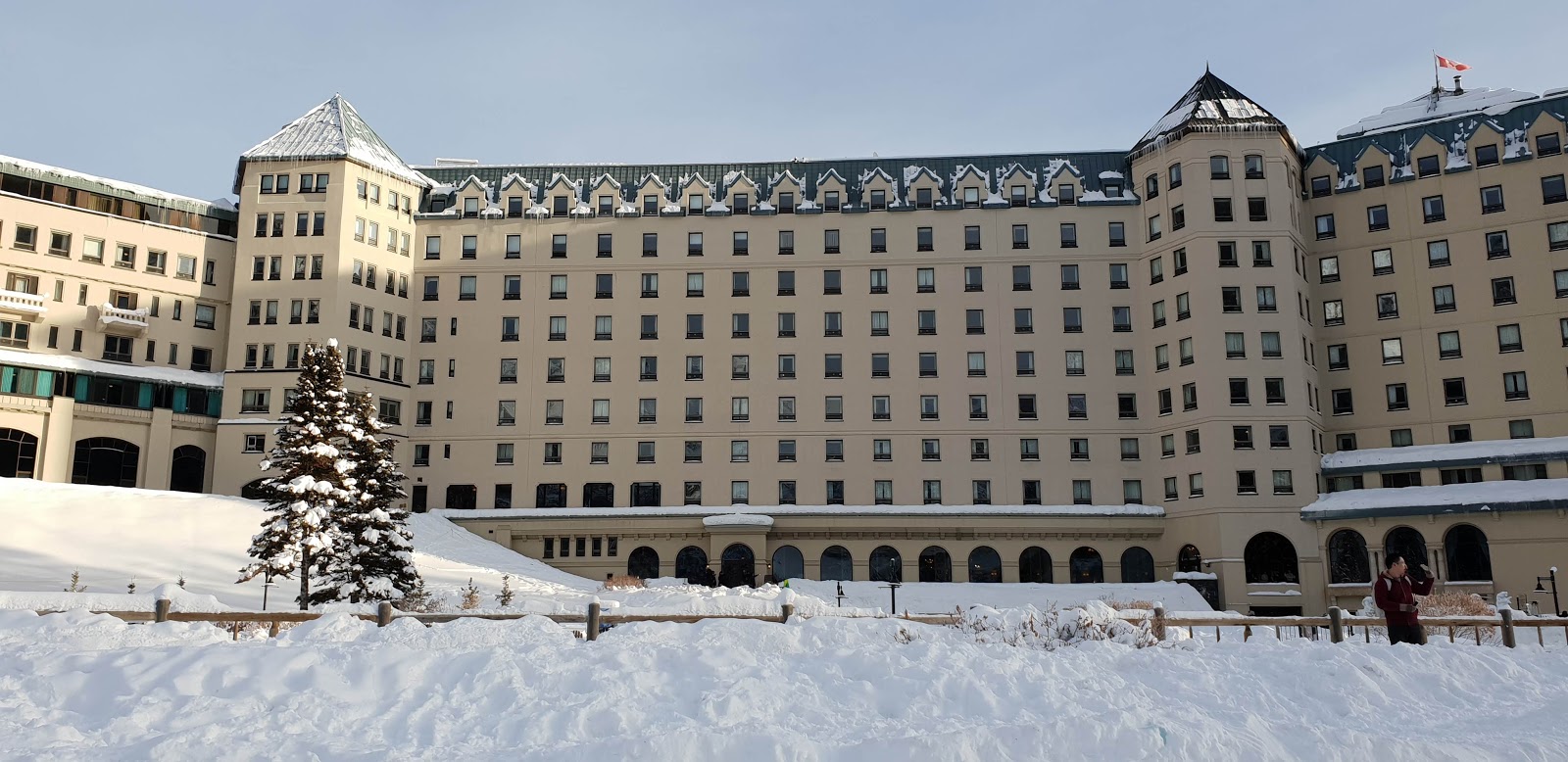
I was not sure what I was expecting to see when we first arrived at the Fairmont Hotel at Lake Louise, Alberta, Canada.

I’d seen endless photographs both in Winter and in Summer, and the problem with photos is that they never quite prepare you for reality.

That’s not to say that our first impression was of incredible scenery, it was of the front door if it could be called that, where we pulled up in the car, and then, if the sub-zero temperatures, a mad rush to get the baggage out, and get into the warmth of the foyer, which was almost the size of several football fields, and then some.

Check-in was quick and easy, and then to our room on the first floor.  I had hoped to be higher up but, being a corner room, when we got there, the views could not be more majestic.

I could not believe there were people who were willing to take a sleigh ride in the minus degree temperatures.  Don’t let the sunny aspect fool you, it’s freezing cold, literally, outside.

The lake had frozen over, and a closer look showed there was a skating rink an ice castle, and a hockey rink as well.  People were skating, and walking over the frozen surface of the lake.

No skating, or walking, on thin ice here.

Venturing outside into the cold, you have to be rugged up, and definitely, have both a hat and gloves.  It was minus six degrees.

There’s this amazing hotel, just like you would see in the movies

A frozen lake where you’re half expecting to open up and a huge spaceship, or something else, come out

Mountainsides to climb, but only if you are stark staring mad.  And, of course, if you don’t freeze to death before you get there.

Our room, believe it or not, is on the extreme right-hand side, just above the first roofline.

Tomorrow we will venture further out onto the lake.

Tonight, it’s dinner in the main restaurant.

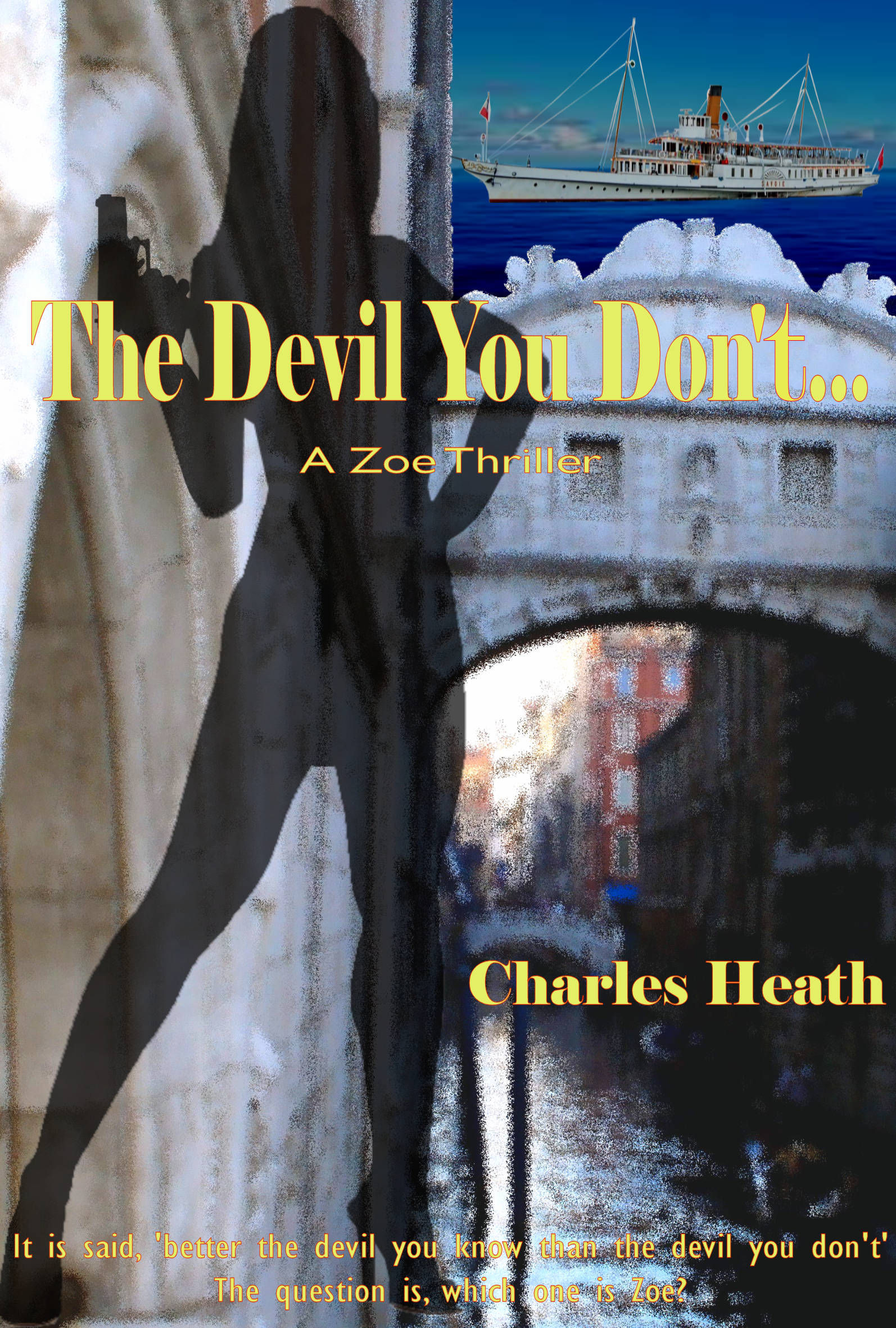
An excerpt from “The Devil You Don’t”

Available on Amazon Kindle here:  https://amzn.to/2Xyh1ow


By the time I returned to the Savoie, the rain had finally stopped, and there was a streak of blue sky to offer some hope the day would improve.

The ship was not crowded, the possibility of bad weather perhaps holding back potential passengers.  Of those I saw, a number of them would be aboard for the lunch by Phillippe Chevrier.  I thought about it, but the Concierge had told me about several restaurants in Yvoire and had given me a hand-drawn map of the village.  I think he came from the area because he spoke with the pride and knowledge of a resident.

I was looking down from the upper deck observing the last of the boarding passengers when I saw a woman, notable for her red coat and matching shoes, making a last-minute dash to get on board just before the gangway was removed.  In fact, her ungainly manner of boarding had also captured a few of the other passenger’s attention.  Now they would have something else to talk about, other than the possibility of further rain.

I saw her smile at the deckhand, but he did not smile back.  He was not impressed with her bravado, perhaps because of possible injury.  He looked at her ticket then nodded dismissively, and went back to his duties in getting the ship underway.  I was going to check the departure time, but I, like the other passengers, had my attention diverted to the woman in red.

From what I could see there was something about her.  It struck me when the light caught her as she turned to look down the deck, giving me a perfect profile.  I was going to say she looked foreign, but here, as in almost anywhere in Europe, that described just about everyone.  Perhaps I was just comparing her to Phillipa, so definitively British, whereas this woman was very definitely not.

She was perhaps in her 30’s, slim or perhaps the word I’d use was lissom, and had the look and manner of a model.  I say that because Phillipa had dragged me to most of the showings, whether in Milan, Rome, New York, London, or Paris.  The clothes were familiar, and in the back of my mind, I had a feeling I’d seen her before.

Or perhaps, to me, all models looked the same.

She looked up in my direction, and before I could divert my eyes, she locked on.  I could feel her gaze boring into me, and then it was gone as if she had been looking straight through me.  I remained out on deck as the ship got underway, watching her disappear inside the cabin.  My curiosity was piqued, so I decided to keep an eye out for her.

I could feel the coolness of the air as the ship picked up speed, not that it was going to be very fast.  With stops, the trip would take nearly two hours to get to my destination.  It would turn back almost immediately, but I was going to stay until the evening when it returned at about half eight.  It would give me enough time to sample the local fare, and take a tour of the medieval village.

Few other passengers ventured out on the deck, most staying inside or going to lunch.  After a short time, I came back down to the main deck and headed forward.  I wanted to clear my head by concentrating on the movement of the vessel through the water, breathing in the crisp, clean air, and let the peacefulness of the surroundings envelope me.

It didn’t work.

I knew it wouldn’t be long before I started thinking about why things hadn’t worked, and what part I played in it.  And the usual question that came to mind when something didn’t work out.  What was wrong with me?

I usually blamed it on my upbringing.

I had one of those so-called privileged lives, a nanny till I was old enough to go to boarding school, then sent to the best schools in the land.  There I learned everything I needed to be the son of a Duke, or, as my father called it in one of his lighter moments, nobility in waiting.

Had this been five or six hundred years ago, I would need to have sword and jousting skills, or if it had been a few hundred years later a keen military mind.  If nothing else I could ride a horse, and go on hunts, or did until they became not the thing to do.

I learned six languages, and everything I needed to become a diplomat in the far-flung British Empire, except the Empire had become the Commonwealth, and then, when no-one was looking, Britain’s influence in the world finally disappeared.  I was a man without a cause, without a vocation, and no place to go.

Computers were the new vogue and I had an aptitude for programming.  I guess that went hand in hand with mathematics, which although I hated the subject, I excelled in.  Both I and another noble outcast used to toss ideas around in school, but when it came to the end of our education, he chose to enter the public service, and I took a few of those ideas we had mulled over and turned them into a company.

About a year ago, I was made an offer I couldn’t refuse.  There were so many zeroes on the end of it I just said yes, put the money into a very grateful bank, and was still trying to come to terms with it.

Sadly, I still had no idea what I was going to do with the rest of my life.  My parents had asked me to come back home and help manage the estate, and I did for a few weeks.  It was as long as it took for my parents to drive me insane.

Back in the city, I spent a few months looking for a mundane job, but there were very few that suited the qualifications I had, and the rest, I think I intimidated the interviewer simply because of who I was.  In that time I’d also featured on the cover of the Economist, and through my well-meaning accountant, started involving myself with various charities, earning the title ‘philanthropist’.

And despite all of this exposure, even making one of those ubiquitous ‘eligible bachelor’ lists, I still could not find ‘the one’, the woman I wanted to spend the rest of my life with.  Phillipa seemed to fit the bill, but in time she proved to be a troubled soul with ‘Daddy’ issues.  I knew that in building a relationship compromise was necessary, but with her, in the end, everything was a compromise and what had happened was always going to be the end result.

It was perhaps a by-product of the whole nobility thing.  There was a certain expectation I had to fulfill, to my peers, contemporaries, parents and family, and those who either liked or hated what it represented.  The problem was, I didn’t feel like I belonged.  Not like my friend from schooldays, and now obscure acquaintance, Sebastian.  He had been elevated to his Dukedom early when his father died when he was in his twenties.  He had managed to fade from the limelight and was rarely mentioned either in the papers or the gossip columns.  He was one of the lucky ones.

I had managed to keep a similarly low profile until I met Phillipa.  From that moment, my obscurity disappeared.  It was, I could see now, part of a plan put in place by Phillipa’s father, a man who hogged the limelight with his daughter, to raise the profile of the family name and through it their businesses.  He was nothing if not the consummate self-advertisement.

Perhaps I was supposed to be the last piece of the puzzle, the attachment to the establishment, that link with a class of people he would not normally get in the front door.  There was nothing refined about him or his family, and more than once I’d noticed my contemporaries cringe at the mention of his name, or any reference of my association with him.

Yet could I truthfully say I really wanted to go back to the obscurity I had before Phillipa?  For all her faults, there were times when she had been fun to be with, particularly when I first met her when she had a certain air of unpredictability.  That had slowly disappeared as she became part of her father’s plan for the future.  She just failed to see how much he was using her.

Or perhaps, over time, I had become cynical.

I thought about calling her.  It was one of those moments of weakness when I felt alone, more alone than usual.

I diverted my attention back to my surroundings and the shoreline.  Out of the corner of my eye, I could see the woman in the red coat, making a move.  The red coat was like a beacon, a sort of fire engine red.  It was not the sort of coat most of the women I knew would wear, but on her, it looked terrific.  In fact, her sublime beauty was the one other attribute that was distinctly noticeable, along with the fact her hair was short, rather than long, and jet black.

I had to wrench my attention away from her.

A few minutes later several other passengers came out of the cabin for a walk around the deck, perhaps to get some exercise, perhaps checking up on me, or perhaps I was being paranoid.  I waited till they passed on their way forward, and I turned and headed aft.

I watched the wake sluicing out from under the stern for a few minutes, before retracing my steps to the front of the ship and there I stood against the railing, watching the bow carve its way through the water.  It was almost mesmerizing.  There, I emptied my mind of thoughts about Phillipa, and thoughts about the woman in the red coat.

Until a female voice behind me said, “Having a bad day?”

I started, caught by surprise, and slowly turned.  The woman in the red coat had somehow got very close me without my realizing it.  How did she do that?  I was so surprised I couldn’t answer immediately.

“I do hope you are not contemplating jumping.  I hear the water is very cold.”

Closer up, I could see what I’d missed when I saw her on the main deck.  There was a slight hint of Chinese, or Oriental, in her particularly around the eyes, and of her hair which was jet black.  An ancestor twice or more removed had left their mark, not in a dominant way, but more subtle, and easily missed except from a very short distance away, like now.

Other than that, she was quite possibly Eastern European, perhaps Russian, though that covered a lot of territory.  The incongruity of it was that she spoke with an American accent, and fluent enough for me to believe English was her first language.

Usually, I could ‘read’ people, but she was a clean slate.  Her expression was one of amusement, but with cold eyes.  My first thought, then, was to be careful.

“No.  Not yet.”  I coughed to clear my throat because I could hardly speak.  And blushed, because that was what I did when confronted by a woman, beautiful or otherwise.

The amusement gave way to a hint of a smile that brightened her demeanor as a little warmth reached her eyes.  “So that’s a maybe.  Should I change into my lifesaving gear, just in case?”

It conjured up a rather interesting image in my mind until I reluctantly dismissed it.

“Perhaps I should move away from the edge,” I said, moving sideways until I was back on the main deck, a few feet further away.  Her eyes had followed me, and when I stopped she turned to face me again.  She did not move closer.

I realized then she had removed her beret and it was in her left side coat pocket.  “Thanks for your concern …?”

“Zoe.”

“Thanks for your concern, Zoe.  By the way, my name is John.”

She smiled again, perhaps in an attempt to put me at ease.  “I saw you earlier, you looked so sad, I thought …”

“I might throw myself overboard?”

“An idiotic notion I admit, but it is better to be safe than sorry.”

Then she tilted her head to one side then the other, looking intently at me.  “You seem to be familiar.  Do I know you?”

I tried to think of where I may have seen her before, but all I could remember was what I’d thought earlier when I first saw her; she was a model and had been at one of the showings.  If she was, it would be more likely she would remember Phillipa, not me.  Phillipa always had to sit in the front row.

“Probably not.”  I also didn’t mention the fact she may have seen my picture in the society pages of several tabloid newspapers because she didn’t look the sort of woman who needed a daily dose of the comings and goings, and, more often than not, scandal associated with so-called celebrities.

She gave me a look, one that told me she had just realized who I was.  “Yes, I remember now.  You made the front cover of the Economist.  You sold your company for a small fortune.”

Of course.  She was not the first who had recognized me from that cover.  It had raised my profile considerably, but not the Sternhaven’s.  That article had not mentioned Phillipa or her family.  I suspect Grandmother had something to do with that, and it was, now I thought about it, another nail in the coffin that was my relationship with Phillipa.

“I wouldn’t say it was a fortune, small or otherwise, just fortunate.”  Each time, I found myself playing down the wealth aspect of the business deal.

“Perhaps then, as the journalist wrote, you were lucky.  It is not, I think, a good time for internet-based companies.”

The latter statement was an interesting fact, one she read in the Financial Times which had made that exact comment recently.

“But I am boring you.”  She smiled again.  “I should be minding my own business and leaving you to your thoughts.  I am sorry.”

She turned to leave and took a few steps towards the main cabin.

“You’re not boring me,” I said, thinking I was letting my paranoia get the better of me.  It had been Sebastian on learning of my good fortune, who had warned me against ‘a certain element here and abroad’ whose sole aim would be to separate me from my money.  He was not very subtle when he described their methods.

But I knew he was right.  I should have let her walk away.

She stopped and turned around.  “You seem nothing like the man I read about in the Economist.”

A sudden and awful thought popped into my head.  Those words were part of a very familiar opening gambit.  “Are you a reporter?”

I was not sure if she looked surprised, or amused.  “Do I look like one?”

I silently cursed myself for speaking before thinking, and then immediately ignored my own admonishment.  “People rarely look like what they are.”

I saw the subtle shake of the head and expected her to take her leave.  Instead she astonished me.

“I fear we have got off on the wrong foot.  To be honest, I’m not usually this forward, but you seemed like you needed cheering up when probably the opposite is true.  Aside from the fact this excursion was probably a bad idea.  And,” she added with a little shrug, “perhaps I talk too much.”

I was not sure what I thought of her after that extraordinary admission. It was not something I would do, but it was an interesting way to approach someone and have them ignoring their natural instinct.  I would let Sebastian whisper in my ear for a little longer and see where this was going.

“Oddly enough, I was thinking the same thing.  I was supposed to be traveling with my prospective bride.  I think you can imagine how that turned out.”

“She’s not here?”

“No.”

“She’s in the cabin?”  Her eyes strayed in that direction for a moment then came back to me.  She seemed surprised I might be traveling with someone.

“No.  She is back in England, and the wedding is off.  So is the relationship.  She dumped me by text.”

OK, why was I sharing this humiliating piece of information with her?  I still couldn’t be sure she was not a reporter.

She motioned to an empty seat, back from the edge.  No walking the plank today.  She moved towards it and sat down.  She showed no signs of being cold, nor interested in the breeze upsetting her hair.  Phillipa would be having a tantrum about now, being kept outside, and freaking out over what the breeze might be doing to her appearance.

I wondered, if only for a few seconds if she used this approach with anyone else.  I guess I was a little different, a seemingly rich businessman alone on a ferry on Lake Geneva, contemplating the way his life had gone so completely off track.

She watched as I sat at the other end of the bench, leaving about a yard between us.  After I leaned back and made myself as comfortable as I could, she said, “I have also experienced something similar, though not by text message.  It is difficult, the first few days.”

“I saw it coming.”

“I did not.”  She frowned, a sort of lifeless expression taking over, perhaps brought on by the memory of what had happened to her.  “But it is done, and I moved on.  Was she the love of your life?”

OK, that was unexpected.

When I didn’t answer, she said, “I am sorry.  Sometimes I ask personal questions without realizing what I’m doing.  It is none of my business.”  She shivered.  “Perhaps we should go back inside.”

She stood, and held out her hand.  Should I take it and be drawn into her web?  I thought of Sebastian.  What would he do in this situation?

I took her hand in mine and let her pull me gently to my feet.  “Wise choice,” she said, looking up at the sky.

It just started to rain.


© Charles Heath 2015-2020
newdevilcvr6

Are these people who say they have the answers to writing success useful or a hindrance?

I’ve been investigating, another word, perhaps, for research!

On how to become an overnight success.

It’s a mistake, I know, because everyone is different, everyone has their own way of doing things, and success comes for different people in different ways, quite often not able to be replicated by others.

What’s the expression, you had to be there.

I read success stories, I read what these people did to get 1,000 extra Twitter followers in a day, a week, or five minutes, sold thousands of copies of their books in a month, from absolutely nothing, and/or have the formula for success.

All you have to do is part with, hang on, yesterday it was $495.00, but today only, just for you, it’s $69.95.

Read the fine print, this might not work for you.  And, generally, who reads the fine print.

I read about other authors using book promotion services, yes we had 250,000 twitter followers just aching to buy you book.

Read the fine print, it depends on a whole lot of factors whether it sells or not.  You could be ‘lucky’.  Most authors are not.

What’s the answer?

I think it’s at the bottom of the abyss, where I’m in free-fall heading rapidly towards.

If I happen to find the answer and become ultra successful, I’ll be happy to share it for nothing.  It’s not going to affect my sales, not once I’m established.

It’s just taking that first step.

Perhaps I need to believe that hard word and perseverance will work.

I’m also sure there are 101 ways to taking that first step, and someone out there knows one, or two, and someone else, knows another.  It’s just finding those people who do know, and who are willing to share, not for $495, not for $69.95, but because they want to do it to help others.

And maybe, just maybe, all those who gain the benefit their wisdom will buy their books.

Hang on, perhaps that’s number one on the list of 101 ….

“The Things We Do For Love” – Coming soon

Is love the metaphorical equivalent to ‘walking the plank’; a dive into uncharted waters?

For Henry the only romance he was interested in was a life at sea, and when away from it, he strived to find sanctuary from his family and perhaps life itself.  It takes him to a small village by the sea, s place he never expected to find another just like him, Michelle, whom he soon discovers is as mysterious as she is beautiful.

Henry had long since given up the notion of finding romance, and Michelle couldn’t get involved for reasons she could never explain, but in the end both acknowledge that something happened the moment they first met.  

Plans were made, plans were revised, and hopes were shattered.

A chance encounter causes Michelle’s past to catch up with her, and whatever hope she had of having a normal life with Henry, or anyone else, is gone.  To keep him alive she has to destroy her blossoming relationship, an act that breaks her heart and shatters his.

But can love conquer all?

It takes a few words of encouragement from an unlikely source to send Henry and his friend Radly on an odyssey into the darkest corners of the red light district in a race against time to find and rescue the woman he finally realizes is the love of his life.

The cover, at the moment, looks like this:

lovecoverfinal1

The cinema of my dreams – It’s a treasure hunt – Episode 49

Here’s the thing…

Every time I close my eyes, I see something different.

I’d like to think the cinema of my dreams is playing a double feature but it’s a bit like a comedy cartoon night on Fox.

But these dreams are nothing to laugh about.

Once again there’s a new installment of an old feature, and we’re back on the treasure hunt.

A dark look crossed Boggs’ face telling me the name Ormiston wasn’t associated with anything good. I was still wondering how I had never heard anything about the family.

“How did you stumble across Fredrich Ormiston?”

“I told you I was keeping an eye on Alex. He and some chap who was, coincidentally, one of the guards we saw at the mall yesterday, they were talking about Ormiston. I’ve never heard of him.”

“That’s because the Ormiston’s disappeared from around here before the second world war. What did Alex have to say about him?”

“From what I overheard, he owned a large tract of land near Patterson’s Reach, that it stretched back to something called the fault line, that he sold the coastal area to the Navy and that’s where they put the dockyard, and other than that, not much. That guard had been doing some investigating for Alex and said he went to the library to ask Gwen. She’s still there by the way. She didn’t tell him very much, and even if she did know anything, she hates Alex and his friends as much as we do so she wouldn’t tell him.”

“She’d know of him. But she would be only one of a few, and those that do would be in the old folks’ home or dead.”

“And yet the name lights up your face, Boggs. How do you know about him?”

“Not me personally. My family. He and my grandfather were friends back in the day. He sold our family a large block near the river to run some cattle. My father wasn’t the first to have information about the treasure, and in fact, according to my dad’s diary, that original map we have was my grandfather’s.”

“How come you didn’t tell me about this before?”

“Not relevant. The map has always been in my family’s possession. My grandfather had made several attempts to find the treasure, and, one day, in a moment of forgetfulness, he told Ormiston about it. Well, you know how the thought of finding treasure can turn heads, Ormiston persuaded my grandfather to provide him with a copy of the map, and in return, he would fund a proper search party to see if they could find it. After all, he said, fifty percent of a trove was better than zero percent of nothing. By that time my grandfather was getting old, and the idea of finding the treasure was slipping through his fingers, so he agreed. Worst days work he ever did.”

“But Ormiston never found the treasure, did he?”

“That’s not the point. He did as he promised in the first instance, and they found nothing. It was a lot of money in pursuit of what could be compared to the holy grail. When my grandfather died, Ormiston decided he was no longer bound to any agreement, and mounted several more treasure hunts, and when my father tried to get him to adhere to the original agreement, Ormiston just brushed him off.”

“He still didn’t find anything. In the end, he lost his fortune and had to sell the land, hence the Naval Base. Do you know who got the rest?”

“Ormiston died on the last treasure hunt, and left massive debts behind, and a widow. They had several kids but no one knows where they went, and it was a long time ago. They had to sell the property to repay the debts. It went to property developers and then the Cossatino’s bought it. They moved in after Ormiston moved out. It’s why Patterson’s Reach is basically a no-go zone.”

I’d often wondered how the Cossatino’s came to town, and why it was they camped in Patterson’s Reach, away from the Benderby’s.

“Alex’s mate was talking about looking for relatives, though I’m not sure why.”

“There are no relatives, not according to my mother, but there were rumors that Ormiston had made extensive notes on all of his hunts, so from that perspective, if the documents existed, it would be useful to align what he knew with what my father says in his journal.”

A good point, and it might be still a possibility if the documents held at the library were to contain any journals. It also made sense, in my mind, why the Cossatino’s decided to run a map scam; had they come across Ormiston’s journals, and maps, and got Boggs father to base his fakes around those? It was starting to throw a giant cold shadow over the whole of this project, and that Boggs was simply missing the point.

If Ormiston couldn’t find anything, and he had money to burn when he mounted the searches, perhaps it was just a myth. And who’s to say that Boggs’s grandfather didn’t make the whole thing up himself?

Just the same, until I was certain, I was going to keep the existence of the papers in the library to myself for the time being.

But, something else just occurred to me. “Do you have anything from your grandfather, in particular about the searches he made, with or without Ormiston?”

“Only that one with Ormiston. In the end, he concluded that it was his belief that Ormiston had deliberately set the wrong course, which was why they never found anything. He had used two different river heads as his basis, to which my grandfather tried to convince him otherwise. Of course, there were considerable differences of opinion, and after they returned, never spoke to each other again.”

Not surprising.

“Well, that adds some more background to the quest. Are you sure you have the right rivers as markers? I mean there are quite a few rivers and streams as well as a few lakes up and down the coastline?”

“My father was certain, and his father was before him. As am I. Let me know when you free next so we can continue the quest.”

I should not have doubted him, but the more he talked about Ormiston, the darker he was looking. It was probably for the best I left him alone for the afternoon if only to calm down.

He didn’t even say goodbye.

I went inside and got ready for work.

© Charles Heath 2020-2021