An excerpt from “The Things We Do For Love”; In love, Henry was all at sea!

In the distance he could hear the dinner bell ringing and roused himself.  Feeling the dampness of the pillow, and fearing the ravages of pent up emotion, he considered not going down but thought it best not to upset Mrs. Mac, especially after he said he would be dining.

In the event, he wished he had reneged, especially when he discovered he was not the only guest staying at the hotel.

Whilst he’d been reminiscing, another guest, a young lady, had arrived.  He’d heard her and Mrs. Mac coming up the stairs, and then shown to a room on the same floor, perhaps at the other end of the passage.

Henry caught his first glimpse of her when she appeared at the door to the dining room, waiting for Mrs. Mac to show her to a table.

She was about mid-twenties, slim, long brown hair, and the grace and elegance of a woman associated with countless fashion magazines.  She was, he thought, stunningly beautiful with not a hair out of place, and make-up flawlessly applied.  Her clothes were black, simple, elegant, and expensive, the sort an heiress or wife of a millionaire might condescend to wear to a lesser occasion than dinner.

Then there was her expression; cold, forbidding, almost frightening in its intensity.  And her eyes, piercingly blue and yet laced with pain.  Dracula’s daughter was his immediate description of her.

All in all, he considered, the only thing they had in common was, like him, she seemed totally out of place.

Mrs. Mac came out of the kitchen, wiping her hands on her apron.  She was, she informed him earlier, chef, waitress, hotelier, barmaid, and cleaner all rolled into one.  Coming up to the new arrival she said, “Ah, Miss Andrews, I’m glad you decided to have dinner.  Would you like to sit with Mr. Henshaw, or would you like to have a table of your own?”

Henry could feel her icy stare as she sized up his appeal as a dining companion, making the hair on the back on his neck stand up.  He purposely didn’t look back.  In his estimation, his appeal rating was minus six.  Out of a thousand!

“If Mr. Henshaw doesn’t mind….”  She looked at him, leaving the query in mid-air.

He didn’t mind and said so.  Perhaps he’d underestimated his rating.

“Good.”  Mrs. Mac promptly ushered her over.  Henry stood, made sure she was seated properly and sat.

“Thank you.  You are most kind.”  The way she said it suggested snobbish overtones.

“I try to be when I can.”  It was supposed to nullify her sarcastic tone but made him sound a little silly, and when she gave him another of her icy glares, he regretted it.

Mrs. Mac quickly intervened, asking, “Would you care for the soup?”

They did, and, after writing the order on her pad, she gave them each a look, imperceptibly shook her head, and returned to the kitchen.

Before Michelle spoke to him again, she had another quick look at him, trying to fathom who and what he might be.  There was something about him.

His eyes, they mirrored the same sadness she felt, and, yes, there was something else, that it looked like he had been crying?  There was a tinge of redness.

Perhaps, she thought, he was here for the same reason she was.

No.  That wasn’t possible.

Then she said, without thinking, “Do you have any particular reason for coming here?”  Seconds later she realized she’s spoken it out loud, had hadn’t meant to actually ask, it just came out.

It took him by surprise, obviously not the first question he was expecting her to ask of him.

“No, other than it is as far from civilization, and home, as I could get.”

At least we agree on that, she thought.

It was obvious he was running away from something as well.

Given the isolation of the village and lack of geographic hospitality, it was, from her point of view, ideal.  All she had to do was avoid him, and that wouldn’t be difficult.

After getting through this evening first.

“Yes,” she agreed.  “It is that.”

A few seconds passed, and she thought she could feel his eyes on her and wasn’t going to look up.

Until he asked, “What’s your reason?”

Slight abrupt in manner, perhaps as a result of her question, and the manner in which she asked it.

She looked up.  “Rest.  And have some time to myself.”

She hoped he would notice the emphasis she had placed on the word ‘herself’ and take due note.  No doubt, she thought,  she had completely different ideas of what constituted a holiday than he, not that she had actually said she was here for a holiday.

Mrs. Mac arrived at a fortuitous moment to save them from further conversation.


Over the entree, she wondered if she had made a mistake coming to the hotel.  Of course, there had been no possible way she could know than anyone else might have booked the same hotel, but realized it was foolish to think she might end up in it by herself.

Was that what she was expecting?

Not a mistake then, but an unfortunate set of circumstances, which could be overcome by being sensible.

Yet, there he was, and it made her curious, not that he was a man, by himself, in the middle of nowhere, hiding like she was, but for very different reasons.

On discreet observance whilst they ate, she gained the impression his air of light-heartedness was forced and he had no sense of humor.

This feeling was engendered by his looks, unruly dark hair, and permanent frown.  And then there was his abysmal taste in clothes on a tall, lanky frame.  They were quality but totally unsuited to the wearer.

Rebellion was written all over him.

The only other thought crossing her mind, and rather incongruously, was he could do with a decent feed.  In that respect, she knew now from the mountain of food in front of her, he had come to the right place.

“Mr. Henshaw?”

He looked up.  “Henshaw is too formal.  Henry sounds much better,” he said, with a slight hint of gruffness.

“Then my name is Michelle.”

Mrs. Mac came in to take their order for the only main course, gather up the entree dishes, then return to the kitchen.

“Staying long?” she asked.

“About three weeks.  Yourself?”

“About the same.”

The conversation dried up.

Neither looked at the other, rather at the walls, out the window, towards the kitchen, anywhere.  It was, she thought, almost unbearably awkward.


Mrs. Mac returned with a large tray with dishes on it, setting it down on the table next to theirs.

“Not as good as the usual cook,” she said, serving up the dinner expertly, “but it comes a good second, even if I do say so myself.  Care for some wine?”

Henry looked at Michelle.  “What do you think?”

“I’m used to my dining companions making the decision.”

You would, he thought.  He couldn’t help but notice the cutting edge of her tone.  Then, to Mrs. Mac, he named a particular White Burgundy he liked and she bustled off.

“I hope you like it,” he said, acknowledging her previous comment with a smile that had nothing to do with humor.

“Yes, so do I.”

Both made a start on the main course, a concoction of chicken and vegetables that were delicious, Henry thought, when compared to the bland food he received at home and sometimes aboard my ship.

It was five minutes before Mrs. Mac returned with the bottle and two glasses.  After opening it and pouring the drinks, she left them alone again.

Henry resumed the conversation.  “How did you arrive?  I came by train.”

“By car.”

“Did you drive yourself?”

And he thought, a few seconds later, that was a silly question, otherwise she would not be alone, and certainly not sitting at this table. With him.

“After a fashion.”

He could see that she was formulating a retort in her mind, then changed it, instead, smiling for the first time, and it served to lighten the atmosphere.

And in doing so, it showed him she had another more pleasant side despite the fact she was trying not to look happy.

“My father reckons I’m just another of ‘those’ women drivers,” she added.

“Whatever for?”

“The first and only time he came with me I had an accident.  I ran up the back of another car.  Of course, it didn’t matter to him the other driver was driving like a startled rabbit.”

“It doesn’t help,” he agreed.

“Do you drive?”

“Mostly people up the wall.”  His attempt at humor failed.  “Actually,” he added quickly, “I’ve got a very old Morris that manages to get me where I’m going.”

The apple pie and cream for dessert came and went and the rapport between them improved as the wine disappeared and the coffee came.  Both had found, after getting to know each other better, their first impressions were not necessarily correct.

“Enjoy the food?” Mrs. Mac asked, suddenly reappearing.

“Beautifully cooked and delicious to eat,” Michelle said, and Henry endorsed her remarks.

“Ah, it does my heart good to hear such genuine compliments,” she said, smiling.  She collected the last of the dishes and disappeared yet again.

“What do you do for a living,” Michelle asked in an off-hand manner.

He had a feeling she was not particularly interested and it was just making conversation.

“I’m a purser.”

“A what?”

“A purser.  I work on a ship doing the paperwork, that sort of thing.”

“I see.”

“And you?”

“I was a model.”

“Was?”

“Until I had an accident, a rather bad one.”

“Oh, I’m sorry.”

So that explained the odd feeling he had about her.

As the evening had worn on, he began to think there might be something wrong, seriously wrong with her because she didn’t look too well.  Even the carefully applied makeup, from close up, didn’t hide the very pale, and tired look, or the sunken, dark ringed eyes.

“I try not to think about it, but it doesn’t necessarily work.  I’ve come here for peace and quiet, away from doctors and parents.”

“Then you will not have to worry about me annoying you.  I’m one of those fall-asleep-reading-a-book types.”

Perhaps it would be like ships passing in the night and then smiled to himself about the analogy.

Dinner now over, they separated.

Henry went back to the lounge to read a few pages of his book before going to bed, and Michelle went up to her room to retire for the night.

But try as he might, he was unable to read, his mind dwelling on the unusual, yet the compellingly mysterious person he would be sharing the hotel with.

Overlaying that original blurred image of her standing in the doorway was another of her haunting expressions that had, he finally conceded, taken his breath away, and a look that had sent more than one tingle down his spine.

She may not have thought much of him, but she had certainly made an impression on him.


© Charles Heath 2015-2020
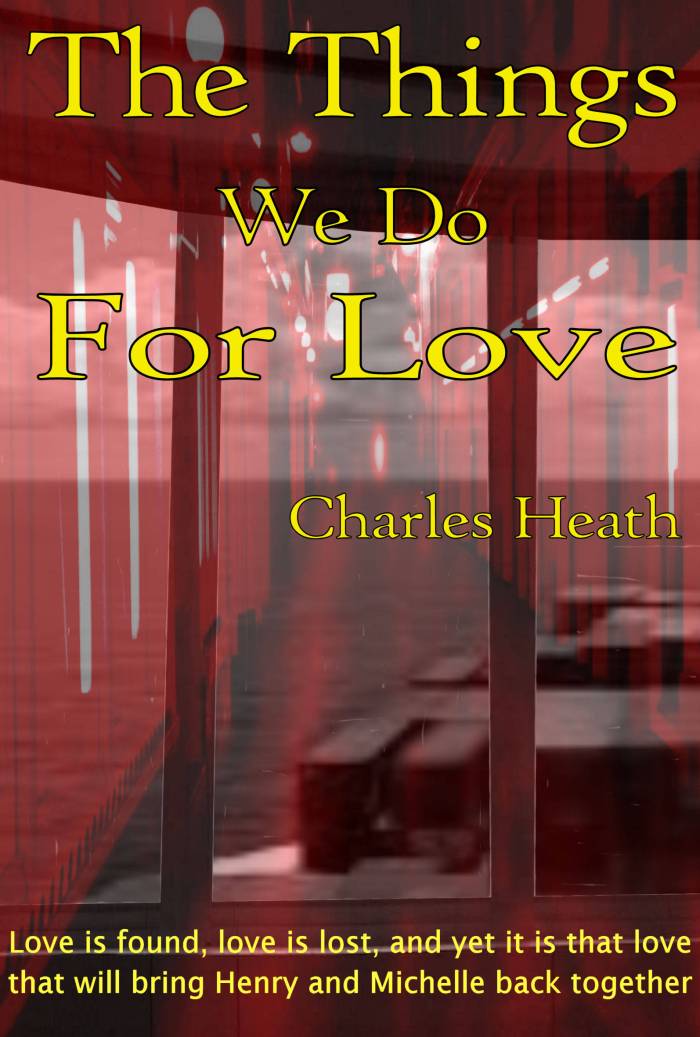
lovecoverfinal1

NaNoWriMo 2021 – Day 26

This image has an empty alt attribute; its file name is NaNoWriMo-WriterBadge-851-2x.png

A score to settle

There is a history of strong female characters. They don’t have to be the lead character in order to become a focal point in the story.

I’m reminded of the CIA agent in Cuba in the latest James Bond Film, No Time To Die, where she literally kicks ass. To my mind, that is a girl to be reckoned with, and no, I would not want to meet her in a dark alley or be her enemy.

I wanted one, and put her in the Zoe series, an assassin without a conscience, but has one of those life-defining moments that doesn’t take away anything from her character, just adds another dimension.

This story is going to have one too, Teresa, only she is a different kettle of fish, to quote an analogy.

She is just the sort of person our main character’s handler recruits in a heartbeat. The fact she is in jail when we first meet her just adds to the mystique.

And when the main character and her meet, it’s like water and oil. She had a role to play, even if it’s not the one our main character is led to believe is.

The trouble is, I’m having too much fun playing to the two off against each other, so much so, I’m beginning to like her, as much as I would, in real life (if such a person existed) fear her.

Interesting question: how would I react if my imaginary world suddenly become all too real?

I guess that’s another story.

Today’s word count: 3,914 words, for the running total of 71,535.

‘Sunday in New York’ – A beta reader’s view

I’m not a fan of romance novels but …

There was something about this one that resonated with me.

This is a novel about a world generally ruled by perception, and how people perceive what they see, what they are told, and what they want to believe.

I’ve been guilty of it myself as I’m sure we all gave one time or another.

For the the main characters Harry and Alison there is others issues driving their relationship.

For Alison, it is a loss of self worth through losing her job and from losing her mother and, in a sense, her sister.

For Harry it is the fact he has a beautiful and desirable wife, and his belief she is the object of other men’s desires, and one in particular, his immediate superior.

Between observation, the less than honest motives of his friends, a lot of jumping to conclusions based on very little fact, and you have the basis of one very interesting story.

When it all come to a head, Alison finds herself in a desperate situation, she realises only the truth will save their marriage.

But is it all the truth?

What would we do in similar circumstances?

Rarely does a book have me so enthralled that I could not put it down until I knew the result. They might be considered two people who should have known better, but as is often the case, they had to get past what they both thought was the truth.

And the moral of this story, if it could be said there is one, nothing is ever what it seems.

Available on Amazon here: amzn.to/2H7ALs8

That helicopter story that kept me awake – Episode 31

Our hero knows he’s in serious trouble.

The problem is, there are familiar faces and a question of who is a friend and who is foe made all the more difficult because of the enemy, if it was the enemy, simply because it didn’t look or sound or act like the enemy.

Now, it appears, his problems stem from another operation he participated in, and because of it, he has now been roped into what might be called a suicide mission.

The folder had half a dozen single-page sheets with a photo attached to each with a standard-issue army paper clip.  There was no top secret in pale red ink diagonally scribed across any of the pages which somehow diminished the exercise.

I guessed this was the hand-picked team selected for me to take on our suicide mission.  It didn’t have the officer overseeing the mission, or the go-between Jacobi.  Not exactly a useful man to have along in a firefight, because he would be too busy working out who would pay the most if or when he survived.

It still astonished me that we hired people like Jacobi, fully knowing that they would sell out their own mother if the price was right.  I was going to reserve one bullet in my gun to execute him the moment he even looked the wrong way.

Trust him, I did not.

Nor any 0f the six members of that hand-picked team.

Sergeant Barnes.  Tall, wide, deadly, that last attribute courtesy of a line in his resume that said he killed three soldiers of the army we were supposed to be training and supporting.  No meaningful reason was given as to why he did, only that he’d just finished serving a five-year sentence, cut short by a month so he could join this force.  Hand to hand combat, and a handy man to have if you’ve got a handheld rocket launcher handy.

Private Williamson.  Had been a Corporal, but considered that too much of a burden, having men look up to him, and having to give orders.  He decided to go AWOL instead.  Used to be a butcher before signing on to see the world, and as described very handy with a knife.  Refused to use a gun, and refused orders too, which was the reason why he was in the stockade, with his friend, the next man on the list.

Private Shurl.  If we needed a man who excelled at sword fighting, he was our man.  A very accomplished swordsman, but I doubt we were going to need a man of his talents because enemy swordsmen seemed only to exist in the old movies.  I guess Lallo was expecting the three musketeers or something.  Other than that, he was a useful radioman and would be handling the communications once we were on the ground in enemy territory.

Corporal Stark.  His claim to fame was reading maps.  He was also an expert on the ground in the country whose borders we were about to violate.  He lived in the country for several years with his wife, who came from there, and who’d been killed by the dictator in a case of mistaken identity.  Stark would have to be carefully managed.

Staff Sergeant Mobley.  A man who had been up and down in ranks for a long time, suggesting a bad attitude, his latest bout leaving him fresh from a stint in the stockade.  He had no valid reason to be in on this disaster and yet had volunteered.  That took courage, to apply for a suicide mission with little hope of return.  I suspect he had an agenda that no one else knew about.

And, lastly

Lieutenant Lesley Davies.  A woman marine, no longer a lieutenant but just another soldier who obviously didn’t understand the concept of taking one step back when everyone else steps in another direction.  It didn’t say what it was she did wrong, but my guess there were a few men out there frightened of meeting her on a dark night.  Some women are dainty, some women are large, and then there’s Davies, a powerhouse that could be dangerous if out of control.

Out of all of that team, she was the one who interested me the most.

There was a knock on the door, interrupting my thoughts.  I called out, “Enter”, surprised the person outside hadn’t just shoved their way into the room.

The door opened, Monroe walked in and closed the door behind her.

“Let me guess,” I said.  “You’re running point.”

“And save your sorry ass from those recruits.  Not a brain between the lot of them, and we need people who can think, given the nature of the forthcoming exercise.  The brains trust has decided the rescue team reports to us.  I didn’t ask for it by the way.  This is one of Lallo’s sick jokes.”

Maybe he had a problem with her too and was hoping she wasn’t coming back.

“You and me both,” I said.

She threw another folder on the table.  “Operational orders, wheels up at 0600 tomorrow.  Make sure you get a hearty meal before we leave, it might be your last for a while.”

I shrugged. 

“Suit yourself.”  She went back to the door, gave me a curious look, and left.

I opened the file and looked at the one piece of paper in it.  It was marked Top Secret in red diagonally across the page, probably specially done by Lallo to make me feel important.  It had departure time, the weather, the flight time, how long the stopover would be before going on to the target.

Tightly planned, no room for missing connections, though this was the army, not an airline taking us, no room for errors.  New intel said that we had five days before the prisoners were to be executed.

No pressure then.

© Charles Heath 2019-2021

An excerpt from “Echoes from the Past”

Available on Amazon Kindle here:  https://amzn.to/2CYKxu4

With my attention elsewhere, I walked into a man who was hurrying in the opposite direction.  He was a big man with a scar running down the left side of his face from eye socket to mouth, and who was also wearing a black shirt with a red tie.

That was all I remembered as my heart almost stopped.

He apologized as he stepped to one side, the same way I stepped, as I also muttered an apology.

I kept my eyes down.  He was not the sort of man I wanted to recognize later in a lineup.  I stepped to the other side and so did he.  It was one of those situations.  Finally getting out of sync, he kept going in his direction, and I towards the bus, which was now pulling away from the curb.

Getting my breath back, I just stood riveted to the spot watching it join the traffic.  I looked back over my shoulder, but the man I’d run into had gone.  I shrugged and looked at my watch.  It would be a few minutes before the next bus arrived.

Wait, or walk?  I could also go by subway, but it was a long walk to the station.  What the hell, I needed the exercise.

At the first intersection, the ‘Walk’ sign had just flashed to ‘Don’t Walk’.  I thought I’d save a few minutes by not waiting for the next green light.  As I stepped onto the road, I heard the screeching of tires.

A yellow car stopped inches from me.

It was a high powered sports car, perhaps a Lamborghini.  I knew what they looked like because Marcus Bartleby owned one, as did every other junior executive in the city with a rich father.

Everyone stopped to look at me, then the car.  It was that sort of car.  I could see the driver through the windscreen shaking his fist, and I could see he was yelling too, but I couldn’t hear him.  I stepped back onto the sidewalk, and he drove on.  The moment had passed and everyone went back to their business.

My heart rate hadn’t come down from the last encounter.   Now it was approaching cardiac arrest, so I took a few minutes and several sets of lights to regain composure.

At the next intersection, I waited for the green light, and then a few seconds more, just to be sure.  I was no longer in a hurry.

At the next, I heard what sounded like a gunshot.  A few people looked around, worried expressions on their faces, but when it happened again, I saw it was an old car backfiring.  I also saw another yellow car, much the same as the one before, stopped on the side of the road.  I thought nothing of it, other than it was the second yellow car I’d seen.

At the next intersection, I realized I was subconsciously heading towards Harry’s new bar.   It was somewhere on 6th Avenue, so I continued walking in what I thought was the right direction.

I don’t know why I looked behind me at the next intersection, but I did.  There was another yellow car on the side of the road, not far from me.  It, too, looked the same as the original Lamborghini, and I was starting to think it was not a coincidence.

Moments after crossing the road, I heard the roar of a sports car engine and saw the yellow car accelerate past me.  As it passed by, I saw there were two people in it, and the blurry image of the passenger; a large man with a red tie.

Now my imagination was playing tricks.

It could not be the same man.  He was going in a different direction.

In the few minutes I’d been standing on the pavement, it had started to snow; early for this time of year, and marking the start of what could be a long cold winter.  I shuddered, and it was not necessarily because of the temperature.

I looked up and saw a neon light advertising a bar, coincidentally the one Harry had ‘found’ and, looking once in the direction of the departing yellow car, I decided to go in.  I would have a few drinks and then leave by the back door if it had one.

Just in case.

© Charles Heath 2015-2020

newechocover5rs

In a word: Joe

Aside from being the short form of the name Joseph, ie a man’s name, there is also a derivative for women, Jo.

The name Joe is said to be used from the mid-1800s.

My favourite Joe name is Joe Bloggs, and he features in some of my stories.

It’s anonymous enough for someone to use as a cover when booking into a sleazy motel and is a little more refined than Smith or Jones, names that more than likely already feature in the register.

Jo could be a short form for Josephine, a name I’m sure some women would prefer not to be called.

But…

Did you know it’s also a name given to a cup of coffee?

Well, that didn’t make much of a splash.  I don’t think anyone these days refers to coffee as Joe because there are so many different variations with names I couldn’t pronounce let alone spell, I think it’s been lost in the mists of time because there was only one type of coffee.

It was called coffee.  Funny about that.

However…

There is another definition, and that is for the ‘average Joe’, an ordinary fellow who works for a living.

Odd, because I thought that was what most of us did, but perhaps it refers to tradespeople, or blue collar workers, not the white collar brigade.

Hang on, isn’t there a GI Joe, a universal description of the average soldier?

“Many have come, few have stayed” – a short story


It was true to say that very few people knew our department existed. In fact, I was not sure quite who it was I worked for, but when I’d been first tasked with the assignment, a transfer precipitated by a transgression that might have ended my career, I was certain I had been sent to purgatory.

At least, that’s what the sign on the door said.

The office, if it could be called that, was in the basement, around so many twists and turns in the passages that it was easy to believe you had entered another dimension. It wasn’t located in the building you walked through the front door of, but somewhere else nearby. Through the walls, you could hear the sounds of cars, but whether it was a nearby road above the ceiling, or they were parking, it was not easy to say.

On another side, the sounds of trains passing through tunnels were barely discernible, and sometimes only noticeable by a slight vibration of the coffee mug on the desktop, of which there were four, the maximum number of occupants in the small area, but I have never seen who two of the other four were.

Such was the nature of our job. We operated in secret, hidden from the world, and the others. I was never quite sure why.

The interview, when I thought was going to be fired, was given by an old man in a pinstripe suit, long past the age of retirement. In fact, had I not known better, I would have said he was dead, and all that was missing was the cobwebs. He had no sense of humor and got straight to the point.

“You are being transferred to PIB effective immediately.”

He didn’t say what PIB stood for, and the no-nonsense tone told me this was not the time to ask.

“Many have come, but few have stayed. It’s not a job to be taken lightly, and a word of advice, the work you are about to undertake is not to be discussed with anyone but the person you have been assigned to work with.”

He then handed me an envelope, sealed, and that was the end of the interview.

I did not get to speak a word. I had this speech memorized, ready to explain why I had failed so badly, and what I was prepared to do to make up for it, but I was not given the opportunity. Perhaps I should just be grateful I was given another chance.

I waited until I was out of the building, and a block away in a small cafe, and the cheerful waitress had brought my coffee and cake. It was, in a small way, a celebration I still had a job, working for the organization I had set my sights on way back when I was in school.

Making sure no one was sitting too close; I opened the envelope and took out the neatly folded sheet of paper.

It was blank.

Was this some sort of joke?

There was a loud noise outside in the street, a car backfiring, and it caused a few anxious moments, particularly for me in case it was trouble, but it wasn’t. When normality returned I went back to the sheet of paper, picking it up off the top of the coffee cup where it had fallen, and something caught my eye.

Writing. Specifically, numbers, but what I thought I’d seen had disappeared, or hadn’t been there at all.

A shake of the head, perplexed, to say the least, I took a sip of the coffee. As the cup passed under the sheet, a pattern was discernible, displaying then disappearing. Bringing the cup back under the sheet, numbers suddenly appeared. It was a telephone number. It was also very cloak and daggers.

Was it a test? Because at that moment when I saw the blank sheet of paper, the meaning was very clear. It was a puzzle, and if I didn’t work it out, then I didn’t get the job. I’d simply been told to turn up at an anonymous building to see a man whom I doubted would answer to the name I’d been given to ask for again after I left.

I entered the number then pressed ‘call’.

Seven rings before a woman’s voice answered, “Yes?”

No names, no identification.

“Mr McCall gave me an envelope with this number in it.”

“You worked it out?” She sounded surprised.

“By accident, yes.”

“Well, four out of five candidates don’t. Consider this to be your lucky morning, the day is not over yet. Where are you?”

I told her.

“Then you’re not far from Central Park. Go to the souvenir store and wait.”

“How will I know you?”

“You won’t, I’ll recognize you.”

Then the phone went dead, and I was left looking at it as if I had the ability to see, via the phone, who that person was. I shrugged. How many others had failed even the most basic test, to figure out what was on the sheet of paper, and, was it an indication of the work I would be doing?

I spent the better part of an hour watching the squirrels at play. They scuttled around on the ground chasing each other or their imaginary friends or leaping from branch to branch in the shrubs and trees. They didn’t seem to have a care in the world, and I wondered what that would be like.

Unfortunately, I had to pay the rent, bills, and eat, all of which required having a paying job. I had been looking at having to return home a dismal failure and fulfil the destiny my father had predicted for me.

“David Jackson, I presume?”

I looked sideways to see a woman about my own age, dressed so that she would look anonymous in a crowd. It was anyone’s guess how long she had been there, but that, I guess was the point. She had been observing me, and no doubt assessing my suitability.

Could I blend in? Perhaps not if I was that easily identifiable.

“I am.”

“What if anything has been explained to you about the job?”

“Nothing. I was asked to meet a nameless man in an anonymous office and was handed an envelope which led to my call to you.”

After I said it out loud it sounded crazy.

“If you don’t mind me asking but how did you work out how to read the letter?”

Moment of truth, was there a right or wrong answer? Most if not all the people who received it would not work it out.

“Quite by accident.”

She smiled. “The truth is a rare commodity in our business. But then, you’re one of a very select group of people who made it to this level.”

“Just out of curiosity, what happens to those who done work out how to read the number?”

“They don’t get to stand where you are. Welcome aboard.”

© Charles Heath 2021

After the third attempt, still needs work

I have a stab at improving this starting piece every now and then, a project that started about a year or so ago, and I find myself rewriting the start over and over because I’m not satisfied with the characterization.

It’s not so much the storyline, as it is in trying to create sympathy for the character, and not find him as dull as ditchwater.  He’s improving with age.  As writers, we tend to create colourful characters and shy away from those who are dull and boring, because after all, as a reader, you want to become something or someone who is far from ordinary.  Well, Graham is starting out ordinary, but he will be anything but by the time I write those words ‘The End’.

I promise.


I am the master of my own destiny.

My father had drummed that into me, as well as my older brother and younger sister, over and over, until it became a mantra.

For them.

I could not say I didn’t have the same advantages afforded to them, afforded to me.  I did.

But somewhere lost in the translation, someone forgot to tell me that it was only advice, not an order, and mistaking it for the latter, I struck out on my own path.

And for the next ten years, it was a long and winding path that led me to this point in time, in a small room that held nothing to tell me where I came from, or who I really was.

My parents were very wealthy with an Upper Westside Apartment in Manhattan and a holiday house in Martha’s Vineyard, my sister had a successful medical career and married a most eligible bachelor, as expected, and my brother, he was a politician.

I’d not seen any of them in at least five years, and they hadn’t called me.

You see, I was the black sheep of the family.  I dropped out of college when it all became too much, and drifted.  Seasonal labourer, farmhand, factory worker, add job man, and night watchman. 

At least now I had a uniform, and a gun, and looked like I’d made something of myself.

It was hard to say why, just before I was about to head out of the factory to end my shift, that those thoughts about them came into my mind.   They might be gone, but I guess I would never forget about them.  I wondered briefly if any of them thought about me.


It was 3 a.m. and it was like standing on the exact epicentre of the South Pole.  I’d just stepped from the factory warehouse into the car park.

The car was covered in snow.  The weather was clear now, but I could feel more snow was coming.  A white Christmas?  That’s all I needed.  I hoped I remembered to put the antifreeze in my radiator this time.

As I approached my car, the light went on inside an SUV parked next to my car.  The door opened and what looked to be a woman was getting out of the car.

“Graham?”

It was a voice I was familiar with, though I hadn’t heard it for a long time.

I looked again and was shocked to see my ultra-successful sister, Penelope.  She was leaning against the front fender, and from what I could see, didn’t look too well.

How on earth did she find me, after all the years that had passed?  Perhaps that sparked my un-conciliatory question, “What do you want?”

I could see the surprise and then hurt in her expression.  Perhaps I had been a little harsh.  Whatever she felt, it passed, and she said, “Help.”

My help?  Help with what? I was the last person who could help her, or anyone for that matter, with anything.   But curiosity got the better of me.  “Why?”

“I think my husband is trying to kill me.”

Then, with that said, she slid down the side of the car, and I could see, in the arc lamps lighting the car park, a trail of blood.

My first thought, she needed the help of a doctor, not a stupid brother, then a second thought, call 911, which I did, and hoped like hell they got here in time.

And, yes, there was a third thought that crossed my mind.  Whether or not I would be blamed for this event.


© Charles Heath 2020

Writing about writing a book – Day 15

Our main character Bill probably needs to give an account of the situation he found himself in.  I have, for a while, considered that he is just another soldier who found himself in the wrong place at the wrong time, but now, I want to add a dimension.

He finishes up where he is, in the end, because he chose to be there, and it was something of a rocky ride to get there.

That I’m still planning in my head.

In the meantime, this is the initial piece I wrote for his situation description:

I used to joke about telling people my middle name was ‘danger’.  It seemed I was not the only one, and for a time, worked with a group of soldiers and ex-soldiers in a capacity similar to that of being a mercenary.

Each one of us had a specialty.  Mine was being the sniper.  Johnny had knife skills and not the sort that was used in a kitchen.  Freddie, explosives, Bill, well, you just left Bill alone because he had a grudge against the world and everyone in it.

The Colonel used to say we were all handpicked, but that wasn’t necessarily the case.  I knew for a fact some of the team came straight out of the stockade before their time was up.

Because some of us were expendable.

The thing was; none of us cared.  For those who were ‘rescued’, it was better out in the jungle, dodging bullets, than being inside, your fate left in the hands of the Gods. 

I knew how it was.  I’d been there once or twice myself.

This morning had started the same as many others.  Rise and shine, a breakfast of sorts, into the chopper, and after an hour or so, dropping into a grassy patch, with nothing but jungle in every direction.  Our mission was to find and liberate a number of our people who had gone missing, read captured, on the border between Cambodia and Vietnam.  It was a familiar country because I had, over the last year or so, gone hunting missing POW’s in the area.  Old prisons had been converted into drug laboratories, and we’d broken up a few of those too.

The noise of the chopper put paid to any sort of stealthy approach and, by the time it dropped us off, if there was anyone nearby, our advantage, if we ever had one, was gone.  The trouble was, to cover the same distance by foot would take a week, and, by the time we arrived, if we arrived, more than half the team would be dead.  We may have been good, but we were not that good.  It was not our home turf.

It was hot, sticky, and nothing like home.  There wasn’t a day that passed when I thought to myself it was getting harder and harder to remember when I wasn’t constantly hot and sweaty, nor as frightened.  It happened that way, towards the end of a tour.

Once on the ground, every man was on full alert.  We changed the lead and tail end constantly, to make sure we didn’t lose anyone.  And it was hard going, the constant heat, sweat, punctuated with slight relief when it rained.

Then as quickly as it came, it went, leaving you wet then sticky.

And if that wasn’t enough to contend with, there was the enemy.   You couldn’t see them, nor hear them yet you had the feeling he was watching you the whole time, and it made your skin crawl.

Sometimes the enemy attacked when we had to camp, invisibly swooping, shooting from the trees, and firing a mortar or two, then disappearing back into the luminous greenery without a trace.  These were the remnants of the Viet Cong, Cambodian armed forces, disaffected Laotians, or the Chinese, or so we believed, but they were well-trained mercenaries and just the sort of people the drug cartels would use.

And surviving the operation, any operation, was like playing Russian roulette.  Was it your turn this time, or someone else’s?  You could be walking along, straining your eyes and ears, and next minute, find the man who was covering your back, dead.  Booby traps were silent and swift.  Landmines are loud and very messy.  Both hangovers from the war, and never cleaned up.  People you’d meet, you never knew whose side they were on, so it was best to avoid all contact.

© Charles Heath 2015-2021

Inspiration, maybe – Volume 1

50 photographs, 50 stories, of which there is one of the 50 below.

They all start with –

A picture paints … well, as many words as you like.  For instance:

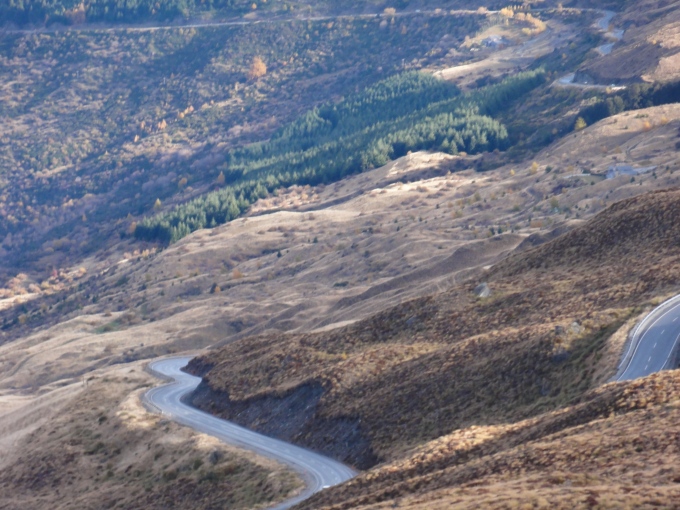
lookingdownfromcoronetpeak

And the story:

It was once said that a desperate man has everything to lose.

The man I was chasing was desperate, but I, on the other hand, was more desperate to catch him.

He’d left a trail of dead people from one end of the island to the other.

The team had put in a lot of effort to locate him, and now his capture was imminent.  We were following the car he was in, from a discrete distance, and, at the appropriate time, we would catch up, pull him over, and make the arrest.

There was nowhere for him to go.

The road led to a dead-end, and the only way off the mountain was back down the road were now on.  Which was why I was somewhat surprised when we discovered where he was.

Where was he going?

“Damn,” I heard Alan mutter.  He was driving, being careful not to get too close, but not far enough away to lose sight of him.

“What?”

“I think he’s made us.”

“How?”

“Dumb bad luck, I’m guessing.  Or he expected we’d follow him up the mountain.  He’s just sped up.”

“How far away?”

“A half-mile.  We should see him higher up when we turn the next corner.”

It took an eternity to get there, and when we did, Alan was right, only he was further on than we thought.”

“Step on it.  Let’s catch him up before he gets to the top.”

Easy to say, not so easy to do.  The road was treacherous, and in places just gravel, and there were no guard rails to stop a three thousand footfall down the mountainside.

Good thing then I had the foresight to have three agents on the hill for just such a scenario.

Ten minutes later, we were in sight of the car, still moving quickly, but we were going slightly faster.  We’d catch up just short of the summit car park.

Or so we thought.

Coming quickly around another corner we almost slammed into the car we’d been chasing.

“What the hell…” Aland muttered.

I was out of the car, and over to see if he was in it, but I knew that it was only a slender possibility.  The car was empty, and no indication where he went.

Certainly not up the road.  It was relatively straightforward for the next mile, at which we would have reached the summit.  Up the mountainside from here, or down.

I looked up.  Nothing.

Alan yelled out, “He’s not going down, not that I can see, but if he did, there’s hardly a foothold and that’s a long fall.”

Then where did he go?

Then a man looking very much like our quarry came out from behind a rock embedded just a short distance up the hill.

“Sorry,” he said quite calmly.  “Had to go if you know what I mean.”

I’d lost him.

It was as simple as that.

I had been led a merry chase up the hill, and all the time he was getting away in a different direction.

I’d fallen for the oldest trick in the book, letting my desperation blind me to the disguise that anyone else would see through in an instant.

It was a lonely sight, looking down that road, knowing that I had to go all that way down again, only this time, without having to throw caution to the wind.

“Maybe next time,” Alan said.

“We’ll get him.  It’s just a matter of time.”

© Charles Heath 2019-2021

Find this and other stories in “Inspiration, maybe”  available soon.

InspirationMaybe1v1