What happens after the action packed start – Part 44

Our hero knows he’s in serious trouble.

The problem is, there are familiar faces and a question of who is a friend and who is foe made all the more difficult because of the enemy, if it was the enemy, simply because it didn’t look or sound or act like the enemy.

Now, it appears, his problems stem from another operation he participated in, and because of it, he has now been roped into what might be called a suicide mission.


I spent another hour trading stories of Army life, none of mine bearing any resemblance to the truth, before the party started.

I said to him, several times, that in my estimation, a part would start at a particular time. He seemed intrigued by how that could be possible when all my men were locked up and guarded.

The Captain, it seemed, was a man of limited intellect.

Or just plain overconfident that he had quelled the incursion and attempt to take the prisoners home.

I was under house arrest, just not in the house with the rest of the men. The Captain decided, being the ranking officer of our group, that I should be accorded facilities befitting my rank. It didn’t change my opinion of the Captain, but it did raise the respect level slightly.

As an officer and a gentleman, as he described himself, he was also a student of Army procedures and practices, not only of his own army but that of others. I admired his hobby out of working hours.

We were just discussing aspects of the first World War, and the part Africa played in it, when both of us suddenly heard gunshots. So did the guard and picked his gun and carefully went out the front door.

The Captain pulled his pistol from out of the top drawer and made sure the magazine had bullets in it. Just in case he needed to use it. All the men, suddenly increased to six, armed and dangerous, in that room had a gun, similar to the Captain. They were commanded by another soldier dressed in fatigues, perhaps a Colonel or higher.

I’d notice some Africa countries had a higher proportion of Generals, to say Lieutenants, and deduced from that, field promotions were a regular thing. That was not my experience here. So far.

I heard another gunshot, this time closer to the hut. Was it my people, mounting their attack? Or was it the Commander, back to retake what was his.

There would be no love lost between the Captain and the commander, and if was a betting man, in a fight, my money would be on the commander.

The sounds of gunfire continued for about ten minutes, then it became sporadic, then none at all. There were footsteps on the boards at the front of the hut, and then a cautious entry, gun barrel first, then, “if you have a gun pointed at the door, I suggest you put it down.” Monroe.

Having caught the Captain’s attention from the front, the Colonel came in the rear, and had his gun barrel pointing to the small of the Captain’s back. “Drop it now.”

The Captain did as he was told.

“You had more men on the perimeter?” he said with a sigh.

“Yes. I thought it prudent to have more than one sniper, a fact that the Militia commander hadn’t given a thought to.” I looked over at Monroe. “Have we secured the airfield?”

“Yes. 10 surviving soldiers, some of them in a bad way, are in the second barracks. They won’t be mounting a counterattack.”

I heard an engine; a large plane engine being started.

“That will be Davies playing with her new toy. Someone is on the runway lights; the rest are heading for the plane. Where are the hostages?” She glared at the Captain.

He shrugged.

Shurl burst in the door. “Out, back through that door,” I said. “Be careful there isn’t a guard waiting for you.”

Monroe looked at me. “Can I shoot the insubordinate bastard?”

A look of surprise, not terror, crossed the Captain’s face.

“Just take him back to the cells and lock him up.”

Shurl came out with the two hostages, just as the second plane engine fired. Monroe took the Captain back to the cells and returned a minute or so later. Shurl had taken the hostages to the plane. Baines would be waiting to switch on the lights at the last minute, and hopefully, the rest were on board.

They would be waiting for Monroe and me.

The both engines were running smoothly, and Davies was testing the rudder and flaps. Suddenly the runway lights came on, and Baines came running towards the plane. Monroe and I jumped aboard, then Baines followed, pulling the door shut behind him.

I heard the engine noise increase, and then we were moving.

I headed up to the cockpit and joined Davies. She was now in her element, her fact a picture of concentration. We were slowly moving to the end of the runway, and I could see her working her way through the preflight checklist.

I tried to speak to her, but she couldn’t hear. She had headphones on. There was a pair near the co-pilot’s seat. I sat down and put them on.

“Everything OK?”

“Nearly. Be quiet for a minute.”

We were at the end of the strip and she turned the plane. She would have checked the wind, not that I’d felt any, and adjusted the take-off direction accordingly.

Then, after what looked like a deep breath and slow exhale, she pushed the engine controls to maximum, and we started moving, slowly gathering speed. The runway surface wasn’t exactly flat, but it was enough not to impede forward motion. Not long after the rear of the plane rose, then in what seemed effortless, we were in the air.

Odd then, when we passed through 2,000 feet, I wondered who this plane belonged to.


© Charles Heath 2020
Inspiration, maybe

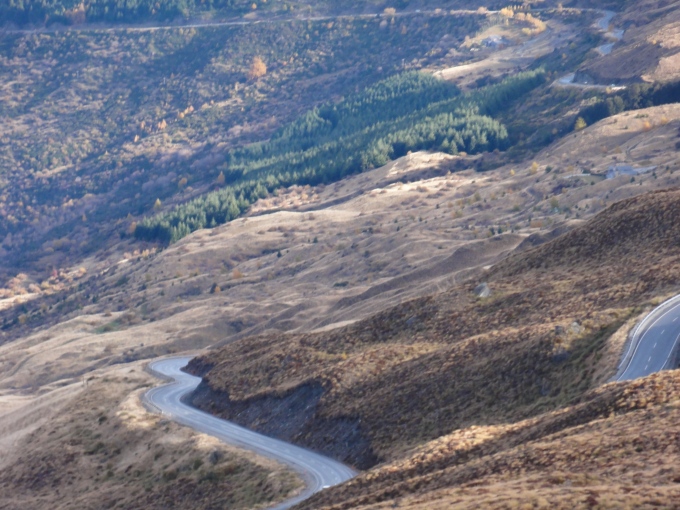
A picture paints … well, as many words as you like.  For instance:

lookingdownfromcoronetpeak

And the story:


It was once said that a desperate man has everything to lose.

The man I was chasing was desperate, but I, on the other hand, was more desperate to catch him.

He’d left a trail of dead people from one end of the island to the other.

The team had put in a lot of effort to locate him, and now his capture was imminent.  We were following the car he was in, from a discrete distance, and, at the appropriate time, we would catch up, pull him over, and make the arrest.

There was nowhere for him to go.

The road led to a dead-end, and the only way off the mountain was back down the road were now on.  Which was why I was somewhat surprised when we discovered where he was.

Where was he going?


“Damn,” I heard Alan mutter.  He was driving, being careful not to get too close, but not far enough away to lose sight of him.

“What?”

“I think he’s made us.”

“How?”

“Dumb bad luck, I’m guessing.  Or he expected we’d follow him up the mountain.  He’s just sped up.”

“How far away?”

“A half-mile.  We should see him higher up when we turn the next corner.”

It took an eternity to get there, and when we did, Alan was right, only he was further on than we thought.”

“Step on it.  Let’s catch him up before he gets to the top.”

Easy to say, not so easy to do.  The road was treacherous, and in places just gravel, and there were no guard rails to stop a three thousand footfall down the mountainside.

Good thing then I had the foresight to have three agents on the hill for just such a scenario.


Ten minutes later, we were in sight of the car, still moving quickly, but we were going slightly faster.  We’d catch up just short of the summit car park.

Or so we thought.

Coming quickly around another corner we almost slammed into the car we’d been chasing.

“What the hell…” Aland muttered.

I was out of the car, and over to see if he was in it, but I knew that it was only a slender possibility.  The car was empty, and no indication where he went.

Certainly not up the road.  It was relatively straightforward for the next mile, at which we would have reached the summit.  Up the mountainside from here, or down.

I looked up.  Nothing.

Alan yelled out, “He’s not going down, not that I can see, but if he did, there’s hardly a foothold and that’s a long fall.”

Then where did he go?

Then a man looking very much like our quarry came out from behind a rock embedded just a short distance up the hill.

“Sorry,” he said quite calmly.  “Had to go if you know what I mean.”


I’d lost him.

It was as simple as that.

I had been led a merry chase up the hill, and all the time he was getting away in a different direction.

I’d fallen for the oldest trick in the book, letting my desperation blind me to the disguise that anyone else would see through in an instant.

It was a lonely sight, looking down that road, knowing that I had to go all that way down again, only this time, without having to throw caution to the wind.

“Maybe next time,” Alan said.

“We’ll get him.  It’s just a matter of time.”


© Charles Heath 2019

Find this and other stories in “Inspiration, maybe”  available soon.

InspirationMaybe1v1


“The Price of Fame”, A Short Story

I looked at the invitation, a feeling of dread coming over me.  It was not entirely unexpected but like a great many things that had suddenly come into my life, it caused equal measures of fear and excitement.

The gold edging and the perfect script displaying my name in the exact centre of the envelope made it almost unique.  Very few people ever received such an invitation.

I held it in my hand for a longer than necessary, then put it down on the desk carefully, as if it would explode if I dropped it.

My first instinct, driven by fear, was not to accept.

But, fear or not, there was no question of me not attending.  Circumstances had painted me into a corner; I’d agreed to go a long time ago when I thought there was no chance it would come to pass.

Way back then, I had been compared to the aspiring painter in an attic having to die before I made any sort of impression.  In those days people thought it amusing.  I thought it was amusing.  Kirsty, in particular, had thought it was as impossible as I had.

Now it was not amusing.  Not even remotely.


My life was once quiet, peaceful, sedate, even boring.  That didn’t mean I lacked imagination, it was just not out on display for everyone to see.  Inspired by reading endless books, I had the capacity to transport myself into another world, divorced from reality, where my boring existence became whatever I wanted it to be.

It was also instrumental in bringing Kirsty into my life.  In reality, I thought she’d never take a second look at me, let alone a first.  So I pretended to be someone else.  Original, witty, charming, underneath more scared than I’d ever known.

And yet she knew, she’d always known and didn’t care.

As we spent more time together, she discovered I liked to write, not finish anything, just start, write a hundred pages, then lose interest.  Like everything I did.  Start, and never finish.

Why not?  It would never be published.  It would never succeed.

So she bribed me.  If I didn’t finish my first book and send it away, I couldn’t marry her.  It didn’t matter if it was rejected, all I had to do was finish a book, and send it.

The thought of marrying her had not entered my mind, because I hadn’t thought she would.  Incentive enough, I picked out one of the unfinished manuscripts and humoured her.  She read bits of it, not saying a word.  Sometimes she’d put a note or two on the manuscript, her equivalent to sweet nothings, and with it I gained inner confidence in my own ability, not only to write but in many other aspects of my life.

When it was finished, it was Kirsty who sent it off.  She read it, packaged it, addressed it, and sent it before I had a chance to change her mind.  Once gone, I heaved a huge sigh of relief.  It was done. That was, as far as I was concerned, the end of it.


It was not possible that one letter could change a person’s life so dramatically.  I came home to the all-knowing smile, and mischievous whimsicality that had always suggested trouble.

Trouble indeed!

My book was accepted.  With a cheque called an advance.  For more money than I knew what to do with.

This was followed not long after by publication.  And a dramatic change to my life, one I didn’t want.  To become a public person, to face an enormous number of people, people I didn’t know.

I went back to being scared.


Kirsty smiled at me and told me how wonderful I looked in my monkey suit.  Why couldn’t I go in jeans and a dress shirt?  All the best actors in Hollywood did it.

“This is not Hollywood.  You’re not an actor.”  It was a simple, practical, answer.

The hell I wasn’t.  I could act sick, dying, fake a heart attack, anything.  “What am I going to say?”

“You could talk about books.”  Quiet, efficient, oozing the confidence I didn’t feel.

She didn’t fuss.  She took it in her stride.  She dressed in her usual simple elegance, in a manner that made me love to be seen with her.  I couldn’t tie my tie, so she did it for me.  She straightened my jacket because I couldn’t do that either.  Nerves.  Can’t live with them, can’t live without them.  Or was that a reference to wives, or mistresses, or something else?

The palms of my hands were sweating.  Meatball hands, I thought, the sort of palms that betrayed the pretenders.  Me, I was the pretender.  My neck felt too large for the shirt.  Beads of sweat formed on my brow.  Where was a sponge when you needed one?

“I can’t do this.”

“You can.”

We hadn’t even left the hotel yet.

“How long before the execution.”

She looked at me with her whimsical smile.  “Long enough for me to give you a hard time.”


I lost count of the number of times I had to go to the bathroom, for one thing, or another.  Nerves I said.  Perhaps a dozen Valium or something similar.  Did I have any?  Had she hidden them?  Why did she keep smiling?

In the car, I looked at my watch at least a dozen times.  I couldn’t breathe.  It was too hot, too cold.  She held my hand, and it served best to stop the trembling that had set in.  Why did I agree to this?  Why?

We were greeted by the Events Manager, who was polite and genuinely interested.  He took us inside where he introduced the interviewer, another woman who oozed confidence and charm, who went over the format and generally tried to set me at ease.

I didn’t let Kirsty’s hand go.  Not yet.  She was my lifeline, the umbilical cord.  When it was severed, I knew I was going to die.

Bathroom?  Where was the bathroom?  Hell, five minutes to go, and I felt like passing out.  No, Kirsty couldn’t come in.  Comb my hair.  Straighten my tie, no it was straight.  Maybe I could hide in here?  I looked around.  No, maybe not.

Time.

The cue man was standing beside me, hand gently on my back.  He knew the score.  He knew I would turn and run the first chance I got.  Kirsty was on the other side, smiling.  Did she know too?

Then the announcement, my cue to walk on.

The gentle shove, the bright lights, the deafening applause, the seemingly endless walk to the chair, dear God, would I make it without tripping over?

How many times had I made this trip?  I stood, facing the audience, waved, then sat.  It was the fifteenth.  You’d think I’d learned by now.

There was nothing to it.


© Charles Heath 2016-2019


Just one of many reading lists – part 3

**Please don’t assume that you have to, nor would I ever expect you to,  read any or all of these books.  You don’t.**

Everyone, it seems, will publish what they call the top 100 books that you should read. Some are voted on, some belong to the opinion of the editor of the book review section of a newspaper, and, as you know, there are a lot of newspapers, a lot of editors, and a lot of opinions.

I’m not a newspaper, I’m not an editor, but I have a list, based on personal experience, and many, many years of reading.

It’s in no particular order.

41.  The Hound of the Baskervilles by Sir Arthur Conan Doyle, as well as a host of other Sherlock Holmes stories

42.  The Secret Agent by Joseph Conrad, one of Conrad’s later political novels, set in London in 1886 and deals with anarchism and espionage.  In those days spies were called anarchists.

43.  The Ipcress File by Len Deighton, introducing us to Harry Palmer, who was personified by Michael Caine and led to Horse Under Water, and Funeral in Berlin.  More of Len Deighton later on in the list

44.  The Remorseful Day by Colin Dexter introducing the somewhat enigmatic detective, Morse, his first name not revealed for a long time but oddly, Endeavour.  John Thaw brought him to life

45.  Crime and Punishment by Fyodor Dostoevsky, hard to pronounce and even harder to read, but perhaps worth it in the end.  By the time I read this I was wishing for a Russian writer had could use an economy of words

46.  Dr. Zhivago by Boris Pasternak wasn’t it.  A vast and lengthy dissertation on lost love, I felt very sad for Zhivago in the end.  I saw a stage play of the same name, and I’m sorry, but it’s a few hours of my life I will never get back

47.  Casino Royale, the first of the James Bond novels by Ian Fleming.  I have to say these are among my favorite spy books.  I must say I preferred the new James Bond in Casino Royale, though Sean Connery still rules!

48.  The Day of the Jackal by Frederick Forsythe, a fascinating story about an assassin

49.  Anything written by John Le Carre, but in particular, the George Smiley collection.  Finally unmasking his nemesis the Russian spymaster made it all so satisfying.

50.  The Bourne Identity by Robert Ludlam, inspiring a long series by both Ludlam and Eric Lustbader makes entertaining reading, but the first, the man who did not know who or what he really was, was excellent.  Matt Damon didn’t harm his persona either.

51.  Murder Must Advertise by Dorothy Sayers, whose detective is Lord Peter Whimsey, a 1933 mystery novel that’s eighth in the series

52.  Gorky Park by Martin Cruz Smith.  You have to admit that his Russian detective Arkady Renko is up against it when his investigation goes in a direction that uncovers corruption and dishonest in his superiors

53.  The Way of All Flesh by Samuel Butler, a semi-autobiographical novel written between 1987 and 1884, and published in 1903.  The story of the Pontifex family.

54.  Howards End by E. M. Forster, first published in 1910, is an interesting insight into the behavior of the, and between the classes, with the Schlegels acting as the catalyst.

55.  Washington Square by Henry James, originally published as a serial, and covers the conflict between daughter and father.  I must say I prefer The Ambassadors to Washington Square.

56.  Ulysses by James Joyce, a day in the life of an ordinary man, Leopold Bloom, why could it not be the 7th June rather than the 16th, for obvious reasons

57.  The Go-Between by L. P. Hartley is a view of society at the end of the Victorian period through the eyes of a young boy.  I read this while still at school and had no clue why, but later, when I read it again, I understood the meaning

58.  Atonement by Ian McEwan, I saw the film and then read the book.  Never a good idea.  Basically, a young girl makes a bad mistake and tries to atone for it.

59.  Gone With The Wind by Margaret Mitchell, the War and Peace of Americal novels, and as long by comparison.  The only book written by Mitchell, and the second most read book by Americans.  The film was interesting but awfully long.

60.  The English Patient by Michael Ondaatje, with a man with severe burns and the effect he had on three others.  Colin Firth is villain one day and hero the next, this time in the cinematic version, an out and out cad.

More to come…


An excerpt from “The Things We Do For Love”

In the distance he could hear the dinner bell ringing and roused himself.  Feeling the dampness of the pillow, and fearing the ravages of pent up emotion, he considered not going down but thought it best not to upset Mrs. Mac, especially after he said he would be dining.

In the event, he wished he had reneged, especially when he discovered he was not the only guest staying at the hotel.

Whilst he’d been reminiscing, another guest, a young lady, had arrived.  He’d heard her and Mrs. Mac coming up the stairs, and then shown to a room on the same floor, perhaps at the other end of the passage.

Henry caught his first glimpse of her when she appeared at the door to the dining room, waiting for Mrs. Mac to show her to a table.

She was about mid-twenties, slim, long brown hair, and the grace and elegance of a woman associated with countless fashion magazines.  She was, he thought, stunningly beautiful with not a hair out of place, and make-up flawlessly applied.  Her clothes were black, simple, elegant, and expensive, the sort an heiress or wife of a millionaire might condescend to wear to a lesser occasion than dinner.

Then there was her expression; cold, forbidding, almost frightening in its intensity.  And her eyes, piercingly blue and yet laced with pain.  Dracula’s daughter was his immediate description of her.

All in all, he considered, the only thing they had in common was, like him, she seemed totally out of place.

Mrs. Mac came out of the kitchen, wiping her hands on her apron.  She was, she informed him earlier, chef, waitress, hotelier, barmaid, and cleaner all rolled into one.  Coming up to the new arrival she said, “Ah, Miss Andrews, I’m glad you decided to have dinner.  Would you like to sit with Mr. Henshaw, or would you like to have a table of your own?”

Henry could feel her icy stare as she sized up his appeal as a dining companion, making the hair on the back on his neck stand up.  He purposely didn’t look back.  In his estimation, his appeal rating was minus six.  Out of a thousand!

“If Mr. Henshaw doesn’t mind….”  She looked at him, leaving the query in mid-air.

He didn’t mind and said so.  Perhaps he’d underestimated his rating.

“Good.”  Mrs. Mac promptly ushered her over.  Henry stood, made sure she was seated properly and sat.

“Thank you.  You are most kind.”  The way she said it suggested snobbish overtones.

“I try to be when I can.”  It was supposed to nullify her sarcastic tone but made him sound a little silly, and when she gave him another of her icy glares, he regretted it.

Mrs. Mac quickly intervened, asking, “Would you care for the soup?”

They did, and, after writing the order on her pad, she gave them each a look, imperceptibly shook her head, and returned to the kitchen.

Before Michelle spoke to him again, she had another quick look at him, trying to fathom who and what he might be.  There was something about him.

His eyes, they mirrored the same sadness she felt, and, yes, there was something else, that it looked like he had been crying?  There was a tinge of redness.

Perhaps, she thought, he was here for the same reason she was.

No.  That wasn’t possible.

Then she said, without thinking, “Do you have any particular reason for coming here?”  Seconds later she realized she’s spoken it out loud, had hadn’t meant to actually ask, it just came out.

It took him by surprise, obviously not the first question he was expecting her to ask of him.

“No, other than it is as far from civilization, and home, as I could get.”

At least we agree on that, she thought.

It was obvious he was running away from something as well.

Given the isolation of the village and lack of geographic hospitality, it was, from her point of view, ideal.  All she had to do was avoid him, and that wouldn’t be difficult.

After getting through this evening first.

“Yes,” she agreed.  “It is that.”

A few seconds passed, and she thought she could feel his eyes on her and wasn’t going to look up.

Until he asked, “What’s your reason?”

Slight abrupt in manner, perhaps as a result of her question, and the manner in which she asked it.

She looked up.  “Rest.  And have some time to myself.”

She hoped he would notice the emphasis she had placed on the word ‘herself’ and take due note.  No doubt, she thought,  she had completely different ideas of what constituted a holiday than he, not that she had actually said she was here for a holiday.

Mrs. Mac arrived at a fortuitous moment to save them from further conversation.


Over the entree, she wondered if she had made a mistake coming to the hotel.  Of course, there had been no possible way she could know than anyone else might have booked the same hotel, but realized it was foolish to think she might end up in it by herself.

Was that what she was expecting?

Not a mistake then, but an unfortunate set of circumstances, which could be overcome by being sensible.

Yet, there he was, and it made her curious, not that he was a man, by himself, in the middle of nowhere, hiding like she was, but for very different reasons.

On discreet observance whilst they ate, she gained the impression his air of light-heartedness was forced and he had no sense of humor.

This feeling was engendered by his looks, unruly dark hair, and permanent frown.  And then there was his abysmal taste in clothes on a tall, lanky frame.  They were quality but totally unsuited to the wearer.

Rebellion was written all over him.

The only other thought crossing her mind, and rather incongruously, was he could do with a decent feed.  In that respect, she knew now from the mountain of food in front of her, he had come to the right place.

“Mr. Henshaw?”

He looked up.  “Henshaw is too formal.  Henry sounds much better,” he said, with a slight hint of gruffness.

“Then my name is Michelle.”

Mrs. Mac came in to take their order for the only main course, gather up the entree dishes, then return to the kitchen.

“Staying long?” she asked.

“About three weeks.  Yourself?”

“About the same.”

The conversation dried up.

Neither looked at the other, rather at the walls, out the window, towards the kitchen, anywhere.  It was, she thought, almost unbearably awkward.


Mrs. Mac returned with a large tray with dishes on it, setting it down on the table next to theirs.

“Not as good as the usual cook,” she said, serving up the dinner expertly, “but it comes a good second, even if I do say so myself.  Care for some wine?”

Henry looked at Michelle.  “What do you think?”

“I’m used to my dining companions making the decision.”

You would, he thought.  He couldn’t help but notice the cutting edge of her tone.  Then, to Mrs. Mac, he named a particular White Burgundy he liked and she bustled off.

“I hope you like it,” he said, acknowledging her previous comment with a smile that had nothing to do with humor.

“Yes, so do I.”

Both made a start on the main course, a concoction of chicken and vegetables that were delicious, Henry thought, when compared to the bland food he received at home and sometimes aboard my ship.

It was five minutes before Mrs. Mac returned with the bottle and two glasses.  After opening it and pouring the drinks, she left them alone again.

Henry resumed the conversation.  “How did you arrive?  I came by train.”

“By car.”

“Did you drive yourself?”

And he thought, a few seconds later, that was a silly question, otherwise she would not be alone, and certainly not sitting at this table. With him.

“After a fashion.”

He could see that she was formulating a retort in her mind, then changed it, instead, smiling for the first time, and it served to lighten the atmosphere.

And in doing so, it showed him she had another more pleasant side despite the fact she was trying not to look happy.

“My father reckons I’m just another of ‘those’ women drivers,” she added.

“Whatever for?”

“The first and only time he came with me I had an accident.  I ran up the back of another car.  Of course, it didn’t matter to him the other driver was driving like a startled rabbit.”

“It doesn’t help,” he agreed.

“Do you drive?”

“Mostly people up the wall.”  His attempt at humor failed.  “Actually,” he added quickly, “I’ve got a very old Morris that manages to get me where I’m going.”

The apple pie and cream for dessert came and went and the rapport between them improved as the wine disappeared and the coffee came.  Both had found, after getting to know each other better, their first impressions were not necessarily correct.

“Enjoy the food?” Mrs. Mac asked, suddenly reappearing.

“Beautifully cooked and delicious to eat,” Michelle said, and Henry endorsed her remarks.

“Ah, it does my heart good to hear such genuine compliments,” she said, smiling.  She collected the last of the dishes and disappeared yet again.

“What do you do for a living,” Michelle asked in an off-hand manner.

He had a feeling she was not particularly interested and it was just making conversation.

“I’m a purser.”

“A what?”

“A purser.  I work on a ship doing the paperwork, that sort of thing.”

“I see.”

“And you?”

“I was a model.”

“Was?”

“Until I had an accident, a rather bad one.”

“Oh, I’m sorry.”

So that explained the odd feeling he had about her.

As the evening had worn on, he began to think there might be something wrong, seriously wrong with her because she didn’t look too well.  Even the carefully applied makeup, from close up, didn’t hide the very pale, and tired look, or the sunken, dark ringed eyes.

“I try not to think about it, but it doesn’t necessarily work.  I’ve come here for peace and quiet, away from doctors and parents.”

“Then you will not have to worry about me annoying you.  I’m one of those fall-asleep-reading-a-book types.”

Perhaps it would be like ships passing in the night and then smiled to himself about the analogy.

Dinner now over, they separated.

Henry went back to the lounge to read a few pages of his book before going to bed, and Michelle went up to her room to retire for the night.

But try as he might, he was unable to read, his mind dwelling on the unusual, yet the compellingly mysterious person he would be sharing the hotel with.

Overlaying that original blurred image of her standing in the doorway was another of her haunting expressions that had, he finally conceded, taken his breath away, and a look that had sent more than one tingle down his spine.

She may not have thought much of him, but she had certainly made an impression on him.


© Charles Heath 2015-2020

lovecoverfinal1

In a word: will

Now that I’ve hit the age of 65, I now have to give some consideration to creating a will.

You know, that document that specifies which child gets what, or if you think any or all of them don’t deserve what’s left of the hard-earned millions, which cat or dog will inherit a fortune.

A will is both a reason for siblings or beneficiaries to kill to get a reward or the fact you have to make one so that the state doesn’t inherit your fortune.

This is only one use of the word.

Another might be that it’s possible to have something like the will to carry on.

Carry on what?

Life, a marriage, a business relationship.

Does it require will power, or is it a matter of where there’s a will there’s a way?

I will come over. I will turn up tomorrow.

In this sense, it is promoting futility.

Of course, seeing is believing.

And as a bit of self-serving advertising, I’m going to promote a new story, actually titled, The Will.

Inheritance can resolve monetary problems, and not only that, set one of the siblings up financially for life. All they have to do is wrest the family home from the dying fingers of a mother who had seen it all.

Into the mix comes the grandson, a man who sometimes is a son but mostly a grandson, someone who doesn’t fit in, who doesn’t want to follow family tradition, and who prefers to go to his grandmothers rather than going home to his family.

He is constantly appalled at his mother’s lack of respect for her mother and suddenly finds himself in the middle of a battle between his grandmother and her daughter, his mother, over the family estate.

Who will win?

That’s a question that will be answered when you read the book.

*** On special – $0.99 – On Special ***

Two novels are on special for $0.99 for the next few weeks.

They are

newechocover5rs

for “Echoes from the Past” go to

https://amzn.to/2CYKxu4

newdevilcvr3

for “The Devil You Don’t” go to

https://amzn.to/2Xyh1ow

Do you remember when…

We used to travel around in airplanes?

20200218_143455

And in planes that had seatback screens where you could watch the planes progress?

It feels like we are never going to be able to travel anywhere ever again, even in a country where the COVID 19 virus has basically been controlled.

Except…

It hasn’t.  We were doing so well when everything went haywire in the southern state of Victoria, and it proves that with a moment’s complacency, it will come back.

I suspect we will never get to travel again until a vaccine is found.

Certainly, we are being told overseas travel may not return until July 2021.

Let’s hope it’s not that long.

“One Last Look”, nothing is what it seems

A single event can have enormous consequences.

A single event driven by fate, after Ben told his wife Charlotte he would be late home one night, he left early, and by chance discovers his wife having dinner in their favourite restaurant with another man.

A single event where it could be said Ben was in the wrong place at the wrong time.

Who was this man? Why was she having dinner with him?

A simple truth to explain the single event was all Ben required. Instead, Charlotte told him a lie.

A single event that forces Ben to question everything he thought he knew about his wife, and the people who are around her.

After a near-death experience and forced retirement into a world he is unfamiliar with, Ben finds himself once again drawn back into that life of lies, violence, and intrigue.

From London to a small village in Tuscany, little by little Ben discovers who the woman he married is, and the real reason why fate had brought them together.

http://amzn.to/2CqUBcz

An excerpt from “Strangers We’ve Become” – Coming Soon

I wandered back to my villa.

It was in darkness.  I was sure I had left several lights on, especially over the door so I could see to unlock it.

I looked up and saw the globe was broken.

Instant alert.

I went to the first hiding spot for the gun, and it wasn’t there.  I went to the backup and it wasn’t there either.  Someone had found my carefully hidden stash of weapons and removed them.

Who?

There were four hiding spots and all were empty.  Someone had removed the weapons.  That could only mean one possibility.

I had a visitor, not necessarily here for a social call.

But, of course, being the well-trained agent I’d once been and not one to be caught unawares, I crossed over to my neighbor and relieved him of a weapon that, if found, would require a lot of explaining.

Suitably armed, it was time to return the surprise.

There were three entrances to the villa, the front door, the back door, and a rather strange escape hatch.  One of the more interesting attractions of the villa I’d rented was its heritage.  It was built in the late 1700s, by a man who was, by all accounts, a thief.  It had a hidden underground room which had been in the past a vault but was now a wine cellar, and it had an escape hatch by which the man could come and go undetected, particularly if there was a mob outside the door baying for his blood.

It now gave me the means to enter the villa without my visitors being alerted, unless, of course, they were near the vicinity of the doorway inside the villa, but that possibility was unlikely.  It was not where anyone could anticipate or expect a doorway to be.

The secret entrance was at the rear of the villa behind a large copse, two camouflaged wooden doors built into the ground.  I move aside some of the branches that covered them and lifted one side.  After I’d discovered the doors and rusty hinges, I’d oiled and cleaned them, and cleared the passageway of cobwebs and fallen rocks.  It had a mildew smell, but nothing would get rid of that.  I’d left torches at either end so I could see.

I closed the door after me, and went quietly down the steps, enveloped in darkness till I switched on the torch.  I traversed the short passage which turned ninety degrees about halfway to the door at the other end.  I carried the key to this door on the keyring, found it and opened the door.  It too had been oiled and swung open soundlessly.

I stepped in the darkness and closed the door.

I was on the lower level under the kitchen, now the wine cellar, the ‘door’ doubling as a set of shelves which had very little on them, less to fall and alert anyone in the villa.

Silence, an eerie silence.

I took the steps up to the kitchen, stopping when my head was level with the floor, checking to see if anyone was waiting.  There wasn’t.  It seemed to me to be an unlikely spot for an ambush.

I’d already considered the possibility of someone coming after me, especially because it had been Bespalov I’d killed, and I was sure he had friends, all equally as mad as he was.  Equally, I’d also considered it nigh on impossible for anyone to find out it was me who killed him because the only people who knew that were Prendergast, Alisha, a few others in the Department, and Susan.

That raised the question of who told them where I was.

If I was the man I used to be, my first suspect would be Susan.  The departure this morning, and now this was too coincidental.  But I was not that man.

Or was I?

I reached the start of the passageway that led from the kitchen to the front door and peered into the semi-darkness.  My eyes had got used to the dark, and it was no longer an inky void.  Fragments of light leaked in around the door from outside and through the edge of the window curtains where they didn’t fit properly.  A bone of contention upstairs in the morning, when first light shone and invariably woke me up hours before I wanted to.

Still nothing.

I took a moment to consider how I would approach the visitor’s job.  I would get a plan of the villa in my head, all entrances, where a target could be led to or attacked where there would be no escape.

Coming in the front door.  If I was not expecting anything, I’d just open the door and walk-in.  One shot would be all that was required.

Contract complete.

I sidled quietly up the passage staying close to the wall, edging closer to the front door.  There was an alcove where the shooter could be waiting.  It was an ideal spot to wait.

Crunch.

I stepped on some nutshells.

Not my nutshells.

I felt it before I heard it.  The bullet with my name on it.

And how the shooter missed, from point-blank range, and hit me in the arm, I had no idea.  I fired off two shots before a second shot from the shooter went wide and hit the door with a loud thwack.

I saw a red dot wavering as it honed in on me and I fell to the floor, stretching out, looking up where the origin of the light was coming and pulled the trigger three times, evenly spaced, and a second later I heard the sound of a body falling down the stairs and stopping at the bottom, not very far from me.

Two assassins.

I’d not expected that.

The assassin by the door was dead, a lucky shot on my part.  The second was still breathing.

I checked the body for any weapons and found a second gun and two knives.  Armed to the teeth!

I pulled off the balaclava; a man, early thirties, definitely Italian.  I was expecting a Russian.

I slapped his face, waking him up.  Blood was leaking from several slashes on his face when his head had hit the stairs on the way down.  The awkward angle of his arms and legs told me there were broken bones, probably a lot worse internally.  He was not long for this earth.

“Who employed you?”

He looked at me with dead eyes, a pursed mouth, perhaps a smile.  “Not today my friend.  You have made a very bad enemy.”  He coughed and blood poured out of his mouth.  “There will be more …”

Friends of Bespalov, no doubt.

I would have to leave.  Two unexplainable bodies, I’d have a hard time explaining my way out of this mess.  I dragged the two bodies into the lounge, clearing the passageway just in case someone had heard anything.

Just in case anyone was outside at the time, I sat in the dark, at the foot of the stairs, and tried to breathe normally.  I was trying not to connect dots that led back to Susan, but the coincidence was worrying me.


A half-hour passed and I hadn’t moved.  Deep in thought, I’d forgotten about being shot, unaware that blood was running down my arm and dripping onto the floor.

Until I heard a knock on my front door.

Two thoughts, it was either the police, alerted by the neighbors, or it was the second wave, though why would they be knocking on the door?

I stood, and immediately felt a stabbing pain in my arm.  I took out a handkerchief and turned it into a makeshift tourniquet, then wrapped a kitchen towel around the wound.

If it was the police, this was going to be a difficult situation.  Holding the gun behind my back, I opened the door a fraction and looked out.

No police, just Maria.  I hoped she was not part of the next ‘wave’.

“You left your phone behind on the table.  I thought you might be looking for it.”  She held it out in front of her.

When I didn’t open the door any further, she looked at me quizzically, and then asked, “Is anything wrong?”

I was going to thank her for returning the phone, but I heard her breathe in sharply, and add, breathlessly, “You’re bleeding.”

I looked at my arm and realized it was visible through the door, and not only that, the towel was soaked in blood.

“You need to go away now.”

Should I tell her the truth?  It was probably too late, and if she was any sort of law-abiding citizen she would go straight to the police.

She showed no signs of leaving, just an unnerving curiosity.  “What happened?”

I ran through several explanations, but none seemed plausible.  I went with the truth.  “My past caught up with me.”

“You need someone to fix that before you pass out from blood loss.  It doesn’t look good.”

“I can fix it.  You need to leave.  It is not safe to be here with me.”

The pain in my arm was not getting any better, and the blood was starting to run down my arm again as the tourniquet loosened.  She was right, I needed it fixed sooner rather than later.

I opened the door and let her in.  It was a mistake, a huge mistake, and I would have to deal with the consequences.  Once inside, she turned on the light and saw the pool of blood just inside the door and the trail leading to the lounge.  She followed the trail and turned into the lounge, turned on the light, and no doubt saw the two dead men.

I expected her to scream.  She didn’t.

She gave me a good hard look, perhaps trying to see if I was dangerous.  Killing people wasn’t something you looked the other way about.  She would have to go to the police.

“What happened here?”

“I came home from the cafe and two men were waiting for me.  I used to work for the Government, but no longer.  I suspect these men were here to repay a debt.  I was lucky.”

“Not so much, looking at your arm.”

She came closer and inspected it.

“Sit down.”

She found another towel and wrapped it around the wound, retightening the tourniquet to stem the bleeding.

“Do you have medical supplies?”

I nodded.  “Upstairs.”  I had a medical kit, and on the road, I usually made my own running repairs.  Another old habit I hadn’t quite shaken off yet.

She went upstairs, rummaged, and then came back.  I wondered briefly what she would think of the unmade bed though I was not sure why it might interest her.

She helped me remove my shirt, and then cleaned the wound.  Fortunately, she didn’t have to remove a bullet.  It was a clean wound but it would require stitches.

When she’d finished she said, “Your friend said one day this might happen.”

No prizes for guessing who that friend was, and it didn’t please me that she had involved Maria.

“Alisha?”

“She didn’t tell me her name, but I think she cares a lot about you.  She said trouble has a way of finding you, gave me a phone and said to call her if something like this happened.”

“That was wrong of her to do that.”

“Perhaps, perhaps not.  Will you call her?”

“Yes.  I can’t stay here now.  You should go now.  Hopefully, by the time I leave in the morning, no one will ever know what happened here, especially you.”

She smiled.  “As you say, I was never here.”


© Charles Heath 2018-2020