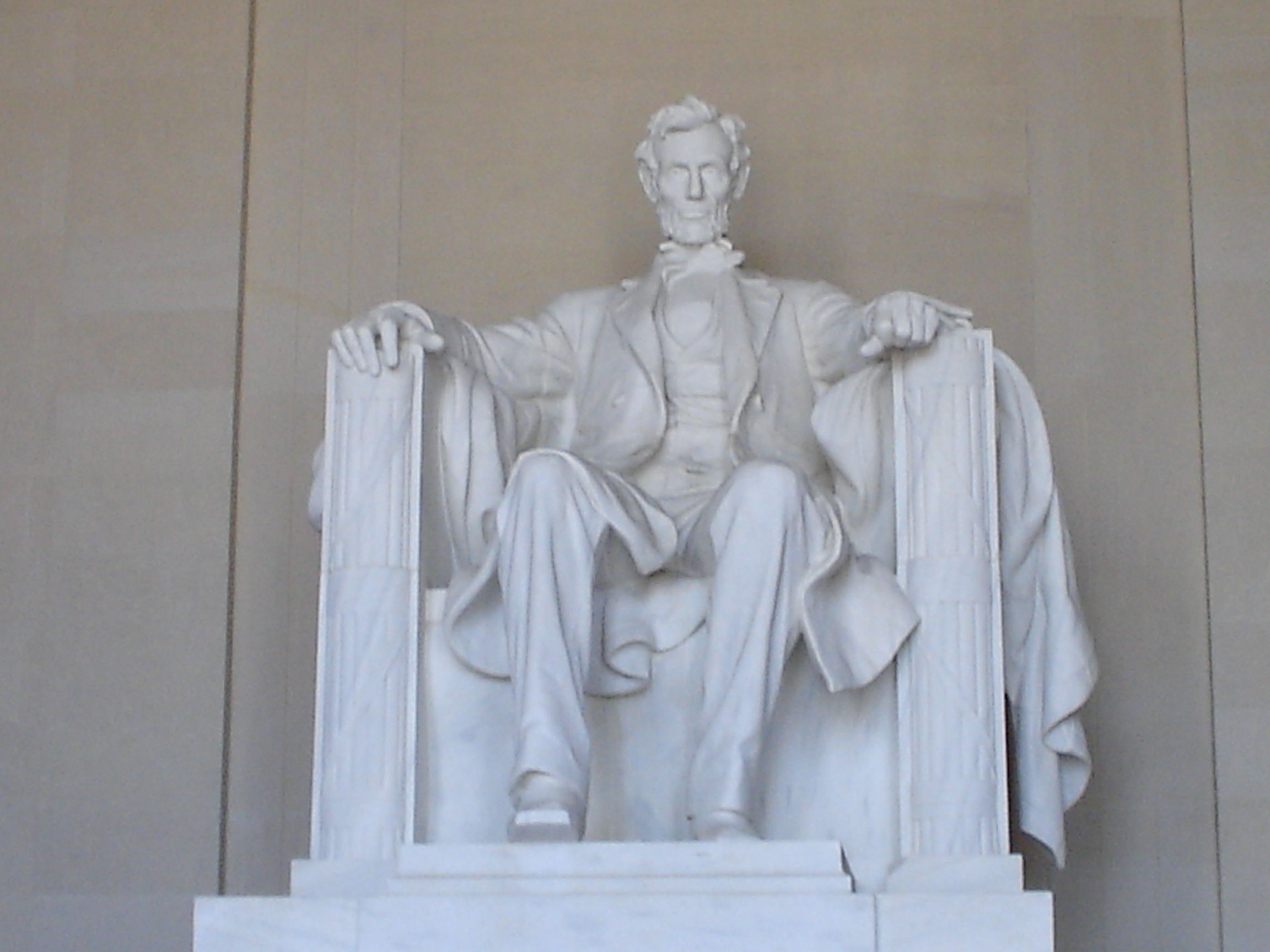
I should be on holiday but…

You would think that going away for a few days, you would be able to drag yourself away from writing.

You would think, after doing it every day for the last six months, it would be time to take a break. But, the trouble with good intentions and being in a different place, there’s a ton of new and different places and things to write about.

We are here primarily for a wedding, with part of it being a Chinese Tea Ceremony, and at course I’ve been reading up on it, and there is any number of descriptions, making it difficult to get a clear idea of what happens.

I guess I’m going to have to wait until the day, next Friday.

In between, there will be a dinner that will have as the centrepiece, Peking duck, my absolute favourite duck dish.

I had it last in Hong Kong two years back before the riots at the restaurant in the Peninsular hotel, and it was exquisite.

Then it’s my brother’s 70th birthday. As he is working feverishly on the family history, and having jetted off many times overseas tracking down the long lost relatives we knew nothing about, it’ll be time for a progress report.

I must admit that some of those relatives have roused my writer’s curiosity. When I helped clear out my parent’s house after they moved into a retirement home, we found a great deal of ancestral material, the most interesting of which is, would you believe, was about my mother.

We have found a whole lot of letters she received from her first boyfriend and then from my father. It shows a side to her I never knew about, and a side to my father that given what I know of him, is totally out of character.

There will no doubt be more on this subject later.

And finally but not least there was a baby announcement, always a subject of much joy and happiness.

This is only day two. There is definitely more to come.

Coming soon – “Strangers We’ve Become”, the sequel to “What Sets Us Apart”

Stranger’s We’ve Become, a sequel to What Sets Us Apart.

The blurb:

Is she or isn’t she, that is the question!

Susan has returned to David, but he is having difficulty dealing with the changes. Her time in captivity has changed her markedly, so much so that David decides to give her some time and space to re-adjust back into normal life.

But doubts about whether he chose the real Susan remain.

In the meantime, David has to deal with Susan’s new security chief, the discovery of her rebuilding a palace in Russia, evidence of an affair, and several attempts on his life. And, once again, David is drawn into another of Predergast’s games, one that could ultimately prove fatal.

From being reunited with the enigmatic Alisha, a strange visit to Susan’s country estate, to Russia and back, to a rescue mission in Nigeria, David soon discovers those whom he thought he could trust each has their own agenda, one that apparently doesn’t include him.

The Cover:

strangerscover9

Coming soon


Is social media useful for advertising?

Of course, if I had I might be saying that it was luck

But…

There’s no such thing as luck, there’s simply good management or being in the right place at the right time.

Or you’ve just put a lot of research and hard work into an idea that pays off.

That’s not luck, that’s something else.

I say this because I have never been on the receiving end of good fortune very often, except, as you would expect, as the result of hard work.  And yes, everything appears to conspire against me some days, but I would not call that bad luck.

Timing, quite often, is everything.

So…

I’ve been researching the internet and the world of social media. So many people make claims about how good it is, how bad it is, how they made a fortune, and how, for others, it’s a dud.

Again, it’s about good management, hard work, or being in the right place, etc.

And viral stuff on YouTube, well, if it goes viral with a million hits in fifteen minutes, it means everybody, in that fifteen minutes, was looking for something interesting at that particular moment, and there it was.

It was not luck.

However…

Using either of Facebook or Twitter as a means to advertise, without parting with your hard earned, or more likely, non-existent cash, is not all it’s cracked up to be.

You have 17,000 followers, that means you have at least 17,000 people who are going to see your post.  Or someone else’s if you are thinking of getting people to market their product on the back of your followers, hang on, targeted followers.  If, say, for instance, you’re followers are book orientated, doesn’t that mean…

You get my point.

Wrong.

You’re lucky if 5% of those followers see anything, and that doesn’t increase by putting a lot of different tags on the post.  Twitter itself is restrictive in the number of people it will distribute the post to.

Five per cent, that’s 850 of your followers who may see any one of your posts at the one time.  other people have done vari0ous tests to check just who gets a post and who doesn’t, so it’s not just me who had noted what’s happening.

Then there’s the take-up rate, which Twitter does tell you, in my case, it’s about 2% at it’s lowest, which means the effective number of real peal people looking at my posts with any interest, is about 17.

It can be more, though I’m not sure how the Twitter algorithm for distributing posts works.  I’ve seen other people get thousands of likes and re-tweets.

And, yes, I get it, their posts might be more interesting than mine, and I accept that, but the numbers I’ve been tracking don’t lie.  If more people saw the tweet, the curiosity factor would be higher, and at the very least, the click-through rate would be higher.

That it isn’t can be verified from checking with the number of clicks on the bitly web site for the day, even over a number of days, in the basic statistics they provide their users.

I’m just saying…

All of those people who say they have thousands, sometimes tens of thousands, of followers just waiting for you to advertise with them, cannot deliver any sort of mass advertising you need, and even if they were to pay to advertise with Twitter, they would have to charge very exorbitant prices.

You can do it yourself, but there’s no guarantee your tweet will read by the people you need to buy your book.

It’s what I would call a shot in the dark.

So…

What do we do?

Anyone else done this exercise and come up with different results?  If you have I’d be interested to know what sort of responses you are getting from Twitter, or Facebook, or any other social media platform.

Preferably before I pull all my hair out in frustration!


If only something made sense…

It seems rather fortuitous that we have a holiday at the end of the year.

I mean, who sat around a table however many years ago and decided that holidays like Christmas should be at the end of the year.  And who decided one half of the world could freeze to death on their holidays, and the other half burn?

At the end of a long year at that, you know, 52 weeks, 12 months, 365 days, where even when some of us get a weekend off once in a blue moon, it still seems like we’re working 7 days a week, 52 weeks a year.

So, who decided a week would have seven days, a year would have 12 months, and while we’re at it, who decided to give each month a different name?  And who named names?

Was it Father Time.  As children, we all learn about father time, or has political correctness stepped in and we now call ‘father time’, ‘person time’.

Anyway…

Who do we blame for this mess, we have to blame someone.  It’s not our fault.  If it were up to me I’d have Christmas in September when there’s more temperate weather in both halves of the world.

And who decided that Christmas should be attached to Winter and not Summer?

It’s like the whole mess was designed by a group of academics majoring in philosophy sitting in a back room and fed Coca Cola and Pizzas until they came up with an answer, which was probably to send it all to a parliamentary committee made up from candidates from Bellevue Asylum.

The same people, by the way, who are responsible for coordinating traffic lights.

And then there’s that other mystery I’ve never quite understood.

If you work for the FBI your first name suddenly becomes ‘Agent’.  Everyone gets that name change whether you like it or not.

Which is much the same as all Russians once upon a time calling each other ‘comrade’.  Beats the hell, I suppose, out of remembering people’s first names, especially in Russia where, to us, they’re unpronounceable.

Sorry.

You can tell I’m still getting over Chrismas.

I’ve become a gibbering idiot.

In a word: Bark

Here’s the thing, a bark is the sound made by a dog.  Isn’t it?  Apparently, it can also be from a fox or a seal

Not necessarily.  A man or woman can bark orders, especially if they are in the army.

And then, their bark might be worse than their bite, this usually refers to newspaper editors and school teachers.

You can theoretically be barking up the wrong tree, and believe me, I’ve done that a few times myself.

People can be barking mad.  Just go to any old spooky hospital that is named Belleview, and has a basement.  How do I know this, I’ve seen a lot of old black and white movies.

Then there’s that other type of bark, the outer layer of a lot of trees, and can be very useful as a top layer of a garden to keep the moisture in.

It can be thin sheets of chocolate with a thin layer of nuts or other confectionaries.

You can bark your shins, that is, scrape the skin off when you trip over a tree with bark.

Or just to complicate matters, there is also a barque, usually a three-masted sailing ship, though you don’t get to see many of them these days.

A Chapter from “Echoes from the Past”

Currently available from Amazon:  https://amzn.to/2CYKxu4


I looked down on 5th Avenue and could just see, in the distance, Saks, and opposite, the Rockefeller Center.  Recently I’d gone ice skating there with a woman I had begun to care for more than I should, and who liked spending time with me.

It was a relationship that had evolved slowly and was now moving into dangerous territory.  From the moment our eyes first met across the ice, I knew that outing had been a mistake.  Whatever I’d been thinking it couldn’t happen, but against better judgment, I had let it happen.

It was not her fault, it was mine.  I was not the person she thought I was, the person I wanted to be, and if the circumstances of my past were not as they were, the person she was most likely looking for.

It had happened before, and it would happen again, and the result would be the same.  I would move on, find a new city, a new job, a new life, and continue to hide in plain sight.

Waiting for an eventuality that may never happen, but if it did, it would happen to me alone, not the woman I loved.

I sighed inwardly, thinking of how unfair life could be.  And how much, this time, I wanted it to be different.

From my office window, high up in the sky, I could see several Fire Department vehicles going though yet another drill and could just hear the sound of the sirens floating up to the 32nd floor.  Darkness was closing in, and the fast-moving red strobing lights stood out against the neon signs, the street lighting, and the Christmas decorations.

It was that time of the year again, a time that brought back very sad memories.  For most people, it was when families came together to celebrate.  That was not possible for me.  I’d thought with the passing of time it would no longer hurt so much, but it did.  I felt a tear in my eye and pulled a tissue out of the box on my desk to wipe it away.

Enough with the sentimentality.

Behind me, I heard files being dropped on my desk.  It was Friday when Maria from Accounting brought me the latest customers who were overdue in paying their investment contributions.  The stack was getting bigger every week.

I turned to face her.  She was only three years younger than me but looked ten.  Italian parents, conservative dressed, reserved manner, but usually friendly and outgoing, she was well-liked by all.  What surprised me, out of all the people she could choose as a friend, and since our ice skating expedition something more than that, she chose me.

I was not exactly the easiest of people to get along with, for obvious reasons.

I soon discovered this was the only time she and I could meet in the office without the prying eyes of our workmates making more of it than it was.  Office romances, not that either of us would acknowledge we were having one, were frowned upon.  Worse, rumors were very easily started, and much harder to quash.

“To be honest, I’m glad I don’t have your job, Will.”

She looked at the stack and then gave me a special look, one I wanted to believe was reserved just for me.  Her smile always tugged at a heartstring or maybe two.  This night it did more than that.

I shrugged and tried to be casual.  “I was told I had a gift.”

“Ah, the statement of faith, just before the sucker punch.”

Everyone knew to call customers in distress was a difficult job at best.  It required tact and diplomacy, a trait I’d acquired over time because of my situation.  It had been a strange match of opportunity and unrealized talent when a disgruntled customer had come into the office and verbally attacked Mr. Bartleby, a senior partner.

I’d talked the customer down, and talked myself into the job.  I’d only agreed to do it because it came with the promise of a promotion.  Now I was considering an exit strategy, it probably didn’t matter.

“Doing anything for the weekend?”  She asked the same question every Friday.  The last time, I surprised her by asking if she skated on ice, not expecting she did.  She said yes.

It didn’t take long to realize she would have said yes to climbing Mount Everest.  It was her first time on skates, and we learned a lot about each other over the half-hour she managed to stay upright.

For her bravery, I took her to dinner and then took her home.  She asked me to stay for a while, to patch up her wounds, perhaps the modern-day equivalent of ‘would you like to come up and see my paintings’.

Whatever her intentions or my desires, we just talked over a bottle of wine and then coffee.  I didn’t have to leave, but it was better for both of us that I did.

I closed my eyes to break the connection.  I could feel it.  I was starting to fall in love with this girl, this woman, and I knew I had to be careful.  It would not be long before the questions started; questions I couldn’t answer.

“No.  I wasn’t intending to do much.”

“Then perhaps you might consider joining the rest of us monkeys for beer, wine and a lively discussion about anything but work.   Harry’s found a new bar, upon 6th Avenue.”

Harry was our social director, not a real one but self-appointed, and he organized most of the unofficial staff gatherings.  He was a bit too self-important for me, an ‘I am’ sort of guy, but he went to Harvard and had probably earned the right.  I wasn’t on his social radar so he rarely invited me to anything.  If he did, I generally declined.  Those gatherings were the hunting grounds of the go-getters, the rookies looking for an edge to climb the corporate ladder.  I was all about keeping a low profile.

“Is he asking, or you?”

A momentary frown settled on her face.  We’d had a similar discussion once before, and I’d realized then she tried only to see the good in people.  Perhaps that was why I was so lucky.

“Does it matter?”

I pretended to think about it for a minute, and then said, “No.”

Her smile returned.  “Do you want me to come to fetch you?”

“As appealing as that sounds, I have a couple of matters to tidy up.  You go, and I’ll drop in later.”

The expression on her face told me she didn’t believe me.  It was not without merit, because I had told her the same before and not followed through.  Then, it didn’t matter because I hadn’t known her all that well.  Now, it seemed everything had changed.

“You are not just saying that to get rid of me, are you?”  The tone matched the doubtful expression.

Blunt, but fairly accurate.  I didn’t want to underestimate this girl.  In normal circumstances, I might have considered something else, other than drinks.  Instead, I said, “I would have preferred a walk in Central Park, but I don’t think the weather is going to behave.”

Then I had a moment where I thought if I told her something closer to the truth, it might help me climb my way out of the deep hole I was digging for myself.  “To be honest, I’m not very good at these social gatherings.”

Another change in expression, she had many faces for many occasions.  This one was of surprise, or was it an agreement?

“Then you and I could go somewhere else if you like.”

Not exactly the result I was looking for.

“We could, but then you would miss out on being with your friends and most likely miss the next scandal to envelop us.”

The last one was about Bartleby junior and a certain socialite.  Everyone knew what he was like except one person, his current fiancée Katrina.

“True.”  She shrugged.  I had just become a lost cause.  “I will look out for you.  But remember, I will be disappointed if you don’t come.”

She gave me a last look, somewhat whimsical I thought, as I watched her walk across the floor to the elevator lobby.  It was like watching the love of my life leaving, without turning back.


I’d promised myself a long time ago that I would not get involved with a woman, but I soon learned how difficult a promise like that was to keep, especially when the woman’s name was Katrina.

I’d not known real love before, and it was not difficult to fall under her spell.  She was as beautiful as she was beguiling.

A long time ago, in what felt like another lifetime, Katrina Winslow and I worked together.  She taught me my first job at Bentley, Bowman and Bartleby, Accountants.  And, as with anyone with whom you work so closely, we became friends, and then something more than that.

By the time I realized what had happened, it was too late.  She was the daughter of parents who cared about their daughter, and the people with whom she associated.  They had me investigated.

I remember that Monday morning as if it was yesterday when she came into my office.  We had spent a perfect weekend together, and when I left her Sunday night, I was full of those starry-eyed dreams people in love had.

An hour later, all of those dreams had been shattered, not only for me but for her too.  I had no answers to her questions, answers the investigators could not find.  I knew from the first day I met her she was out of my league, but I honestly believed love could conquer all.

Her father didn’t.  It ended, and in time I realized it was for the best.  I had nothing to offer her, and I could never give answers to any of the questions she might ask.

Not long after, Maria told me about her engagement to Marcus Bartleby, son of the remaining live partner whose name graced the building, and signs throughout the city.  I told myself he would be the sort of man her father believed she deserved, but in my heart, I knew what sort of person Marcus was, and equally, there was nothing I could do about it.

I had a secret, one that I could never tell anyone.  And until I could find a way of reconciling my past I could never contemplate having a future, make any friends, or find any sort of peace or happiness.

With Katrina, with Maria, or anyone else.


The truth is my life was the equivalent of a metaphorical train wreck.  You wouldn’t know it, looking at me, but how I looked now, how I acted and reacted was a product of many years of practice.  From the moment I had seen my parents murdered at the age of fourteen, I’d been on the run.  Being that young, it was tough on the road, and I had to get street smart, and defensive, very quickly.  I’d learned the hard way, through the school of hard knocks.  By comparison, the Bartleby’s of this world had got it easy.

But, don’t get me wrong.  It was not something I was bitter about.  It was what it was.  I did what I had to do, and what I have to.  I accepted they had and always would have everything handed to them on a platter.  It was the way of the world.

On the upside, I had only myself to please.  I did not have to rely on anyone else, nor was I responsible for anyone but myself.  I had no family to speak of, or that I would acknowledge.

My father had been an orphan and had spent a relatively lonely life up to the point where he married my mother.

The family I had on my mother’s side was the reason I ran away and kept running, and fortunately, I had not seen any of them since the day I finally escaped.

On the downside, I’d never stayed in one place too long, and never had the time to get a good education, a prerequisite for a good job.  Instead, I had a lot of experience in jobs that didn’t have much of a career path.

I’d thought of night school, even tried it once, but it didn’t work out.  That was the catalyst for joining the army, the one place where people like me finished up.  It was a place to call home wherever they dumped you, and you made friends that didn’t care who or what you were, or cared too much about your past.

I was sent to Iraq, the first time around, with a great bunch of guys, until most of the platoon was killed in a suicide bombing, and the few that survived, including me, were physically repaired and discharged.

In the years since I’d stopped in ten cities.  New York was the most recent, and I’d been here the longest.  I’d carved a path across America from the Mid West, a place called Columbus, Nebraska, through to New York, with a lot of places in between.  It was an interesting way to see the country when in normal circumstances I would have little reason to leave my home town.

Now, after all the running, all the looking over my shoulder, there was a desire to stop.  The problem was I couldn’t.  I couldn’t afford to feel safe, because the moment I did, the moment I let down my guard, it would be when I’d make a mistake, a mistake that could have horrific consequences.  Not only for me but for others around me.

I’d learned that lesson well, soon after I had run away from home, but before I left my home town.  Escape was a relief, and when they had not caught up with me after a week, I started to feel safe.

I let down my guard.  I allowed my trust of the one person in that family I thought was my friend to influence my actions.  She had unwittingly led the family to me after being used as a decoy.  I hadn’t thought of that possibility.

They handed me to the man who murdered my parents.  He told me he’d been willing to track me to the ends of the earth, as long as it took.  He held me captive for a few hours until I escaped, and I had no intention of being caught again.

From that day, I never trusted anyone again.

I remembered the demonic look in his eyes when he told me he would never stop looking.  He was out there, somewhere, and I had to remain vigilant.  The passing of time, for this murderer, was irrelevant.

And, standing there, looking out the window and down 5th Avenue, I could feel the itch, the one I couldn’t scratch.  The one that told me my pursuer, a man who went by the name of Edward Jamieson, wasn’t very far away.


© Charles Heath 2015-2020


*** On special – $0.99 – On Special ***

Two novels are on special for $0.99 for the next two weeks.

They are

newechocover5rs

for “Echoes from the Past” go to  https://amzn.to/2CYKxu4

newdevilcvr3

for “The Devil You Don’t” go to  https://amzn.to/2Xyh1ow

As a matter of fact…

But, is it?

This oft used expression is one we pull out of our argument arsenal every now and then, but the problem is, are we quoting actual facts, or are we just trying to get a point of view across?

What are facts?

There seems to be a wide disparity of explanations on what facts are, depending on what purpose they’re used for.

We’re all familiar with a certain line of information being put forward as factual in defense of a particular wall, but are these facts?

Can we disprove these facts with other facts, and are these facts factual or otherwise.

The real facts may never be known because they may well be buried underneath a welter of auxiliary information that is factual but can be twisted any which way.

So…

Would we be better of with conjecture?

To be honest, I’m not quite sure what conjecture is, but at a guess, conjecture is a series of assumptions based on facts (oh no, here we go again!)

Over here we built a fence to keep out the rabbits.

Walls, fences, it didn’t work.  It cost a lot of money but didn’t achieve the intended result.

Humans are more inventive than rabbits.  We seem to be better keeping them in, rather than keeping them out.

And I’m off track yet again, distracted by current affairs.

I just wanted to say that any story can be based on fact, and then generally go down the path of conjecture.  Historically, we might keep people who have died alive, places that have disappeared in place, follow history accurately for a while and then make assumptions of what might have happened rather than what did.

Unfortunately, it involves a lot of studies, and, sometimes, the unearthing of a fact that no one really knew about.

Make of that what you will.

An excerpt from “What Sets Us Apart”, a mystery with a twist

See excerpt from the story below, just a taste of what’s in store…

http://amzn.to/2Eryfth

whatsetscover

McCallister was old school, a man who would most likely fit in perfectly campaigning on the battlefields of Europe during the Second World War. He’d been like a fish out of water in the army, post-Falklands, and while he retired a hero, he still felt he’d more to give.

He’d applied and was accepted as head of a SWAT team, and, watching him now as he and his men disembarked from the truck in almost military precision, a look passed between Annette, the police liaison officer, and I that said she’d seen it all before. I know I had.

There was a one in four chance his team would be selected for this operation, and she had been hoping it would be one of the other three. While waiting for them to arrive she filled me in on the various teams. His was the least co-operative, and the more likely to make ad-hoc decisions rather than adhere to the plan, or any orders that may come from the officer in charge.

This, she said quite bluntly, was going to end badly.

I still had no idea why Prendergast instructed me to attend the scene of what looked to be a normal domestic operation, but as the nominated expert in the field in these types of situations, it was fairly clear he wasn’t taking any chances. It was always a matter of opinion between us, and generally I lost.

In this case, it was an anonymous report identifying what the authorities believed were explosives in one of the dockside sheds where explosives were not supposed to be. The only reason why the report was given any credence was the man, while not identifying himself by name, said he’d been an explosive expert once and recognized the boxes. That could mean anything, but the Chief Constable was a cautious man.

With his men settled and preparing their weapons, McCallister came over to the command post, not much more than the SUV my liaison and I arrived in, with weapons, bulletproof vests, and rolls of tape to cordon off the area afterward. We both had coffee, steaming in the cold early morning air. Dawn was slowly approaching and although rain had been forecast it had yet to arrive.

A man by the name of Benson was in charge. He too had groaned when he saw McCallister.

“A fine morning for it.” McCallister was the only enthusiastic one here.

He didn’t say what ‘it’ was, but I thought it might eventually be mayhem.

“Let’s hope the rain stays away. It’s going to be difficult enough without it,” Benson said, rubbing his hands together. We had been waiting for the SWAT team to arrive, and another team to take up their position under the wharf, and who was in the final stages of securing their position.

While we were waiting we drew up the plan. I’d go in first to check on what we were dealing with, and what type of explosives. The SWAT team, in the meantime, were to ensure all the exits to the shed were covered. When I gave the signal, they were to enter and secure the building. We were not expecting anyone inside or out, and no movement had been detected in the last hour since our arrival and deployment.

“What’s the current situation?”

“I’ve got eyes on the building, and a team coming in from the waterside, underneath. Its slow progress, but they’re nearly there. Once they’re in place, we’re sending McKenzie in.”

He looked in my direction.

“With due respect sir, shouldn’t it be one of us?” McCallister glared at me with the contempt that only a decorated military officer could.

“No. I have orders from above, much higher than I care to argue with, so, McCallister, no gung-ho heroics for the moment. Just be ready to move on my command, and make sure you have three teams at the exit points, ready to secure the building.”

McCallister opened his mouth, no doubt to question those orders, but instead closed it again. “Yes sir,” he muttered and turned away heading back to his men.

“You’re not going to have much time before he storms the battlements,” Benson quietly said to me, a hint of exasperation in his tone. “I’m dreading the paperwork.”

It was exactly what my liaison officer said when she saw McCallister arriving.

The water team sent their ‘in position’ signal, and we were ready to go.

In the hour or so we’d been on site nothing had stirred, no arrivals, no departures, and no sign anyone was inside, but that didn’t mean we were alone. Nor did it mean I was going to walk in and see immediately what was going on. If it was a cache of explosives then it was possible the building was booby-trapped in any number of ways, there could be sentries or guards, and they had eyes on us, or it might be a false alarm.

I was hoping for the latter.

I put on the bulletproof vest, thinking it was a poor substitute for full battle armor against an exploding bomb, but we were still treating this as a ‘suspected’ case. I noticed my liaison officer was pulling on her bulletproof vest too.

“You don’t have to go. This is my party, not yours,” I said.

“The Chief Constable told me to stick to you like glue, sir.”

I looked at Benson. “Talk some sense into her please, this is not a kindergarten outing.”

He shrugged. Seeing McCallister had taken all the fight out of him. “Orders are orders. If that’s what the Chief Constable requested …”

Madness. I glared at her, and she gave me a wan smile. “Stay behind me then, and don’t do anything stupid.”

“Believe me, I won’t be.” She pulled out and checked her weapon, chambering the first round. It made a reassuring sound.

Suited up, weapons readied, a last sip of the coffee in a stomach that was already churning from nerves and tension, I looked at the target, one hundred yards distant and thought it was going to be the longest hundred yards I’d ever traversed. At least for this week.

A swirling mist rolled in and caused a slight change in plans.

Because the front of the buildings was constantly illuminated by large overhead arc lamps, my intention had been to approach the building from the rear where there was less light and more cover. Despite the lack of movement, if there were explosives in that building, there’d be ‘enemy’ surveillance somewhere, and, after making that assumption, I believed it was going to be easier and less noticeable to use the darkness as a cover.

It was a result of the consultation, and studying the plans of the warehouse, plans that showed three entrances, the main front hangar type doors, a side entrance for truck entry and exit and a small door in the rear, at the end of an internal passage leading to several offices. I also assumed it was the exit used when smokers needed a break. Our entry would be by the rear door or failing that, the side entrance where a door was built into the larger sliding doors. In both cases, the locks would not present a problem.

The change in the weather made the approach shorter, and given the density of the mist now turning into a fog, we were able to approach by the front, hugging the walls, and moving quickly while there was cover. I could feel the dampness of the mist and shivered more than once.

It was nerves more than the cold.

I could also feel rather than see the presence of Annette behind me, and once felt her breath on my neck when we stopped for a quick reconnaissance.

It was the same for McCallister’s men. I could feel them following us, quickly and quietly, and expected, if I turned around, to see him breathing down my neck too.

It added to the tension.

My plan was still to enter by the back door.

We slipped up the alley between the two sheds to the rear corner and stopped. I heard a noise coming from the rear of the building, and the light tap on the shoulder told me Annette had heard it too. I put my hand up to signal her to wait, and as a swirl of mist rolled in, I slipped around the corner heading towards where I’d last seen the glow of a cigarette.

The mist cleared, and we saw each other at the same time. He was a bearded man in battle fatigues, not the average dockside security guard.

He was quick, but my slight element of surprise was his undoing, and he was down and unconscious in less than a few seconds with barely a sound beyond the body hitting the ground. Zip ties secured his hands and legs, and tape his mouth. Annette joined me a minute after securing him.

A glance at the body then me, “I can see why they, whoever they are, sent you.”

She’d asked who I worked for, and I didn’t answer. It was best she didn’t know.

“Stay behind me,” I said, more urgency in my tone. If there was one, there’d be another.

Luck was with us so far. A man outside smoking meant no booby traps on the back door, and quite possibly there’d be none inside. But it indicated there were more men inside, and if so, it appeared they were very well trained. If that were the case, they would be formidable opponents.

The fear factor increased exponentially.

I slowly opened the door and looked in. A pale light shone from within the warehouse itself, one that was not bright enough to be detected from outside. None of the offices had lights on, so it was possible they were vacant. I realized then they had blacked out the windows. Why hadn’t someone checked this?

Once inside, the door closed behind us, progress was slow and careful. She remained directly behind me, gun ready to shoot anything that moved. I had a momentary thought for McCallister and his men, securing the perimeter.

At the end of the corridor, the extent of the warehouse stretched before us. The pale lighting made it seem like a vast empty cavern, except for a long trestle table along one side, and, behind it, stacks of wooden crates, some opened. It looked like a production line.

To get to the table from where we were was a ten-yard walk in the open. There was no cover. If we stuck to the walls, there was equally no cover and a longer walk.

We needed a distraction.

As if on cue, the two main entrances disintegrated into flying shrapnel accompanied by a deafening explosion that momentarily disoriented both Annette and I. Through the smoke and dust kicked up I saw three men appear from behind the wooden crates, each with what looked like machine guns, spraying bullets in the direction of the incoming SWAT members.

They never had a chance, cut down before they made ten steps into the building.

By the time I’d recovered, my head heavy, eyes watering and ears still ringing, I took several steps towards them, managing to take down two of the gunmen but not the third.

I heard a voice, Annette’s I think, yell out, “Oh, God, he’s got a trigger,” just before another explosion, though all I remember in that split second was a bright flash, the intense heat, something very heavy smashing into my chest knocking the wind out of me, and then the sensation of flying, just before I hit the wall.

I spent four weeks in an induced coma, three months being stitched back together and another six learning to do all those basic actions everyone took for granted. It was twelve months almost to the day when I was released from the hospital, physically, except for a few alterations required after being hit by shrapnel, looking the same as I always had.

But mentally? The document I’d signed on release said it all, ‘not fit for active duty; discharged’.

It was in the name of David Cheney. For all intents and purposes, Alistair McKenzie was killed in that warehouse, and for the first time ever, an agent left the Department, the first to retire alive.

I was not sure I liked the idea of making history.

Searching for locations: Washington DC, USA

Washington is a city with bright shiny buildings and endless monuments, each separated by a long walk or a taxi ride if you can find one.

We might have picked the wrong day, shortly after New Year’s Day when the crowds were missing along with everything else.  Or, conversely, it was probably the right time to go, when we didn’t have to battle the crowds.

Sunny but very cold, the walking warmed us up.

First stop was the Lincoln Memorial

DSC00833

It was built to honor the 16th President of the United States, Abraham Lincoln.

It is located on the western end of the National Mall in Washington, D.C., across from the Washington Monument.

DSC00834

The building is in the form of a Greek Doric temple and contains a large seated sculpture of Abraham Lincoln and inscriptions of two well-known speeches by Lincoln.

The next stop was the Washington Monument

DSC00840

The Washington Monument is an obelisk on the National Mall in Washington, D.C., built to commemorate George Washington. Construction of the monument began in 1848 and not completed until 1888.  It was officially opened October 9, 1888.


We then took a taxi ride to the Jefferson Memorial

DSC00851

This monument is dedicated to Thomas Jefferson (1743–1826), one of the most important of the American Founding Fathers as the main drafter and writer of the Declaration of Independence.

Construction of the building began in 1939 and was completed in 1943.

The bronze statue of Jefferson was added in 1947.