#AtoZChallenge — M is for Murder

AtoZ2019M

I started off thinking that murder was pretty straight forward, you know, someone pulls out a gun and shoots someone else: murder.  Of course, there are any other means of doing the same crime, by knife, poison, strangulation, or suffocation.

Or, by endless inane conversation.  Much less chance of going to jail with that one.

Its the stuff that keeps crime writers going, fictional detectives detecting and crime scene investigators analysing.

Still the fact someone might be getting away with murder, means they’ve successfully found a way to have their cake and eat it.

Come to think of it how many times have we used that word in vain, like when a child drives you to distraction, red-faced and you say with a great deal of conviction ‘you do that again I’ll murder you’.

Just make sure it doesn’t actually happen, or those words will come back to haunt you.

But this is only one aspect of using the word.

You could, if you want, scream blue murder, which is literally impossible.  In fact, what the does that really mean?

It can also refer to an onerous task or experience, hence the possibility that listening to that discussion about hot water bottles was absolute murder.

For one thing, it probably murdered an hour or two of my time.

It could also describe a comprehensive defeat, that we murdered the other side 86 to nothing.  Come to think of it, I never got to participate in such a game, so that might account for why I’d never heard it used before.

And, lastly…

Did you know it can refer to a flock of a particular type of bird, I think crows.

Travel is part of the story – Paris, there are so many stories that could be told

We have been to Paris a number of times over the years.

The first was at the end of a whirlwind bus tour, seven countries in seven days or something like that.  It was a relief to get to Paris and stay two nights if only to catch our breath.

I remember three events from that tour, the visit to the Eiffel Tower, the tour of the night lights, not that we were able to take much in from the inside of the bus, and the farewell dinner in one of the tour guides specially selected restaurants.  The food and atmosphere were incredible.  It was also notable for introducing us to a crepe restaurant in Montmartre, another of the tour guide’s favorite places.

On that trip to Paris, we also spent an afternoon exploring the Palace of Versailles.

The next time we visited Paris we flew in from London.  OK, it was a short flight, but it took all day.  From the hotel to the airport, the wait at the airport, departure, flying through time zones, arrival at Charles De Gaulle airport, now there’s an experience, and waiting for a transfer that never arrived, but that’s another story.

I can’t remember where we stayed the first time, it was somewhere out in the suburbs, but the second time we stayed at the Hilton near both the Eiffel Tower and the Australian Embassy, notable only because the concierge was dating an Australian girl working in the Embassy.  That was our ticket for special treatment, which at times you need to get around in Paris.

It was the year before 2000 and the Eiffel Tower was covered in lights, and every hour or so it looked like a bubbling bottle of champagne.  It was the first time we went to Level 3 of the Tower, and it was well worth it.  The previous tour only included Level 2.  This time we were acquainted with the fries available on the second level, and down below under the tower.

This time we acquainted ourselves with the Metro, the underground railway system, to navigate our way around to the various tourist spots, such as Notre Dame de Paris, The Louvre, Sacre-Coeur Basilica, and Les Invalides, and, of course, the trip to the crepe restaurant.

We also went to the Louvre for the express purpose of seeing the Mona Lisa, and I came away slightly disappointed.  I had thought it to be a much larger painting.  We then went to see the statue of Venus de Milo and spent some time trying to get a photo of it without stray visitors walking in front of us.  Aside from that, we spent the rest of the day looking at the vast number of paintings, and Egyptian artifacts in the Museum.

We also visited the Opera House which was architecturally magnificent.

The third time we visited Paris we took our daughter, who was on her first international holiday.  This time we stayed in a quaint Parisian hotel called Hotel Claude Bernard Saint Germain, (43 Rue Des Ecoles, Paris, 75005, France),  recommended to us by a relation who’d stayed there the year before.  It was small, and the elevator could only fit two people or one person and a suitcase.  Our rooms were on the 4th floor, so climbing the stairs with luggage was out of the question.

It included breakfast and wifi, and it was quite reasonable for the four days we stayed there.

It was close to everything you could want, down the hill to the railway station, and a square where on some days there was a market, and for those days when we were hungry after a day’s exploring, a baguette shop where rolls and salad were very inexpensive and very delicious.

To our daughter we appeared to be experienced travelers, going on the Metro, visiting the Louvre, going, yes once again, to the crepe restaurant and the Basilica at Montmartre, Notre Dame, and this time by boat to the Eiffel Tower.  We were going to do a boat rode on the Seine the last time but ran out of time.

We have some magnificent photos of the Tower from the boat.

Lunch on one of the days was at a restaurant not far from the Arc de Triomphe, where our daughter had a bucket of mussels.  I was not as daring and had a hamburger and fries.  Then we went to the center of the Arch and watched the traffic.

Our first time in Paris the bus driver got into the roundabout just to show us the dangers of driving in an unpredictable situation where drivers seem to take huge risks to get out at their exit.  Needless to say, we survived that experience, though we did make a number of circuits.

The next time we visited Paris we brought the two eldest grandchildren.   We took the Eurostar train from St Pancras station direct to Disneyland, then took the free bus from the station to the hotel.  The train station was directly outside Disneyland.

We stayed at the Dream Castle Hotel, rather than Disneyland itself as it was a cheaper option and we had a family room that was quite large and breakfast was included every morning.  Then it was a matter of getting the free bus to Disneyland.

We spent three days, time which seem to pass far too quickly, and we didn’t get to see everything.  They did, however, find the time to buy two princess dresses, and then spent the rest of the time playing dress-ups whenever they could.

In Paris, we stayed at the Crown Plaza at Republique Square and took the children to the Eiffel Tower where the fries, and the carousel at the bottom of the tower, seemed to be more memorable than the tower itself.  The day we visited the third level was closed.  The day was cold and windy so that probably accounted for the less than memorable visit.

We travelled on the Metro where it was pointed out to me that the trains actually ran on rubber tires, something I had not noticed before.  It was a first for both children to travel on a double-decker train.

When we went to the Louvre where, when we took the girls to the Mona Lisa, one said, “and we walked all this way to see this small painting”.  It quickly became obvious their idea of paintings were the much larger ones hanging in other galleries.  We took them to the Arc de Triomphe, the Disney shop, which I’m still wondering why after spending a small fortune at Disneyland itself, the Opera House, where one of the children thought she saw the ghost and refused to travel in one of the elevators, and lastly Notre Dame.

Sadly, I don’t think they were all that interested in architecture, but at the Opera House, they did actually get to see some ballet stars from the Russian Bolshoi ballet company practicing.  As we were leaving the next day we could not go and see a performance.

All in all, traveling with children and experiencing Paris through their eyes made it a more memorable experience.

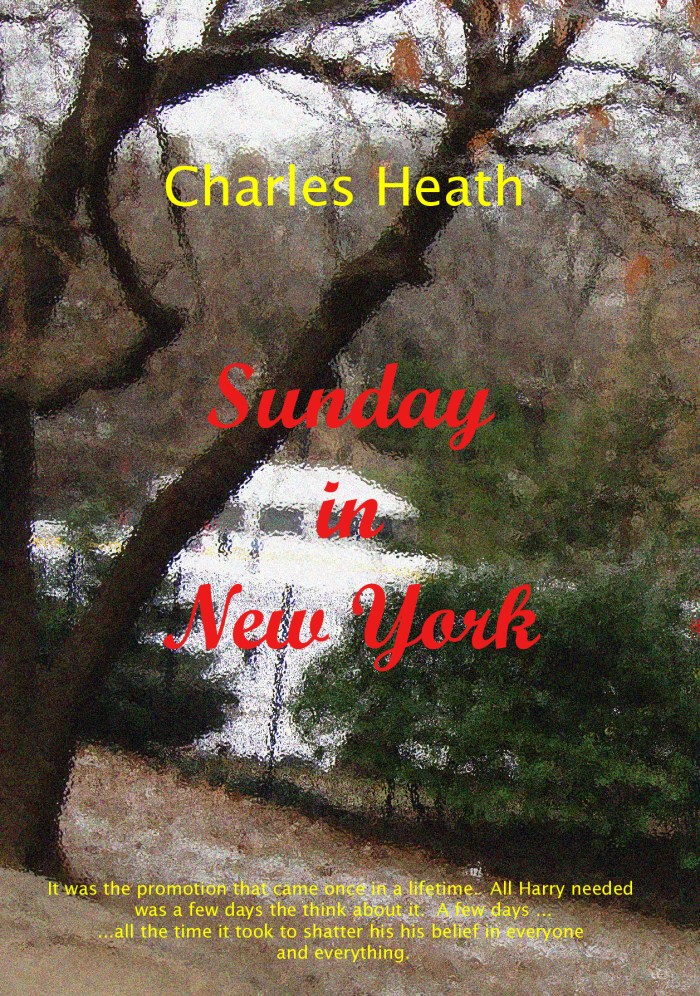
“Sunday in New York”, it’s a bumpy road to love

“Sunday in New York” is ultimately a story about trust, and what happens when a marriage is stretched to its limits.

When Harry Steele attends a lunch with his manager, Barclay, to discuss a promotion that any junior executive would accept in a heartbeat, it is the fact his wife, Alison, who previously professed her reservations about Barclay, also agreed to attend, that casts a small element of doubt in his mind.

From that moment, his life, in the company, in deciding what to do, his marriage, his very life, spirals out of control.

There is no one big factor that can prove Harry’s worst fears, that his marriage is over, just a number of small, interconnecting events, when piled on top of each other, points to a cataclysmic end to everything he had believed in.

Trust is lost firstly in his best friend and mentor, Andy, who only hints of impending disaster, Sasha, a woman whom he saved, and who appears to have motives of her own, and then in his wife, Alison, as he discovered piece by piece damning evidence she is about to leave him for another man.

Can we trust what we see with our eyes or trust what we hear?

Haven’t we all jumped to conclusions at least once in our lives?

Can Alison, a woman whose self-belief and confidence is about to be put to the ultimate test, find a way of proving their relationship is as strong as it has ever been?

As they say in the classics, read on!

Purchase:

http://tinyurl.com/Amazon-SundayInNewYork

Sunday In New York

Friday the Twelfth nearly turned into Friday the Thirteenth

I should have known it was near enough to be that mystical day where everything is usually turned on its head.

It started with a plague of self-doubt.  I’m writing a story that’s set in the dying days of world war two, in Italy, where I was not quite sure of what was happening there at the time.  A little reading to check some facts showed my thinking had been all wrong.

Trust me to just write a story without due regard to actual events.

And, this is what set me thinking the worst, and then heading to the encyclopedias to do some research.  I mean, we all have a modicum of general knowledge about the war, the role Germany played, and that of Italy to a certain extent.

I had read the Allies had mounted a fightback in the southern part of Italy in 1943, but hadn’t realised it only covered the bottom half of the country, and that the northern half had remained in Italian hands under Mussolini, with the help of the Germans until that collapsed and the Germans took over.

For my story to work, the allies had to be in control of the location of a particular castle, and be in a position to process fleeing scientists and useful ex Germans expatriation to Britain.

Having finally got hold of the facts, it seemed my story wouldn’t fit.  Not in the southern half of the country.  I just had to move it north, and now, with refugees coming over the mountains via Switzerland and the Dolomites, it will work.

What does it all mean?

You should do your homework first.  Lesson learned, now it’s back to research for a while if only to get the setting right.


#AtoZChallenge — L is for Land

AtoZ2019L

And, yes, the simple description for this word is that area of the earth that isn’t covered by water.

It could also describe that little patch that my house is built on, and is generally covered by the expression, house and land as a package.

After all, a piece of land is not much used to you unless there’s a dwelling on it, or, on rare occasions, under it.  Does that mean then that land in this instance only as what you can see?

OK, now it’s getting confusing.

What if I wanted to live off the land.  A small patch will not do, in this case, is need a large area, perhaps thousands if hectares.

It is said that the Australian aborigines have lived off the land for thousands of years, with a nomadic lifestyle.

No small patch of land for them.

Now, what if I come down out of the sky. Oddly enough this means I have to land, even if I come back to earth over later.  It’s still a landing.

Now it’s getting interesting.

So what if you wanted to refer to where you live?  That would be your homeland or motherland, and it describes a country.

So it’s my patch, my country, any area where there isn’t water.  What about describing a country, say the land of the long white cloud, or the land of the rising sun?

And just to add to the confusion

I can land a fish

Make land, after being all at sea, and,

Best of all, land that much desired job.

Wow.

I’m beginning to think it’s another one of those ‘four-letter words’

I was going to write a movie review but…

It seems nostalgia got in the way.

It’s school holidays on this side of the world and we decided to treat our grandchildren to a film.  Being 8 and 11, it was always going to be one of those children’s films that we either didn’t understand, had minions, monsters, or bratty children.

This didn’t, but it had a baby elephant with large ears.

Dumbo.

Saw the cartoon version, read the book countless times at bedtime, but live action?  I suspect with the advances in movie technology, anything is not possible, even flying elephants.

Yes, and somewhere in the film was the byline, ‘making the impossible possible’.

I guess only Disney and a handful of others could do that.

But…

What interested me the most was the train at the start, the circus winter home, and the manner in which the great circuses moved from town to town throughout the midwest, and other areas of e continental United States.

I may live on the other side of the world, but the magic and mystery of circuses has fed my imagination since childhood, and the notion one day that I might see the circus arrive, led by the steam calliope and followed by a parade of circus performers and animals on their way to the first vacant field.

And the thought of seeing that huge big top tent.

It never happened.

Except in the pages of a book I received one Christmas when I was about 7 or 8, called Toby Tyler first published in 1880, a boy who saw such a circus arrive, and hating his foster life on the farm ran away when the circus left town.

My only other memory of that story, Toby being called ‘the death-defying daredevil of the lemonade stand’ after being promoted from the concession stalls to bareback horse riding, for reasons I cannot remember.

But, today, seeing the film’s opening, it all came back.

Was it a good film?  For kids, yes.  It has the usual message of good triumphing over evil, and that you should follow your dreams.  For those older people like me, well, it will bring back a few other interesting memories, some of which will not include running away from home to become a circus performer.

And the fact they don’t make circuses like they used to.


Conversations with my cat – 29

20160903_163858

This is Chester  He thinks he has managed to slip away without anyone noticing.

He doesn’t realise that we put a special collar on him so that we can hear him coming.

It was supposed to save the birds, stopping him from sneaking up on them, but we don’t let him outside.

Like all cats who have a dash of bravado in them, they don’t realize cars are not meant to be chased, and they are faster than cats think they are.

Or so the last three cats we had thought.  Chester is benefitting from their mistakes.

Not that he can be told.

Still…

He knows it’s reading days, where I need an opinion, and I’m guessing he’s not in the mood.

That’s OK.  I need a change of scenery.  And the chance to improve my surveillance skills.

Maybe I can use that experience in the story.


#AtoZChallenge — K is for keep

AtoZ2019K

Yes, this is an easy one.

I want to keep the car.  Especially if it’s a Lamborghini and it didn’t cost $500,000.

This form of the word simply means to hang on to something, or up the proper definition, to have or retain possession of

Paring it with other words is where it gets complicated.

For instance,

Keepings off, make sure that the ball doesn’t get into someone else’s possession.

Keep it to yourself, yes, here’s your chance to become the harbinger of secrets and not tell anyone else.  Not unless a lot of money is involved, or a Lamborghini.

You guessed it, the car is the running joke on this post.

How about, keep a low profile, been there tried that, it’s a lot harder than you think.

What about keeping your cards close to your chest, yes, this had both a literal and figurative meaning which makes it sort of unique.

That might follow the second definition, to continue, or cause to continue a particular state.

Another way of using keep is by delaying or stopping someone from doing something or getting somewhere; ie, I was kept waiting at the doctor’s surgery because he was late.

There are any number of examples of using the word keep in tandem with other words

One that specifically doesn’t relate to all the former examples, is simply the word keep.

What is it?

Usually the strongest part of the castle, and the last to fall in an attack.

At least, that was the theory.

Was it just another surveillance job – Episode 1

Always the unexpected

I was walking past a fast food outlet, minding my own business when an explosion behind me firstly threw me about 20 feet along the sidewalk and then dumped a whole lot of building rubbish on me.

So much for minding my own business.

Dazed, half deaf, and bleeding from several shrapnel wounds, I slowly got to my feet and looked back in the direction of where I thought the explosion happened.

Wrong. It was in the other direction. No surprise with the disorientation.

Not far from me I could see several others on the ground through the settling cloud of dust, bodies lying on the pathway, not moving. A number of cars that had been driving past had got caught almost directly by the blast and had been severely damaged. Other cars behind had crashed into them.

The storefront I had just past was now just a pile of rubble, much like photos of houses during the blitz and anyone caught in it would not have survived.

Still slightly disorientated, I could hear sirens in the distance, and then, above that, as my hearing slightly improved, screams from people who had taken the full brunt of the explosion.

I headed towards the nearest of the injured when I was knocked abruptly to the ground by two men running away from the scene. It took a few moments to realize these men must have had something to do with the explosion and were fleeing.

I scrambled to my feet and started running after them. They were some distance in front of me as was an oncoming police car, and I thought they could take up the chase, and stopped.

Instead, it drove straight past the two men and stopped opposite me, and before knew what was happening, I was on the ground with four weapons trained on my head, and three of them yelling that if I moved they would shoot me.

I tried telling them about the two fleeing men I’d been chasing but no one was listening.

I had a knee in my back and a gun to my head. This wasn’t going to end well for someone.

© Charles Heath 2018-2019

“What Sets Us Apart”, a mystery with a twist

David is a man troubled by a past he is trying to forget.
Susan is rebelling against a life of privilege and an exasperated mother who holds a secret that will determine her daughter’s destiny.
They are two people brought together by chance. Or was it?
When Susan discovers her mother’s secret, she goes in search of the truth that has been hidden from her since the day she was born.
When David realizes her absence is more than the usual cooling off after another heated argument, he finds himself being slowly drawn back into his former world of deceit and lies.
Then, back with his former employers, David quickly discovers nothing is what it seems as he embarks on a dangerous mission to find Susan before he loses her forever.

http://amzn.to/2Eryfth

whatsetscover